
How to Choose a Cam Lock Fastener Supplier for Cabinet and Flat-Pack Furniture
A cam lock fitting is easy to underestimate.
It is small, usually hidden, and not expensive compared with the cabinet panels around it. Yet when the part is wrong, the whole assembly feels wrong.
The panel does not pull tight. The side wall shifts slightly. A customer keeps turning the cam but nothing closes. On the production line, workers begin sorting parts, checking hole positions, and replacing hardware that should have worked the first time.
That is why choosing a cam lock fastener supplier is not only a purchasing task.
For cabinet factories, flat-pack furniture brands, wholesalers, and OEM buyers, cam lock hardware affects assembly speed, panel alignment, packaging accuracy, and the final feel of the product. A good supplier does not simply ship connectors. It supports a stable assembly system.
 Cam lock hardware works only when the whole joint is correct
A cam lock fastener is usually part of a larger connection.
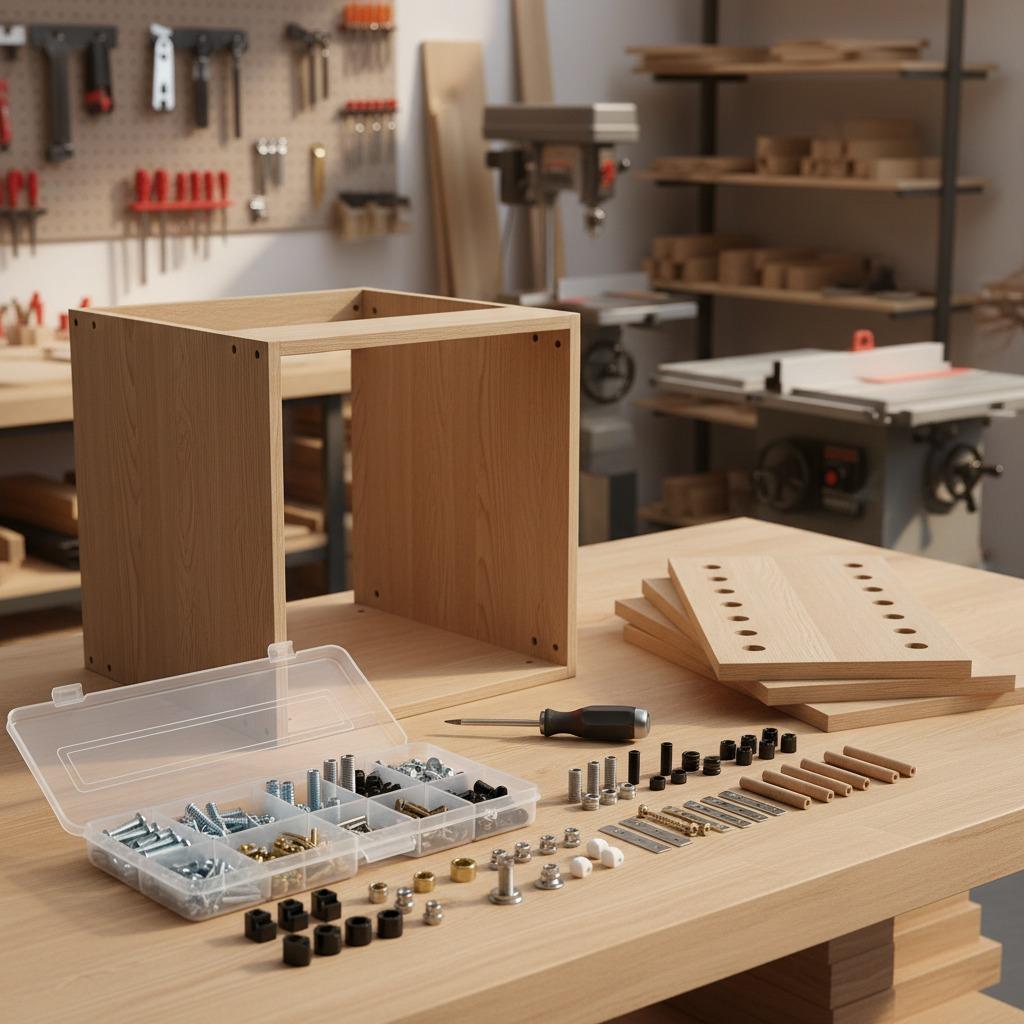
The cam body needs to match the connector bolt. The bolt must suit the panel thickness. The pre-drilled hole needs the right diameter and depth. Dowels may be used nearby to guide the panels before the cam pulls the joint closed.
If one detail is off, the fitting may still look correct but fail during assembly.
This is why buyers should avoid judging cam lock hardware only by appearance.
A bright finish, clean machining, and neat packing are useful, but they do not prove that the connector will work in the intended cabinet. The real test is whether the hardware pulls the panels together smoothly and repeatedly in the actual board material.
For flat-pack furniture, that repeatability matters even more. The person assembling the product may not be a trained worker. The connector needs to be clear, forgiving, and compatible with the instruction sequence.
Why cam locks remain common in flat-pack furniture
Cam-style connectors are popular because they solve several practical problems at once.
They create a concealed or semi-concealed joint. They allow panels to ship flat. They can be assembled with simple tools. They also support replacement and disassembly better than many permanent joining methods.
That makes them useful for:
- Cabinets
- Wardrobes
- Shelving units
- Storage furniture
- Office furniture
- Workshop cabinets
- Modular case goods
- Ready-to-assemble furniture
The advantage is not only lower shipping volume.
Cam lock hardware also helps manufacturers create a repeatable assembly method. Once the hole pattern and hardware set are controlled, the same structure can be used across several cabinet models.
However, this system depends heavily on precision.
If the hole pattern moves, the cam may not catch the bolt properly. If the bolt length changes, the panels may not close. If the cam cavity is poorly matched, the joint may feel loose even when fully tightened.
The connector is small, but the tolerance window is not always generous.
A supplier should understand more than the cam body
Some suppliers can sell the cam fitting itself. That may be enough for simple replacement orders.
For production furniture, buyers usually need more.
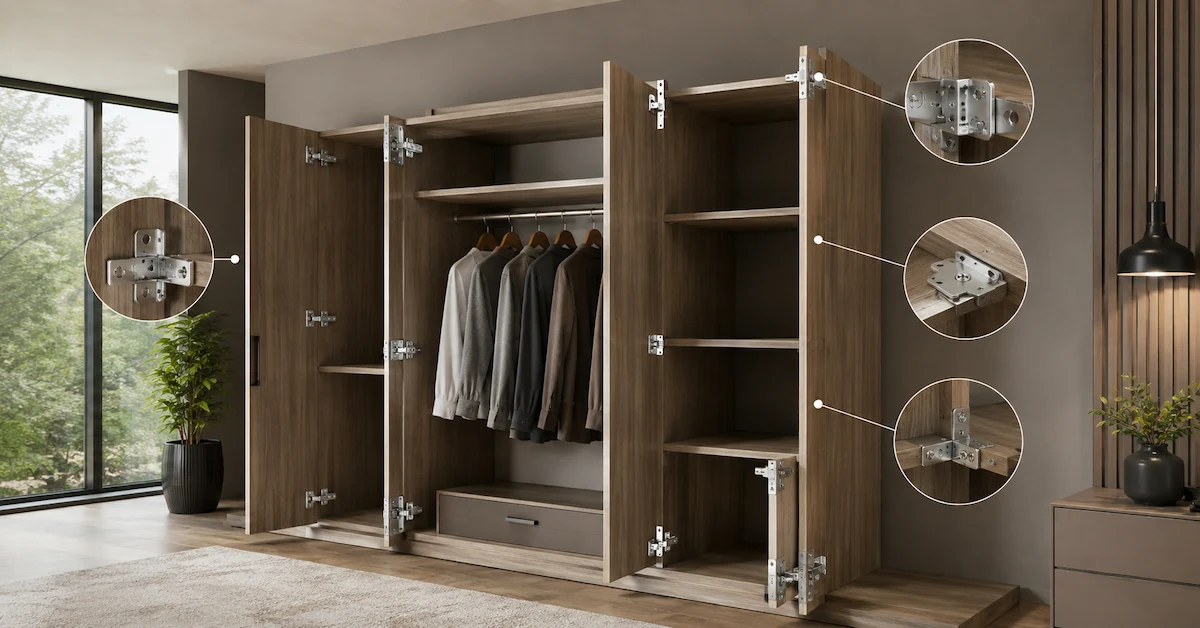
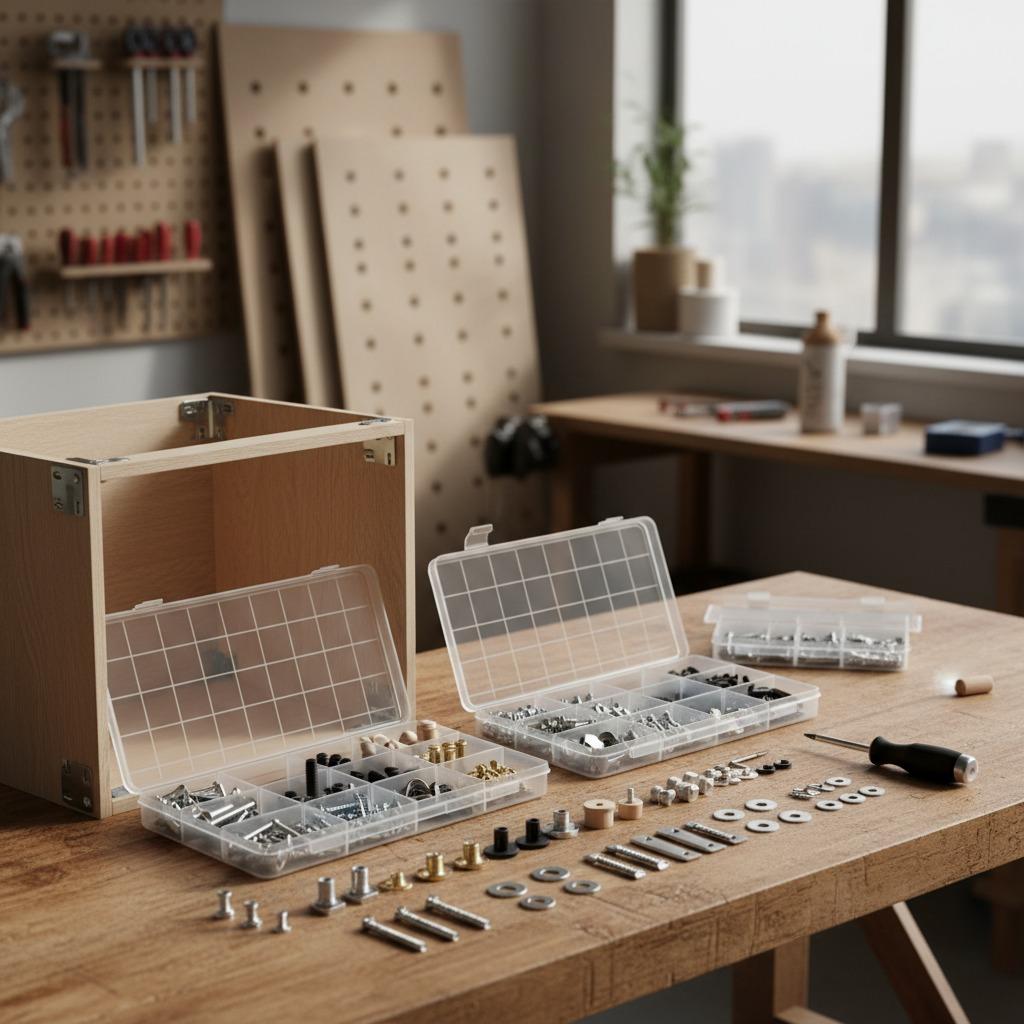
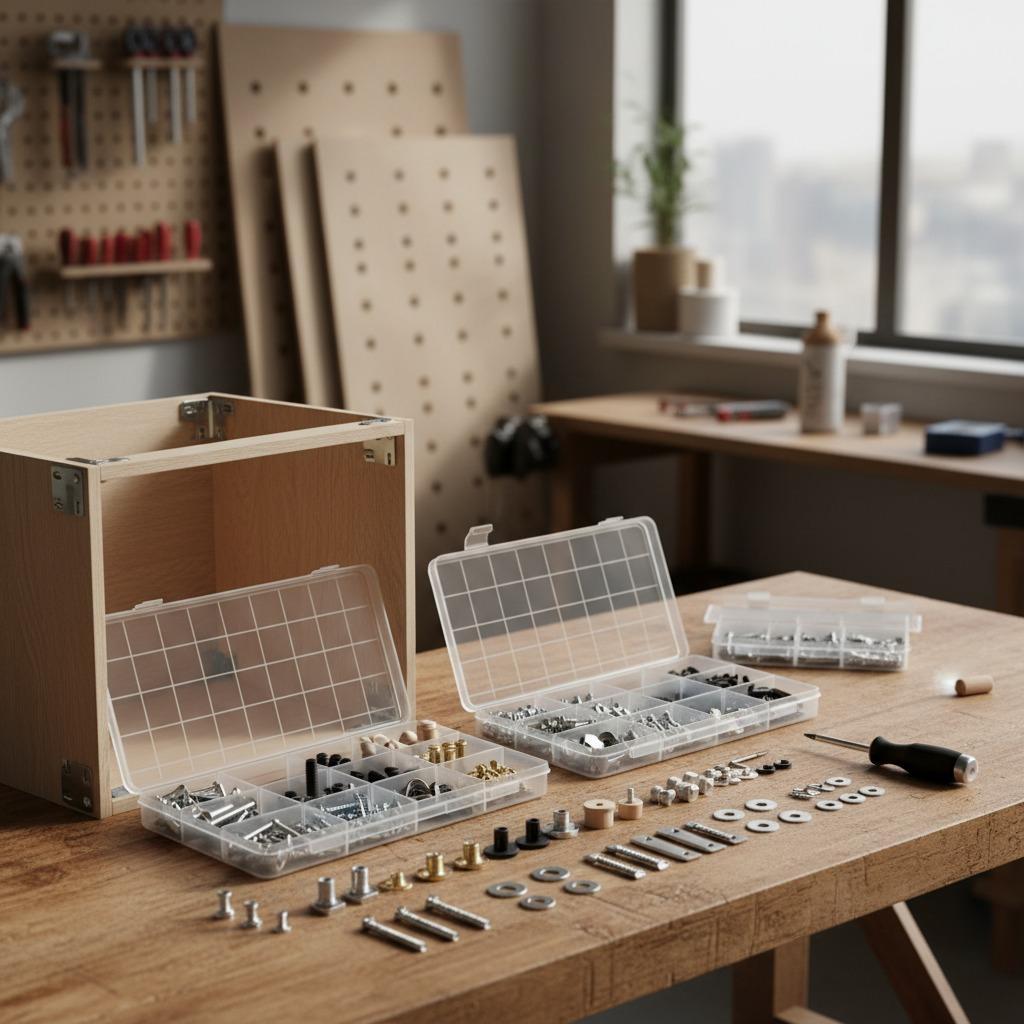
A complete cabinet connection may involve cam locks, connector bolts, dowels, screws, washers, inserts, brackets, plastic caps, and sometimes a simple tightening tool. These parts must be compatible with one another and packed in the right quantities.
A useful cam lock fastener supplier should be able to discuss:
- Cam diameter
- Bolt length
- Thread type
- Panel thickness
- Hole depth
- Surface finish
- Matching dowels
- Required tools
- Packing quantity
- Furniture model or SKU
- Whether the product is factory-assembled or flat-packed
If the supplier only asks for quantity and finish, the buyer may be carrying too much of the application risk.
A good supplier should want to know how the part will be used.
Panel material changes the fastener decision
Cam lock hardware does not work in isolation from the panel.
MDF, particleboard, plywood, and solid wood all respond differently to drilled holes, inserts, screws, and repeated tightening. A connector that works well in one material may feel weak or too aggressive in another.
Particleboard is common in flat-pack furniture, but the density can vary. MDF machines cleanly, though edge strength must be watched carefully. Plywood may offer stronger holding performance, but layer quality and drilling direction still matter.
Before confirming a bulk order, buyers should test the hardware in the actual panel material.
The trial should check:
- Whether the cam engages the bolt correctly
- Whether the panels pull together without visible gaps
- Whether the board surface is damaged during tightening
- Whether the joint remains stable after movement
- Whether the fitting can be opened and tightened again
- Whether the assembly tool reaches the connector easily
A sample on a desk cannot answer these questions.
Only a real assembly test can.
Material and finish should be confirmed, not assumed
Many cam locks, bolts, and related furniture fasteners use zinc-plated or nickel-like silver finishes. Some inserts or threaded parts may appear brass-colored. These finishes are common, but appearance alone is not a specification.
Buyers should ask the supplier to confirm the base material and surface treatment in writing.
For indoor furniture, basic corrosion protection may be enough. For kitchen cabinets, bathroom storage, coastal regions, export shipping, or long warehouse storage, the finish may need closer review.
Important details may include:
- Base material
- Plating or coating type
- Coating thickness
- Corrosion resistance requirement
- Color consistency
- Compatibility with visible hardware
- Environmental compliance
- Storage and transport conditions
A shiny fastener does not automatically mean reliable corrosion resistance.
For visible or semi-visible parts, finish consistency also affects the product’s perceived quality. A cabinet may function correctly but still look cheap if the hardware finish varies from one part to another.
Kitting accuracy can decide whether production keeps moving
Cam lock hardware is often supplied as part of a cabinet hardware kit.
That creates another sourcing issue: the parts must be counted and packed correctly.
A kit may contain the right cam locks but miss one connector bolt. It may include the correct number of screws but mix two similar lengths. It may use the right bracket but the wrong plastic cap.
Each mistake creates a different problem.
On the factory line, workers lose time sorting and checking parts. In flat-pack furniture, the end customer may be unable to finish assembly. For wholesalers and e-commerce sellers, one small missing part can lead to returns, replacement shipments, or support requests.
Buyers should therefore ask how the supplier controls kitting.
Useful questions include:
- Are parts counted manually or automatically?
- Are similar screws separated?
- Can kits be packed by furniture model?
- Can labels include SKU, quantity, and part list?
- Is there a final kit inspection?
- Can spare parts be added if required?
- Are bulk and retail packing both available?
Good hardware with poor packing still creates trouble.
Standard parts and non-standard customization both have a place
Some cabinet projects can use standard cam lock hardware without modification.
That is usually the easiest path. Standard parts may offer faster delivery, lower cost, and easier replacement.
Other projects need custom support.
The panel may be unusually thick. The available installation space may be tight. The buyer may need a special bolt length, a different head style, a specific finish, or a packaging format designed around one furniture model.
Customization can be useful when it solves a real problem.
It should not be added only to make the product appear more specialized.
Non-standard components require drawings, samples, approval records, minimum quantities, and repeat-order control. If a standard part works reliably, it may be the better long-term choice. If the furniture structure requires a different fastener, then customization becomes practical.
Jiangmen Jinhe Hardware Co., Ltd. manufactures machine screws, self-tapping screws, micro screws, precision screws, and non-standard customized fasteners. For furniture buyers, this type of capability can be useful when a cabinet hardware program needs both standard fasteners and project-specific components.
What to check before approving samples
A sample review should go beyond measuring the cam fitting.
The complete connection should be tested.
Use the intended panel material, drilling pattern, connector bolt, dowel, tool, and assembly order. Assemble several joints rather than one. Ask production workers to handle the parts if the hardware will be used on a line.
During testing, look for practical issues:
- Does the cam rotate smoothly?
- Does the bolt engage at the right depth?
- Do the panels pull together evenly?
- Does the joint feel tight after movement?
- Does the tool damage the cam slot?
- Can the user understand the installation sequence?
- Are similar parts easy to identify?
- Is the hardware finish scratched after handling?
A perfect sample part is not enough if the complete cabinet joint behaves poorly.
The approval should reflect the assembly result, not only the component drawing.
Why supplier documentation matters
In furniture hardware, many parts look similar.
That makes documentation important.
A supplier should be able to provide drawings, material information, finish details, inspection records, packaging instructions, and revision control. This is especially important when several furniture models use similar-looking connectors.
Without clear records, repeat orders become risky.
A buyer may receive a slightly different bolt length or finish and not notice the change until assembly begins. The supplier may substitute a component that appears close but does not match the approved joint.
Documentation helps prevent those changes from becoming hidden.
Jiangmen Jinhe Hardware states that it works with standards such as GB, DIN, ANSI, BS, JIS, and ISO, and provides inspection before delivery. For buyers, that kind of process support is useful, but product-specific confirmation is still necessary.
Furniture hardware should always be validated against the actual application.
Logistics and delivery are part of the sourcing decision
Cam lock fasteners are low-cost parts, but a delayed shipment can stop a cabinet program.
This is especially true for OEM furniture, e-commerce products, and export orders where hardware kits must arrive with the panels, cartons, labels, and instructions.
A supplier that can support freight coordination, warehousing, or mixed shipments may reduce pressure on the buyer’s logistics team.
Jiangmen Jinhe notes support for international freight forwarding, domestic logistics, warehousing, and supply chain services. For wholesalers and cross-border sellers, this can be useful when hardware needs to move with other furniture components or arrive according to a staged production plan.
The supplier’s delivery support should be discussed before the purchase order, not after production is complete.
Common sourcing mistakes
One common mistake is treating all cam lock hardware as interchangeable.
Two fittings may look nearly the same but differ in cam geometry, engagement depth, material, or matching bolt requirements. Small changes can affect how the cabinet closes.
Another mistake is approving the hardware without checking the drilled panel.
The connector may be correct, but the hole diameter, hole depth, or edge distance may not support the joint properly.
Buyers also sometimes focus too heavily on unit price.
A cheaper cam lock can become expensive if it slows assembly, causes panel gaps, creates customer complaints, or requires extra sorting during packing.
Packaging is another frequent weak point.
Bulk mixed hardware may be acceptable for some factory settings, but cabinet kits and flat-pack furniture usually need more organized packing. When parts look similar, clear separation and labels are not optional.
Questions to ask a cam lock fastener supplier
Before placing a purchase order, buyers should ask:
- What cam sizes are available?
- Which bolts or threaded parts match this cam?
- What panel thickness range is suitable?
- What hole diameter and depth are required?
- What material and finish are used?
- Can the supplier provide samples for assembly testing?
- Can kits be packed by furniture model?
- Can labels and packaging be customized?
- Are drawings and inspection reports available?
- How are repeat orders controlled?
- Can non-standard parts be developed if needed?
- What logistics support is available?
The answers should be practical, not vague.
A reliable supplier should be able to explain how the hardware fits into the cabinet structure and how the order will be controlled during production.
Frequently Asked Questions
What are cam lock fasteners used for?
Cam lock fasteners are commonly used in flat-pack furniture, cabinets, wardrobes, shelving units, and modular storage products. They help connect panels in a concealed or semi-concealed way.
Are all cam locks compatible with all connector bolts?
No. Cam locks and connector bolts must match in size, engagement depth, and geometry. Buyers should test the complete connection before approving a bulk order.
What should buyers inspect in a sample?
Check cam rotation, bolt engagement, panel fit, joint tightness, hole compatibility, surface finish, and whether the included tool works properly.
Can cam lock hardware be customized?
Yes. Customization may involve bolt length, thread type, cam size, finish, packaging, labels, or kit configuration. Custom parts should solve a clear application problem.
Why is packaging important for cam lock hardware?
Because cam locks are often supplied with matching bolts, dowels, screws, and caps. If one small part is missing or mixed, assembly may stop.
Is the cheapest cam lock fastener always the best choice?
No. Buyers should consider assembly performance, consistency, finish, packaging accuracy, documentation, and repeat supply—not only unit price.
The right supplier protects the assembly process
A good cam lock fastener supplier makes assembly feel predictable.
The cam fits the hole. The bolt engages correctly. The panels close without being forced. The hardware bag contains the correct parts, and the same result repeats across the next order.
That reliability is what buyers are really purchasing.
For cabinet hardware kits, furniture assembly programs, flat-pack products, and custom fastening projects, Jiangmen Jinhe Hardware Co., Ltd. can discuss standard fasteners, non-standard customization, material options, finish requirements, kitting, packaging, and export support.
The best conversation starts with the cabinet structure, not only the connector photo.