
Concealed Furniture Connector Supplier: Why the Right Fit Matters Before Production
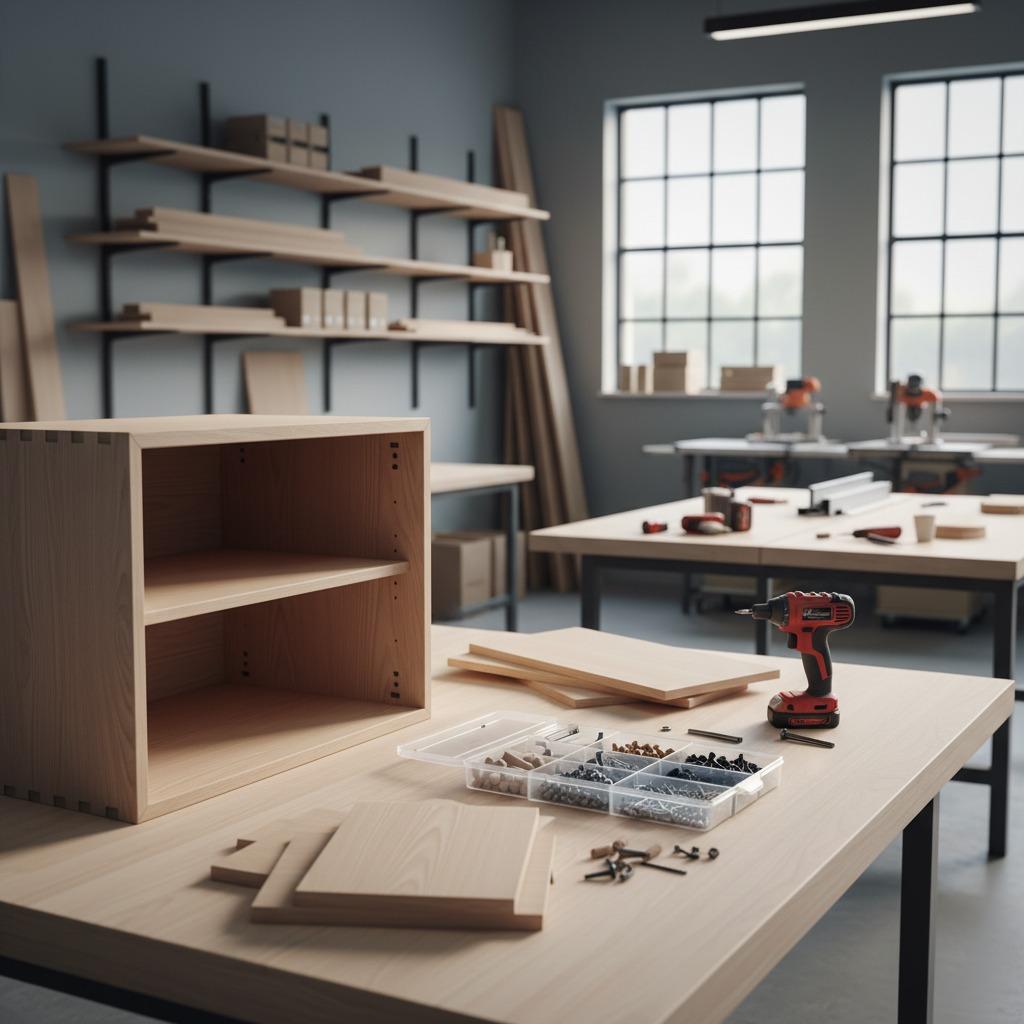 A hidden connector seems like a small detail until the cabinet is assembled.
From the outside, the product may look simple: two side panels, a base, a top, perhaps a divider shelf, and a clean front opening. No exposed screws. No bulky brackets on the visible face. That neat appearance is exactly why many buyers look for concealed furniture connectors in the first place.
But the part doing the work is hidden. That makes sourcing more important, not less.
If the connector does not match the panel thickness, the hole depth, or the assembly method, the problem may not show up until the unit is already on the bench. The panels may not pull together fully. The corner may sit slightly out of square. A worker may need to force the joint into place. For flat-pack furniture, the end user may be the one discovering the issue.
That is why choosing a concealed furniture connector supplier is not just about finding a cleaner-looking fastener.
It is about making sure the connector, panel, drilling pattern, tool access, packaging, and assembly sequence all belong together.
A hidden joint still has to do visible work
The reason buyers like hidden furniture connectors is easy to understand.
They help keep the cabinet exterior clean. They reduce the need for exposed screws or large metal brackets. They make shelves, storage boxes, bedside units, modular cabinets, and workshop organizers look more finished.
Still, a concealed connector is not chosen for appearance alone.
It must hold the panel in position. It must tolerate normal handling during packing and transport. It should not loosen after the unit is moved. If the product is designed for knock-down assembly, the connector may also need to support more than one assembly cycle.
This is where buyers sometimes get caught.
A connector that looks elegant in a sample photo may be awkward in real production. It may require a drilling position that is too tight for the panel. It may need a tool angle that workers cannot reach easily. It may work in plywood but feel weak in particleboard.
The clean look is valuable only when the joint remains practical.
Start with the panel, not the connector catalog
A compact cabinet or small storage unit looks forgiving at first glance.
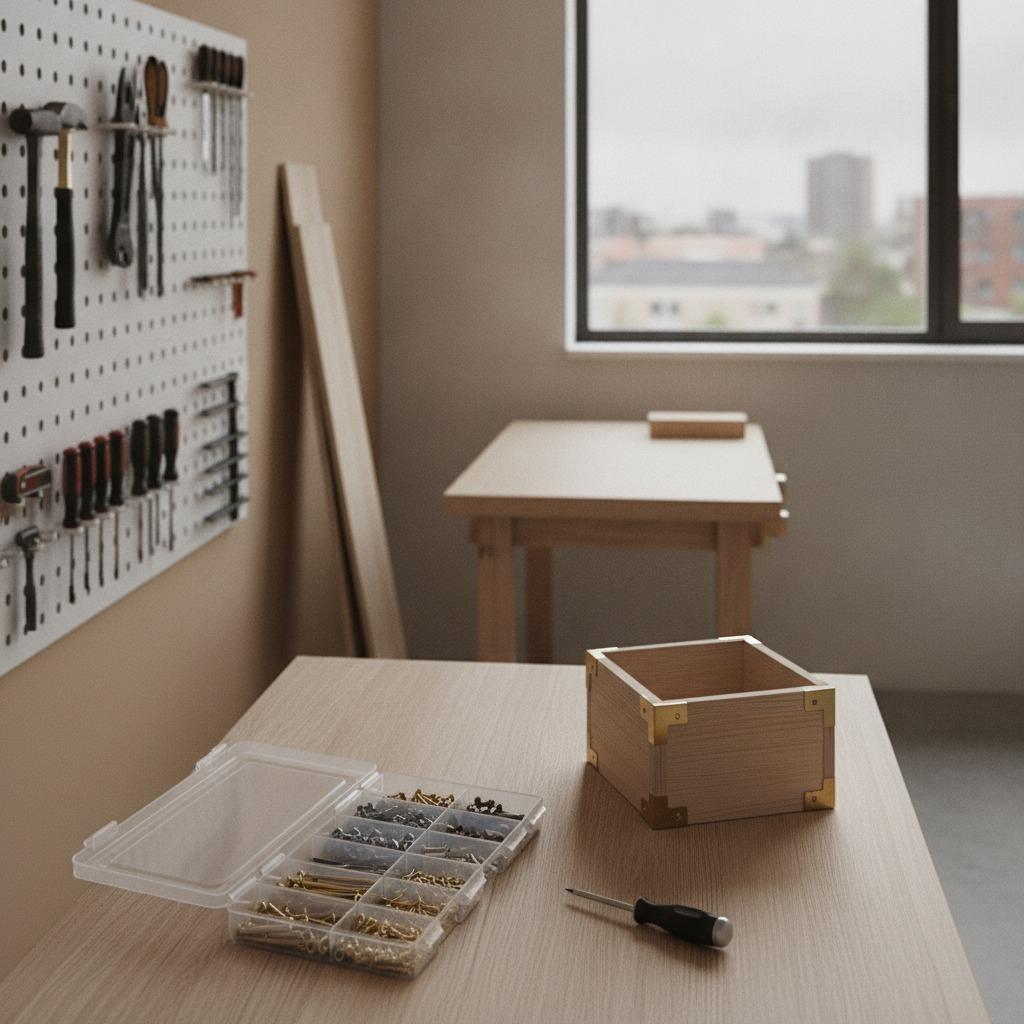
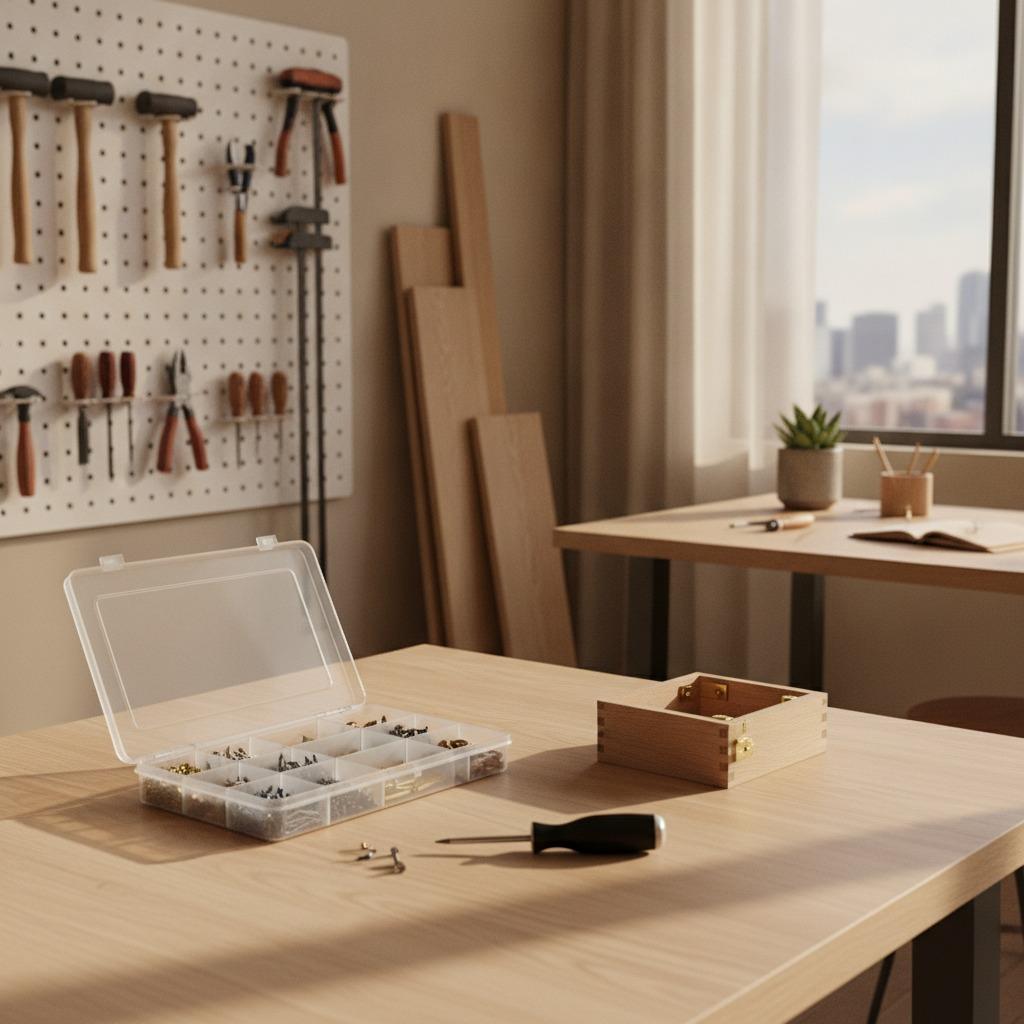
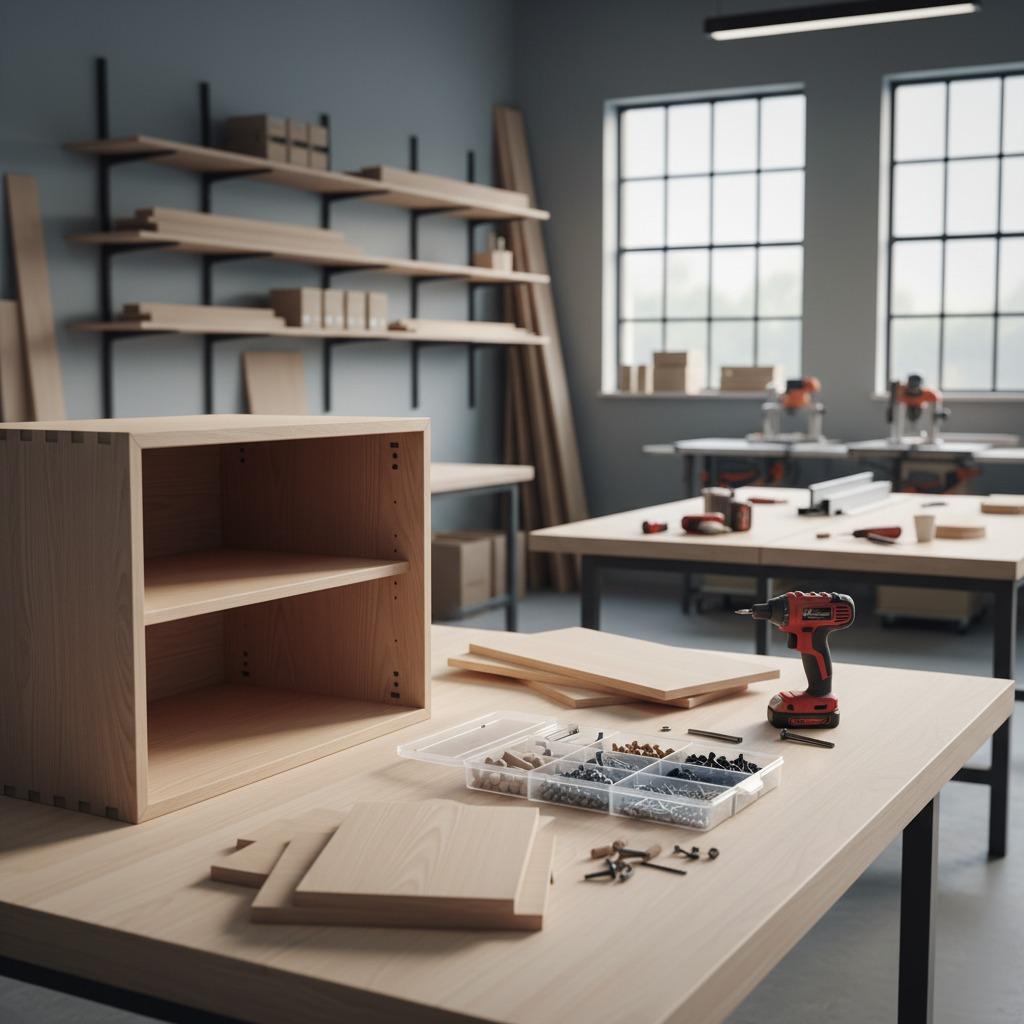
It is usually a box shape. The panels are flat. The holes are pre-drilled. A few fasteners and a screwdriver are placed nearby. Nothing appears complicated.
That simplicity can be misleading.
Panel furniture depends on small dimensional relationships. Board thickness, hole diameter, drilling depth, edge distance, and connector length all affect the result. When the hardware is concealed, there is often less room to correct mistakes after assembly begins.
Buyers should therefore begin with the cabinet structure.
Before asking for a quotation, prepare the basic details:
- Panel material
- Panel thickness
- Hole diameter
- Hole depth
- Edge distance
- Assembly direction
- Whether the unit ships flat-packed
- Whether the joint needs to be reopened later
- Matching screws, dowels, inserts, or sleeves
A supplier can quote from a connector photo, but that does not mean the part is suitable.
A better supplier will want to understand the panel system first.
Concealed connectors depend on drilling accuracy
Many concealed furniture connectors are designed for CNC-drilled or jig-drilled panels.
That is good for repeatability. Once the drilling pattern is stable, the same cabinet can be assembled again and again with less variation.
But accurate drilling does not solve everything.
The connector still needs to match the hole pattern. The fitting depth must leave enough material around the joint. The mating part must sit in the correct position. If the drilling layout and connector design are not reviewed together, the assembly may still feel wrong.
This is especially important for small storage boxes, compact cabinets, and open-front carcasses.
There is little space to hide misalignment. A divider shelf or side panel can make the joint less forgiving. If one side pulls tighter than the other, the unit may rack slightly, and the problem becomes visible at the front edge.
For production buyers, the question is not only, “Can this connector fit the hole?”
The better question is, “Can this connector fit the same way across the full production run?”
Different concealed connector types solve different problems
Not every hidden connector works the same way.
Some are designed for fast flat-pack assembly. Some are better for permanent cabinet structures. Others are chosen mainly to hide hardware on visible surfaces.
Cam-style concealed connectors
Cam-style systems are common in flat-pack furniture. They allow panels to ship flat and be assembled with basic tools.
They can work well when the holes are accurate and the matching bolt is correctly positioned. The problem is tolerance. If the bolt depth or cam location is slightly off, the joint may not close cleanly.
These connectors are familiar to many furniture buyers, but they still need testing in the actual panel.
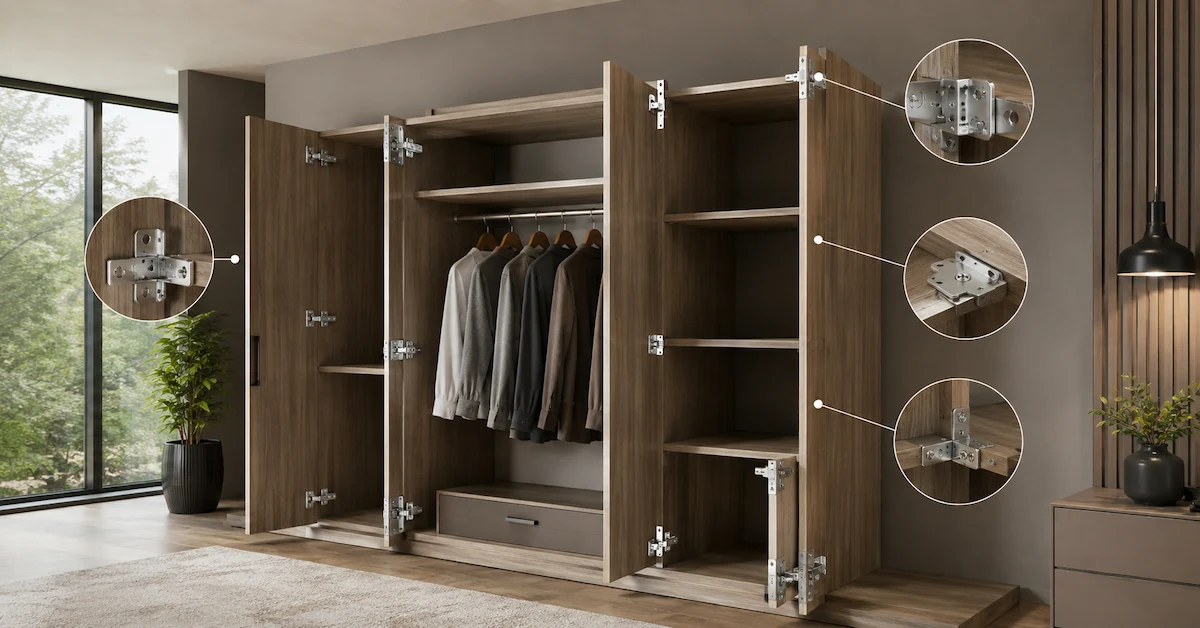
Hidden mechanical connectors
Hidden mechanical connectors are often used when the exterior appearance matters more. They may help create a cleaner look inside cabinets, shelves, display units, or small storage products.
The main concern is installation access. A connector may be hidden after assembly, but someone still has to install it correctly.
If the tool angle is difficult or the fitting requires too many steps, the clean appearance may come at the cost of slower production.
Internal brackets and support fittings
Internal brackets are not always fully invisible, but they can keep the outside surface clean.
They are useful in prototypes, workshop cabinets, storage boxes, and special-size furniture where strength or adjustability matters more than a completely hidden joint.
The trade-off is appearance inside the unit. For some products, that is acceptable. For others, a more discreet connector may be preferred.
The right choice depends on the furniture, not on one universal rule.
Board material changes the result
A concealed connector does not behave the same in every panel.
MDF, particleboard, plywood, veneered boards, and solid wood all respond differently to drilling, tightening, and repeated assembly. A fitting that works well in a dense plywood panel may feel loose in lower-density particleboard. A screw that holds securely in one board may split the edge of another.
This is why sample testing matters.
Buyers should not approve concealed furniture connectors only from loose samples. The connector needs to be installed in the same panel material planned for production.
During testing, check:
- Whether the connector seats correctly
- Whether the panels close without force
- Whether the edge remains clean
- Whether the joint feels stable after movement
- Whether the tool can reach the fitting
- Whether the connector can be adjusted or removed if needed
A hidden problem is still a problem.
In fact, hidden hardware problems often take longer to diagnose because the defect is not visible until the cabinet is already partly assembled.
Supporting fasteners matter too
A concealed connector is rarely the only part in the joint.
It may rely on screws, connector bolts, dowels, threaded inserts, plastic sleeves, or cover caps. If one of those companion parts is wrong, the main connector may not perform properly.
A dowel can help align the panels before tightening. A screw may secure a secondary fitting. A threaded insert may create a stronger connection in engineered wood. A plastic sleeve may protect the hole or improve fit.
This is why buyers should evaluate the complete fastening system.
Jiangmen Jinhe Hardware Co., Ltd. works with machine screws, self-tapping screws, micro screws, precision screws, standard parts, and non-standard customized fasteners. For furniture projects, that broader hardware capability can be useful when a concealed connector system needs matching screws or special supporting parts.
The connector may be the part buyers ask about first.
The smaller parts around it often decide whether assembly feels smooth.
Customization should not be the first answer every time
Some furniture projects need custom furniture fasteners.
A panel may be thinner than usual. A hole pattern may already be fixed. A screw may need a special length. The connector may need to fit a narrow internal space. In these cases, customization can prevent rework.
But custom does not always mean better.
Non-standard parts require drawings, samples, approval records, tooling, minimum quantities, and repeat-order control. If a standard connector works reliably, it may be easier to source and replace over time.
A good supplier should help buyers decide where customization is actually needed.
Sometimes the right solution is a modified fastener. Sometimes it is a small adjustment to the drilling layout. Sometimes it is simply choosing a proven standard connector and packing it correctly with the matching parts.
The goal is not to make the hardware unusual.
The goal is to make the furniture assemble correctly.
Packaging can affect hidden connector performance
Concealed connector systems often include several small parts.
If one part is missing, the assembly stops. If two similar screws are mixed, the wrong one may damage the panel. If the labels are unclear, workers may spend time checking parts before they can build.
For flat-pack furniture, this becomes even more important.
The customer may not know what the hidden connector should look like. They only know that the cabinet will not close or the shelf will not sit correctly.
Buyers should confirm the packaging method before bulk orders.
Useful details include:
- Quantity per kit
- Component separation
- Furniture model label
- Assembly-step label
- Spare-part policy
- Counting method
- Final inspection
- Carton packing format
A concealed joint should feel simple to the person assembling the product.
That simplicity starts with the hardware pack.
Inspection should focus on fit, not just appearance
Concealed hardware can look fine before installation and still fail during assembly.
A connector may have a clean finish, but the diameter may be slightly off. A screw may look correct, but the length may not suit the panel. A mating part may pass a visual check but fail to engage properly.
Inspection should focus on the features that affect the joint.
For concealed furniture connectors, buyers may need to check:
- Connector length
- Diameter
- Thread quality
- Screw fit
- Surface finish
- Mating part compatibility
- Hole requirement
- Quantity accuracy
- Packaging accuracy
Jiangmen Jinhe Hardware states that products undergo inspection before delivery and are supplied with necessary documentation. That is useful for buyers, but furniture-specific testing should still be done.
A general fastener inspection does not always prove that the connector will work in a specific cabinet design.
Supplier response time matters when assembly is blocked
A hardware issue often appears when the production team is already waiting.
A sample build fails. A pilot order needs adjustment. A batch of parts does not match the approved drawing. A customer reports that the connector will not tighten.
At that point, slow communication becomes expensive.
Jiangmen Jinhe states that customer support responds within 30–60 minutes and provides solutions within two hours for issues. Buyers should confirm service expectations during cooperation, but the underlying point is clear.
When a concealed connector blocks production, the supplier should be able to check the drawing, review the part, identify the cause, and suggest a practical correction quickly.
A hidden joint should not create hidden delays.
Common mistakes buyers should avoid
One common mistake is treating all concealed furniture connectors as interchangeable.
They are not. Similar-looking connectors may require different hole depths, panel thicknesses, or installation methods.
Another mistake is choosing only by appearance.
A hidden connector should improve the look of the furniture, but it also has to support load, alignment, installation, and repeat production.
Buyers also sometimes test the connector outside the actual panel. That is risky. The board material and drilling pattern are part of the joint.
Packaging is another frequent weak point. A good connector packed with the wrong screw or missing companion part still creates failure.
Finally, do not over-specify strength for a light cabinet.
More metal is not always better. A heavy-duty connector may add cost and assembly difficulty without improving the product in a meaningful way.
What buyers should ask before ordering
Before choosing a concealed furniture connector supplier, ask:
What panel thickness is the connector designed for?
What hole diameter and depth are required?
Which board materials has it been tested with?
Does it need matching screws, dowels, inserts, or sleeves?
Can it support flat-pack assembly?
Can we test samples in our actual cabinet structure?
What material and finish are used?
Can non-standard dimensions be supported?
What inspection documents are available?
Can the parts be packed by furniture model?
How are repeat orders controlled?
What happens if a fit issue appears during assembly?
Good answers should be specific.
A supplier that understands furniture will usually talk about drilling, fit, assembly, and packaging—not only unit price.
Frequently Asked Questions
Are concealed furniture connectors only for premium furniture?
No. They are also used in budget flat-pack furniture, workshop storage, modular shelves, and small cabinets when a clean exterior is important.
Can concealed connectors be used for flat-pack furniture?
Yes, as long as the connector is matched to the panel drilling pattern and the assembly process is clear for the user.
Do hidden connectors always improve strength?
No. They can improve appearance and support stable assembly, but strength depends on panel material, connector design, fit, and installation quality.
Should buyers test samples before bulk ordering?
Yes. Samples should be tested in the actual panel material and cabinet structure, not only measured as loose hardware.
Can concealed connectors be customized?
Yes. Dimensions, screw length, finish, supporting fasteners, and packaging can be customized when the furniture design requires it.
Why does packaging matter for concealed connectors?
Because hidden connector systems often include several matching parts. If one component is missing, mixed, or mislabeled, assembly can stop.
The right connector should disappear after doing its job
A good concealed connector should not make the assembly team struggle.
The panel closes neatly. The exterior stays clean. The joint holds. The hardware pack makes sense. The next batch behaves like the approved sample.
That quiet consistency is what buyers should look for in a concealed furniture connector supplier.
For concealed furniture connectors, cabinet connector hardware, standard fasteners, custom furniture fasteners, and non-standard hardware support, Jiangmen Jinhe Hardware Co., Ltd. can discuss materials, dimensions, sample testing, inspection, packaging, and supply requirements.
For direct inquiries:
Tel/WeChat: +86 13729150102
WhatsApp: +86 13322893939
Email: sharon@hkhomeideas.com
Start with the cabinet drawing, panel material, board thickness, hole pattern, assembly method, and order quantity.
Once the furniture structure is clear, the right hidden connector becomes much easier to choose.