
Concealed Furniture Connector Supplier: What Buyers Should Check Before Production
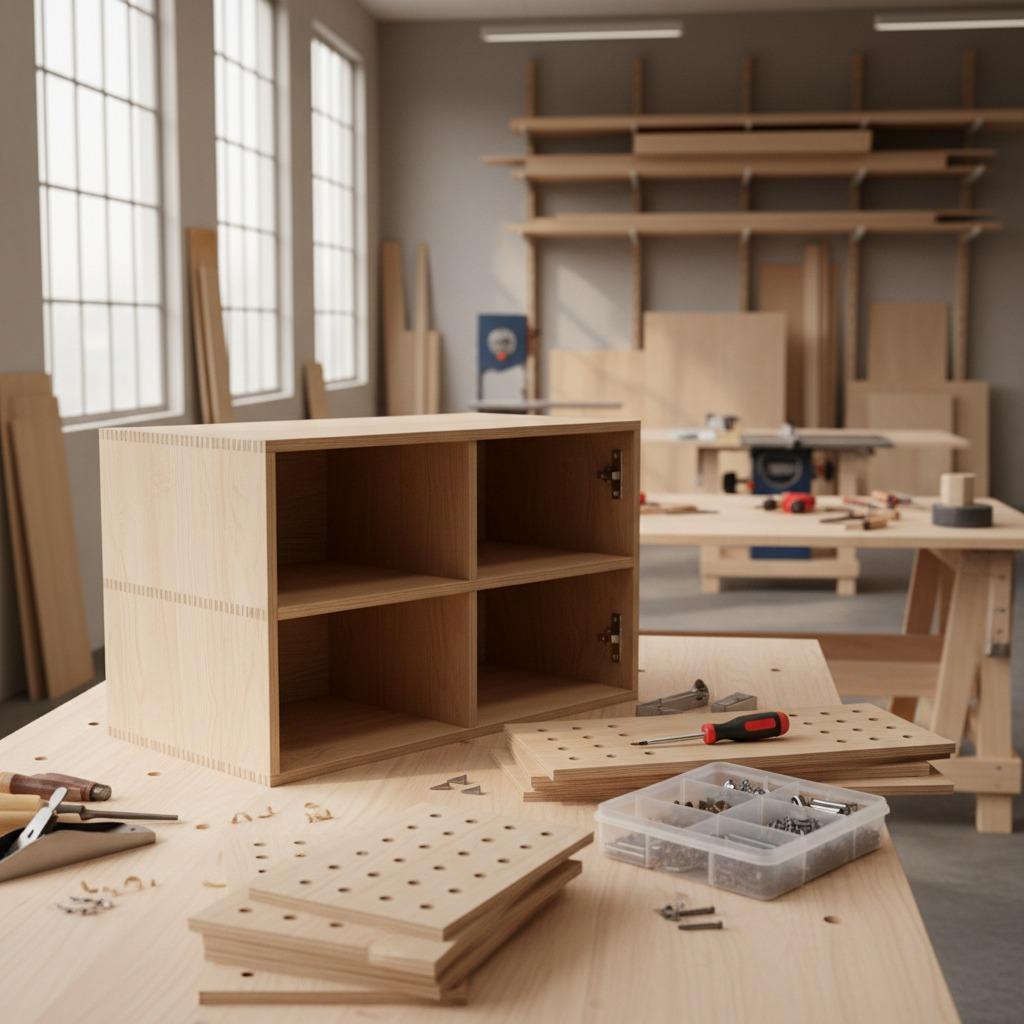 A visible screw can make a cabinet look unfinished, even when the panel work is clean.
That is one reason furniture buyers keep paying attention to concealed furniture connectors. They help hide the joint, keep the outside surface tidy, and give cabinets, shelves, storage boxes, and modular units a more finished appearance.
But appearance is only part of the story.
A hidden connector still has to pull panels together correctly. It has to fit the drilled holes. It needs to hold during transport, installation, and daily use. If the part is difficult to install or does not match the board structure, the clean exterior quickly loses its value.
This is why choosing a concealed furniture connector supplier is not only a design decision. For furniture manufacturers, cabinet makers, sourcing teams, and OEM buyers, the supplier affects assembly efficiency, dimensional consistency, rework risk, and whether the hardware can be repeated across production batches.
A hidden connector should make the furniture look simpler. It should not make production more complicated.
Start with the cabinet structure, not the connector photo
A connector may look perfect in a catalog photo.
The finish is clean. The size appears compact. The supplier says it is suitable for cabinets, shelving, or panel furniture. That information helps, but it does not prove the part will work in your product.
A concealed connector depends heavily on the surrounding panel system.
Board thickness, hole diameter, drilling depth, edge distance, and installation direction all matter. If the hole is too shallow, the connector may not seat properly. If the board is too thin, the fitting may weaken the panel edge. If the connector requires a tight installation angle, workers may struggle once the cabinet structure is partly assembled.
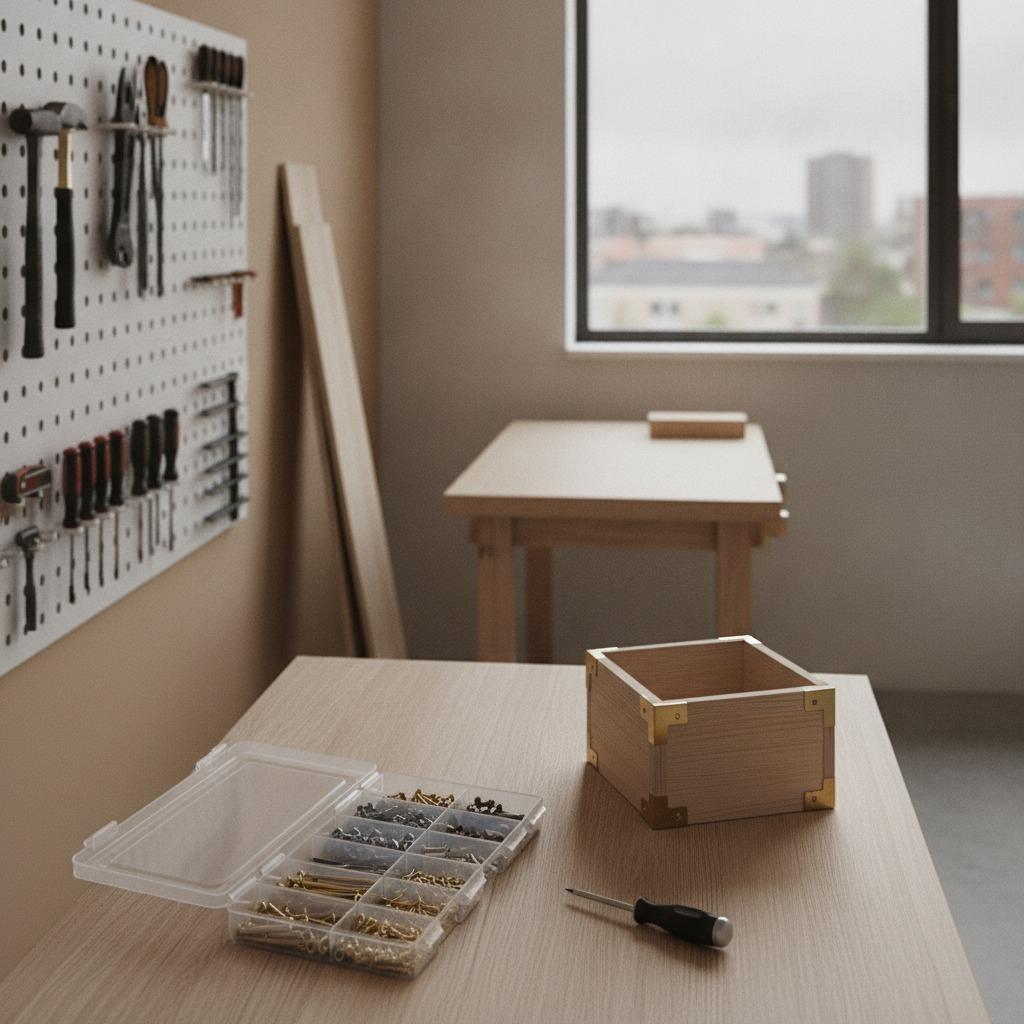
For a small cabinet or open-front storage box, the issue becomes even more obvious.
There is not much room to hide mistakes. A divider shelf, side panel, or base panel may all transfer load through the same joint area. If the connector does not pull the panels square, the whole box can feel slightly off.
That is why buyers should send panel drawings, not only connector photos.
A useful inquiry should include panel thickness, material, drilling layout, assembly sequence, and whether the furniture is shipped flat-packed or already assembled. With that information, the supplier can judge the connector as part of the cabinet, not as a loose hardware item.
Concealed joints are not automatically stronger
Hidden hardware often looks more refined, but it is not always the stronger choice by default.
A concealed furniture connector must be judged by fit, load path, and installation quality. A poorly matched hidden connector can loosen, split the board, or create awkward assembly steps. In some cases, a visible bracket may actually be stronger or easier to service.
The right choice depends on the product.
For a decorative wall shelf, the priority may be a clean exterior. For workshop storage, strength and easy repair may matter more. For flat-pack furniture, the connector must be understandable to the end user. For built-in cabinetry, installers may need access for adjustment after the unit is positioned.
A good concealed connector solves both appearance and function.
If it only hides the joint but slows assembly or reduces stability, it is not the right part.
The panel material changes everything
Furniture panels may look similar from the outside, but fasteners do not behave the same in every board.
MDF, particleboard, plywood, solid wood, and veneered engineered panels all respond differently to drilling and tightening. A connector that holds well in plywood may feel weak in a softer particleboard core. A fitting that works in a thick side panel may be risky near the edge of a thinner divider.
Buyers should be careful with assumptions here.
The supplier needs to know the actual board material or at least the intended panel category. If possible, test the connector in the same material used for production.
During testing, pay attention to practical details:
- Does the connector sit flush?
- Does it pull the panels together without forcing them?
- Does the board edge remain clean?
- Does the joint stay square after movement?
- Can workers install it without special handling?
- Can the connector be removed or adjusted if needed?
A hidden connector often fails quietly at first. The panel still assembles, but the joint feels slightly loose or the alignment is not quite right. Those small issues become more expensive once the product reaches volume production.
CNC drilling helps, but only when the hardware is matched
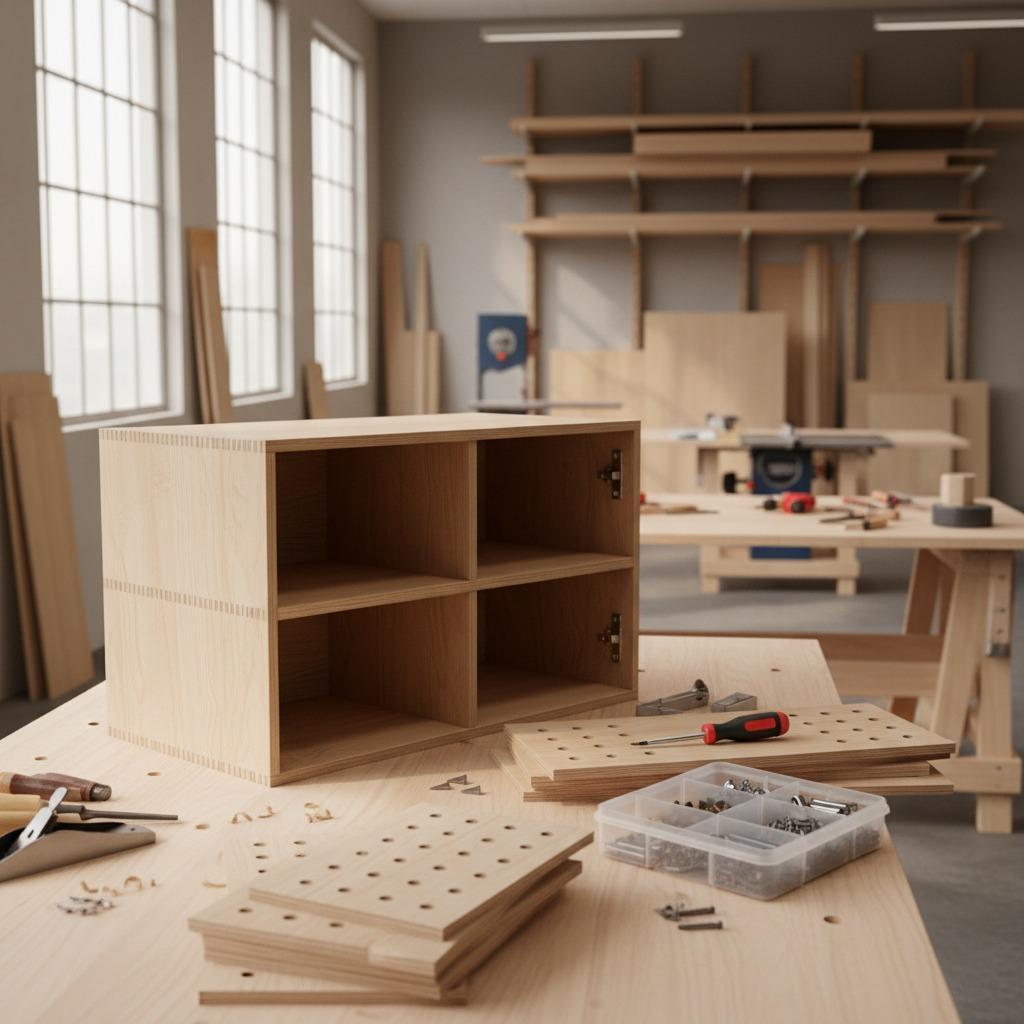
Many panel furniture products use CNC drilling or controlled jig drilling.
That is a good foundation for concealed furniture connectors because hidden joints usually need accurate hole placement. Even small shifts can affect engagement, depth, or clamping force.
Still, CNC drilling does not guarantee success.
The connector must be designed around the drilling pattern. The drill diameter must match the fitting. The installation depth must leave enough material around the joint. If the hardware and the machining plan are developed separately, the assembly may still become awkward.
For buyers, the practical question is not only whether the supplier can provide the connector.
The question is whether the supplier understands how the connector works with prepared panels.
A capable furniture connector supplier should be able to review the hole pattern, suggest adjustments when needed, and explain what dimensional areas are critical. If the response is only a price quote and a product image, the buyer may need to do more engineering work alone.
Hidden connectors still need supporting fasteners
A concealed furniture connector is rarely the only part in the joint system.
It may work with screws, inserts, dowels, sleeves, bolts, plugs, or caps. These smaller parts can decide whether the final joint performs well.
A dowel may help align panels before the hidden connector tightens. A screw may hold a secondary fitting in place. An insert may provide a stronger thread inside engineered wood. A plastic cap may cover an access hole after installation.
If one supporting part is wrong, the hidden connector may not perform as intended.
This is why buyers should evaluate the whole hardware stack, not just the main connector.
Jiangmen Jinhe Hardware Co., Ltd. focuses on machine screws, self-tapping screws, micro screws, precision screws, standard fasteners, and non-standard customized components. For furniture buyers, that broader fastener capability can be useful when a concealed connector system requires companion screws or project-specific fastening parts.
The connector may be the visible topic in the sourcing discussion. The surrounding fasteners often decide whether it works smoothly.
Customization should solve a real production issue
Some concealed connector projects can use standard hardware.
That is often the easiest route. Standard components usually offer faster delivery, easier replacement, and lower long-term sourcing risk.
Other furniture designs need customization.
A cabinet may use an unusual panel thickness. The connector may need a shorter screw. The installation space may be narrow. The buyer may want a hidden joint but cannot change the existing hole pattern. In those cases, custom furniture fasteners or modified components may be necessary.
Customization can help, but it should have a clear purpose.
A non-standard part creates drawings, samples, approval steps, tooling questions, minimum quantities, and repeat-order control. If a standard connector works reliably, forcing customization may only add complexity.
A good concealed furniture connector supplier should be honest about this. The best answer is not always “make a new part.” Sometimes the better answer is to adjust the drilling layout, change the assembly order, or use a proven connector with the correct companion fastener.
Inspection matters because defects are hidden too
With exposed hardware, some problems are easy to see.
With concealed hardware, many issues do not show up until the product is assembled.
A connector may look normal before installation but fail to engage properly. A screw may be slightly too long. A hole may be technically close but still produce a loose joint. Once the cabinet is complete, finding the problem takes more time.
For this reason, inspection should focus on the dimensions that affect assembly.
Useful checks may include connector length, diameter, thread quality, screw fit, surface finish, hole compatibility, plating condition, and packaging accuracy.
Jiangmen Jinhe Hardware notes that products are inspected before delivery and supplied with necessary documentation. For buyers, that is a useful baseline. Still, furniture-specific testing remains important.
A hardware part can pass a general inspection and still be unsuitable for one cabinet structure.
The safest approach is to test samples in real panels before approving a larger order.
Packaging can make or break the assembly experience
Hidden connectors are often small and easy to confuse.
If a furniture kit includes several screws, inserts, dowels, caps, and concealed fittings, packaging becomes part of the quality system. One missing connector or one mixed screw length can stop assembly.
For flat-pack products, the problem is worse because the final user may not have spare parts or technical knowledge.
A proper kit should make the hardware easy to identify. Similar components may need separate bags. Labels should match the assembly instructions. If the product uses several concealed connector types, the packaging should prevent them from being mixed.
Buyers should confirm:
- Quantity per kit
- Component separation
- Label information
- Furniture model number
- Spare-part policy
- Packing format
- Counting method
- Final inspection process
Packaging may look like a small detail, but it affects the person who opens the carton.
A clean hidden joint begins with an organized hardware kit.
Supplier response speed matters when the line is waiting
A hardware mismatch is rarely discovered at a convenient time.
It may appear when a pilot run is already underway, when a shipment is being packed, or when installers are waiting on-site. At that point, a slow supplier response can cost more than the hardware itself.
Jiangmen Jinhe states that customer support responds within 30–60 minutes and provides solutions within two hours for issues. Buyers should confirm service expectations during real cooperation, but the underlying point is practical.
When concealed connectors affect production, communication speed matters.
The supplier should be able to check drawings, confirm dimensions, review samples, identify possible causes, and suggest a correction quickly.
A vague reply such as “please try again” is not enough when a cabinet line is blocked.
Common mistakes buyers should avoid
One common mistake is assuming all concealed furniture connectors are interchangeable.
They are not.
Two connectors may appear similar but require different hole depths, screw lengths, panel thicknesses, or installation methods. A part that works in one cabinet may fail in another.
Another mistake is focusing only on appearance.
Hidden hardware improves the look of the product, but appearance does not replace strength, repeatability, or ease of assembly.
A third mistake is testing the connector without the actual panel.
Loose-part inspection is useful, but it cannot reveal how the connector behaves inside MDF, particleboard, plywood, or a finished veneer panel.
Buyers also sometimes ignore packaging until late in the project.
If the hardware must be packed with flat-pack furniture, labels, separation, and count accuracy should be planned before mass production.
Finally, some buyers choose the lowest-price supplier without considering rework.
A cheap connector is not cheap if it creates slow assembly, misaligned cabinets, replacement shipments, or customer complaints.
What to ask before placing an order
Before choosing a concealed furniture connector supplier, buyers should ask practical questions:
Which panel thickness is this connector designed for?
What hole diameter and depth are required?
What board materials has it been tested with?
Does it need a matching screw, insert, dowel, or sleeve?
Can the connector be used in flat-pack furniture?
Can samples be tested in our actual cabinet structure?
What material and surface finish are used?
Can non-standard dimensions be supported?
What inspection documents are available?
Can the parts be packed by furniture model or assembly step?
How are repeat orders controlled?
What is the response process if a fit issue appears?
The answers should be specific.
A supplier that understands panel furniture will usually talk about drilling, assembly, tolerance, and packaging—not only price.
Where concealed connectors are most useful
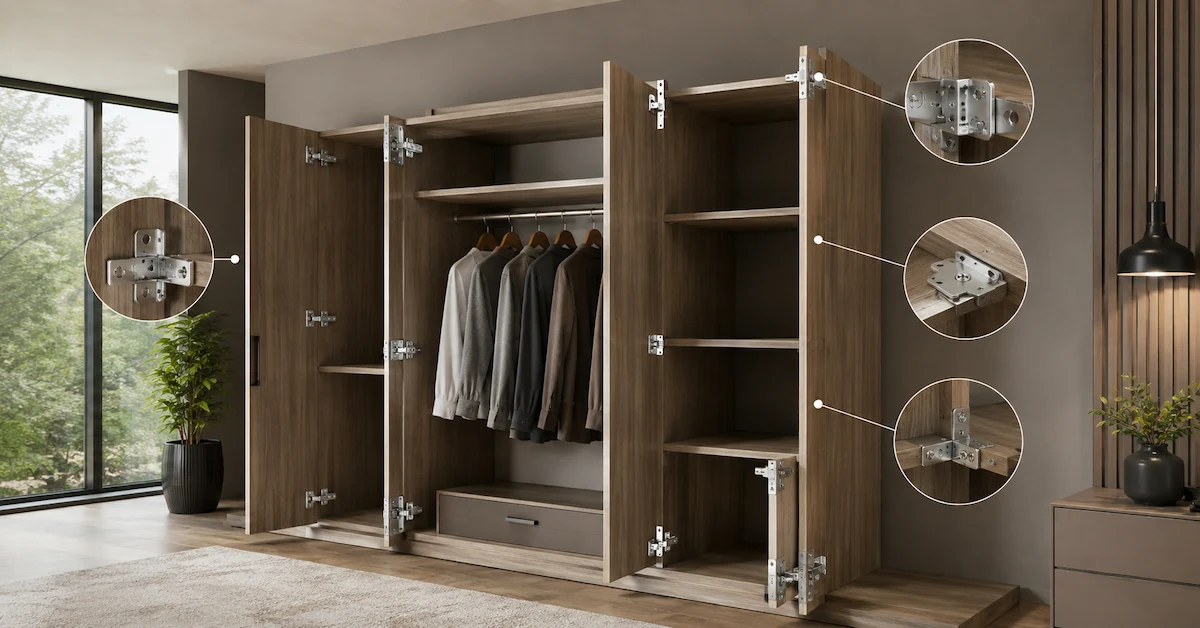
Concealed furniture connectors are often used in products where appearance and efficient assembly both matter.
Common applications include:
- Cabinet boxes
- Modular shelving
- Workshop storage
- Office storage
- Built-in furniture
- Flat-pack furniture
- Wardrobes
- Drawer units
- Compact storage cabinets
- Custom panel furniture
They are especially useful when exposed screws or brackets would make the product look unfinished.
However, they should be selected with the full product lifecycle in mind. Will the furniture be assembled once and left alone? Will it be moved often? Will customers assemble it themselves? Will installers need access for adjustment later?
The hidden connector should suit the way the furniture will actually be used.
Frequently Asked Questions
Do concealed connectors always make furniture better?
No. They can improve appearance and support clean assembly, but only when they match the panel material, drilling pattern, load, and installation method.
Can concealed furniture connectors be used in flat-pack furniture?
Yes, if the connector is designed for repeatable installation and the packaging clearly supports the assembly process.
What should buyers test before bulk ordering?
Buyers should test connector fit, hole compatibility, panel strength, installation effort, joint stability, and whether supporting fasteners match the system.
Are custom concealed connectors always necessary?
No. Standard connectors are often better when they work reliably. Customization is useful when the furniture design has a specific dimensional, structural, or installation requirement.
Why does packaging matter for concealed connectors?
Because concealed connector systems often include several small matching parts. If one part is missing, mixed, or mislabeled, assembly may stop.
What makes a supplier worth shortlisting?
A strong supplier should understand fasteners, panel furniture, documentation, inspection, customization, packaging, and repeat-order control.
A good concealed connector should disappear in use
The best hidden hardware does not call attention to itself.
The panels close neatly. The outside surface stays clean. The joint holds. Workers do not need to fight the installation. The next order performs like the approved sample.
That quiet result is what buyers should expect from a capable concealed furniture connector supplier.
For concealed furniture connectors, cabinet connector hardware, standard fasteners, custom furniture fasteners, and non-standard hardware support, Jiangmen Jinhe Hardware Co., Ltd. can discuss material options, dimensions, sample testing, packaging, inspection, and supply requirements.
Start with the cabinet drawing, panel material, board thickness, hole pattern, assembly method, and expected order quantity.