
Custom Fastener Packaging Supplier: Why Packaging Problems Start on the Assembly Bench
 Fastener packaging rarely causes concern when everything is still on a quotation sheet.
The problem shows up later, usually at the worst possible moment. A worker opens a carton and finds two screw lengths mixed together. A washer bag is short. A spacer that belongs to one cabinet model has slipped into another kit. Someone checks the drawing, someone else checks the packing list, and the line slows down over a part that costs almost nothing.
That is the strange thing about small hardware. The parts are cheap, but the confusion around them is not.
For furniture factories, cabinet shops, repair teams, e-commerce sellers, and hardware distributors, packaging is not just the final step before shipment. It decides whether the right fastener reaches the right person at the right time, in a condition that can actually be used.
This is where a custom fastener packaging supplier becomes important. The supplier is not simply putting screws into bags. It is helping control counting, sorting, labeling, protection, and the way small parts move through production.
The package should solve a workbench problem first
Many buyers think about packaging from the warehouse side: carton size, pallet quantity, shipping weight, storage space.
Those details matter, of course.
But the real test often happens on the bench.
A worker does not want to open five bags to find one washer. An installer does not want to compare two similar screws by eye. A repair technician does not want a loose assortment that looks complete but is missing one critical fitting.
Good fastener packaging should make the next step easier.
In a furniture or cabinet assembly setup, that may mean clear compartment boxes, separated polybags, labeled hardware bags, or kits arranged by assembly step. In a maintenance program, it may mean one repair set per machine model. In e-commerce, it may mean stronger packaging that keeps parts from tearing through the bag during delivery.
The right format depends on where the parts are actually used.
A package that is convenient for the warehouse but annoying on the assembly bench has only moved the labor cost downstream.
Mixed hardware needs more control than bulk screws
A single screw type packed in bulk is straightforward. Count it, bag it, label it, ship it.
Mixed hardware is different.
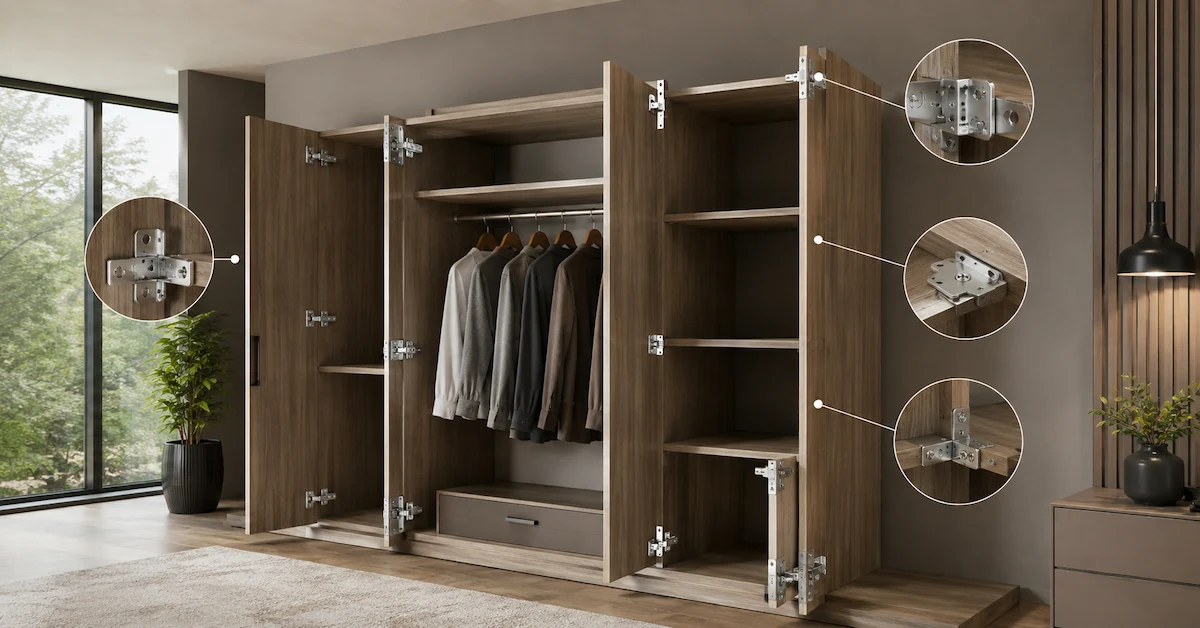
A cabinet kit may include short screws, long screws, washers, nuts, spacers, standoffs, brackets, plastic caps, and special fittings. Some parts look almost the same. Others have different finishes or materials. A few may be essential even though they are tiny.
Once those parts are mixed, someone has to sort them again.
That is why custom screw packaging should start with the bill of materials, not only with the carton. The supplier needs to know which parts must stay separate, which parts can be packed together, and which items are easy to confuse.
For example, two screw lengths may need separate bags even if they use the same finish. A plated bracket may need protection from rubbing against threaded parts. A small plastic spacer may need its own cavity or label because it is easy to overlook.
The goal is not pretty packaging.
The goal is fewer mistakes.
Clear organizers are useful because people are busy
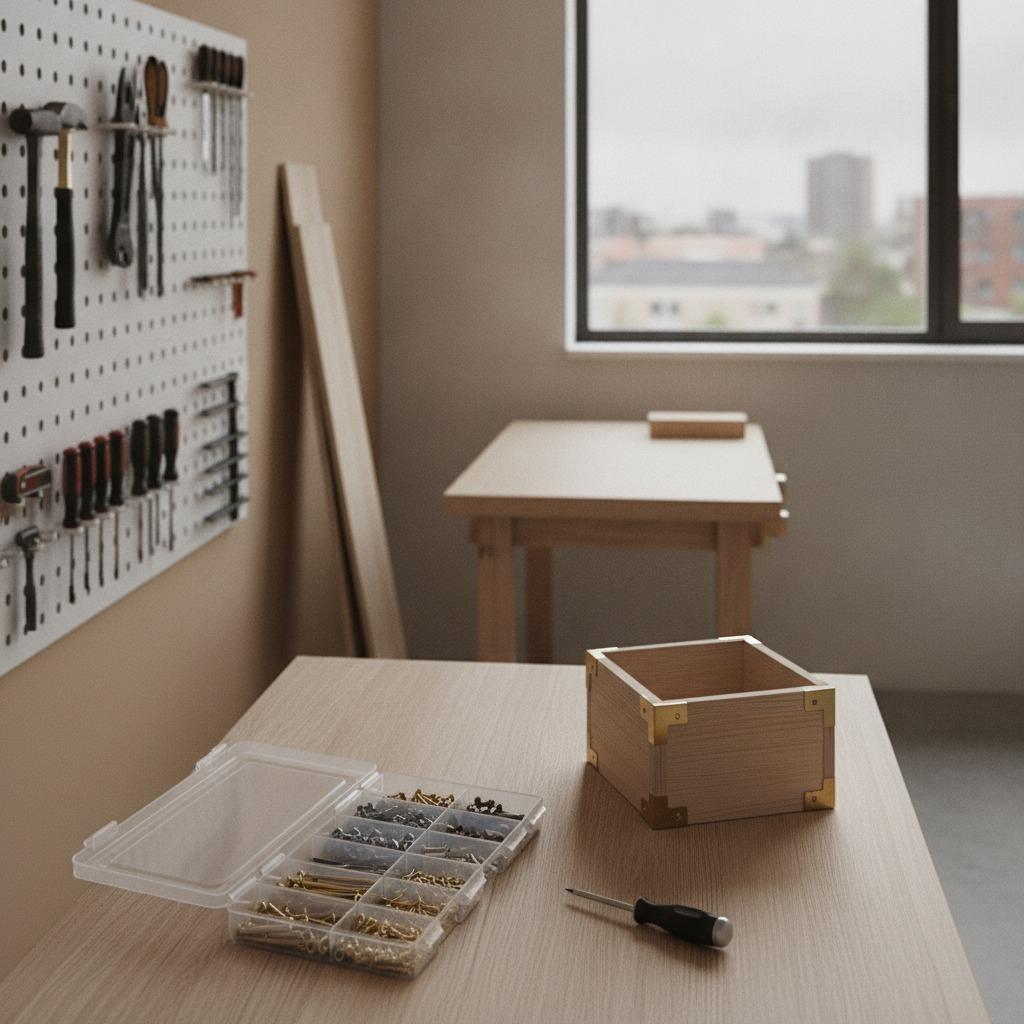
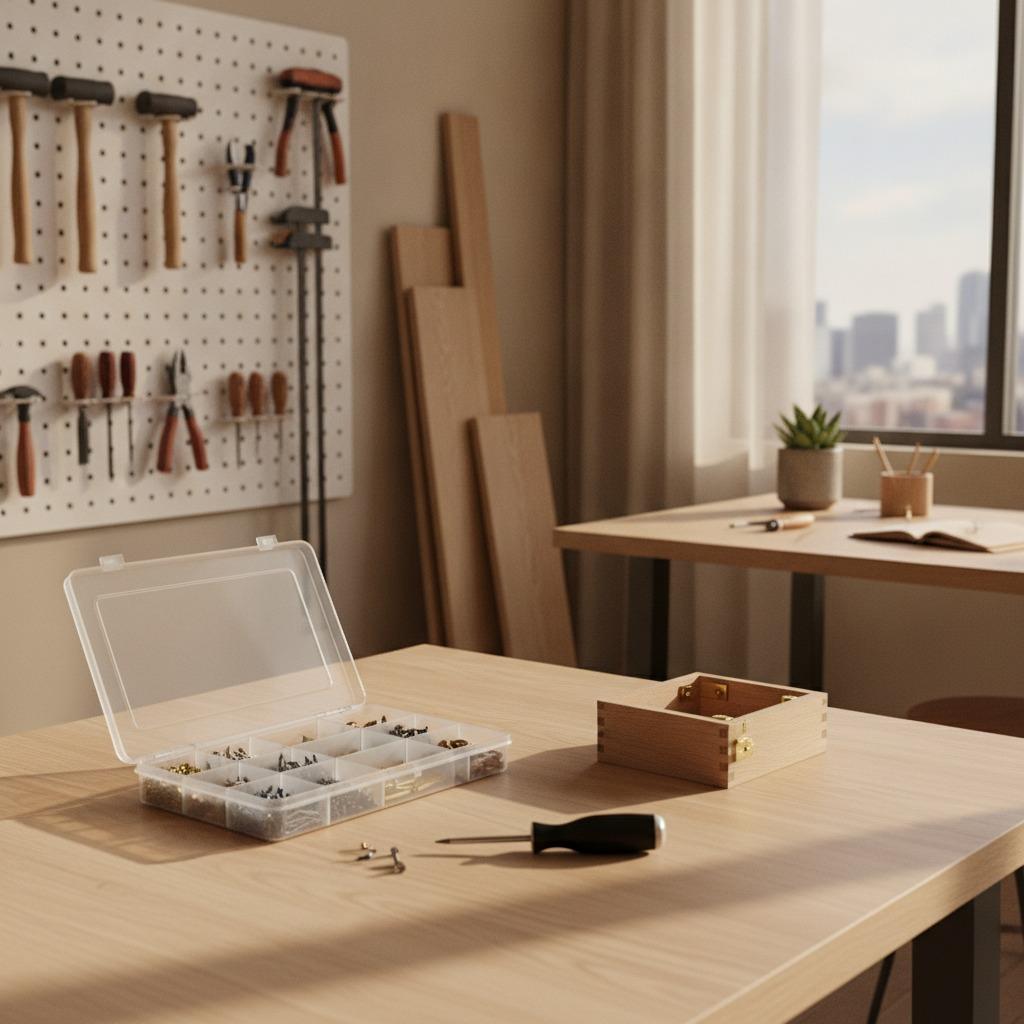
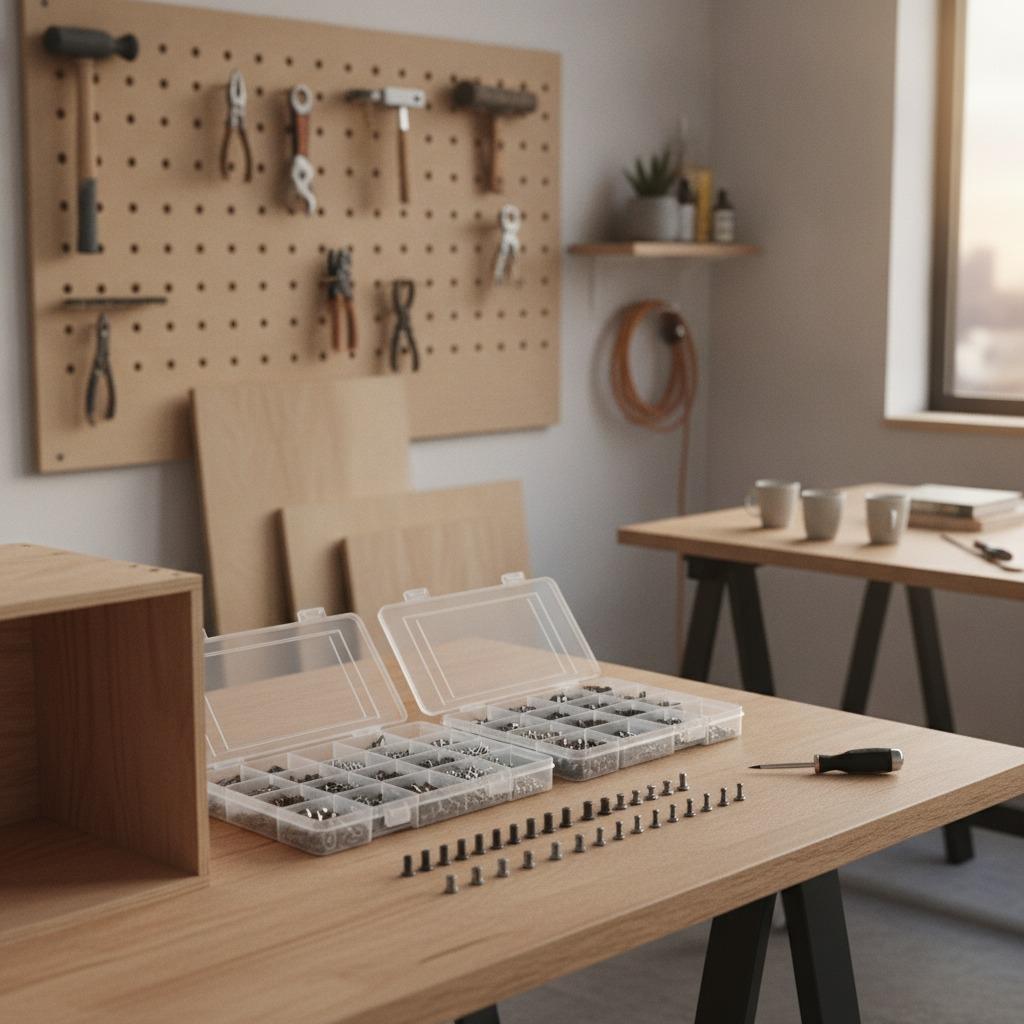
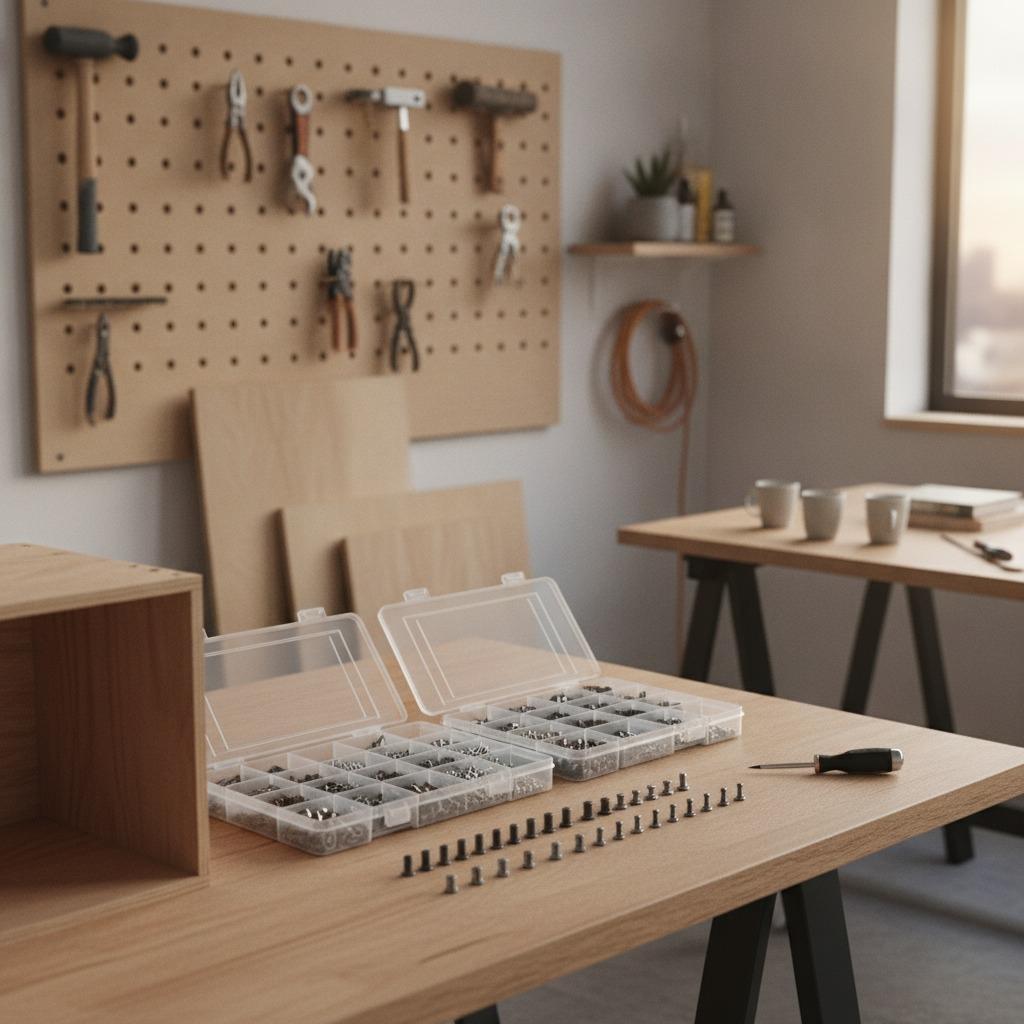
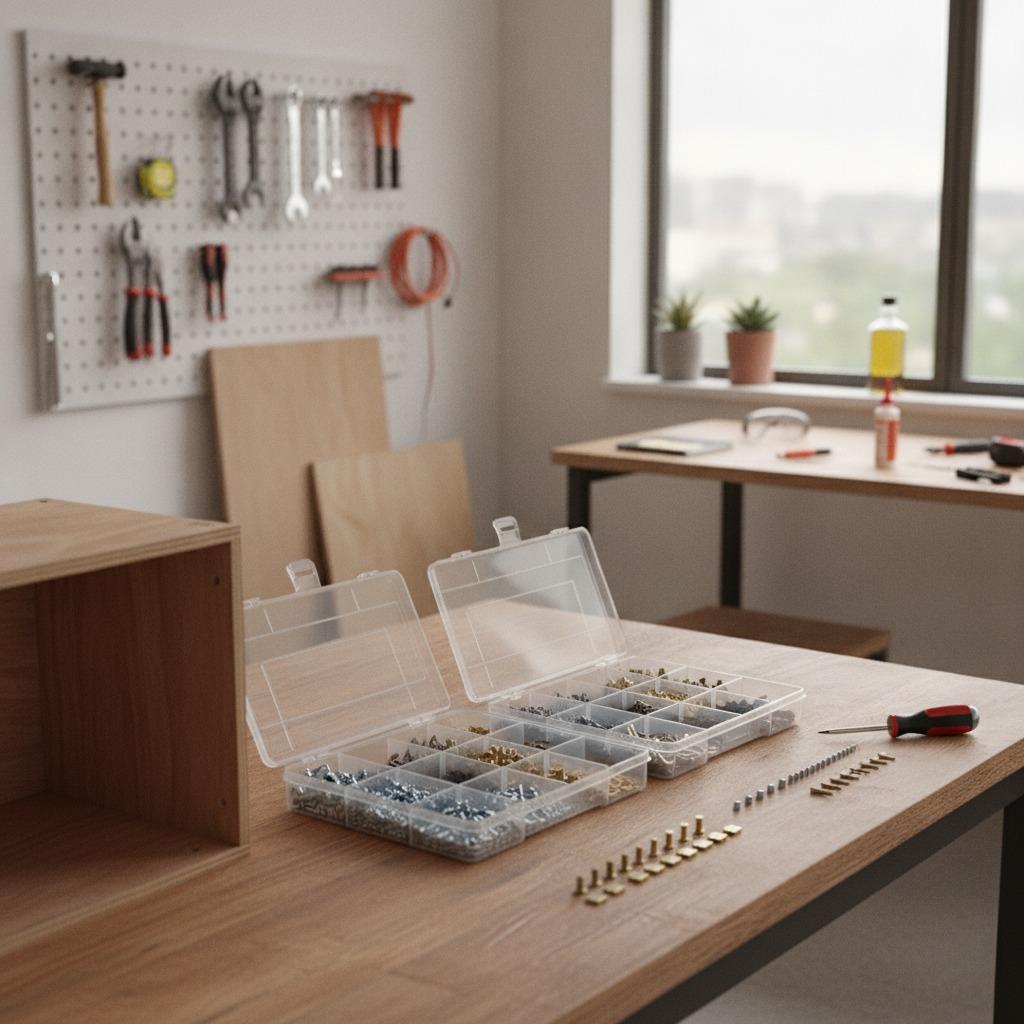
The image of fasteners arranged in clear-lid compartment boxes tells a very practical story.
This is how many workshops actually work. Parts are grouped by type, visible through the lid, and kept close to the assembly area. Nobody wants to waste time opening every container just to find one small fitting.
That visibility saves a few seconds each time.
Across a day, those seconds matter.
Clear organizers, trays, or divided boxes are useful when workers need repeated access to a known set of parts. They are especially helpful for cabinet hardware, furniture assembly kits, workshop repair sets, and prototype builds.
Still, visibility alone is not enough.
If the divider layout is poor, parts can migrate. If similar components sit too close together, workers may still pick the wrong one. If the box is useful on the bench but weak during shipping, the parts may arrive scattered.
A good packaging design has to consider both movement and use.
It should survive the journey and remain logical once opened.
Bags, trays, boxes, and blister packs all have a place
There is no universal best packaging format for fasteners.
Bulk cartons work when the buyer has its own sorting system or when a production line consumes one part number in large quantities.
Small polybags are flexible and economical. They suit simple kits, spare parts, and model-specific packs, provided counting and labels are controlled.
Compartment trays are better when visibility and separation matter. They work well for furniture hardware, cabinet accessories, repair assortments, and mixed fastener sets.
Blister packs or retail-ready boxes make sense when the product needs shelf presentation, barcodes, instructions, or customer-facing branding.
The wrong choice creates hidden cost.
A low-cost bag may save money during packing but create extra sorting later. A beautiful retail box may be unnecessary for an industrial refill kit. A bulky organizer may look professional but increase shipping volume too much.
A capable fastener packaging supplier should recommend the format around the job, not around what is easiest to pack.
Labels are not decoration
In B2B fastener supply, labels carry real work.
They help warehouse staff identify parts quickly. They help incoming inspection confirm the shipment. They help assembly workers avoid the wrong component. They help buyers trace a batch if something goes wrong.
A label may need to include:
- Part number
- Quantity
- Material or finish
- Customer SKU
- Product model
- Assembly step
- Batch or lot number
- Barcode or QR code
- Revision information
Not every project needs all of this. Too much information can be just as confusing as too little.
The best label is the one that answers the user’s next question quickly.
If the pack is for a cabinet kit, the label may need a furniture model number and component count. If it is for maintenance, the machine model may matter more. If it is for export retail sales, barcode and multilingual information may become important.
Packaging becomes much more reliable when the label is treated as part of the specification.
Counting errors are usually process errors
A missing washer is easy to blame on a worker.
In many cases, it is really a process problem.
The packaging method may rely too heavily on manual counting. Similar parts may not be separated before bagging. The label may not match the packing instruction. The check method may verify weight but not the actual component mix.
Weight checks can be useful, but they have limits.
A missing small washer may be offset by an extra screw. Two similar parts may pass a weight check even if the wrong one is inside. For mixed hardware kits, counting should often be combined with visual separation, divided trays, automatic counters, barcode checks, or final inspection.
Buyers should ask the supplier how counting is done.
Not in general terms. Specifically.
How are similar screws separated?
How is the quantity verified?
Who checks the label?
What happens when the count does not match?
Is there a reference sample for repeat orders?
These details decide whether the packaging process can be trusted.
Protection matters when finishes and threads matter
Fasteners are not always rugged enough to be thrown together.
Threads can be damaged. Plated finishes can scratch. Black-coated parts can mark lighter plastic pieces. Brass-colored inserts can rub against steel brackets. Moisture can affect some finishes during storage or shipping.
If the parts are hidden inside a machine, a minor scuff may not matter.
If they are visible in a retail hardware kit or furniture assembly pack, it does.
Packaging should protect the parts according to how they will be used.
That may involve thicker bags, separate compartments, desiccant, inner wrapping, carton dividers, or simply keeping abrasive parts away from finished surfaces.
Overpacking wastes money. Underpacking creates complaints.
The supplier should understand which parts are sensitive and which are not.
The packaging plan should follow the BOM
For OEM fastener packaging, the bill of materials is the foundation.
The BOM defines which parts are included, how many are required, and which product version the kit belongs to. If the BOM changes and the packaging instruction does not, mistakes are almost guaranteed.
This is common in furniture, electronics, appliances, and repair programs.
A screw length changes. A spacer is added. A washer is removed. A bracket supplier changes. The product still looks nearly the same, but the kit is no longer identical.
If the packaging process is not revision-controlled, old and new kits may mix.
That is why buyers should ask how packaging changes are approved. A good supplier should be able to track BOM revisions, label changes, packing instructions, and reference samples.
Quiet substitutions are dangerous.
A part may look close enough to the supplier but still fail in the buyer’s assembly process.
What a capable supplier should understand
A custom fastener packaging supplier should understand both the hardware and the workflow.
It should know that a precision screw is not packed the same way as a furniture connector. A mixed cabinet hardware kit is not handled like a bulk carton of washers. A retail pack needs different thinking from a line-side refill box.
Jiangmen Jinhe Hardware Co., Ltd. focuses on fasteners and standard parts, including machine screws, self-tapping screws, micro screws, precision screws, and non-standard customized components. Its material range includes stainless steel, iron, and aluminum.
That fastener background matters because packaging decisions depend on the product itself. A supplier familiar with screws, fittings, and custom hardware is better positioned to discuss count accuracy, surface protection, kit layout, and part separation.
The company also notes support for non-standard customization, logistics, warehousing, international freight forwarding, and supply chain services. For buyers managing furniture, appliances, electronics, building materials, or export hardware programs, that combination can reduce handoffs between different suppliers.
Still, every packaging requirement should be confirmed project by project.
There is no standard pack that fits every line, channel, or customer.
Do not approve packaging from appearance alone
A package can look clean in a photo and still fail in use.
The bag may tear during transit. The label may peel in humid storage. The parts may shift into another compartment. The tray may be too large for the buyer’s carton. The pack may look organized but take too long to fill.
This is why physical samples matter.
Buyers should test the package with real parts, under conditions close to real handling. Open it. Shake it. Stack it. Let the assembly team use it. Ask whether the label is clear and whether the parts are easy to identify.
The people using the package usually see weak points quickly.
If workers still need to sort parts after opening the pack, the packaging has not solved enough.
Common mistakes buyers should avoid
One mistake is treating packaging as a late-stage choice.
By the time sorting problems show up on the line, the buyer is already paying for the mistake in labor.
Another mistake is chasing the cheapest packaging without calculating handling cost.
The lowest pack price may create higher sorting, inspection, repacking, or replacement costs.
A third mistake is asking for one universal package across too many products.
A workshop refill pack, e-commerce pack, retail blister pack, and production-line kit may need different formats.
Buyers also sometimes overlook document control.
If labels, quantities, or part versions change without approval, the kit may look correct while quietly creating assembly errors.
What buyers should define before asking for a quote
Before requesting prices, buyers should prepare the basic packaging requirement.
Start with the use case.
Is the package for line-side assembly, furniture hardware kits, maintenance teams, retail sale, e-commerce shipment, export distribution, or spare parts?
Then define the parts.
Which fasteners are included? Which look similar? Which finishes need protection? Which components must never be mixed?
Then define the label.
What information must be visible? Does the pack need a barcode, SKU, model number, lot number, assembly step, or revision code?
Then define the count.
How many parts per bag, tray, box, or carton? Is a spare quantity required? How will shortages be checked?
These details help the supplier quote accurately and prevent assumptions from entering the project.
Questions worth asking a fastener packaging supplier
Before placing an order, buyers should ask:
Can you pack by part number, kit, or assembly step?
How do you count small mixed parts?
Can similar fasteners be separated?
Can labels include customer SKUs or barcodes?
Can you protect plated or visible parts from scratching?
What packaging formats do you support?
How are BOM or label revisions controlled?
Can you provide inspection records?
Can you support warehousing or export logistics?
How quickly do you respond if a packaging issue is found?
The supplier’s answers should be practical and specific.
A simple “we can pack as required” is not enough when the kit supports production.
Frequently Asked Questions
Can one packaging format work for all fasteners?
Usually not. Different screws, washers, nuts, spacers, brackets, and precision parts may need different separation, protection, and labeling.
Is custom packaging only useful for large orders?
No. Smaller programs can also benefit when parts are easy to confuse, the kit is complex, or missing components create expensive delays.
Are polybags enough for mixed fastener kits?
Sometimes. For simple kits, polybags work well. For complex or similar-looking parts, buyers may need separated bags, trays, labels, or stronger verification.
Should packaging be designed for the warehouse or the assembly bench?
The assembly bench should usually come first. Warehouse efficiency matters, but the package should save time where the parts are actually used.
How can missing parts be reduced?
Use a controlled BOM, reliable counting method, separated packing, clear labels, final inspection, and approved reference samples.
What should buyers send before requesting a quote?
Send the parts list, quantities, drawings or photos, finish requirements, target packaging format, label needs, usage scenario, and expected order volume.
Good packaging keeps production from guessing
Fastener packaging works best when nobody has to think about it for long.
The right screw is in the right bag. The label is clear. The count is correct. The parts are protected. The assembly team can open the package and move on without sorting, checking, or asking for clarification.
That quiet efficiency is what a capable custom fastener packaging supplier helps create.
For screws, standard parts, customized fasteners, furniture hardware kits, electronics fasteners, maintenance packs, and export-ready hardware programs, Jiangmen Jinhe Hardware Co., Ltd. can discuss fastener production, custom sorting, packaging formats, documentation, warehousing, logistics, and supply chain support.
For direct inquiries:
Tel/WeChat: +86 13729150102
WhatsApp: +86 13322893939
Email: sharon@hkhomeideas.com
Start with the BOM, assembly method, packaging requirement, label information, and delivery schedule.
When the handling process is clear, the right packaging format becomes much easier to choose.