
Custom Fastener Packaging Supplier: Why Better Packing Prevents Costly Assembly Problems
Fastener packaging usually becomes important after something has already gone wrong.
A carton reaches the assembly area, but the washers are mixed with another size. A small screw bag is missing from a furniture kit. Some bright-plated parts arrive scratched because they rubbed against brackets during shipping. A warehouse worker opens three boxes before finding the correct hardware for one order.
The fasteners themselves may be fine. The problem is the way they were counted, separated, labeled, and protected.
That is why working with a custom fastener packaging supplier is not just about putting screws into bags. For manufacturers, furniture brands, maintenance suppliers, hardware wholesalers, and e-commerce sellers, packaging affects labor, assembly flow, inventory control, and customer complaints.
A good package does not make the fastener stronger. It makes the fastener easier to use correctly.
 Small parts create large interruptions
Fasteners are low-cost parts, but they often sit at critical points in production.
A cabinet cannot be completed without the correct connector. A machine housing may wait for one screw size. A repair kit becomes useless if the washer count is wrong. A retail hardware pack may be returned because the customer believes a part is missing, even if it has simply slid behind another component.
The cost of the missing part is tiny. The cost of stopping, checking, repacking, or replacing it is not.
This is the main reason fastener packaging turns into a sourcing issue earlier than many buyers expect.
At the beginning of a project, the focus is usually on price, material, finish, and drawing requirements. Packaging may receive one short line in the quotation: bulk packed, polybag packed, carton packed, or as requested.
That is rarely enough.
The buyer needs to know how the parts will move through the next step. Will workers pull them from bins? Will they be packed into a furniture carton? Will they be sold online? Will a technician open the pack on-site? Will several similar fasteners appear in one kit?
Each situation needs a different packaging answer.
Packaging should be designed around the workbench
A fastener pack should be judged where it is used, not only where it is shipped.
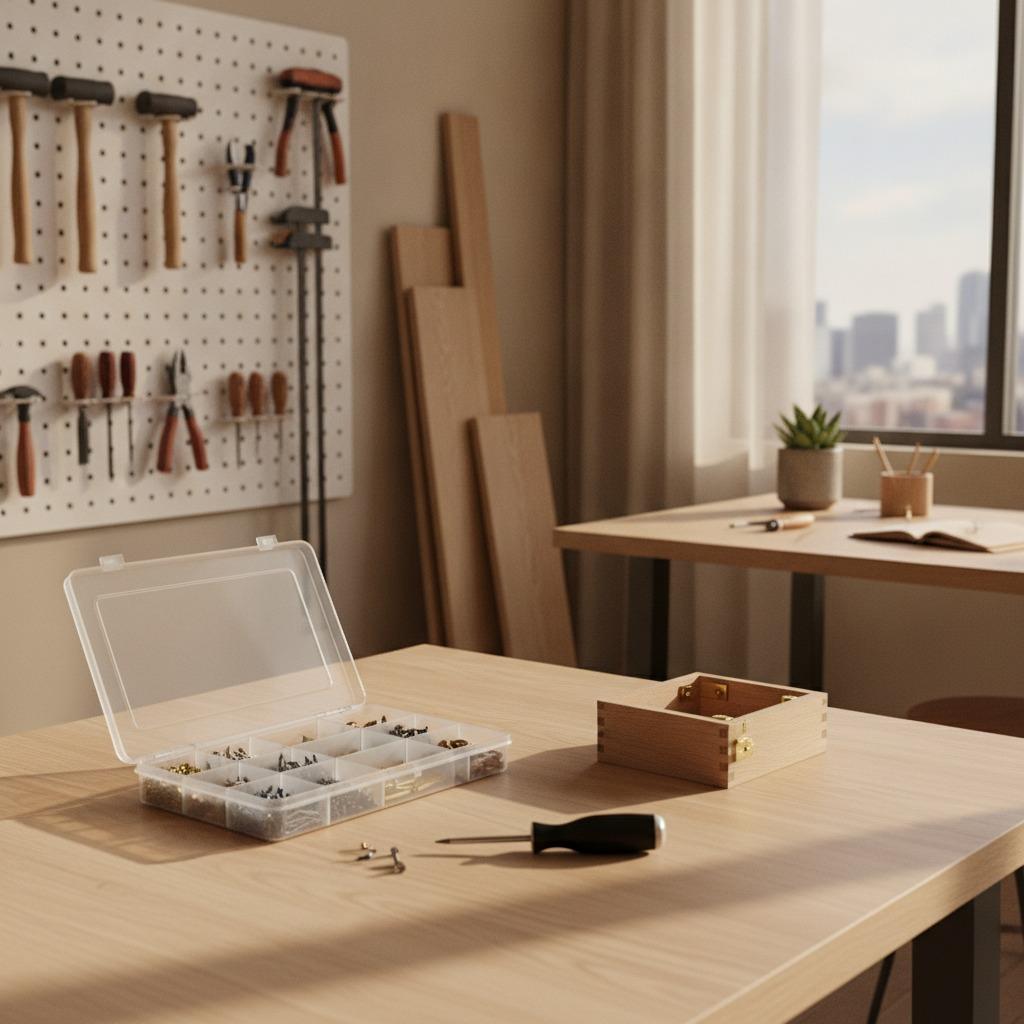
In a workshop, clear compartment trays, labeled bags, and separated part groups can save real time. Workers do not need to open every small packet or compare similar screws by eye. They can take the right part, use it, and move on.
That sounds ordinary. It is exactly the point.
Good packaging removes small decisions from the assembly process.
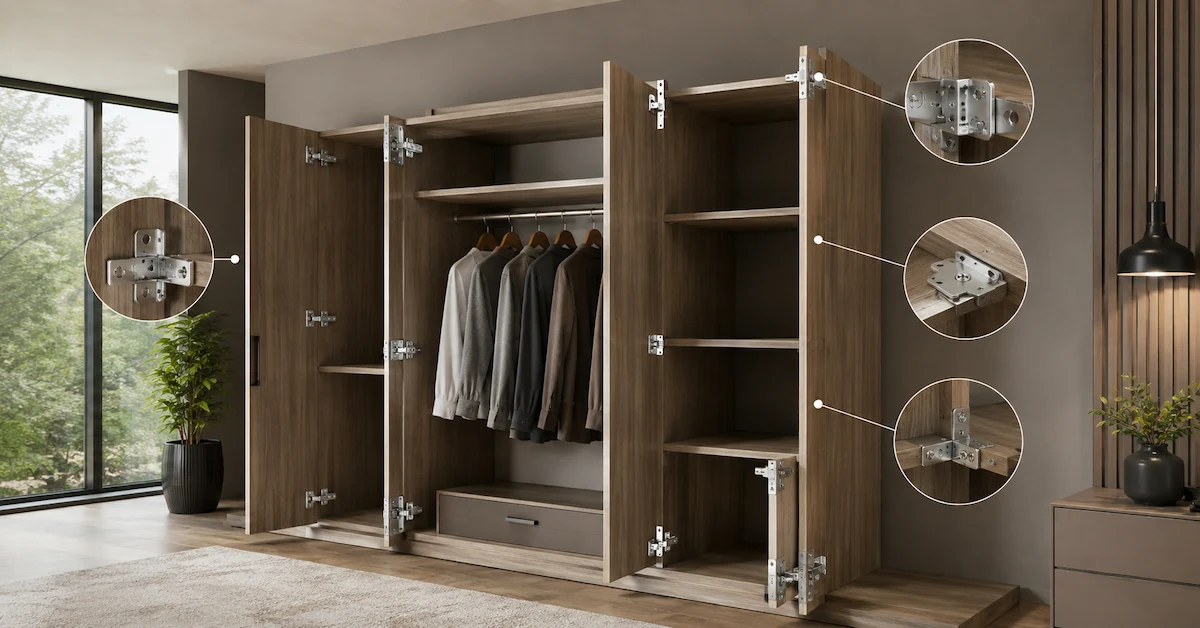
For example, a furniture hardware kit may include short screws, longer screws, washers, corner brackets, plastic caps, dowels, and connector bolts. If everything is mixed into one bag, the worker has to sort before assembly. If the parts are separated by type or step, the package quietly guides the work.
The same logic applies outside furniture.
Electronics screws may need anti-static or precision handling. Maintenance kits need clear labels and traceable part numbers. Retail packs need visibility and clean presentation. E-commerce hardware needs stronger protection against rough transport.
A practical fastener packaging supplier should ask where the parts will be used before recommending the format.
Bulk packing is simple, but not always cheaper
Bulk cartons and loose bags still have a place.
For high-volume production lines with organized bins and experienced workers, bulk packing can be efficient. It reduces packaging material and may lower the unit handling cost.
But bulk packing becomes expensive when the buyer has to sort the parts again.
If screws, nuts, washers, and spacers arrive together but must later be separated into 20,000 furniture kits, the labor has only moved from the supplier to the buyer. The quote may look cheaper, but the total cost has not disappeared.
Bulk packing is usually suitable when:
- One part number is shipped in large quantity
- The buyer has its own sorting system
- The parts are not easily confused
- Surface damage is not a major concern
- The assembly line uses bins or feeders
It is less suitable when the hardware must be packed by product model, assembly step, or customer order.
A low packing price is not useful if it creates extra work at the destination.
Small polybags work when counting is controlled
Small polybags are one of the most common fastener packaging formats.
They are simple, flexible, and economical. A bag can hold one screw type, one kit quantity, one spare-part set, or one repair pack. Labels can include part numbers, barcodes, quantities, customer codes, or assembly-step information.
The weakness is counting accuracy.
A polybag looks correct from the outside only when the contents are easy to verify. Similar screws may be difficult to distinguish. A missing washer may not be visible. A label may be correct while the bag contains the wrong part.
For custom screw packaging, buyers should ask how the supplier verifies quantity and identity.
Possible methods include manual counting, automatic counting, weight checks, divided trays before bagging, barcode control, visual inspection, or a combination of these.
Weight checks are useful for many fasteners, but they are not perfect. One missing light washer may be offset by one extra screw. Similar components can also create a false sense of accuracy.
The more complex the kit, the more important the counting method becomes.
Kitted sets reduce sorting when the BOM is stable
Fastener kitting is valuable when the same set of parts is used repeatedly.
A furniture kit, cabinet accessory pack, appliance repair set, or installation hardware bag may contain several fasteners that belong together. Instead of sending loose parts and letting the buyer build the set later, the supplier prepares the kit according to an approved bill of materials.
This can reduce line-side sorting and make packing more predictable.
A proper kitted set should define:
- Component names
- Part numbers or drawings
- Quantity per kit
- Material and finish
- Label content
- Bag or tray format
- Spare-part policy
- Final verification method
The BOM must be stable. If the product design changes often, the packaging system needs revision control. Otherwise, the supplier may continue packing an old screw length after the buyer has changed the panel thickness or assembly method.
This is where documentation becomes part of packaging, not a separate topic.
The package should reflect the approved product version.
Trays and compartment boxes help when visibility matters
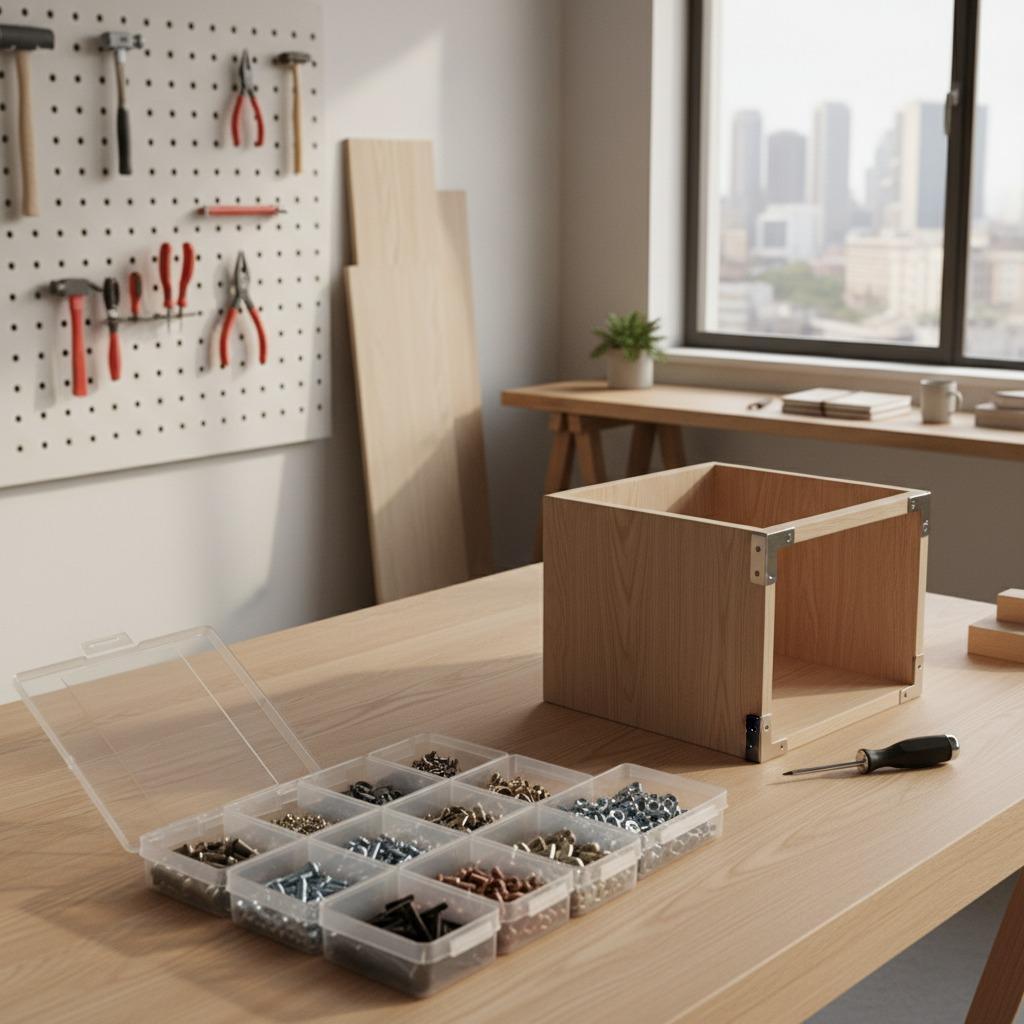
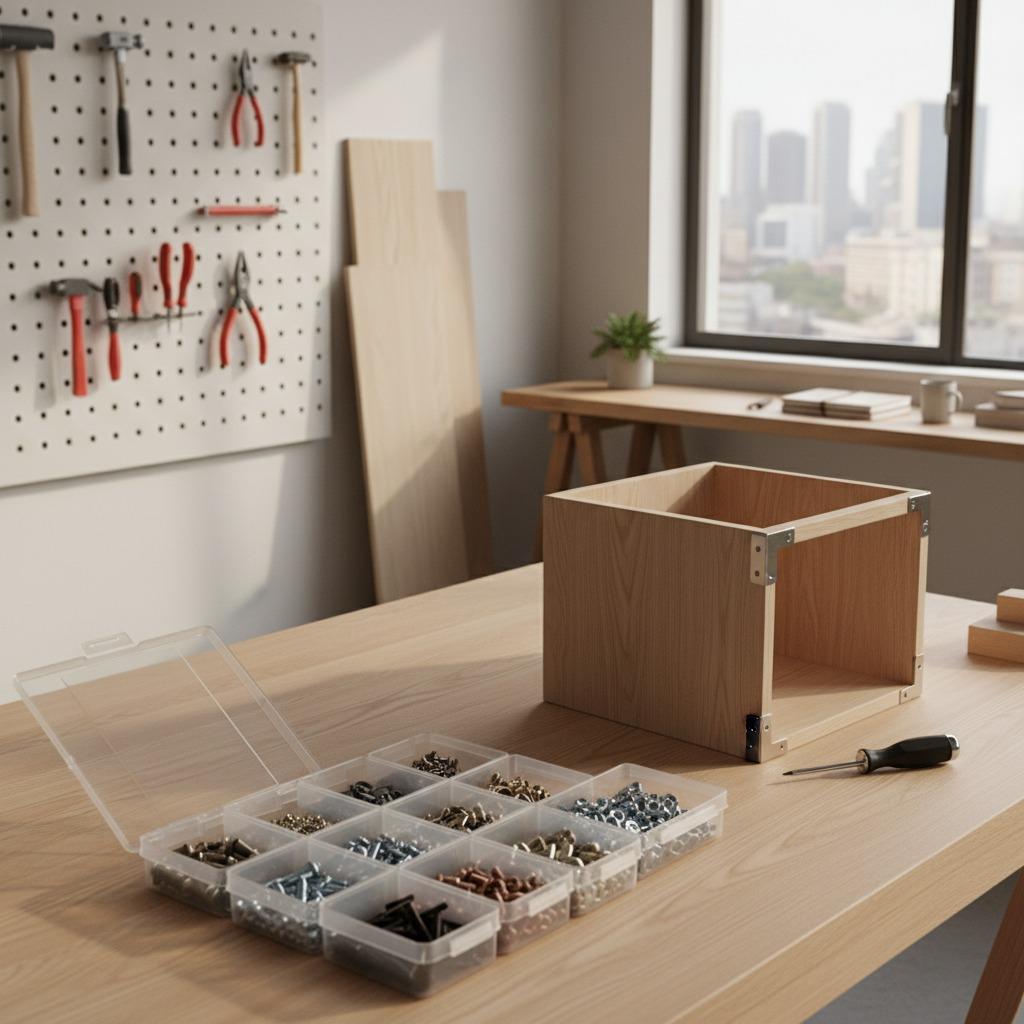
Compartment trays and organizer boxes are useful when parts need to stay visible, separated, and easy to pick.
They are common in furniture assembly, workshop maintenance, repair programs, and some retail hardware assortments. Workers can see the contents without opening multiple bags. Buyers can check whether every part group is present. Similar components are less likely to mix.
The trade-off is cost and space.
Trays use more material than basic bags. They may increase carton size. They can also take longer to fill if parts must be placed into specific compartments.
That extra cost can still be worthwhile when the kit is complex or when missing parts create expensive complaints.
A compartment tray makes sense when:
- Several fastener types must stay separate
- The kit is used repeatedly
- Visibility helps inspection
- The end user needs easy identification
- The parts have different finishes or materials
- The product is sold as a professional kit
For simple bulk production, a tray may be unnecessary. For mixed hardware kits, it can prevent a surprising amount of confusion.
Retail and e-commerce packaging need different thinking
Retail-ready fastener packaging must sell and protect at the same time.
The customer should see what is inside. The label should explain the application. The barcode should scan correctly. The pack should hang, stack, or display cleanly.
E-commerce packaging has a different job.
It may not need shelf appeal, but it must survive rougher handling. A small bag of screws may be placed inside a larger carton with panels, tools, or accessories. If the fasteners break through the bag, the customer may receive loose parts scattered across the box.
For online hardware sales, packaging should consider:
- Bag strength
- Label durability
- Carton protection
- Abrasion between parts
- Moisture exposure
- Part identification after shipping
- Return and replacement handling
A package that looks good on a desk may fail after real parcel movement.
Buyers should test the packaging in the actual shipping condition, not just inspect a sample lying flat.
Moisture and abrasion protection should not be ignored
Fasteners can be damaged before anyone uses them.
Screws may rub against brackets. Plated surfaces may scratch. Small parts may collect moisture inside poorly sealed bags. Mixed metal finishes can mark one another during transport.
For some applications, a small scratch may not matter. For visible hardware, retail products, or corrosion-sensitive parts, it matters a lot.
A custom fastener packaging supplier should understand whether the parts need protection from:
- Moisture
- Abrasion
- Dust
- Oil transfer
- Mixed-metal contact
- Surface scuffing
- Thread damage
- Impact during transport
The solution may be simple: separate bags, thicker film, desiccant, protective wrapping, tray separation, or carton dividers.
The right choice depends on the part value and use environment.
Overpacking wastes money. Underpacking creates damage and complaints.
Labels are small, but mistakes are expensive
A label does more than identify a bag.
It tells the warehouse where the part belongs, helps the assembly team pick the correct component, supports traceability, and gives the customer confidence that they received the right kit.
A poor label can create as much trouble as poor packaging.
For fastener kits, useful label information may include:
- Part number
- Description
- Quantity
- Material or finish
- Customer code
- Furniture model or machine model
- Batch or lot number
- Barcode or QR code
- Assembly step
- Date or revision code
Not every project needs all of this. Too much label information can also confuse users.
The goal is clarity.
If several bags look similar, the label needs to prevent mistakes quickly. If the parts are used for replacement service, the label should help the customer or technician identify the correct set without opening every pack.
Packaging changes need approval control
Fastener packaging often changes quietly.
A supplier switches bag size. A label layout is adjusted. A screw count method changes. A carton quantity is revised. A substitute screw is added because the original part is temporarily unavailable.
Each change may seem small. Together, they can break the buyer’s process.
For OEM and repeat-order projects, packaging changes should be controlled like product changes.
Buyers should ask:
- Can the supplier keep an approved packaging specification?
- Are label revisions recorded?
- Are substitutions allowed without approval?
- Is one reference sample kept?
- Can the supplier trace which batch used which packing method?
- Who approves changes in quantity, bag format, or carton layout?
A supplier that manages these details well can prevent many future disputes.
A supplier that treats packaging as flexible may create problems even when the fasteners are correct.
What Jiangmen Jinhe Hardware can support
Jiangmen Jinhe Hardware Co., Ltd. focuses on fasteners and standard parts, including machine screws, self-tapping screws, micro screws, precision screws, and non-standard customized components. Its material range includes stainless steel, iron, and aluminum, and its products are used across furniture, electronics, home appliances, building materials, and related industries.
For buyers, this kind of fastener background matters because packaging decisions depend on the product itself.
A precision screw, furniture connector, washer, spacer, or customized fastener may require a different counting method, protection level, and labeling approach. When the supplier understands the hardware, it can recommend packaging that fits the part rather than forcing everything into one standard format.
The company also notes support for non-standard customization, warehousing, logistics, international freight forwarding, and supply chain services. For buyers managing furniture, electronics, hardware kits, or export programs, that can help reduce supplier handoffs.
Still, packaging requirements should be confirmed project by project.
No standard pack format suits every assembly line, retail channel, or shipment method.
Common mistakes buyers make
The first mistake is treating packaging as a final detail.
By the time missing parts or mixed bags appear in production, the buyer is already paying through labor, rework, and delay.
The second mistake is choosing the cheapest pack without checking the downstream cost.
A lower packaging price may lead to extra sorting, slower picking, damaged parts, or more customer complaints.
The third mistake is designing packaging for appearance before defining the handling need.
A clean printed pack looks good, but if workers still have to sort eight fastener types by hand, the package has not solved the real problem.
The fourth mistake is approving one sample without testing repetition.
A hand-packed sample can look excellent. Bulk packing is where counting, labeling, and line clearance are tested.
The final mistake is ignoring document control.
If the fastener changes but the label does not, or if the kit quantity changes without a new packing specification, errors become difficult to trace.
What buyers should define before requesting quotes
Before asking for packaging prices, define the job the package must perform.
Start with the use case.
Is the pack for line-side assembly, retail resale, e-commerce shipment, maintenance supply, furniture hardware, electronics production, or spare parts?
Then define the parts.
Which components must stay separated? Which parts can be mixed? Are any surfaces easy to scratch? Are any parts similar enough to cause confusion? Is moisture protection required?
Then define the label.
What information must be visible? Does the buyer need a barcode, QR code, customer SKU, model number, batch number, or revision code?
Then define the quantity.
How many parts per bag, tray, kit, carton, or shipment? Is a spare quantity required?
These details make the quotation more accurate and prevent the supplier from guessing.
Questions to ask a custom fastener packaging supplier
Before placing an order, buyers should ask:
Can you pack by part number, kit, or assembly step?
How do you count small parts?
Can similar components be separated?
Can labels include customer SKUs or barcodes?
What bag, tray, or carton formats are available?
Can the packaging protect plated or visible parts?
Can you support moisture protection if required?
How are packaging changes approved?
What inspection documents are provided?
Can you support warehousing or export logistics?
How quickly do you respond if a packaging issue is found?
The answers should be practical.
A useful supplier should explain how the pack will reduce handling problems, not only how many pieces fit into one carton.
Frequently Asked Questions
Can one packaging format work for all fasteners?
Usually not. Screws, washers, nuts, spacers, brackets, and precision parts may need different separation, protection, or labeling depending on how they are used.
Is custom fastener packaging only for large orders?
No. Smaller programs can also benefit when the hardware mix is complex, parts are easily confused, or missing components create expensive problems.
Are polybags enough for fastener kits?
Sometimes. Polybags work well for simple kits, but mixed or similar fasteners may need separated bags, labels, trays, or stronger verification.
Should packaging be designed for the warehouse or the assembly bench?
The assembly bench should usually come first. Warehouse efficiency matters, but the package should save time where the parts are actually used.
How can missing parts be reduced?
Use a controlled BOM, suitable counting methods, separated packing, clear labels, final inspection, and approved reference samples.
What should buyers send before requesting a quote?
Send the part list, quantities, photos or drawings, surface finish requirements, target packaging format, label needs, sales channel, and expected order volume.
Good packaging keeps small parts from becoming big problems
Fastener packaging should make the next step easier.
The worker should not need to sort mixed screws. The warehouse should not need to open several cartons to confirm part identity. The customer should not receive damaged, corroded, or confusing hardware.
That is what a capable custom fastener packaging supplier helps prevent.
The right pack keeps parts separated, counted, protected, labeled, and ready for use. It reduces friction quietly, long before anyone notices a problem.
For screws, standard parts, customized fasteners, furniture hardware kits, electronics fasteners, maintenance packs, and export-ready hardware programs, Jiangmen Jinhe Hardware Co., Ltd. can discuss fastener production, custom sorting, packaging formats, documentation, warehousing, logistics, and supply chain support.
For direct inquiries:
Tel/WeChat: +86 13729150102
WhatsApp: +86 13322893939
Email: sharon@hkhomeideas.com
Start with the parts list, usage scenario, packaging requirement, label information, and delivery schedule.
Once the handling process is clear, the right packaging format becomes much easier to choose.