
Custom fastener solutions are the screws, cam locks, insert nuts, shelf supports and dowels for one product, supplied as a single kitted order instead of four separate cartons. A fastener is a device used to connect or secure separate parts of an object (source: baike.baidu.com); in a custom program it arrives sorted, packed and documented against your bill of materials.
One integrated custom fastener and hardware program replaces your screw supplier, your cam lock vendor, your packaging converter and the label printer. That is the trade. An OEM fastener factory like JHFIX quotes the whole kit, packs it in bags, blisters, compartment boxes or buckets, and puts it on one purchase order.
What Are Custom Fastener Solutions and What Do They Cover?
Start with the parts. Custom fastener solutions cover the screws, cam locks, insert nuts, shelf supports, dowels and brackets on your BOM, made to your drawing instead of picked from a catalog page. JHFIX lists 240 products across 12 lines, so much of that base is already there.
Then kitting, packaging and documentation. Parts get counted into one bag, blister, compartment box or plastic bucket, labeled for the project, with the packing list and drawing revision the kit was built to.
Catalog buying gets you a carton of one part. A one-stop fastener supplier hands over the assembled kit. That difference is what a custom hardware solution provider actually manages, and packing accuracy matters as much as the screw.
Why Does One Integrated Supplier Beat Four Separate Vendors?
Four vendors means four purchase orders, four shipment dates, and four people who won't answer for a scratched cam lock. Run the same job against a single partner and the arithmetic shifts fast.
| Job | Four separate vendors | One integrated partner |
|---|---|---|
| Parts | Cam locks from one, insert nuts from another, screws from a third — each with its own tolerance | Cam locks, dowels, insert nuts and shelf supports quoted against one drawing |
| Kitting | You open cartons and count pieces on your own line | Piece counts packed per kit, per your BOM |
| Packaging | Four carton designs, four artwork approvals | Bag, blister, compartment box or bucket — one artwork cycle |
| Finish consistency | Zinc from supplier A reads grey beside zinc from supplier B on the same panel | Coating specification confirmed per part at drawing review |
| Claim handling | Short shipments become a three-way email argument | One contact, one replacement decision |
Consolidation is where the margin sits on a kitted job, whatever the piece count. Verdict: use a one-stop fastener supplierfor any kit with three or more components — and a custom hardware solution provideronly once you need drawing-level custom fastener solutions.
Which Buyers Fit a Custom Fastener Program — and Which Do Not
Flat-pack and RTA brands gain the most. One bag per carton, one pick list at the line, one person to call when a cam lock arrives without its dowel — that's where custom hardware kits for OEM projects earn their cost back.
- Furniture and cabinet manufacturers running several models down one line — an OEM fastener solution keeps cam locks, insert nuts and shelf pins matched to the BOM instead of three shipments landing on three dates.
- Export project buyers in Europe, North America and the Middle East: retail-ready packing and paperwork usually matter more than shaving a cent off the screw.
- Distributors building their own branded assortment boxes — the kit is the product, so packaging format decides whether it sells.
Skip custom fastener solutions if you resell loose cartons to local trades. Standard stock wins on price and speed. And a single-SKU repeat order? Custom kitting is built for program volume, so check the MOQ published on the specific kit's product page before you plan the run.
Application Scenarios: Where Custom Hardware Kits for OEM Projects Pay Off
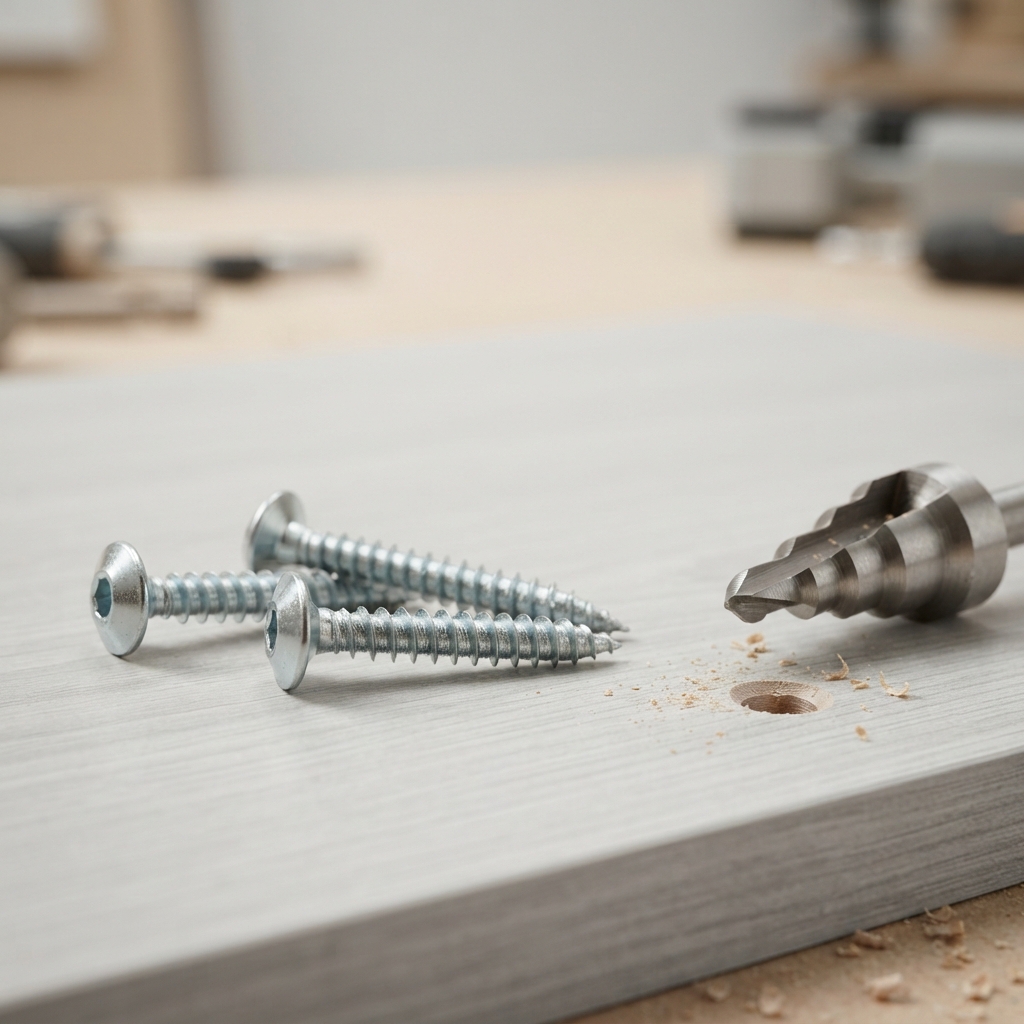
A wardrobe in 18 mm board gives real numbers: six cam joints per wardrobe, four shelf pins per bay. The parts list calls out Brown Rafix M6.2×16/19 mm cam connectors, steel dowels, insert nuts, sleeved shelf support pins and 3.5 mm chipboard screws.
JHFIX packs that lot as one compartment box, one packing list and one SKU. Count it, store it, reorder it. The custom hardware kits for OEM projectsrelease is a single unit, and the Cam Locks & Connector Sets line carries 27 products, so the joint options stay inside one catalogue.
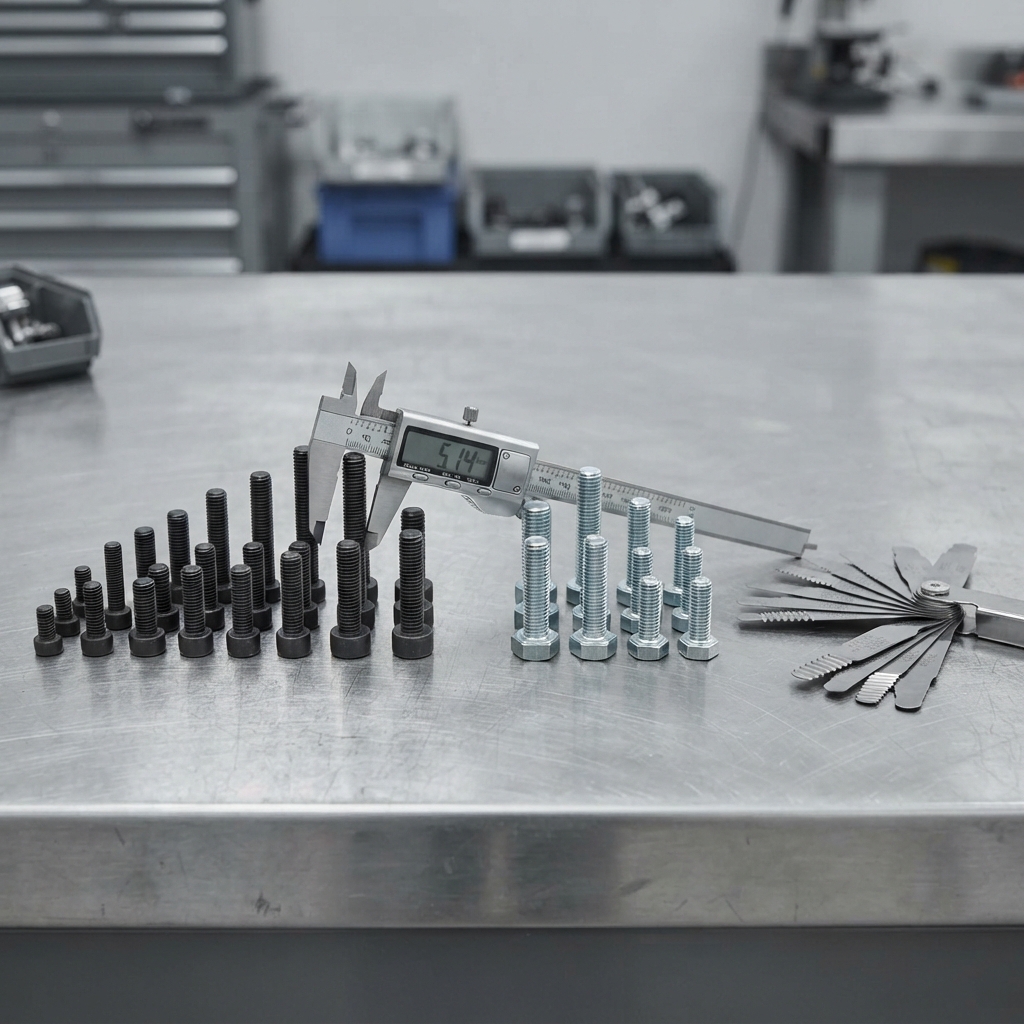
Drawing review commonly corrects three issue classes: thread length, head type and board-thickness match. Fix them on paper and the packing line gets a target that doesn't move. Miss them and the error shows up at the assembly bench, after the carton is sealed.
Two more types fit the same pattern: RTA/KD office desks with silver eccentric cam lock sets, and a 270-piece wall plug organizer for retail. Skip custom kitting if your annual volume is a few cartons.
Technical Specifications: What a Custom Fastener Solutions Kit Holds
Piece count, sizes, coating and MOQ decide whether two quotations are comparable. Kits that look identical in a photo differ on all four.
| Kit | Contents and published figures | Sizes | Finish |
|---|---|---|---|
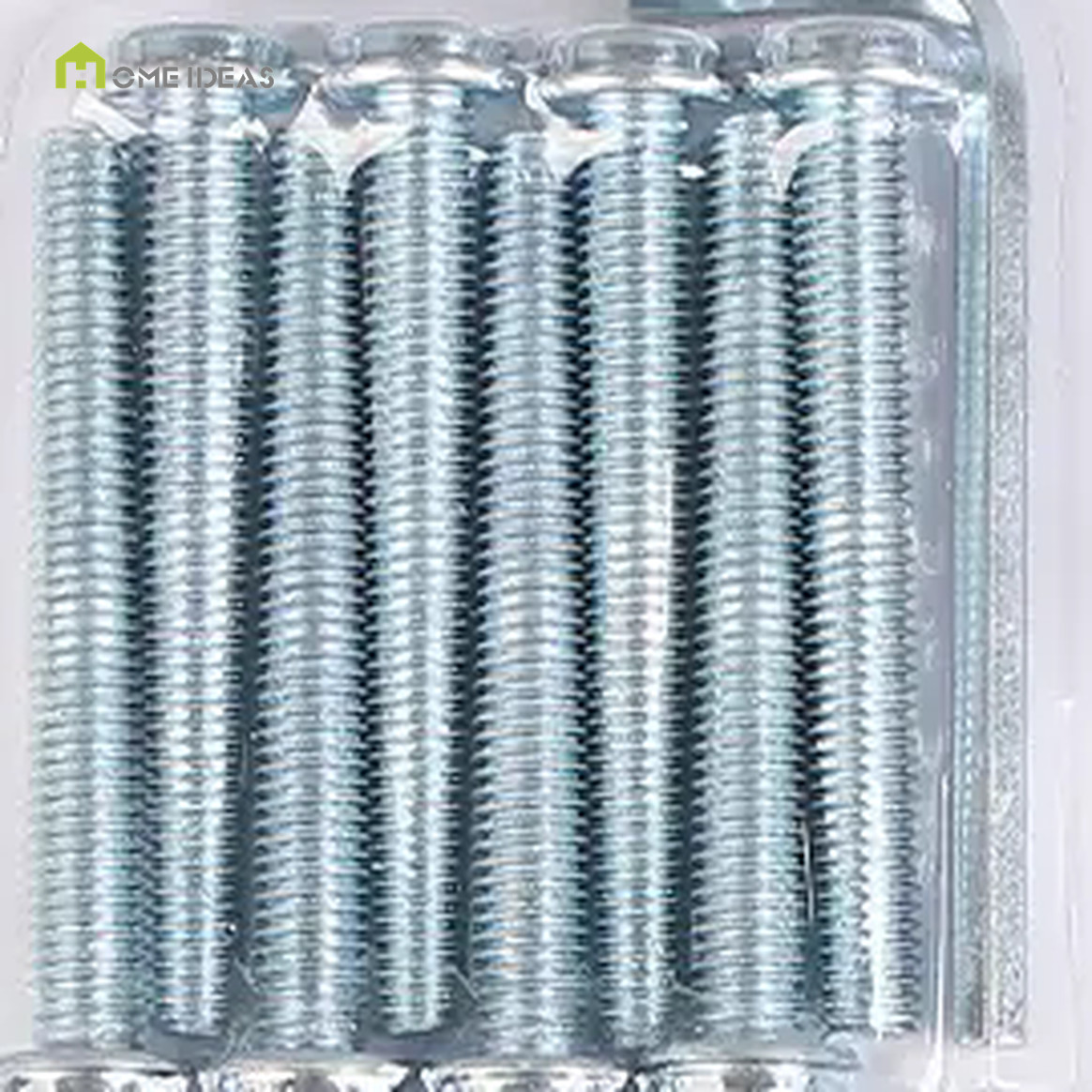
| Blue-Coated Concrete Screw Assortment Kit | 100 pcs; USD 3.99; MOQ 10,000 pcs; 45-day lead time; Phillips and hex sockets; coarse and fine threads | Inch sizes | Carbon steel; blue rust-resistant coating |
| Wall Plug and Screw Assortment Organizer | 270 pcs; drywall anchors and screws; organizer box | 5 sizes | Galvanized |
| Brown Rafix Cam Connector with Steel Dowel | 3-in-1 cam bolt with plastic components | M6.2 thread; 16, 17 and 19 mm | Brown |
| Yellow-Coated Coarse-Thread Deck Screw Assortment | Bulk coarse-thread screws, mixed | 8, 9, 10, 15; up to 4 inch | Yellow rustproof |
Price, MOQ and lead time are published for one kit on this list, and even that figure is confirmed only after JHFIX's technical engineers review the drawing — thread callout and socket type get settled on paper, before a run starts. Coating is where specs go vague. Ask for the exact coating specification and inspection requirement in writing when “blue” must mean something specific.
Sorting is the hidden cost. A cam bolt and steel dowel pull a butt joint tight with no glue line and no fixing head on the face; an organizer box spares the line a drawer of loose anchors. Add chipboard screws to the same carton and one custom fastener solutions program covers the whole cabinet.
Materials and Components: Matching the Part to the Joint
Pick the fitting by how the joint carries load. Last year's BOM is a bad place to start.
- Eccentric cam lock: the Silver 2-in-1 carbon steel body suits kitchen and dining cabinet panels built to ship flat. The brown Rafix 3-in-1 with M6.2 thread comes in 16/17/19 mm lengths, and the steel dowel lets it bite into thicker board.
- Threaded insert nut: galvanized carbon steel, round body, internal and external thread, galvanized coating. In MDF it takes repeated knock-down assembly; a plain screw strips by the second or third build.
- Shelf support pins: stainless steel with optional plastic sleeves, so a shelf holds in a humid room and stays quiet in transit.
- Dowels and screws: the dowel locates the panel, the screw clamps it. Self-tapping chipboard screws do the hidden work, so confirm the galvanized coating specification for the shipment conditions.
Plating is where cheap lots fail first. Put the coating requirement in writing on the purchase order — the finish, the appearance, the conditions the parts have to come through — rather than accepting "galvanized" as a description.
A mixed kit puts all four parts in one box: cam lock, insert nut, shelf pin, chipboard screw. That is where custom fastener solutions earn their keep, because thread form and plating have to survive the same assembly sequence.
Joint-by-joint listings sit in the furniture assembly components range.
How a Custom Fastener Solutions Program Runs: From Drawing Review to Packed Carton
You send the BOM and a section drawing of the cam-and-dowel joint. JHFIX technical engineers review it before anything is priced: thread length, head type, panel thickness, checked against the parts you actually specified, and only then does the quotation get confirmed. Run as an OEM fastener program, that review stage is where most cost surprises die.
Samples next. You build one carcass, find the dowel 1 mm too long, send it back. Then packaging artwork: blister card, barcode, carton mark. Nothing goes to print until the sample fits and the artwork is signed off.
Production and packing close it out. Parts get counted into sets, then packed to the format the project calls for (bag, blister card, compartment box or plastic bucket), with kitting and packaging artwork coordinated inside the same custom fastener and packaging program. Your purchasing team chases one order, not three.
For the Blue-Coated Concrete Screw Assortment Kit, the published price, MOQ and lead-time figures appear in Technical Specifications; for any other kit, confirm price, MOQ and lead time with JHFIX after drawing review. Skipping the sample gate is the mistake that costs most; a wrong barcode or a 1 mm-long dowel shows up on the retail shelf, not at the loading dock.
Packaging Format Decides Your Rework Rate — Not the Screw
Packaging gets blamed last and causes the most rework. A 270-piece wall plug and screw organizer is a kit only if the counts land right at the bench; loose bagging turns it into a sorting job. JHFIX lists 27 products in blister packaging, 22 in box packaging and 7 in bag packaging, so format belongs in the production decision. A case-selection guidecovers compartment layout before artwork approval.
Four formats shift cost: bag, blister, compartment box/organizer case and plastic bucket. Retail shelves punish weak blister seals. Line-side handlers punish a bucket with no divider. Take the 270-piece drywall anchor and screw assortment: five sizes of galvanized screw and wall plug, one compartment per size inside the organizer box.
Cavity layout is what kills picking errors, and a compartmented blister format does the same job behind a carded front. JHFIX runs 27 of its listed products in that blister format, so the cavity drawing gets reviewed next to the part drawing.
Put packaging inside the custom fastener and packaging program from the first quote. Wrong format adds counting, returns and repacking. No screw tolerance explains that bill.
Model Comparison: Three Kit Formats Side by Side
Three custom fastener kits, three buyers. A spec sheet tells you what's inside; this table tells you if you're the buyer for it.
| Kit | Buyer it fits | What decides it |
|---|---|---|
| Blue-Coated Concrete Screw Assortment Kit | Distributors and importers buying at volume against a fixed unit cost | Unit cost at scale. This kit is the program's volume-price reference. |
| Wall Plug and Screw Assortment Organizer | Retail and e-commerce sellers who need shelf-ready presentation | The organizer box. Shoppers reach for it because the layout looks orderly. |
| Copper-Toned Furniture Connector Assortment Pack | Furniture and cabinet brands matching finish to the frame | Finish range and the mix of metals in the pack. |
If your tender needs a locked unit price at scale, the concrete kit answers it. Buying 270-piece organizer boxes? Skip the concrete kit. There the box does the selling.
Cost, MOQ and Risk: What Moves the Numbers
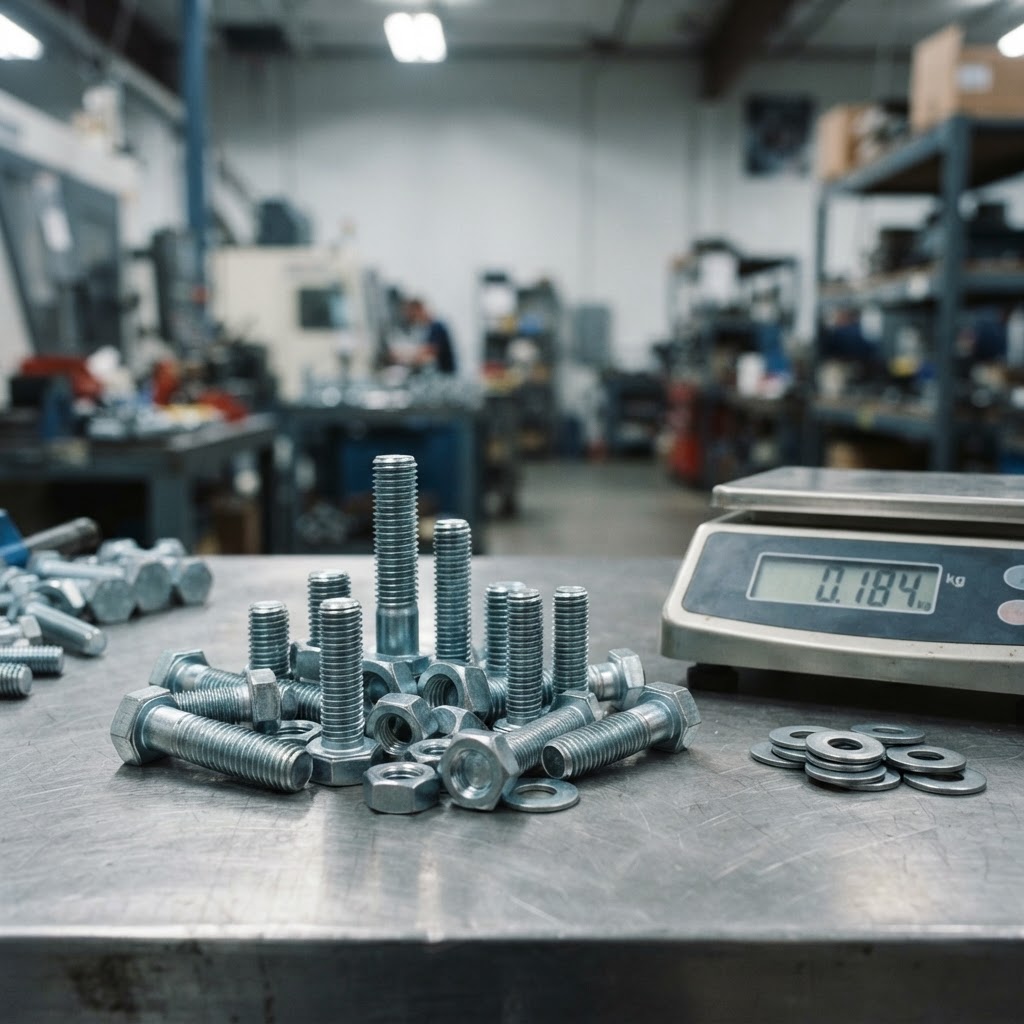
Part count drives the quote harder than any single item price. Twelve screw lines in one kit means twelve rounds of counting, weighing and bag checks before anything ships. Bags are the cheapest format to fill by hand. Blisters need a formed cavity and a printed sealing card, compartment boxes need an insert or a molded tray, and both formats slow the pack rate per unit.
Material and finish come next. Carbon steel with a blue rust-resistant coating is the low-cost route; stainless, brass and black oxide cost more at the wire and again at the finishing stage, where short runs wait their turn in a plating bath.
Volume decides the MOQ. Heading tools, plating batches, printed cards and die-cut inserts are all setup, and setup spreads across the run — double the order and the per-piece cost rarely doubles with it. The concrete-kit piece count, price, MOQ and lead time we publish sit in Technical Specifications.
Splitting one kit across four vendors hides freight, re-inspection and claim costs; they land months later, not on the first invoice. A one-stop fastener suppliertakes that drag out, so custom fastener solutions get quoted against the volumes you'll actually reorder. If your own line can count parts, buy bulk bags and skip the kitting labor entirely.
OEM: How Much Customisation Is Realistic
Two levels, in ascending cost. Level one: catalog parts, your packaging — pick from 240 published products across 12 lines, then name the format: bag, blister, compartment box or plastic bucket. Level two: existing parts recombined or modified to your drawing, then kitted to a BOM. That is the range. The customisation scope is confirmed per product and per project, after JHFIX engineers review the drawing. Nothing gets assumed up front.
Most furniture buyers land on level two, and packaging is where the easy savings sit. Send the drawing and BOM first; the first-order process with an OEM supplierwalks through what happens next. Quotation follows the drawing review. The Blue-Coated Concrete Screw Assortment Kit is a plain example: 100 pieces at USD 3.99, quoted at a 10,000-piece MOQ with a 45-day lead time once that review is finished.
Send drawing and BOM to request a quote
Custom fastener solutions follow three steps: send drawing and BOM → JHFIX engineering team reviews the drawing → confirm quote and lead time after review. The quote comes after the review, and the review sets the scope.
Want to see a finished kit? The Copper-Toned Furniture Connector Assortment Packis a sample custom hardware kit in mixed metals and finishes.
Frequently Asked Questions
What changes when I move a kit to one supplier?
You stop chasing four vendors for screws, cam locks, inserts and packaging. One purchase order covers the lot, so the carton count matches the BOM when it lands. That's the working case for custom fastener solutions: fewer incoming inspections, one document set, one phone number when a line stops. It also leaves you a single point of failure. Pick a supplier whose factory you can visit.
What should I send with the RFQ?
Drawing or sample, BOM with quantities, target pack format, annual volume. Four items. JHFIX technical engineers review the drawing before the quotation is confirmed, so dimensions need to live on the drawing, not in an email thread — the Brown Rafix connector comes in M6.2 thread at 16, 17 or 19 mm, and the length decides the part. For the Blue-Coated Concrete Screw Assortment Kit, published MOQ and lead-time figures sit in Technical Specifications; for other projects, confirm them after drawing review.
Can one kit mix parts, finishes and materials?
Yes. The Copper-Toned Furniture Connector Assortment Pack carries black oxide stainless, carbon steel, brass and aluminium in the same set. Mixing isn't the risk; counting is. Give every variant its own part number and its own BOM line, or a picker will substitute one finish for another at 2 a.m. and nobody catches it until the customer does.
Which parts belong in the kit and which stay bulk?
Kit what one assembler reaches for at one station and can't sort quickly by hand. Leave bulk what a hopper feeds or a station burns through by the thousand. A 270-piece wall plug and screw organizer suits a retail SKU; those same anchors loose in a 5,000-piece carton suit the line. Get that split wrong and you're paying packaging cost you'll never recover.
What happens when one component in the kit changes?
Somebody has to eat the obsolete packaging. Charge it to the engineering change order, run the old parts out first, or scrap them — all three are legitimate, and all three cost money. Put a revision letter on the drawing and a revision date on the BOM, then agree in writing that the supplier holds the new revision until old stock clears. Kits punish changes harder than loose parts, because the bag, blister card or compartment insert is printed with the old contents.