
TL;DR: A reliable custom hardware OEM supplier should offer more than competitive component prices. Before placing a bulk order, buyers should verify manufacturing scope, tooling agreements, sample approval procedures, pilot-order acceptance criteria, and international delivery responsibilities. The most effective sourcing approach is to qualify the supplier in stages, compare total procurement costs, and establish clear requirements for repeat production.
Custom hardware sourcing becomes complicated when a project involves nonstandard screws, stamped brackets, threaded inserts, furniture connectors, or specialized packaging.
A supplier may offer an attractive quotation but leave important questions unanswered. Who owns the production tooling? Is the quoted sample identical to the intended production part? What happens if the first shipment fails inspection? Can the same specification be supplied six months later?
For furniture manufacturers, industrial OEMs, hardware distributors, and private-label brands, these uncertainties can create unnecessary costs.
This guide explains how to qualify custom hardware suppliers, structure a first order, protect project requirements, and build a repeatable sourcing relationship.
Key Takeaways
-
Qualify capabilities before comparing prices. A supplier must be able to provide or coordinate the required components and processes.
-
Clarify tooling agreements early. Tooling fees, physical ownership, storage, maintenance, and design rights are separate commercial considerations.
-
Approve production-representative samples. A similar stock product should not automatically substitute for a custom production sample.
-
Use a pilot order to validate the supply process. Packaging, identification, consistency, and delivery documentation need verification alongside product quality.
-
Compare total sourcing costs. Tooling, inspection, freight, duties, and inventory requirements can change the apparent price advantage.
-
Prepare for repeat orders. The supplier should understand approved specifications, part identification, and agreed procedures for managing changes.
1. What Does a Custom Hardware OEM Supplier Provide?
A custom hardware OEM supplier provides or coordinates hardware components manufactured according to customer-defined specifications.
Depending on the agreed project scope, services may include drawing review, production feasibility assessment, sample development, manufacturing, finishing, inspection, packaging, and export coordination.
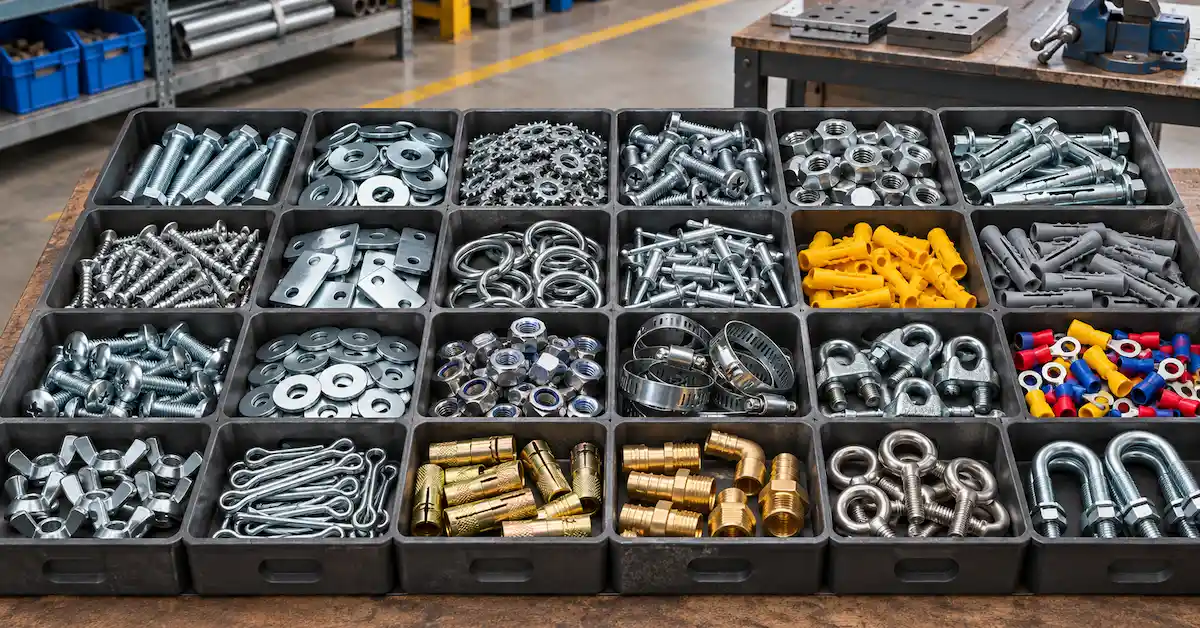
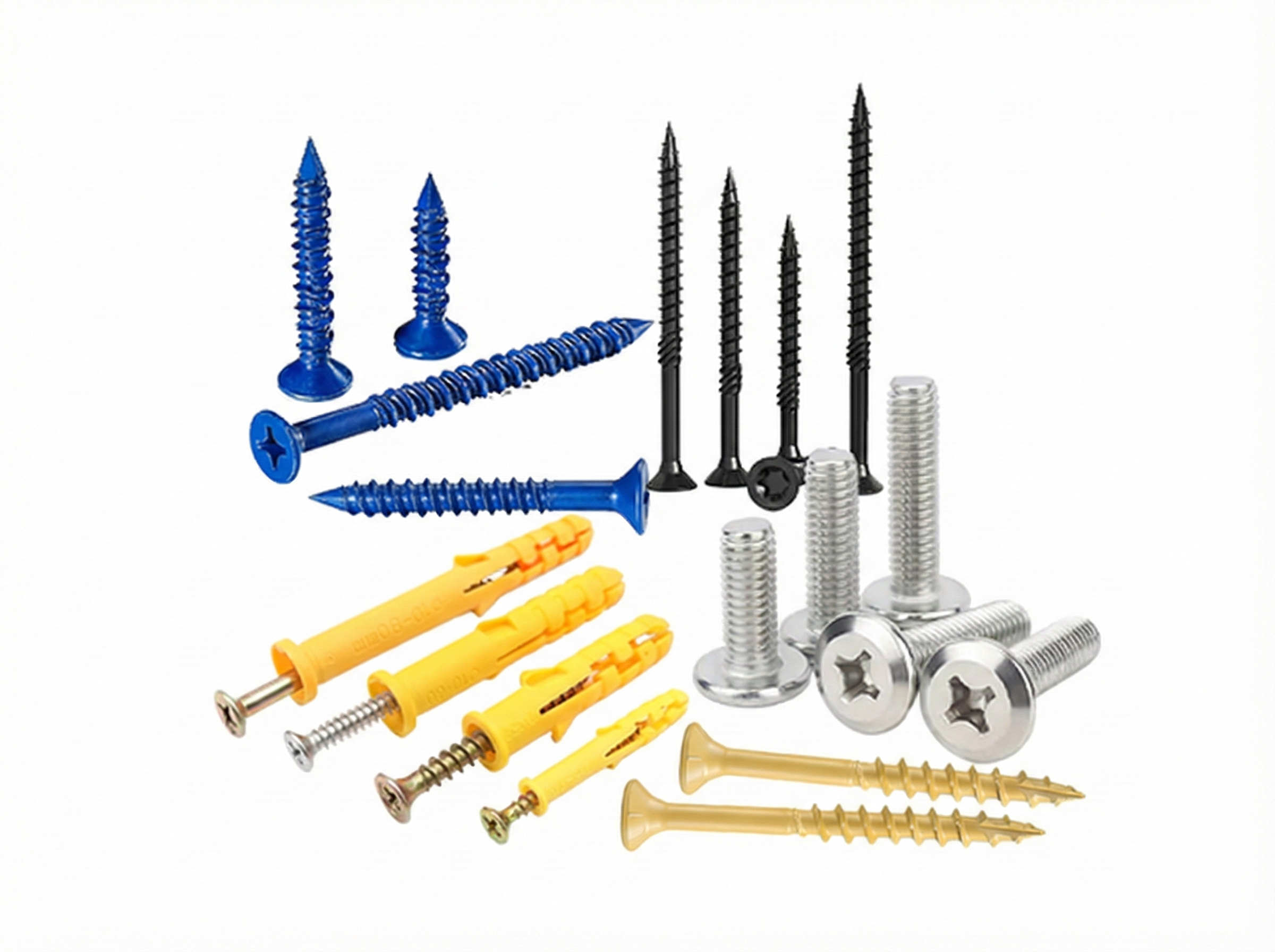
Common product categories include custom screws, fastening components, nuts, threaded inserts, metal brackets, furniture connectors, and mounting hardware.
OEM Supplier vs Manufacturer vs Distributor
These business models can overlap, but they do not always provide the same level of technical responsibility.
| Supplier type | Typical strength | Main purchasing consideration |
|---|---|---|
| Standard hardware distributor | Access to established product ranges | Limited customization may be available |
| Specialized component manufacturer | Production expertise in a defined process | Other components may require separate suppliers |
| Coordinated OEM hardware supplier | Combines manufacturing and sourcing activities | Technical ownership and supplier responsibilities must be clear |
| Integrated manufacturing and export arrangement | Links production with overseas purchasing support | Buyers should identify the manufacturing and contracting entities |
A company does not need to perform every process internally to coordinate a successful OEM order.
However, buyers should know which operations are performed by the primary manufacturer, which may involve external processors, and who is accountable for finished-product acceptance.
Who Benefits Most From Custom OEM Hardware Supply?
This sourcing approach is particularly useful for furniture and cabinet manufacturers, industrial equipment brands, hardware wholesalers, and companies developing proprietary hardware configurations.
It is less appropriate for buyers who need only a small quantity of readily available standard fasteners or require specialized processes the prospective supplier cannot demonstrate.
Purchasing takeaway: The best supplier model depends on technical requirements, order complexity, and the level of coordination the buyer needs.
2. Which Hardware Products Can Be Included in an OEM Sourcing Project?
A successful sourcing program starts by identifying the exact component families.
JHFIX's published product range includes screws, nuts, furniture hardware, stamping hardware, and several hardware packaging formats.
Different categories require different technical and purchasing information.
OEM Hardware Product and Specification Matrix
| Product category | Possible customization | Technical information to provide |
|---|---|---|
| Custom screws | Length, thread, head, drive, material, finish | Drawing, thread specification, substrate |
| Nuts and threaded inserts | Size, thread, geometry, material | Mating fastener, installation conditions |
| Stamped brackets | Shape, holes, bends, material, finish | Dimensioned drawing, intended load/application |
| Furniture connectors | Connector configuration, size, finish | Panel details, mating components |
| Hardware component sets | Component combination and identification | Approved parts list and quantities |
| OEM packaging | Bag, box, blister, bucket, labeling | Contents, format, artwork, shipping needs |
These are potential customization requirements, not a guarantee that every option is available for every design.
The buyer should confirm feasibility before approving a quotation.
For relevant products, explore JHFIX Specialty & Custom Screws, Nuts and Threaded Components, and Stamping Hardware.
3. How Should Buyers Qualify a Custom Hardware OEM Supplier?
Supplier qualification should be based on evidence relevant to the actual purchase.
General statements about manufacturing experience are useful background, but they do not replace product-specific confirmation.
Check Manufacturing Scope
Ask whether the supplier can support the required component types and manufacturing operations.
If plating, heat treatment, machining, or another specialized process is coordinated externally, establish who manages the specification and inspections.
Check Engineering Communication
A supplier should be able to review drawings or samples, identify missing information, and explain manufacturing limitations.
A quotation that ignores unclear technical requirements may create problems later.
Check Sample and Inspection Support
Confirm whether production-representative samples can be supplied and what inspection records can be agreed.
The level of documentation should match the project's risk.
Check Commercial and Export Responsibilities
Identify the legal entity responsible for quotations and contracts, the party handling manufacturing, and the company coordinating shipment.
These details are particularly important when manufacturing and international sales are handled by different entities.
Suggested Supplier Qualification Scorecard
The following is an illustrative buyer evaluation framework, not an assessment of any particular company.
| Evaluation factor | Suggested weight | Evidence to review |
|---|---|---|
| Technical and product capability | 25% | Drawings, samples, process scope |
| Sample and pilot-order verification | 25% | Inspection and assembly results |
| Tooling and commercial clarity | 15% | Written tooling and quotation terms |
| Quality communication | 15% | Inspection procedures and issue handling |
| Delivery and cost transparency | 10% | Itemized quotation and shipping responsibilities |
| Repeat-order support | 10% | Specification and order identification procedures |
A weighted score can help structure comparisons, but a critical technical failure should not be offset by a lower unit price.
Supplier qualification should establish whether the project is feasible before treating suppliers as commercially interchangeable.
4. What Should Buyers Confirm About Tooling Ownership and Design Rights?
Tooling is one of the most frequently overlooked commercial issues in custom hardware sourcing.
Depending on the product, manufacturing may require dedicated dies, molds, fixtures, or other production tools.
These tools can create upfront costs and ongoing operational dependencies.
Tooling Fee vs Tool Ownership
Paying a tooling fee does not, by itself, resolve every ownership or access question.
Buyers should obtain written agreement on:
-
Who owns the physical tooling.
-
Whether the tooling is dedicated to the customer's project.
-
Where it will be stored.
-
Who is responsible for maintenance and replacement.
-
Whether the buyer can request tooling transfer.
-
What happens if production ends or the supplier relationship changes.
Actual ownership rights depend on the agreement and applicable law.
Physical Tooling vs Intellectual Property
Ownership of physical tooling should be distinguished from rights over drawings, designs, technical information, and improvements.
The World Intellectual Property Organization explains the importance of defining intellectual property rights in supplier agreements in its guidance on IP agreements with suppliers.
For a custom hardware project, confidentiality provisions and permitted use of technical data may be relevant.
Tooling Agreement Checklist
| Contract topic | What to clarify |
|---|---|
| Tooling cost | One-time charge and included services |
| Physical ownership | Ownership and identification of the tool |
| Storage | Location and custody arrangements |
| Maintenance | Responsibilities and associated charges |
| Design information | Ownership and permitted use |
| Replacement | Conditions and cost responsibility |
| Transfer | Access and procedures if production moves |
Buyers should settle these terms before making a significant tooling investment.
Engineering takeaway: Tooling agreements should be treated as part of the sourcing strategy, not as a minor detail after pricing approval.
5. How Should Custom Hardware Samples Be Approved?
Sample approval confirms whether a proposed product meets the agreed technical requirements.
However, not every sample has the same purpose.
Concept Samples
A concept sample may be used to explore a design or demonstrate a possible configuration.
It may not represent the final production process.
Production-Representative Samples
These should match the intended material, dimensions, finish, and relevant manufacturing conditions as closely as necessary for approval.
When a sample differs from the final process, the differences should be documented.
First-Article Inspection
For suitable custom projects, first-article inspection may provide dimensional and material verification against the approved drawing.
The buyer should define what the report must contain.
Sample Approval Checklist
| Verification | Why it matters |
|---|---|
| Dimensions | Confirms drawing compliance |
| Material | Establishes required substrate |
| Thread or connector fit | Verifies mating compatibility |
| Finish | Checks appearance and specified protection |
| Functional assembly | Tests representative installation |
| Identification | Links the sample to a part number and revision |
| Packaging trial | Evaluates handling and protection |
Sample approval should also identify which characteristics may require further validation during pilot production.
A polished sample photograph is not a substitute for representative functional testing.
6. Why Is a Pilot Order Important Before Long-Term Supply?
A pilot order is a limited production order used to evaluate the supplier's ability to deliver the approved product under agreed manufacturing and supply conditions.
It is especially useful when the project includes new tooling, several component categories, unusual packaging, or tight assembly requirements.
What a Pilot Order Should Test
The pilot should verify more than product appearance.
Important considerations include manufacturing consistency, component identification, inspection arrangements, packaging accuracy, and delivery communication.
Pilot Order Acceptance Matrix
| Stage | Buyer verification | Release decision |
|---|---|---|
| Before production | Approved specification and commercial terms | Authorize pilot |
| Production sampling | Critical dimensions and material requirements | Confirm production conformity |
| Functional checks | Representative fit and installation | Evaluate application suitability |
| Packing trial | Quantities, labels, part identification | Approve packaging |
| Pre-shipment review | Agreed records and shipment details | Authorize dispatch |
| Arrival inspection | Product condition and order accuracy | Accept, investigate, or reject against agreed criteria |
The required sample size and acceptance criteria should be established according to the product's risk and purchasing requirements.
What Happens if the Pilot Order Fails?
A failure should trigger a structured review.
The parties should identify the nonconformity, investigate its cause, agree on corrective actions, and determine whether further sampling or production is necessary.
The commercial agreement should clarify responsibilities for nonconforming goods.
A successful pilot order does not guarantee that no future problems will occur. It provides evidence that the selected supply process can meet the agreed requirements.
7. How Do MOQ and Lead Time Affect Custom Hardware Sourcing?
Minimum order quantity (MOQ) and lead time depend on product type, manufacturing process, material availability, finishing, tooling, and order complexity.
A supplier's general MOQ or estimated lead time should not be assumed to apply to every customized component.
Why Custom Orders Have Different MOQ Requirements
MOQ may be influenced by:
-
Material purchasing quantities.
-
Manufacturing setup and tooling.
-
Batch finishing arrangements.
-
Inspection requirements.
-
Packaging materials.
-
The number of different product variants.
For multi-component orders, each part may have a different economical production quantity.
Understanding Lead Time
A custom hardware order may include engineering review, tooling preparation, sampling, approval, manufacturing, finishing, packaging, and export shipment.
These activities are not necessarily completed within one production period.
Buyers should clarify whether a quoted lead time starts at purchase-order confirmation, deposit receipt, drawing approval, sample approval, or another agreed milestone.
Questions That Improve Scheduling
Ask which components have the longest production lead times, which operations depend on subcontractors, and when packaging materials must be confirmed.
For repeat orders, confirm whether existing tools and approved specifications can be reused.
Purchasing takeaway: A realistic production schedule is more valuable than an optimistic lead-time claim that excludes key approval stages.
8. How Should Buyers Compare Total Custom Hardware Sourcing Costs?
Unit price is only one component of the overall procurement cost.
For a custom hardware project, buyers should evaluate the cost of obtaining an accepted product at the required destination.
Total Sourcing Cost Framework
| Cost category | What to include |
|---|---|
| Unit price | Agreed price for each component or set |
| Tooling | New tools, modifications, maintenance arrangements |
| Sampling | Prototype and approval-related charges |
| Quality verification | Agreed inspections and testing |
| Packaging | Materials, labeling, private-label requirements |
| Freight | Transport under the selected delivery arrangement |
| Import costs | Applicable duties, taxes, clearance-related costs |
| Inventory | Storage and working-capital considerations |
| Nonconformity risk | Potential inspection, rework, or replacement costs |
A practical comparison can use:
Comparable procurement cost per accepted unit = Total comparable acquisition costs ÷ Accepted usable units
The calculation should use the same scope and assumptions for each quotation.
Why Incoterms Matter
For international orders, delivery terms influence which party is responsible for specified logistics activities, costs, and risks.
The International Chamber of Commerce provides the official Incoterms® 2020 rules.
These rules help define delivery-related responsibilities, but they do not replace the sales contract or determine matters such as product specifications, payment obligations, and intellectual property ownership.
Buyers should confirm the selected rule, named place, and applicable version in their agreement.
Commercial takeaway: Compare suppliers using equivalent technical specifications and delivery conditions, not quotations with different cost responsibilities.
9. How Can Buyers Reduce Repeat-Order Supply Risks?
The first successful shipment is the beginning of a supplier relationship, not the end of qualification.
Repeat-order quality depends on preserving the approved product requirements.
Control Product Identity
Each custom component should have an agreed identification method.
Where relevant, this includes a part number, drawing revision, material or finish requirement, and packaging identification.
Confirm Manufacturing Changes
If a proposed process, material, tool, or specification change affects the approved component, the supplier should follow the agreed notification and approval procedure.
Monitor Repeat-Order Performance
Useful purchasing metrics may include accepted quantity, on-time delivery, nonconformity frequency, documentation accuracy, and response to corrective actions.
Actual results should be measured rather than assumed.
Plan for Supply Interruptions
Buyers may consider safety stock, agreed reorder lead times, or contingency arrangements for critical components.
The appropriate approach depends on production volume, supply risk, and commercial terms.
A dependable custom hardware OEM supplier should support clear communication about production availability and order requirements.
10. How JHFIX Supports International Custom Hardware OEM Sourcing
JHFIX supplies screws, nuts, furniture hardware, stamped components, and hardware packaging products for international B2B buyers.
Its manufacturing company, Jiangmen Jinhe Hardware Products Co., Ltd., describes facilities and operations covering cold heading, tapping, stamping, injection molding, assembly, packaging, and inspection.
JHFIX also supports OEM/ODM development discussions based on drawings, samples, and customer specifications.
Manufacturing and Export Responsibilities
JHFIX identifies Jiangmen Shenxin Trading Co., Ltd. as its authorized international export and trading partner.
According to JHFIX's published business structure:
-
Jiangmen Jinhe Hardware Products Co., Ltd. is responsible for manufacturing, production management, OEM/ODM development, and quality control.
-
Jiangmen Shenxin Trading Co., Ltd. coordinates international buyer communication, quotations, contracts, invoices, and export activities.
This distinction helps overseas buyers identify the relevant manufacturing and contracting responsibilities.
Learn more through JHFIX Global Sales & Export Support.
Custom Hardware Categories to Explore
Buyers can review JHFIX Furniture Hardware, Specialty & Custom Screws, and Stamping Hardware.
For suitable OEM orders, packaging options include bags, blister packs, boxes, and plastic buckets.
The actual availability of custom tooling, specifications, inspection documentation, MOQ, lead time, and packaging arrangements should be confirmed during project review.
Recommended First-Order Discussion
A buyer can begin by providing drawings, existing samples, technical requirements, estimated quantities, and the intended application.
JHFIX's export team can coordinate the inquiry with the manufacturing team for feasibility review and quotation.
Specific tooling conditions, sample approvals, pilot-order arrangements, and other commercial terms should be established through the project agreement rather than assumed to be standard services.
Contact JHFIX to discuss custom hardware requirements, drawings, sample development, and bulk purchasing.
11. OEM Hardware RFQ Checklist: What Should Buyers Send?
A useful RFQ should answer the questions necessary to evaluate both technical feasibility and commercial scope.
| RFQ field | Recommended information |
|---|---|
| Application | Furniture, cabinet, equipment, or other project |
| Hardware categories | Screws, brackets, inserts, connectors, or sets |
| Drawings and samples | Dimensions, materials, finishes, revisions |
| Order volume | Initial quantity and forecast repeat demand |
| Manufacturing requirements | Required processes and functional characteristics |
| Tooling | Existing tools or new-tool requirements |
| Sample approval | Inspection and acceptance expectations |
| Pilot order | Quantity and release criteria |
| Packaging | Format, labeling, identification |
| Documentation | Agreed inspection and traceability requirements |
| Delivery | Destination, delivery term, requested schedule |
| Commercial conditions | Pricing scope, tooling terms, payment arrangements |
For a new custom component, provide the intended mating parts and installation requirements where relevant.
For an existing product being resourced, include the current specification and details of any previous quality problems.
A clear RFQ helps the supplier identify feasibility issues before issuing a final quotation.
12. Frequently Asked Questions
1. What is a custom hardware OEM supplier?
A custom hardware OEM supplier provides or coordinates hardware production according to customer-defined requirements. Depending on its capabilities, the supplier may support drawings, samples, manufacturing, finishing, inspection, packaging, and international supply.
2. What products can be customized for OEM hardware orders?
Common categories include custom screws, nuts, threaded inserts, stamped brackets, furniture connectors, and specialized component sets. Available options depend on manufacturing feasibility and the agreed project scope.
3. How do I evaluate a custom hardware supplier in China?
Review manufacturing capability, technical communication, product samples, inspection arrangements, commercial transparency, and export responsibilities. Ask for evidence relevant to the actual components rather than relying only on general marketing claims.
4. Who owns the tooling for a custom hardware project?
Tooling ownership depends on the agreement between the buyer and supplier and applicable law. Buyers should define physical ownership, storage, maintenance, transfer rights, and design-related intellectual property separately.
5. Do custom hardware orders always require new tooling?
No. Some products can use existing tooling or standard components. Others may require modified or dedicated tools. Manufacturing feasibility should be reviewed before assuming tooling costs.
6. What is the difference between a sample and a pilot order?
A sample is used to verify specified product characteristics, while a pilot order helps evaluate production and supply performance under agreed conditions. Both can be useful for new OEM projects.
7. What determines MOQ for custom hardware?
MOQ depends on the product design, manufacturing process, setup requirements, material availability, finishing, and packaging. Different components in one project may have different minimum quantities.
8. How can I compare OEM hardware quotations fairly?
Use the same technical specifications, quantity assumptions, inspection requirements, packaging, and delivery terms. Compare total acquisition costs instead of unit prices alone.
9. Can JHFIX support custom hardware OEM projects?
JHFIX publishes OEM/ODM support and offers screws, nuts, furniture hardware, stamping products, and packaging solutions. Buyers can submit drawings and requirements for review. Project-specific capabilities and commercial conditions must be confirmed.
10. What should I send when requesting an OEM hardware quotation?
Provide drawings or samples, product descriptions, materials, finishes, intended application, estimated quantity, packaging needs, quality requirements, and delivery destination. Include tooling and pilot-order questions where relevant.
Conclusion
Choosing a reliable custom hardware OEM supplier requires balancing technical capability, commercial clarity, and long-term supply requirements.
For furniture brands, industrial OEMs, and international hardware distributors, the most important purchasing decision is not simply which supplier offers the lowest initial quotation. It is which supplier can provide the required components, support meaningful sample approval, establish suitable tooling and commercial terms, and deliver consistent repeat orders.
A structured supplier qualification process helps identify uncertainties before significant purchasing commitments. Clear tooling agreements protect project expectations, production-representative samples support technical approval, and pilot orders provide practical evidence of supply readiness.
Total sourcing cost, international delivery responsibilities, and repeat-order communication should also be considered before establishing a long-term relationship.
JHFIX supports international B2B buyers with custom screws, nuts, furniture hardware, stamped components, OEM/ODM manufacturing coordination, and hardware packaging solutions for suitable projects.
Contact JHFIX to submit your custom hardware drawings, discuss tooling and sample requirements, and request an OEM sourcing quotation.