
Custom Stamping Hardware Manufacturer: Why Flat-Pack Furniture Still Depends on Small Metal Parts
Flat-pack furniture looks simple from the outside.
A few panels. Some clean edges. Pre-drilled holes. A small hardware bag. Maybe a screwdriver in the kit. The customer expects the cabinet or shelf unit to come together without much thought.
That “simple” experience is actually built on very small decisions.
A bracket needs to sit flat. A connector plate needs to match the hole position. A screw must grip without stripping the board. A stamped support part has to hold its shape after packing, shipping, and tightening. If one of these details is wrong, the furniture may still assemble, but it will not feel right.
The corner may open slightly. The shelf may shift. The user may need to force the part into place. On a production line, workers may lose time adjusting hardware that should have fitted the first time.
That is why choosing a custom stamping hardware manufacturer matters more than many furniture buyers expect.
For flat-pack cabinets, modular shelving, workshop storage, office furniture, and private-label furniture kits, the metal parts behind the panel are not accessories. They are part of the structure.
 Flat-pack furniture depends on confidence during assembly
Flat-pack furniture is sold on convenience.
The panels are compact. The carton is easier to ship. The customer or installer can assemble the unit with basic tools. For that promise to work, the hardware must remove uncertainty, not create it.
A buyer may spend weeks reviewing panel finish, edge banding, carton strength, and instruction sheets. Those are all important. Still, the first real judgment often happens when someone starts tightening the hardware.
Does the bracket align?
Does the screw enter smoothly?
Does the joint close square?
Does the cabinet feel stable after the final turn?
If the answer is no, the surface finish no longer saves the product.
In flat-pack furniture, assembly confidence is part of quality. The customer may not know the name of a stamped connector or reinforcement plate, but they can feel when the hardware is poorly matched.
What stamped hardware does behind the panel
Stamped hardware is often used because furniture panels need help at connection points.
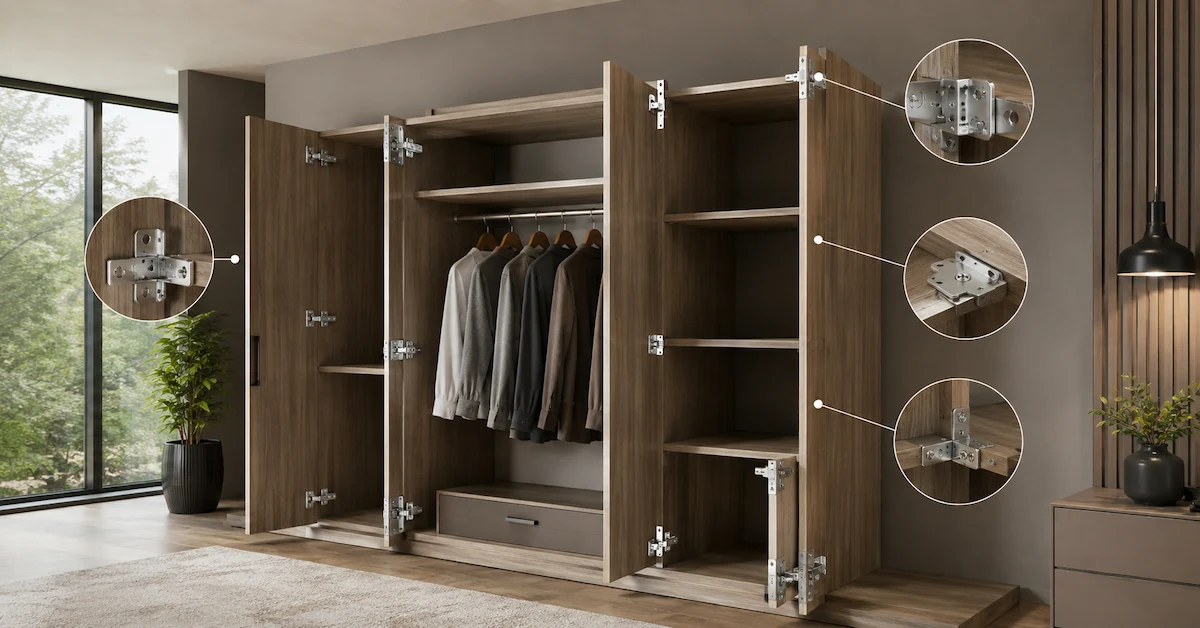
Wood-based boards can be clean, attractive, and economical, but they do not always provide enough strength by themselves. A stamped metal part can reinforce a corner, guide a screw, hold two panels in position, or create a repeatable mounting point.
In furniture projects, custom stamped hardware may include:
- Corner brackets
- Connector plates
- Mounting tabs
- Reinforcement pieces
- Flat fixing plates
- Shelf support parts
- Metal clips
- Small angle plates
- Custom joining components
- Special washers or support plates
These parts may not look complicated. That does not mean they are easy to ignore.
A small hole position error can slow assembly. A sharp burr can scratch a panel. A weak bend can flex under load. A poor surface finish can rust or mark other hardware inside the carton.
A stamped part has to work with the panel, the screw, the packaging, and the person assembling the product.
That is the difference between a metal part and a furniture-ready part.
The panel system should come first
A common sourcing mistake is starting with the hardware drawing alone.
The buyer sends a bracket sketch, asks for a quotation, and compares prices. That may be enough for a basic metal part, but furniture hardware needs more context.
The supplier should understand the panel system.
Particleboard, MDF, plywood, veneered board, and solid wood all behave differently when screws are tightened. A stamped bracket that works well on plywood may feel less secure on a lower-density board. A screw hole that holds in one panel may strip in another.
Before approving custom stamped hardware, buyers should confirm:
- Panel material
- Panel thickness
- Hole diameter
- Hole depth
- Edge distance
- Screw type
- Load direction
- Whether the furniture ships flat-packed
- Whether the end user will assemble it
- Whether the joint may need to be reopened
The stamped hardware is not working in empty space. It is working inside a cabinet structure.
A good supplier will ask about that structure before treating the part as finished.
The image shows a familiar production reality
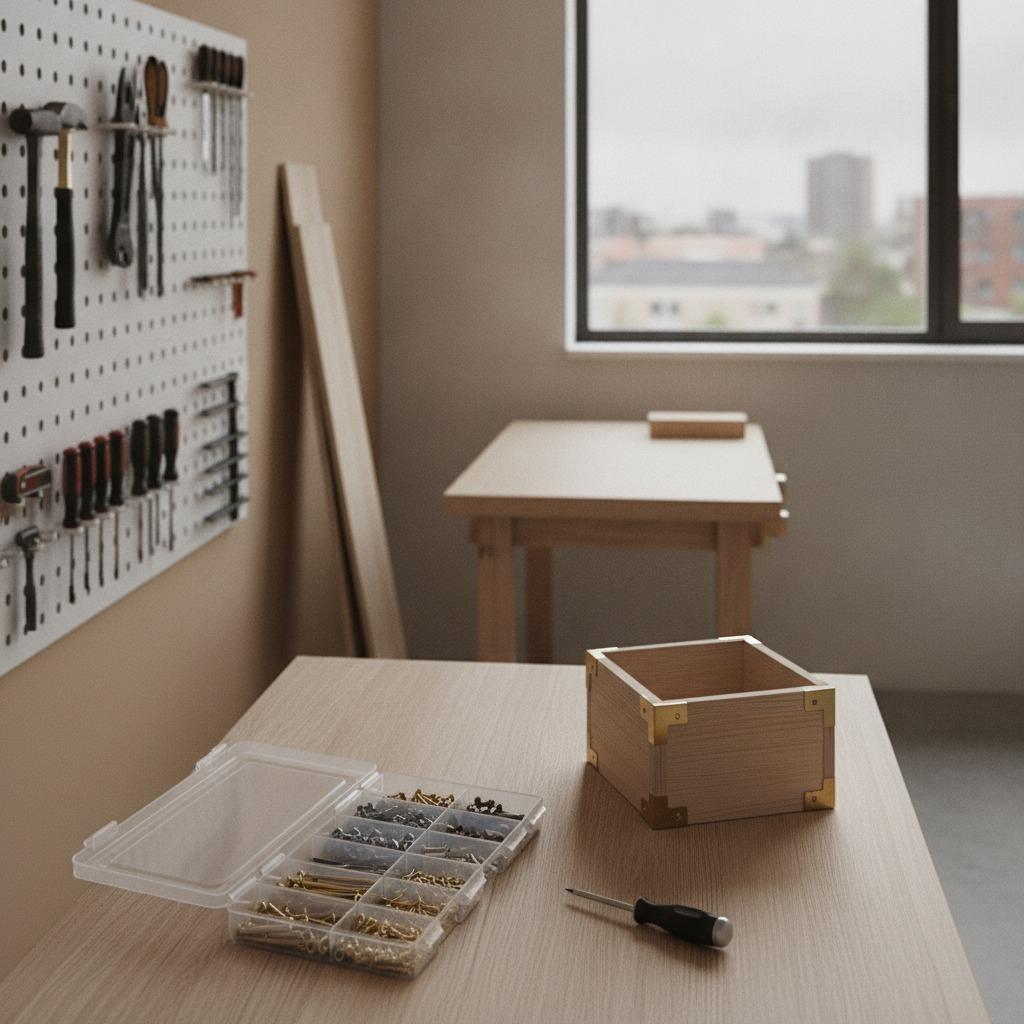
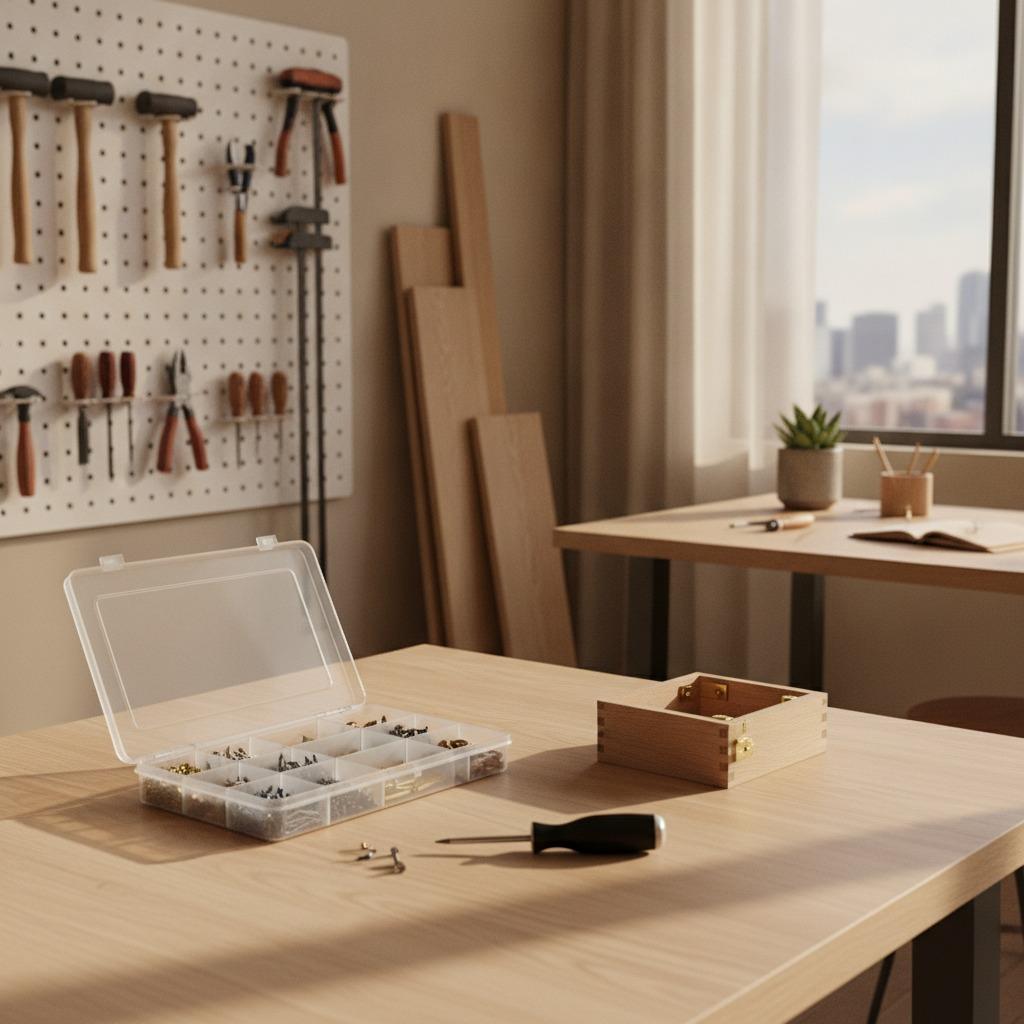
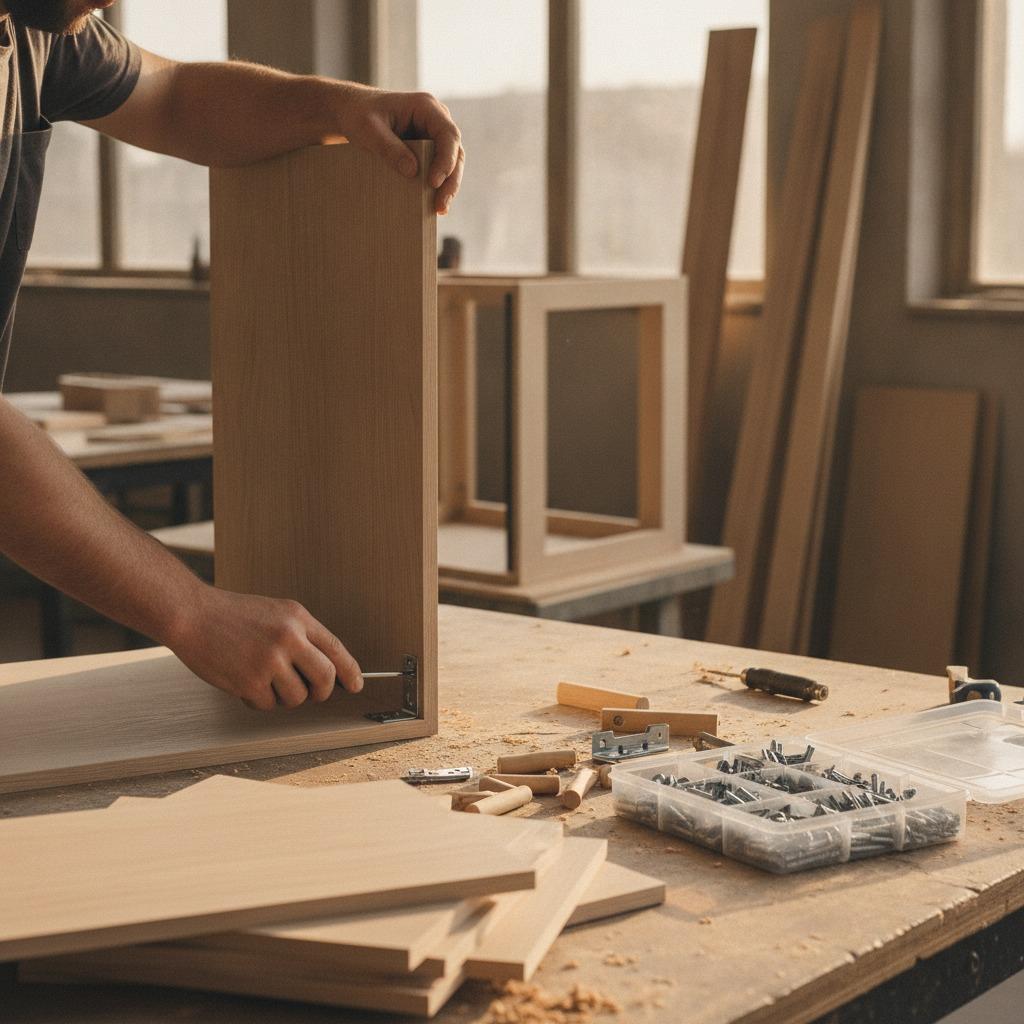
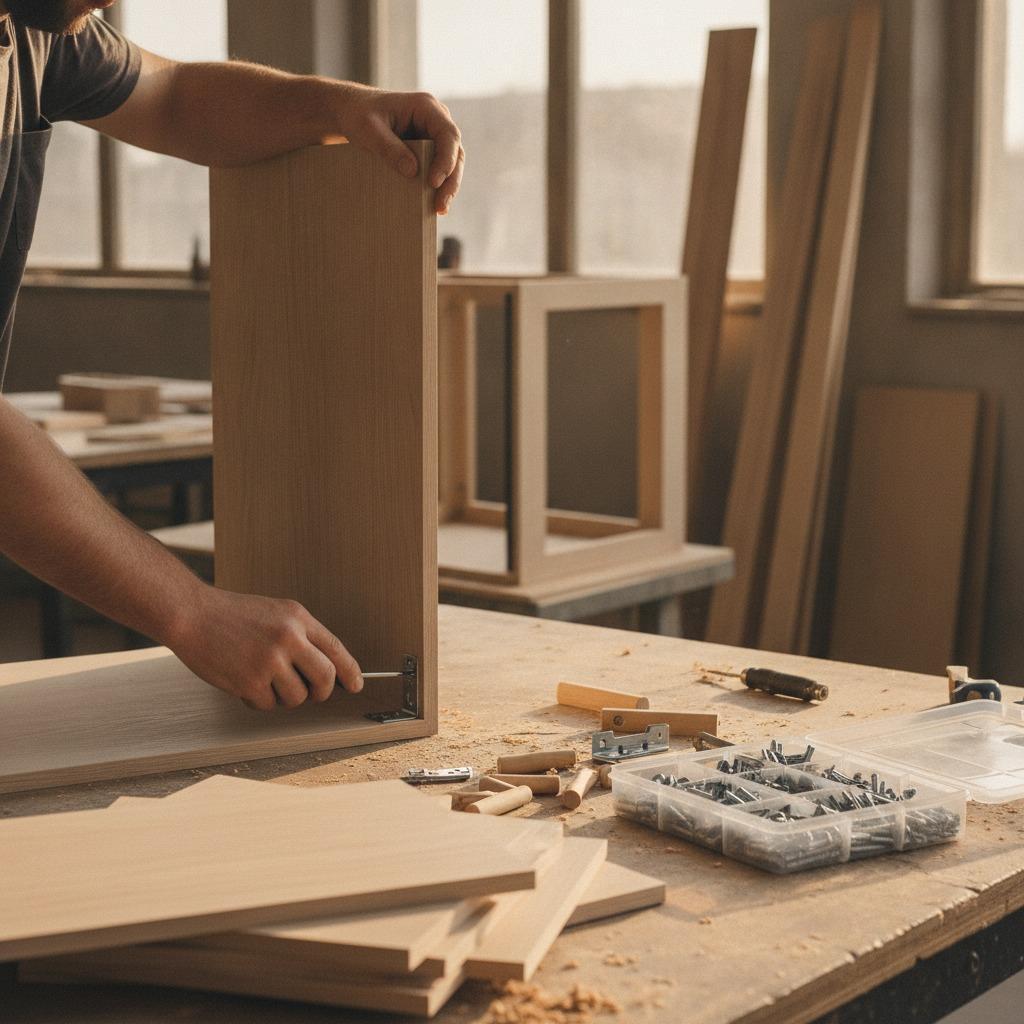
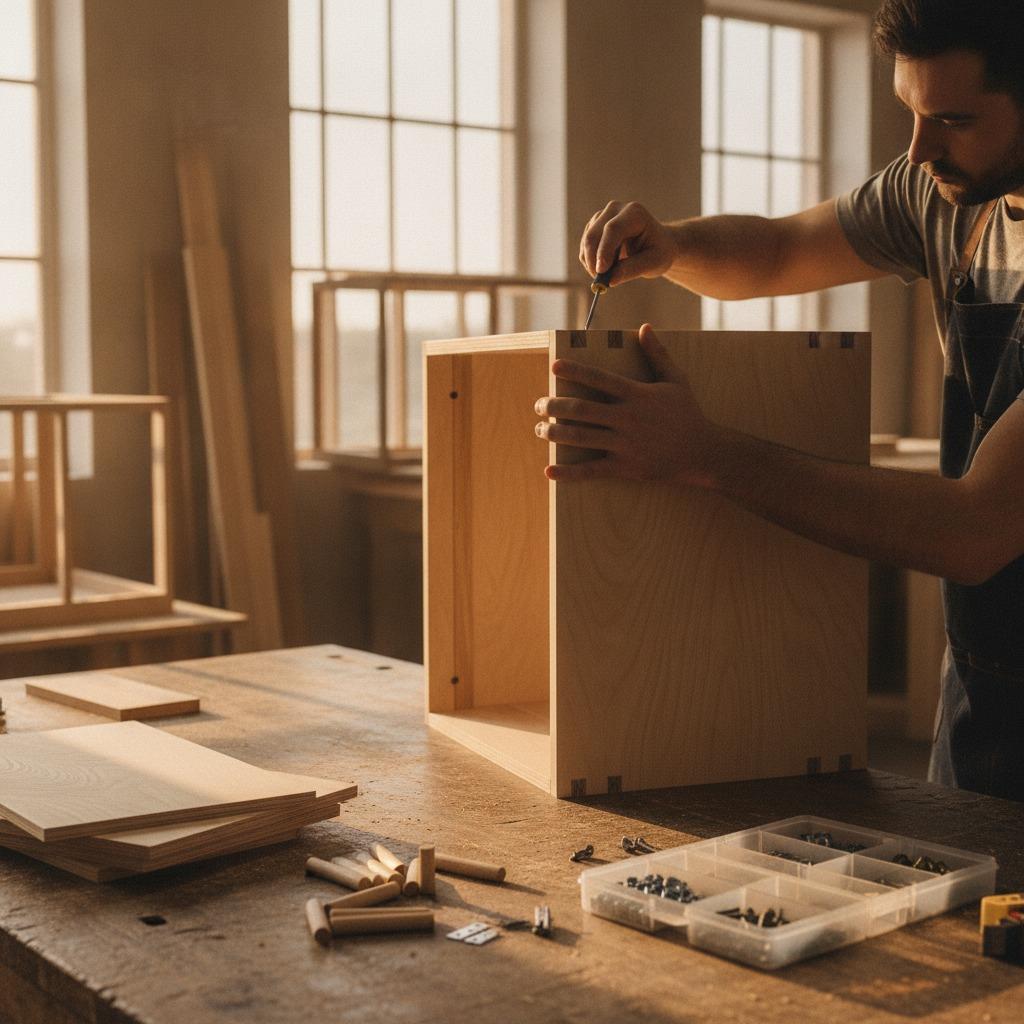
The scene of a flat-pack cabinet or small storage unit in assembly is familiar to many furniture teams.
Light wood-grain panels are prepared with drilled holes. Hardware is arranged nearby. A screwdriver is ready. The product looks simple enough for factory assembly or end-user setup.
That type of product depends on coordination.
The cutting, drilling, edge finishing, screws, brackets, dowels, connectors, and packaging all need to match. If the panel geometry is accurate but the hardware kit is not, assembly still suffers.
Compact shipping only works when the hardware system has been planned from the beginning.
A cabinet carcass with clean square edges is only half the story. The other half is the small stamped or machined hardware that pulls the structure together and keeps it stable after handling.
Standard hardware is useful when it truly fits
Standard hardware has real advantages.
It is faster to source, easier to replace, and often more cost-effective. If a standard bracket, plate, or connector fits the furniture well, there may be no reason to customize it.
But standard does not mean universal.
A furniture design may use unusual panel thickness, a special load path, limited tool access, or a non-standard hole pattern. In those cases, a standard part may create hidden cost.
Workers may need to adjust the part by hand. The cabinet may require extra tightening. The hardware may not sit cleanly inside the panel. The end user may find the assembly confusing.
Custom stamped hardware is useful when it solves one of these real problems.
It should make the product easier to assemble, more stable, or more repeatable. It should not be customized simply because custom sounds better.
Good sourcing sometimes means removing complexity, not adding it.
Where custom stamping becomes worth it
Custom stamping makes sense when the hardware must follow the furniture design closely.
For example, a cabinet may need a bracket with a special hole spacing. A modular shelf may need a support tab that fits into a narrow channel. A storage unit may require a reinforcement plate that works with a fixed drilling layout. A flat-pack product may need a stamped part that is easy for customers to install with one tool.
In these cases, custom hardware can reduce assembly friction.
It can also improve repeatability, especially when the same furniture model is produced in volume.
Still, custom parts require proper control. Buyers need drawings, samples, approval records, tolerance checks, finish confirmation, and repeat-order management.
A capable custom stamping hardware manufacturer should be able to support that process, not only make the first sample.
Tolerance control shows up on the assembly bench
A stamped part may look acceptable when inspected alone.
The real test happens during assembly.
Does the hole line up with the panel?
Does the bend angle sit correctly?
Does the screw seat without forcing?
Does the part stay flat after tightening?
Does the joint remain square?
Small tolerance changes can create large assembly problems.
This is especially true in flat-pack furniture because the same part may be used thousands of times. One slightly incorrect bracket is a small issue. A batch of slightly incorrect brackets becomes a production problem.
Buyers should ask how the supplier controls:
- Material thickness
- Hole position
- Hole diameter
- Bend angle
- Flatness
- Burrs
- Surface finish
- Batch inspection
- Drawing revisions
- Packaging consistency
A low unit price becomes less attractive if workers need to correct the part during assembly.
Repeatability is where good stamped hardware earns its value.
Screws and stamped parts should be developed together
A stamped bracket is rarely used alone.
It usually works with screws, bolts, washers, inserts, dowels, or plastic fittings. If the stamped part is correct but the fastener is wrong, the joint can still fail.
A screw head may not seat properly. A washer may be too small. A thread may strip the board. A bolt may not provide enough clamping force. A sharp stamped edge may damage nearby parts in the hardware bag.
Furniture buyers should review the hardware package as a system.
Jiangmen Jinhe Hardware Co., Ltd. focuses on fasteners, standard parts, and non-standard customization. Its product range includes machine screws, self-tapping screws, micro screws, and precision screws in materials such as stainless steel, iron, and aluminum.
For furniture projects, that kind of fastener background can be useful because the stamped part often needs matching screws or custom fastening support.
A bracket is only as reliable as the fastening method used with it.
Finish matters even when the hardware is hidden
Some furniture hardware is visible after assembly. Some is hidden inside the unit. Some is only seen during installation.
All three situations need finish control.
A visible bracket should look clean. A hidden plate still needs basic corrosion resistance. A part packed with other hardware should not scratch, rust, or transfer marks during shipping.
Buyers should confirm:
- Base material
- Surface treatment
- Plating or coating type
- Corrosion resistance
- Burr control
- Color consistency, if visible
- Storage condition
- Compatibility with other packed parts
A metal part can be structurally correct and still create a complaint if it arrives scratched, rusty, sharp, or inconsistent in color.
This matters for furniture shipped across regions, stored in warehouses, or sold through e-commerce channels where carton handling may be rough.
Packaging is part of the furniture hardware system
Flat-pack furniture does not use hardware in isolation.
The parts usually arrive as a kit. Screws, brackets, dowels, connector pieces, caps, and other fittings may all be packed together. If the kit is confusing, assembly slows down before the first panel is even tightened.
For stamped hardware, packaging should be planned early.
Buyers should decide:
- How many stamped parts go into each kit
- Whether they need separate bags
- Whether sharp edges require protection
- Whether plated surfaces can rub together
- Whether labels are needed
- Whether the kit is packed by furniture model
- Whether spare parts are included
- Whether the packaging matches the instruction sheet
A part that is well made but poorly packed can still create problems.
Jiangmen Jinhe Hardware notes support for logistics, warehousing, supply chain services, and foreign trade. For furniture buyers managing repeat orders or export programs, that supply support can help keep hardware aligned with panels, cartons, and final packing schedules.
Inspection should include real-use testing
Inspection reports are useful, but they do not replace assembly testing.
A stamped part may pass dimensional inspection and still be awkward to use. It may fit the drawing but not the carton layout. It may match the screw but scratch the panel during installation.
Before bulk approval, buyers should test the hardware in real conditions.
That means using production-intent panels, matching screws, actual tools, and the planned assembly sequence. If the furniture will ship flat-packed, the hardware should also be tested in the intended kit format.
Useful questions include:
- Can the worker install the part quickly?
- Does the part align with the drilled holes?
- Does the screw tighten cleanly?
- Does the part damage the panel surface?
- Does the joint stay square?
- Does the hardware survive packing and transport simulation?
- Can the end user identify the part easily?
The bench test often reveals what the drawing does not.
Common mistakes buyers should avoid
One mistake is treating stamped hardware as a commodity.
In furniture, a small geometry change can affect the whole assembly process.
Another mistake is approving the metal part without the matching screw.
The two should be tested together. A bracket, plate, or tab may need a specific screw length, head style, washer, or torque level.
A third mistake is over-specifying the part.
More thickness, more strength, or more metal is not always better. A heavier part may add cost, slow installation, or make the furniture harder to assemble.
Buyers also sometimes ignore packaging until the end.
For flat-pack furniture, packaging is not a shipping detail. It is part of the customer’s assembly experience.
The final mistake is choosing only by price.
A cheap stamped part may become expensive if it creates rework, delays, warranty calls, or customer frustration.
What buyers should ask before choosing a supplier
Before working with a custom stamping hardware manufacturer, ask practical questions:
What material and thickness do you recommend for this furniture application?
Can the part match our panel thickness and hole pattern?
What tolerances can you control in production?
How do you manage burrs and sharp edges?
What finishes are available?
Can the part be tested with our screws and panels?
Can you support non-standard customization?
How are inspection records handled?
How are drawing revisions controlled?
Can parts be packed into furniture hardware kits?
Can you support repeat orders and delivery coordination?
The answers should connect the part to the furniture.
A supplier that only talks about stamping cost may not understand the full assembly risk.
Frequently Asked Questions
What does a custom stamping hardware manufacturer provide for furniture buyers?
A custom stamping hardware manufacturer can provide brackets, connector plates, support tabs, reinforcement pieces, clips, fixing plates, and other stamped metal parts used in furniture assembly.
Is custom stamped hardware always necessary?
No. Standard parts are often better when they fit reliably. Custom stamping is useful when the furniture design has special panel, hole, load, or assembly requirements.
Why does stamped hardware matter in flat-pack furniture?
Because flat-pack furniture depends on repeatable assembly. Small hardware parts help panels align, tighten, and stay stable during use.
Should stamped parts and screws be tested together?
Yes. The stamped part and the fastener work as one system. Screw length, head style, thread, washer use, and tightening force can all affect performance.
What should buyers check before bulk orders?
Buyers should check material, thickness, hole position, bend accuracy, finish, burr control, screw compatibility, packaging, inspection, and assembly performance.
Why does packaging matter for custom stamped hardware?
Packaging prevents missing parts, scratching, mixing, and confusion during assembly. In flat-pack furniture, the hardware kit is part of the product experience.
Good hardware makes flat-pack furniture feel easy
The best flat-pack furniture does not feel like a pile of parts.
It feels controlled.
The panels align. The screws tighten properly. The brackets sit where they should. The stamped hardware supports the joint without drawing attention to itself. The customer finishes assembly without wondering whether something is wrong.
That result depends on small metal parts doing their job correctly.
For custom stamped hardware, furniture stamping parts, cabinet connector hardware, standard fasteners, and non-standard customized components, Jiangmen Jinhe Hardware Co., Ltd. can discuss material selection, dimensions, fastener matching, sample testing, inspection, packaging, and supply support.
Start with the panel system, joint type, hardware drawing, screw requirement, packaging method, and expected order quantity.
Once the assembly conditions are clear, the right stamped hardware becomes much easier to produce and repeat.