
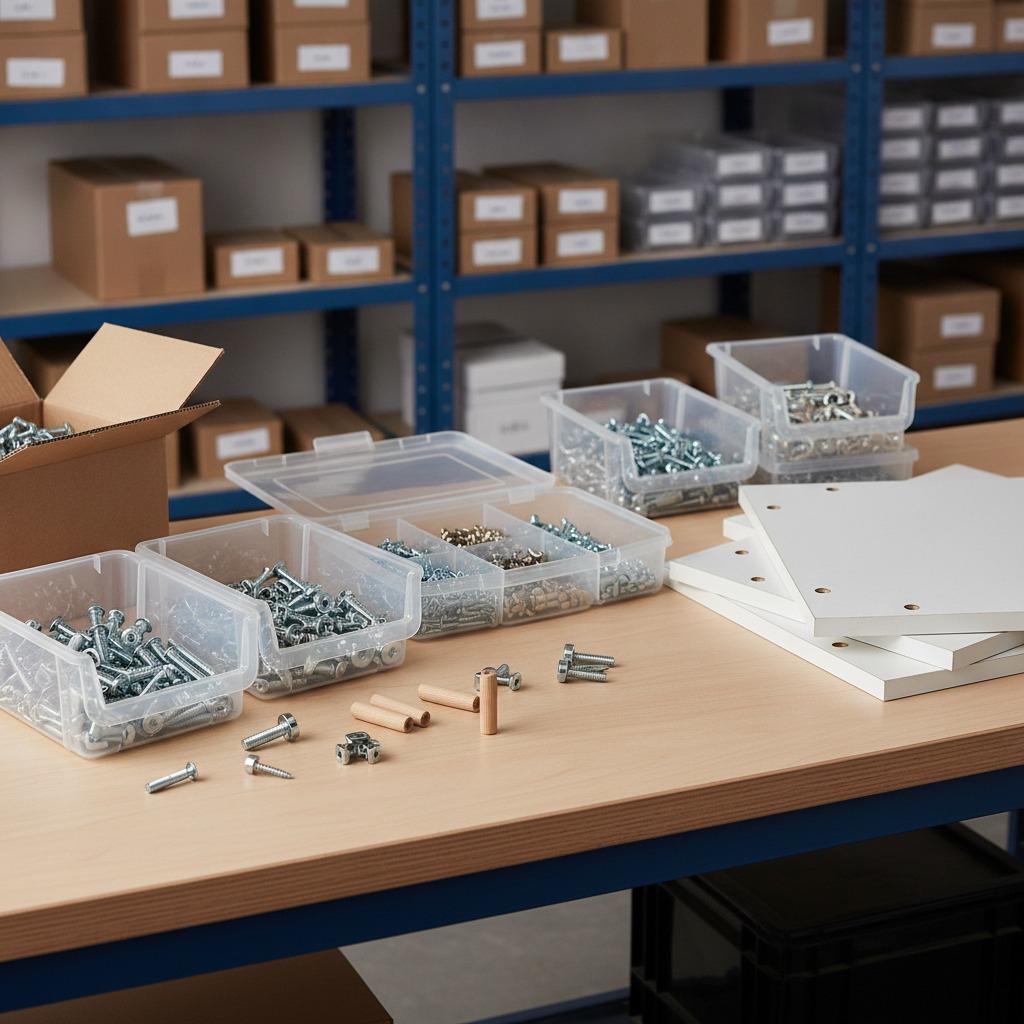
Flat Pack Assembly Fittings: Why Small Hardware Is Back in the Spotlight
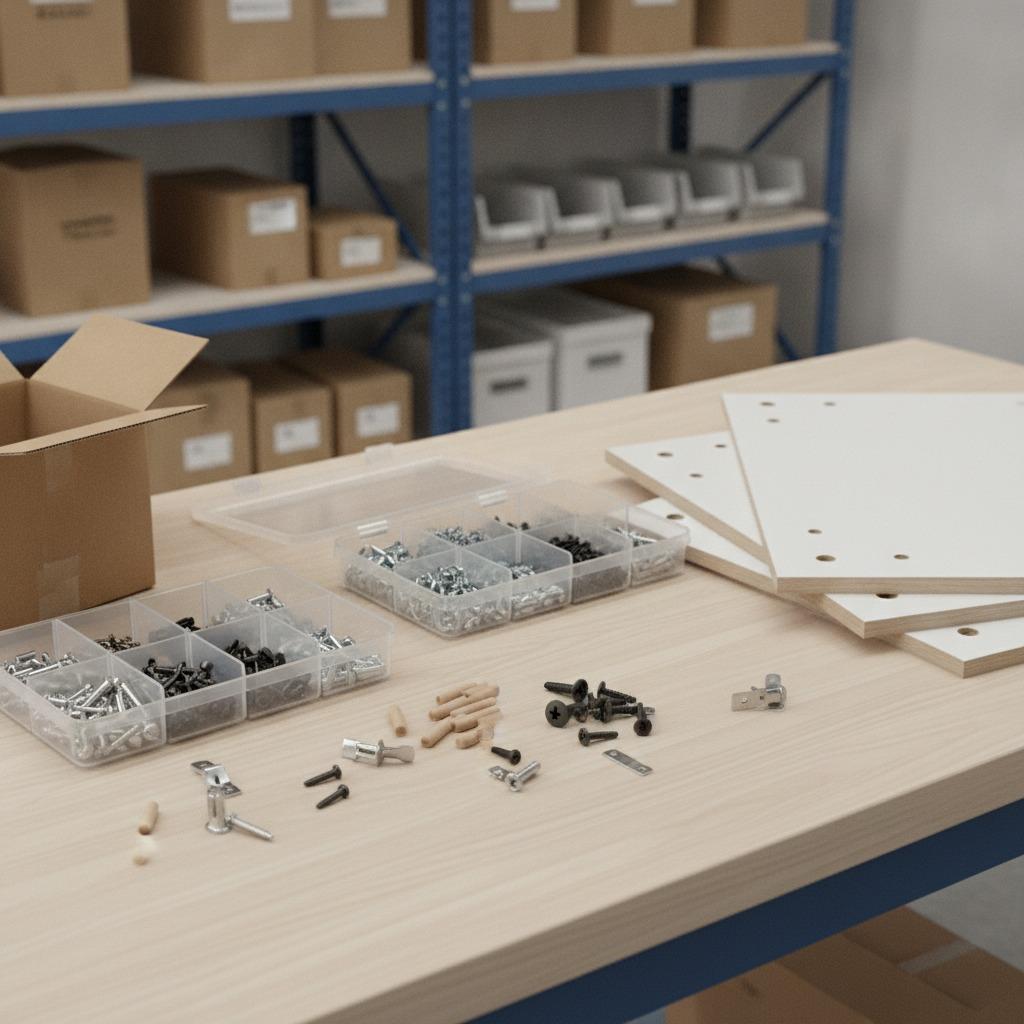 Flat-pack furniture has always looked simple from the outside.
A few panels. A hardware kit. An instruction sheet. A carton that is easier to ship than a fully assembled cabinet.
But anyone who works with furniture production knows the difficult part is not always the panel. It is often the small hardware sitting in the box.
One cam lock does not match the bolt.
One dowel is too loose.
One screw looks almost the same as another but belongs in a different hole.
One tray looks organized until the assembly worker reaches for the wrong part.
That is why flat pack assembly fittings are getting more attention again.
Furniture factories, RTA brands, hardware distributors, and e-commerce sellers are all under pressure to reduce assembly errors, control packaging volume, and avoid customer complaints. A connector kit may look like a small box of ordinary fasteners, but in real production it can decide whether a cabinet goes together smoothly or becomes a rework problem.
Flat-pack hardware is not just a cost item
Many buyers used to treat flat pack furniture connectors as basic purchasing items.
Find the cam lock. Match the screw. Add a dowel. Pack everything with the panels.
That approach can work for simple projects, but it becomes risky once the product range grows. More SKUs mean more hardware combinations. More channels mean different packaging needs. More customer assembly means more pressure on part clarity.
A low-cost fitting is not useful if it slows the line or creates after-sales issues.
The real value of a flat-pack hardware kit is control. It should help the buyer control part count, assembly sequence, packaging format, replacement supply, and repeat-order consistency.
That is why sourcing teams should look beyond the price of the cam lock itself.
The better question is whether the whole kit supports the furniture system.
What is usually inside a cam lock connector kit
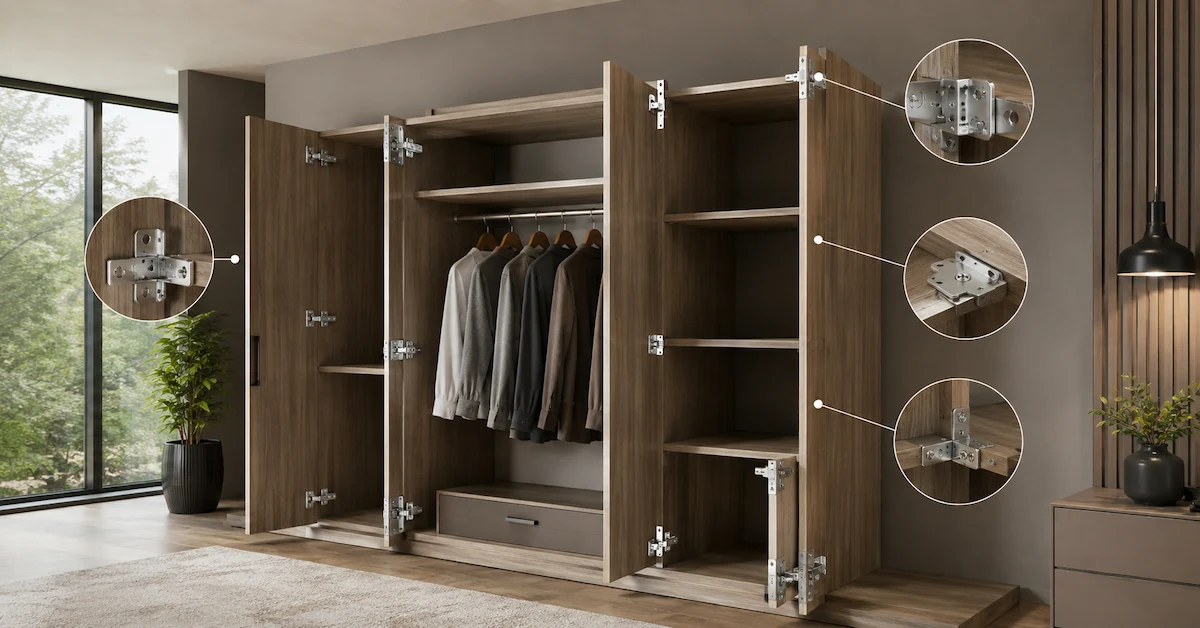
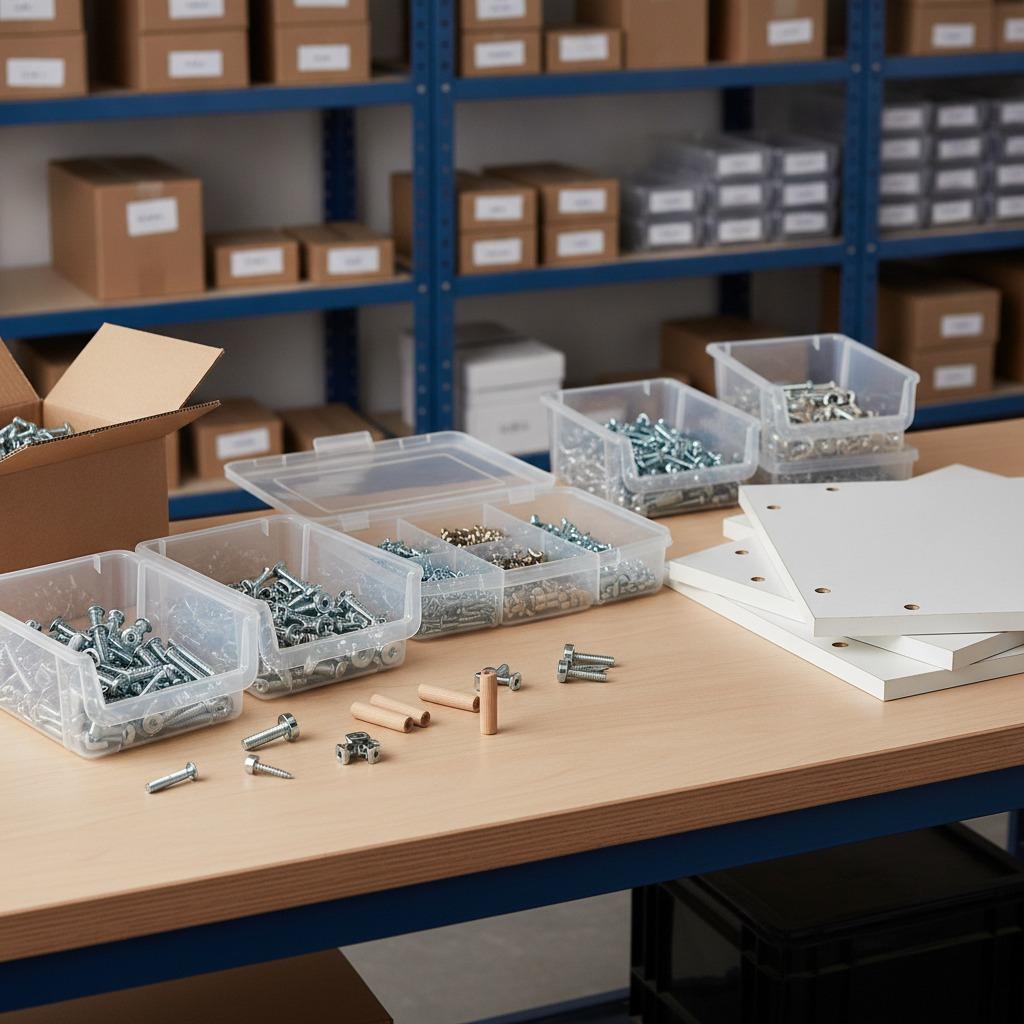
A typical cam lock connector kit for panel furniture may include round cam locks, connector bolts, screws, wooden dowels, plastic sleeves, washers, brackets, caps, or small fittings.
Each part looks simple. Each part has a role.
The cam lock pulls two panels together.
The bolt gives the cam something to catch.
The dowel helps align the panels before tightening.
The screw holds brackets, supports, or other fittings in place.
The packaging keeps the parts separated until someone needs them.
When these parts match correctly, assembly feels quick and controlled.
When one part is wrong, the whole cabinet can feel poorly made.
This is why buyers should not evaluate a cam lock set only by looking at loose hardware. The complete kit should be tested as it will be used: with the real panel, real drilling pattern, real assembly sequence, and real packaging format.
Packaging affects production more than buyers expect
A clear plastic compartment box may seem like a small packaging choice.
On the shop floor, it can matter a lot.
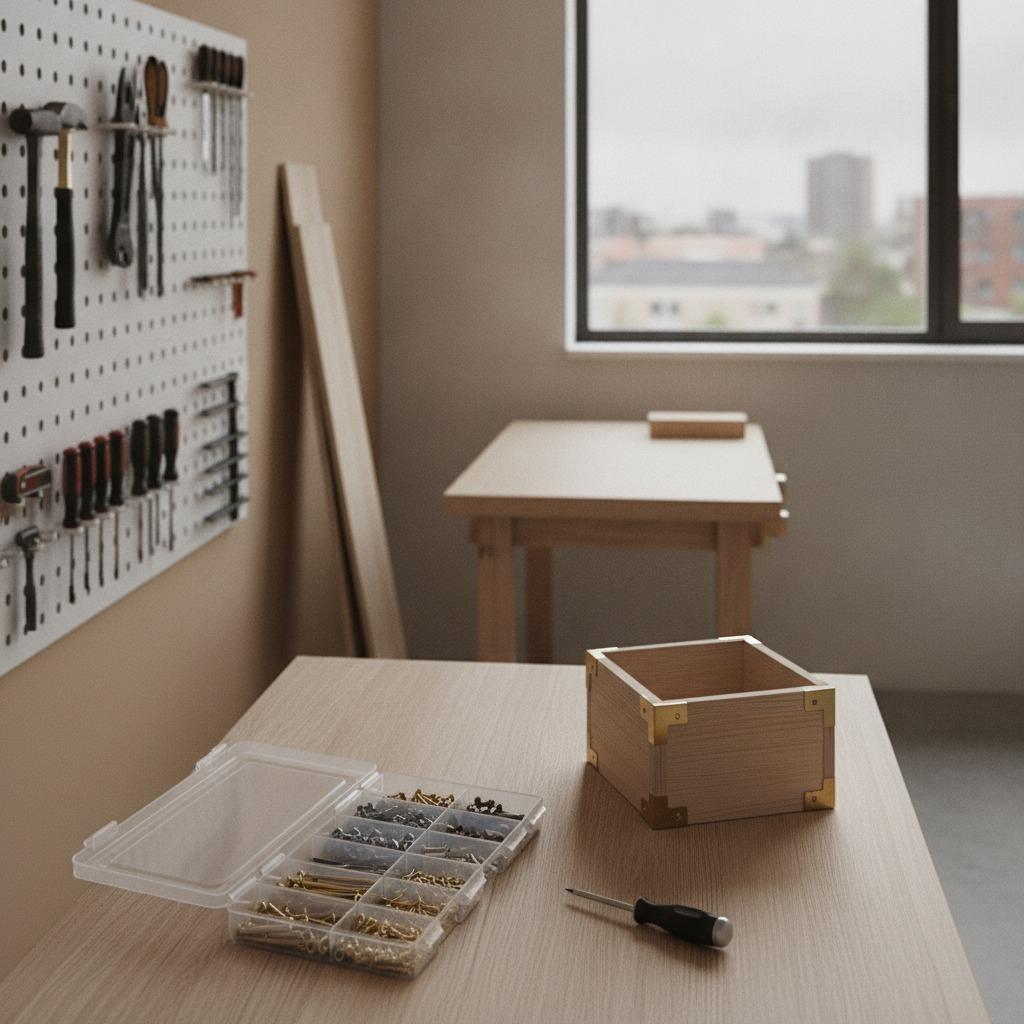
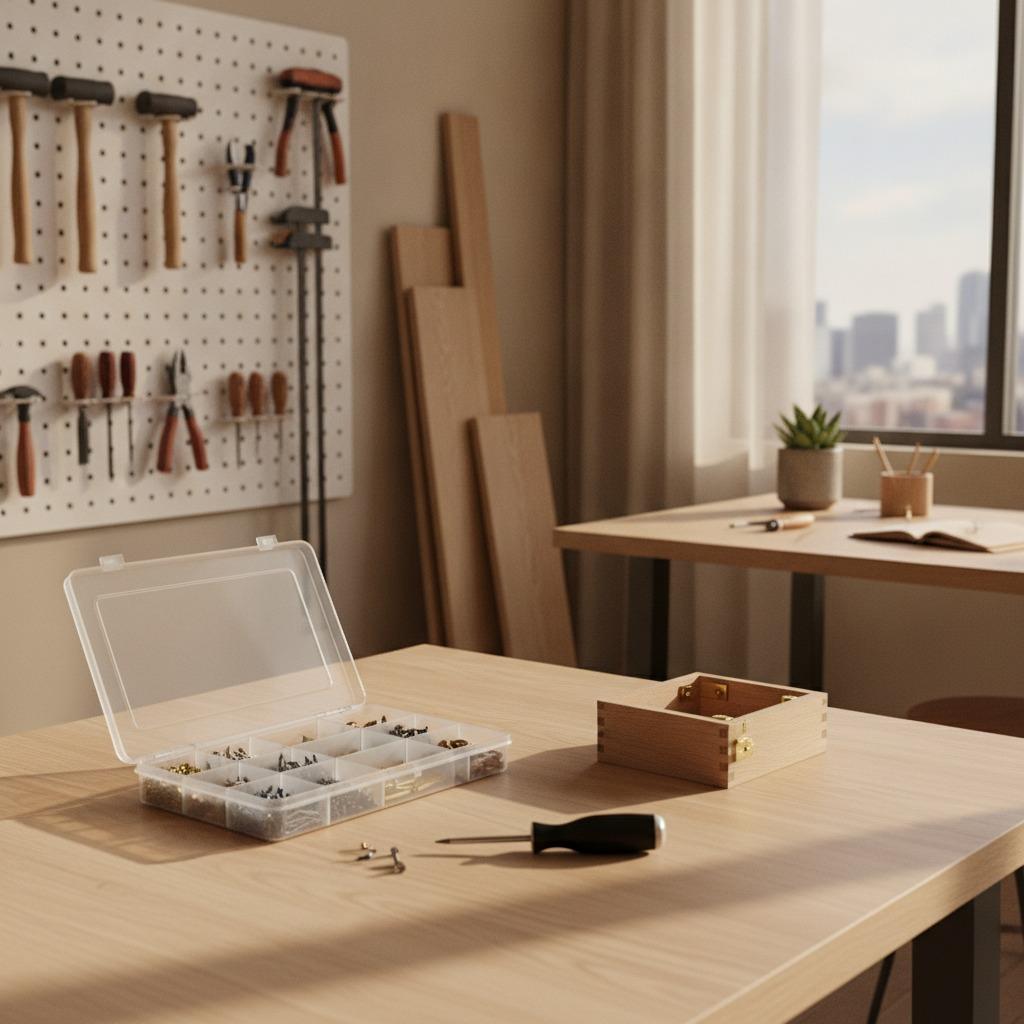
Segmented packaging helps workers identify parts faster. It reduces the chance of mixing similar screws or bolts. It also makes incoming inspection easier because the buyer can see the assortment without opening every bag.
For hardware distributors and repair-kit sellers, organized packaging also improves resale value. Customers can see what they are buying. Warehouse teams can store the kit more cleanly. E-commerce sellers can photograph the product more easily.
Loose hardware may be cheaper at first.
But if workers must sort it again, or if customers receive a confusing bag of mixed parts, the saving may disappear quickly.
A good cabinet hardware supplier should be able to discuss packaging as part of the product, not as an afterthought.
Board compatibility is the first real test
Flat-pack fittings only work well when they match the board system.
Particleboard, MDF, plywood, and laminated panels do not behave the same way. Hole strength, screw holding, edge distance, and drilling quality all change the final result.
A cam lock kit that works well in one cabinet may not work in another.
Before approving flat pack assembly fittings, buyers should confirm:
- Board material
- Panel thickness
- Hole diameter
- Hole depth
- Edge distance
- Cam lock size
- Bolt length
- Dowel diameter
- Assembly direction
- Whether the product may be disassembled later
The safest approach is simple: test the kit in the actual board.
Do not rely only on drawings or supplier photos. Build the sample. Tighten the cam locks. Check whether the panels pull together cleanly. Move the cabinet slightly and see whether the joint stays firm.
A few minutes of testing can prevent a large batch of unsuitable hardware.
Cam locks are simple, but the system is not
Cam locks remain popular because they solve a real furniture problem.
They let panels ship flat. They create a clean joint without large visible brackets. They are familiar to factories and end users. They also allow some furniture to be disassembled and moved.
But a cam lock is not magic.
It depends on accurate drilling, stable panel thickness, correct bolt length, and a good match between the cam and connector. If one of those details is wrong, the user may struggle even though the part looks standard.
This is where some buyers make mistakes.
They assume cam locks are universal. They are not. Size, depth, head shape, finish, and mating hardware all matter.
A responsible sourcing process should treat the cam, bolt, dowel, panel, hole pattern, and assembly step as one system.
Standard assortment or customized kit?
Many flat-pack furniture programs can use standard hardware assortments.
That is often the best choice when the fittings match the board and the assembly method. Standard parts are easier to reorder, easier to replace, and easier to manage across different product lines.
But some projects need customization.
A cabinet may use a non-standard board thickness. A shelving unit may need a stronger connector. A repair kit may require a specific bolt length. A furniture brand may need private-label packaging, model-specific labels, or a special hardware mix.
Customization is useful when it solves a real problem.
It should not be added just to make the kit look unique.
A custom kit requires drawings, samples, approval records, packaging confirmation, and repeat-order control. If those details are not managed carefully, customization can create more risk than value.
Material and finish should be confirmed, not guessed
Many flat-pack fittings use silver-colored or zinc-like finishes. That is common for indoor furniture hardware, but buyers should still confirm the real specification.
The cam lock may be zinc alloy. The screw may be plated steel. The dowel may be wood. A bracket may have another finish. These differences matter when parts are packed together or used in different environments.
Buyers should ask for:
- Base material
- Surface treatment
- Finish type
- Corrosion expectation
- Thread specification
- Size tolerance
- Packing protection
- Whether finish changes require approval
For indoor cabinets and shelving, a standard finish may be enough. For humid storage, bathrooms, utility furniture, or long-distance export, finish performance may need closer review.
A bright sample does not always tell the full story.
Supplier discipline matters when orders repeat
A first sample kit can look neat because everyone is paying attention.
The real test comes later.
Can the supplier repeat the same assortment after several batches? Will the cam lock size stay the same? Will the matching bolt remain consistent? Will the packaging layout match the approved sample? Will labels change without notice?
These are practical questions for buyers managing multiple SKUs or export shipments.
Jiangmen Jinhe Hardware Co., Ltd. was founded in 2016 in Jiangmen City, Guangdong Province. The company works with fasteners, standard parts, and non-standard customization, including machine screws, self-tapping screws, micro screws, and precision screws. Its materials include stainless steel, iron, and aluminum.
For buyers sourcing RTA furniture hardware, this fastener background is relevant because flat-pack assembly fittings often depend on stable screws, bolts, connectors, and kit organization.
Jiangmen Jinhe also notes support for inspection, documentation, logistics, warehousing, foreign trade, and supply chain services. For buyers managing cross-border furniture hardware programs, that support can help keep part supply, packing, and delivery more predictable.
Common sourcing mistakes
One common mistake is approving the hardware without assembling the actual product.
Loose parts may look fine. The assembled cabinet tells the real story.
Another mistake is ignoring packaging. A mixed bag of fasteners may save a little money, but it can create sorting work, packing errors, and customer complaints.
A third mistake is assuming one kit fits every furniture line. Even small differences in panel thickness, hole depth, or dowel size can change the result.
Buyers also sometimes focus only on the cam lock and forget the rest of the kit. The bolt, dowel, screw, label, tray, and spare-part plan all matter.
The final mistake is accepting vague specifications. If the supplier cannot confirm dimensions, material, finish, packaging, or inspection details, the buyer should not guess.
What buyers should request before ordering
Before placing a production order, sourcing teams should ask:
What parts are included in the kit?
What cam lock size is supplied?
What bolt length and thread type are used?
What dowel size is included?
What board thickness is the kit designed for?
What hole diameter and depth are required?
Can the kit be tested with our actual panel?
How are similar parts separated?
Can the packaging match our production or resale channel?
Can OEM labels or model numbers be added?
What material and finish documents are available?
How is kit completeness checked?
Can the same kit be repeated in future orders?
Good answers should be specific and connected to the furniture design.
A supplier that understands flat-pack furniture will not only quote parts. It will discuss fit, assembly, packaging, inspection, and repeat supply.
Frequently Asked Questions
What are flat pack assembly fittings?
Flat pack assembly fittings are the cam locks, bolts, screws, dowels, brackets, caps, and other small hardware used to assemble ready-to-assemble furniture.
Are cam lock connector kits still widely used?
Yes. Cam lock connector kits remain common in cabinets, wardrobes, shelving, desks, and other flat-pack furniture because they support compact shipping and simple assembly.
Why does board material matter?
Different boards hold fasteners differently. MDF, particleboard, plywood, and laminated panels all require suitable drilling and connector selection.
Should buyers test the hardware before bulk orders?
Yes. Buyers should test the kit with the actual panel material, hole pattern, and assembly sequence before volume production.
Is compartment packaging better than loose packing?
It depends on the use case. Compartment packaging helps with identification and part separation, while loose packing may suit bulk factory use if the buyer has its own sorting process.
Can flat-pack fittings be customized?
Yes. Cam size, bolt length, screw type, finish, kit quantity, packaging, and labels can be customized when the furniture program requires it.
Good flat-pack hardware makes assembly predictable
Flat-pack hardware is getting more attention because buyers want fewer surprises.
They want panels that align. They want fittings that match the holes. They want organized kits that workers and customers can understand quickly. They want repeat orders that look and perform like the approved sample.
That is what good flat pack assembly fittings should provide.
For flat pack furniture connectors, cam lock connector kits, cabinet hardware, RTA furniture hardware, custom fasteners, and organized hardware packaging, Jiangmen Jinhe Hardware Co., Ltd. can discuss fastener selection, kit structure, material options, packaging formats, inspection, logistics, warehousing, and repeat supply requirements.
For direct inquiries:
Tel/WeChat: +86 13729150102
WhatsApp: +86 13322893939
Email: sharon@hkhomeideas.com
Start with the board material, panel thickness, drilling pattern, hardware list, packaging method, and expected order quantity.
Once the assembly system is clear, the right flat-pack hardware kit becomes much easier to source and repeat.