
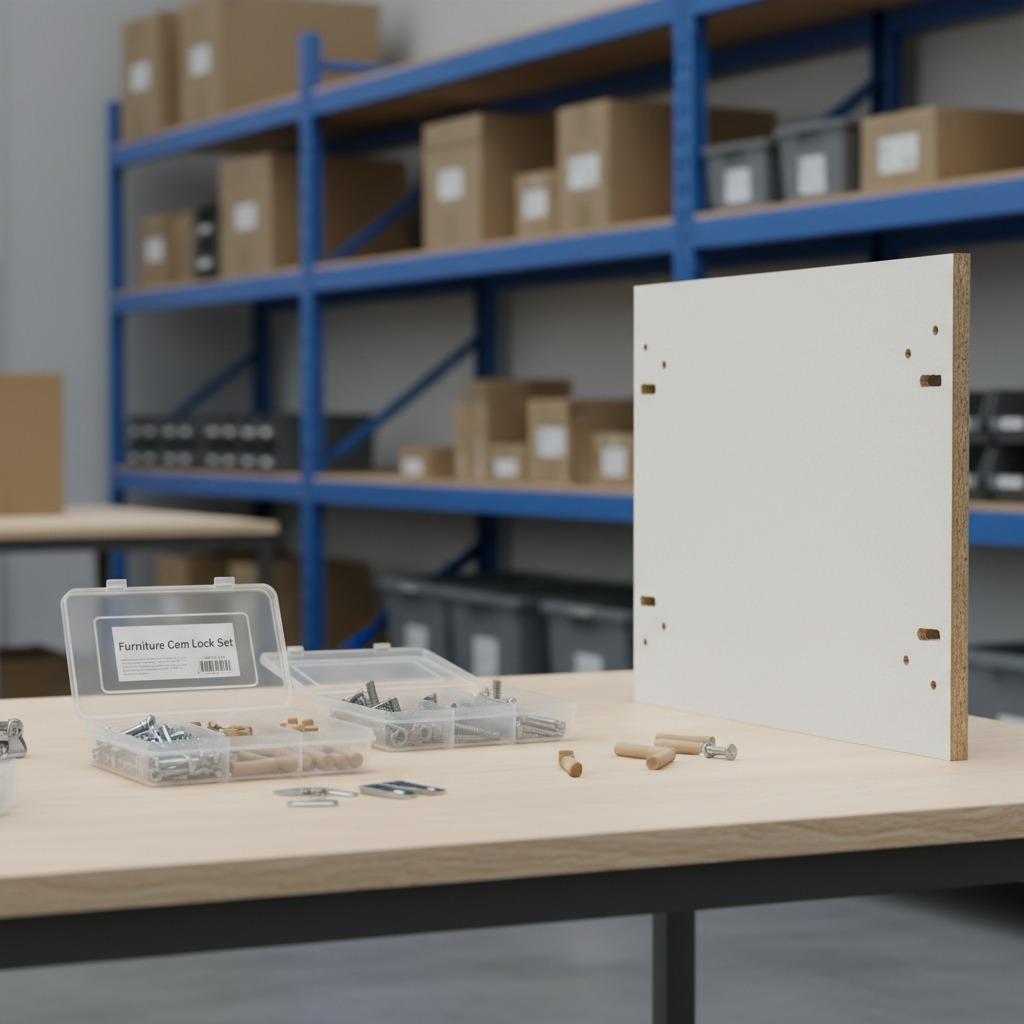
Flat Pack Assembly Fittings: Why Small Hardware Decides the Furniture Experience
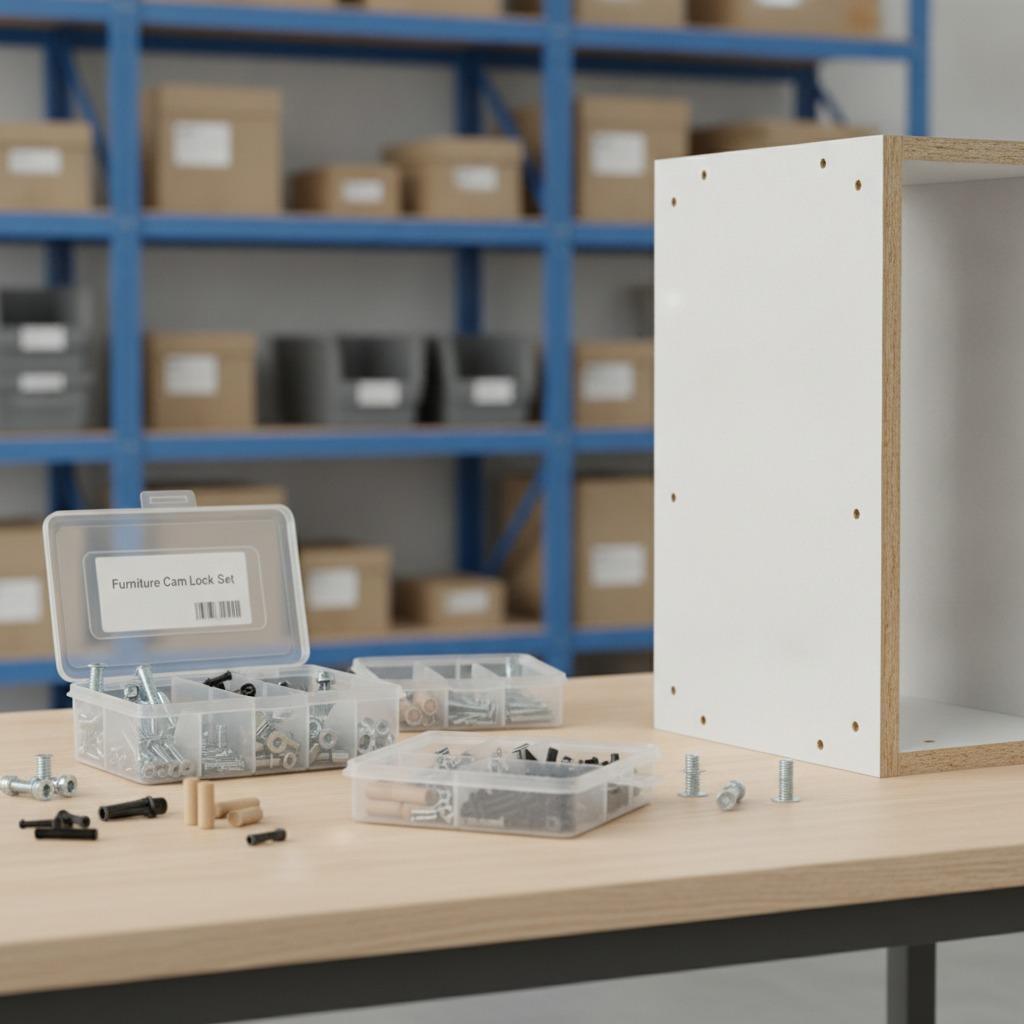
When a cabinet arrives in a flat carton, most people notice the panels first.
They check the color. They look at the surface finish. They count the boards. They wonder whether the instruction sheet is clear enough.
But the real test usually begins when the hardware bag is opened.
One missing cam lock can stop the whole assembly. One wrong screw length can damage a panel. One loose dowel can make the cabinet feel cheap before it is even finished. For furniture factories, e-commerce sellers, wholesalers, and sourcing teams, this is why flat pack assembly fittings deserve more attention than they usually get.
The panels may create the shape of the furniture.
The fittings decide whether that shape can be assembled smoothly, shipped efficiently, and used without complaints.
Flat pack furniture depends on small parts behaving correctly
Ready-to-assemble furniture works because every part is supposed to meet in a predictable way.
The holes are drilled before shipment. The panels are cut to size. The hardware kit is packed with the carton. The customer, installer, or line worker follows the sequence and expects the parts to fit.
When the fittings are correct, assembly feels simple.
When they are wrong, even a basic cabinet becomes frustrating.
A cam lock may not catch the bolt. A dowel may sit too loosely. A screw may strip the board. A bracket may not line up with the hole pattern. These problems are small in size, but large in effect.
That is why flat pack furniture connectors should be selected as part of the whole cabinet system, not as loose hardware added at the end.
What a typical flat pack hardware kit includes
A flat pack assembly kit often contains more than one fastener type.
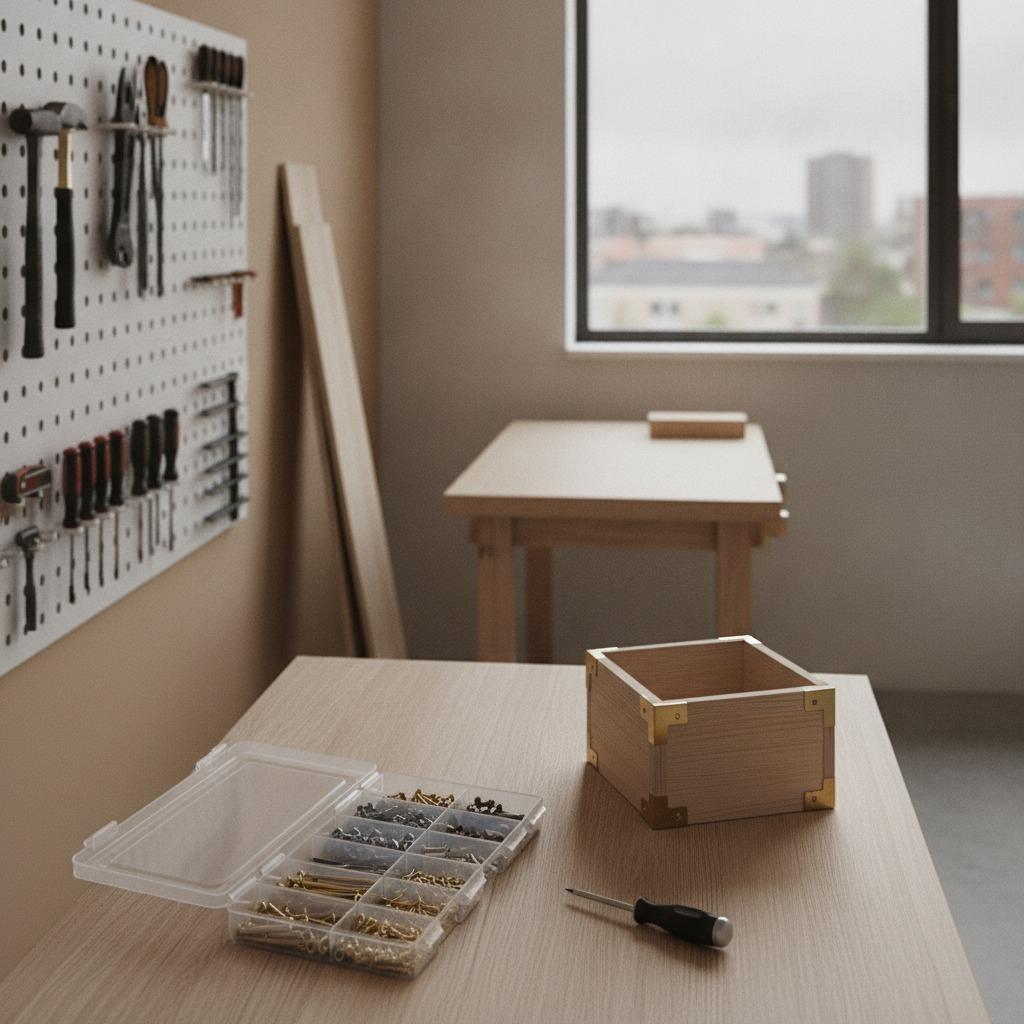
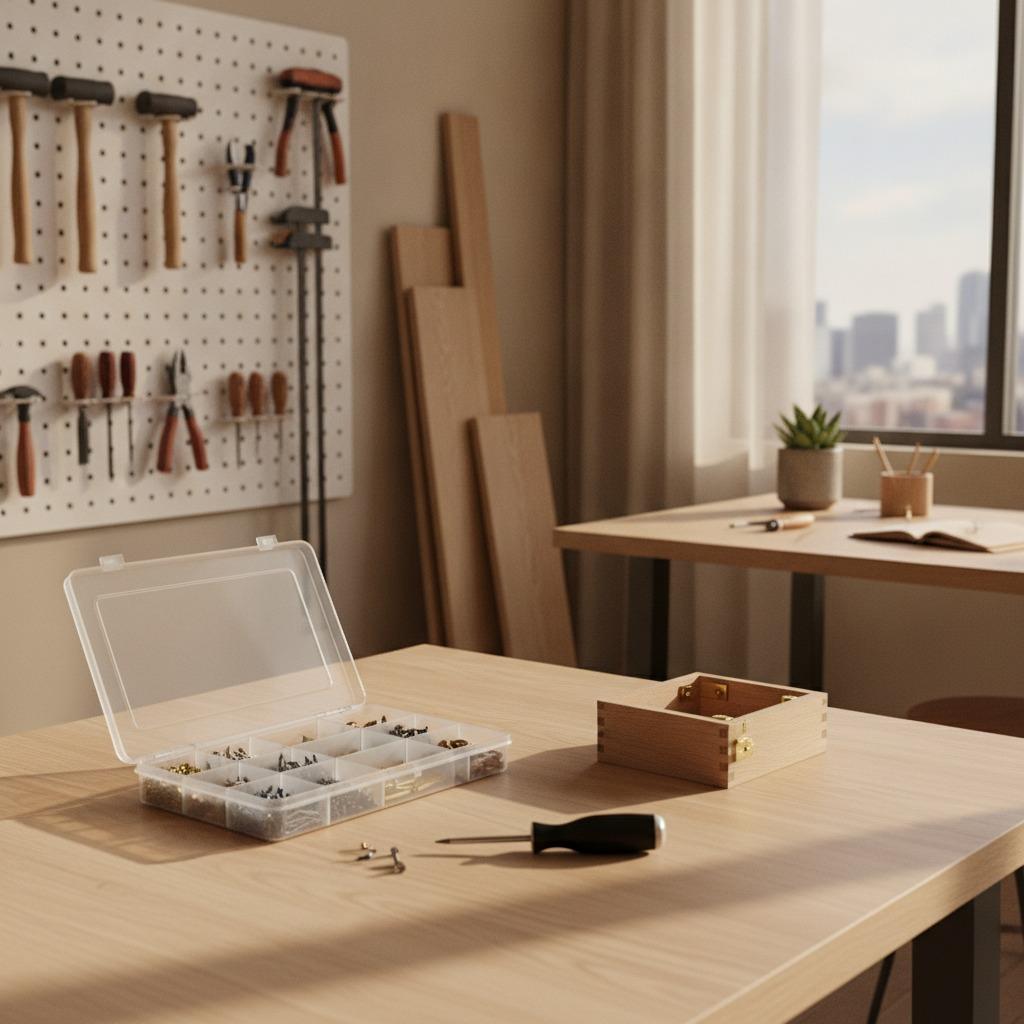
For a cabinet, wardrobe, shelf unit, or storage box, the kit may include:
- Cam locks
- Connector bolts
- Wooden dowels
- Self-tapping screws
- Machine screws
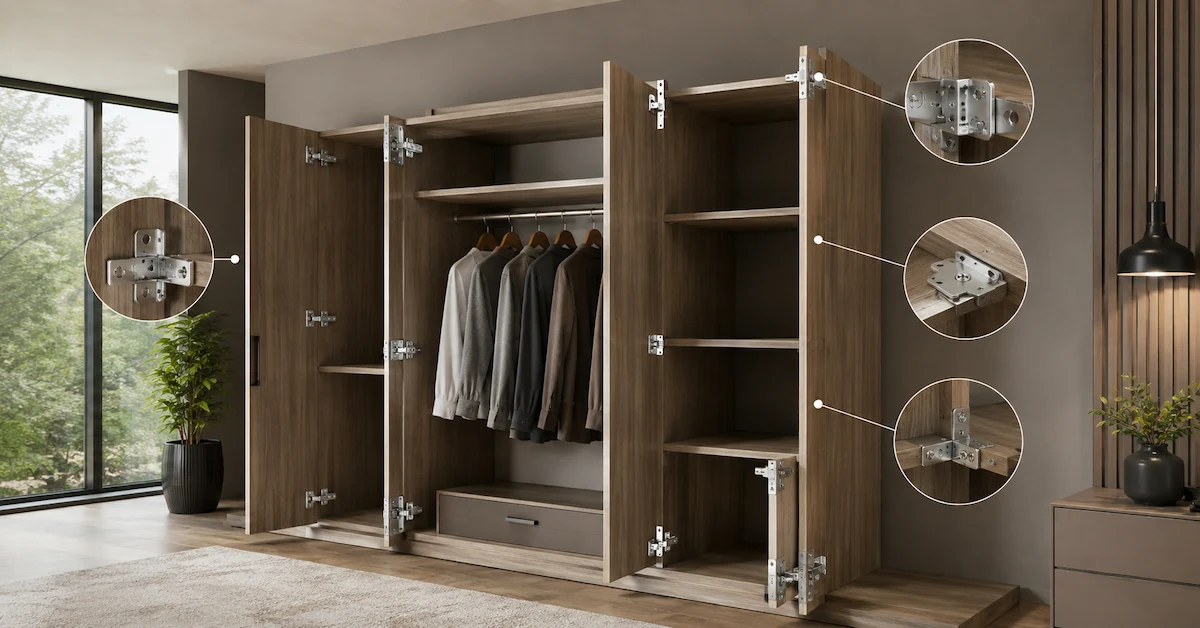
- Brackets
- Shelf supports
- Plastic caps
- Washers or spacers
- Small installation tools
- Labels or instruction references
Each part has a job.
Dowels help align panels before tightening. Cam locks pull two panels together. Screws secure brackets or fittings. Shelf supports allow adjustment. Caps hide exposed holes or improve the finished look.
The kit only works when these parts match one another.
A cam lock without the correct bolt is useless. A screw that is too long may break through the panel. A dowel that is too small may allow movement. A bracket with the wrong hole position may force workers to adjust the furniture by hand.
A good furniture connector kit should reduce uncertainty, not add it.
Cam lock systems remain popular for a reason
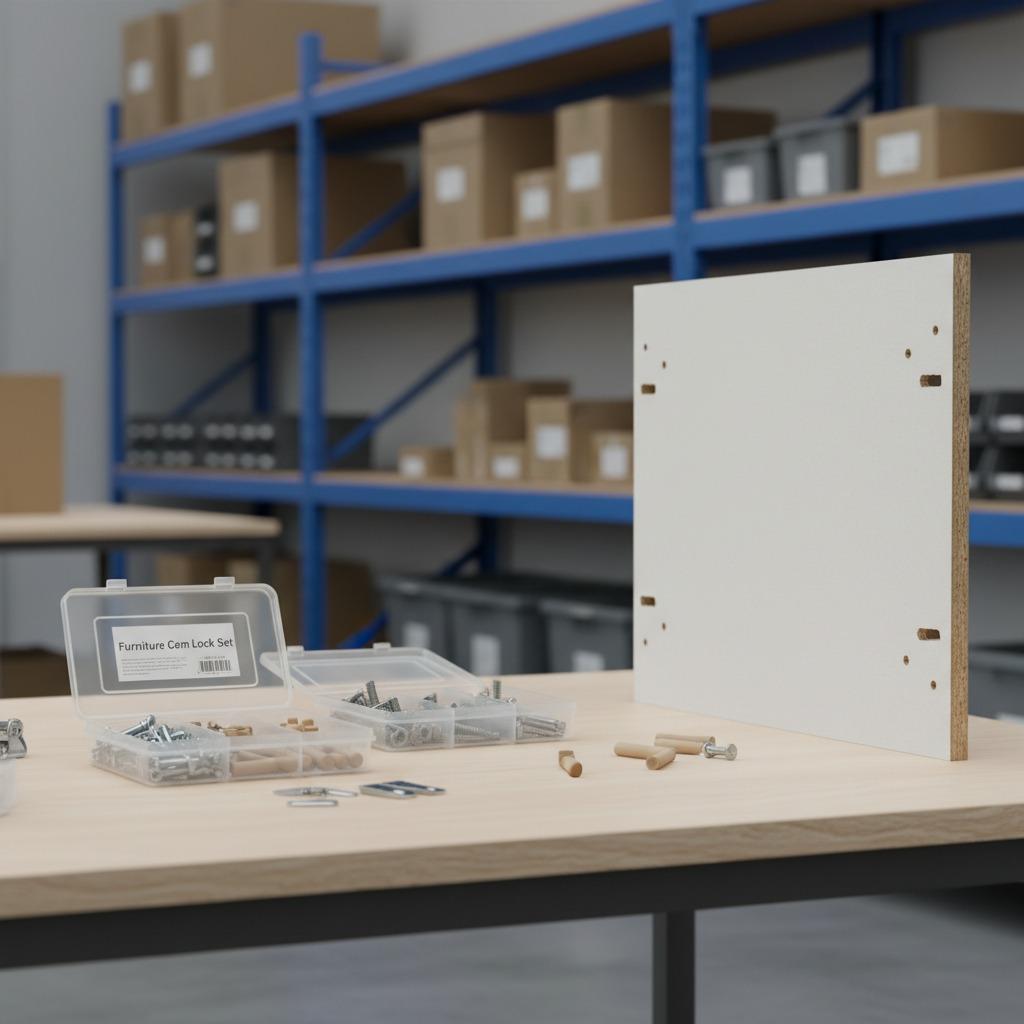
Cam lock connector kits are still widely used in flat pack furniture because they solve several practical problems at once.
They support compact shipping. They allow panels to be joined with basic tools. They reduce the need for bulky exterior brackets. They also make disassembly possible in some furniture designs.
For cabinets, bookshelves, wardrobes, desks, and modular storage units, cam locks remain a familiar and efficient joining method.
Still, they are not forgiving hardware.
A cam lock system depends on accurate drilling, correct panel thickness, matching bolt length, and clean alignment. If the hole is slightly wrong, the cam may not pull the joint tight. If the panel material is weak around the hole, the connection may loosen over time.
The fitting may be simple.
The preparation around it cannot be careless.
Board material changes the result
Not all panels hold hardware the same way.
Particleboard, MDF, plywood, melamine-faced board, and solid wood each behave differently during drilling and tightening. A screw that holds well in plywood may not perform the same way in lower-density particleboard. A dowel that fits tightly in one board may feel loose in another.
That matters because many flat pack furniture programs use engineered boards.
Before approving flat pack assembly fittings, buyers should confirm:
- Board material
- Panel thickness
- Hole diameter
- Hole depth
- Edge distance
- Drilling tolerance
- Fastener length
- Assembly direction
- Expected load
- Whether the furniture may be moved or reassembled
The safest test is not a loose hardware inspection.
It is a real assembly test using the actual panel material.
Build the cabinet. Tighten the fittings. Move the unit. Check whether the corners stay square and the panels remain tight.
That short test often finds problems before bulk production does.
Packaging is part of the hardware quality
Flat pack furniture hardware is easy to mix.
Cam locks, bolts, screws, dowels, caps, and brackets may all be small. Some parts look similar. Some differ only by a few millimeters. If the kit is packed carelessly, the user may not know which part belongs to which step.
This is why sorted packaging matters.
Clear trays, labeled bags, compartment boxes, or step-based hardware packs can reduce mistakes. They help production workers pick faster. They help customers identify parts more easily. They also make incoming inspection and replacement service simpler.
Loose mixed hardware may save a little cost at the packing stage.
But it can create higher cost later through sorting time, missing-part complaints, returns, and support requests.
For e-commerce furniture, packaging is even more important. The customer may assemble the product alone. If the hardware bag looks confusing, the whole product feels less professional.
A good cabinet hardware supplier should treat packaging as part of the product experience.
The kit should match the assembly sequence
A hardware kit should not only contain the right parts.
It should support the order in which the furniture is built.
If the user needs to install dowels first, then connector bolts, then cam locks, the kit should make those parts easy to identify. If similar screws are used in different steps, they should be separated or labeled. If certain hardware is for shelves and other hardware is for the carcass, the packaging should make that clear.
This matters for factory assembly too.
A worker who has to stop and compare two screw sizes loses time. A line that must recheck every bag is not getting the full value of kitting. A customer who installs the wrong fastener may damage a panel and blame the product.
The best flat pack assembly fittings are not only compatible with the furniture.
They are easy to use in the right order.
Surface finish should match the real use environment
Many furniture fasteners use bright silver, zinc-like, or plated finishes. That is common for general indoor cabinet hardware. Still, buyers should not approve finishes by photo alone.
They should confirm the base material and surface treatment.
For most indoor furniture, standard plated steel or zinc alloy components may be suitable. For humid environments, utility rooms, bathrooms, or long export routes, corrosion resistance may need closer review.
Visible parts also need appearance consistency.
A cam lock may be hidden inside the panel, but shelf supports, brackets, caps, or exposed screws may still be seen by the customer. If the finish looks inconsistent or scratches easily during packing, the furniture may feel lower grade.
A practical sourcing review should include:
- Base material
- Surface finish
- Coating type
- Corrosion expectation
- Finish consistency
- Whether visible parts need protection during packing
Small hardware does not need to look decorative in every case.
But it should not make the finished furniture look careless.
Replacement hardware should be planned early
Flat pack furniture does not stop needing hardware after the first assembly.
Customers move homes. Panels are replaced. Fasteners are lost. Repair teams need spare parts. E-commerce sellers may receive requests for missing connector kits.
For this reason, many buyers now treat flat pack assembly fittings as after-sales inventory, not only production material.
A good spare-part strategy can reduce service pressure.
Buyers should consider whether the supplier can support:
- Replacement cam lock kits
- Extra dowel and screw packs
- Labeled spare hardware bags
- Retail or e-commerce packaging
- Model-specific hardware sets
- Repeat supply for older furniture lines
This is especially useful for distributors, furniture brands, and online sellers.
A customer who receives the right replacement kit quickly is less likely to turn a small missing part into a larger complaint.
Where Jiangmen Jinhe Hardware fits
Jiangmen Jinhe Hardware Co., Ltd. was founded in 2016 in Jiangmen City, Guangdong Province. The company works with fasteners, standard parts, and non-standard customization, including machine screws, self-tapping screws, micro screws, and precision screws in materials such as stainless steel, iron, and aluminum.
For furniture buyers, that fastener background is relevant because flat pack assembly fittings often depend on more than one component. A connector kit may need screws, bolts, dowels, metal fittings, custom fasteners, labels, and organized packaging.
The company also serves furniture-related buyers along with industries such as electronics, medical devices, automation, and building materials. That broader manufacturing background can be useful when sourcing teams need dimensional consistency, inspection discipline, documentation, and repeat supply.
Jiangmen Jinhe also notes support for logistics, warehousing, foreign trade, and supply chain services. For export furniture programs and cross-border e-commerce sellers, that kind of support can help keep hardware supply aligned with production and shipping schedules.
Common sourcing mistakes buyers should avoid
One common mistake is treating all flat pack furniture connectors as interchangeable.
They are not.
A cam lock set that works in one board thickness may not suit another. A screw that holds well in plywood may strip in particleboard. A dowel that aligns one cabinet design may be too loose in another.
Another mistake is buying hardware without testing the full assembly.
Loose parts can look fine. The real question is whether the panel, hole, connector, screw, and assembly sequence work together.
Buyers also sometimes ignore packaging until late in the project.
That creates problems when the hardware must be packed by furniture model, assembly step, or after-sales kit.
A final mistake is choosing only by price.
A cheaper connector kit can become expensive if it creates rework, customer complaints, missing-part claims, or replacement shipments.
What buyers should ask before placing an order
Before choosing flat pack assembly fittings, buyers should ask:
What board thickness is the kit designed for?
What cam size and bolt length are included?
Are dowels, screws, brackets, and caps part of the kit?
Can the parts be tested with our actual panel material?
What hole diameter and depth are required?
How are similar parts separated?
Can the kit be packed by furniture model?
Can OEM labels or retail packaging be supported?
What materials and finishes are used?
How is kit completeness checked?
Can replacement packs be supplied later?
Can the same kit be repeated in future orders?
Good answers should connect the hardware to the furniture structure.
A supplier that only quotes loose parts may not be ready to support a complete RTA furniture hardware program.
Frequently Asked Questions
What are flat pack assembly fittings?
Flat pack assembly fittings are the connectors, screws, dowels, cam locks, brackets, shelf supports, caps, and small hardware used to assemble ready-to-assemble furniture.
Are cam locks still common in flat pack furniture?
Yes. Cam locks remain common because they allow panels to ship flat and assemble with a clean joint using basic tools.
Why does panel material matter?
Different boards hold fasteners differently. MDF, particleboard, plywood, and melamine-faced boards all require suitable drilling and hardware selection.
Should buyers test the hardware before bulk orders?
Yes. The fittings should be tested in the actual panel material, drilling pattern, and assembly sequence before volume production.
Why is packaging important for flat pack hardware?
Because missing, mixed, or unclear hardware can stop assembly and create customer complaints. Sorted packaging helps reduce mistakes.
Can flat pack fittings be supplied as replacement kits?
Yes. Many buyers use connector kits for repair, after-sales service, e-commerce replacement packs, and spare-part inventory.
Good fittings make flat pack furniture feel easy
Flat pack furniture works best when the hardware does not draw attention to itself.
The panels align. The cam locks tighten properly. The dowels fit. The screws hold. The kit is easy to identify. The customer finishes assembly without wondering whether something is wrong.
That is what good flat pack assembly fittings should deliver.
For flat pack furniture connectors, cam lock connector kits, cabinet hardware, RTA furniture hardware, custom fasteners, and organized hardware packaging, Jiangmen Jinhe Hardware Co., Ltd. can discuss fastener selection, kit structure, material options, packaging formats, inspection, logistics, and repeat supply requirements.
For direct inquiries:
Tel/WeChat: +86 13729150102
WhatsApp: +86 13322893939
Email: sharon@hkhomeideas.com
Start with the panel material, board thickness, drilling pattern, hardware list, packaging method, and expected order quantity.