
Why furniture connectors decide more than just assembly speed
Choosing a furniture connector manufacturer is not only about buying screws and brackets. For engineers, sourcing managers, and product teams, the real question is whether the connector system will hold a cabinet, shelf unit, or built-in assembly together after repeated handling, transport, and installation. In furniture production, a weak fastener choice can slow assembly, create ugly rework, or turn into a warranty issue months later.
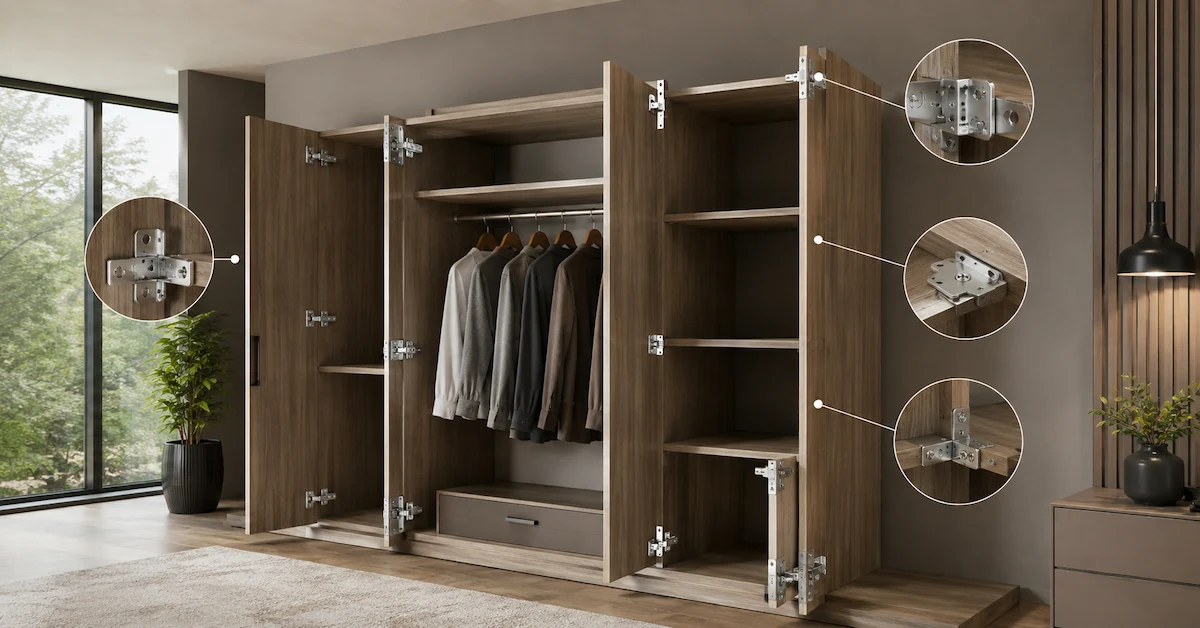
That is why buyers often start with the hardware, not the carcass. A well-made cabinet connector may look small, but it affects alignment, rigidity, serviceability, and the final fit of wood furniture connectors across the whole product line. If your team is evaluating suppliers, the decision is usually less about catalog variety and more about consistency, documentation, and whether the parts work with real-world cabinet fabrication.
Quick reasons buyers compare suppliers
- Assembly speed on the line
- Repeatable fit in drilled panels
- Cleaner installation in visible furniture edges
- Enough variety for cabinets, shelving, and modular carcasses
- Reliable packing and delivery for production schedules
Those points sound basic, but they are where many projects go wrong. A connector that is technically suitable can still be frustrating if it arrives with inconsistent dimensions, poor surface finish, or no clear documentation for the production team.
What the workshop image tells a buyer
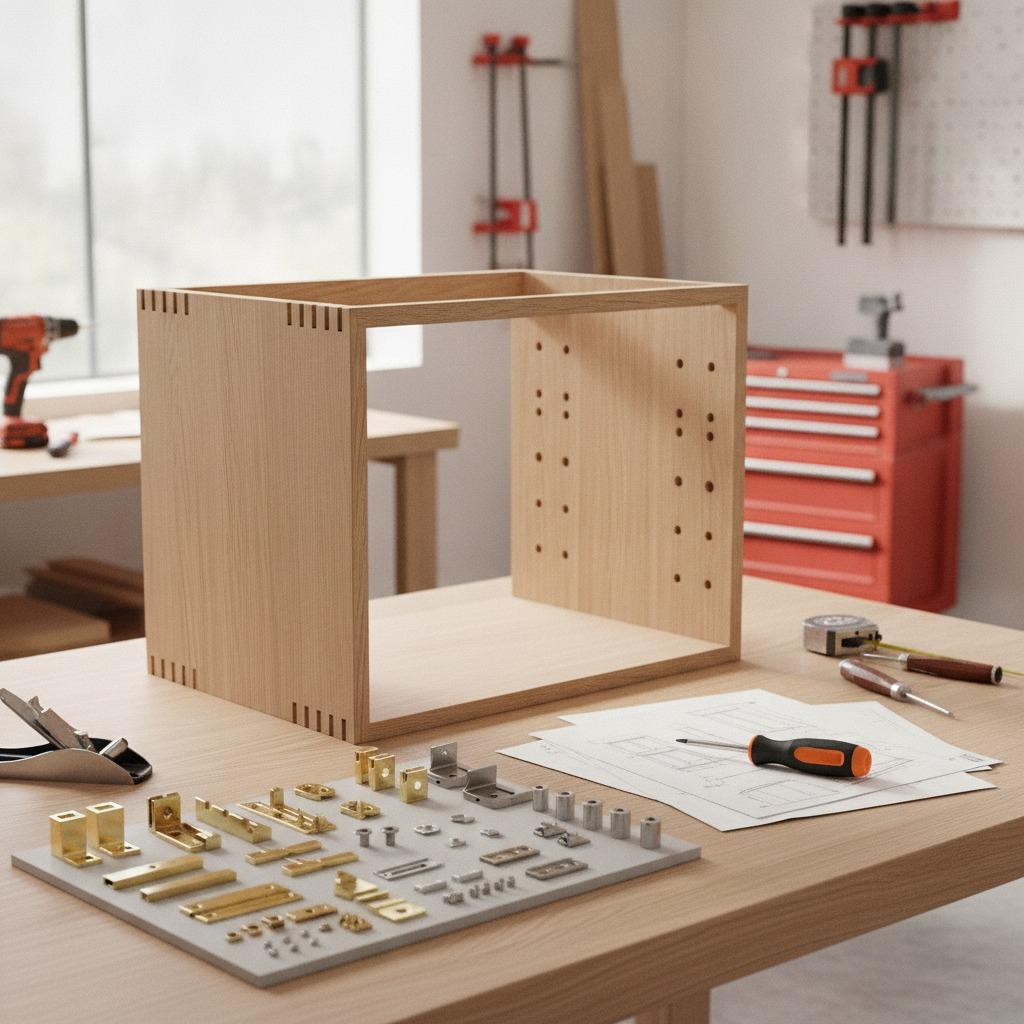
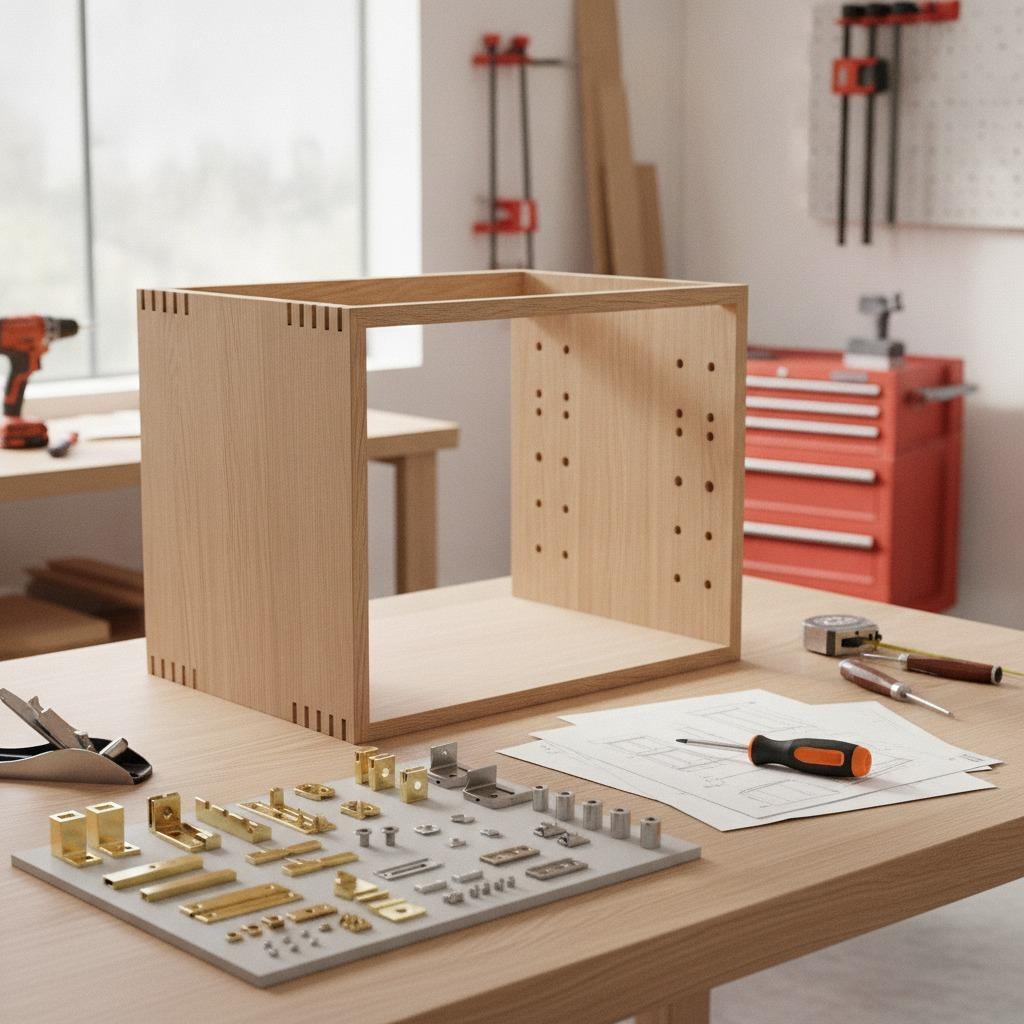
The reference setup shows an open rectangular wooden cabinet carcass with predrilled rows inside the side panels, plus loose hardware on the bench: brass-colored sleeves, bolts, screws, brackets, plates, and small fittings. That combination is typical of prototyping and fit-up testing. It suggests a workflow where the carcass is being prepared for adjustable shelving, modular joining, or final hardware selection before mass assembly.
For sourcing teams, this is a useful reminder. A furniture connector is rarely judged in isolation. It has to work with the panel material, the hole pattern, the assembly sequence, and the hand tools on the shop floor. A connector that seems simple on paper can become awkward if the hole spacing is off by even a small amount or if the installer needs too many steps to close the joint.
Common connector categories buyers usually evaluate
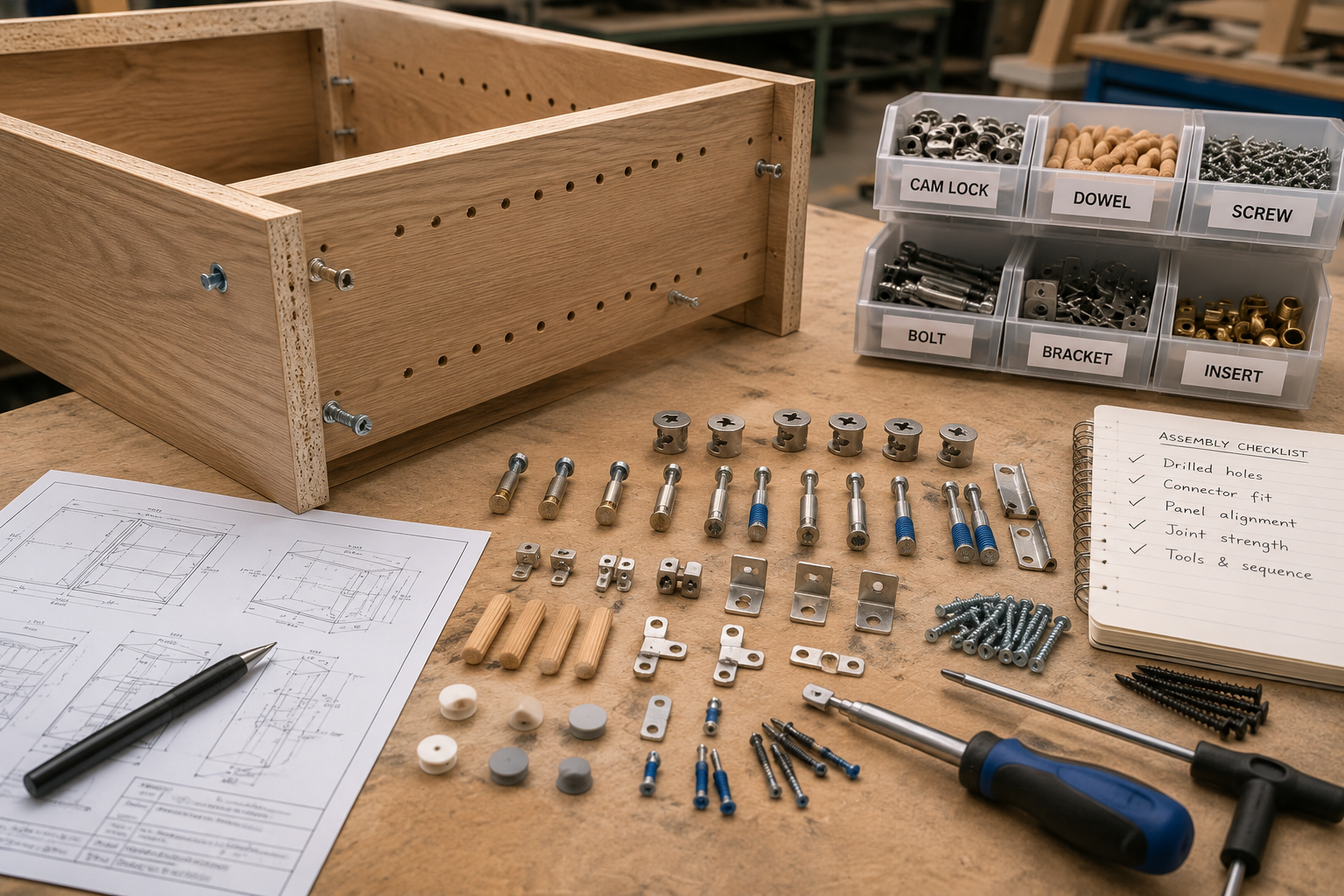
Knock-down connectors
These are popular when furniture needs to ship flat and be assembled quickly. They support disassembly and reassembly, which matters for cabinets, storage furniture, and contract projects.
Dowel and screw-based joints
These remain common because they are familiar, economical, and easy to scale. In many shops, they pair well with CNC-drilled panel parts.
Brackets, plates, and spacer hardware
These parts are often used for reinforcement, alignment, or special mounting situations. They are not always visible in the finished product, but they can make a prototype much easier to test.
How to judge a cabinet connector manufacturer
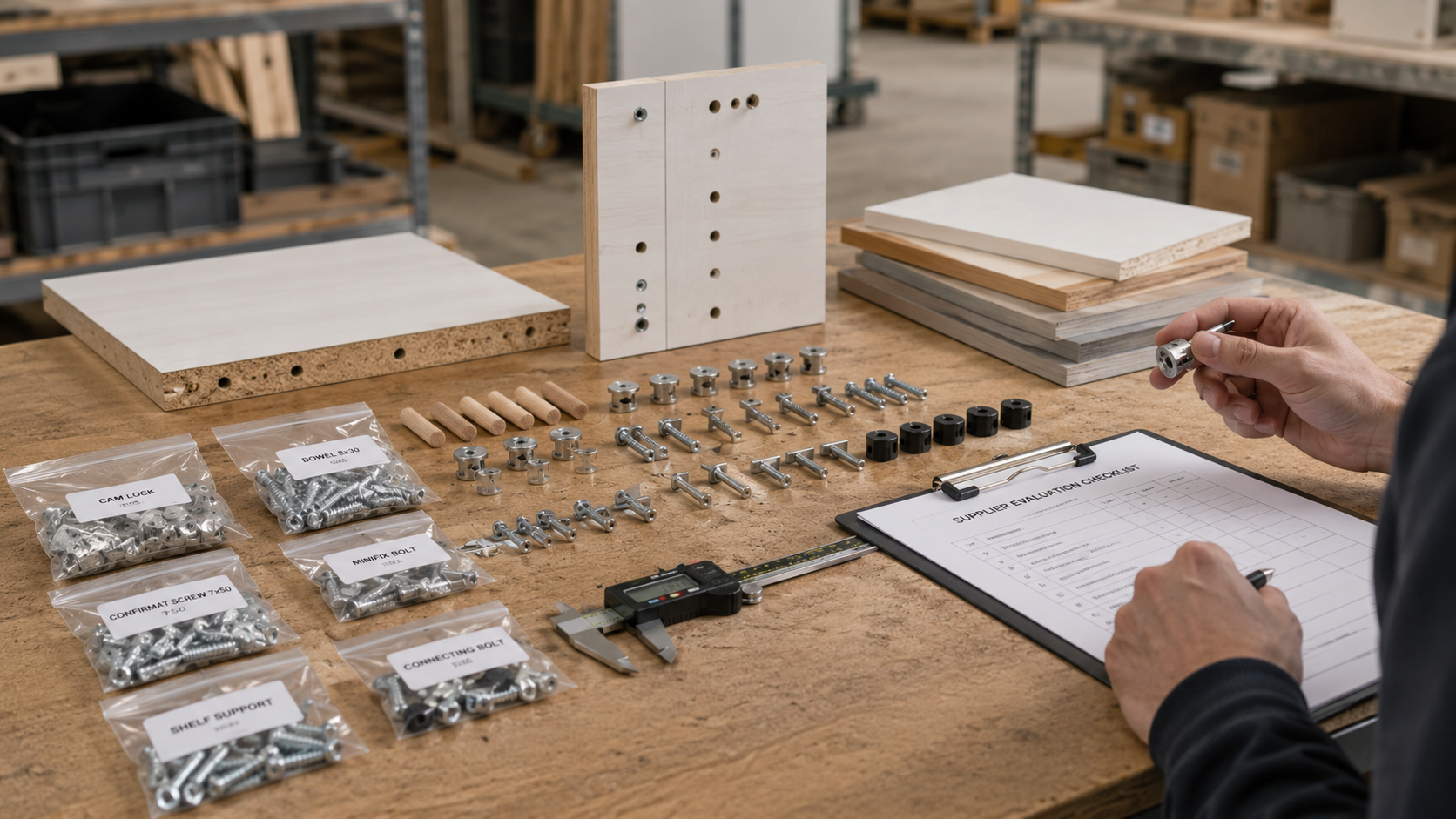
A cabinet connector manufacturer should be evaluated on more than part price. Look at whether they can support standard parts and non-standard customization, because furniture projects often need both. Jiangmen Jinhe Hardware Co., Ltd., founded in 2016 in Jiangmen City, Guangdong Province, fits the profile of a hardware producer with broad fastener capability, including machine screws, self-tapping screws, micro screws, and precision screws in stainless steel, iron, and aluminum. That kind of mix is relevant when a project needs connector hardware plus matching fasteners from one source.
It also helps when a supplier can work across GB, DIN, ANSI, BS, JIS, and ISO standards, since furniture buyers often serve different markets or export channels. Just as important, the company notes strict inspection before delivery and documentation support, which are practical concerns for procurement teams that need traceability rather than vague promises.
Selection criteria that matter in real procurement
- Compatibility with panel thickness and drilled-hole layout
- Material choice for strength and corrosion resistance
- Stable dimensions across batches
- Packaging that prevents mixed hardware damage
- Support response when a fit problem appears
That last point is easy to overlook. In furniture manufacturing, a supplier’s response time can save a production week. Jiangmen Jinhe states a 30-60 minute response window for issues and a solution target within 2 hours. Buyers may want to verify service expectations in writing, but the general idea is sound: hardware suppliers should be easy to reach when an assembly issue shows up on the line.
Common mistakes when buying furniture connectors
One common mistake is treating all wood furniture connectors as interchangeable. They are not. Hole pattern, panel density, load path, and end-use all change the outcome. Another mistake is buying on appearance alone. Brass-colored parts may look clean in a prototype, but the real test is whether the joint remains stable after repeated tightening or cabinet movement.
It is also worth cautioning buyers against over-specifying exotic hardware when a standard connector would do. Custom parts have their place, but they can complicate sourcing, warehousing, and replacement.
What this means for product teams
If your team is developing custom cabinetry, shelving units, kitchen or bathroom cabinets, or built-in furniture, the best supplier is usually the one that understands both fasteners and the furniture assembly context. A good furniture connectors supplier should be able to support prototype builds, then transition into consistent production supply without forcing redesigns at the last minute.
For sourcing managers, the practical next step is straightforward: compare suppliers on fit, documentation, batch consistency, and communication speed. Ask for technical details before you commit to volume. If the project depends on modular assembly or repeated installation, bring the panel drawing and hardware layout into the discussion early.
FAQ: short answers buyers usually need
Are all cabinet connectors suitable for custom furniture?
No. Custom furniture often needs a connector matched to hole spacing, material thickness, and assembly sequence.
Can one supplier cover screws and connector hardware?
Often yes, if the manufacturer has a broad fastener range and supports non-standard customization.
What should I ask before sampling?
Ask about standards, inspection, documentation, packaging, and whether the hardware has been used in similar furniture applications.
Next step for buyers
If you are comparing a furniture connector manufacturer for a new cabinet or modular furniture project, start with samples and a drawing review, not a catalog screenshot. That is the fastest way to see whether the hardware, the panel work, and the assembly method actually belong together.