
Furniture Joiner Connector Supplier: Why Small Hardware Can Decide the Quality of a Cabinet
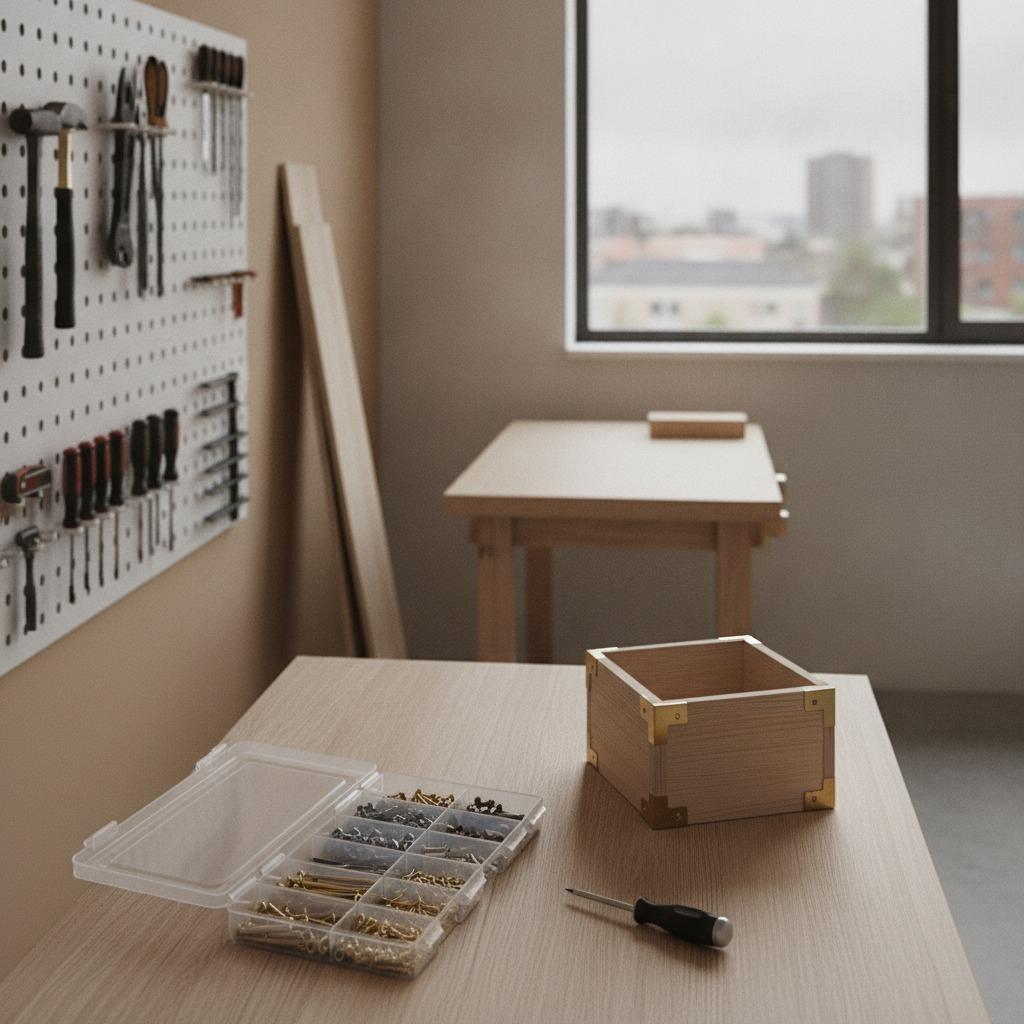
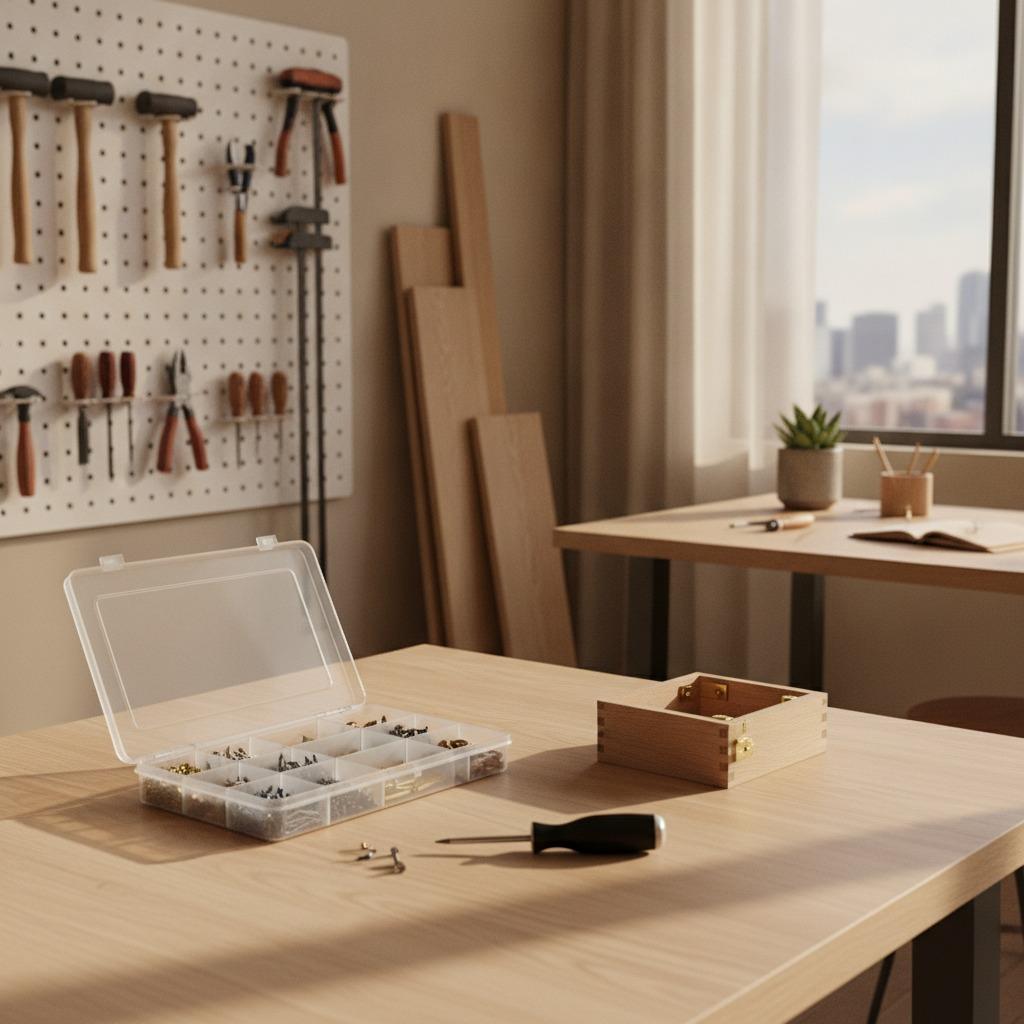
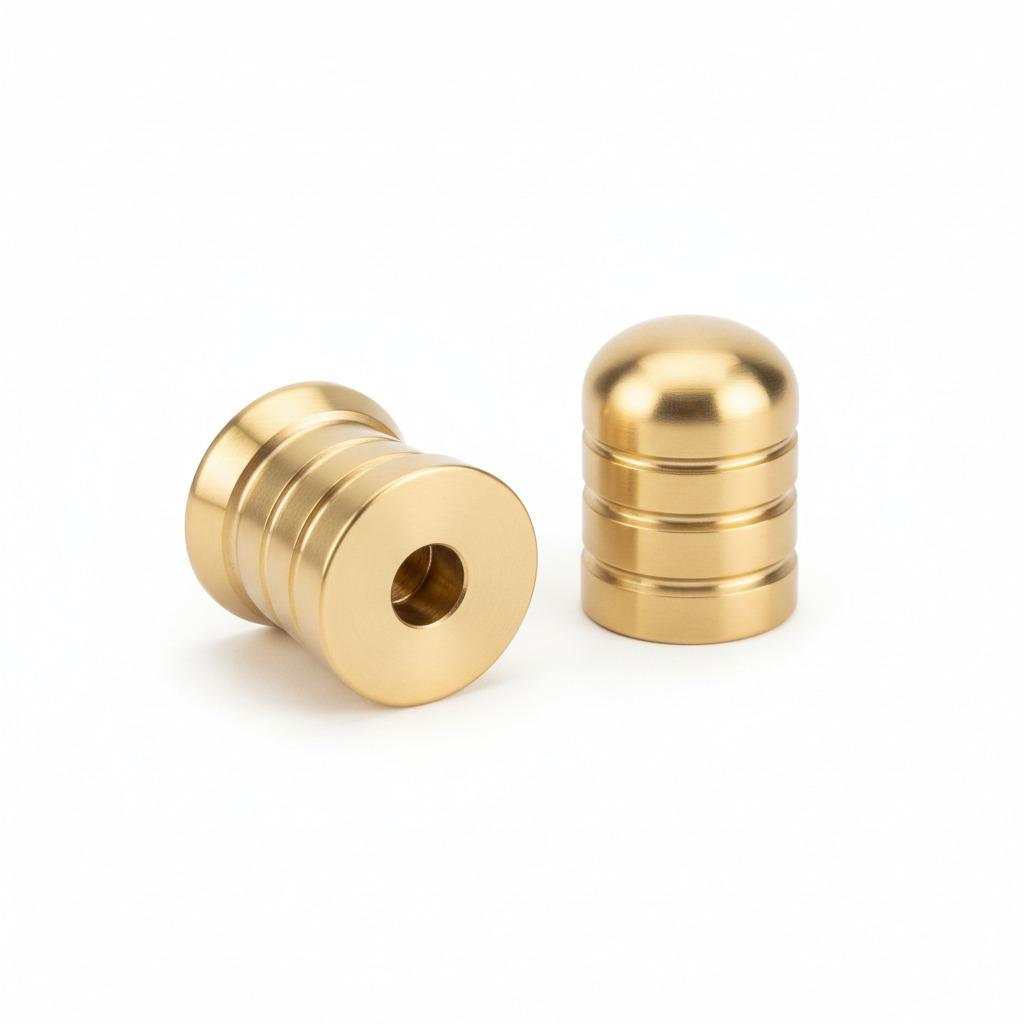 A furniture connector is easy to overlook when it is sitting alone on a desk.
It is small. It does not take much space in the bill of materials. It may cost far less than panels, hinges, slides, or packaging. For that reason, many furniture projects treat the connector as a late-stage purchasing item.
Then the sample build starts.
The connector does not sit quite right. The finish looks different from the approved photo. The pin feels slightly loose in the board. The cabinet still assembles, but the joint does not feel as clean as expected.
That is usually the moment when buyers realize the connector was never just a small metal part.
For engineers, sourcing managers, cabinet brands, and repair-kit suppliers, choosing the right furniture joiner connector supplier affects much more than part availability. It affects assembly feel, visible quality, repeat use, packaging protection, and whether future batches match the approved sample.
A good connector does not draw attention to itself.
It fits, holds, looks correct, and lets the furniture do its job.
A small connector can carry a large quality signal
Furniture buyers often focus on the visible surfaces first.
Panel finish, edge banding, color match, cabinet shape, and packaging all receive attention because customers notice them quickly. But once the product is handled or assembled, the hardware starts to speak.
A connector that feels loose makes the cabinet feel cheaper.
A polished part with a scratched finish looks careless.
A replacement connector that does not match the original part creates doubt.
A small fitting that is difficult to install makes the whole product feel poorly designed.
This is especially true for decorative joinery, modular cabinets, open shelving, and flat-pack furniture where users interact directly with the hardware.
A connector may be partly hidden, fully visible, or only visible during installation. In each case, it still shapes the user’s impression.
That is why buyers should not treat furniture connector hardware as an afterthought. The part may be small, but the customer often feels the difference.
What a brass-colored connector tells buyers
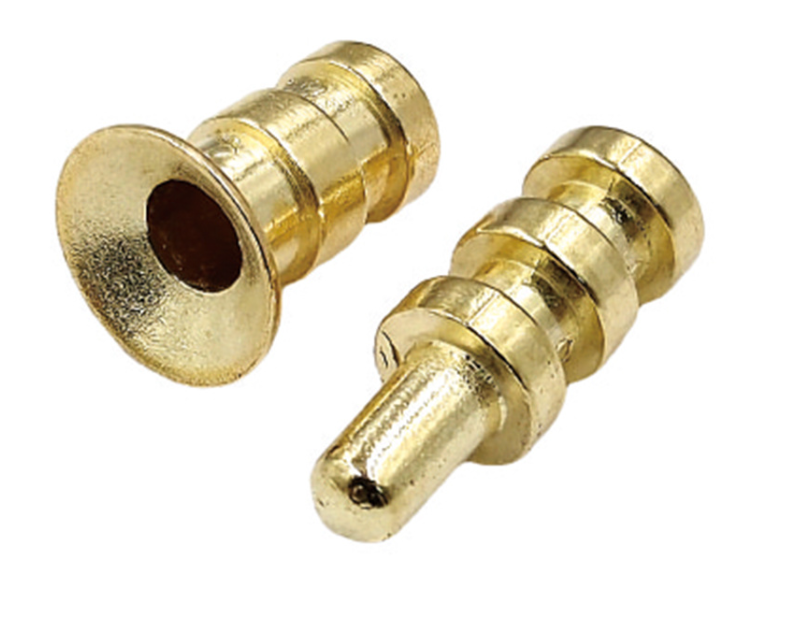
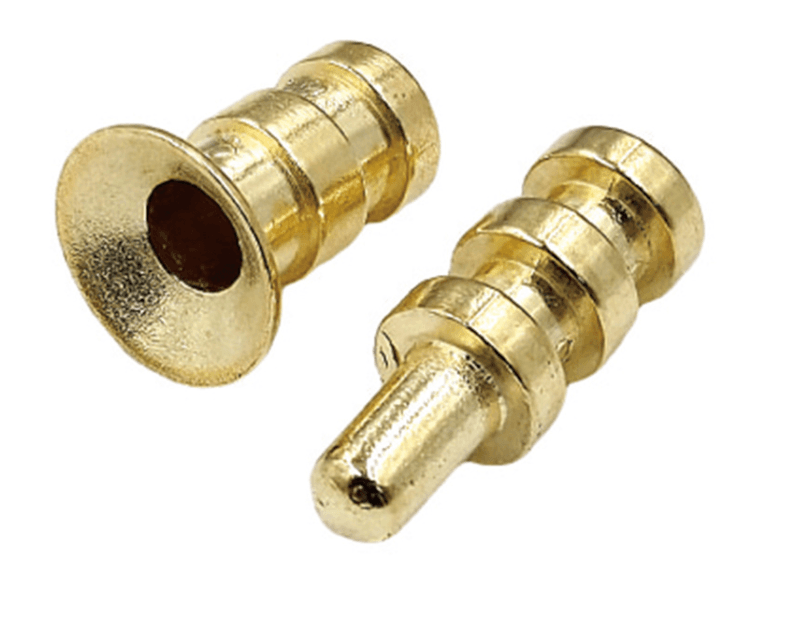
A small brass-colored connector with a polished surface can suggest several things.
It may be designed for visible cabinet hardware, decorative joinery, repair fittings, shelving support, or a two-piece connection system. A flanged head can help the part stop at the correct depth. A central hole may point to a fastening or alignment function. A pin or peg detail may suggest mating with another part or seating into a prepared hole.
The stepped cylindrical body and ridged detail also matter.
Those shapes are not only decorative. They may help with positioning, grip, retention, or alignment depending on the installation method.
Still, buyers should be careful.
A part that looks like brass may not be solid brass. It could be brass-plated steel, zinc alloy with a decorative surface, or another material with a warm finish. That may be perfectly acceptable for many furniture uses, but it must be confirmed before bulk ordering.
Appearance is a clue.
It is not a specification.
Material should be confirmed before approval
One of the most common sourcing mistakes is approving a connector based on appearance alone.
A polished brass-like connector may look premium in a sample photo. But the buyer still needs to know the base material, surface treatment, coating thickness if relevant, corrosion behavior, and whether the color will remain stable across batches.
For furniture applications, material choice affects several things:
- Cost
- Wear behavior
- Color stability
- Corrosion resistance
- Strength
- Surface feel
- Compatibility with screws or mating parts
- Long-term replacement consistency
If the connector is visible, finish consistency becomes especially important. One batch that appears slightly duller, redder, or more yellow than the previous batch can create complaints, even if the part still functions.
If the connector is hidden, dimensional stability and installation feel may matter more than color.
The buyer should decide which risk is more important before approving the part.
Fit matters more than the catalog description
Furniture connectors often fail by a small margin.
The hole is slightly too loose.
The flange does not sit flat.
The pin catches during insertion.
The part turns when it should stay fixed.
The connector works in one board but not another.
These are not always dramatic failures. Sometimes the product still assembles, but it feels wrong.
A furniture joiner connector supplier should be able to discuss the mating hole, installation method, tolerance range, and substrate compatibility. The buyer should not rely only on a catalog photo or a short product name.
For wood-based furniture, the connector should be tested in the actual material whenever possible.
MDF, particleboard, plywood, solid wood, and veneered board all behave differently. A connector that seats cleanly in plywood may feel less stable in lower-density particleboard. A tight-fitting part may damage a finished veneer if the installation method is too aggressive.
Loose samples can confirm appearance.
They cannot confirm real fit.
Why flat-pack furniture raises the standard
Flat-pack furniture gives small hardware very little room to hide.
The customer may be assembling the product at home with basic tools. The instruction sheet may be clear, but the hardware still has to feel logical. If a connector does not fit easily or a pin does not align with the mating part, the customer may assume the whole product is defective.
That is why a flat pack furniture connector manufacturer is judged on repeatability.
The connector must match the drilling pattern. It must tolerate shipping vibration. It must be easy to identify in the hardware kit. It should not scratch before installation. It should fit the same way in batch after batch.
For flat-pack furniture, buyers should review:
- Panel thickness
- Hole diameter
- Hole depth
- Installation direction
- Tool access
- Matching screws or mating parts
- Packaging method
- Whether the connector is visible after assembly
- Whether the furniture may be disassembled later
A connector that works in a factory jig may still frustrate a home user.
That difference matters.
Decorative finish needs real-world testing
A polished brass-colored connector can improve the look of furniture.
It can add warmth, contrast, or a more finished detail to cabinets, shelves, interior joinery, and repair parts. But decorative finishes are also easier to damage.
Parts may scratch in transit. They may rub against screws, washers, or brackets inside the same bag. Fingerprints may show during assembly. The tone may shift under different lighting.
Before approval, buyers should check the connector under real conditions.
Place it against the actual panel finish. Look at it under factory lighting, showroom lighting, and normal indoor light if possible. Compare several pieces from the same batch. Then compare samples from different production lots if the project will be repeated.
A connector may look excellent in isolation but too bright, too yellow, or too reflective once installed in the furniture.
Visible hardware should be judged in the product, not only in the supplier’s photo.
A wood furniture connector manufacturer should understand the board
A good wood furniture connector manufacturer does not only make the metal part.
It understands how the part behaves in wood and wood-based panels.
That includes insertion pressure, hole tolerance, surface damage, edge strength, and whether the connection can handle normal movement. For repair hardware, it also includes whether the replacement part can work in an existing hole without damaging the cabinet further.
Buyers should ask practical questions:
What hole size does this connector require?
Which board materials has it been tested with?
Can it be installed by hand, or does it need a press or tool?
Will the connector loosen after repeated use?
Can the finish survive normal handling?
Can the part be customized if the hole pattern is already fixed?
The answers reveal whether the supplier understands the application or is only quoting a part.
Customization is useful when the standard part almost works
Many connector projects begin with a standard part that is close, but not quite right.
The flange may need to be wider.
The pin may need to be shorter.
The finish may need to match another hardware item.
The body diameter may need tighter control.
The groove detail may need adjustment for better seating.
This is where non-standard customization can help.
Jiangmen Jinhe Hardware Co., Ltd. works with fasteners, standard parts, and non-standard customization. Its product range includes machine screws, self-tapping screws, micro screws, and precision screws in materials such as stainless steel, iron, and aluminum. For furniture buyers, this background can be useful when a connector project also requires matching screws, adjusted dimensions, or customized fastening support.
Still, customization should be used carefully.
A custom connector requires drawings, samples, approval records, inspection standards, and repeat-order control. If a standard part works reliably, it may be the better long-term choice.
The best decision is not always the most customized one.
It is the one that makes the furniture assemble correctly with the least future risk.
Packaging should protect both the part and the finish
Small polished connectors are easy to damage.
If they are packed loosely with screws or other metal parts, the finish may be scratched before the customer ever sees the furniture. If similar connectors are mixed together, the wrong part may be installed. If there is no clear label, repair teams or warehouse workers may waste time identifying the correct component.
Packaging should be part of the sourcing discussion.
For visible or semi-visible furniture connectors, buyers should confirm:
- Quantity per bag or kit
- Part separation method
- Surface protection
- Label content
- Furniture model number
- Matching fasteners included
- Spare-part quantity
- Inspection before packing
- Repeat-order packaging consistency
A good connector can still create complaints if it arrives scratched, mixed, or difficult to identify.
For flat-pack furniture and repair kits, the package is part of the user experience.
Inspection should include finish, fit, and repeatability
Connector inspection should not only measure dimensions.
For furniture applications, the inspection plan should include the things that affect assembly and appearance.
Useful inspection points include:
- Body diameter
- Pin diameter
- Flange size
- Seating depth
- Groove consistency
- Burrs or sharp edges
- Surface finish
- Material confirmation
- Plating or coating quality
- Packaging condition
- Quantity accuracy
Jiangmen Jinhe Hardware states that its products undergo inspection before delivery and can be supplied with necessary documentation. For buyers, that is useful, but the acceptance standard still needs to be clear.
“Looks right” is not enough.
If the connector is visible, define acceptable surface marks and color variation. If it is structural, define fit and holding requirements. If it is used in repair kits, define compatibility with the original part.
A clear inspection standard prevents arguments later.
Repeat orders are where supplier discipline shows
A first sample may look perfect.
The harder question is whether the tenth batch will look and fit the same way.
For furniture connectors, repeatability matters because products often stay in the market for years. A repair part ordered later should match the original connector. A flat-pack furniture kit should not change quietly between shipments. A visible finish should not shift enough for customers to notice.
Buyers should ask how the supplier controls:
- Approved drawings
- Material records
- Finish standards
- Sample references
- Lot traceability
- Packaging format
- Label revisions
- Substitution approval
- Repeat-order inspection
A supplier that manages these details well can reduce long-term sourcing friction.
A supplier that treats every order as a new transaction may create small changes that become big problems later.
Common mistakes buyers should avoid
One mistake is treating small connectors as commodity parts.
They are small, but they are not always low-risk.
Another mistake is approving a part only by photo. A connector must be checked in the actual panel, with the actual hole, finish requirement, and assembly method.
A third mistake is assuming brass-colored means brass. The base material should always be confirmed.
Buyers also sometimes ignore packaging until the end. That is risky for polished or decorative connectors because surface damage can happen during transport.
The final mistake is choosing by price alone.
A cheaper connector may cost more if it creates rework, visible defects, loose fit, customer complaints, or replacement problems.
What buyers should ask before sending an RFQ
Before requesting a quote from a furniture joiner connector supplier, prepare the basic application details.
Ask and confirm:
What is the base material?
What surface treatment is used?
Is the brass color plated, coated, polished, or solid material?
What are the critical dimensions?
What hole size does the connector require?
Which panel materials are suitable?
Can the part be tested in our board?
Can the finish match our reference sample?
Can dimensions be customized?
What inspection documents are available?
How is the part packed to prevent scratches?
Can repeat orders match the approved sample?
These questions save time because they move the conversation from “Can you supply this?” to “Can this part work in our furniture?”
That is the better sourcing question.
Frequently Asked Questions
Is a brass-colored furniture connector always made from brass?
No. It may be solid brass, brass-plated steel, zinc alloy, or another material with a decorative surface finish. Buyers should confirm the base material and coating before approval.
Can a screw manufacturer supply furniture joiner connectors?
Yes, if the supplier has the right machining, finishing, inspection, and customization capability. The key is whether the supplier understands furniture fit, finish, and assembly requirements.
Should connectors be tested in real panels?
Yes. Loose samples are useful for checking appearance, but fit and function should be tested in the actual board material and hole pattern.
When is customization necessary?
Customization is useful when a standard connector does not match the panel thickness, hole size, finish requirement, mating part, or assembly method.
Why does packaging matter for furniture connectors?
Packaging protects the surface finish, prevents mixing, supports kitting, and helps workers or customers identify the correct part.
What makes a supplier worth shortlisting?
A strong supplier should support material confirmation, dimensional control, finish consistency, sample testing, inspection documentation, packaging, and repeat-order management.
A good connector should feel intentional
The best furniture connector does not feel like a compromise.
It fits the panel. It sits cleanly. The finish matches the product. The assembly step is easy to understand. The next batch looks and works like the approved sample.
That is what buyers should expect from a capable furniture joiner connector supplier.
For furniture connectors, cabinet connector hardware, custom furniture fasteners, visible metal fittings, standard parts, and non-standard hardware support, Jiangmen Jinhe Hardware Co., Ltd. can discuss materials, dimensions, finish options, sample testing, inspection, packaging, and supply requirements.
For direct inquiries:
Tel/WeChat: +86 13729150102
WhatsApp: +86 13322893939
Email: sharon@hkhomeideas.com
Start with the application, panel material, hole size, finish requirement, mating part, packaging method, and expected order quantity.
Once those details are clear, the right connector becomes much easier to source and repeat.