
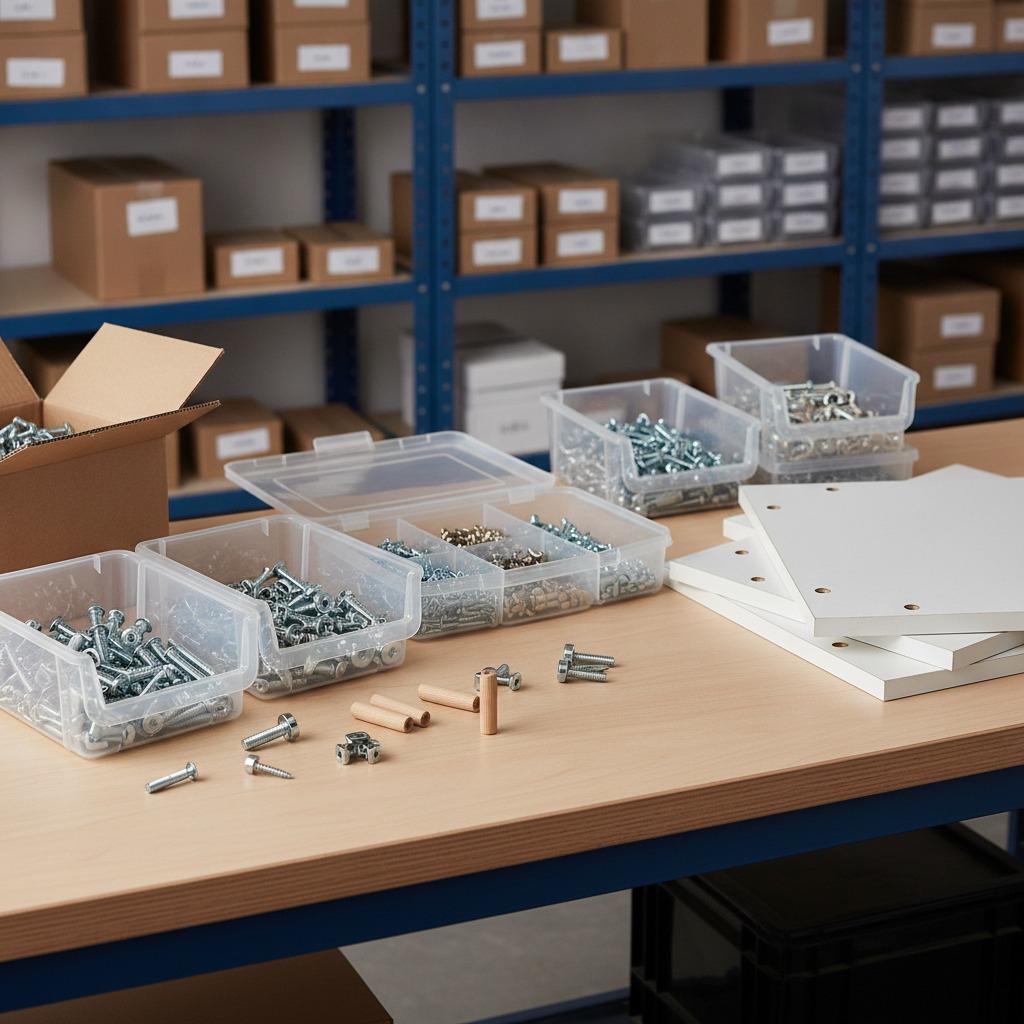
Furniture Joining Hardware Supplier: How to Choose Parts That Actually Fit the Build
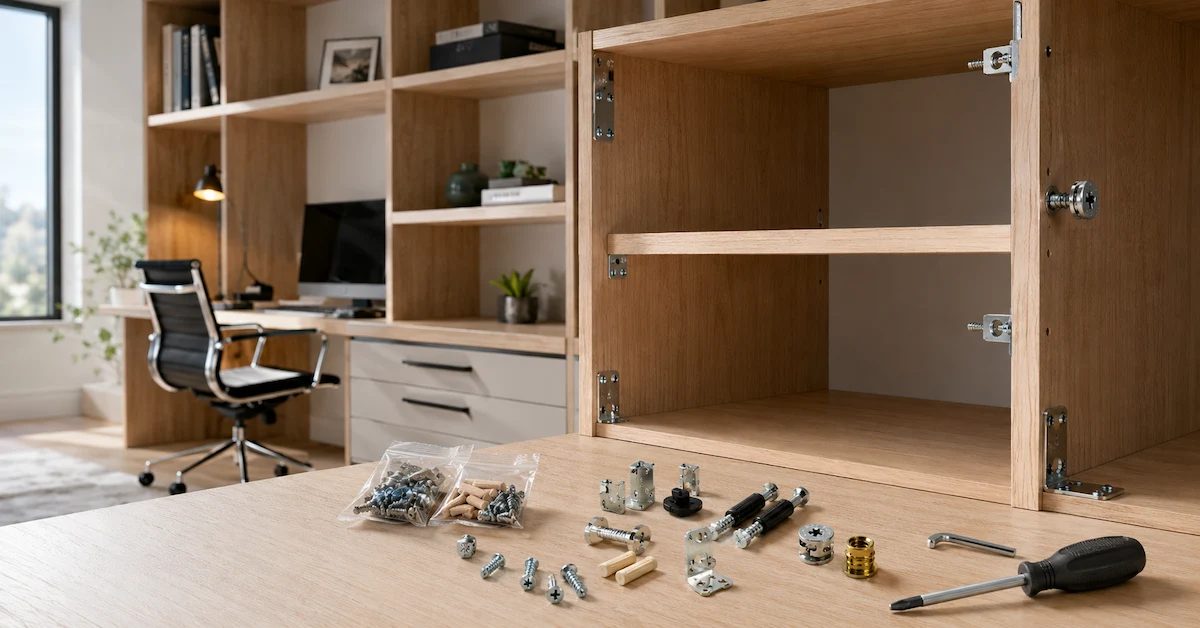 There is a small moment in every flat-pack furniture project when the hardware tells the truth.
The panels may look fine. The edge banding may be clean. The carton may be printed well. The instruction sheet may even look clear. But once someone opens the hardware bag and starts joining the boards, the real quality of the furniture becomes obvious.
A cam lock either catches the bolt, or it does not.
A dowel either lines up cleanly, or the panel starts fighting back.
A threaded insert either holds, or it begins to turn in the board.
A bracket either sits flat, or the installer has to force it into place.
That is why choosing a furniture joining hardware supplier should never be treated as a quick price comparison.
For flat-pack cabinets, wardrobes, shelving units, modular storage, and repair kits, the hardware is not just a supporting item. It is the system that makes the furniture buildable. When it works, nobody notices. When it fails, everyone notices.
The supplier is really supplying fit, not just parts
It is easy to say, “We need screws and connectors.”
That is not wrong, but it is incomplete.
In panel furniture, hardware has to match the board, the hole pattern, the assembly order, the packaging method, and the person who will put the product together. Sometimes that person is a trained factory worker. Sometimes it is an installer on-site. Sometimes it is a customer building a wardrobe in a bedroom with limited tools and limited patience.
The same connector can feel very different in those three situations.
A good cabinet connector supplier understands this. It does not only ask for a part number. It asks what the connector is expected to do. Is it pulling two side panels together? Holding a shelf? Supporting a rail? Fixing a hinge plate? Allowing the furniture to be taken apart and rebuilt later?
Those questions matter because the wrong hardware rarely fails politely. It usually creates a chain reaction: slow assembly, damaged boards, loose joints, customer complaints, or replacement requests.
Flat-pack furniture leaves no room for vague hardware
Flat-pack furniture depends on preparation.
The holes are drilled before shipment. The boards are cut before the customer sees the product. The hardware is counted and packed before the carton leaves the factory. Once everything arrives, the user expects the parts to meet in the right way.
That means “close enough” is not close enough.
A bolt that is slightly short may not pull the panels tight. A screw that is a little too long may mark the outside face. A dowel that feels loose may make the whole cabinet seem cheaper than it is. A bracket that misses the pre-drilled holes by a few millimeters can turn a simple installation into a repair job.
This is why buyers should review the full joining system early, not after the panel design is already frozen.
The hardware should be chosen with the cabinet structure in mind.
Not after it.
A kit is only useful when the parts work together
Most furniture hardware kits contain a mix of small parts.
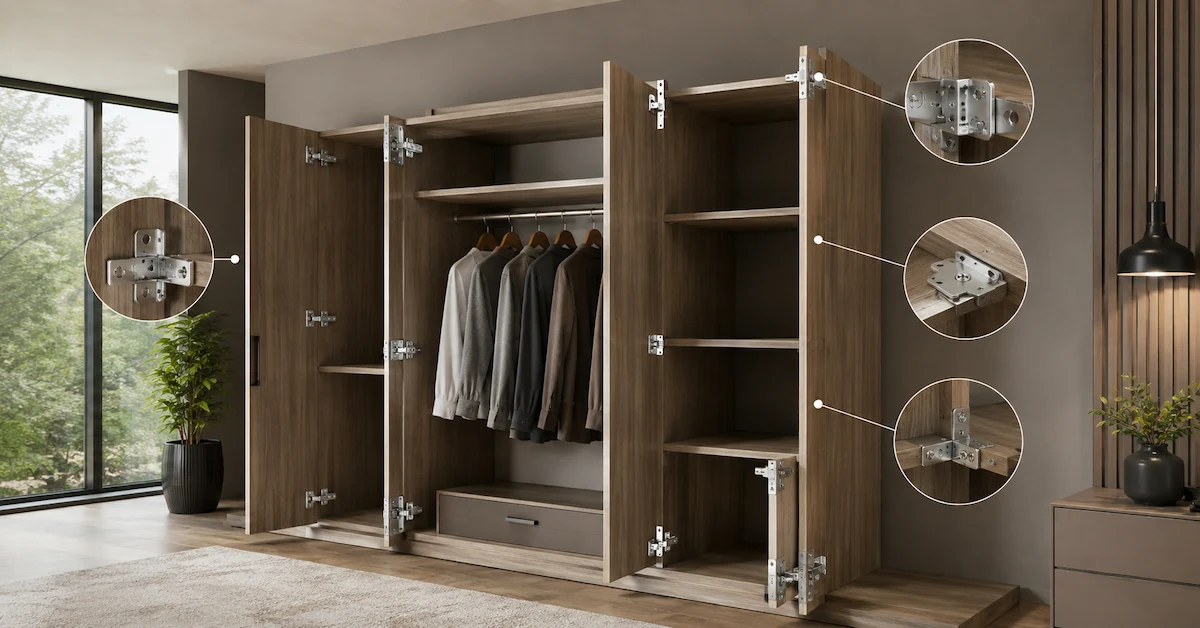
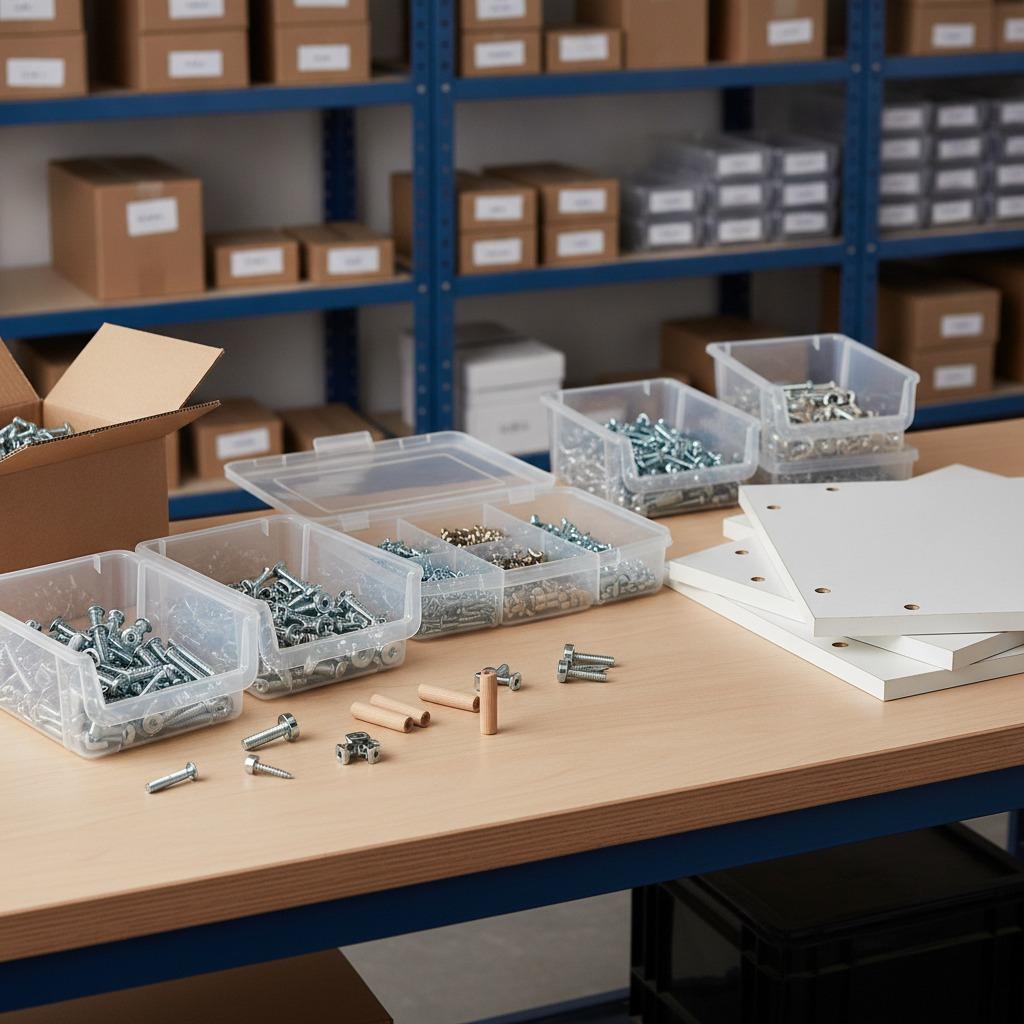
Cam locks. Connector bolts. Wood dowels. Threaded inserts. Screws. Shelf pins. Brackets. Mounting plates. Plastic caps. Washers. Sometimes small rails or guide pieces.
Each part has its own purpose, but the kit only works when the parts support one another.
A cam lock needs the correct bolt head.
A bracket needs the right screw.
A threaded insert needs the right hole and board density.
A shelf pin needs the correct row spacing.
A plastic cap needs to fit after the joint is tightened.
If these parts are bought separately without enough coordination, the buyer becomes the one doing the integration work. That may be manageable in a small trial. In repeat production, it becomes risky.
A capable furniture joining hardware supplier should help buyers avoid that problem by looking at the kit as a whole.
Board material changes everything
A connector does not behave the same way in every panel.
Particleboard, MDF, plywood, laminated board, veneered board, and solid wood each respond differently to screws, inserts, and dowels. Some boards hold threads well. Some need more care near the edge. Some machine cleanly but do not like repeated tightening. Some look strong from the outside but fail around the hole if the fastener is poorly matched.
This is where a wood furniture connector supplier should be practical.
Before recommending a connector or fastener, the supplier should understand the board thickness, hole diameter, hole depth, edge distance, expected load, and whether the furniture may be assembled more than once.
A part can look good on a sample tray and still perform badly in the real board.
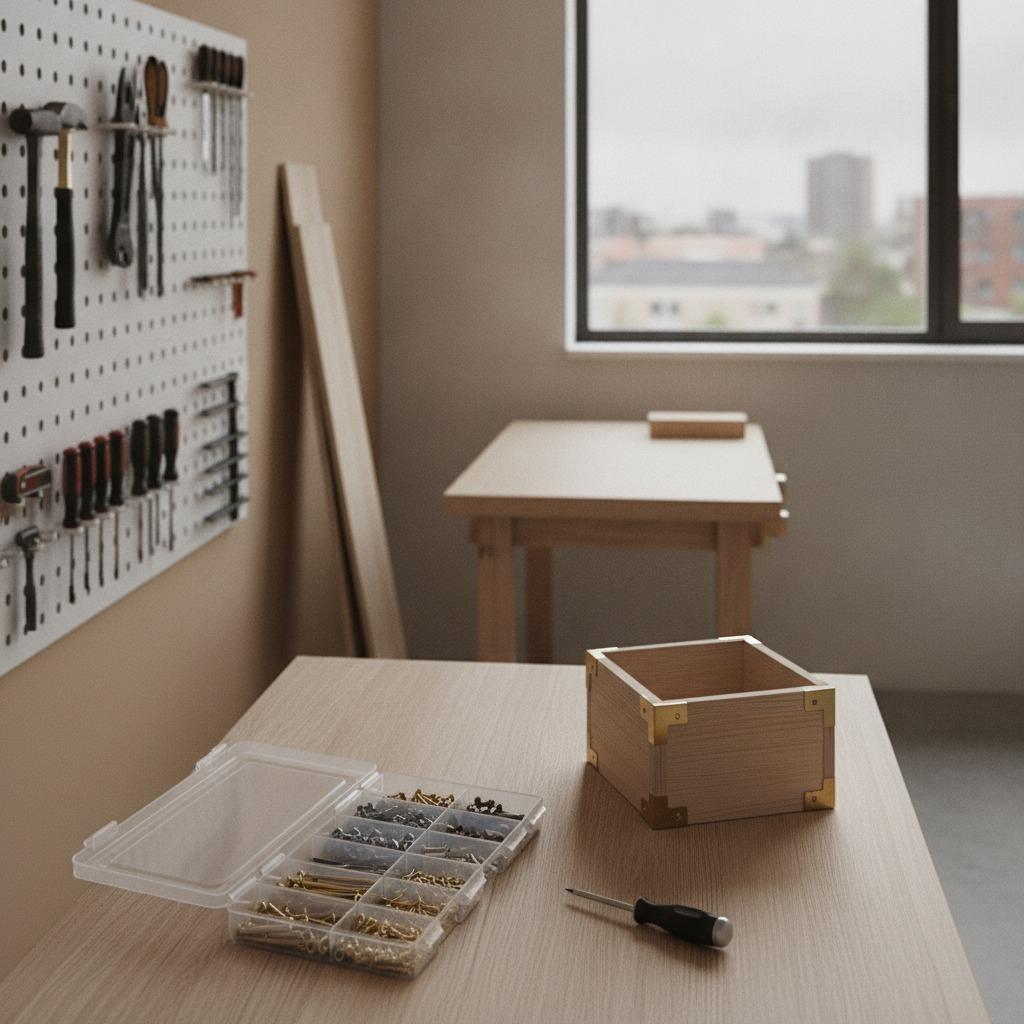
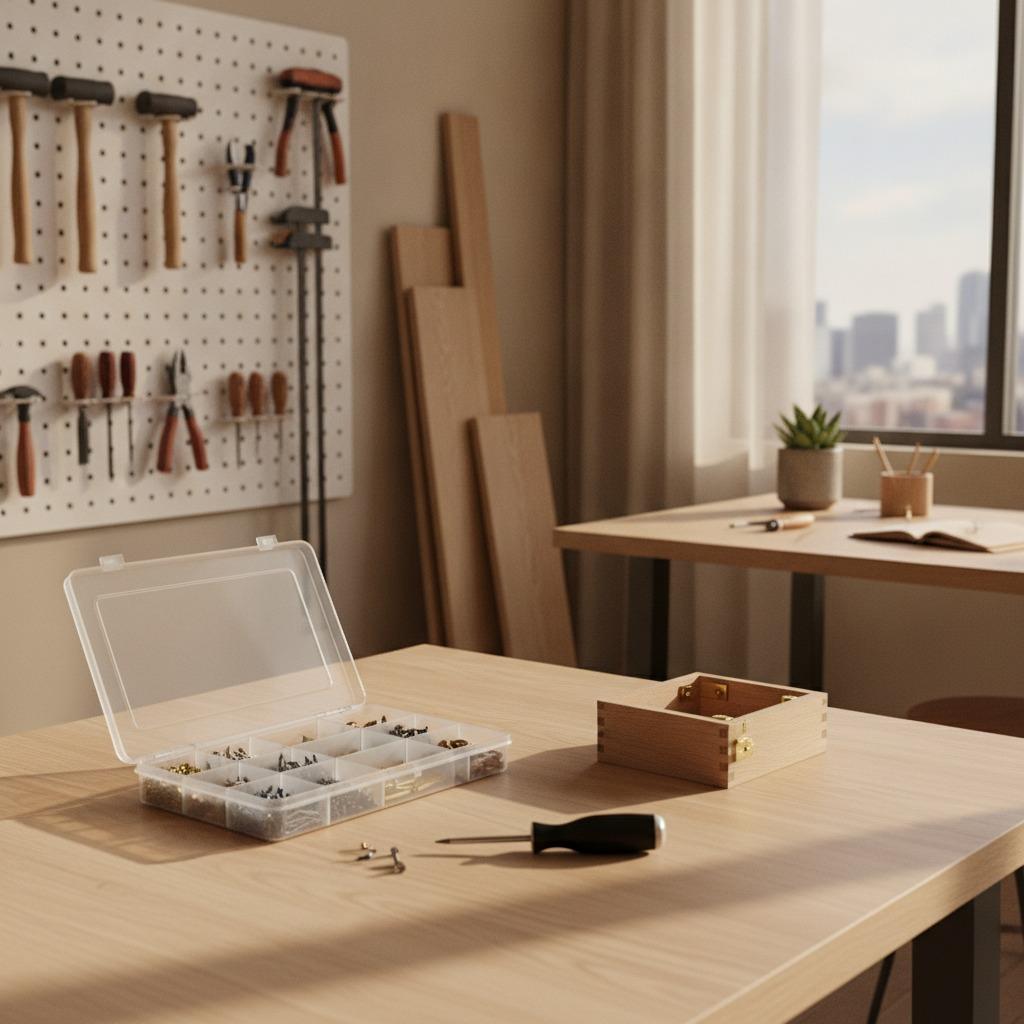
That is why samples should be tested in the actual panel material. Not only on a desk. Not only against a drawing. In the real joint, with the real installation sequence.
Standard parts are useful, but they still need control
Standard hardware is often the right choice.
It is easier to buy, easier to replace, and usually easier to repeat. For many cabinet and wardrobe projects, standard cam locks, dowels, screws, inserts, and brackets are enough.
But standard does not mean casual.
The buyer still needs stable dimensions, consistent finish, proper packing, clear labels, and repeat supply. A standard screw that changes slightly between batches can still cause problems. A standard bracket packed with the wrong screws can still delay assembly.
There are also times when standard parts do not fully solve the job.
Maybe the board thickness is unusual. Maybe the furniture needs a cleaner exterior. Maybe the bracket hole position needs to move. Maybe the hardware kit must be packed by assembly step for e-commerce customers. In those cases, custom furniture fasteners or modified packaging can be worth discussing.
Jiangmen Jinhe Hardware Co., Ltd. works with machine screws, self-tapping screws, micro screws, precision screws, standard parts, and non-standard customization. Its material range includes stainless steel, iron, and aluminum, with production aligned to standards such as GB, DIN, ANSI, BS, JIS, and ISO.
For furniture buyers, that background can be useful when a project needs both standard hardware and some custom support.
Finish is not only about appearance
Many furniture joining kits use practical finishes rather than decorative ones.
Silver or zinc-like fasteners are common for general cabinet assembly. Brass-colored inserts may be used where repeated fastening is needed. Black plastic or nylon parts may act as spacers, caps, or guides. Some pieces are visible. Most are hidden after assembly.
Even hidden hardware needs the right finish.
Surface treatment can affect corrosion resistance, thread behavior, handling feel, and whether parts scratch each other during packing. If visible parts are included, color consistency becomes more important. If the product will be exported or stored for a long time, packaging and moisture conditions also need attention.
Buyers should confirm the base material and finish before production.
A photo is not enough.
Packaging can prevent many complaints before they happen
Flat-pack furniture hardware is easy to mix up.
Two screws may look almost the same. A small insert may hide in the corner of a bag. A washer may be missed during counting. A bracket may need a specific screw, but the kit may not make that clear.
Good packaging reduces these small mistakes.
For some projects, separated bags are enough. For others, a compartment tray works better. For retail or e-commerce kits, labels may need to match the instruction sheet. For OEM assembly, the kit may need to be packed by model number or production step.
Packaging is not decoration here.
It is part of the assembly process.
A hardware kit that is easy to read, easy to count, and hard to mix up can reduce service calls before the furniture ever reaches the customer.
Repeat orders are where supplier quality shows
A sample kit can be prepared carefully.
That does not prove the supplier can repeat it.
Furniture programs often run for months or years. The buyer needs the same connector size, same screw length, same insert type, same finish, same label, and same packaging logic across future shipments. A small unapproved change can create a large problem on the assembly line.
Before choosing a supplier, buyers should ask how repeat orders are controlled.
Are drawings recorded?
Are approved samples kept?
Are substitutions allowed without approval?
Are packaging instructions fixed?
Are labels version-controlled?
Is inspection done before shipment?
Jiangmen Jinhe Hardware states that products undergo inspection before delivery and that necessary documentation can be provided. The company also notes support for logistics, warehousing, foreign trade, and supply chain services. For export furniture programs or cross-border sellers, those details can help reduce the quiet problems that happen between production and delivery.
Communication matters when the line is waiting
Furniture hardware problems often appear at inconvenient times.
A carton is being packed. A customer asks for a sample change. A connector needs to be separated from another part. A screw length needs confirmation. A bracket drawing has been updated, but the old packaging label is still in use.
At that moment, slow communication becomes expensive.
Jiangmen Jinhe says it can respond to product issues within 30 to 60 minutes and provide solutions within 2 hours. Buyers should still verify this during real sampling and order communication, but the idea is important.
A supplier that answers clearly can save time.
A supplier that disappears after the order is placed can turn a small hardware detail into a production delay.
Common mistakes buyers should avoid
One mistake is assuming every connector is interchangeable.
It is not.
A cam lock, dowel, threaded insert, shelf pin, bracket, rail mount, and screw all solve different problems. They may sit in the same kit, but they should not be selected casually.
Another mistake is buying from appearance alone. Two connectors may look similar in a photo but use different dimensions, materials, finishes, or matching screws.
A third mistake is approving loose samples without testing the full assembly. The real question is not whether the part looks correct. The real question is whether it works in the actual panel, with the actual hole pattern and tools.
Buyers also sometimes leave packaging until the end. For flat-pack furniture, that is risky. The packaging affects assembly, counting, replacement service, and customer satisfaction.
The final mistake is choosing only by the lowest unit price.
A cheap kit becomes expensive if it causes damaged boards, missing-part complaints, slow assembly, or repeated replacement shipments.
What buyers should ask before ordering
Before choosing a furniture joining hardware supplier, ask questions that relate to the real build.
What panel material is being used?
What board thickness and hole pattern are required?
Which parts are included in the full kit?
Which parts are standard, and which can be customized?
Can the sample be tested in our actual cabinet or wardrobe design?
What materials and finishes are available?
How are similar parts separated in packaging?
Can labels include model numbers or assembly steps?
How is kit completeness checked?
What inspection documents are available?
Can replacement kits be supplied later?
Can the same specification be repeated in future orders?
Can logistics, warehousing, or export support be included?
These questions are simple, but they reveal a lot.
A real hardware partner should be able to discuss the assembly, not only the price list.
Frequently Asked Questions
What does a furniture joining hardware supplier provide?
A furniture joining hardware supplier may provide screws, cam locks, connector bolts, dowels, threaded inserts, brackets, shelf pins, mounting plates, plastic caps, and custom furniture fasteners.
Why does panel material matter?
Different panels hold hardware differently. MDF, particleboard, plywood, laminated board, and solid wood may require different connector types, screw lengths, inserts, or pilot holes.
What does a cabinet connector supplier do?
A cabinet connector supplier provides hardware used to align, tighten, and support cabinet panels, shelves, rails, doors, and related furniture structures.
Can furniture hardware be customized?
Yes. Connector size, screw length, insert type, bracket design, finish, packaging, labels, and kit contents can be customized when the application requires it.
Why is packaging important in flat-pack furniture hardware?
Packaging helps prevent missing parts, mixed fasteners, unclear assembly steps, surface damage, and customer complaints during installation.
Should buyers test hardware before bulk production?
Yes. Hardware should be tested with the actual board material, hole pattern, assembly tools, and installation sequence before volume orders.
The right supplier makes assembly feel less risky
Good furniture joining hardware does not need to be complicated.
It needs to fit the board, hold the joint, stay organized, and arrive the same way next time.
That is what buyers should expect from a reliable furniture joining hardware supplier.
For furniture joining hardware, cabinet connectors, wood furniture connectors, flat-pack furniture hardware kits, custom furniture fasteners, and organized assembly packaging, Jiangmen Jinhe Hardware Co., Ltd. can discuss material options, standard parts, non-standard customization, inspection, packaging, logistics, warehousing, and repeat supply requirements.
For direct inquiries:
Tel/WeChat: +86 13729150102
WhatsApp: +86 13322893939
Email: sharon@hkhomeideas.com
Start with the panel material, board thickness, hole pattern, joint design, hardware list, packaging method, and expected order quantity.
Once the assembly system is clear, choosing the right hardware supplier becomes much less of a gamble.