
Hardware Blister Packaging Manufacturer: What Buyers Should Check Before Production
A hardware package can look clean on a retail hook and still be badly designed.
The plastic is clear. The backing card is printed neatly. Every screw, bracket, insert, and connector is visible. From a distance, the product appears ready for sale.
Then the pack is handled.
Small parts slide into the wrong cavity. A metal bracket presses against the plastic and leaves a crack. The card bends during shipping. A customer opens the package and cannot tell which screw belongs to which assembly step.
This is why selecting a hardware blister packaging manufacturer involves more than approving a shape and printing a label.
For hardware brands, furniture suppliers, wholesalers, and OEM buyers, the package has several jobs to perform at once. It must hold the components securely, make the contents easy to understand, protect the finish, survive transport, and fit the sales channel.
When those details are handled properly, packaging supports the product.
When they are not, even well-made hardware can arrive looking disorganized or incomplete.
 Hardware packaging is part of the product experience
Small components create unusual packaging problems.
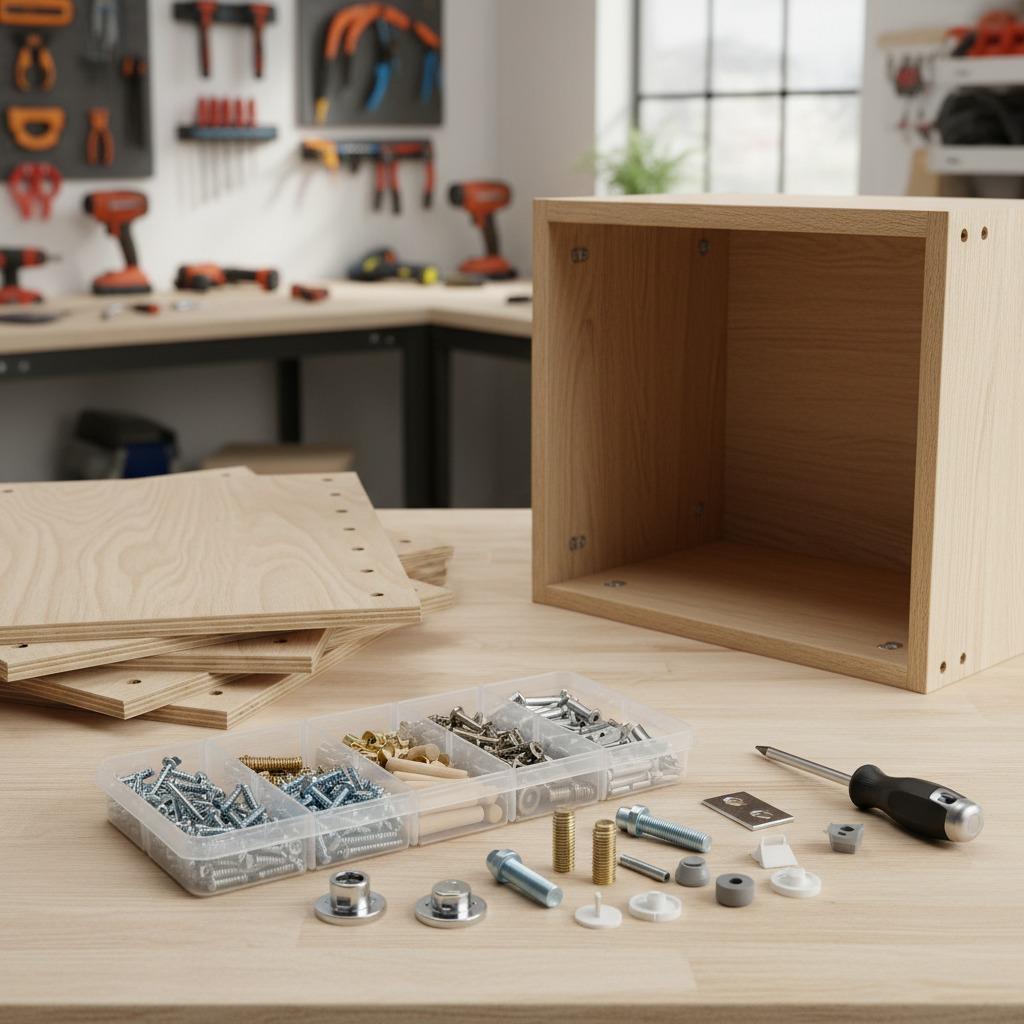
A cabinet hardware kit may contain screws, threaded inserts, cam fittings, brackets, plastic covers, spacers, sleeves, washers, and a simple driver tool. The parts may differ only slightly in size, yet each one has a specific function.
Loose packing makes those differences harder to manage.
If two screw lengths are mixed, a customer may install the longer screw in the wrong panel and damage the visible surface. If a small spacer moves behind a larger bracket, the customer may assume the part is missing. If several finishes rub together during transit, the metal can arrive scratched.
Blister packaging helps because it gives each component a controlled position.
The clear plastic allows the buyer to see what is inside. Formed cavities limit movement. The backing card provides space for instructions, quantities, compatibility information, warnings, and branding.
The package becomes a simple visual map of the kit.
That is particularly useful for products sold through retail stores or online channels, where the customer may never speak with a salesperson before purchasing.
What the cabinet hardware set reveals about packaging needs
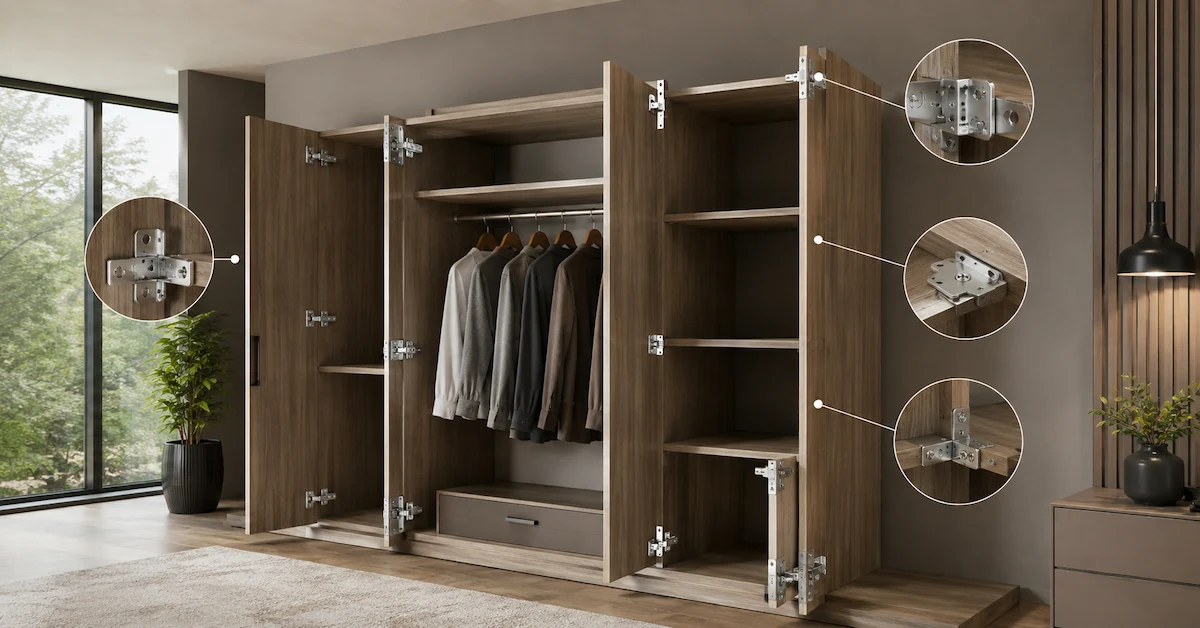
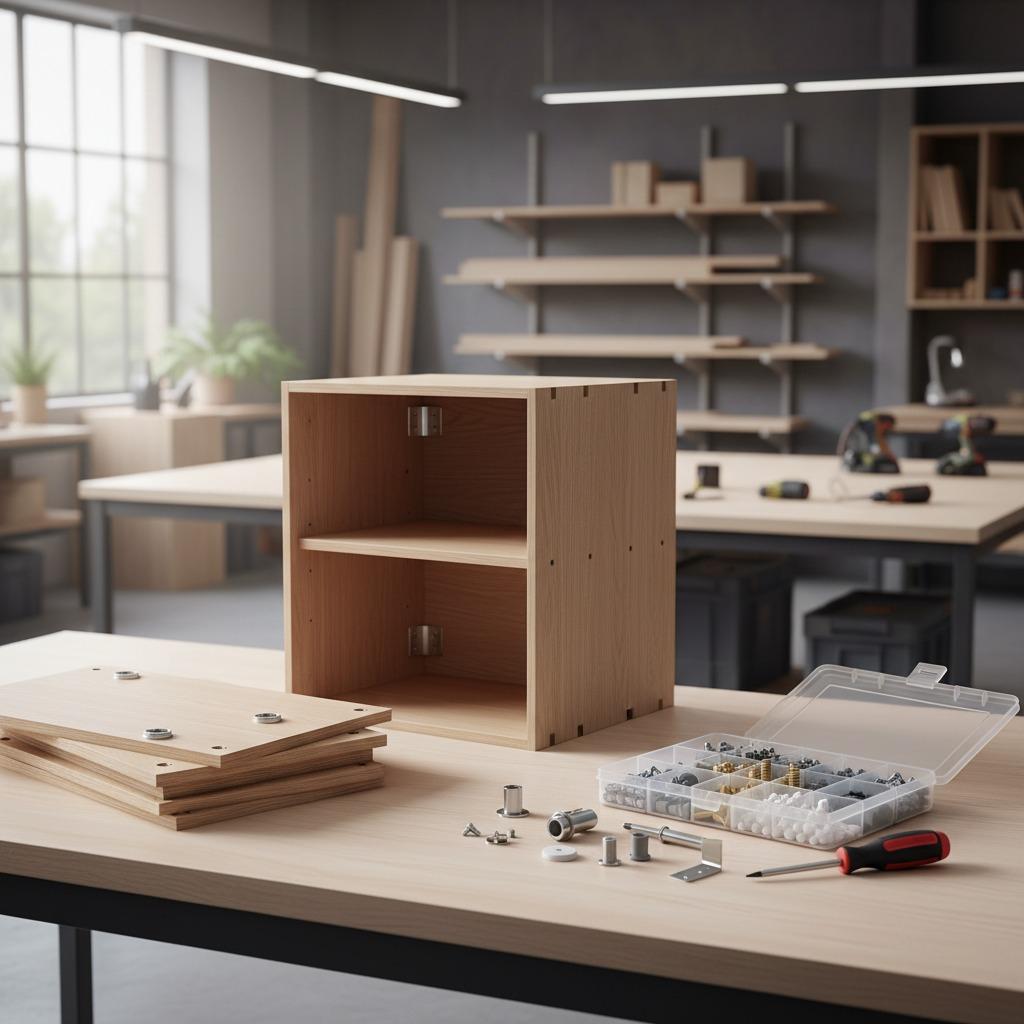
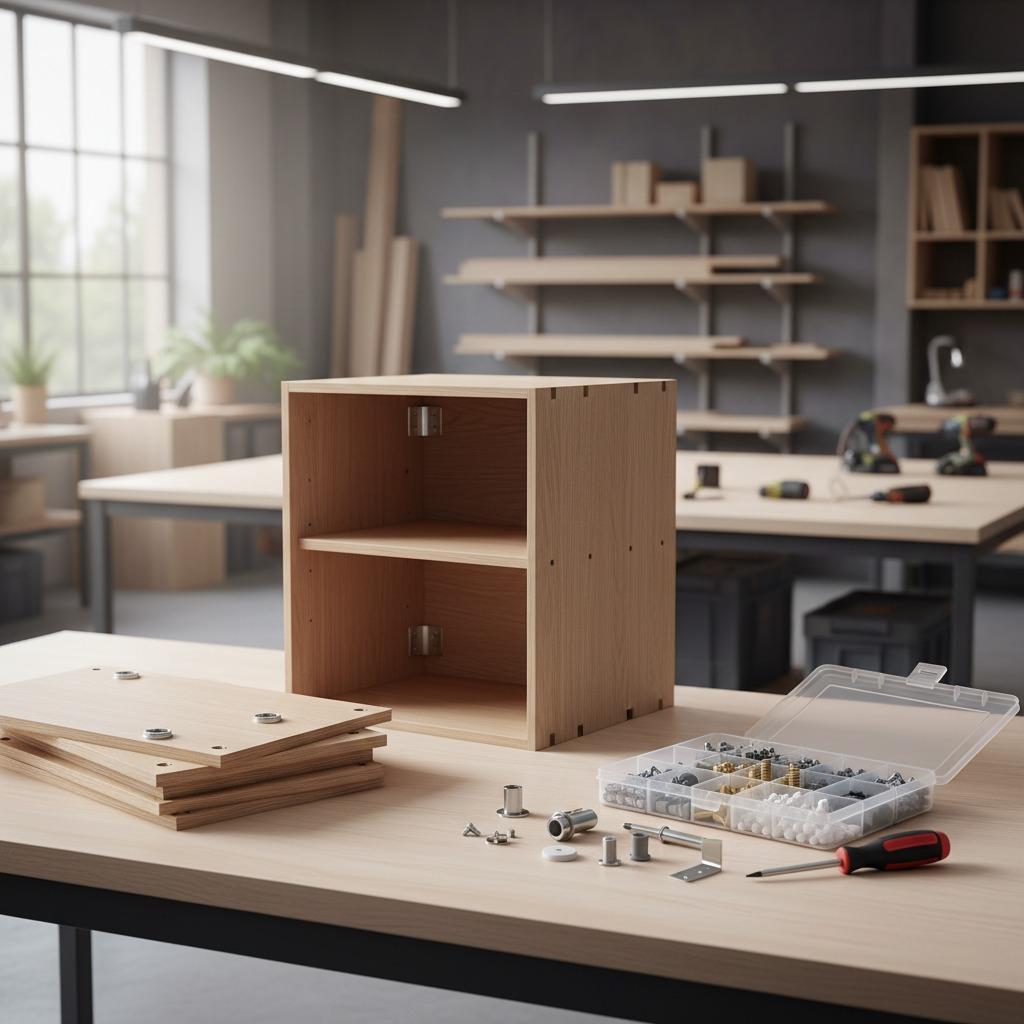
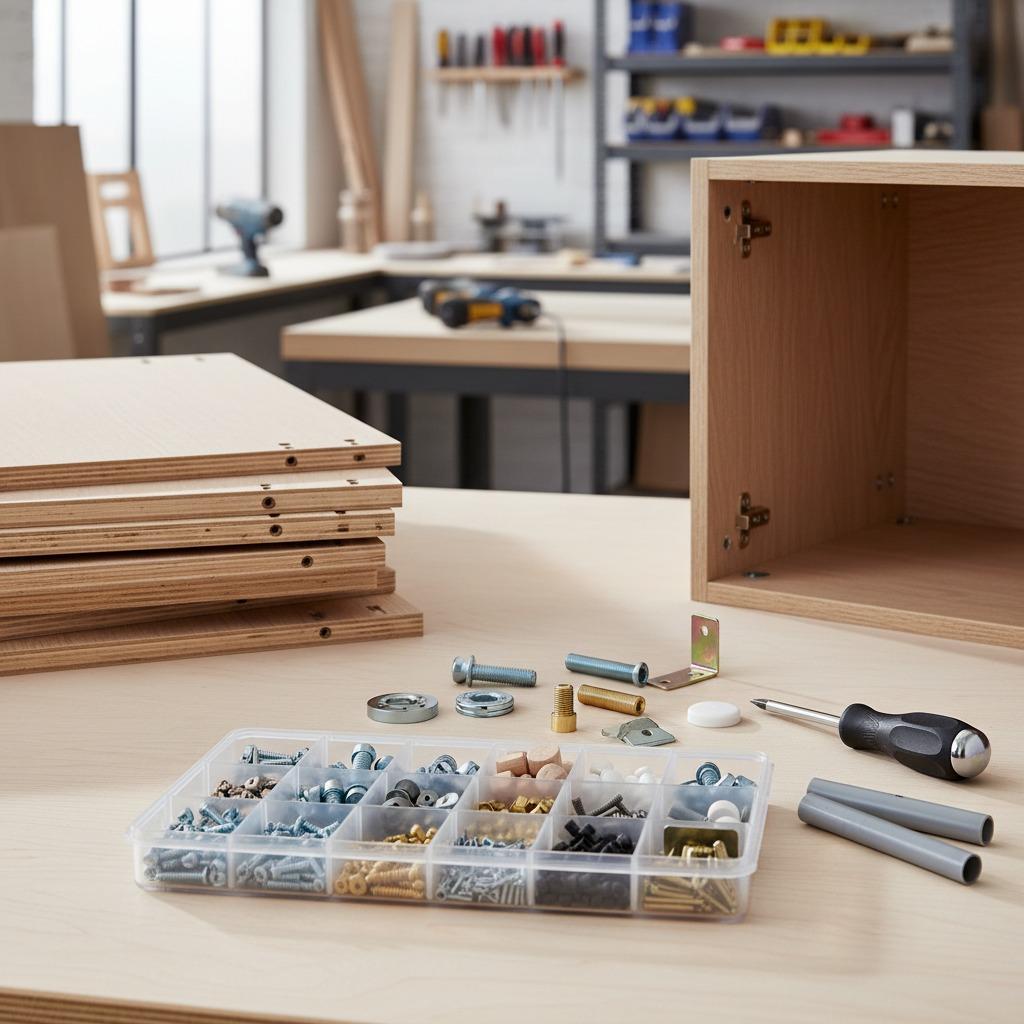
The cabinet hardware assortment described here includes several different component types.
There appear to be screws, threaded inserts, cylindrical connectors, cam-style fittings, small angle brackets, plastic caps, spacers, and other accessories used with pre-drilled furniture panels.
This is not a product that should be poured loosely into a clear shell.
The components have different weights, shapes, and surfaces. A bracket has sharp edges. Screws can move easily. Small plastic parts may disappear behind larger metal items. Brass-colored inserts may need to remain visually separate from silver-colored fasteners.
A suitable package should therefore do more than hold the total quantity.
It should organize the hardware according to how the customer understands or uses it.
For example, cavities may be arranged by:
- Component type
- Assembly step
- Quantity
- Furniture location
- Part number
- Tool and accessory group
The right layout depends on whether the pack is intended for retail sale, replacement service, factory use, or inclusion inside a furniture carton.
A hardware packaging factory should ask about that use before designing the blister.
Retail, e-commerce, and industrial packaging have different priorities
One package design rarely performs equally well in every channel.
A retail blister pack needs to look orderly from the front. The product must remain visible while the card provides enough space for branding and clear application information. The hanging area also needs to withstand repeated handling on store displays.
An e-commerce pack faces a different problem.
It may never hang on a pegboard. Instead, it moves through conveyors, sorting centers, cartons, and delivery vehicles. Transit protection becomes more important than shelf appearance. Extra reinforcement or secondary packaging may be necessary.
Industrial and line-side packs have another set of priorities.
Factory workers may care less about retail graphics and more about fast identification, compact storage, barcode scanning, and clean picking. The pack should open quickly and support the production sequence.
Before requesting custom blister packaging for hardware, buyers should define where the pack will be used.
Trying to make one format serve a showroom, parcel network, and factory line often creates unnecessary compromise.
The cavity design must follow the hardware
Blister cavities are not simply decorative outlines around the product.
Their depth, width, spacing, and wall shape determine whether components stay in place during shipping and handling.
A cavity that is too shallow may allow the hardware to move or push against the cover. One that is too deep can make the package bulky and increase material use. Tight corners may put stress on the formed plastic, while excessive empty space allows parts to rattle.
Metal hardware also creates different loads from lightweight consumer products.
Screws can collect in one area. Brackets may concentrate pressure on a small point. Cylindrical connectors may roll if the cavity shape does not control them.
The packaging supplier should review actual production parts rather than designing only from rough dimensions.
Physical samples reveal details that drawings may not show:
- Sharp edges
- Surface friction
- Weight distribution
- Part nesting
- Movement during vibration
- Difficulty during loading
- How the product looks through the plastic
A custom cavity should match both the geometry and the behavior of the hardware.
 Visibility should not create confusion
Clear packaging is useful because buyers can inspect the contents without opening the product.
Visibility alone, however, does not guarantee clarity.
If all components are crowded into one large cavity, the customer may still struggle to identify the parts. Similar screws can overlap. Small fittings may be hidden. The product may appear messy even when the quantity is correct.
A well-designed blister pack creates visual separation.
This can be achieved through separate cavities, molded dividers, printed part labels, illustrated component lists, or step numbers on the backing card.
For mixed hardware kits, the card can show:
- Component name
- Quantity
- Simple drawing
- Part letter or number
- Intended use
- Assembly step
- Compatible furniture model
The customer should be able to compare the visible hardware with the printed list quickly.
That is especially important for replacement packs and DIY furniture products, where users may not know the technical name of a connector.
Packaging must protect the hardware finish
Furniture and retail hardware often uses several surface treatments in one kit.
Silver zinc-plated screws may be packed alongside brass-colored inserts, black plastic components, and coated brackets. Although most parts are durable, repeated contact during transport can still create scratches, scuffing, or plating marks.
Visible hardware deserves particular attention.
A scratched connector may function correctly and still appear defective to the customer. Dark parts can leave marks on lighter plastic accessories. Sharp screw threads can damage softer caps or spacers.
The blister layout should limit direct contact where appearance matters.
Possible solutions include:
- Separate cavities
- Molded ribs
- Individual pockets
- Protective film
- Orientation controls
- Secondary bags for abrasive parts
- Reduced internal movement
The buyer should also confirm whether the packaging material interacts safely with coatings, lubricants, or protective oils used on the hardware.
A clean product at the packing station should remain clean when the customer opens it.
Material choice affects strength, appearance, and cost
Blister packs may use different plastic materials depending on clarity, strength, forming behavior, sustainability goals, and market requirements.
The correct choice depends on the product and channel.
Heavy hardware needs enough rigidity to prevent the blister from collapsing or cracking. Retail packs need good transparency. Export products may need to tolerate temperature changes and long storage periods.
The backing card also matters.
A thin card may warp or tear around the hanging hole. A thicker card adds strength but may increase cost and packing volume. Coatings, printing, and sealing treatments need to match the chosen production method.
Buyers should ask the hardware blister packaging manufacturer about:
- Plastic type
- Material thickness
- Transparency
- Impact resistance
- Recycled-content options
- Backing-card weight
- Printing compatibility
- Sealing method
- Temperature and storage limits
- Local recycling requirements
Material should be selected for the actual load rather than copied from another product category.
A blister that performs well for lightweight plastic accessories may be unsuitable for a set of steel brackets and screws.
Sealing strength needs to match the pack weight
A blister package may be heat sealed, trapped between cards, mechanically closed, or designed with another closure format.
Whatever method is used, the seal needs to survive handling.
The heavier the hardware, the more stress is placed on the blister edge and backing card. A pack may pass a visual inspection while lying flat and fail when hung vertically for several weeks.
Buyers should consider:
- Peel strength
- Hanging performance
- Vibration during transport
- Drop resistance
- Card delamination
- Plastic cracking
- Opening method
- Tamper evidence
The package should be secure enough to protect the contents but not so difficult to open that the customer needs dangerous tools.
This balance is easy to overlook.
Overly aggressive sealing can lead to cuts, frustration, and negative reviews. Weak sealing creates missing parts and damaged retail displays.
Sample testing should include both transport and user opening.
The packing process should be reviewed before the design is approved
A visually attractive blister may be slow or awkward to load.
This creates hidden production cost.
If workers need to orient every screw by hand, place several tiny parts into narrow cavities, and repeatedly correct components before sealing, packing time can rise quickly.
The manufacturer should review how the blister will be filled.
Questions include:
- Are parts loaded manually or automatically?
- Do components need a fixed orientation?
- Can several parts be counted into one cavity?
- How are missing items detected?
- Can the pack be sealed without shifting the contents?
- Does the layout support quick visual inspection?
- How often will the product design change?
A package that saves plastic but adds excessive labor may not reduce total cost.
For high-volume projects, a slightly simpler cavity layout can improve loading speed and lower error rates.
Counting accuracy is critical for hardware kits
A blister pack gives customers confidence because they can see the contents.
That confidence disappears when the quantity is wrong.
One missing screw can prevent a cabinet from being completed. An extra part may be less serious, but it can still confuse the customer and suggest that something was skipped during assembly.
The packing process should include a suitable counting method.
Options may include:
- Automatic component counters
- Weight verification
- Vision inspection
- Fixed cavity quantities
- Manual checklists
- Final visual inspection
- Combined checks
The correct method depends on the number, size, and similarity of the parts.
Weight checking may work for a simple screw pack. It is less dependable when different components have similar weights or when one missing light item can be offset by an extra heavy one.
Separate cavities make visual confirmation easier because the expected quantity is clearer.
This is one reason blister packaging is useful for structured furniture hardware kits.
Printed information should answer practical questions
The card is not only a branding surface.
It should help the buyer understand what the hardware does.
Useful information may include:
- Product name
- Component quantities
- Part diagram
- Compatible furniture types
- Basic dimensions
- Material or finish
- Installation guidance
- Required tools
- Safety warning
- Manufacturer information
- Barcode or QR code
- Batch or model number
The front should communicate the application quickly.
The back can carry detailed instructions, technical information, or a link to an assembly video.
For replacement hardware, compatibility information is especially important. Customers may know that they need a “cabinet connector” but not the exact thread or size.
A clear printed diagram can prevent an incorrect purchase.
Branding should not hide the contents
Retail packaging needs visual identity, but hardware buyers usually want to see the product.
Large graphics, dark backgrounds, or excessive printed claims can reduce the main advantage of blister packaging: visibility.
The design should balance branding with inspection.
Buyers should be able to see the connector type, screw count, bracket shape, and general finish without opening the package.
This is particularly valuable in stores where several similar hardware kits hang next to each other.
The package should help the customer compare them.
A clean layout often works better than an overloaded one.
Common sourcing mistakes
One common mistake is contacting a packaging supplier before the hardware list is final.
If component sizes or quantities change later, the cavity may need to be redesigned. This can affect tooling, card artwork, sealing, and production lead time.
Another mistake is approving the pack using lightweight substitute samples.
The final hardware may be heavier, sharper, or more abrasive. The approved blister may no longer provide enough support.
Buyers also sometimes focus only on the front appearance.
They overlook stacking, carton efficiency, hanging strength, warehouse labels, and how quickly the pack can be filled.
Oversized packaging creates another problem.
It may look substantial on a shelf but increases plastic use, shipping volume, and storage cost. A pack that is too compact can create pressure points or make printed information difficult to read.
The design should be large enough to protect and explain the product—no larger.
How to evaluate a hardware blister packaging manufacturer
A capable supplier should ask more than the desired package dimensions.
It should want to understand:
- Hardware type
- Component quantity
- Part weight
- Sharp edges
- Surface finish
- Retail or industrial channel
- Hanging requirement
- Transit conditions
- Packing method
- Opening method
- Printing requirements
- Order volume
The supplier should also be able to provide prototypes or sample tooling before full production.
Testing actual hardware in the proposed package is essential.
For buyers sourcing both the fasteners and the package, coordination becomes even more valuable. Changes in screw length, bracket shape, or kit quantity can be communicated before they create a tooling problem.
Jiangmen Jinhe Hardware Co., Ltd. manufactures machine screws, self-tapping screws, precision screws, and customized non-standard fasteners for industries that include furniture and hardware distribution.
For projects involving packaged hardware kits, aligning the fastener specifications, sorting method, inspection, and packaging format can reduce handoffs between suppliers.
The exact blister-production scope should still be confirmed for each project. Fastener manufacturing experience is useful, but the buyer should verify packaging capability, materials, tooling, and sealing processes separately.
What buyers should approve before production
Before releasing a blister-packaging order, confirm the final product and packaging information together.
The approval package should include:
- Hardware bill of materials
- Final component samples
- Component quantities
- Blister drawing
- Cavity layout
- Plastic specification
- Backing-card material
- Printed artwork
- Sealing method
- Pack dimensions
- Hanging-hole design
- Barcode information
- Packing instructions
- Carton quantity
- Inspection criteria
- Approved opening method
A small pilot batch is advisable.
The pilot should be packed using the intended process, placed in the final carton, and tested through realistic handling.
Check whether the parts move, whether the card bends, whether the seal remains intact, and whether users can identify and remove the hardware easily.
That trial often reveals more than a digital rendering.
Frequently Asked Questions
What types of hardware are suitable for blister packaging?
Blister packaging can be used for screws, nuts, bolts, connectors, brackets, plugs, anchors, spacers, washers, small tools, and mixed furniture hardware kits.
Can the blister cavities be customized?
Yes. The cavity shape, depth, layout, quantity, and orientation can be adjusted to match the hardware and packaging channel.
Is blister packaging suitable for e-commerce?
It can be, although e-commerce products may need additional carton protection because the package experiences more impact and compression than a retail shelf pack.
How can buyers prevent parts from mixing?
Use separate cavities, molded dividers, clear part labels, controlled loading, and a suitable counting or vision-inspection process.
Should actual hardware samples be sent to the packaging supplier?
Yes. Physical samples help the supplier evaluate weight, edges, finish, orientation, movement, and cavity depth more accurately than drawings alone.
What information belongs on the backing card?
The card may include the product name, component list, quantities, compatible applications, installation notes, warnings, barcode, and manufacturer details.
Good packaging makes the hardware easier to trust
A customer should not need to shake a package, count hidden screws, or guess whether the correct connector is inside.
The parts should be visible, organized, and protected. The card should explain what the kit contains and where it is used. The blister should remain secure through packing, shipping, storage, and retail handling.
That is the real value of working with a capable hardware blister packaging manufacturer.
The package does not improve the strength of a screw or bracket. It does improve the way the product is identified, transported, sold, and used.
For furniture hardware, cabinet connectors, retail fasteners, and mixed component kits, Jiangmen Jinhe Hardware Co., Ltd. can discuss fastener selection, customized components, sorting, documentation, and packaging requirements.
Begin with the actual hardware samples, quantities, target channel, and expected order volume.