
How to Choose a Hardware Blister Packaging Manufacturer for Cabinet Parts
A hardware blister packaging manufacturer does not simply place screws behind a clear sheet of plastic.
The package has to keep small components where they belong, allow buyers to see what they are purchasing, and survive the trip from the packing line to the store, warehouse, jobsite, or customer’s home.
That sounds straightforward until the pack contains several fasteners that look almost identical.
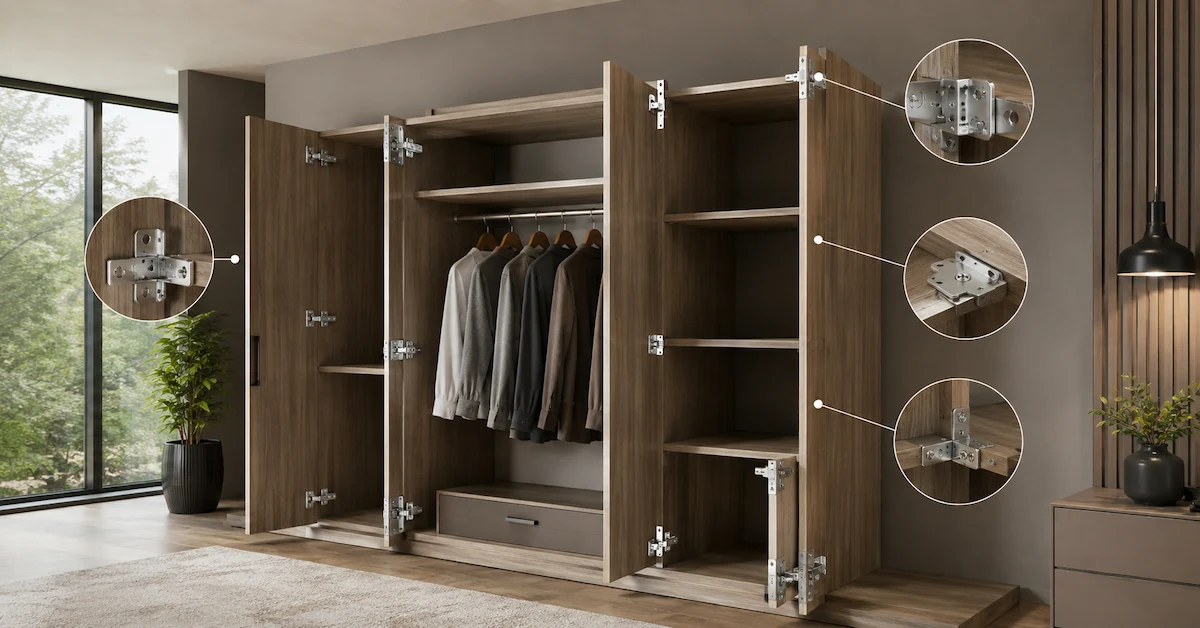
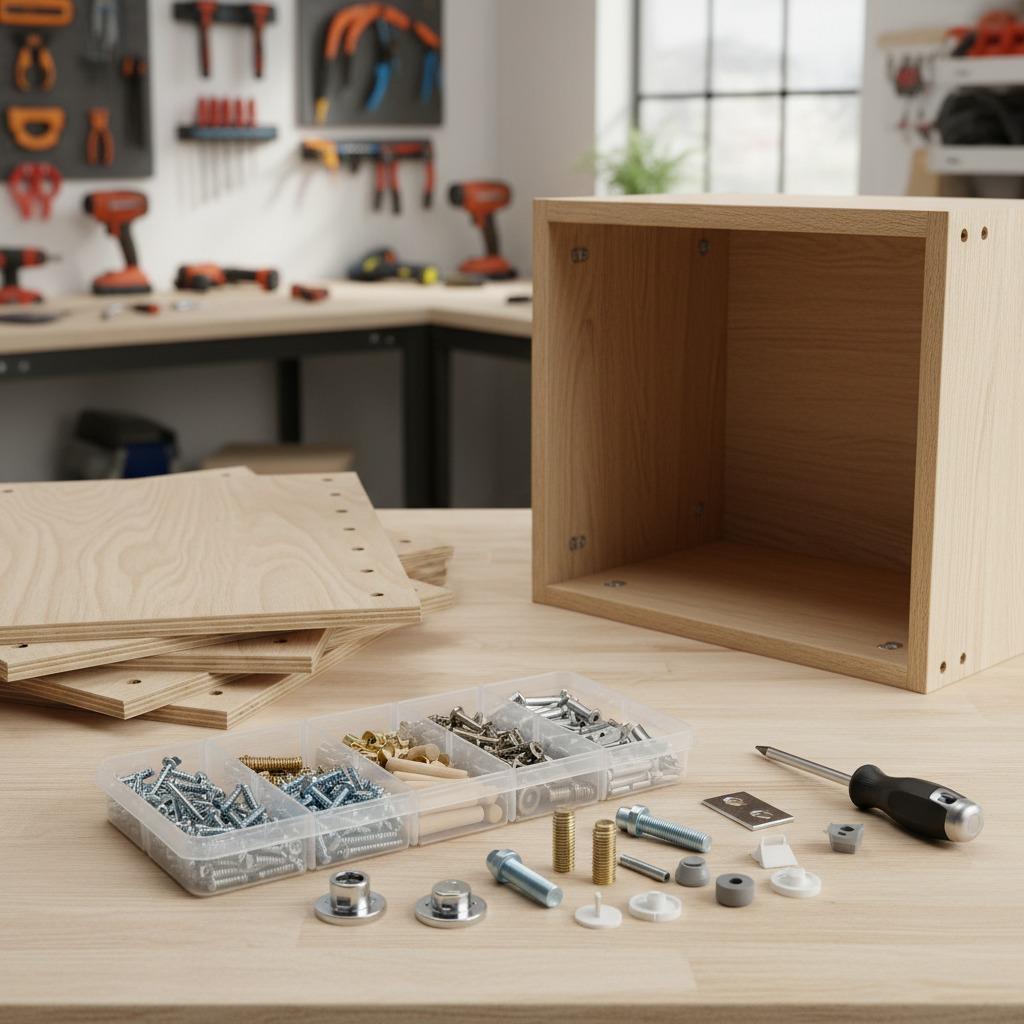
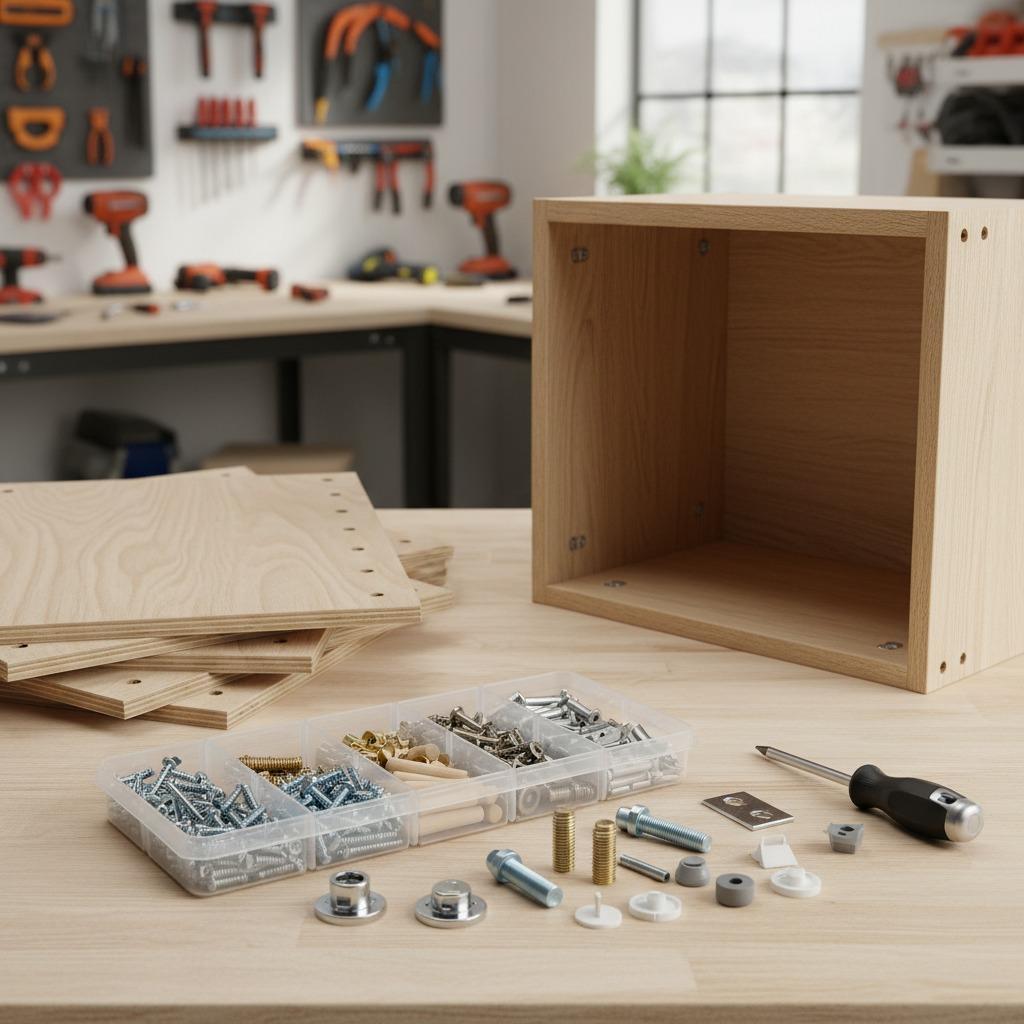
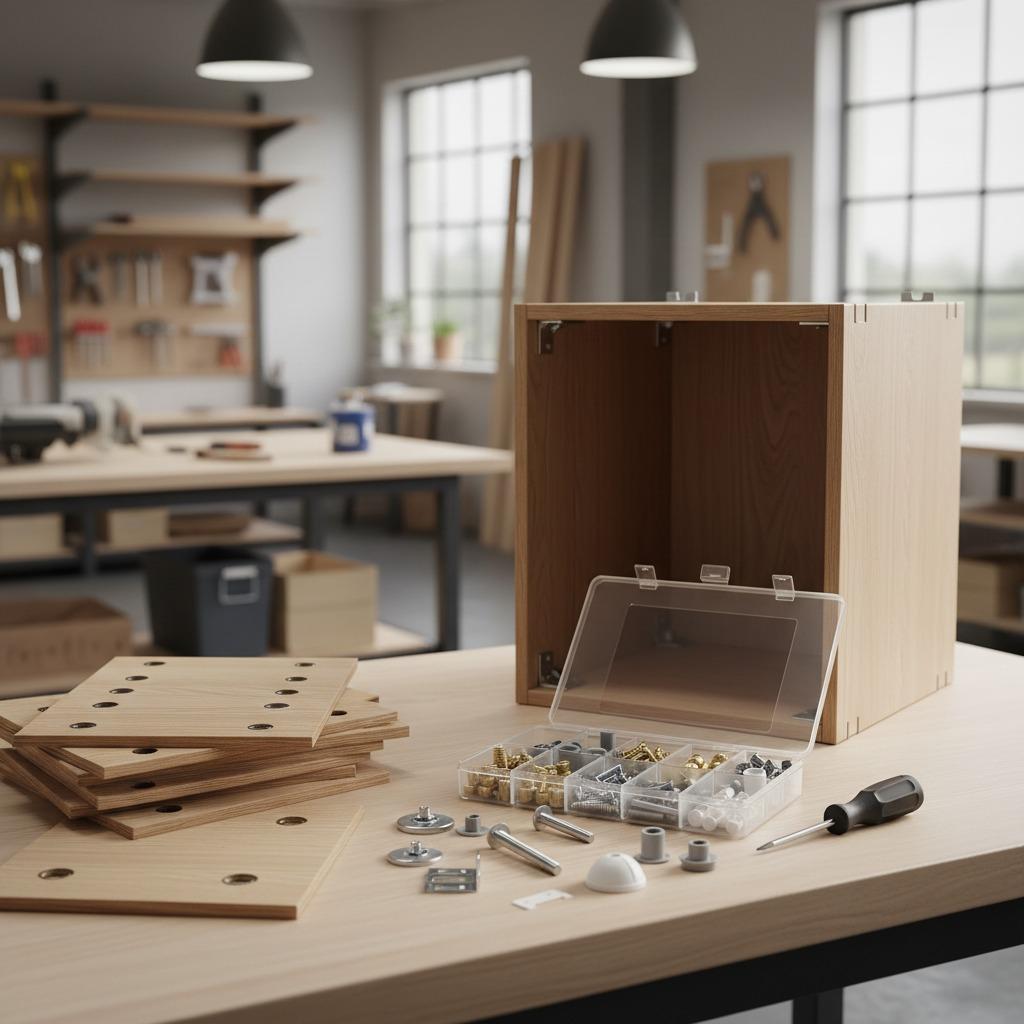
A cabinet hardware set may include connector bolts, cam fittings, dowels, threaded inserts, corner brackets, plastic plugs, cover caps, washers, and a driver bit. When those parts move, mix, or disappear behind one another, the installer has to stop and sort the kit before assembly can begin.
At that point, packaging is no longer a cosmetic issue.
It has become part of the product’s usability.
 Cabinet hardware creates an awkward packaging problem
Small hardware is easy to manufacture in volume and surprisingly difficult to present well.
The parts are often compact, dense, and irregularly shaped. Screws roll. Brackets have sharp corners. Plastic caps weigh almost nothing and can hide beneath heavier components. Inserts and barrel nuts may appear similar to buyers who do not work with furniture fittings every day.
A loose bag may be adequate for factory use, but it often performs poorly in retail.
The customer cannot see the full contents clearly. Parts collect in one corner. Printed labels become separated from the hardware. When the bag is opened, everything lands on the work surface at once.
A cabinet hardware blister pack can solve many of these problems because the formed plastic creates a fixed layout.
The package can show the connector system before the customer opens it. Different component groups can be separated. The backing card can explain quantities, compatibility, and assembly steps.
The result should feel less like a bag of miscellaneous fasteners and more like a prepared installation set.
What the packaging needs to accomplish
Good packaging does not need to be complicated, but it does need to perform several jobs at the same time.
It should keep the parts visible without allowing them to shift excessively. It should protect plated surfaces and plastic accessories. It needs enough structure to remain flat on a pegboard or inside a carton.
The pack should also answer a basic customer question:
“Do I have the correct hardware for this job?”
For a cabinet or furniture connector kit, that answer may depend on details such as:
- Connector type
- Screw length
- Thread size
- Bracket shape
- Number of components
- Panel application
- Required installation tool
A clear plastic cover helps the buyer inspect the product. The printed card gives those visible parts context.
Neither element is especially useful on its own.
Why a tidy layout matters during assembly
A well-organized package can quietly reduce installation errors.
Suppose a cabinet requires eight short screws and four longer screws. The difference between them may be only a few millimeters. If all twelve are placed into one cavity, the customer has to compare them manually.
That may be manageable for a professional installer.
It is less reasonable for someone assembling flat-pack furniture at home.
Separate cavities, printed part letters, or step-based grouping can make the distinction much clearer. The package can show that the short screws belong to the brackets while the longer ones secure another fitting.
The same logic applies to cam locks, connector bolts, dowels, and cover caps.
Custom blister packaging for hardware should reflect how the kit is used, not simply how the pieces fit most efficiently into a plastic shape.
Sometimes the most compact layout is not the easiest one to understand.
Retail display and transport protection are different jobs
A blister pack may look excellent while hanging in a showroom and fail inside an e-commerce parcel.
Retail packaging is usually designed to attract attention and make the contents easy to compare. The front needs to remain clean, the backing card should stay flat, and the hanging slot must tolerate repeated handling.
E-commerce creates harsher conditions.
The product may move through automated sorting systems, fall inside a larger carton, or sit beneath heavier goods. A thin blister that performs well on a retail hook may crack during parcel delivery.
Trade and industrial users create another requirement.
A workshop buyer may care less about graphics and more about compact storage, barcode identification, and quick opening. Installers may also want a package that can be closed again after only part of the kit has been used.
This is why buyers should identify the primary channel before asking a hardware packaging factory for a quotation.
Retail, e-commerce, and industrial packs can share materials and branding, but they should not be assumed to have identical structures.
Blister packs, clamshells, and divided trays
Not every hardware kit belongs in a conventional sealed blister.
A standard blister pack works well for lighter retail sets that need strong visibility and tamper evidence. The clear formed plastic is sealed to a backing card, creating a package that hangs easily and shows the contents.
A clamshell offers a more rigid enclosure and may be opened and closed again. This can be useful for larger assortments, tools, or products sold through both retail and online channels.
A divided tray inside a box may be better for heavier cabinet kits.
The parts remain separated, but the packaging does not rely on a hanging card to support the full load. Trays can also work well for OEM production, spare-parts programs, and installation teams.
A tool blister packaging supplier may offer all three approaches, but the choice should come from the hardware weight, sales channel, and user behavior.
Packaging style should follow the product.
The blister cavity should be built around real parts
Designing a cavity from dimensions alone creates avoidable risk.
A drawing may show the length and width of a metal bracket, but it does not show how sharply the edge presses against plastic. A screw can be measured accurately without revealing how easily it rolls or nests with other screws.
Physical samples show much more.
They help the packaging supplier evaluate:
- Actual weight
- Sharp edges
- Surface friction
- Natural resting position
- Part movement
- Loading difficulty
- Visual appearance through the blister
- Risk of one component hiding another
The cavity needs enough clearance for reliable loading, but not so much that the part rattles.
Very tight cavities can also create problems. Workers may struggle to place parts correctly, and the formed plastic may crack around narrow corners.
The best layout is usually found through samples and trial packs rather than a single digital rendering.
 Mixed materials need separation
Cabinet hardware kits often combine several materials and finishes.
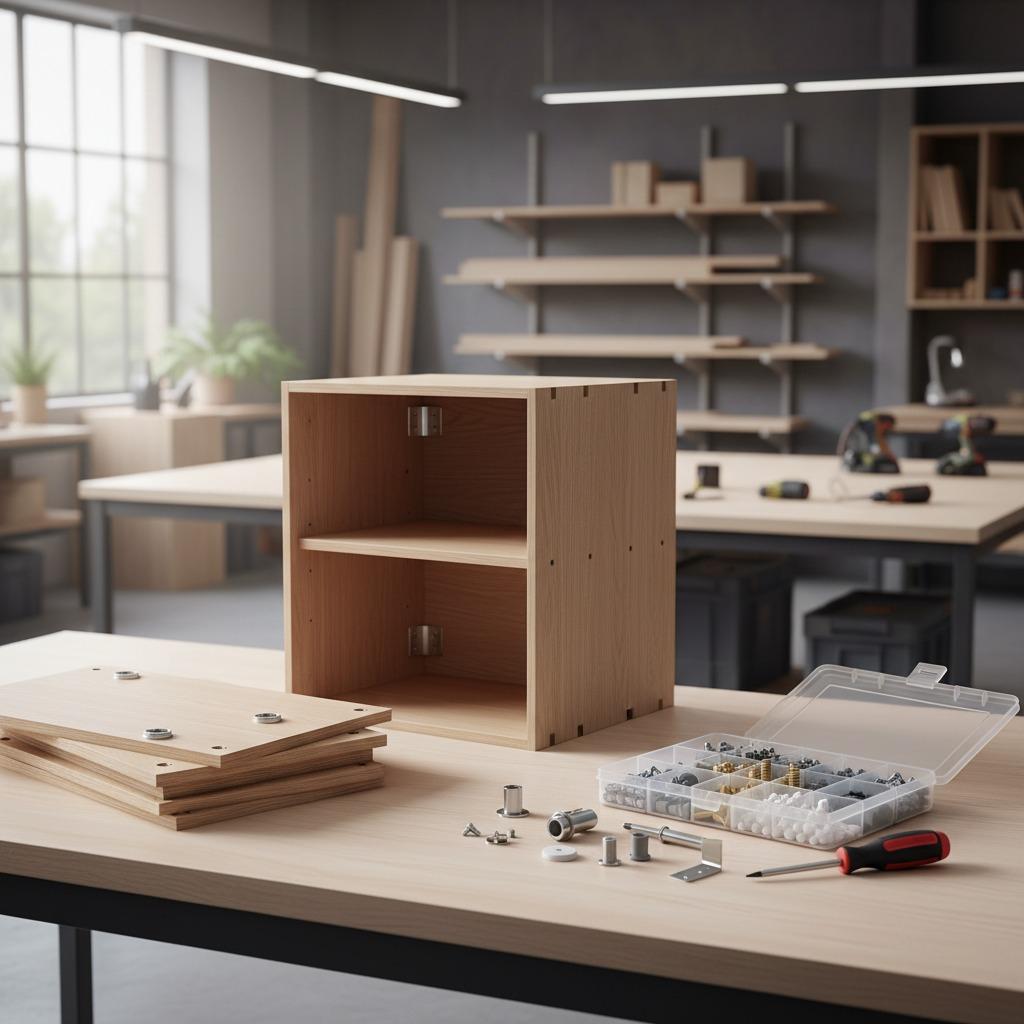
A typical set may contain zinc-plated screws, brass-colored inserts, black plastic caps, white nylon sleeves, and steel brackets. These parts do not always travel well when packed together loosely.
Threads can scratch coated surfaces. Heavy brackets may crush plastic pieces. Dark components can leave visible marks on pale accessories.
This does not mean every part requires an individual cavity.
It does mean the hardware blister packaging manufacturer should understand which surfaces matter and which parts can safely contact one another.
Sensitive or visible components may need:
- Separate pockets
- Molded ribs
- Protective film
- Small inner bags
- Fixed orientation
- Additional clearance
A pack should not arrive with damaged-looking hardware simply because all the pieces were technically present.
Packaging material should match the hardware weight
Hardware is heavier than many products commonly sold in blister packs.
This affects material thickness, seal strength, backing-card stiffness, and hanging performance.
If the clear plastic is too thin, screw heads and bracket corners may push outward. If the backing card is too flexible, the pack may bend or tear around the hanging hole.
Overspecifying the material is not ideal either.
A very thick blister increases plastic use, pack volume, and cost. It may also become harder to open.
Buyers should ask the packaging supplier to explain the proposed material, not simply provide a thickness number.
The discussion may include:
- Plastic type
- Plastic thickness
- Clarity
- Impact resistance
- Forming quality
- Recycled content
- Backing-card weight
- Hanging strength
- Storage temperature
- Recycling requirements
The correct structure is the lightest one that reliably protects the final hardware set.
Sealing strength needs practical testing
A seal can look clean and still fail after several weeks of hanging or transport.
Metal components place continuous weight on the lower section of a blister pack. During shipment, that load moves repeatedly as cartons are handled.
The package should therefore be tested in more than one position.
It should remain secure while lying flat, standing inside a carton, and hanging vertically. Drop and vibration checks are also useful for heavier kits.
Opening behavior matters too.
A package that is extremely difficult to open may frustrate customers or encourage them to use knives and scissors in unsafe ways. A weak pack creates the opposite problem: missing components, tampering, and damaged retail displays.
The closure should protect the product while still allowing a reasonable opening experience.
The packing line matters as much as the final appearance
Some blister designs are attractive but painfully slow to load.
Workers may need to place screws one by one into narrow cavities. Small parts shift before the package is sealed. A bracket has to be rotated several times before it sits correctly.
Across a large production run, those seconds become a significant labor cost.
Before approving the design, buyers should review the packing process with the supplier.
Useful questions include:
- Will parts be loaded manually?
- Can components be counted automatically?
- Do they require a fixed orientation?
- Can workers confirm quantities visually?
- Will the hardware move before sealing?
- How will incorrect parts be detected?
- Can the layout accommodate future kit revisions?
A slightly less elaborate design may be more reliable and economical when production volume is high.
Packaging should look organized because the process is organized—not because workers spend excessive time correcting every pack.
Counting accuracy remains critical
Clear packaging makes mistakes visible, but it does not prevent them automatically.
A customer may still receive seven screws when the card lists eight. Two similar components may be loaded into the wrong cavity. An extra part may create uncertainty about whether an assembly step was missed.
The counting process should match the kit complexity.
Simple screw sets may be verified through automatic counters or weight checks. Mixed cabinet hardware may require divided trays, fixed cavity quantities, vision systems, or manual inspection.
Weight checking alone has limitations.
A missing lightweight washer might be offset by one extra connector bolt. The total weight appears correct even though the component mix is wrong.
Blister layouts can help because separate cavities make missing parts easier to see.
The package itself becomes part of the inspection method.
Printed information should help the buyer make a decision
The backing card has limited space, so every printed element should have a purpose.
The front may show:
- Product name
- Main application
- Part count
- Connector type
- Compatible furniture
- Brand
- Simple feature statement
The back can carry:
- Component list
- Basic dimensions
- Installation diagram
- Required tool
- Warnings
- Material or finish
- Barcode
- QR code
- Manufacturer information
For replacement hardware, diagrams are often more useful than technical terminology.
A customer may not know the phrase “threaded insert,” but they can compare the visible part with an illustrated component list.
The packaging should help the buyer identify the correct set without requiring specialist knowledge.
Branding should leave room for the product
Retail packaging needs to look recognizable, but cabinet hardware is usually purchased for function.
Buyers want to see the screw type, bracket shape, connector finish, and number of parts.
Large graphics should not hide the contents. Nor should the card make a simple kit look more complicated than it is.
A clear visual hierarchy usually works best:
- What is the product?
- What does it fit?
- What is included?
- How is it used?
- Who supplied it?
The clear blister is already doing much of the display work.
The printed design should explain the hardware rather than compete with it.
Planning for product changes
Hardware kits rarely remain unchanged forever.
A screw length may be revised. A bracket might move to another supplier. The furniture brand may add a plastic cap or change the included tool.
Every component revision can affect the blister.
A longer screw may no longer fit the cavity. A thicker bracket may need more depth. The printed quantity and diagram may need to change.
Buyers should consider future revision risk before approving expensive tooling.
Where changes are likely, a divided tray or more flexible cavity layout may be safer than a tightly shaped blister built around every individual contour.
Artwork and packaging files should also use clear revision numbers.
Obsolete cards and old cavities create expensive confusion when several versions remain in inventory.
How to assess a hardware packaging factory
A useful packaging partner should ask about the product before discussing machinery.
The supplier should want to know the part sizes, weights, finishes, quantities, sharp edges, target market, packing method, and expected order volume.
It should also be able to explain:
- Recommended packaging format
- Material selection
- Tooling process
- Prototype options
- Filling method
- Sealing method
- Inspection approach
- Artwork requirements
- Lead time
- Revision handling
A physical sample is especially important.
With mixed hardware, the difference between a convincing concept and a workable pack often becomes clear only after the package is loaded, handled, stacked, and opened.
Do not approve the design from a rendering alone.
Where Jiangmen Jinhe Hardware fits
Jiangmen Jinhe Hardware Co., Ltd. manufactures machine screws, self-tapping screws, micro screws, precision screws, and non-standard fasteners. Its reported material capabilities include stainless steel, iron, and aluminum, and it serves industries such as furniture, electronics, automation, medical devices, and building materials.
For packaged cabinet hardware programs, consistency in the parts themselves is essential.
Blister packaging cannot compensate for mixed screw lengths, unstable finishes, or dimensional variation. The hardware needs to be manufactured, inspected, and sorted correctly before it reaches the packaging stage.
Jinhe also supports customized fastener requirements and export-related services. That may be useful for buyers who want hardware production, sorting, labeling, and packaging planning coordinated through fewer suppliers.
The exact packaging capabilities, blister tooling, materials, and sealing options should still be confirmed for the individual project.
Mistakes buyers can avoid
One frequent mistake is beginning the blister design before the kit is finalized.
If parts or quantities change later, the tooling and printed card may both become obsolete.
Another mistake is testing the packaging with substitute components. The final hardware may be heavier or sharper, creating failures that did not appear during approval.
Oversized packs also deserve caution.
A large package can improve shelf presence, but it increases material use, storage volume, and freight cost. Too much empty space also allows components to move.
A very compact pack creates another problem. Cavities become difficult to load, printed instructions are cramped, and parts may press against the cover.
The package needs enough room to protect and explain the product—nothing more.
What to approve before production
Before placing the production order, the buyer and supplier should confirm the same final version of both the hardware and the package.
The approved file should cover:
- Hardware bill of materials
- Actual component samples
- Quantities
- Blister dimensions
- Cavity layout
- Plastic specification
- Backing-card specification
- Artwork
- Seal method
- Hanging slot
- Barcode
- Opening method
- Packing process
- Carton quantity
- Inspection criteria
- Revision number
A pilot batch is strongly recommended.
Load the package using the intended process, seal it, place it in the final carton, and subject it to realistic handling. Then open it as a customer would.
Check whether the parts stayed in position, whether the finish remained clean, and whether every component was easy to identify.
Frequently Asked Questions
Which hardware products are suitable for blister packs?
Common examples include screws, nuts, bolts, brackets, anchors, plugs, spacers, connectors, drill bits, small tools, and mixed cabinet hardware sets.
Can blister packaging hold different component types?
Yes. Separate cavities or dividers can be designed for metal fasteners, plastic caps, brackets, connectors, and tools within the same pack.
Is a clamshell better than a blister pack?
It depends on the application. Clamshells may offer stronger protection and reclosability, while traditional blister packs often provide better retail display and lower material use.
Should buyers send actual parts to the packaging supplier?
Yes. Physical samples help the supplier assess weight, sharpness, finish, movement, loading, and the correct cavity depth.
How can missing components be reduced?
Use fixed cavity quantities, automatic counting, divided trays, weight checks, vision inspection, and final visual verification.
Is blister packaging suitable for e-commerce?
Yes, but the pack may require secondary carton protection because parcel delivery places more stress on the package than retail display.
Good packaging removes doubt
The customer should be able to look at the package and understand what is inside.
They should not need to shake the blister to find a hidden connector or wonder whether a screw is missing. The package should reach the jobsite with the parts separated, visible, and ready to use.
That is what a capable hardware blister packaging manufacturer contributes.
The packaging does not change the mechanical strength of the hardware. It changes how confidently the product can be transported, displayed, selected, and installed.
For cabinet fasteners, furniture connector kits, retail hardware, and customized component sets, Jiangmen Jinhe Hardware Co., Ltd. can discuss fastener specifications, non-standard parts, sorting, labeling, and packaging coordination.
For project inquiries:
Tel/WeChat: +86 13729150102
WhatsApp: +86 13322893939
Email: sharon@hkhomeideas.com
Begin with the final parts list, physical samples, target sales channel, and expected volume.
A reliable blister package is designed around the hardware—not added after everything else has been decided.