
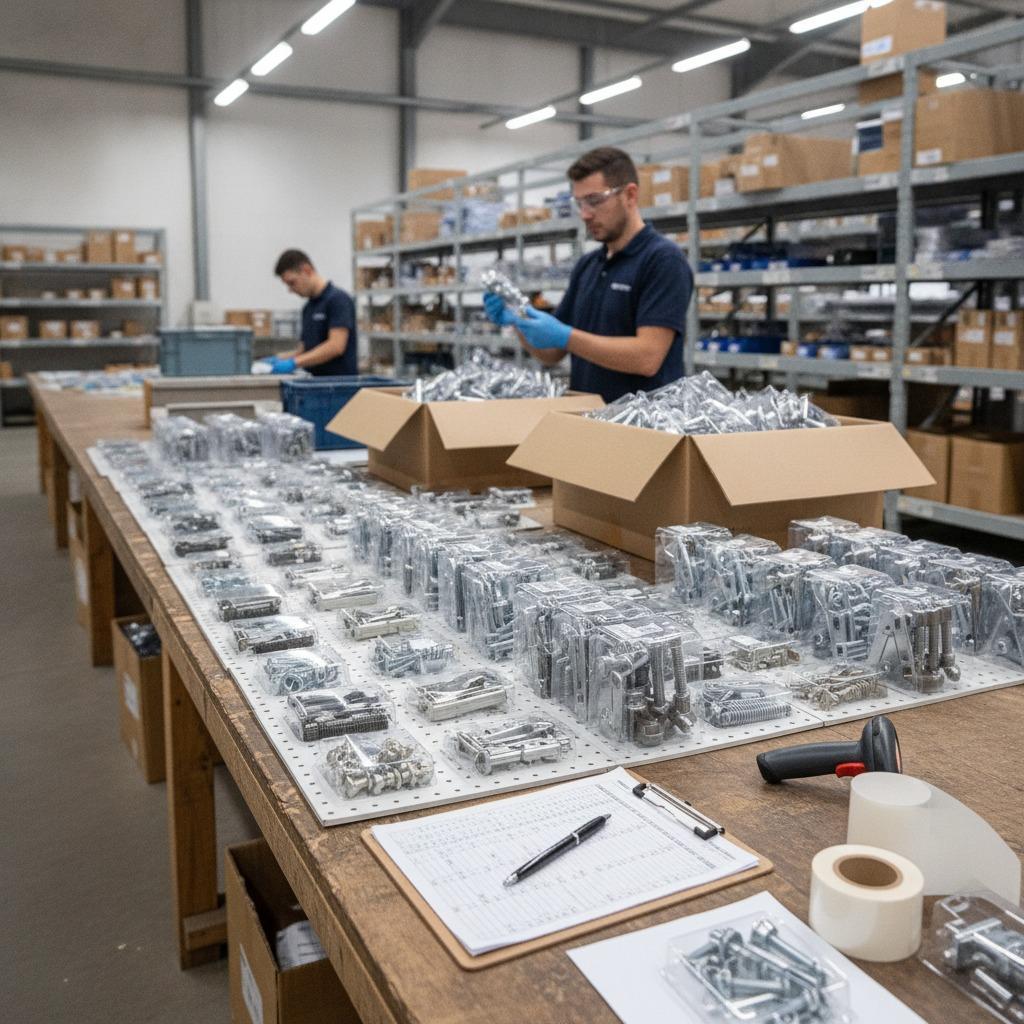
Hardware Kitting Services: Why Small Parts Are Becoming a Supply Chain Advantage
Hardware kitting does not look exciting at first.
It may be a blister pack hanging on a retail pegboard, a small bag of screws inside a furniture carton, a bolt and nut set for maintenance work, or a tray of mixed fasteners prepared for an assembly line. Nothing about it feels complicated until one part is missing, one label is wrong, or one fastener type gets mixed into the wrong pack.
Then the cost becomes very real.
A line stops because a washer is short.
A customer returns a kit because one bracket is missing.
A warehouse worker opens three cartons to find the correct screw set.
An installer loses time sorting hardware that should already have been organized.
That is why hardware kitting services are becoming more important for factories, distributors, retailers, and OEM buyers.
The value is not only in putting small parts together. The value is in turning loose hardware into a controlled, ready-to-use unit that can move through production, storage, sales, and installation with fewer mistakes.
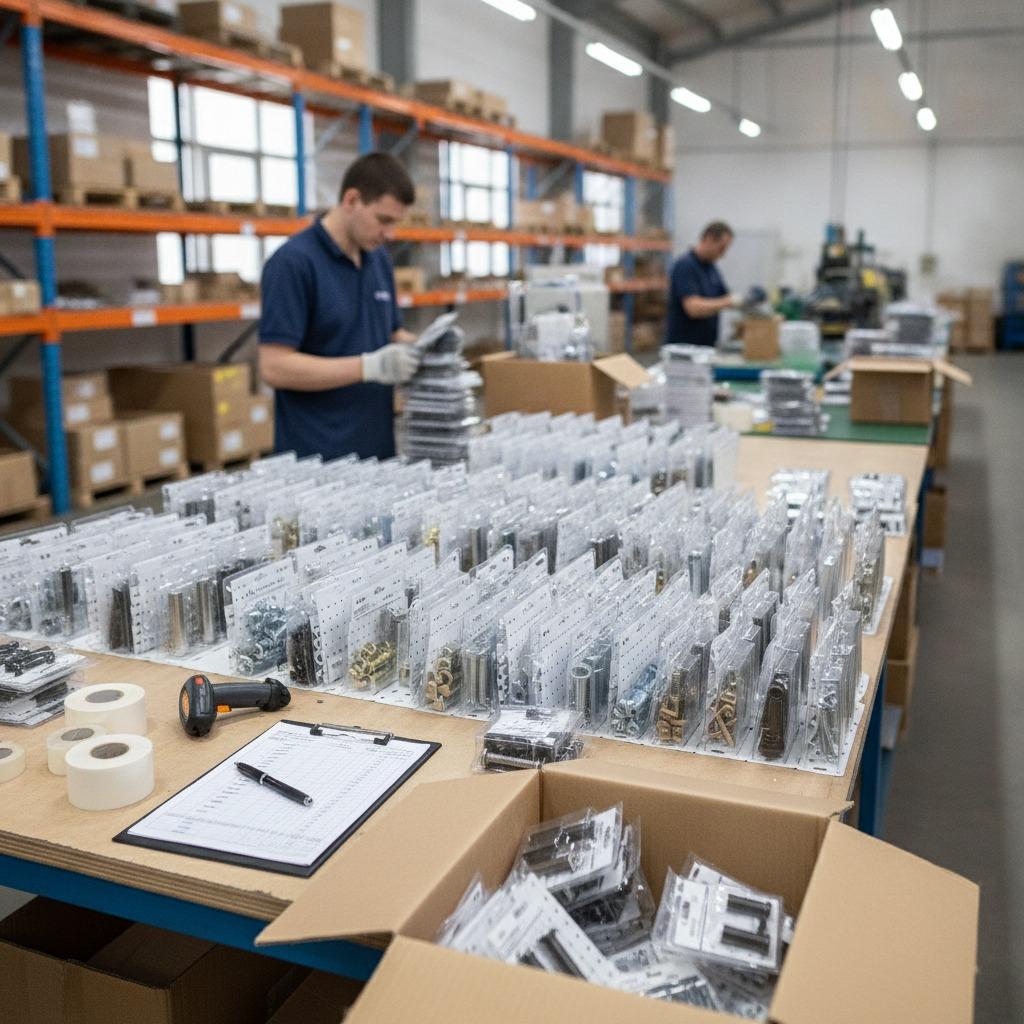 Small parts create bigger problems than buyers expect
Fasteners, brackets, hinges, nuts, washers, and small fittings often cost very little individually.
But when they are missing or mixed, they can interrupt expensive work.
In assembly plants, one wrong fastener can slow a workstation. In furniture production, a missing connector can stop a cabinet from being packed. In maintenance programs, a poorly labeled repair kit can send technicians back to the stockroom. In e-commerce, a broken or confusing hardware pack can become a customer complaint before the product is even installed.
This is why kitting has moved beyond convenience.
A good hardware kit reduces the number of decisions people need to make at the point of use. The right parts are already grouped. The count has already been checked. The label tells the user what the kit is for. The package protects the parts until they are needed.
That kind of control is easy to overlook when everything goes well.
It becomes obvious when it is missing.
Hardware kitting turns inventory into a usable system
Loose inventory is flexible, but it is not always efficient.
A factory may have all the right fasteners in stock and still lose time if workers must pick them from different bins every day. A distributor may carry every component needed for a repair set, yet still struggle to sell it if the parts are not packed in a clear, usable way.
Kitting changes the role of inventory.
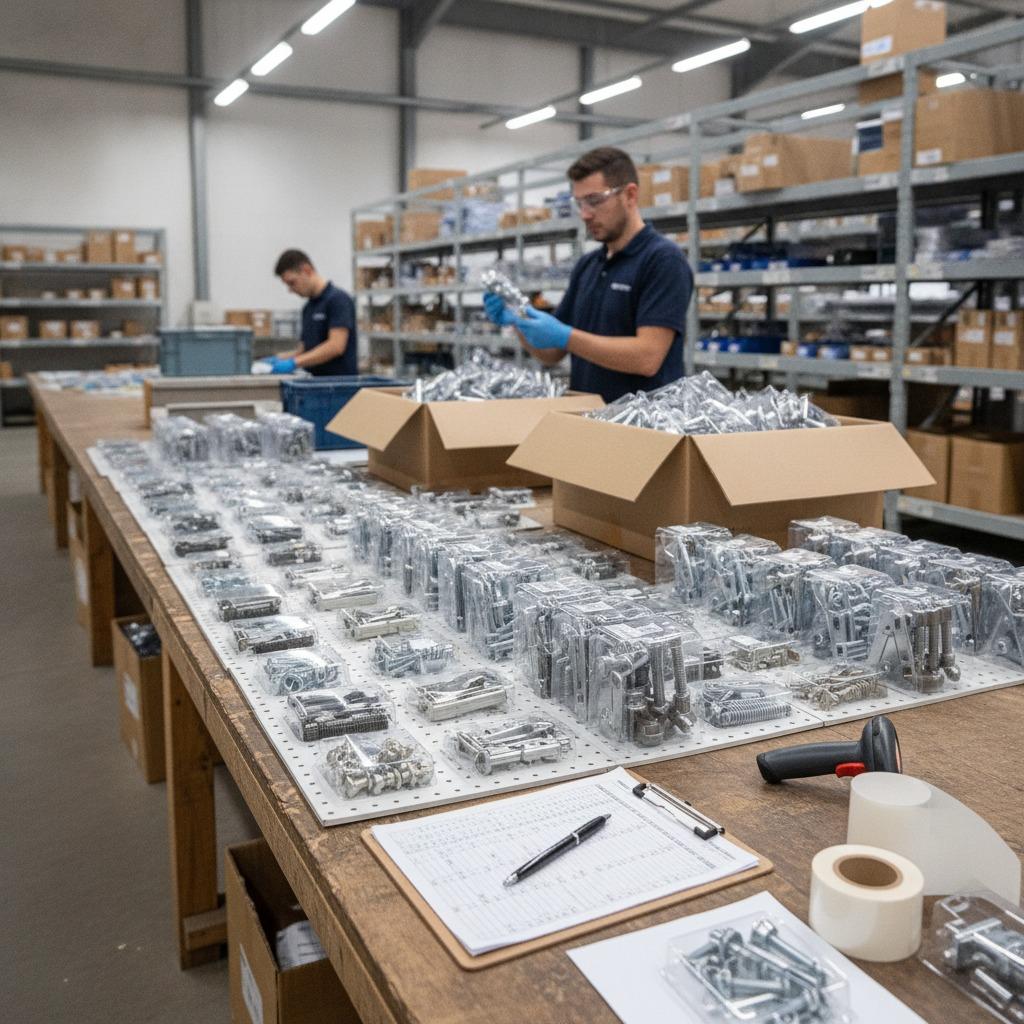
Instead of managing screws, nuts, washers, brackets, and hinges as separate pieces every time, the supplier or warehouse prepares them as a finished set.
That set may be used for:
- Assembly line supply
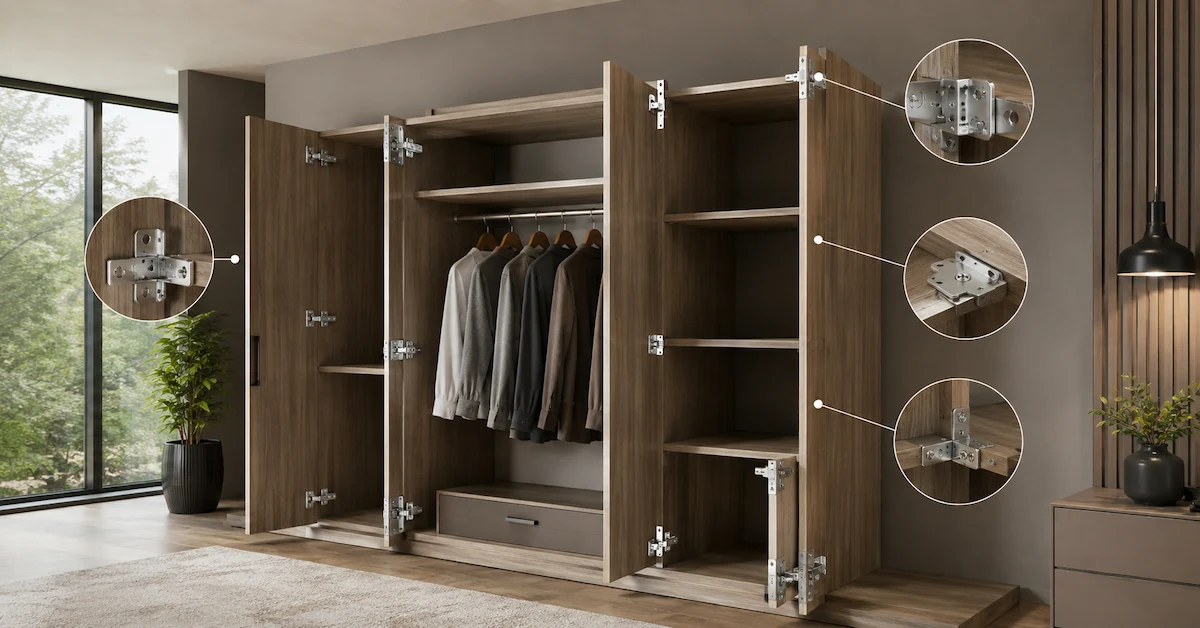
- Furniture hardware kits
- Retail hardware packs
- E-commerce orders
- Maintenance and repair kits
- Installation hardware
- Bolt and nut kits
- Custom fastener kits
- Spare-parts programs
- OEM product packaging
The parts themselves may not change.
What changes is the control around them.
Retail kits and production kits are not the same thing
Many buyers use the word “kit” loosely, but different channels need different packaging logic.
A retail hardware kit must look clear and trustworthy on the shelf. The customer should see what is inside, understand the purpose, scan the barcode, and feel confident buying it. Blister packs, clamshells, printed cards, and hang-tab packaging are common here.
A production kit has a different job.
It may not need shelf appeal. It needs accuracy, speed, and repeatability. Workers should be able to open it, take the parts, and move through the assembly step without sorting.
An e-commerce kit has another requirement again.
It needs to survive shipping. The package should not tear, spill parts into the carton, or let metal pieces scratch each other during transport.
A maintenance kit may need clear part identification, model numbers, and durable labels because it may sit in storage before use.
The same fasteners can be packed in several ways depending on the channel. Good hardware kitting starts by asking where the kit will be used.
Blister packaging works when visibility matters
Retail-ready blister packaging has become common in hardware programs for a reason.
It gives visibility. It separates parts. It allows pegboard display. It helps buyers count the product quickly. It can hold mixed fasteners, small brackets, hinges, washers, and other components in a clean, controlled layout.
For retail and e-commerce hardware, that visual order matters.
A customer can see the parts. A warehouse can identify the SKU. A store can display the pack neatly. A distributor can audit stock more easily.
But blister packaging is not always the best answer.
It may cost more than bags. It may require tooling or forming. It may not suit heavy parts. It may be inconvenient for a factory line that simply needs fast access to components.
That is why buyers should not choose packaging by appearance alone.
A blister pack is useful when visibility, presentation, protection, and SKU control matter. For internal assembly, a labeled bag, divider tray, or carton kit may be more practical.
A kit is only as reliable as its BOM
The bill of materials is the backbone of any kitting program.
If the BOM is unclear, the kit will eventually fail.
A proper kit specification should define each part, quantity, finish, label, package type, and inspection requirement. It should also clarify whether substitutions are allowed and how revisions are controlled.
For example, a custom fastener kit may include:
- Two screw lengths
- Matching washers
- Four brackets
- Plastic caps
- One small tool
- A printed label
- Spare parts
- Model-specific packing
If the screw length changes but the BOM does not, the wrong part may continue to be packed. If the label changes but the warehouse system does not, the kit may be misidentified. If a finish changes without approval, the product may still function but no longer match customer expectations.
Kitting is not just packing.
It is BOM discipline.
Counting accuracy is where many programs fail
Most kitting mistakes are not dramatic.
They are small count errors.
One washer missing. One extra screw in the wrong bag. One black-coated part mixed with zinc-plated parts. One hinge screw packed with the wrong head style.
These errors happen because small parts are easy to confuse, especially when they are similar in size or finish.
Buyers should ask suppliers how counting is controlled.
Common methods include manual counting, automatic counting, weight checks, divided trays, barcode scanning, visual inspection, and final pack verification. For simple kits, manual counting may be enough. For larger or more complex programs, it may not be reliable by itself.
Weight checks can help, but they are not perfect. A missing small washer can be hidden by an extra heavier screw. Similar fasteners may pass a weight check while still being the wrong type.
The more mixed the kit is, the more important the verification process becomes.
Mixed finishes need extra care
Many hardware kits include several finishes in one pack.
Silver zinc-plated screws, brass-toned parts, black-coated brackets, stainless steel washers, and plastic fittings may all appear together. That can be useful for the end product, but it creates extra control points during packing.
Different finishes may need separation.
Black-coated parts can mark lighter components. Polished pieces can scratch. Brass-colored parts may be confused with another plated item. Stainless steel and carbon steel parts may look similar unless the label is clear.
For retail and visible hardware kits, finish consistency matters even more. A customer may not know the technical difference between coatings, but they can see if one part looks out of place.
Buyers should define:
- Which finishes are included
- Which parts must stay separated
- Whether visible parts need surface protection
- Whether color consistency matters
- Whether the kit needs inspection under lighting
- Whether the finish can change between batches
A kit can be technically correct and still look wrong if the visible finishes are inconsistent.
Packaging should fit the workflow, not only the product
A common mistake is choosing packaging based only on the part set.
The better approach is to choose packaging based on how the kit will be used.
If a kit goes to a production line, speed matters. The package should open easily, present parts clearly, and reduce picking time.
If it goes to retail, display matters. The package should look clean, protect the parts, and support barcode or label requirements.
If it goes to e-commerce, durability matters. The package should survive parcel handling and prevent loose parts from spilling.
If it goes to a jobsite, identification matters. The installer should be able to tell which kit belongs to which task without opening every pack.
A good hardware kitting supplier should ask about the workflow before recommending the package.
The cheapest pack is not always the lowest-cost option.
Supplier capability matters more than the brochure
A kitting supplier needs to understand more than how to pack parts.
It should understand the hardware itself.
A screw kit, bolt and nut kit, hinge set, bracket pack, or furniture hardware kit may include parts with different materials, finishes, sizes, and tolerance needs. If the supplier does not understand the components, it may miss the details that make the kit reliable.
Jiangmen Jinhe Hardware Co., Ltd. focuses on fasteners, standard parts, and non-standard customization. Its product range includes machine screws, self-tapping screws, micro screws, and precision screws in materials such as stainless steel, iron, and aluminum. The company also notes support for logistics, warehousing, and supply chain services.
For buyers, that combination can be useful because many hardware kitting programs need both part knowledge and delivery control.
Still, every kit should be confirmed by project.
A supplier’s general capability is helpful. The approved kit specification is what protects the order.
Custom kits should be built around real demand
Custom fastener kits are useful when the standard pack does not fit the job.
A buyer may need a special screw mix for furniture assembly. A distributor may need bolt and nut kits for a maintenance customer. A retailer may want a smaller pack size for DIY buyers. An OEM may need a kit that matches one product model exactly.
Customization makes sense when it reduces confusion or improves use.
It should not add unnecessary complexity.
Too many variants can slow packing and increase error rates. Too many similar parts in one kit can confuse users. Too much packaging can raise cost without improving function.
A narrower, clearer kit often performs better than a broad assortment that looks attractive on paper.
The best kit is not the one with the most parts.
It is the one that matches the user’s task.
Common mistakes in hardware kitting
One mistake is treating kitting as a simple packing job.
It is not. A kit depends on BOM control, part inspection, count accuracy, label clarity, packaging durability, and repeat production.
Another mistake is overcomplicating the assortment.
A kit with too many variants may look useful but become harder to pack, sell, store, or use.
A third mistake is ignoring the sales channel.
Retail-ready blister packaging may be excellent for display but unnecessary for internal warehouse supply. A plain bag may be economical for production but weak for e-commerce shipping.
Buyers also sometimes approve loose samples instead of real packed samples.
Loose parts do not show whether the final kit is easy to identify, open, store, and use.
The final mistake is not checking repeatability.
A first sample kit may be hand-packed carefully. The real test is whether the supplier can repeat the same kit accurately at volume.
What buyers should ask before choosing a kitting supplier
Before placing an order, buyers should ask:
Can you work from our exact BOM?
How do you verify part counts?
Can similar fasteners be separated?
Can mixed finishes be protected?
What packaging formats do you support?
Can labels include barcodes, SKUs, or model numbers?
Can you prepare retail-ready blister packs?
Can you support warehouse or OEM assembly kits?
How are packaging changes approved?
What inspection documents are provided?
Can the same kit be repeated across future orders?
Can you support logistics or warehousing?
Good answers should be specific.
A supplier that only says “we can pack it” may not be ready for a serious kitting program.
Frequently Asked Questions
Is hardware kitting only for retail packaging?
No. Hardware kitting is used in factories, warehouses, maintenance programs, installation kits, e-commerce fulfillment, OEM assembly, and retail display.
What does a hardware kit usually include?
A kit may include screws, bolts, nuts, washers, brackets, hinges, fasteners, plastic fittings, tools, labels, and instructions, depending on the application.
Can one supplier handle both parts and packaging?
Sometimes. It depends on whether the supplier supports component production, sorting, counting, labeling, packaging, inspection, and logistics.
Are blister packs always the best option?
No. Blister packs are useful for retail display and visibility, but bags, trays, cartons, or divider boxes may be better for assembly lines or warehouse programs.
What should buyers check first?
Start with part accuracy, kit count, packaging durability, label clarity, and whether the format fits the sales channel or assembly workflow.
Why do hardware kits fail?
Most failures come from unclear BOMs, poor counting, mixed similar parts, weak labels, poor packaging, or changes that were not approved.
Good kitting turns small parts into a controlled product
Hardware kitting works best when it reduces friction.
The right parts are grouped together. The count is correct. The label is clear. The package fits the channel. The kit can be repeated without surprises.
That is why hardware kitting services are becoming a real supply chain advantage.
They make small parts easier to sell, ship, store, install, and replace.
For custom fastener kits, bolt and nut kits, retail hardware packs, OEM assembly kits, furniture hardware kits, and fastener packaging projects, Jiangmen Jinhe Hardware Co., Ltd. can discuss part selection, kit structure, packaging formats, inspection, warehousing, logistics, and repeat supply requirements.
Start with the use case, BOM, packaging channel, label needs, and expected order volume.