

When a Hex Nut Doesn’t Behave Like One: Small Deviations, Real Problems
It doesn’t take a catastrophic failure to disrupt a production line. Sometimes, it’s just a hex nut that feels… wrong.
Too tight on the bolt. Or slightly loose. Maybe the first few turns are smooth, and then resistance kicks in. Operators notice. They always do. They slow down, adjust, compensate. The line keeps moving—but not as it should.
These aren’t dramatic defects. They’re subtle inconsistencies. And they often trace back to one place: manufacturing control.
At JHFIX, we’ve seen this pattern repeatedly. Buyers assume hex nuts are fully standardized—and in theory, they are. But in practice, variations in thread tolerance, material hardness, and surface treatment can shift performance just enough to create friction. Not visible on a drawing. Very visible on a production floor.
That’s where a reliable hex nut manufacturer makes the difference—not by meeting standards once, but by holding them consistently across every batch.
Material and Mechanical Behavior: What’s Hidden Inside the Hex Nut
A hex nut’s strength isn’t just defined by its size. It’s defined by what it’s made of—and how that material is processed.
Carbon steel remains the most common choice for general industrial use. Stainless steel is preferred when corrosion resistance matters. Alloy steel is selected for high-load or structural applications.
But raw material is only part of the story. Heat treatment determines how that material behaves under stress.
| Material Type | Strength Range | Application Context |
|---|---|---|
| Carbon Steel | 400–800 MPa | General fastening |
| Stainless Steel (304/316) | 500–700 MPa | Outdoor, humid environments |
| Alloy Steel | 800–1200 MPa | High-load assemblies |
Standards from ISO (https://www.iso.org) and ASTM (https://www.astm.org) define acceptable ranges. Still, two nuts meeting the same standard can perform differently if heat treatment is inconsistent.
That difference often shows up not during inspection—but during use.
Why Buyers Stay: It’s Not About Specs, It’s About Consistency
We’ve worked with buyers who came to us after trying multiple suppliers. On paper, everything looked correct—dimensions, materials, certifications. Yet problems persisted.
Threads didn’t always engage smoothly. Torque varied. Occasionally, nuts seized under load.
The issue wasn’t specification. It was repeatability.
So the focus shifted from “Does it meet standard?” to “Does it behave the same every time?”
At JHFIX, we approach this through:
- Controlled tapping processes for consistent thread geometry
- Batch-level inspection to detect variation early
- Stable material sourcing to reduce mechanical fluctuation
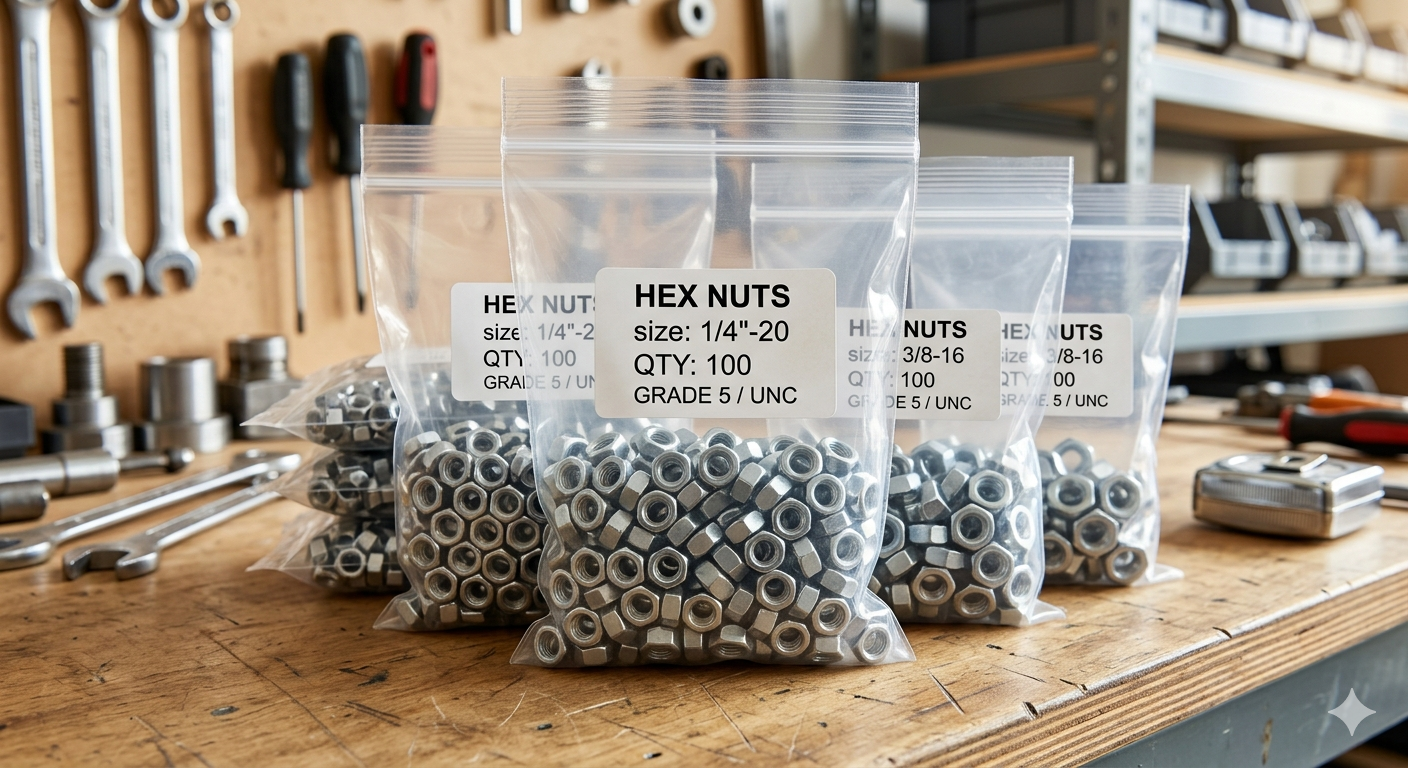
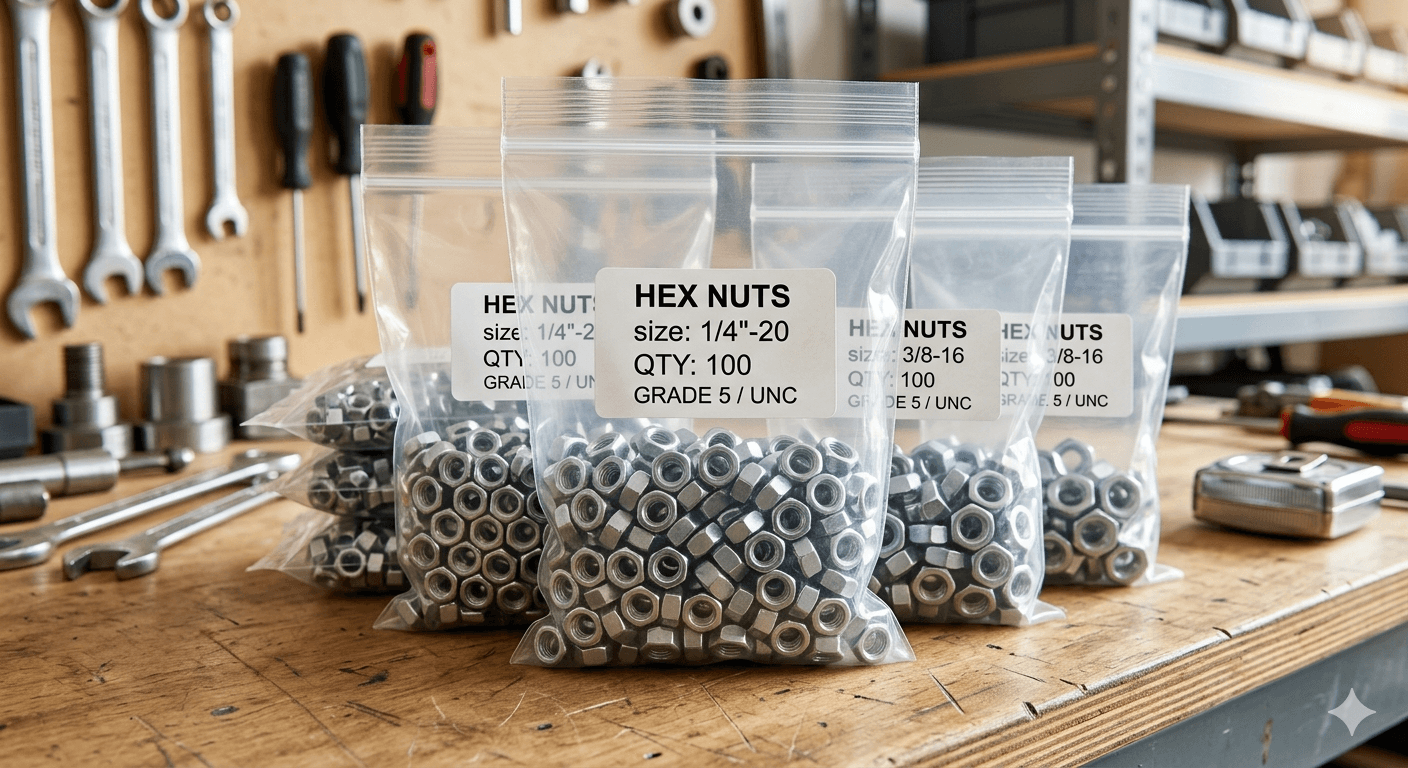
- Packaging systems that prevent mixing across specifications
The result is not just compliant products—but predictable performance.
Thread Engagement: Where Precision Becomes Tangible
Thread engagement is one of those details that rarely gets attention—until it fails.
A hex nut must match the bolt perfectly. Not just in pitch and diameter, but in tolerance alignment. Too tight, and installation becomes difficult. Too loose, and load distribution suffers.
Even minor deviations can lead to:
- Cross-threading during installation
- Uneven load distribution under stress
- Increased wear over repeated use
- Reduced joint stability
In automated assembly environments, these issues amplify. Torque tools rely on consistent resistance. When threads vary, tools compensate—often leading to further inconsistency.
A capable hex nut manufacturer ensures thread precision is not just accurate, but stable across production runs.
Surface Treatment: The Balance Between Protection and Performance
Surface coatings do more than protect against corrosion. They influence friction, which directly affects installation torque.
Common treatments include:
- Zinc plating for corrosion resistance
- Black oxide for moderate protection and reduced glare
- Phosphate coatings to stabilize friction during tightening
Each coating changes how the nut interacts with the bolt.
For example, excessive coating thickness can alter thread fit. Insufficient coating may lead to corrosion, especially in export or outdoor applications.
Studies in corrosion engineering show that properly plated fasteners significantly outperform untreated steel in salt spray environments—sometimes extending resistance by several hundred hours.
But again, consistency matters more than the coating itself.
Hex Nut Manufacturer Packaging Accuracy: The Part That Usually Gets Ignored
Let’s be honest—packaging rarely gets discussed during procurement meetings. Until something goes wrong.
Mixed sizes. Missing quantities. Damaged cartons.
Suddenly, packaging becomes a problem.
| Packaging Type | Counting Accuracy | Operational Impact |
|---|---|---|
| Loose bulk | ~90% | Frequent interruptions |
| Standard packaging | ~97–98% | Occasional adjustments |
| Controlled packaging | 99%+ | Stable operations |
In high-volume environments, even small counting errors disrupt workflow. Operators stop. Inventory mismatches appear. Time is lost.
Accurate packaging doesn’t just protect the product—it protects the process.
A Real Case: When Thread Stability Changed Everything
A client in the industrial equipment sector approached us with a recurring issue. Their hex nuts met all specifications, yet assembly teams reported inconsistent torque and occasional binding.
Initial suspicion fell on tool calibration.
But after reviewing samples across multiple batches, the issue became clear—thread tolerances varied slightly. Within acceptable limits, but enough to affect real-world performance.
We adjusted:
- Thread tapping calibration
- Inspection sampling frequency
- Batch consistency control
No redesign. No material change.
Within weeks:
- Installation became smoother
- Torque readings stabilized
- Assembly interruptions decreased
Sometimes the biggest improvements come from the smallest adjustments.
Where Hex Nut Quality Gets Tested Most
Not all applications expose fastener inconsistencies equally. Some environments reveal them immediately.
You’ll see it in:
- Heavy machinery under continuous load
- Automotive assemblies exposed to vibration
- Industrial systems using torque-controlled tools
- Export projects requiring long-term reliability
In these cases, even slight inconsistencies don’t stay hidden for long.
Frequently Asked Questions
Q1: What is the most common issue with hex nuts?
Thread inconsistency, which can lead to binding, loose fit, or unstable torque during installation.
Q2: How can buyers test hex nut quality effectively?
By evaluating thread engagement, torque behavior, and consistency across multiple batches—not just single samples.
Q3: Does coating affect thread performance?
Yes. Coating thickness and type influence friction and fit, directly affecting installation performance.
Building Reliable Fastener Supply Starts with the Smallest Details
Hex nuts are simple components. But in production, simplicity can be deceptive.
Thread precision, material consistency, and packaging accuracy all influence how smoothly an assembly line operates. When these elements align, everything flows. When they don’t, small inefficiencies grow into larger problems.
At JHFIX, we focus on making fastener supply predictable—through controlled manufacturing, consistent quality, and packaging systems designed for real use. If you want to explore how we approach hex nut production and supply, you can visit our homepage:
https://www.jhfix.com/
If you’re currently facing issues like inconsistent thread fit, unstable torque, or recurring assembly interruptions, it may be time to look beyond specifications. You can reach out to our team here to discuss your requirements and find a more reliable solution:
https://www.jhfix.com/contact-us