

Why do imperial hexagonal nuts remain important in the metric world?
Wherever imperial hardware is used, imperial hex nuts remain a standard component in maintenance, assembly, and repair work. If you are looking for suitable nuts for machinery, equipment cabinets, brackets, vehicle repair, or general manufacturing, the main issue is not whether these nuts are outdated, but their compatibility: thread compatibility, wrench size, load path, and whether the connection will maintain good working performance after vibration, repeated disassembly, or exposure to the workshop floor.
Therefore, buyers typically compare imperial hex nuts with other options such as stainless steel hex nuts, carbon steel hex nuts, galvanized hex nuts, thick hex nuts, and thin hex nuts before placing an order. Each type of nut addresses different issues. Mismatched nuts can slow down assembly, cause rework, or force on-site technicians to use the wrong nuts for temporary assembly. This is generally not a wise choice.
What can a typical set of fasteners tell you?
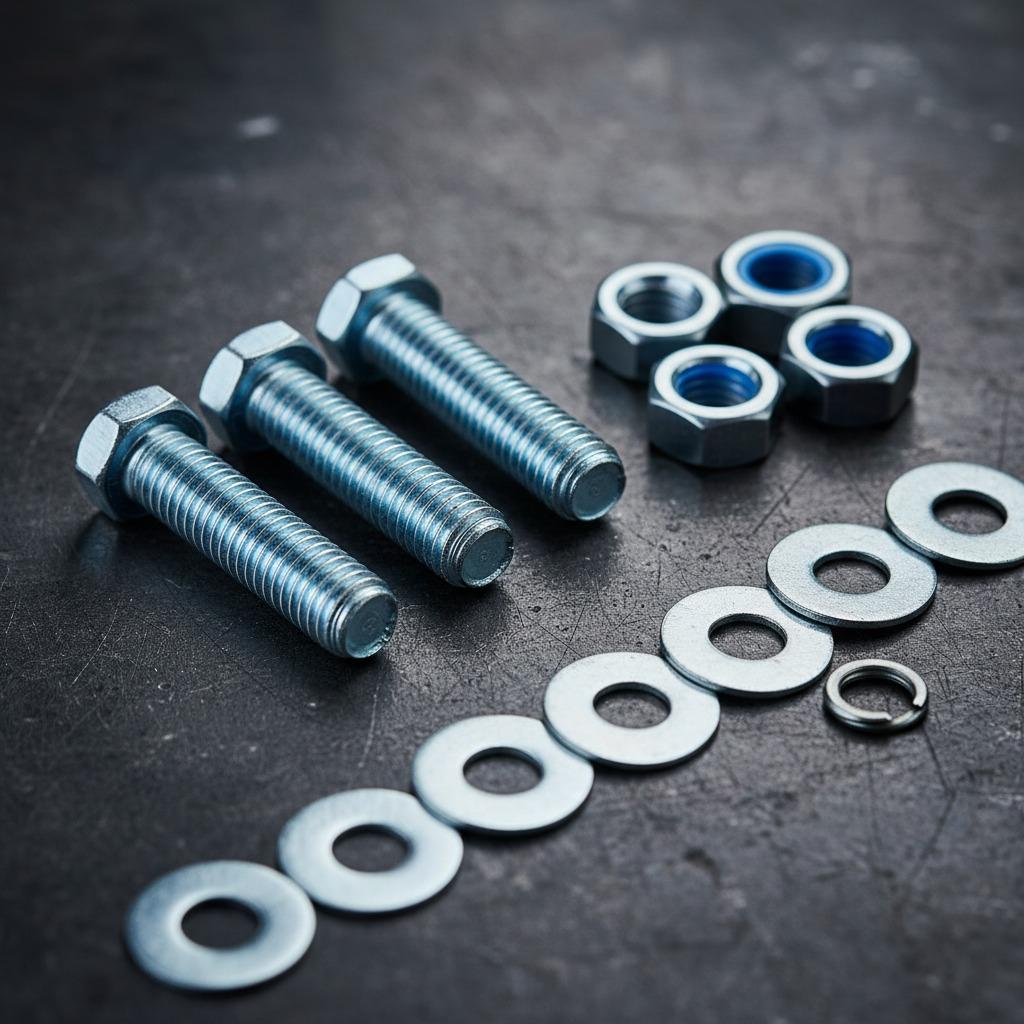
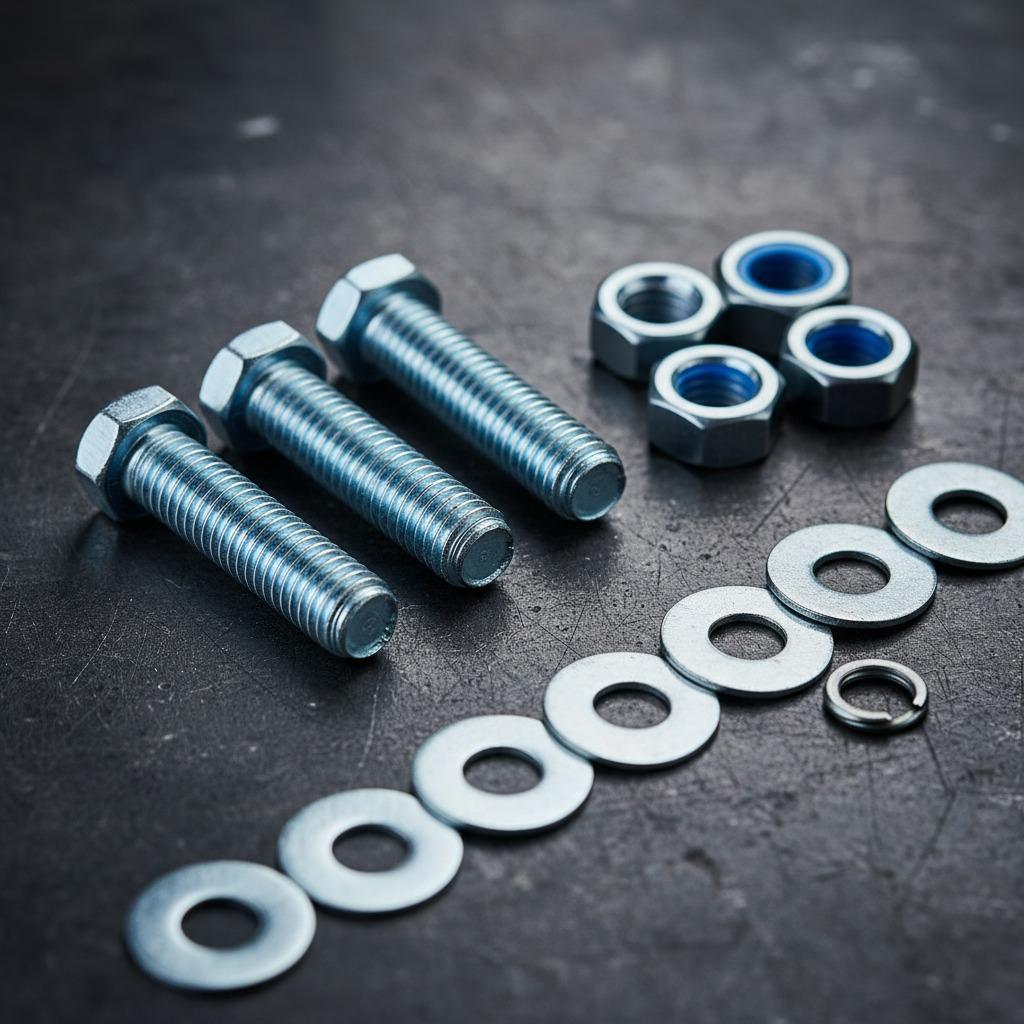
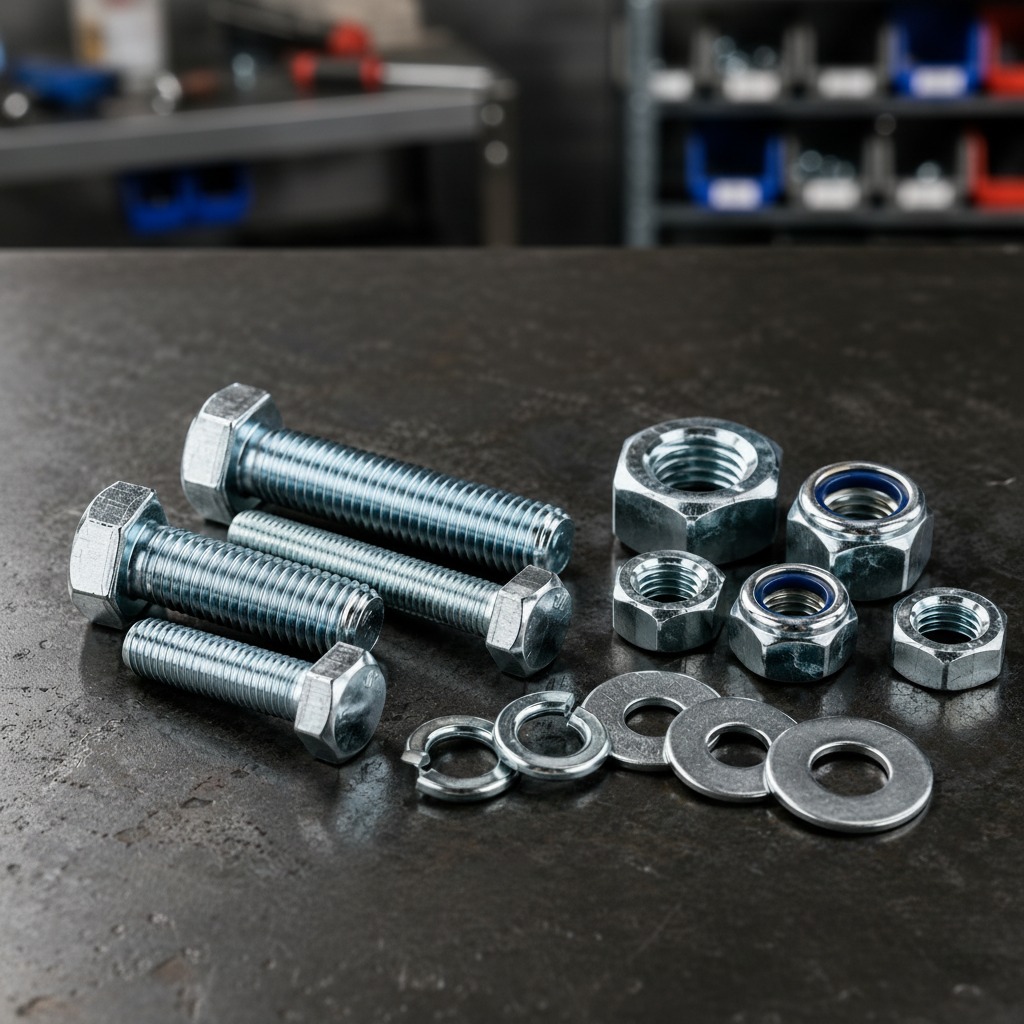
In reality, connections rarely consist of only one nut. The product information here indicates that the matching hardware includes hex head bolts, hex nuts, flat washers, and spring washers. This is important because the combination of washers alters the distribution of clamping force at the connection, while the spring washers indicate the need to prevent loosening due to vibration. These hardware components appear to be made of galvanized or hot-dip galvanized steel with a bright finish, but the specific coating type and grade have not yet been confirmed.
For buyers, the key point is simple: when bolts, nuts, and washers are sold together, it usually means a more complete mechanical clamping solution, rather than just a bag of loose nuts. This saves kit assembly time and reduces the likelihood of mixed hardware appearing on the production line.
Choose the appropriate imperial hex nut
1. First, consider thread compatibility.
Before comparing materials or surface finishes, always ensure that the nut and bolt threads are perfectly matched. Imperial hardware has very strict requirements in this regard. Nuts that are only "barely fit" must be discarded and not used as backups. If the assembly is designed around imperial bolts, the entire connection must use the same system.
2. Match materials to the environment.
In applications requiring high corrosion resistance, especially in humid or outdoor environments, stainless steel hex nuts are often the preferred choice. Carbon steel hex nuts are widely used in general industrial applications, offering a practical balance of strength and cost. If you require a brighter finish and some corrosion protection but don't want to use stainless steel, galvanized hex nuts are a good option. Ultimately, the choice depends on the application environment, not just price.
3. Use the appropriate nut shape.
Thicker hex nuts are typically chosen for applications requiring a larger bearing surface or greater wrench engagement force. Thinner hex nuts are better suited for use as lock nuts or in tightly stacked structures, but are not the default choice for all connections. This detail may seem insignificant on the drawings, but it becomes very noticeable during maintenance.
What implications does visible hardware have for applications?
The bolt-nut-washer combination shown in the product details is suitable for common industrial applications: machine assembly, equipment maintenance, structural support, metalworking, automotive repair, and general construction. Using an open-end lock washer indicates that the connection may be subjected to vibration or repetitive movement. However, lock washers are not a panacea; they do help, but proper torque and thread engagement are key.
It should also be noted that some nuts in mixed hardware kits may be preloaded torque nuts or nylon insert lock nuts, but this cannot be determined without inspection or review of relevant documentation. Buyers must confirm the specific type of nuts before preparing the bill of materials.
Avoid common procurement mistakes
A common mistake is ordering based solely on appearance. A bright silver finish does not indicate coating specifications, and standard hex nuts are not necessarily interchangeable with thin or thick hex nuts. Another common misconception is assuming that all fastener kits are standardized in the same way; in reality, standards such as GB, DIN, ANSI, BS, JIS, and ISO may guide a wider range of products, but specific products still need to be checked against drawings or samples.
Buyers should also be cautious about using the same set of hardware in drastically different environments. Fittings suitable for indoor equipment may require different finishes or materials for outdoor or corrosive environments. These subtle differences can cause significant problems later on.
How to clearly explain your order
If you are sourcing imperial hex nuts for production or inventory maintenance, the clearest specifications should include thread size, nut type, material, surface finish, whether washers are required, and whether vibration resistance is needed at the connection. If you require non-standard customization, a supplier with fastener manufacturing and matching hardware support will be invaluable. For example, Jiangmen Jinhe Hardware Co., Ltd. offers customization services for fasteners and standard parts, with a broader range of services including inspection, documentation, and export logistics. This support is crucial when the purchasing team is focused on ensuring smooth assembly rather than frantically searching for missing parts.
Buyer questions worth asking before approving a purchase order
Inquire whether the nut is a standard hexagonal nut or a lock nut. Confirm whether the surface treatment is galvanized or zinc-plated; do not judge solely based on photos. If purchasing a complete hardware set, verify the thread size and bolt length. If the assembly is susceptible to vibration, inquire whether the washers are sufficient or if alternative locking methods should be considered.
Next step
If you are sourcing imperial hex nuts for existing components, please provide drawings, thread specifications, and information about the intended use. This gives the supplier sufficient information to accurately match the nut type, finish, and associated washers, eliminating guesswork. A brief and accurate inquiry is usually much faster than revising a purchase order after receiving the first sample.