

When Thread Fit Fails: The Hidden Cost of Choosing the Wrong Industrial Nuts Supplier
It usually starts quietly.
A bolt goes in—but not smoothly. There’s resistance where there shouldn’t be. The operator pauses, adjusts, tries again. Another nut fits, but feels slightly loose. Torque readings fluctuate. Nothing dramatic, nothing catastrophic. Just… friction.
Multiply that across a production line.
This is the kind of problem OEM buyers face more often than they admit. Not outright failure—but inconsistency. And inconsistency, in high-volume manufacturing, is expensive.
At JHFIX, we approach nut supply from a different angle. Instead of focusing only on dimensional standards, we look at how nuts actually behave in real assembly conditions—thread engagement, load distribution, and repeatability across batches. Because in the end, a nut that fits on paper but fails in practice solves nothing.
Form industrial nuts supplier Materials and Mechanical Behavior: What’s Inside the Nut Matters
Before threads are cut or surfaces treated, everything begins with material selection. It sounds obvious, but in export and OEM supply, this is where subtle differences start to matter.
Carbon steel nuts are widely used due to their balance of strength and cost. Stainless steel is preferred in corrosive or humid environments. Alloy steel enters when higher load capacity is required.
But here’s the catch: two nuts made from the same “material type” can behave very differently depending on heat treatment and processing.
| Material Type | Strength Range | Typical Use Case |
|---|---|---|
| Carbon Steel | 400–800 MPa | General industrial assembly |
| Stainless Steel (304/316) | 500–700 MPa | Outdoor or humid environments |
| Alloy Steel | 800–1200 MPa | High-load machinery |
Standards from organizations like ISO (https://www.iso.org) and ASTM (https://www.astm.org) define these ranges—but real performance depends on how consistently these standards are applied during production.
And that’s where many suppliers begin to diverge.
Why Buyers Work with Us: Experience That Shows Up in Assembly, Not Just Specs
There’s a difference between producing nuts and supplying them for real industrial use.
We’ve seen what happens when thread tolerances drift slightly. Nuts bind halfway. Bolts require excessive force. Sometimes threads strip—not because of design, but because of inconsistency.
So the focus shifts.
Instead of asking, “Does this meet spec?” we ask, “Will this behave the same in 50,000 installations?”
Our approach includes:
-
Controlled thread tapping with calibrated tooling
-
Batch-level inspection for thread engagement consistency
-
Material traceability from raw input to final shipment
-
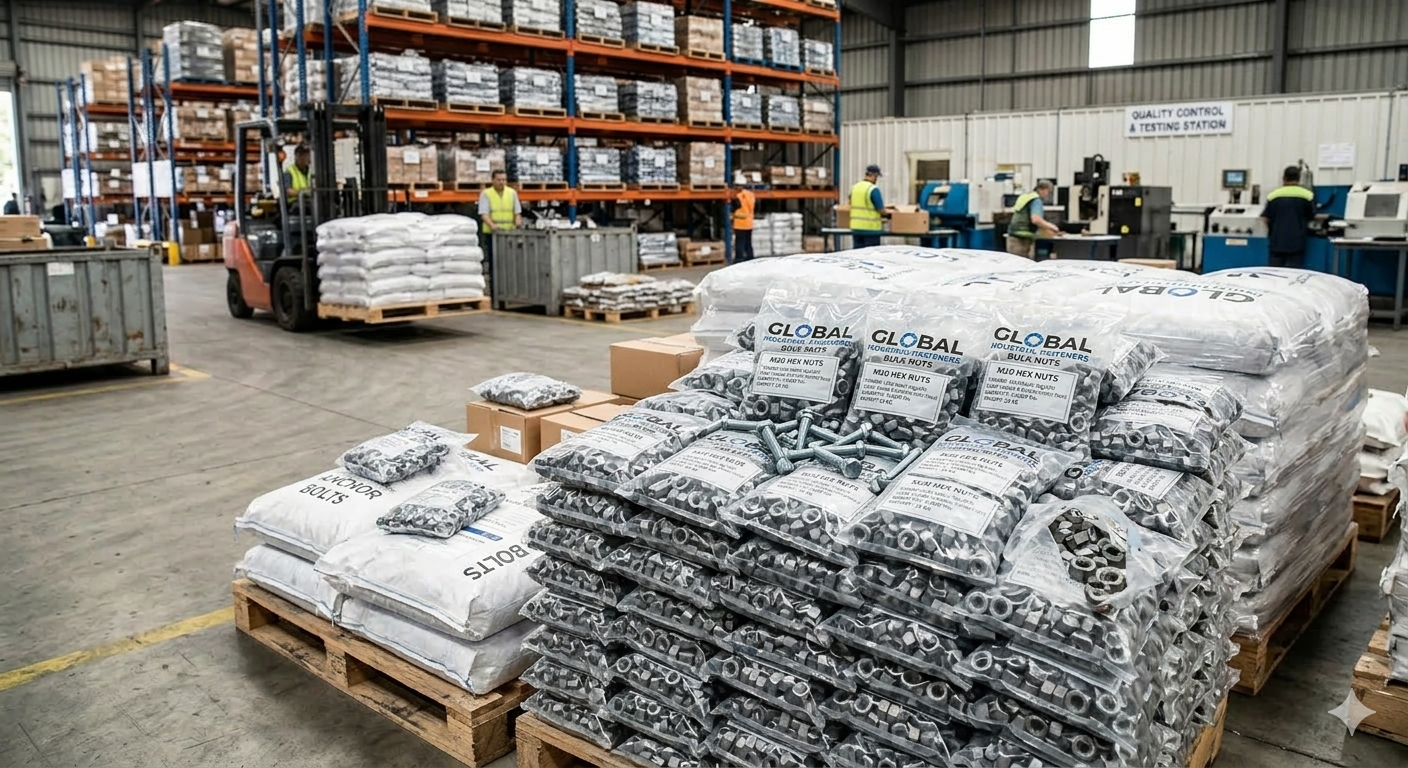
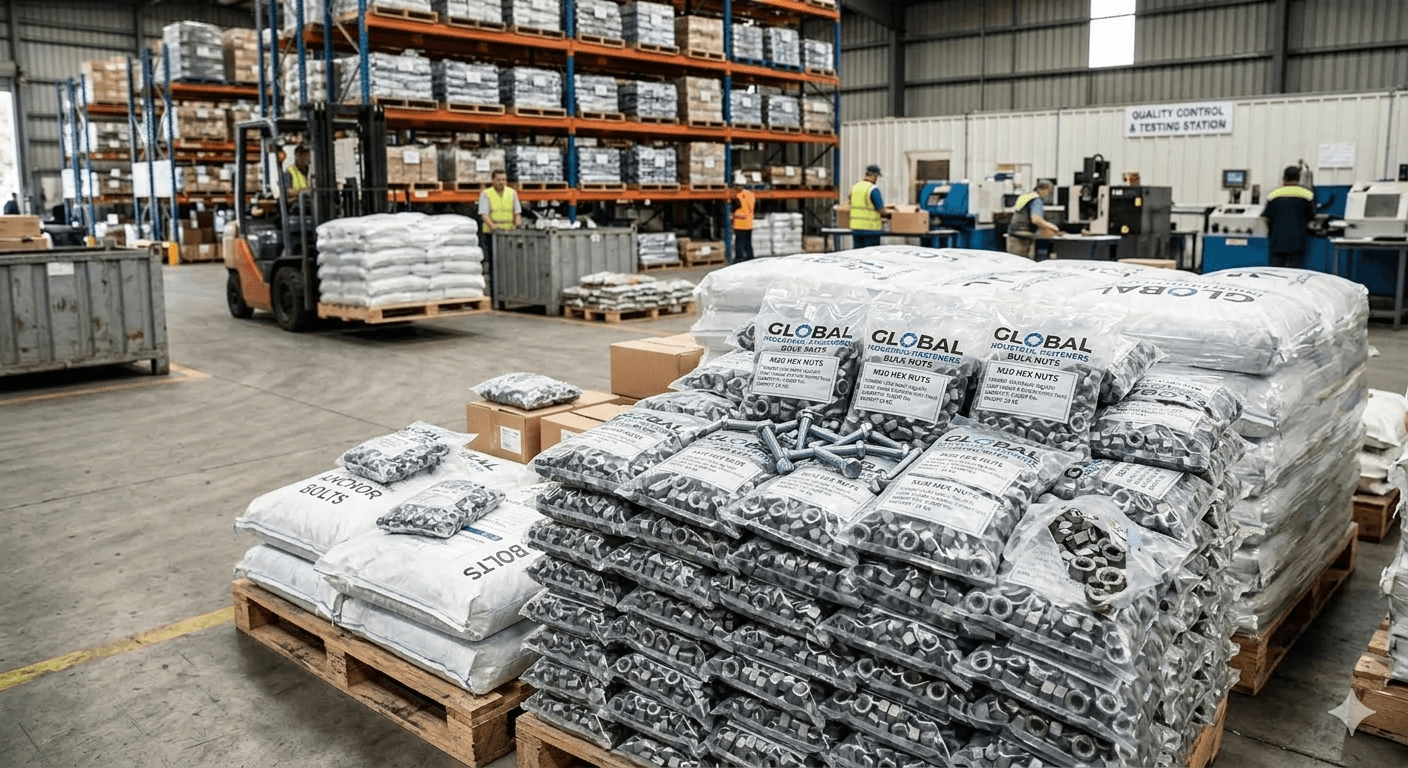
Packaging systems designed to prevent mixing and counting errors
This isn’t about adding complexity. It’s about removing uncertainty.
Thread Precision: Where Most Problems Actually Begin
On paper, threads are standardized. In practice, they are sensitive.
Thread pitch, diameter, and tolerance must align precisely with mating bolts. Even slight deviations can lead to cross-threading, binding, or loose connections.
And here’s something often overlooked: these issues don’t always show up immediately.
They appear under load. Under vibration. After repeated use.
A reliable industrial nuts supplier ensures that thread geometry is not just correct—but consistent.
When that happens, installation feels almost effortless. The nut turns smoothly. Torque stabilizes. The process flows.
When it doesn’t, operators feel it instantly—even if they can’t explain why.
Packaging and Quantity Accuracy: Small Errors, Big Consequences
Packaging is often treated as logistics. It’s not. It’s part of the product experience.
Loose nuts in bulk containers may seem efficient, but they introduce risk:
-
Mixed sizes
-
Counting inaccuracies
-
Material loss during handling
-
Slower assembly preparation
Let’s look at typical outcomes:
| Packaging Method | Counting Accuracy | Operational Impact |
|---|---|---|
| Loose bulk | ~90% | Frequent recounting, delays |
| Standard packaging | ~97–98% | Minor adjustments |
| Controlled packaging | 99%+ | Stable supply flow |
In high-volume environments, a 2–3% shortage isn’t small. It stops lines. It creates gaps. It forces manual intervention.
Accurate packaging doesn’t just prevent loss—it keeps production moving.
A Real Case: When Thread Consistency Changed Assembly Efficiency
A mid-sized industrial equipment manufacturer came to us with a recurring issue. Their nuts met all standard specifications, yet assembly teams reported inconsistent torque and occasional binding.
The initial assumption? Tool calibration.
After reviewing samples, the issue became clearer. Thread tolerances varied slightly between batches—within acceptable limits, but enough to affect real performance.
We adjusted:
-
Thread tapping precision
-
Inspection sampling frequency
-
Batch consistency controls
No design change. No material change.
Within two production cycles:
-
Installation consistency improved noticeably
-
Assembly interruptions decreased
-
Reported torque variation dropped significantly
Sometimes the solution isn’t visible in drawings. It’s hidden in process control.
Where Industrial Nut Supply Gets Stress-Tested
Not every application exposes these issues equally. But some do—quickly.
You’ll see it in:
-
Heavy machinery requiring stable load distribution
-
Automotive components under vibration stress
-
Industrial assemblies using torque-controlled tools
-
Export projects requiring consistent batch performance
In these environments, inconsistency doesn’t stay hidden. It shows up fast—and often at the worst moment.
Frequently Asked Questions
Q1: What is the most common issue with industrial nuts?
Thread inconsistency, which leads to binding, unstable torque, or improper fit with bolts.
Q2: How can buyers verify nut quality before bulk orders?
By testing thread engagement, torque behavior, and consistency across multiple samples—not just single-piece inspection.
Q3: Does packaging really affect nut supply efficiency?
Yes. Accurate packaging prevents shortages, reduces handling time, and improves overall production flow.
Building a More Reliable Industrial Fastener Supply
Nuts are simple components. But their impact isn’t.
Thread precision, material consistency, and packaging accuracy all influence how smoothly a production line runs. When these elements align, assembly becomes predictable. When they don’t, small issues multiply.
At JHFIX, we focus on making supply predictable—through controlled manufacturing, consistent threads, and reliable packaging systems. If you want to understand how these elements come together, you can explore more here:
https://www.jhfix.com/
And if you’re currently dealing with inconsistent fit, unstable torque, or supply issues that seem “small but constant,” it might be time to look deeper. You can reach out to our team to discuss your project and explore a more stable solution:
https://www.jhfix.com/contact-us