
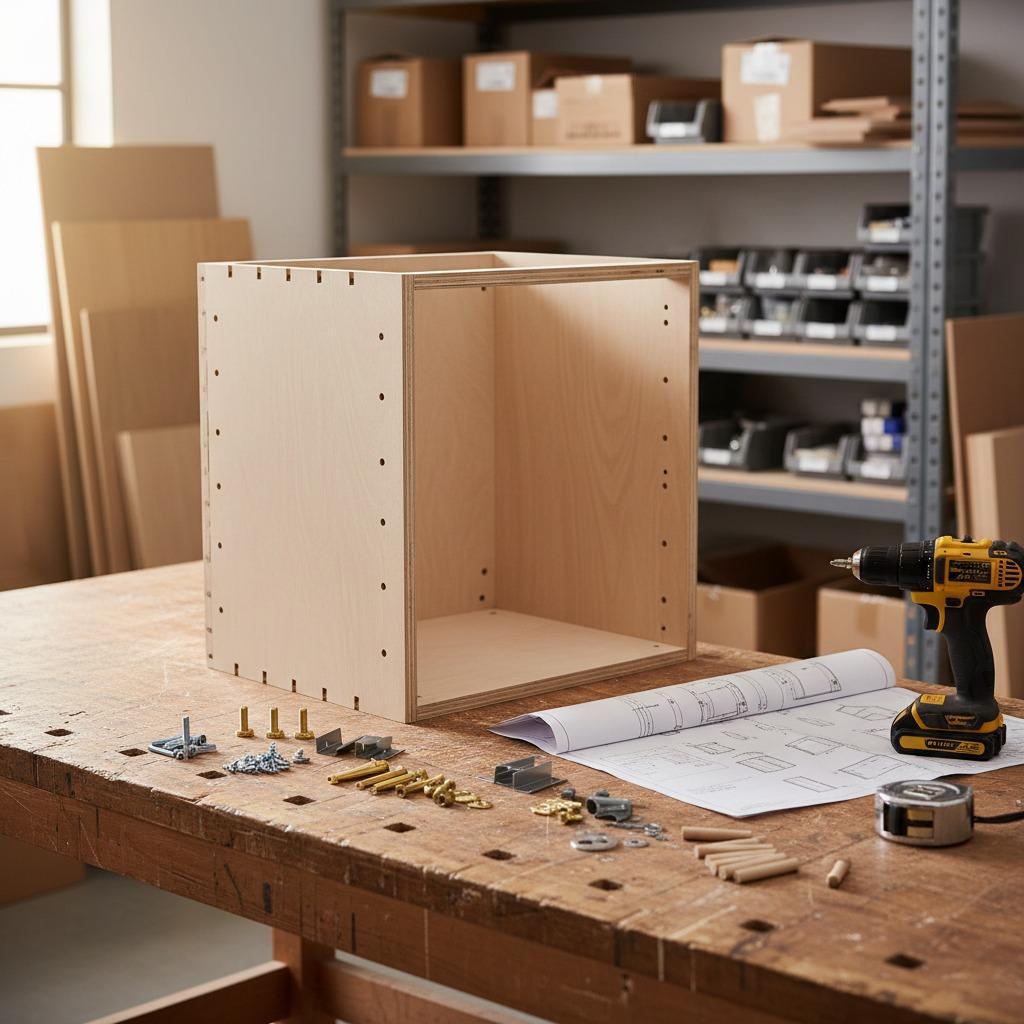
Industrial Screw Kit: Why Cabinet Builders Are Taking Small Fasteners More Seriously
In a cabinet shop, the screw is usually not the part anyone talks about first.
People talk about panel cutting. Edge quality. Laminate color. Hinge position. Whether the carcass is square. Whether the shelf line looks clean.
The screw kit often sits off to the side, opened only when the real assembly starts. Then, suddenly, everyone cares about it.
A screw that is two millimeters too long can mark the outside face of a panel. A head that strips too easily slows the operator down. A mixed bag of similar-looking screws makes workers stop and compare parts by hand. A weak bite in particleboard can make a cabinet feel loose before it ever reaches the customer.
That is why an industrial screw kit is not just a box of fasteners.
For furniture factories, cabinet shops, OEM buyers, and installation teams, it is part of the build system. The kit affects how smoothly the cabinet goes together, how much time the worker spends at the bench, and whether the next batch behaves like the last one.
Small hardware, yes. Small consequence? Not really.
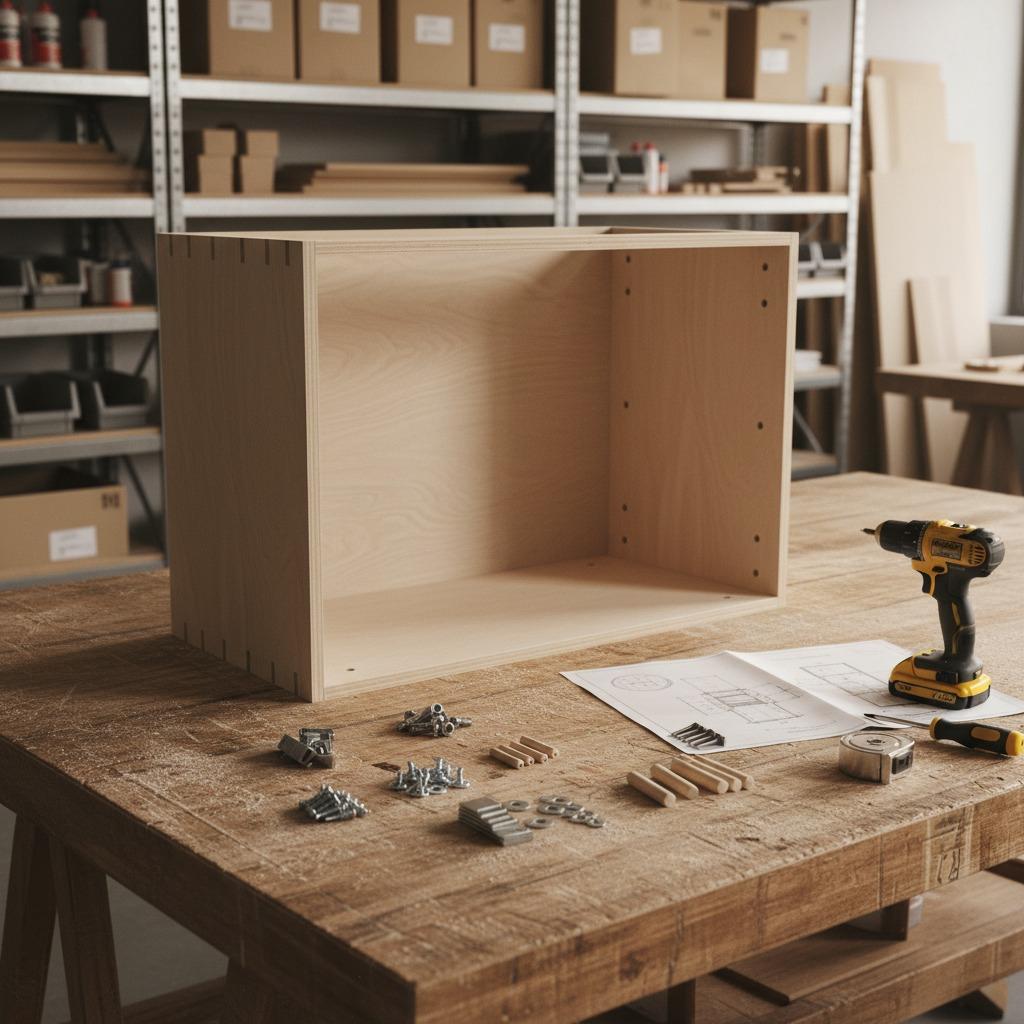 A cabinet screw kit has to match the way the cabinet is built
A cabinet carcass looks simple after it is assembled.
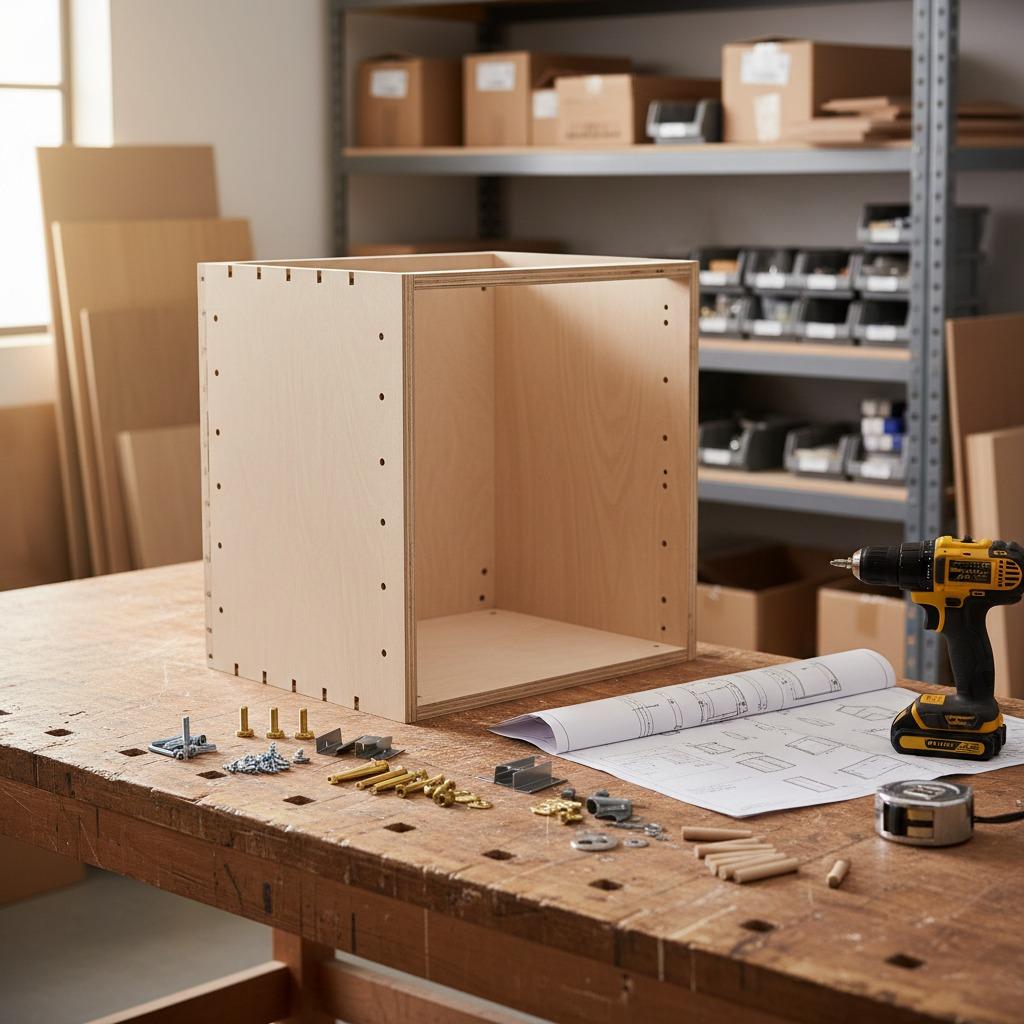
Before that, it is a set of panels waiting for the right sequence: side panel, top, bottom, back board, shelves, maybe brackets, maybe hinges, maybe connector hardware. Every screw has to do its job without asking the worker to fight the material.
That is where the buying decision starts.
Not with the cheapest screw.
Not even with the screw size alone.
The better starting point is the cabinet itself: board material, panel thickness, pre-drilled holes, edge distance, joint style, driver tool, and the number of times the assembly may need to be repeated.
A screw that works in plywood may not behave the same way in MDF. A fastener that bites well in solid wood may be too aggressive for particleboard. A screw that looks acceptable in a sample bag may still sit poorly once it meets the actual panel.
For cabinet and furniture production, the screw kit should follow the build.
The build should not be adjusted around a random fastener.
Pre-drilled holes make the screw choice less flexible
Pre-drilled panels are useful. They make work faster, cleaner, and easier to repeat.
They also leave less room for guessing.
Once the hole diameter and depth are fixed, the screw has to fit that geometry. If the thread does not engage properly, the joint feels weak. If the screw is too tight, the panel edge may crack. If the head shape is wrong, the fitting may not sit flush.
This is common in modular cabinets, shelving units, flat-panel furniture, and workshop carcasses.
On the drawing, everything may seem fine. In the worker’s hand, the story can change quickly.
A serious fastener kit manufacturer should ask about the panel before recommending the screw. What board is being used? Are the holes already drilled? Is the screw joining two panels directly, or is it fixing a bracket, hinge plate, rail, or connector? Will the screw be driven by hand, cordless driver, or production tool?
These are not extra questions. They are the real questions.
The driver head can save time or waste it
A lot of assembly trouble starts at the screw head.
If the drive recess is shallow, the bit slips. If the head is too soft, it strips. If the driver type changes between batches, the line loses rhythm. If workers have to swap bits too often, the kit is already costing time.
In one-off work, that may be annoying.
In production, it becomes measurable.
A good cabinet screw kit should match the tools already used by the assembly team. For factory assembly, that may mean a drive style that handles repeated installation without frequent stripping. For flat-pack or home assembly, it may mean a screw that works with common tools and does not confuse the end user.
This detail is easy to overlook because it feels basic.
But basic things are often where production slows down.
A complete kit is not always a useful kit
A screw kit can contain every required part and still be poorly prepared.
If similar screws are packed together with no separation, someone has to sort them. If hinge screws and carcass screws look almost the same, the wrong fastener may go into the wrong place. If the label only says “screw kit” without model or step information, the warehouse or assembly team may have to verify it again.
That is not efficient kitting.
That is loose hardware with a nicer name.
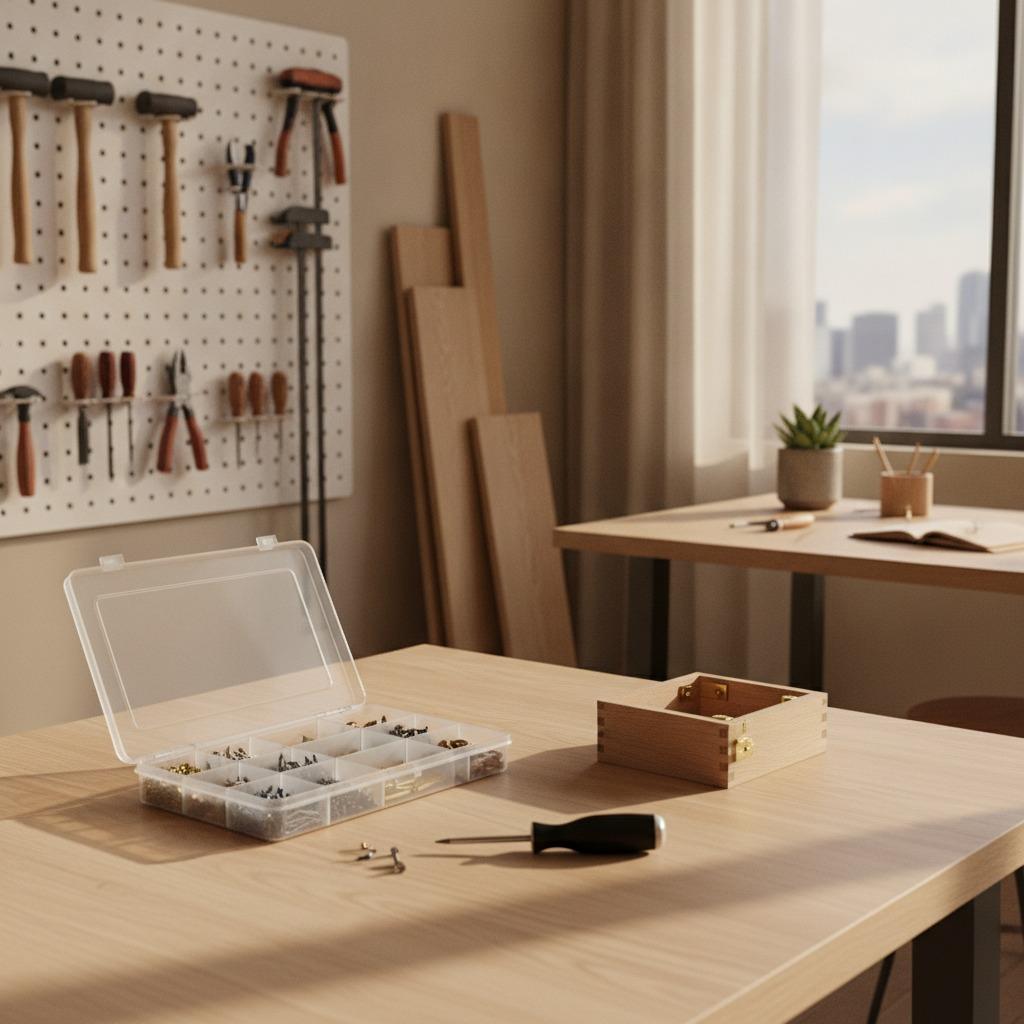
A useful industrial screw kit should reduce decisions at the point of use. The person opening it should understand what the kit is for and which screw belongs where. Sometimes that means separate bags. Sometimes a compartment box works better. For OEM production, model labels and pack counts may matter more than fancy packaging.
The point is simple: the kit should make the bench quieter, not busier.
Board material still decides much of the result
Furniture buyers sometimes ask for screw recommendations before giving enough information about the panel.
That is risky.
Plywood, MDF, particleboard, laminated board, veneered panels, and solid wood all hold fasteners differently. The thread form, point design, screw length, and pilot hole strategy should change with the material.
For example, lower-density particleboard may need more care around edge distance and tightening force. MDF can machine cleanly, but it can still fail if the screw is poorly matched. Plywood often has better holding strength, but its layered structure can change insertion feel.
There is no universal furniture screw that behaves perfectly in every board.
That is why sample testing should happen in the actual panel material, using the actual driver and the real assembly order. A screw that looks fine on a supplier’s desk may feel very different after a worker drives it into the same carcass two hundred times.
Standard screws are useful when they are chosen properly
Not every furniture project needs custom fasteners.
In fact, standard screws are often the right answer. They are easier to buy, easier to replace, and easier to keep stable across future orders. If a standard screw fits the panel system well, there is usually no reason to complicate the supply chain.
But “standard” should not mean careless.
A standard screw still needs the right length, head, finish, thread, point, and packaging format. It still needs to match the panel, tool, and joint. It still needs to be consistent from batch to batch.
Custom fastener kits become useful when the cabinet design demands something more specific: a shorter screw for shallow panels, a wider head for a bracket, a cleaner finish for visible areas, or a special pack layout for OEM assembly.
Customization should solve a problem.
If it does not, it may only create another part number to manage.
What an OEM fastener supplier should bring to the table
A capable OEM fastener supplier should do more than move cartons.
For cabinet and furniture buyers, supplier value often shows up in the less visible areas: drawing review, sample support, material options, finish control, inspection, kit labeling, packaging, repeat orders, and logistics.
Jiangmen Jinhe Hardware Co., Ltd. works with machine screws, self-tapping screws, micro screws, precision screws, standard fasteners, and non-standard customization. Materials include stainless steel, iron, and aluminum, with work covering standards such as GB, DIN, ANSI, BS, JIS, and ISO.
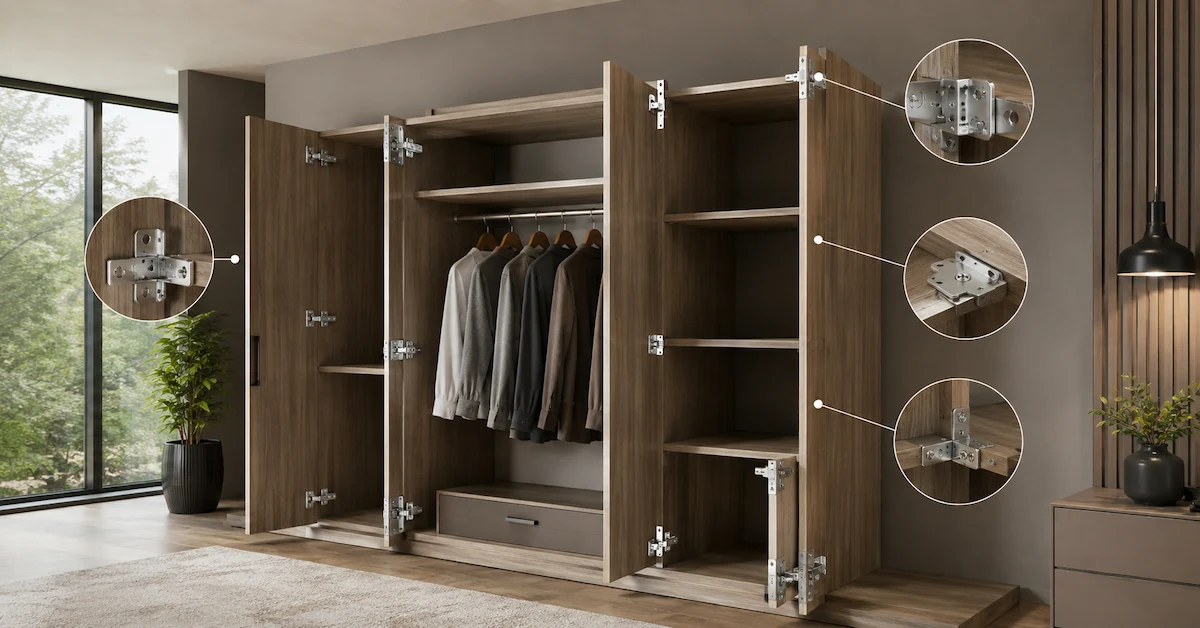
For furniture and cabinet teams, that background can be useful because one build may need more than one fastener type. The carcass, hinge plate, shelf support, bracket, rail, and connector hardware may each require different screws.
Jiangmen Jinhe also notes support for inspection, documentation, warehousing, logistics, foreign trade, and supply chain services. For OEM furniture programs or export orders, those details can help reduce the quiet problems that appear when parts, packaging, and delivery are not coordinated.
The sample kit should be tested like production hardware
A sample should not only be looked at.
It should be used.
Put the screws into the same panel material. Use the same driver. Follow the same assembly sequence. Let the person who normally assembles the product test it, not only the purchasing team.
Then check the practical results.
Does the screw start cleanly?
Does it seat without damaging the surface?
Does the head hold the driver well?
Does the joint pull tight?
Does the panel edge stay clean?
Can workers identify the right screw quickly?
These questions are simple, but they catch real problems.
If the kit is for production, test more than one set. One well-prepared sample does not prove repeatability.
Common mistakes buyers still make
One mistake is buying by diameter and length alone.
Those two numbers are important, but they do not describe the full fastener. Thread form, point style, head type, drive recess, material, finish, and hardness all affect how the screw behaves.
Another mistake is ignoring packaging. A kit with correct screws can still slow assembly if the parts are mixed or poorly labeled.
A third mistake is approving the screw before testing the full joint. The fastener may look fine until it meets the real panel, real hole, and real tool.
Buyers also sometimes treat the first sample as proof that bulk orders will be the same. That is not always true. The supplier needs a controlled part list, approved sample, packing instruction, and inspection method.
The final mistake is choosing the cheapest kit without counting the hidden cost.
A low unit price can disappear quickly if the kit causes stripped holes, tool changes, rework, missing parts, or service complaints.
What buyers should confirm before ordering
Before placing an order, sourcing teams should confirm the basic application details clearly.
What panel material is being used?
Are the holes pre-drilled?
What joint is the screw supporting?
What driver tool will be used?
Are there different screw lengths in one kit?
How will similar screws be separated?
Can labels show product model or assembly step?
What material and finish are required?
Can non-standard screws be customized?
What inspection documents are available?
Can the same kit be repeated in future orders?
The answer should connect the screw kit to the assembly method.
If the conversation stays only at “size, price, quantity,” the kit may not be ready for real production.
Frequently Asked Questions
What is an industrial screw kit?
An industrial screw kit is an organized set of screws or related fasteners prepared for production, furniture assembly, installation, repair, or OEM use.
Can one screw kit work for every cabinet?
Usually not. Board material, panel thickness, hole pattern, joint type, and assembly method all affect screw selection.
Why does the driver head matter?
The driver head affects installation speed, stripping risk, tool wear, and consistency during repeated assembly.
Should buyers test the kit before bulk ordering?
Yes. The kit should be tested with the actual panel material, hole pattern, driver tool, and assembly sequence.
Can screw kits be customized?
Yes. Screw length, thread type, head style, finish, quantity mix, labels, and packaging can be customized when the project requires it.
What makes a fastener kit manufacturer worth choosing?
A good supplier should support screw selection, standard and custom fasteners, inspection, documentation, packaging, repeat supply, logistics, and clear communication.
A good screw kit keeps the work moving
The best screw kit does not make the assembly team stop.
The screw fits the hole. The head fits the driver. The thread holds the board. The label makes sense. The pack is easy to use. The next shipment matches the approved sample.
That is what cabinet and furniture buyers are really looking for in an industrial screw kit.
For cabinet screw kits, furniture screw kits, custom fastener kits, OEM fastener supply, and organized hardware packaging, Jiangmen Jinhe Hardware Co., Ltd. can discuss screw selection, material options, non-standard customization, inspection, packaging, warehousing, logistics, and repeat supply requirements.
For direct inquiries:
Tel/WeChat: +86 13729150102
WhatsApp: +86 13322893939
Email: sharon@hkhomeideas.com
Start with the panel material, hole pattern, screw function, driver tool, packaging method, and expected order quantity.