
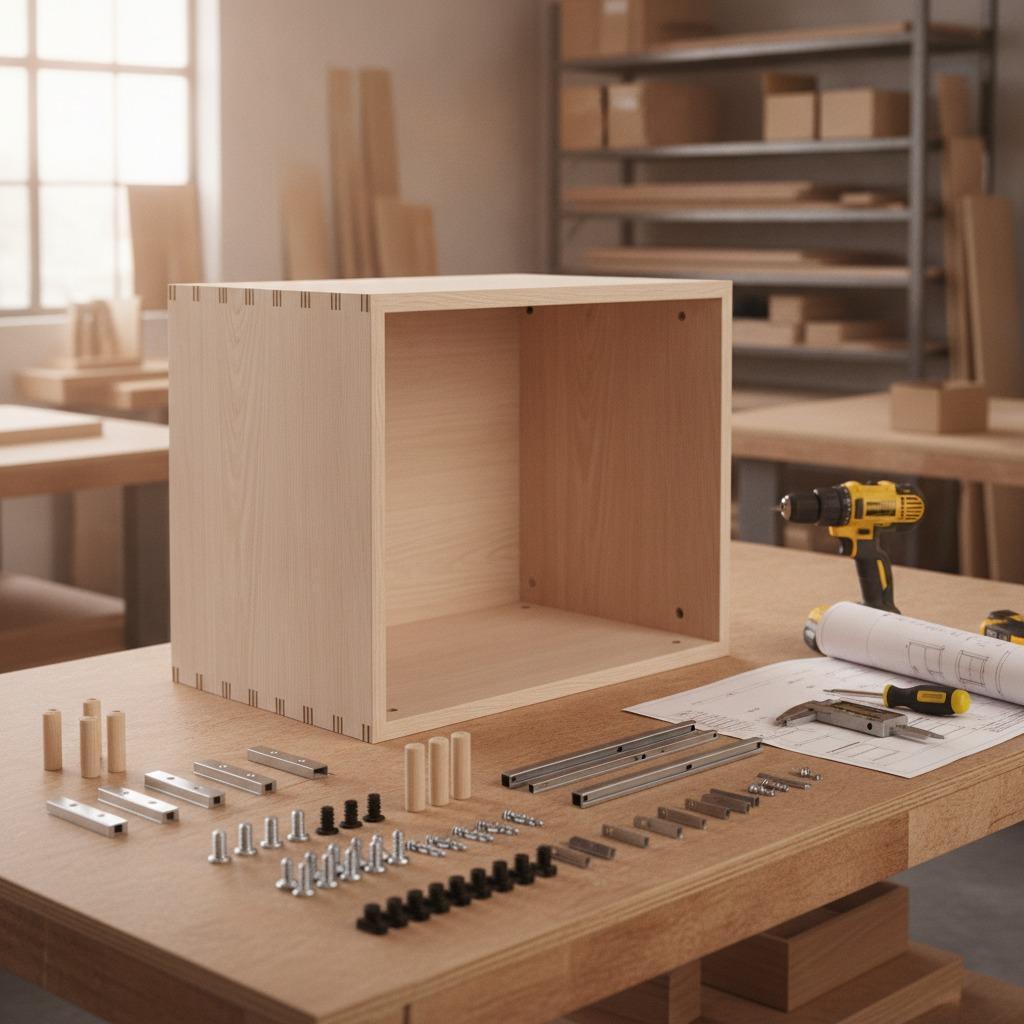
Industrial Screw Kit: The Small Hardware Package That Keeps Cabinet Assembly Moving
Nobody stops in front of an unfinished cabinet and says, “Look at the screws.”
They look at the board. They check the edge. They notice whether the carcass is square, whether the shelves sit level, whether the hinge side feels solid. The screw kit stays in the background, usually in a small bag or tray beside the panels.
Until something goes wrong.
One screw is too short. Another one bites too aggressively into the board. A worker changes driver bits three times during the same assembly step. A panel edge splits. A bracket sits slightly proud because the head style was not right. By the time people notice the problem, the issue is no longer “a cheap screw.” It has become rework, slower assembly, and sometimes a customer complaint.
That is why an industrial screw kit deserves more attention in cabinet and furniture production. It is not just a set of fasteners. It is part of the way the product is built.
The screw kit should follow the cabinet, not the other way around
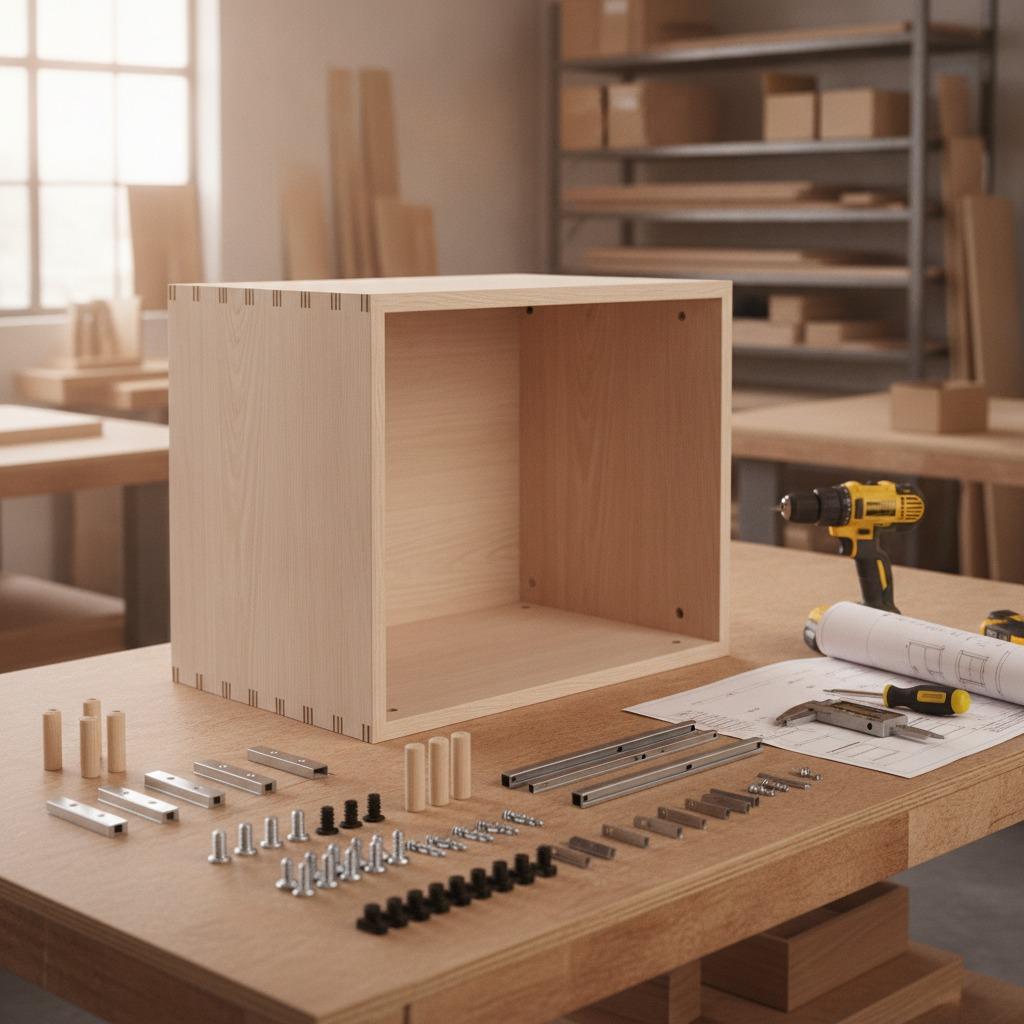
A wooden cabinet carcass may look simple from a distance. Side panels, top board, bottom board, maybe a back panel and a few shelf holes. But once the assembly starts, every small detail matters.
The screw has to match the board material.
It has to suit the pre-drilled hole.
It has to sit cleanly under the driver.
It has to hold without crushing the edge.
And it has to do all of that repeatedly, not only once in a sample room.
This is where many buying decisions go off track. The sourcing team asks for a screw by size, gets a quotation, and only later discovers that the assembly process needs something more specific.
A cabinet screw kit should be built around the real panel design. Board thickness, hole depth, edge distance, screw length, head type, thread form, driver interface, and packaging all belong in the same conversation.
The screw is small, but it is not separate from the cabinet.
Pre-drilled panels leave less room for guessing
Pre-drilled holes make cabinet assembly faster. They also make the screw choice less forgiving.
Once the hole is drilled, the fastener has to work with what is already there. If the screw is too loose, the joint feels weak. If it is too aggressive, it may split the board or strip the hole. If the head does not seat correctly, the fitting may not sit flat.
That is common in furniture work, especially with MDF, particleboard, plywood, and laminated boards. These materials are useful and economical, but they react differently to screw threads and tightening force.
A screw that works nicely in plywood may not perform the same way in particleboard. MDF may machine cleanly but still need careful control during tightening. Laminated board adds another issue: nobody wants a visible surface damaged by the wrong fastener.
For this reason, a fastener kit manufacturer should not only ask, “What size screw do you need?”
A better question is: “What board are you using, and how is it assembled?”
The driver head is not a small detail
In real production, screws are not installed slowly with perfect attention every time.
They are driven by workers using cordless drivers, pneumatic tools, or controlled production equipment. Sometimes the pace is quick. Sometimes the same person drives hundreds of screws in one shift.
That is why the driver interface matters.
A poor head design can strip. A shallow recess can slip. A head that requires an uncommon bit may slow the line. Even a small change between batches can cause trouble if workers do not notice it immediately.
For furniture screw kits, the head style should match the tool used in production. If the kit is for home assembly, the screw should not require a tool that the customer is unlikely to have. If the kit is for workshop assembly, the screw should tolerate repeated use with the chosen driver.
This is not glamorous engineering. It is ordinary production reality.
But ordinary production reality is where costs accumulate.
A useful kit is organized, not just complete
A screw kit can contain every required part and still be frustrating.
If three similar screws are mixed in one bag, someone has to compare them. If the label is vague, receiving teams have to double-check the contents. If the wrong screw is used in the wrong hole, the cabinet may be damaged before anyone realizes it.
That is why packaging matters.
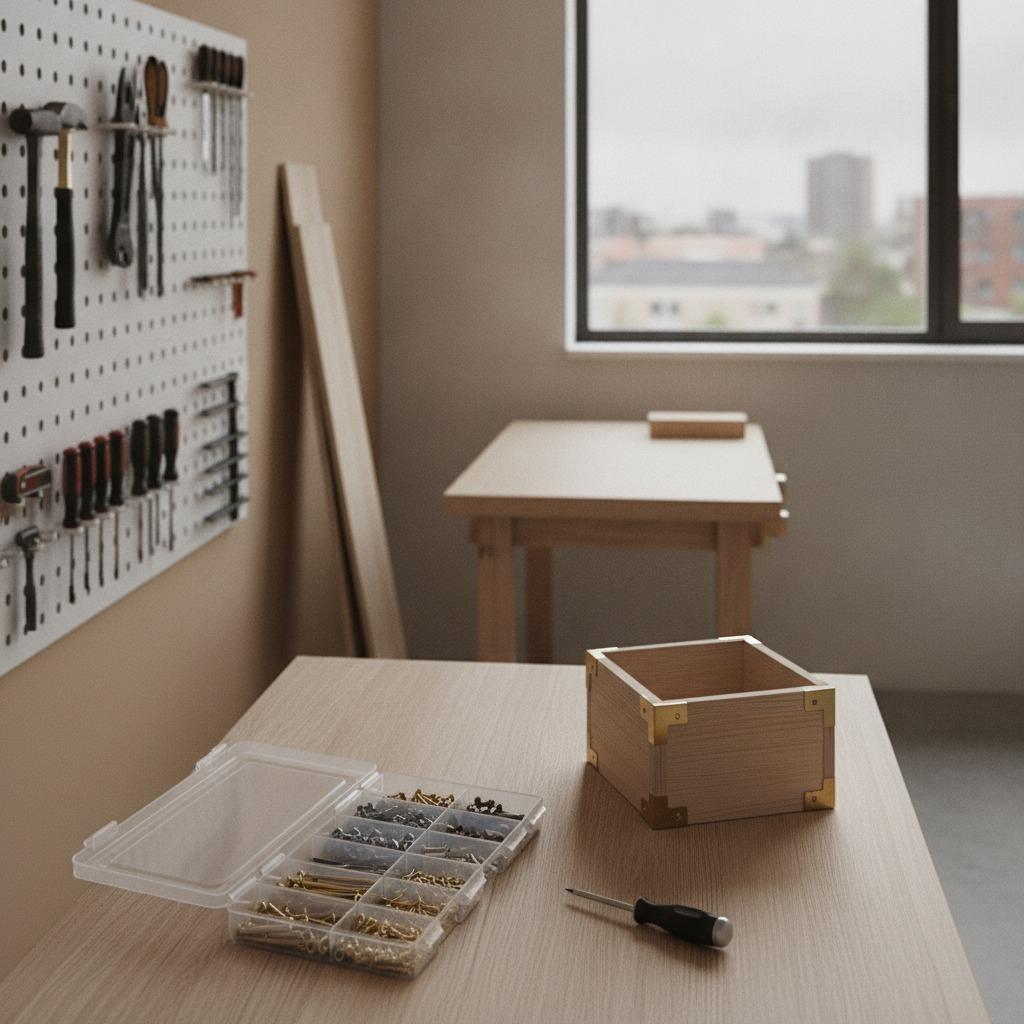
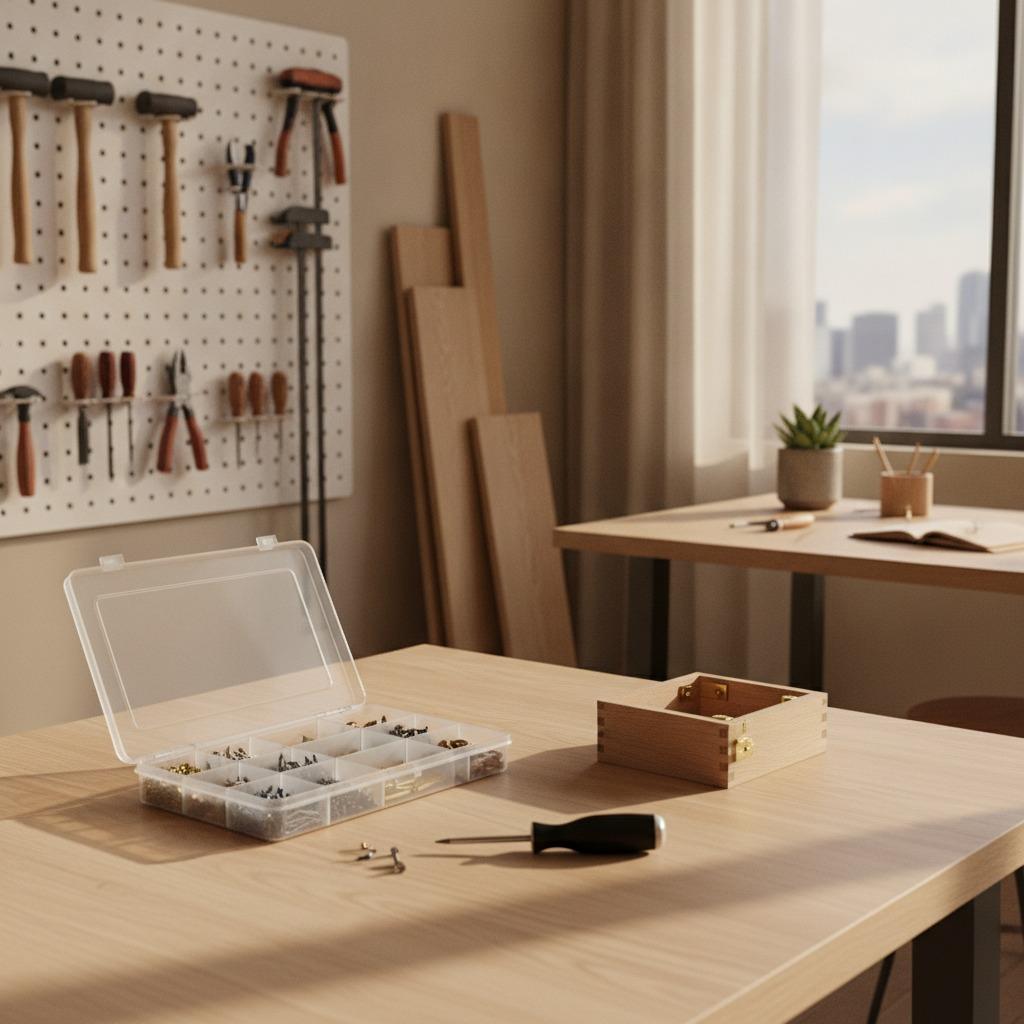
For a prototype workshop, a small compartment box may be enough. For OEM production, step-based bags or labeled packs may work better. For flat-pack furniture, the kit should be clear enough for the customer or installer to follow without confusion.
The question is not only whether the parts are inside.
The question is whether the person opening the kit can use them correctly.
A good industrial screw kit reduces decisions at the bench. It does not create another sorting job.
Standard screws are useful, but not always enough
Standard screws are often the best starting point.
They are easier to source, easier to reorder, and usually more cost-effective. If a standard fastener matches the cabinet design well, there is no reason to make the project more complicated.
Still, cabinet and furniture work often creates special requirements.
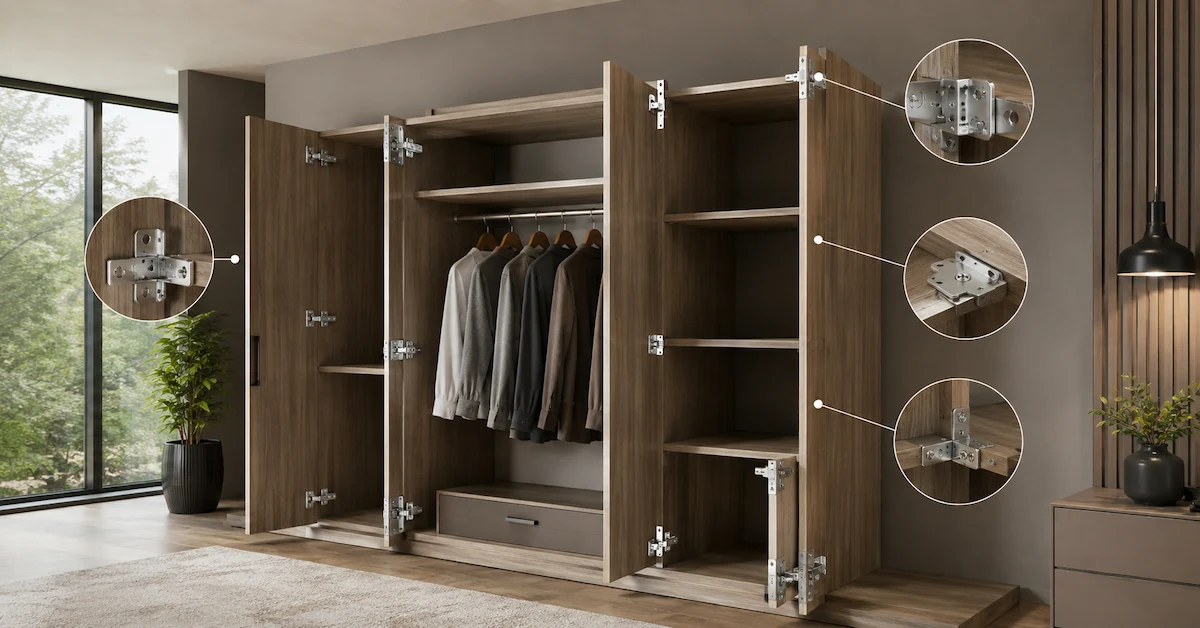
A bracket may need a certain head diameter. A shallow panel may need a shorter fastener. A visible area may require a cleaner finish. A tight assembly space may need a different drive type. A pre-drilled hole may already be fixed, leaving the screw to adapt.
That is where custom fastener kits become useful.
Customization should solve a real assembly problem. It should not be added just to make the hardware look special. A custom screw needs drawings, samples, inspection standards, and repeat-order control. Used carefully, though, it can remove a lot of trouble from production.
What an OEM fastener supplier should help with
A capable OEM fastener supplier should do more than ship cartons of screws.
For cabinet and furniture buyers, the supplier should help connect the fastener to the application. That may include screw length, thread style, material, surface finish, head type, packing quantity, documentation, and whether non-standard parts are needed.
Jiangmen Jinhe Hardware Co., Ltd. works with machine screws, self-tapping screws, micro screws, precision screws, standard fasteners, and non-standard customization. Materials include stainless steel, iron, and aluminum, and the company works with standards such as GB, DIN, ANSI, BS, JIS, and ISO.
For furniture buyers, this background is relevant because cabinet assembly rarely depends on only one screw. A complete furniture screw kit may include several fastener types, labels, separated packing, inspection records, and repeat supply support.
The company also notes support for documentation, inspection, logistics, warehousing, foreign trade, and supply chain services. For OEM furniture programs or export orders, those details can matter as much as the screw itself.
Testing should happen on the real panel
A catalog photo cannot tell you enough.
A sample screw in your hand cannot tell you enough either.
The useful test happens on the actual panel, with the actual hole, the actual driver, and the same assembly sequence workers will use later.
Drive the screw. Check the seating. Watch the edge. Feel whether the joint pulls tight. Repeat the process several times. Then try it with more than one operator if the kit is going into production.
This kind of test is simple, but it catches practical problems early.
A screw may look fine on paper and still feel wrong after two hundred insertions. A head may strip only when used at normal line speed. A board may hold well in one area and fail near the edge.
Those details are hard to see in a quotation sheet.
Common mistakes buyers should avoid
One mistake is buying by diameter and length only.
Those numbers matter, but they do not describe the whole screw. Thread form, point type, head style, material, finish, and driver fit all affect performance.
Another mistake is ignoring the board material. A screw does not behave the same way in plywood, MDF, particleboard, or laminated board.
A third mistake is approving loose samples without testing the full kit. The screw may be acceptable, but the packaging may still create sorting errors.
Buyers also sometimes forget repeatability. The first sample kit may be packed carefully by hand. Bulk orders need the same screw type, same label, same quantity, and same packing logic every time.
The final mistake is choosing the cheapest kit without counting the hidden cost.
A low-cost screw kit can become expensive if it causes stripped holes, tool changes, slower assembly, damaged panels, missing parts, or extra service work.
What buyers should confirm before ordering
Before choosing an industrial screw kit, buyers should confirm the practical details, not just the price.
Start with the panel material and thickness. Check whether the holes are pre-drilled. Confirm screw length, thread type, head style, driver interface, material, and finish. Then review how similar screws will be separated, whether labels can include model numbers, and how the supplier checks kit completeness before shipment.
If the project needs non-standard fasteners, bring that up early. It is much easier to adjust the screw during sampling than after the cabinet drawing, packaging method, and production schedule are already fixed.
A good supplier should be able to discuss the kit in relation to the assembly process.
If the discussion stays only at “size and price,” something important may be missing.
Frequently Asked Questions
What is an industrial screw kit?
An industrial screw kit is an organized set of screws or related fasteners prepared for production, assembly, repair, installation, or OEM use.
Can one screw kit work for every cabinet?
Usually not. Board material, panel thickness, hole pattern, load requirement, and assembly method all affect screw selection.
Why does the driver head matter?
Because repeated assembly depends on tool fit. A poor driver match can cause stripping, slipping, damaged heads, and slower work.
Should buyers test the screw kit before bulk ordering?
Yes. The kit should be tested with the actual panel material, driver tool, hole pattern, and assembly sequence used in production.
Can screw kits be customized?
Yes. Screw length, thread type, head style, finish, quantity mix, labels, and packaging can be customized when the application requires it.
What makes a fastener kit manufacturer worth shortlisting?
A strong supplier should support fastener selection, material options, customization, inspection, documentation, clear packaging, repeat supply, and logistics coordination.
A good screw kit keeps the bench moving
The best industrial screw kit does not make the assembly team stop and think.
The screws match the holes. The head matches the driver. The thread holds the panel. The label is clear. The kit is packed in a way that makes sense. The next shipment matches the approved sample.
That is what buyers are really sourcing.
For industrial screw kits, cabinet screw kits, furniture screw kits, custom fastener kits, OEM fastener supply, and organized hardware packaging, Jiangmen Jinhe Hardware Co., Ltd. can discuss screw selection, material options, non-standard customization, inspection, packaging, logistics, warehousing, and repeat supply requirements.
For direct inquiries:
Tel/WeChat: +86 13729150102
WhatsApp: +86 13322893939
Email: sharon@hkhomeideas.com
Start with the board material, hole pattern, screw function, driver tool, packaging method, and expected order quantity.
Once the assembly method is clear, the right screw kit becomes much easier to build and repeat.