
Lock nuts and anti-loosening nuts: Choose the appropriate anti-loosening fasteners
When buyers compare locknuts with other types of nuts , the real issue is often not the name, but the performance of the fastener after vibration, thermal cycling, repeated use, and a few maintenance cycles. Even if it looks perfect on the first day, a fastener can silently loosen in the field if the wrong type of nut is chosen. Therefore, selecting the right nut is more important than what is shown on many purchasing lists.
For engineers, product teams, and purchasing managers, choices often involve trade-offs between compactness, reusability, locking performance, and ease of assembly. This is where the differences begin to emerge between flange nuts , standard hex nuts , and lock nuts. They all belong to the same category of industrial fasteners, but they address the same problem in different ways.
What do you want to make with jam and nuts?
A lock nut is a thin nut that is typically used in conjunction with another nut. When tightened, they rub against each other to prevent rotation. In effect, the two nuts form a locking layer on the threaded bolt or stud. This design is simple, which is its appeal: no inserts, no special flange geometry, and no additional spring elements are required. It's simply the two nuts rubbing against each other.
This simplicity also explains why locknuts remain suitable for environments requiring frequent maintenance. They are particularly useful when joints need adjustment but are unlikely to loosen once tightened. Crucially, the locking effect depends on proper assembly and sufficient thread engagement. If the nut is tightened too quickly or the threads are damaged, its reliability is far less than described in the product manual.
Lock nuts, flange nuts, and standard hex nuts: practical differences
Jam and Nuts
Lock nuts are commonly used for thin-film locking and assembly methods that rely on two nuts tightening together. They are compact in design, but require more care during installation. In retrofitting projects, this extra step can sometimes be cumbersome; however, in machine installations, it may be exactly what the installer needs.
Preload torque lock nut
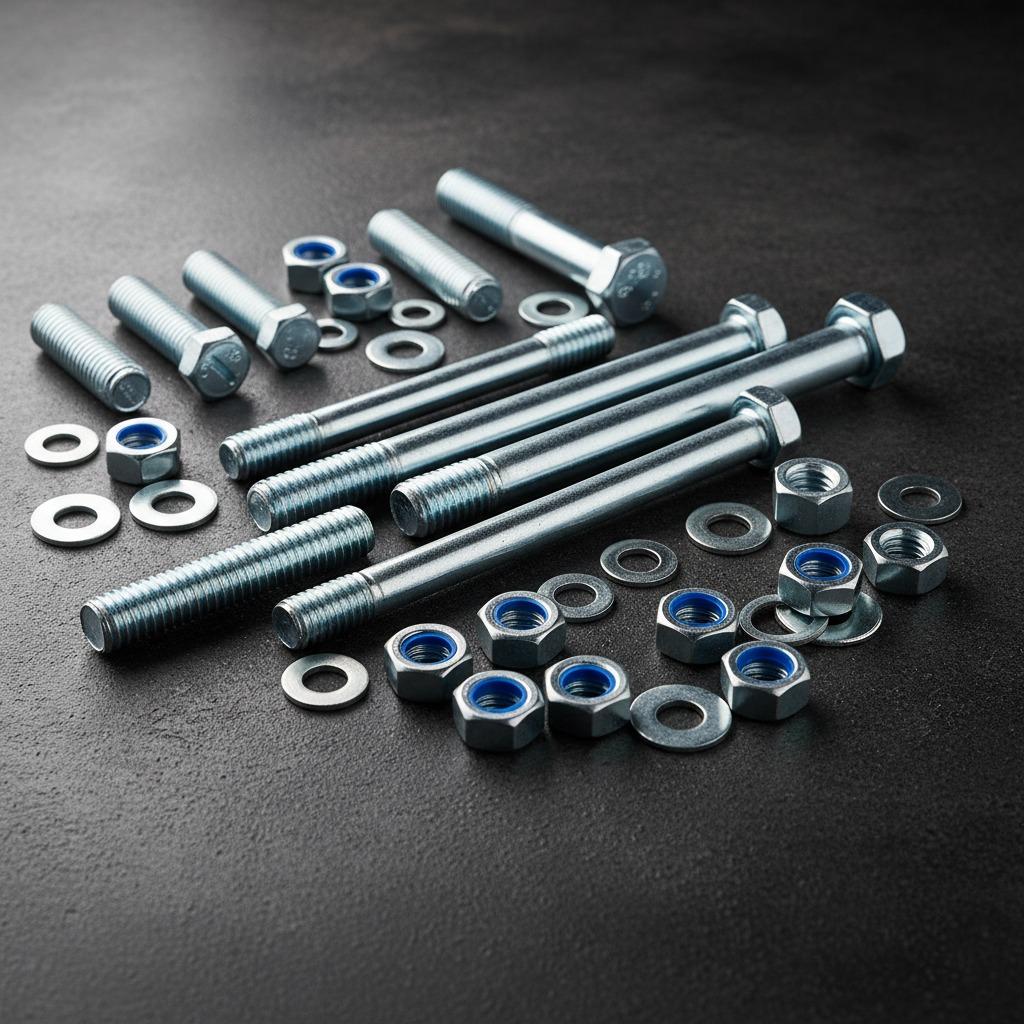
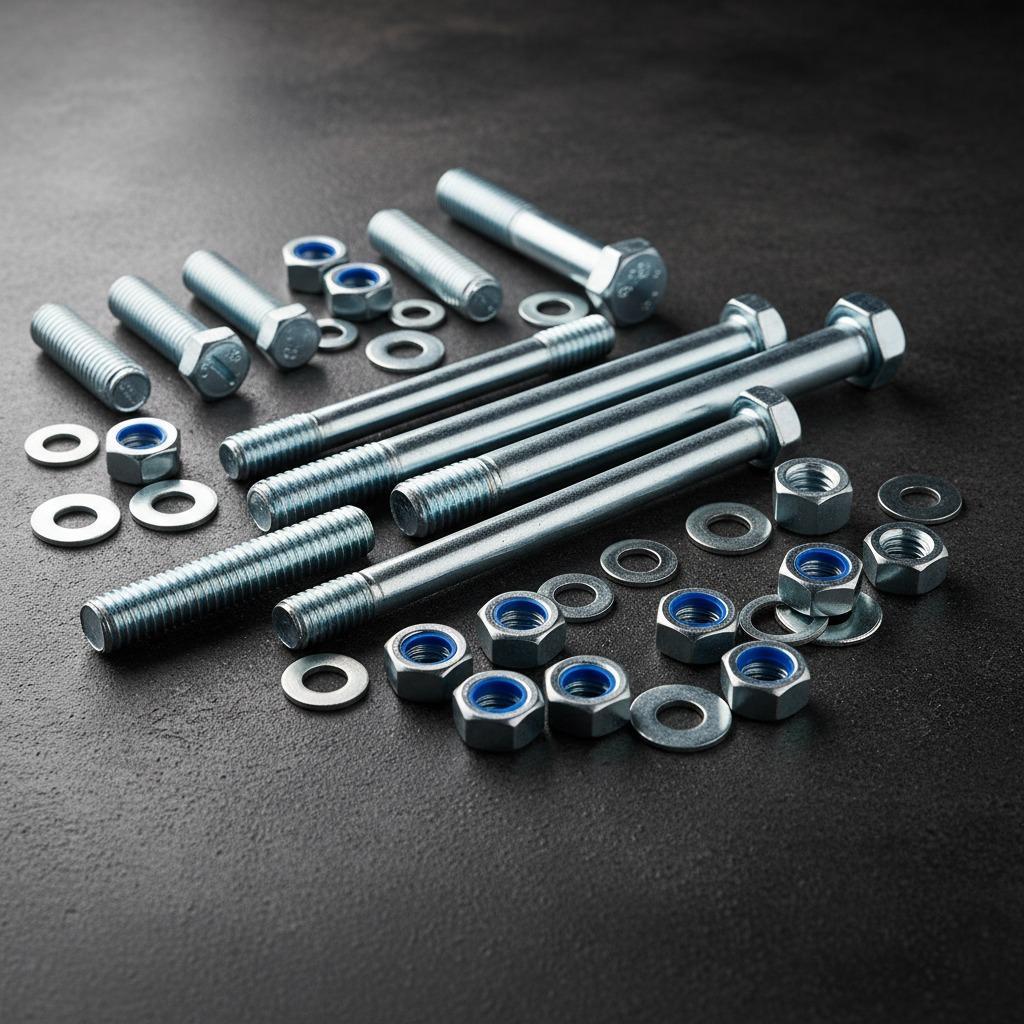
Some lock nuts use locking elements such as nylon inserts. In product information, some nuts with blue nylon inserts are of this type. These nuts are often the first choice when more robust anti-loosening features are required. They reduce the need for a second nut, thus simplifying assembly. On the other hand, reusability and temperature limitations need to be considered based on the actual product specifications, rather than assumptions.
Flange nuts
Flange nuts, due to their built-in washer-like flanges, distribute the load over a larger load-bearing area. Therefore, flange nuts are very useful when the mating surfaces are soft or when a separate flat washer is required. However, they are not always a replacement for lock nuts. Flanges help distribute load, but they are not a universal solution for preventing loosening.
Standard hexagonal nuts
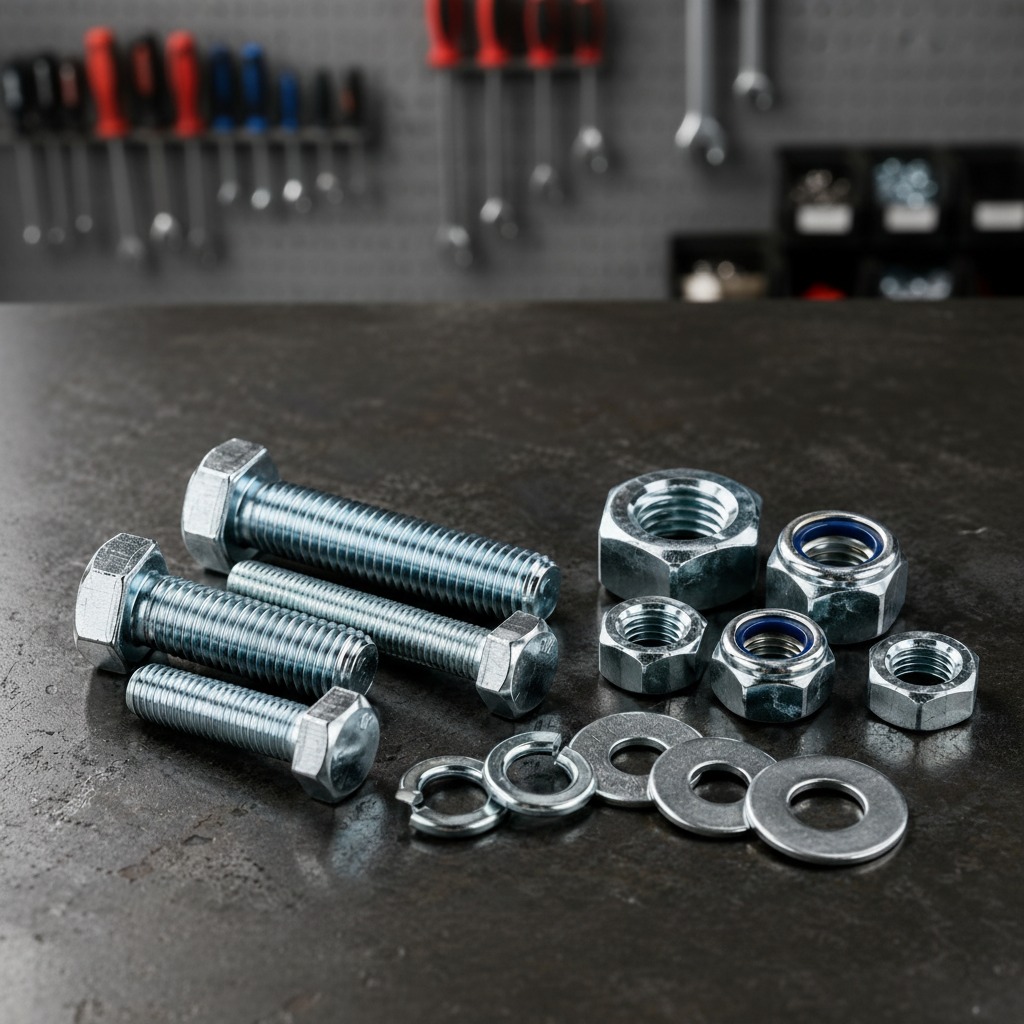
Standard hex nuts remain a basic choice due to their ease of sourcing, installation, and compatibility with a wide range of bolts. The fastener kit described in this article, consisting of hex nuts, flat washers, and spring washers, is designed for use with hex head bolts and is suitable for general mechanical fastening. This combination is commonly found in machinery, frames, brackets, covers, clamps, and maintenance work. This also serves as a reminder that many buyers rely on the overall design of the connection, not just the nut, to prevent loosening.
What implications do fastener kits have for practical applications?
The product details show that it includes steel bolts and nuts with a bright zinc or silver-plated finish, and is equipped with flat washers and spring washers. This is a very common industrial fastening assembly. It embodies a pragmatic and cost-effective design philosophy: protecting the assembly from visible surface corrosion, distributing clamping forces, and adding anti-loosening measures in areas where vibration is expected.
For buyers, the appeal isn't the appearance, but the assembly logic. Hex bolts paired with matching hex nuts offer a simple and straightforward installation. Adding flat washers reduces surface damage and improves load distribution. Adding open-end lock washers increases friction, but it's not a panacea. In many repair shops, lock washers are considered a safety measure, but they cannot replace proper thread engagement or a nut with the correct preload torque.
Selection criteria that buyers should actually verify
First, consider the application scenario. Is the connection static or subject to vibration? Does it require frequent maintenance? Is the space confined? Does it require on-site adjustments? The answers to these questions are often more important than whether the nut is labeled "industrial fastener".
Then carefully check the thread and size compatibility. The source data did not confirm metric or imperial dimensions, pitch, grade, or torque values, so this information should be verified at the time of procurement. This may sound obvious, but thread mismatch remains one of the most costly little mistakes in fastener procurement.
Surface treatment is another practical issue. Zinc coatings are suitable for many indoor or semi-enclosed environments, but buyers should confirm their corrosion resistance requirements based on the actual usage environment. Never judge a component's corrosion resistance solely by its appearance if it will be exposed to moisture, chemicals, or outdoor environments.
Common mistakes in fastener procurement
A common mistake is assuming all locknuts are interchangeable. Lock nuts, nylon insert lock nuts, and flange nuts may all belong to the same Bill of Materials (BOM) series, but their functions are not the same. Another mistake is over-reliance on open locking washers as if they can solve all vibration problems. In reality, joint design, clamping force, and maintenance schedule are equally important.
Buyers should also be wary of unverified standard assumptions. Jiangmen Jinhe Hardware Co., Ltd. claims its fasteners comply with GB, DIN, ANSI, BS, JIS, and ISO standards and supports rigorous pre-delivery inspection and documentation. This information is useful, but specific components still need to be verified item by item before production.
The importance of suppliers
For procurement teams, supplier responsiveness is just as important as product geometry. Jiangmen Jinhe Hardware Co., Ltd., established in 2016 and located in Jiangmen City, Guangdong Province, specializes in fasteners, standard parts, and custom-made components, serving clients in industries such as electronics, medical devices, automation, home appliances, furniture, and building materials. The company also emphasizes the importance of logistics and warehousing support, which is particularly crucial when factories need to replenish stock rather than ship out all at once.
In other words, the final purchasing decision should still consider both technical and operational factors. If your components rely on removable joints and repetitive maintenance, inquire which type of nut (e.g., locknut, flange nut, or simple hex nut with washer) best suits your lifecycle. Generally, the best choice is a nut that can accommodate the joint with minimal implicit compromises.
Buyer's next steps
If you are preparing a quotation request or a revised bill of materials (BOM), compare the actual number of fasteners with the vibration level of the joint, space allowance, and usage requirements. Before approval, be sure to inquire about details such as size, thread, grade, finish, and packaging. Taking a few minutes to verify this information can often prevent significant rework later, especially in high-volume industrial production.