

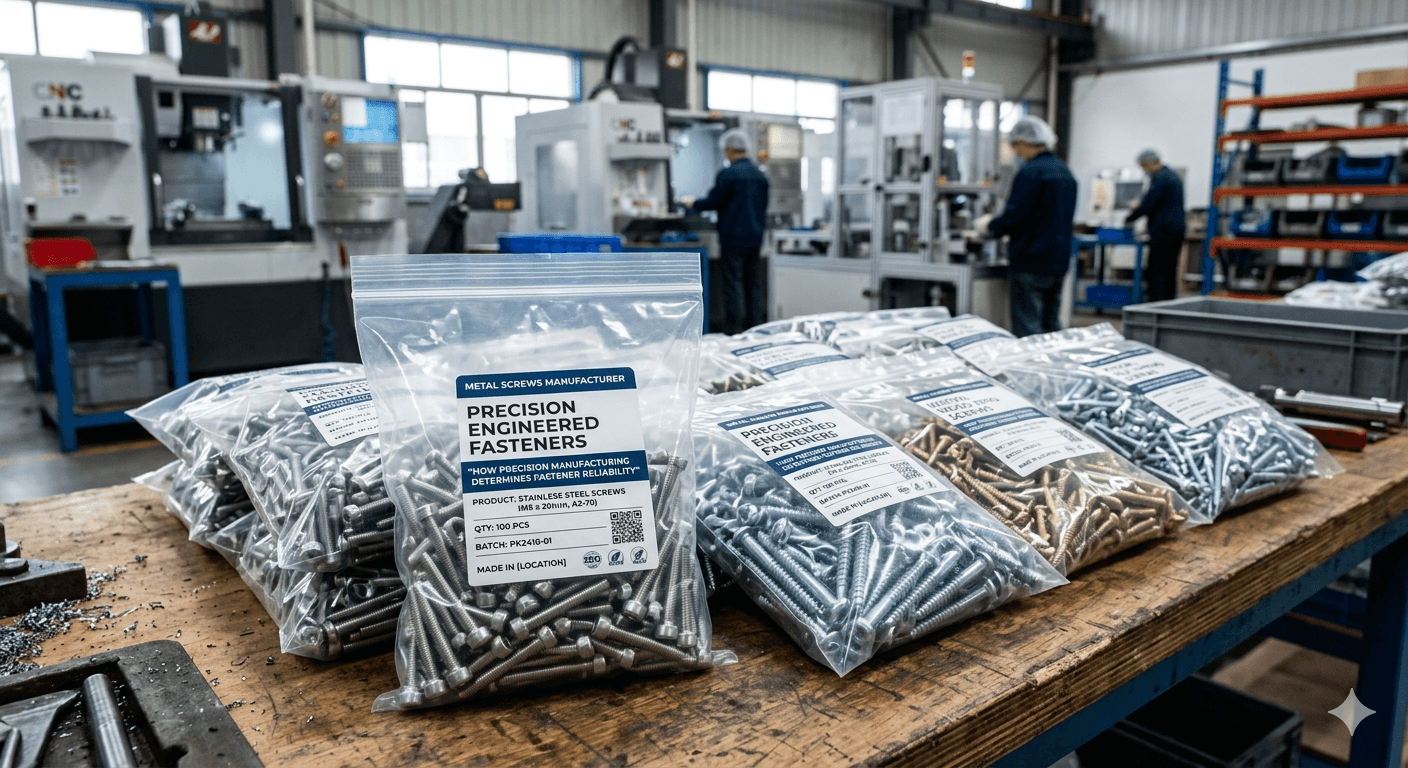
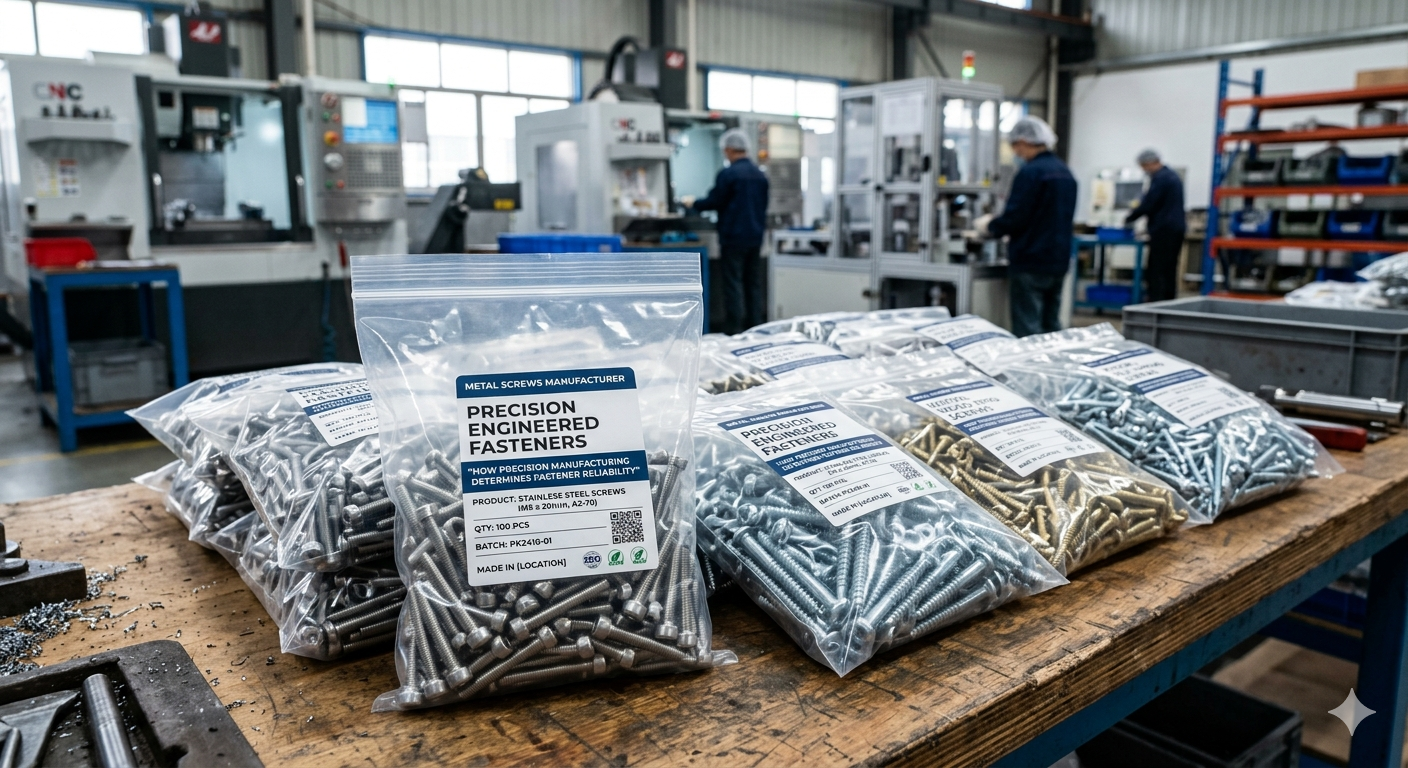
At first glance, screws appear almost trivial. Tiny pieces of metal. Cheap. Replaceable. In many engineering drawings they occupy only a few millimeters of space.
Yet anyone who has spent time on a real production floor knows the story is different.
An assembly line begins smoothly. Tools are calibrated, workers are experienced, materials are ready. Then something subtle happens. A screw resists slightly during driving. Another slips. A few begin stripping the material. Installation slows. Operators adjust torque. Someone stops to inspect the batch.
Minutes pass. Multiply those minutes by thousands of installations a day, and the “small component” quietly becomes a bottleneck.
This is why a serious metal screws manufacturer focuses not merely on producing screws that meet dimensional drawings but on ensuring that each screw behaves predictably during real installation. At JHFIX, the objective is straightforward: fasteners should disappear into the process. No friction. No surprises. Just consistent performance shift after shift.
Materials: Where the Story of a Metal Screw Begins
Before threads are rolled or heads are formed, every screw begins with raw metal. And the choice of metal matters far more than many buyers realize.
Carbon steel remains the most widely used option for general manufacturing. It balances strength and cost effectively. Stainless steel—especially grades such as 304 or 316—offers corrosion resistance and performs better in humid or outdoor environments. Alloy steel enters the scene when higher tensile strength becomes necessary.
But material selection alone does not guarantee performance. Heat treatment changes everything.
A screw that is too soft deforms during installation. Too hard? It becomes brittle and risks fracture under load. Achieving the correct balance requires careful control of thermal processes.
The differences are measurable.
| Material Type | Typical Tensile Strength | Typical Applications |
|---|---|---|
| Carbon Steel | 400–700 MPa | Furniture, appliances |
| Stainless Steel (304) | 500–700 MPa | Outdoor equipment |
| Alloy Steel | 800–1200 MPa | Industrial machinery |
Organizations such as ASTM and ISO define these material standards because even minor variations can alter performance dramatically. A screw may appear identical on the surface. Inside the metal structure, however, the difference between reliable fastening and failure is often measured in microstructures.
Threads: The Geometry That Controls Installation Behavior
Now imagine a screw under magnification. What looks simple to the eye becomes a carefully engineered spiral.
Thread pitch, depth, flank angle—each dimension influences how the screw interacts with the material it enters. A deviation of only a few microns can change installation torque, grip strength, or resistance during driving.
This is where manufacturing precision reveals itself.
When thread geometry remains consistent, installation becomes smooth and predictable. Tools run within expected torque ranges. Operators rarely notice the screws because nothing unusual happens.
But when thread profiles drift slightly between batches, the change is obvious on the assembly line. Drivers hesitate. Fasteners resist. Occasionally they bite too aggressively.
A well-controlled metal screws manufacturer invests heavily in thread rolling accuracy for exactly this reason. The goal is not perfection for its own sake—it is stability during real production.
Surface Treatment: Protection Beyond Appearance
Coatings are sometimes viewed as aesthetic features. In reality, they are functional layers that shape how screws behave during installation and throughout the product’s lifespan.
Consider friction alone. A screw with excessive surface roughness can dramatically increase driving torque. The same screw, properly coated, slides smoothly into the material.
Common treatments include:
-
Zinc plating for corrosion protection
-
Black oxide coatings that reduce glare and moderate oxidation
-
Phosphate coatings that stabilize friction during installation
-
Nickel or chrome plating for enhanced durability
These treatments may appear subtle, yet they influence performance in environments where temperature, humidity, and mechanical stress fluctuate continuously.
Studies in corrosion engineering show that zinc-plated screws can survive hundreds of hours in salt spray testing before visible oxidation appears—far longer than untreated steel. In outdoor products, this difference directly affects product lifespan.
Precision Manufacturing: Where Reliability Is Actually Built
Inspection alone cannot create quality. A screw that fails inspection has already consumed time, material, and energy.
Reliable fasteners are produced through carefully controlled manufacturing stages:
Cold heading forms the screw head.
Thread rolling shapes the spiral geometry.
Heat treatment adjusts hardness and strength.
Surface finishing protects the metal and reduces friction.
Quality inspection verifies dimensional accuracy.
Each stage contributes to the final behavior of the screw.
A single inconsistency—improper heat treatment, for example—can alter mechanical properties across an entire batch. And when thousands of screws are installed every day, even a small deviation becomes noticeable.
Precision manufacturing, therefore, is not simply a technical ideal. It is a practical necessity.
Packaging: The Quiet Efficiency Factor
Packaging rarely receives much attention during procurement discussions. Yet its influence on production efficiency is surprisingly large.
Loose screws packed in large containers often lead to counting errors. Different types become mixed. Material spills during handling. Operators must pause to recount or sort.
Over time these interruptions accumulate.
Packaging strategies can drastically change this outcome.
| Packaging Type | Counting Accuracy | Material Loss |
|---|---|---|
| Loose bulk packaging | ~90% | 5–7% |
| Standard industrial packaging | ~97–98% | 2–3% |
| Custom packaging systems | 99%+ | <1% |
The improvement may appear small numerically, but its operational impact is substantial. Accurate packaging prevents shortages, reduces manual handling, and keeps production lines moving.
Applications Where Screw Precision Truly Matters
Certain industries reveal the importance of fastener quality more clearly than others.
Furniture manufacturing depends on consistent thread engagement in particleboard and MDF. Industrial equipment assembly requires stable torque performance when automated tools are used. Outdoor products demand corrosion resistance across seasons of humidity and temperature variation.
In each of these environments, screws are installed repeatedly—sometimes tens of thousands of times a day. When quality fluctuates, inefficiencies multiply quickly.
When quality is stable, production flows almost effortlessly.
Frequently Asked Questions
Q1: What should buyers evaluate when choosing a metal screws manufacturer?
Beyond certifications, it is important to review manufacturing processes, heat treatment control, thread precision, and packaging reliability.
Q2: Why do some screws strip during installation?
Common causes include inconsistent thread geometry, improper hardness levels, or mismatched screw design for the material being fastened.
Q3: Does packaging really affect production efficiency?
Yes. Accurate packaging reduces counting errors, prevents shortages, and simplifies handling, especially in high-volume assembly environments.
Building Long-Term Fastener Reliability
Screws may be small components, but their influence extends far beyond their size. They affect assembly speed, product durability, and the overall rhythm of manufacturing operations.
Working with a reliable metal screws manufacturer ensures that material selection, thread precision, and surface treatments are aligned with real production requirements. To learn more about our manufacturing capabilities and fastener solutions for OEM and industrial applications, you can explore the overview available on the JHFIX homepage.
If you are currently reviewing suppliers or planning a project that requires consistent fastener quality, discussing the technical requirements in detail often reveals opportunities to improve reliability and efficiency. You are welcome to contact our team through the Contact Us page to explore a more stable and dependable screw supply strategy.