
TL;DR: Selecting a reliable OEM hardware manufacturer requires more than finding a factory that produces screws, brackets, or connectors. For multi-component hardware projects, buyers must ensure that every part fits the same approved assembly, follows a controlled bill of materials (BOM), and remains consistent after design changes. A structured DFM review, sample approval process, revision-control system, and assembly-level inspection plan can reduce sourcing mistakes before mass production.
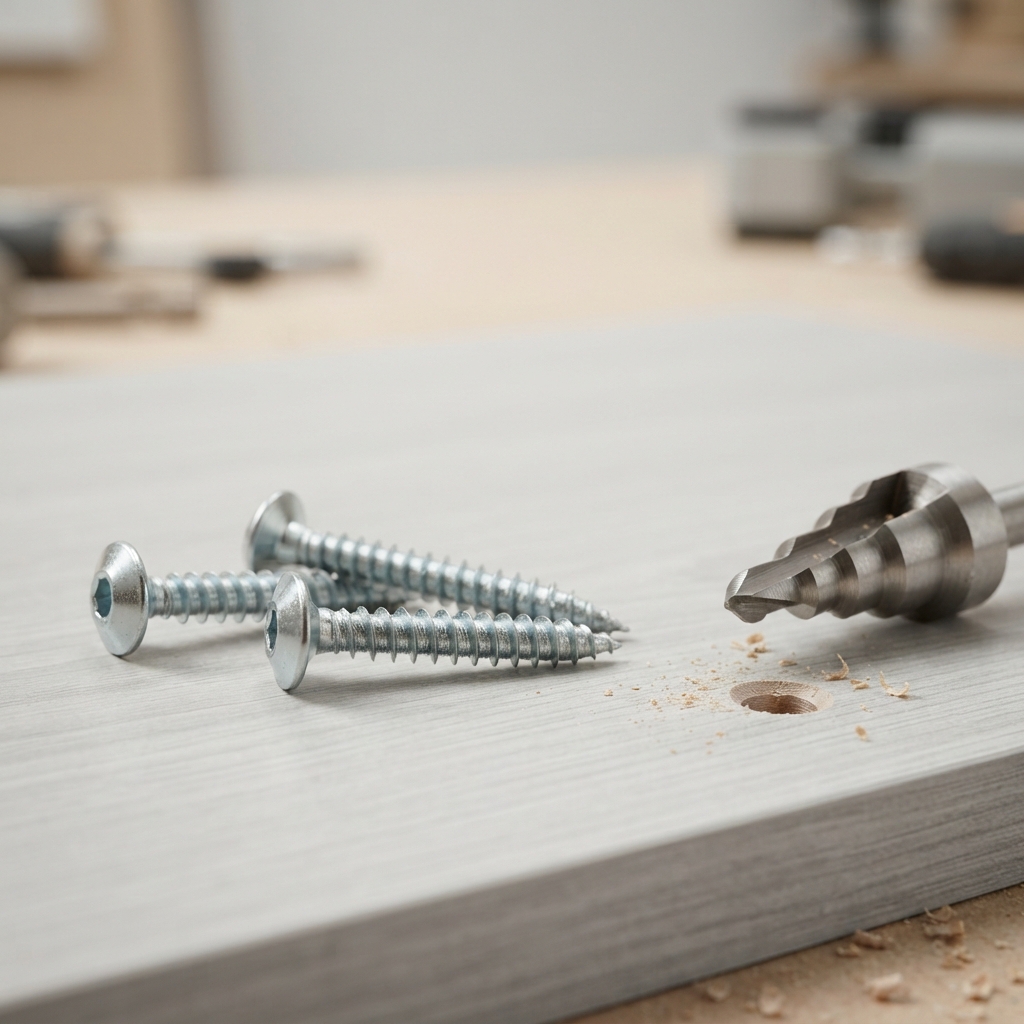
A custom screw may meet its drawing while failing to engage with a threaded insert. A stamped bracket may pass dimensional inspection but create misalignment during final assembly. Even when every component is acceptable, an outdated BOM can result in incorrect parts being packed together.
These problems are particularly important for furniture manufacturers, industrial equipment OEMs, cabinet brands, and international hardware distributors managing multiple components.
The objective is not simply to purchase individual parts at the lowest price. It is to develop a coordinated hardware system that can be manufactured, assembled, inspected, and reordered consistently.
This guide explains how OEM hardware manufacturing works, where engineering risks arise, and what buyers should verify before approving a custom hardware project.
Key Engineering Takeaways
-
Component compatibility comes first. Screws, inserts, stamped brackets, and connectors should be evaluated as one functional assembly.
-
DFM reduces manufacturing uncertainty. Design for Manufacturability reviews identify potential problems with geometry, materials, tooling, tolerances, and production methods.
-
The BOM must control product identity. Every component should have a defined part number, revision, quantity, and approved specification.
-
Engineering changes affect multiple operations. A bracket modification may require updates to mating components, assembly instructions, inspection plans, and packaging.
-
Quality inspection needs multiple levels. Individual parts, complete assemblies, and packed hardware sets may require different acceptance checks.
-
Supplier selection should reflect project complexity. Buyers should evaluate technical coordination and revision control alongside manufacturing capabilities and pricing.
1. What Does an OEM Hardware Manufacturer Do?
An OEM hardware manufacturer produces hardware components according to a customer's design, specifications, or functional requirements.
Depending on the project and supplier, the work may involve product development support, manufacturing, processing, assembly, inspection, and packaging.
For B2B buyers, OEM hardware manufacturing may cover:
-
Custom screws and threaded fasteners.
-
Metal brackets and stamped mounting plates.
-
Nuts and threaded inserts.
-
Furniture cam locks and connecting bolts.
-
Hardware fittings and supporting components.
-
Custom hardware assortments and assembly kits.
The manufacturing responsibilities depend on the agreed project scope.
OEM Manufacturing vs Standard Hardware Sourcing
Standard hardware sourcing normally involves purchasing existing products that meet the buyer's requirements.
OEM manufacturing may involve modifying existing designs or developing drawing-specific components.
| Evaluation factor | Standard hardware sourcing | OEM hardware manufacturing |
|---|---|---|
| Product design | Existing catalog specification | Customer-defined or modified design |
| Drawings | Standard references may be sufficient | Approved drawings often required |
| Tooling | Usually established | Additional tooling may be necessary |
| Material selection | Available standard options | Project-specific requirements |
| Inspection | Standard acceptance criteria | Critical-feature and assembly checks |
| Revision control | Catalog identification | Drawing and BOM revision management |
| Commercial terms | Product-dependent | Tooling, MOQ, samples, and production requirements |
OEM production is most valuable when available standard hardware cannot satisfy the required dimensions, configuration, or assembly function.
When Is OEM Manufacturing Necessary?
An OEM approach may be appropriate when the project requires a special bracket geometry, a custom screw length, matching hardware components, or a controlled combination of parts.
However, if standard products already meet the engineering requirements, additional customization may increase costs without providing a practical benefit.
Engineering takeaway: The value of an OEM hardware manufacturer comes from delivering components that meet the approved application requirements—not simply manufacturing unusual shapes.
2. Why Do Multi-Component Hardware Projects Fail During Assembly?
A common purchasing mistake is evaluating each hardware component separately.
A screw may be dimensionally acceptable, while the insert it engages is specified to a different thread system.
A bracket may have the correct hole diameter but an unsuitable hole position for the mating structure.
These are interface problems.
Thread Compatibility
Machine screws, bolts, nuts, and threaded inserts must have compatible thread specifications.
Nominal diameter alone is insufficient.
Thread pitch, tolerance requirements, engagement length, and installation conditions must also be considered.
Hole Position and Bracket Alignment
Stamped brackets are commonly used to connect or reinforce components.
Hole positions must correspond to the intended mating features.
Even when the bracket itself meets its drawing, variation in the surrounding assembly may create alignment problems.
Surface Finish Compatibility
Protective coatings can influence final dimensions, friction, appearance, and corrosion behavior.
A change in surface treatment should be reviewed whenever it may affect mating fit or installation performance.
Kit and Component Identification
A complete assembly can fail before installation if the wrong component revision is selected or packed.
This risk increases when several similar-looking screw lengths, connector designs, or bracket variants are used across related product models.
Common Interface Risks
| Component interface | Potential problem | Recommended verification |
|---|---|---|
| Screw and threaded insert | Thread mismatch | Thread specification and functional fit |
| Screw and stamped bracket | Incorrect clearance or seating | Hole size, head geometry, assembly check |
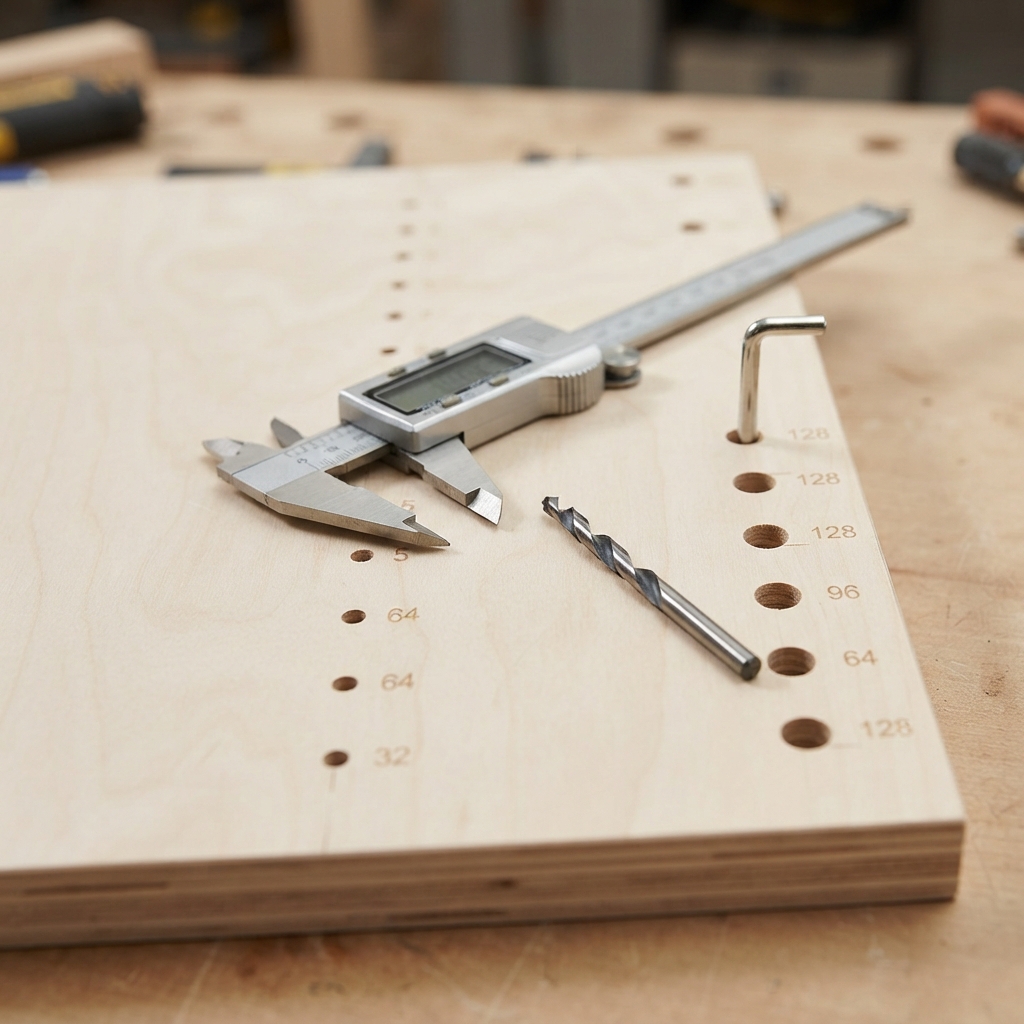
| Connector and furniture panel | Misaligned installation features | Drilling map and assembly validation |
| Bracket and mating structure | Hole-position mismatch | Datum and position verification |
| Coated fastener and mating part | Fit or installation variation | Finished-part inspection |
| Components and packing list | Missing or incorrect part revision | BOM and packaging verification |
These problems are best addressed before mass production.
Engineering takeaway: OEM hardware quality depends on the relationship between parts, not only the inspection results of individual components.
3. How Does DFM Improve OEM Hardware Manufacturing?
Design for Manufacturability (DFM) evaluates whether a product can be manufactured consistently using suitable materials, processes, and inspection methods.
For hardware projects, DFM helps connect engineering design with production feasibility.
A useful review should evaluate the complete assembly rather than only the most complex component.
Step 1: Define the Functional Requirement
Start with the purpose of the hardware.
Is the component intended to locate two panels, support a bracket, provide removable fastening, or connect threaded parts?
Functional requirements establish which dimensions and properties are critical.
Step 2: Review Geometry and Tolerances
Identify critical dimensions, mating interfaces, and installation clearances.
Avoid assigning unnecessarily tight tolerances to features that do not affect assembly performance.
Step 3: Select the Manufacturing Process
Different hardware geometries may be suited to cold heading, threading, stamping, injection molding, or other production methods.
Manufacturing feasibility should be confirmed against the actual drawing.
Step 4: Evaluate Materials and Finishes
Consider strength, forming requirements, corrosion exposure, appearance, and compatibility with other parts.
The selected surface treatment must be suitable for the intended environment and geometry.
Step 5: Review Assembly and Inspection
Determine how the components will be installed and which characteristics need verification.
A design that cannot be inspected effectively may introduce unnecessary production risk.
DFM Review Matrix
| DFM review area | Questions for the buyer | Possible outcome |
|---|---|---|
| Part geometry | Is the design suitable for the selected process? | Geometry adjustment |
| Material | Does the material meet forming and functional needs? | Material confirmation |
| Tolerance | Which dimensions are critical to assembly? | Revised tolerance scheme |
| Tooling | Is existing tooling suitable? | New or modified tooling |
| Surface finish | Could the finish affect fit or performance? | Finish specification review |
| Assembly | Do mating components work together? | Interface or assembly adjustment |
| Inspection | Can critical characteristics be verified? | Inspection-plan development |
| Packaging | Can correct parts be identified and supplied? | Packing and labeling specification |
The DFM process should result in an agreed technical specification before routine manufacturing begins.
Explore JHFIX Specialty & Custom Screws for relevant customizable fastening designs.
Engineering takeaway: DFM is not simply a method for reducing cost. It helps identify manufacturing and assembly risks while design changes are still practical.
4. Why Is BOM Management Essential for OEM Hardware Projects?
A bill of materials is a structured list of the components required to manufacture or assemble a product.
For multi-part hardware projects, the BOM connects engineering, purchasing, production, inspection, and packaging.
A well-controlled BOM should distinguish between similar products and make the approved configuration clear.
Essential BOM Information
Each component should have:
-
A unique part number.
-
A clear component description.
-
The approved drawing or specification revision.
-
The required quantity per assembly.
-
Relevant material or finish information.
-
An applicable sourcing or manufacturing reference.
Additional records may be necessary for more complex projects.
Illustrative Hardware BOM
The following is a hypothetical example of a hardware assembly, not a published JHFIX product specification.
| Part number | Component | Quantity | Key requirement |
|---|---|---|---|
| HW-101 | Stamped mounting bracket | 1 | Hole position and geometry |
| HW-102 | Machine screw | 2 | Thread and head dimensions |
| HW-103 | Threaded insert | 2 | Compatible internal thread |
| PK-101 | Identified component bag | 1 | Correct contents and labeling |
The component descriptions alone are not sufficient to approve production.
The buyer must also provide controlled drawings and applicable functional requirements.
Why BOM Revisions Matter
Suppose a customer changes the bracket hole pattern.
The engineering team may update the bracket drawing, but the purchasing department continues ordering parts using the previous BOM.
If that change is not coordinated, old and new component versions may become mixed.
For this reason, the BOM should refer to the approved component revisions and the appropriate assembly configuration.
Engineering takeaway: A BOM is a production-control document, not merely a shopping list.
5. How Do Tolerance Stack-Ups Affect Multi-Part Hardware Assemblies?
Tolerance stack-up occurs when dimensional variation across multiple components influences the final assembly condition.
Each component may meet its individual drawing while the complete assembly experiences excessive variation.
Example: Bracket-to-Insert Alignment
Consider a stamped mounting bracket attached using two machine screws and threaded inserts.
The final fit depends on several characteristics:
-
Bracket hole location.
-
Hole diameter and clearance.
-
Location of the threaded inserts.
-
Screw dimensions and mating-thread compatibility.
-
Any relevant dimensional changes caused by finishing.
The engineering team must evaluate whether the combined variation allows reliable assembly.
Why Individual Inspection May Be Insufficient
A bracket with acceptable hole spacing does not guarantee that the mating inserts are positioned correctly.
Likewise, a suitable screw thread does not solve a positional misalignment between components.
How to Manage Interface Variation
The design review should identify functional datums, critical dimensions, and assembly clearances where appropriate.
The buyer and manufacturer should agree on dimensional acceptance criteria.
Representative assembly testing should then verify actual compatibility.
For stamped components, see JHFIX Stamping Hardware.
Engineering takeaway: Critical assembly interfaces should be validated as a system, even when individual parts already pass inspection.
6. Which Manufacturing Processes Are Used for Different OEM Hardware Components?
Different hardware categories require different manufacturing approaches.
A coordinated OEM project may involve several processes, each with distinct quality risks.
Manufacturing Process Comparison
| Hardware component | Common manufacturing approach | Key manufacturing concern | Important buyer check |
|---|---|---|---|
| Screws and fasteners | Cold heading and thread production | Thread and head consistency | Dimensions and functional fit |
| Stamped brackets | Sheet-metal stamping and forming | Hole position, geometry, burrs | Drawing compliance |
| Nuts and inserts | Suitable forming, threading, or machining processes | Mating-thread compatibility | Thread inspection |
| Furniture connectors | Component-specific metal or plastic processes | Mating geometry and alignment | Assembly verification |
| Plastic accessories | Injection molding where appropriate | Dimensional variation and fit | Material and mating checks |
| Hardware sets | Assembly, counting, and packaging | Missing or mixed parts | BOM and packaging inspection |
The manufacturing route should be selected for the actual component, not assumed from the supplier's general product range.
One Manufacturer or Multiple Specialized Suppliers?
Using one coordinated manufacturing partner may simplify communication and configuration management when that partner has suitable capabilities.
Using multiple specialized suppliers may provide greater flexibility for processes that require particular expertise.
Neither sourcing model is inherently superior.
The key issue is who controls the technical interfaces, approved revisions, and finished-product acceptance.
Engineering takeaway: Manufacturing capability should be assessed at both the individual-component and overall-project levels.
7. How Should Engineering Changes Be Controlled During OEM Production?
Engineering change control is a structured method for reviewing, approving, and implementing modifications to a product or its production requirements.
For multi-component hardware assemblies, even a small change can affect several documents and operations.
Common Engineering Changes
These may include:
-
Changes to a screw diameter or length.
-
Revised bracket hole positions.
-
Different materials or finishes.
-
Modified insert geometry.
-
New assembly requirements.
-
Updated packaging quantities.
-
Revised labels or part identification.
Engineering Change Workflow
Step 1 — Identify the change. Record the proposed modification and reason.
Step 2 — Assess the impact. Determine which drawings, mating parts, tools, inspections, and packaging instructions may be affected.
Step 3 — Approve the revision. Confirm responsibilities and obtain the required authorization.
Step 4 — Update controlled documents. Revise the drawings, BOM, work instructions, and inspection criteria where necessary.
Step 5 — Validate the change. Check new samples or representative assemblies if the modification affects function.
Step 6 — Implement the change. Establish when the new revision becomes effective and how existing stock or work in progress will be handled.
Step 7 — Verify the first affected order. Confirm that the produced and packed items match the approved revision.
Change-Control Records
| Record | Main purpose |
|---|---|
| Engineering change request | Describes the proposed modification |
| Impact assessment | Identifies affected components and operations |
| Approved drawing revision | Defines the revised component |
| Updated BOM | Identifies the approved assembly configuration |
| Sample approval | Confirms relevant changes |
| Implementation record | Defines when the change takes effect |
| Stock disposition | Controls earlier-revision parts |
| Production inspection | Verifies the revised product |
The current ISO 9001:2026 quality-management framework reinforces the importance of controlled processes and consistent conformity, although implementation requirements depend on the organization's applicable system and scope.
Engineering takeaway: Every approved engineering change should reach the production documents and purchasing records before the revised hardware is released.
8. How Should OEM Hardware Quality Be Verified Before Mass Production?
Quality verification should reflect the complete project rather than rely on a single inspection method.
For a multi-component hardware assembly, the buyer should distinguish three levels of inspection.
Component-Level Verification
Confirm that individual parts meet their approved specifications.
Depending on the component, this may include:
-
Material identification.
-
Critical dimensional measurements.
-
Thread checks.
-
Surface-finish requirements.
-
Visual inspection.
-
Functional performance where relevant.
Assembly-Level Verification
Check whether the components work together.
Examples include screw-to-insert fit, bracket alignment, seating, accessibility, and intended assembly sequence.
Kit-Level Verification
If parts are supplied as sets, the packing process should confirm correct identification, quantities, and revision compatibility.
OEM Inspection Plan
| Verification level | Main questions | Possible evidence |
|---|---|---|
| Incoming materials | Are approved materials used? | Material identification records |
| Individual parts | Do components meet drawings? | Dimensional and thread inspection |
| Finishing | Are specified surface requirements met? | Applicable finish inspection |
| Complete assembly | Do components fit and function together? | Representative assembly test |
| Production batch | Does the lot match approved requirements? | Agreed inspection records |
| Packed set | Are quantities and revisions correct? | BOM-based packing check |
First-article inspection can provide useful evidence that representative manufactured parts meet the approved requirements.
However, the inspection scope should be agreed according to the project's complexity and risks.
Engineering takeaway: Component approval, assembly validation, and final packaging verification address different failure modes.
9. How Does Revision Control Work in Practice? An OEM Assembly Scenario
The following scenario is illustrative and does not describe a documented JHFIX customer project.
Project: Industrial Equipment Mounting Hardware
An equipment manufacturer needs a small hardware set containing stamped brackets, machine screws, and threaded inserts.
The first sample assembly fits correctly.
During product development, the OEM changes the mounting layout.
The new design requires a revised bracket hole position.
What Could Go Wrong?
If the bracket drawing is updated but the BOM remains unchanged, purchasing may order an incorrect revision.
If old brackets remain in stock, they may be mixed with newly approved components.
If inspection instructions are not updated, the changed feature may not be checked correctly.
Recommended Control Process
The OEM issues an engineering change request.
The manufacturer reviews the new bracket drawing and determines whether tooling or inspection requirements must change.
The affected assembly is then checked using representative components.
Once the change is approved, the BOM and relevant records are updated.
The first production lot using the revised configuration is verified before shipment.
What Does This Scenario Demonstrate?
The principal risk is not necessarily the manufacturing quality of one bracket.
The risk is a mismatch between engineering intent, purchasing information, production records, and final product configuration.
Engineering takeaway: Revision synchronization is a central part of reliable multi-component OEM manufacturing.
10. How Can Buyers Evaluate an OEM Hardware Manufacturer?
A suitable supplier should be evaluated using project-specific requirements.
A wide product catalog is useful, but it does not automatically prove that the supplier can control every manufacturing or assembly process required.
Supplier Comparison
| Evaluation factor | Single-component supplier | Coordinated multi-component supplier |
|---|---|---|
| Product scope | Specific hardware category | Multiple compatible categories |
| Engineering responsibility | Individual component | May include interface coordination |
| BOM management | Often buyer-controlled | May support coordinated BOM fulfillment |
| Assembly validation | Depends on the supplier | Can be included in the agreed scope |
| Packaging | Component-specific | May support complete sets |
| Main strength | Specialized production capability | Simplified project coordination |
| Main risk | Multiple supplier interfaces | Dependence on one coordinating partner |
These differences are general sourcing considerations, not guarantees about any particular manufacturer.
Buyers should confirm the actual technical and commercial scope.
Supplier Qualification Questions
A purchasing team should ask whether the supplier can review assembly drawings, confirm manufacturing feasibility, coordinate component revisions, provide agreed inspection records, and identify the production and finishing operations within its scope.
It should also clarify the handling of engineering changes, packaging specifications, tooling costs, MOQ, and lead times.
An effective OEM hardware manufacturer should communicate limitations and unresolved requirements before production approval.
11. JHFIX OEM Hardware Manufacturing and Project Support
JHFIX supplies fastening and hardware products for furniture manufacturing, cabinet assembly, industrial equipment, and international hardware purchasing.
Its manufacturing company, Jiangmen Jinhe Hardware Products Co., Ltd., describes capabilities including cold heading, tapping, stamping, injection molding, assembly, packaging, and quality inspection.
The company also supports OEM/ODM development through an established process involving drawings or samples, technical review, quotation, sample development, production, and inspection.
International sales and export coordination are handled by its authorized trading partner, Jiangmen Shenxin Trading Co., Ltd.
Relevant JHFIX Product Categories
| OEM project requirement | Related JHFIX category |
|---|---|
| Custom fastening components | Specialty & Custom Screws |
| Nuts and threaded inserts | Nuts and Threaded Components |
| Stamped metal components | Stamping Hardware |
| Brackets and mounting fittings | Furniture Brackets & Mounting Plates |
| Cam locks and connecting systems | Cam Locks & Connector Sets |
| Packaged hardware components | Bag Packaging |
The suitability of a particular manufacturing process, material, tolerance, test procedure, or packaging configuration must be confirmed for each project.
Recommended OEM Development Process
1. Submit drawings and samples. Share component specifications, assembly drawings, and required quantities.
2. Review DFM and interfaces. Evaluate geometry, materials, manufacturing feasibility, and mating-component requirements.
3. Confirm quotation details. Review tooling where applicable, sample requirements, quantities, lead time, and finishing.
4. Approve representative samples. Verify component dimensions and assembly compatibility.
5. Establish the approved production configuration. Confirm drawings, BOM revisions, inspection requirements, and packaging.
6. Verify and coordinate shipment. Review agreed acceptance criteria before delivery.
Specific documentation, inspection, and revision-control arrangements should be agreed during project development.
For more information, visit JHFIX About Us.
12. OEM Hardware RFQ Checklist: What Should Buyers Prepare?
A complete RFQ gives manufacturers enough information to review both production and assembly requirements.
| RFQ requirement | Recommended information |
|---|---|
| Project type | Furniture, cabinet, industrial equipment, or other OEM application |
| Assembly drawing | General layout and mating-component interfaces |
| Component drawings | Part numbers, dimensions, tolerances, revisions |
| BOM | Approved list of components and quantities |
| Materials | Required grades and functional properties |
| Surface finishes | Coating, appearance, or environmental requirements |
| Manufacturing needs | Forming, threading, stamping, or other applicable operations |
| Assembly requirements | Fit, installation sequence, clearance, and functional checks |
| Quality requirements | Sample approval, inspection, testing, documentation |
| Engineering changes | Revision approval and implementation expectations |
| Production quantity | Initial order and expected repeat demand |
| Packaging | Bulk parts, sets, labels, or private-label requirements |
| Shipping | Destination and purchasing terms |
Common RFQ Mistakes
One common mistake is submitting only an individual screw drawing when the screw must work with another component.
Another is sending a BOM without component revisions or using inconsistent part numbers between drawings and purchase orders.
Buyers should also avoid assuming that sample approval automatically covers later design changes.
A well-prepared RFQ should make the technical requirements and assembly relationships clear enough for a meaningful feasibility review.
Request an OEM Manufacturing Review
If your project involves custom screws, connectors, stamped brackets, inserts, or coordinated hardware components, provide drawings, sample information, BOM requirements, and expected order quantities.
13. Frequently Asked Questions
1. What does an OEM hardware manufacturer produce?
An OEM hardware manufacturer produces hardware components according to customer-defined specifications. Products may include custom screws, brackets, nuts, inserts, furniture connectors, stamped parts, and related components. Actual manufacturing capabilities depend on the supplier and project.
2. What is DFM in OEM hardware manufacturing?
DFM stands for Design for Manufacturability. It evaluates whether a component or assembly can be produced consistently using appropriate materials, processes, tooling, and inspection methods.
3. Why is a BOM important for custom hardware orders?
A BOM identifies the components required for an assembly, including quantities, part numbers, and applicable revisions. It helps connect engineering specifications with purchasing, production, and packaging.
4. Can one OEM manufacturer supply screws and stamped brackets together?
Some manufacturers offer multiple hardware categories or coordinate specialized processes. Buyers should confirm which components and operations the supplier can provide and how overall quality will be managed.
5. What causes assembly problems when individual hardware parts pass inspection?
Problems may result from incompatible threads, misaligned holes, dimensional stack-ups, coating effects, incorrect revisions, or incomplete assembly validation.
6. What is engineering change control?
Engineering change control is a process for reviewing, approving, documenting, and implementing product or manufacturing changes. It helps ensure that drawings, BOMs, production requirements, and inventory remain consistent.
7. Should OEM buyers request first-article inspection?
First-article inspection can be valuable for custom parts or critical assembly interfaces. Its scope should reflect the product's engineering requirements and agreed quality plan.
8. Is an integrated hardware supplier always cheaper than multiple suppliers?
No. Pricing depends on component complexity, manufacturing methods, tooling, quantity, packaging, and supplier capabilities. Integrated sourcing may simplify coordination, but specialist suppliers may be preferable for certain processes.
9. Can JHFIX support custom OEM hardware projects?
JHFIX describes OEM/ODM manufacturing support and offers screws, furniture hardware, nuts, stamped components, and packaging solutions. Buyers can submit project information for review. Specific manufacturing, inspection, and commercial requirements must be confirmed for each order.
10. What information is needed to request an OEM hardware quotation?
Buyers should provide component drawings, assembly requirements, materials, finishes, BOM details, estimated quantities, inspection requirements, packaging instructions, and delivery information.
Conclusion
Choosing a reliable OEM hardware manufacturer requires evaluating how individual hardware components work together throughout design, manufacturing, inspection, and final assembly.
For furniture brands, industrial equipment manufacturers, and global purchasing teams, the principal challenge is not simply sourcing screws, brackets, or connectors. It is ensuring that every component follows the approved design and remains compatible as the project evolves.
DFM reviews help identify manufacturing and interface risks. Controlled BOMs establish the correct product configuration. Engineering change procedures help prevent outdated revisions from entering production, while component-level and assembly-level inspections support product conformity.
A successful sourcing strategy combines technical clarity, suitable manufacturing capability, sample approval, revision management, and reliable purchasing communication.
JHFIX supports international B2B customers with screws, nuts, furniture connectors, stamped hardware components, OEM/ODM development, and packaging solutions for suitable projects.
Contact JHFIX to discuss your custom hardware drawings, multi-component assembly requirements, DFM review, and OEM sourcing project.