
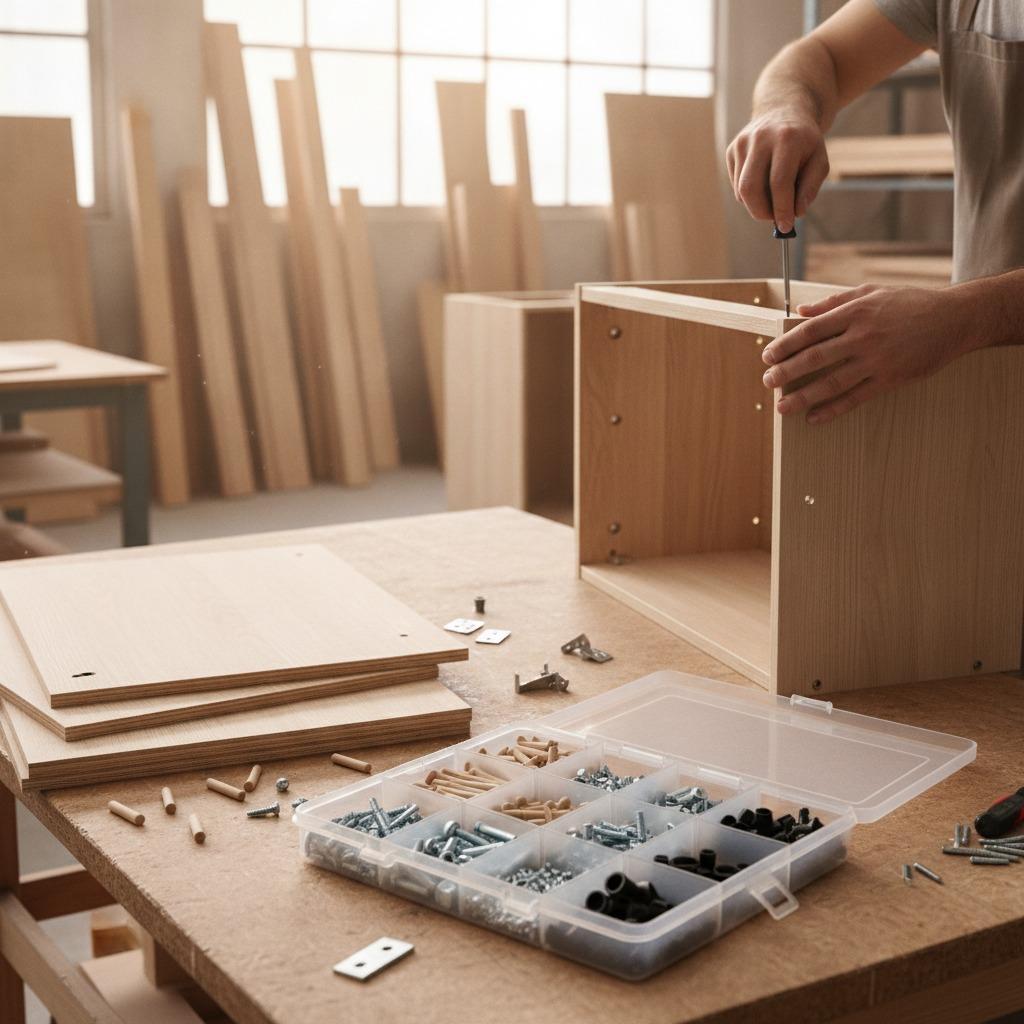
OEM Screw Kit Manufacturer: The Small Box That Keeps Furniture Assembly Moving
A furniture screw kit does not look important until the line is waiting for it.
The panels are ready. The holes are drilled. The carton layout has already been approved. Then someone opens the hardware pack and notices the problem: the screw is a little too long, the washer count is short, or the dowel belongs to another cabinet model.
Nothing dramatic has happened, at least not yet. But production slows down. A worker checks another bag. The packing team asks whether the order should keep moving. Later, if the mistake reaches the customer, the complaint is rarely polite: “I can’t finish assembling this cabinet.”
That is why working with an OEM screw kit manufacturer is not only about buying screws.
For furniture factories, cabinet brands, flat-pack suppliers, wholesalers, and repair programs, the kit is a small control point inside a much larger process. It decides whether workers can assemble without sorting, whether customers receive every part they need, and whether the next order matches the approved sample.
A good kit keeps people from guessing. That is its real value.
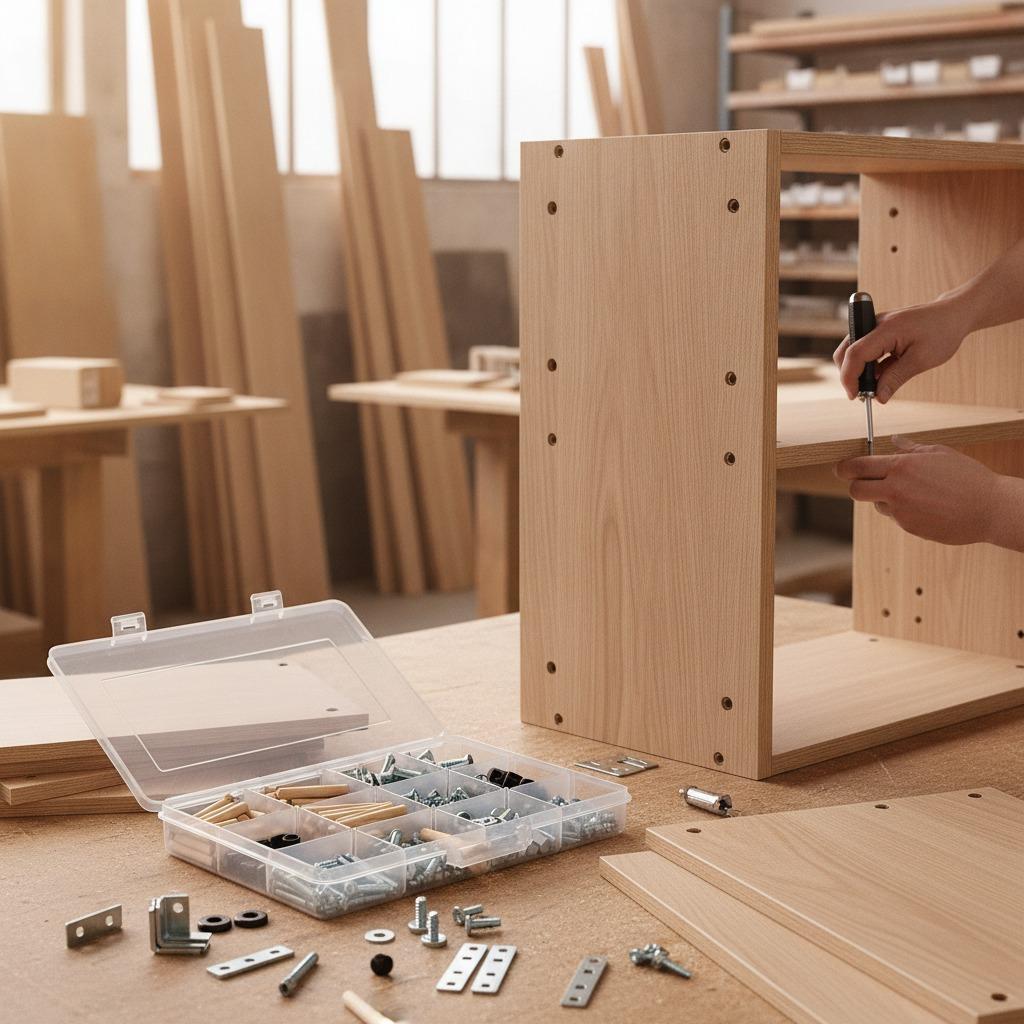 The kit should start with the furniture, not the assortment
Many screw kits look useful at first glance.
A box may contain wood screws, bolts, nuts, washers, dowels, brackets, plastic caps, inserts, and a small tool. It feels complete. For a repair bench or a general workshop, that may be enough.
Furniture production is different.
An OEM screw kit should be built around one product, one product family, or one controlled assembly method. A wardrobe kit does not need a random mix of fasteners. It needs the exact parts that match its panels, hole positions, connector system, and packing instructions.
Panel thickness alone can change the decision. So can hole depth, board density, edge distance, and whether the joint must be opened again later.
A screw that works in plywood may behave poorly in particleboard. A threaded insert that sits well in dense MDF may rotate in a softer board. A bracket that looks close enough may place the hole center just far enough off to create rework.
This is why buyers should avoid starting with a generic box and hoping the furniture will adapt to it.
The furniture comes first. The kit follows.
What an OEM screw kit usually includes
The exact contents depend on the product, but furniture screw kits often combine several small parts that perform different jobs.
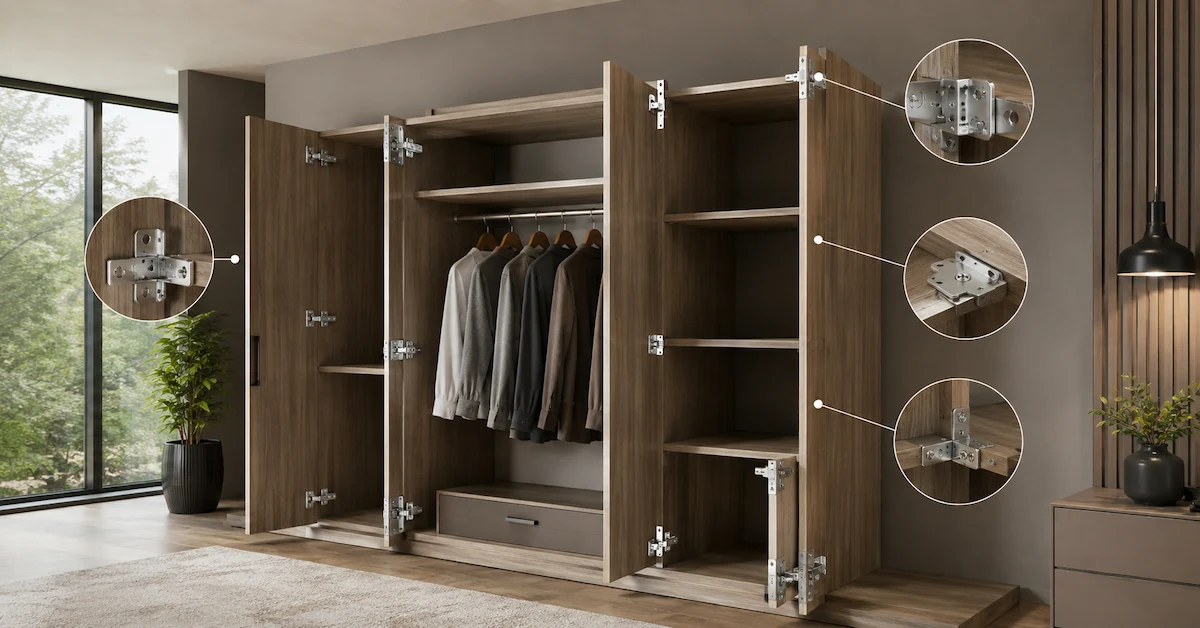
A cabinet or flat-pack furniture kit may include wood screws, machine screws, self-tapping screws, connector bolts, cam fittings, washers, nuts, wooden dowels, threaded inserts, corner brackets, spacers, cover caps, and sometimes a basic installation tool.
Those pieces are not interchangeable extras.
A dowel helps align two panels before tightening. A screw secures a bracket or fitting. A connector bolt works with a cam lock. A threaded insert creates a stronger metal thread inside a wood-based board. A cap hides an access hole after assembly.
If one part is wrong, the full kit can still fail.
A washer may look minor, but it may be needed to spread load. A screw length may seem close, but a few extra millimeters can damage the finished surface. A cam connector may fit the hole, yet fail to pull the panels together if the matching bolt is incorrect.
The question is not simply, “Are the parts inside the box?”
The better question is, “Do these parts work together in this furniture?”
Organized packing saves more time than buyers expect
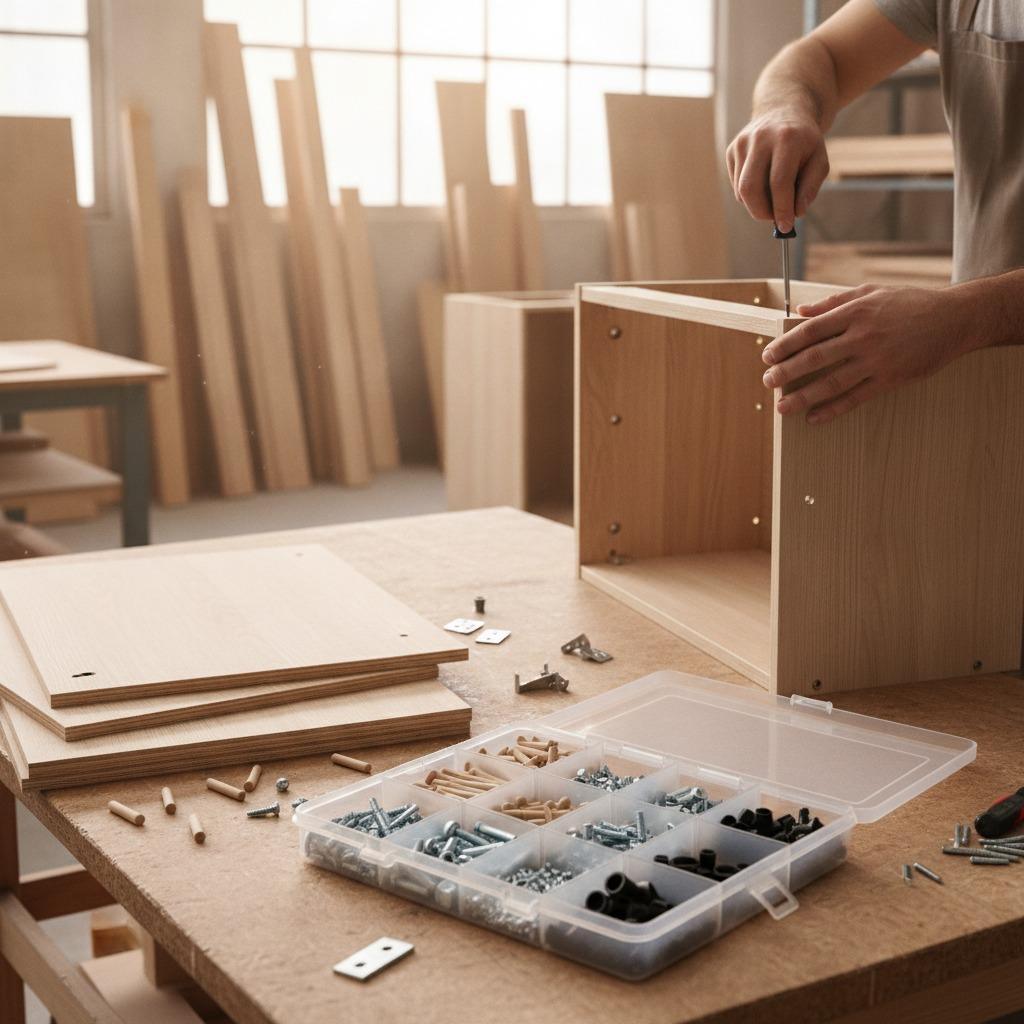
A compartmented case or well-labeled bag can look like a small detail.
On the assembly floor, it is not small.
Workers should not spend time separating screws from washers, dowels from connector bolts, or one fastener length from another. That sorting work adds no value to the furniture. It only compensates for a kit that was not prepared well enough.
The same issue appears in flat-pack retail products.
A customer at home does not have spare bins, measuring tools, or a quality-control table. They open the carton and expect the hardware to make sense. If similar screws are mixed together, or if the instruction sheet calls for a part that is hard to identify, the product immediately feels less professional.
A practical custom hardware kit should make the next step obvious.
That may mean separated bags, a compartmented tray, model-specific labels, step-by-step packing, or a controlled spare-part policy. The format depends on the product, but the purpose is the same: remove uncertainty before assembly begins.
Panel compatibility needs a real test
Loose fasteners can pass inspection and still fail in the furniture.
That is why sample testing should happen with the actual panel material whenever possible.
The buyer should check how the screw enters the board, whether the thread holds, whether the insert stays fixed, whether the bracket aligns with the hole pattern, and whether the final joint remains stable after movement.
For furniture buyers, useful test details include:
- Panel material
- Panel thickness
- Hole diameter
- Drilling depth
- Edge distance
- Installation direction
- Tool access
- Expected load
- Whether the joint may be reopened
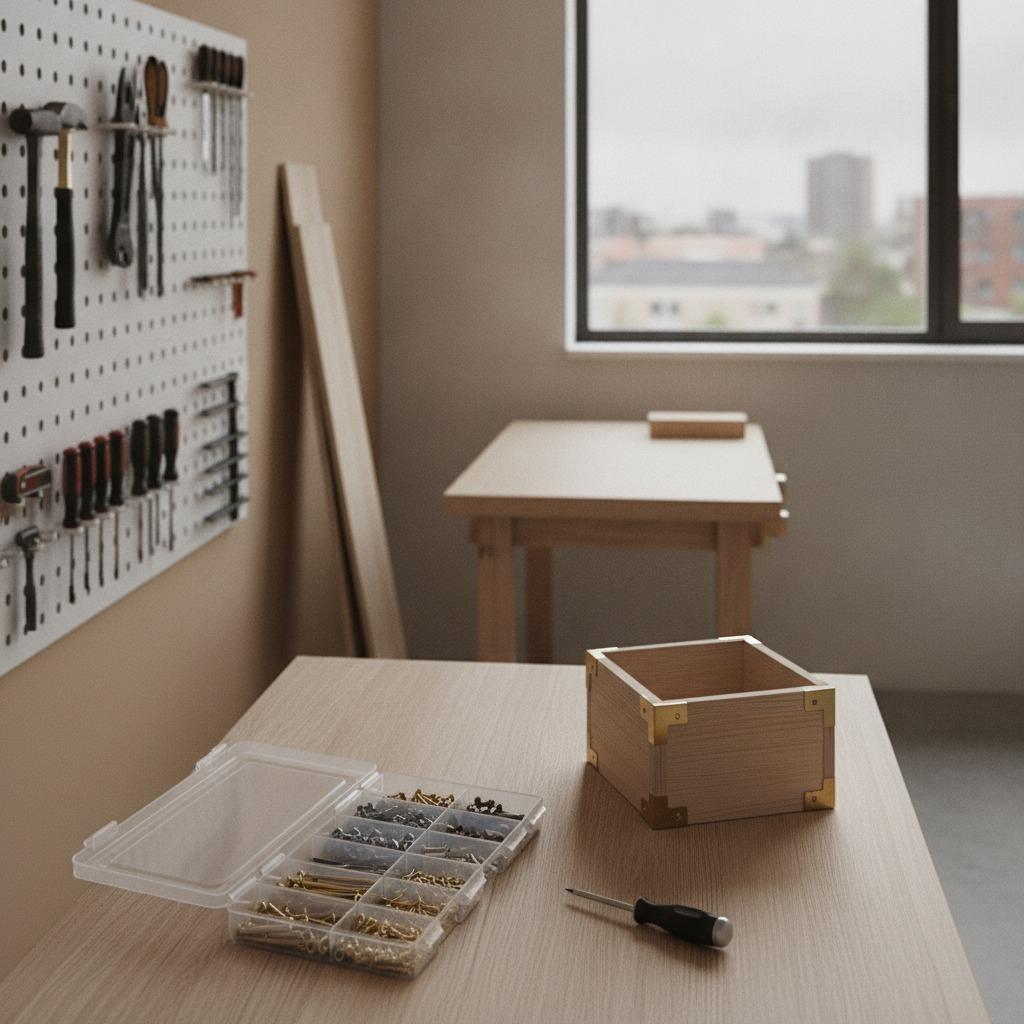
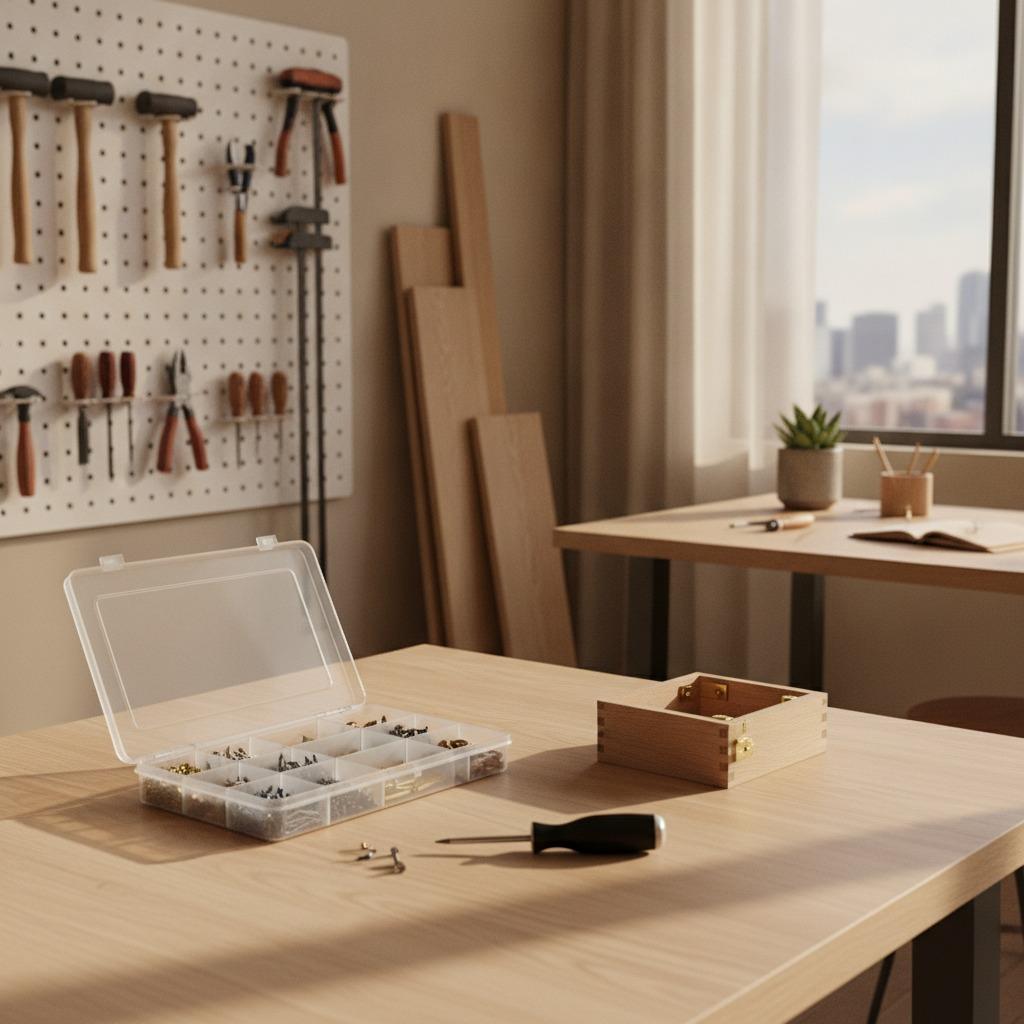
A sample kit placed neatly on a desk gives only part of the answer.
The real answer comes when the kit is used to assemble the cabinet, wardrobe, drawer box, or shelf unit under normal working conditions.
If regular assembly workers notice that one part feels awkward, that feedback is worth taking seriously. They often catch problems before they appear in formal reports.
Standard fasteners are useful, but not always enough
Many furniture programs can use standard screws and fittings.
That is usually good news. Standard parts are easier to replenish, easier to replace, and often lower risk over time.
But standard does not mean universal.
A product line may use a thinner panel, a narrow assembly space, a special finish, or a bracket with unusual hole spacing. In those cases, custom furniture fasteners may prevent bigger problems later.
Customization can include screw length, thread type, head shape, material, finish, bracket geometry, labels, packing format, or kit structure.
It should solve a practical problem.
A custom screw that prevents panel breakthrough is useful. A custom bracket that matches a fixed hole pattern is useful. A special label that prevents warehouse confusion may also be useful.
Customization for appearance alone should be questioned. Every non-standard item creates drawings, samples, approvals, minimum order quantities, replacement planning, and repeat-order control.
The best kit often uses standard parts where they work, then adds custom components only where the furniture design truly needs them.
Jiangmen Jinhe Hardware Co., Ltd. works with machine screws, self-tapping screws, micro screws, precision screws, and non-standard customized fasteners. For furniture buyers, that kind of range can help when one kit needs both common screws and project-specific parts.
Finish and material should be written down
A furniture screw kit may contain mixed finishes and materials.
Silver screws, brass-colored inserts, black plastic caps, natural wooden dowels, plated brackets, and nylon spacers can all appear in the same set.
That is normal. It should still be controlled.
A bright silver part may be zinc plated, nickel plated, stainless steel, or another finish. A brass-colored insert may not be solid brass. A black component may be coated metal, rubber, or plastic.
Buyers should ask for written confirmation of the base material and finish, especially for furniture used in kitchens, bathrooms, humid warehouses, export shipments, or visible interior areas.
Useful details may include coating type, coating thickness, corrosion requirements, color expectations, environmental compliance, and whether visible parts need finish consistency.
A fastener can be dimensionally correct and still create a quality complaint if the finish scratches easily or looks different from batch to batch.
Inspection should include the kit, not just the screws
Traditional fastener inspection focuses on length, diameter, thread, head shape, material, and surface finish.
OEM screw kits need another layer of checking.
The supplier also has to confirm the correct quantity, correct mix, correct labels, correct packing format, and correct carton markings.
A kit can fail in several ways:
The screws are good, but one length is packed in the wrong bag.
The brackets are correct, but the quantity is short.
The label says one furniture model, while the parts belong to another.
The sample kit was approved, but the repeat order uses a substituted fastener.
For buyers, the inspection plan should match the real risk.
If missing parts cause the most complaints, kitting accuracy deserves close attention. If panel damage is the main risk, screw length and head style should be controlled carefully. If several furniture models use similar hardware, labeling and SKU separation become critical.
Jiangmen Jinhe Hardware states that it provides inspection before delivery and related documentation. That is useful for OEM buyers, but the buyer should still define which inspection items matter for the furniture program.
Packaging format should match the channel
Not every screw kit needs the same package.
A furniture factory may prefer bulk cartons with line-side bins. A flat-pack brand may need one sealed hardware bag per furniture carton. A retailer may want a compartmented box. A repair program may require small spare-part packs with model numbers.
The packaging should fit how the kit will be used.
Common formats include:
- Bulk cartons
- Small polybags
- Step-based assembly bags
- Compartmented plastic cases
- Model-specific kits
- Spare-part packs
- Retail boxes
- Blister packs
For production, the goal is speed and accuracy. For customers, the goal is clarity. For after-sales service, the goal is easy identification.
Before placing a bulk order, buyers should confirm the quantity per kit, separation method, label content, barcode needs, spare quantity, carton quantity, and counting method.
A better packaging format may cost slightly more, but it can save far more in sorting, support, and replacement shipments.
Repeat orders are where supplier control is tested
A first sample kit often receives special attention.
The supplier packs it carefully. The buyer reviews it carefully. Everyone agrees that it looks correct.
The real test comes later.
Can the supplier repeat the same kit six months from now? Will the screw length stay the same? Will the finish match? Will the label use the same model code? Will a substitute part be used without approval?
OEM buyers should ask how repeat orders are controlled.
Important questions include:
- Is there an approved bill of materials?
- Are drawings and revisions recorded?
- Is one sealed reference kit kept?
- Are substitutions allowed only after approval?
- Are labels version-controlled?
- Can lot or batch information be traced?
- How are packing workers guided during kit assembly?
A screw kit is reliable only when the same configuration can be reproduced.
A good sample is not enough.
Common mistakes when buying OEM screw kits
One mistake is buying by piece count.
A large kit may look better in a quotation, but extra parts do not help if they are irrelevant to the furniture. In fact, they may make the kit harder to use.
Another mistake is approving loose parts without assembling the product.
A screw can pass inspection. A dowel can meet its drawing. A bracket can look clean. But the furniture may still assemble badly if the parts do not work together.
Buyers also sometimes overlook packaging.
For OEM furniture, packaging is not decoration. It affects line speed, carton accuracy, warehouse handling, customer experience, and after-sales claims.
The final mistake is requesting customization too late.
If the furniture needs a special fastener, bracket, or packing format, that should be discussed before cartons, labels, instructions, and production schedules are finalized.
Questions to ask an OEM screw kit manufacturer
Before approving a supplier, ask direct questions:
Can you provide the exact kit breakdown?
Can the kit be built around one furniture model?
What materials and finishes are available?
Can standard and non-standard fasteners be combined?
Can similar screw lengths be separated?
How do you verify quantity?
What inspection documents are provided?
Can labels, barcodes, or model numbers be added?
Can you repeat the same kit format in later orders?
What packaging options are available?
Can you support export packing, warehousing, or logistics?
The answers should be specific.
A simple “yes, we can supply screw kits” is not enough for OEM production.
Where OEM screw kits are most useful
OEM screw kits are often used for flat-pack furniture, cabinet production, wardrobes, drawer boxes, modular shelving, office furniture, repair programs, spare parts, retail hardware packs, e-commerce furniture, and private-label furniture lines.
Their value is practical.
They reduce sorting. They improve traceability. They make packing more predictable. They help customers finish assembly without calling for missing parts.
For furniture brands, that can mean fewer interruptions, cleaner production, and fewer after-sales messages about small components.
Frequently Asked Questions
What is an OEM screw kit?
An OEM screw kit is a fastener set prepared for a specific product, brand, or assembly process. It may include screws, bolts, dowels, washers, inserts, brackets, caps, and tools.
Can one screw kit be used for several furniture models?
Sometimes, but only when the models share similar panel thickness, hole patterns, assembly steps, and fastener requirements. Otherwise, a model-specific kit is usually safer.
Should buyers test the kit before bulk orders?
Yes. The full kit should be tested with the actual panel material, drilling layout, tool, and assembly sequence.
Can screw kits be customized?
Yes. Screw length, thread type, head style, finish, quantity mix, labels, barcodes, packaging, and included accessories can all be customized when needed.
What matters more: quantity or compatibility?
Compatibility matters more. A smaller kit with the correct matched parts is more useful than a large box of components that do not suit the furniture.
How can missing parts be reduced?
Use a controlled bill of materials, reliable counting method, separated packing, clear labels, final inspection, and repeat-order reference samples.
A good screw kit keeps the assembly quiet
The best screw kit does not draw attention to itself.
Workers open it, find the right parts, and keep moving. The screws match the panels. The dowels fit. The connectors close the joint. The packaging makes sense. The next shipment arrives the same way.
That kind of quiet consistency is exactly what furniture buyers need from an OEM screw kit manufacturer.
For furniture screw kits, cabinet assembly hardware, custom hardware kits, standard fasteners, and non-standard customized parts, Jiangmen Jinhe Hardware Co., Ltd. can discuss kit structure, materials, finishes, packing, inspection, logistics, and repeat supply requirements.
Start with the furniture model, panel details, hardware list, assembly method, packaging requirement, and expected order quantity.
Once the assembly process is clear, the right screw kit becomes much easier to define.