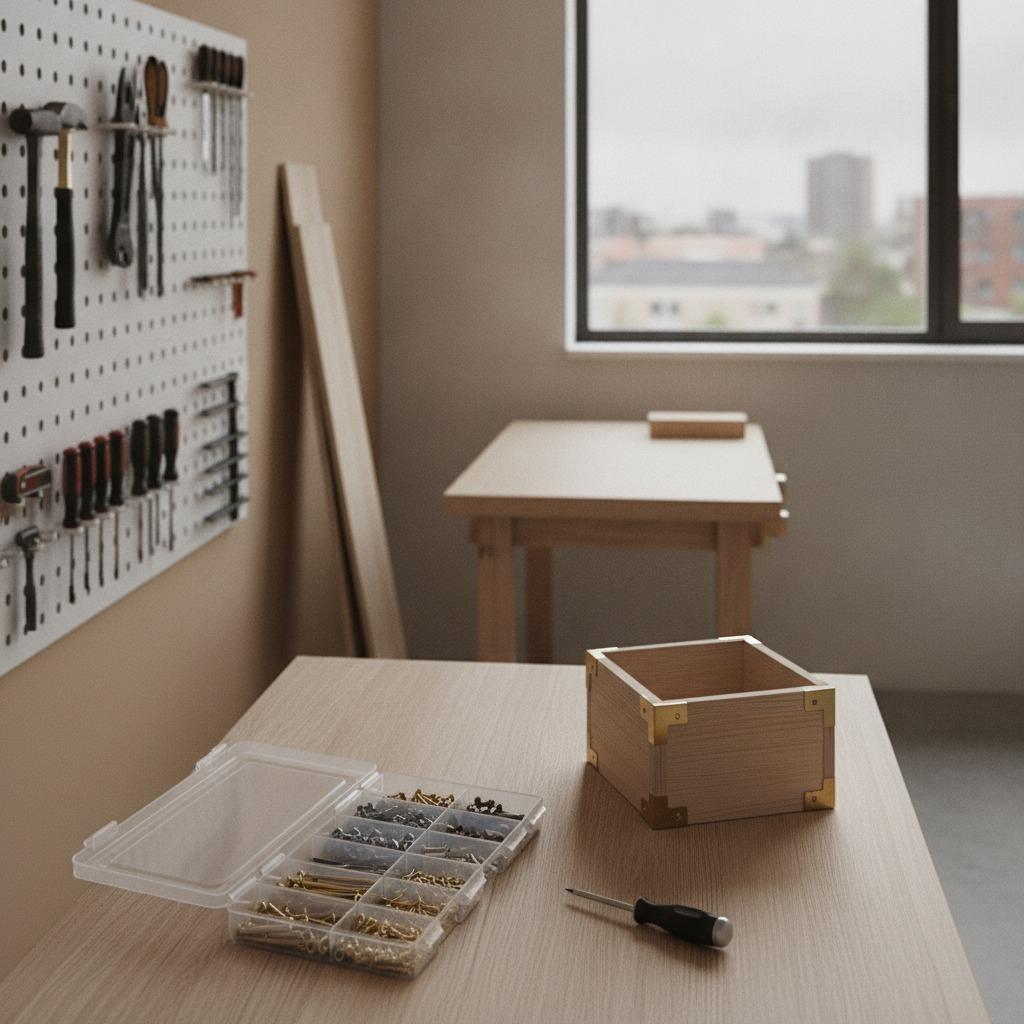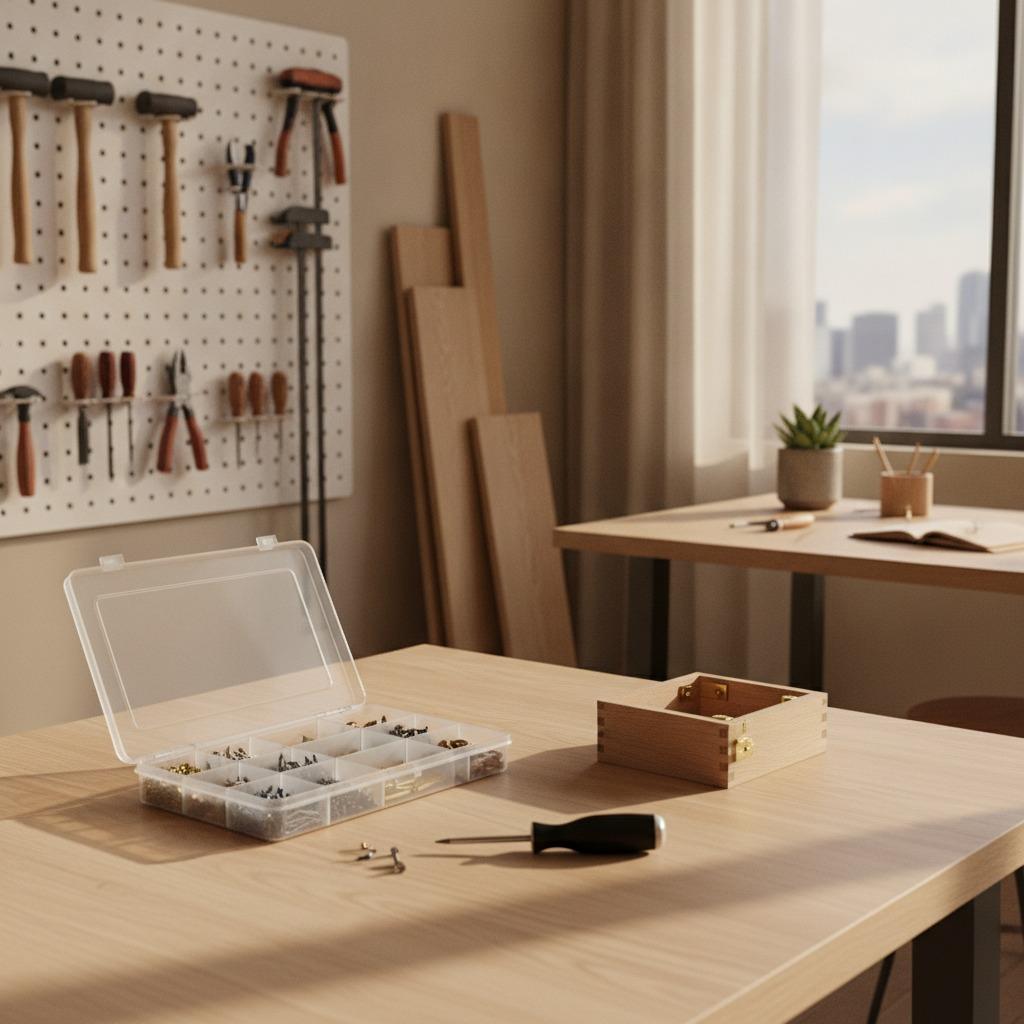

OEM Screw Kit Manufacturer: 10 Checks That Prevent Furniture Assembly Problems
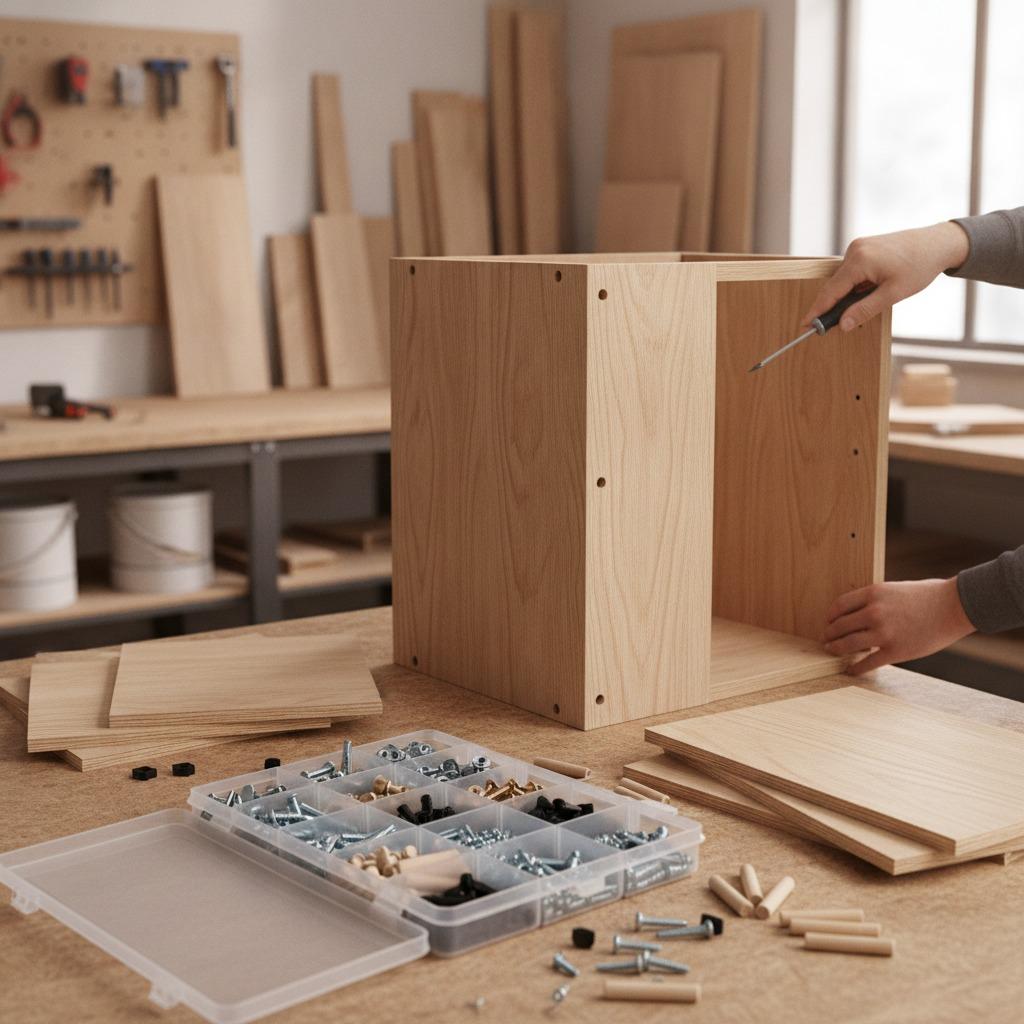 A furniture hardware kit does not usually get much attention when everything is going well.
The panels arrive. The holes line up. Workers open the kit, take out the screws, dowels, cam connectors, washers, and brackets, then move through the assembly steps without stopping. No one talks about the kit because it has done exactly what it was supposed to do.
Trouble starts when the small parts are not controlled.
One washer is missing. A connector bolt belongs to another cabinet model. A screw looks right but is a few millimeters too long. The hardware bag says one thing, the assembly sheet says another, and the production team has to stop and sort through parts that should already be correct.
That is why choosing an OEM screw kit manufacturer is not only about price or availability.
For flat-pack furniture, cabinet assembly, shelving, repair kits, and private-label hardware programs, the screw kit is part of the production system. It affects assembly speed, packing accuracy, warehouse handling, replacement service, and the customer’s final experience.
A good kit keeps assembly boring. That is a compliment.
1. Start with the furniture, not the screw assortment
Many buyers begin by asking for a box of mixed fasteners.
That can work for a general repair kit, but it is risky for OEM furniture production. A furniture hardware kit should be built around the product it supports, not around a convenient assortment already sitting in a supplier’s catalog.
A cabinet, wardrobe, drawer box, or shelf unit has its own assembly logic. Panel thickness, hole diameter, drilling depth, edge distance, and joint direction all affect the fasteners needed.
A kit for factory assembly may look different from one packed for an end customer. A repair kit may need extra identification. A retail hardware box may need clearer part separation than a line-side production kit.
Before discussing price, buyers should confirm the actual use case:
- Factory assembly
- Flat-pack customer assembly
- Cabinet production
- Wardrobe or shelving assembly
- Repair and spare-parts service
- Retail resale
- OEM or ODM furniture supply
The kit should follow that use case. Otherwise, the buyer may receive many parts but not the right assembly solution.
2. Match the kit to the exact bill of materials
A large kit can look impressive. It may include screws, nuts, bolts, washers, brackets, dowels, inserts, spacers, and caps.
That does not mean it is useful.
For production furniture, every component should have a reason to be there. Extra parts can confuse workers, slow packing, and make shortages harder to detect.
A reliable OEM screw kit supplier should be able to work from your bill of materials rather than guessing from a product photo.
A useful BOM should include:
- Part name
- Drawing or reference number
- Quantity per furniture unit
- Material
- Surface finish
- Packaging position
- Matching panel or assembly step
- Spare-part quantity, if needed
This does not need to be complicated. A clean spreadsheet with photos, dimensions, and quantities is often enough to prevent many sourcing errors.
The important point is simple: the kit must match the furniture, not just look complete.
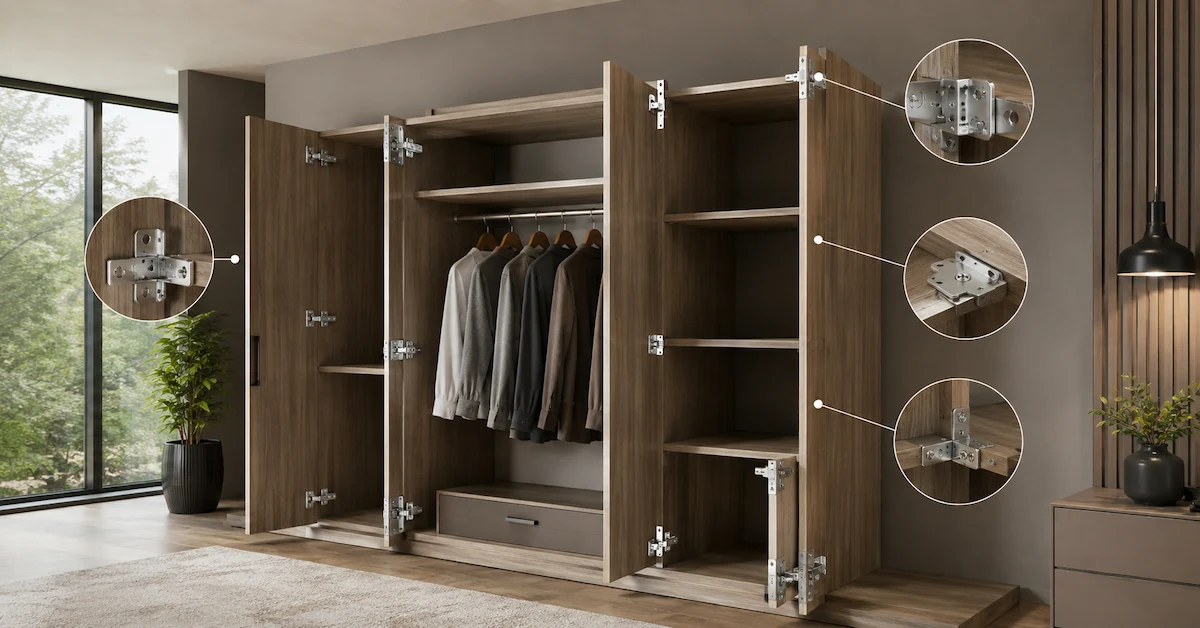
3. Check whether the hardware works as a system
Furniture hardware kits often contain several fastening methods.
Wood dowels may align panels. Screws may secure brackets. Cam connectors may pull knock-down joints tight. Washers may spread load. Plastic caps may cover exposed holes after assembly.
These parts work together.
A screw can meet its drawing and still fail if the bracket hole is different. A cam connector can fit the panel but fail to lock properly if the matching bolt is too short. A dowel can look correct but loosen in the actual board material.
This is why buyers should review the complete joint, not only each individual part.
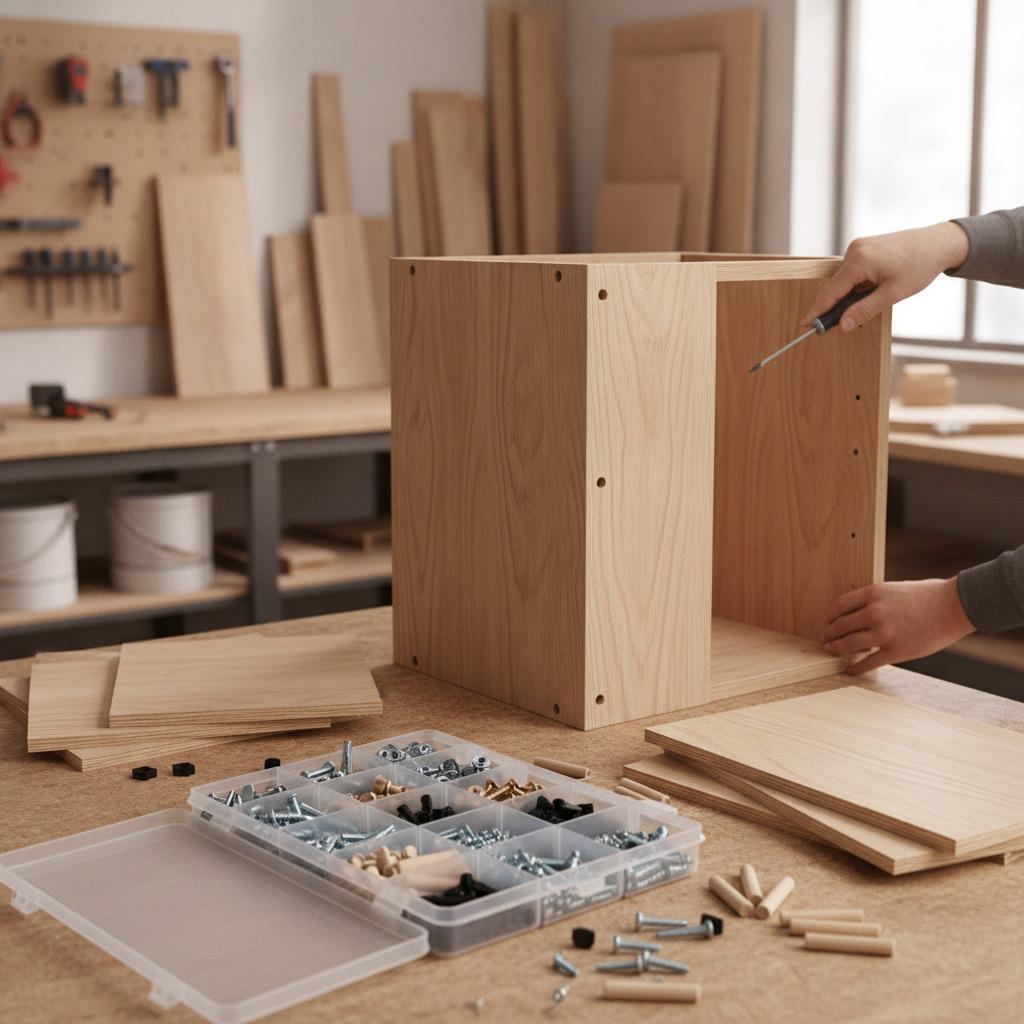
Before approval, test the kit in real furniture panels. Assemble the product, tighten the hardware, move the unit, and check whether the joint still feels stable.
A kit that looks good in a compartment box has only passed the first test.
4. Do not ignore panel material and hole pattern
Furniture panels may look similar, but they do not hold fasteners in the same way.
Particleboard, MDF, plywood, and solid wood all behave differently during tightening. A self-tapping screw that works well in plywood may feel weak in lower-density particleboard. A threaded insert may hold securely in one board and rotate in another.
Predrilled holes also matter.
A screw kit must match the hole diameter, depth, spacing, and edge distance used in production. Even a small mismatch can create panel damage or loose joints.
Buyers should provide the supplier with:
- Panel material
- Panel thickness
- Hole diameter
- Hole depth
- Edge distance
- Installation direction
- Tooling method
- Expected load
- Whether the product may be disassembled later
An OEM screw kit manufacturer that asks for these details is usually easier to work with than one that only asks for quantity.
5. Review how the kit is organized
Organization is not just a presentation detail.
A compartmented box, separated bags, or labeled tray can reduce mistakes before assembly even begins. Workers should not have to sort through similar screw lengths or compare washers by eye.
In production, small delays multiply quickly.
If one worker spends two extra minutes sorting hardware for each unit, that time becomes expensive across a full order. In flat-pack furniture, the problem shifts to the customer. Confusing hardware makes the product feel poorly designed, even when the panels and finish are acceptable.
Good kit organization may include:
- Separate compartments
- Labeled bags
- Step-based packing
- Model-specific kits
- Clear part codes
- Barcode or QR code labels
- Spare-part sections
- Assembly-sheet matching
The best format depends on where the kit will be used. A factory kit and a customer-facing kit do not always need the same layout.
6. Confirm material and finish in writing
Furniture screw kits often contain mixed materials and finishes.
One box may include zinc-plated screws, brass-colored inserts, black plastic caps, natural wooden dowels, and silver brackets. That is normal. It still needs control.
Appearance is not enough.
A bright silver screw may be zinc plated, nickel plated, stainless steel, or another finish. A brass-colored insert may not be solid brass. A black component may be coated metal, nylon, plastic, or rubber.
Before placing a bulk order, buyers should confirm:
- Base material
- Surface treatment
- Coating thickness, if required
- Finish color
- Corrosion resistance
- Environmental compliance
- Whether visible parts need color consistency
This matters more for kitchen cabinets, bathroom furniture, export shipments, humid warehouses, and visible hardware.
A fastener can function correctly and still create a quality complaint if the finish looks inconsistent or wears too quickly.
7. Ask what the supplier actually manufactures
Some suppliers only trade mixed hardware. Others manufacture core fasteners and source supporting parts. Some can handle both standard and non-standard components.
Buyers should know the difference.
Jiangmen Jinhe Hardware Co., Ltd. is based in Jiangmen, Guangdong, and focuses on machine screws, self-tapping screws, micro screws, precision screws, standard fasteners, and non-standard customization. According to company information, its materials include stainless steel, iron, and aluminum, and it serves industries including furniture, electronics, medical devices, automation, and building materials.
For furniture buyers, this kind of fastener manufacturing background can be useful when a kit requires more than a generic assortment. A project may need standard screws, custom lengths, special head styles, controlled finishes, or furniture-specific packaging.
Still, buyers should confirm the exact scope for each order.
Manufacturing screws and managing complete OEM screw kits are related capabilities, but they are not the same job. The supplier must also control counting, packing, labeling, and repeat-order consistency.
8. Check the inspection process for both parts and kits
Fastener inspection usually focuses on dimensions, threads, material, and finish.
That is necessary, but it is not enough for OEM screw kits.
The completed kit also needs inspection. One wrong quantity can stop an assembly job even if every individual screw is well made.
Buyers should ask how the supplier checks:
- Screw length
- Thread quality
- Head style
- Washer size
- Bracket dimensions
- Insert compatibility
- Surface finish
- Quantity per kit
- Part separation
- Label accuracy
- Carton marking
- Repeat-order consistency
Jiangmen Jinhe states that products undergo inspection before delivery and are supplied with necessary documentation. For OEM buyers, documentation is useful for incoming inspection, internal QA, and traceability.
The key is to make sure the documents match the actual risk.
If the main concern is missing parts, the inspection should include kit completeness. If the main concern is panel damage, screw length and head shape need closer control. If several furniture models share similar hardware, label accuracy becomes critical.
9. Think about packaging before the first order
Packaging is often discussed too late.
By the time the parts are approved, buyers may discover that the kit needs a different bag, a different label, a different compartment layout, or a different carton format.
That creates delay.
For furniture hardware kits, packaging is part of the product specification. It affects assembly speed, warehouse handling, retail presentation, and after-sales service.
Common options include:
- Bulk cartons
- Small polybags
- Labeled hardware bags
- Compartmented plastic cases
- Step-by-step assembly kits
- Model-specific kits
- Spare-part packs
- Retail boxes
- Blister packs
A production line may prefer bulk or tray packing. A flat-pack customer needs clearer labels. A repair program needs part identification. A wholesaler may need barcode-ready packaging.
Buyers should define the packaging format before confirming the quotation.
A supplier cannot price accurately if the kit structure is unclear.
10. Make sure repeat orders will match the approved sample
A sample kit may be carefully packed by hand.
That does not prove the bulk order will match it.
Repeat supply is where many hardware kit programs either become stable or become frustrating. The buyer needs the same parts, same quantities, same labels, same finish, and same packing format in later orders.
Ask the supplier how it controls:
- Approved BOM
- Drawing revisions
- Sample records
- Material changes
- Finish changes
- Part substitutions
- Packaging revisions
- Label versions
- Lot traceability
- Repeat-order checks
A sealed reference kit is useful. It gives both buyer and supplier a physical standard to compare against future production.
A quiet substitution may seem harmless to the supplier, but it can create serious trouble in assembly.
Common mistakes buyers should avoid
The first mistake is buying by part count.
More pieces do not make a better kit. A smaller kit with correct, matched components is more valuable than a large box full of parts that do not suit the furniture.
The second mistake is approving loose fasteners without assembling the product.
The real test is not whether the screw looks correct. It is whether the full kit supports a clean assembly sequence.
The third mistake is ignoring packaging.
For furniture hardware, packaging controls how quickly parts are identified, counted, and used.
The fourth mistake is requesting customization without a clear reason.
Custom fasteners can solve important problems, but they also require drawings, samples, tooling, minimum quantities, and future replacement planning.
The final mistake is not asking how repeat orders are controlled.
One accurate shipment is helpful. Stable supply is what OEM buyers really need.
Frequently Asked Questions
What is an OEM screw kit?
An OEM screw kit is a fastener set prepared for a specific product, brand, or assembly process. It may include screws, bolts, nuts, washers, dowels, inserts, brackets, caps, and tools.
What should buyers provide before requesting a quotation?
Buyers should provide the furniture model, BOM, drawings, panel material, panel thickness, hole details, required finishes, packaging format, and expected order quantity.
Can OEM screw kits be customized?
Yes. Screw length, thread type, head style, finish, quantity mix, labels, barcodes, packaging, and included accessories can be customized when required.
Is a larger screw kit better?
Not necessarily. Compatibility is more important than part count. A smaller kit with the exact required components is usually better for production.
Should buyers test the kit before bulk ordering?
Yes. The full kit should be tested with actual panels, tools, and assembly steps. A small pilot order is also useful before volume production.
How can missing parts be reduced?
Use a controlled BOM, reliable counting method, separated packing, clear labels, final inspection, and repeat-order reference samples.
The best screw kit removes guesswork
A good OEM screw kit should not make workers pause.
The correct fasteners are easy to find. Similar parts are separated. The screws match the panels. The dowels fit the holes. The brackets line up. The packing follows the assembly process.
That is what buyers are really sourcing from an OEM screw kit manufacturer.
For furniture screw kits, cabinet assembly hardware, custom hardware kits, standard fasteners, and non-standard customized parts, Jiangmen Jinhe Hardware Co., Ltd. can discuss kit structure, material options, finishes, packaging, inspection, logistics, and repeat supply requirements.
Start with the furniture model, panel details, hardware BOM, assembly method, packaging requirement, and order quantity.
Once the assembly process is clear, the right screw kit becomes much easier to build.