
Outdoor screws: what buyers actually need to decide before they place an order
Choosing outdoor screws is rarely just a matter of picking a length and moving on. For engineers, sourcing teams, and product developers, the real question is whether the fastener will keep holding after months of rain, UV exposure, temperature cycling, and the occasional bad installation on site. That is where many jobs go wrong: the screw looks fine on day one, then rust stains, loosening, or surface damage show up later.
There is also a second layer to the decision. Outdoor fastening is not one category. A deck screw, a façade screw, a concrete screw, and a stainless steel screw for exterior hardware solve different problems. The wrong choice can add rework, warranty risk, or even a safety issue. If your application includes timber, masonry, or mixed-material assemblies, the fastener has to match the base material as much as the weather exposure.

What “outdoor” really means in fastener selection
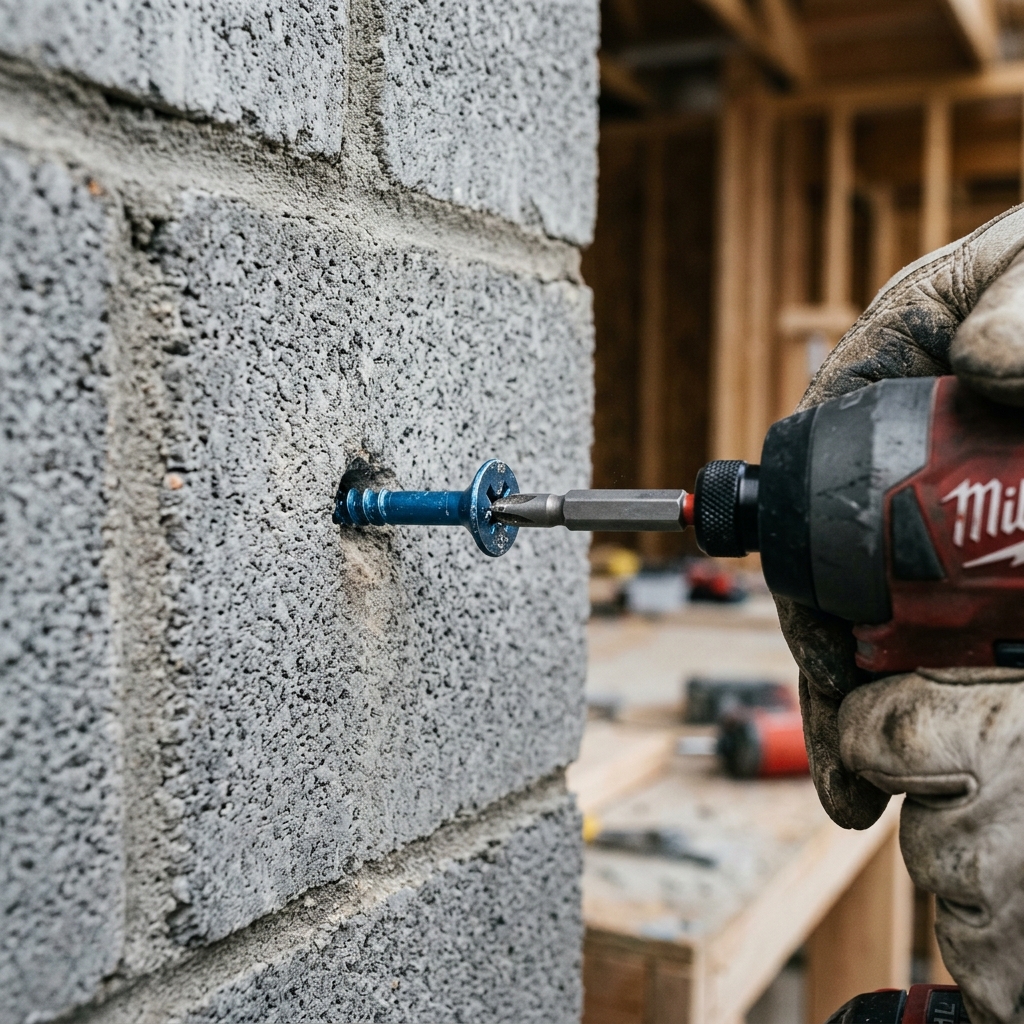
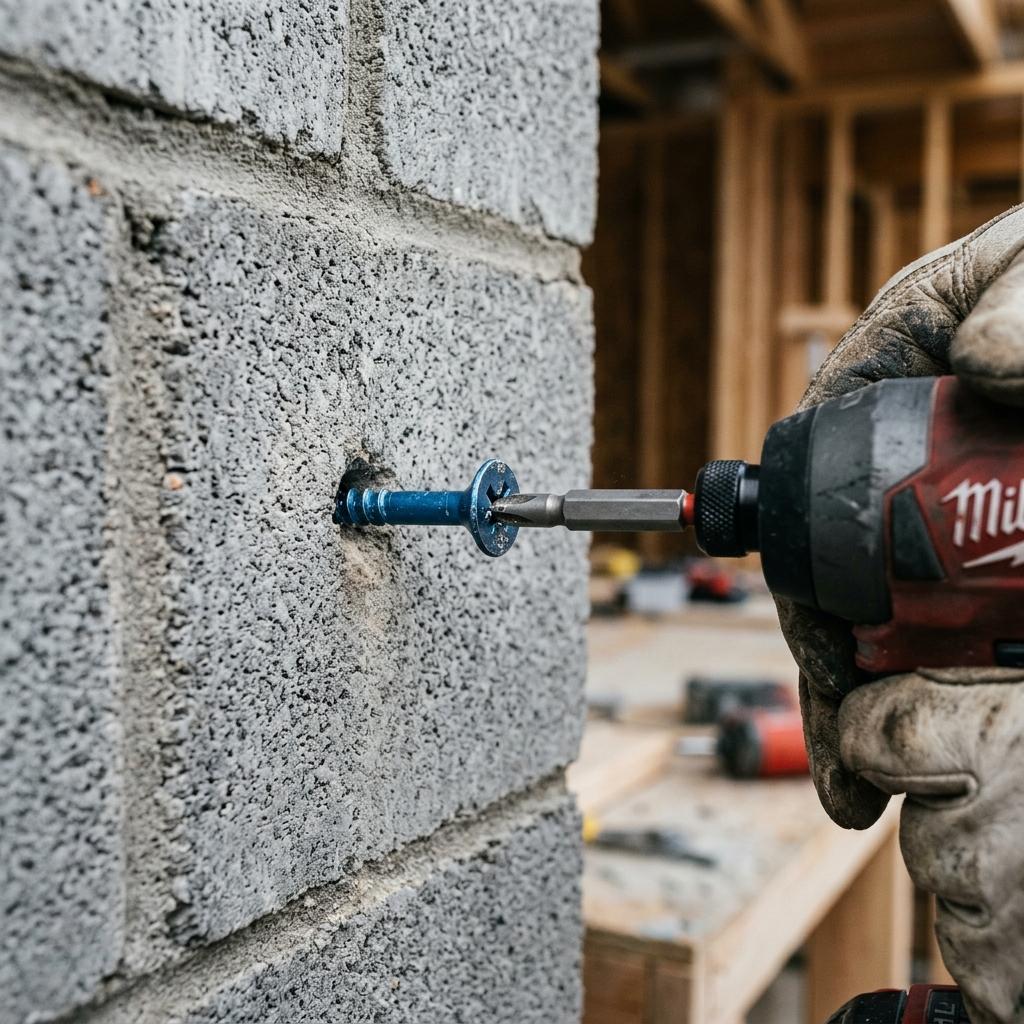
In practice, outdoor service covers more than wet weather. A fastener may face condensation, salt spray, fertilizer exposure, treated lumber chemicals, or repeated expansion and contraction. The visible blue-coated masonry-style fastener in the product information is a good reminder that outdoor assemblies often need more than a standard interior screw. It is designed for anchoring into concrete or masonry block, where corrosion resistance and thread engagement both matter.
That same logic applies to timber applications. When buyers search for screws for cedar outdoor or screws for redwood outdoor, the issue is not only strength. Cedar and redwood are naturally durable woods, but they can still discolor around reactive metals. In those cases, stainless or other corrosion-resistant options are often preferred, especially where appearance matters.
Material choices: stainless, coated steel, and where each fits
Stainless steel screws outdoor are usually the safest starting point when corrosion risk is high or the project has long service expectations. They are commonly selected for exterior trims, marine-adjacent installations, exposed brackets, and premium architectural work. That said, stainless is not a universal answer. It can be over-specified for some dry exterior environments, and in certain assemblies it may not provide the same cost efficiency as coated carbon steel.
Coated steel fasteners, including blue-coated masonry screws like the one shown in the product image, are often used where direct anchoring into concrete or CMU is required. The coating helps resist corrosion, but the buyer still needs to confirm whether the coating suits the exposure level. A fastener that performs well in sheltered exterior construction may be a weak choice in a coastal or chemically aggressive setting.
For procurement teams, the practical takeaway is simple: define the environment first, then choose the material. Too many sourcing discussions begin with price per thousand pieces and end with expensive field failures.
Concrete, masonry, and exterior timber are different jobs
Concrete and block fastening
The blue fastener shown in the product details appears to be a direct fastening solution for rough concrete or CMU. It is installed with a power driver or impact driver and has a washer-like flange at the wall face. That type of assembly is common for brackets, conduit clips, framing points, and maintenance hardware.
One caution: with masonry fasteners, buyers should not assume all blue-coated screws share the same load behavior. Exact dimensions, embedment depth, hole preparation, and base material quality can all change performance. If the application is structural or safety-related, request the actual technical data rather than relying on a visual match.
Outdoor wood fastening
For exterior wood assemblies, especially softwoods like cedar and redwood, the fastener needs to resist staining, loosening, and corrosion in exposed joints. Screws for redwood outdoor projects often need a more careful material choice than general-purpose deck screws suggest. The same applies to screws for cedar outdoor installations, where a cleaner finish and lower risk of fastener reaction can matter as much as holding power.
What to ask a supplier before you buy
Jiangmen Jinhe Hardware Co., Ltd. produces machine screws, self-tapping screws, micro screws, and precision screws in stainless steel, iron, and aluminum, and works to GB, DIN, ANSI, BS, JIS, and ISO standards. That matters because outdoor fastening is not just about product type; it is also about whether the supplier can keep geometry, consistency, and inspection under control. The company also notes strict inspection before delivery and support response within 30 to 60 minutes, which is useful in time-sensitive sourcing work, though buyers should still verify the exact specification on each order.
Ask these questions early:
Which base material is the fastener intended for?
What corrosion exposure is expected?
Is the finish cosmetic, functional, or both?
Can the supplier provide documentation for the exact standard and inspection requirements?
Will the part be installed with a driver, or does it require predrilling or an anchor sleeve?
Common mistakes buyers still make
The first mistake is treating all exterior fasteners as interchangeable. The second is assuming stainless always means best. The third is overlooking installation method. A screw that performs well in a controlled test may fail if it is driven poorly in the field or matched to the wrong substrate.
Another quiet problem is packaging and logistics. Exterior fasteners often move through multiple hands before installation. If the supplier’s warehousing and shipping process is careless, coatings can get damaged or mixed lots can create headaches on site. Jinhe’s stated logistics and supply chain services are relevant here, because fastener quality is not only made in the factory; it is protected in transit too.
Quick buyer rule of thumb
If the job is exposed timber, start by comparing stainless options against the wood species and appearance requirements. If the job is masonry, make sure the screw or anchor is truly intended for concrete or block, not just vaguely “outdoor.” And if the job has regulatory or technical constraints, always ask for the exact standard and inspection basis before you commit.
Next step for sourcing teams
Whether you are specifying exterior hardware, building a catalog program, or qualifying a new supplier, the safest route is to match the screw to the environment first and the price second. If you need help sorting through outdoor screw types, confirm the substrate, finish, and installation method before asking for samples. That single step prevents most purchasing mistakes and makes the supplier comparison far more honest.
For buyers evaluating production capability, documentation, and export support, Jiangmen Jinhe Hardware Co., Ltd. can be contacted at +86 13729150102 or sharon@hkhomeideas.com for product discussion and sourcing follow-up.