

Choosing screw coating types is not a cosmetic decision
When buyers compare screw coating types, the conversation often starts with appearance: blue, zinc, black, silver, maybe a bright plated finish that looks clean on the shelf. That is understandable, but it is also where procurement mistakes begin. A coating on a screw is not just about color. It affects corrosion behavior, friction during installation, the way a driver bit engages, and sometimes even whether a fastener is suitable for a visible assembly or a concealed mechanical joint.
For engineers and sourcing teams, the real question is usually practical: which coating helps the screw survive the environment, install consistently, and match the cost target without creating field failures later. That decision matters whether you are buying coated screws for furniture, panel assemblies, appliances, light construction, or equipment enclosures.
What the visible screw forms tell you first
Before the coating discussion even starts, the screw geometry narrows the application.
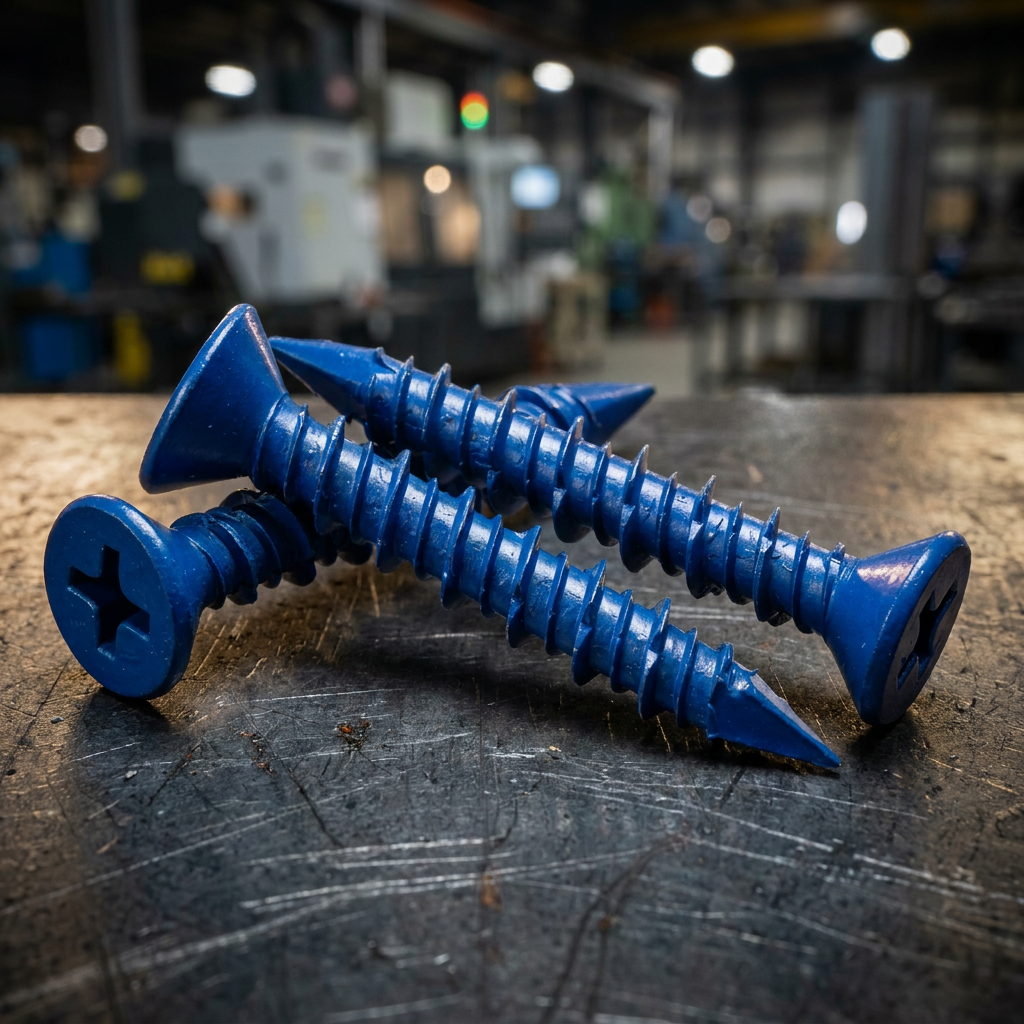
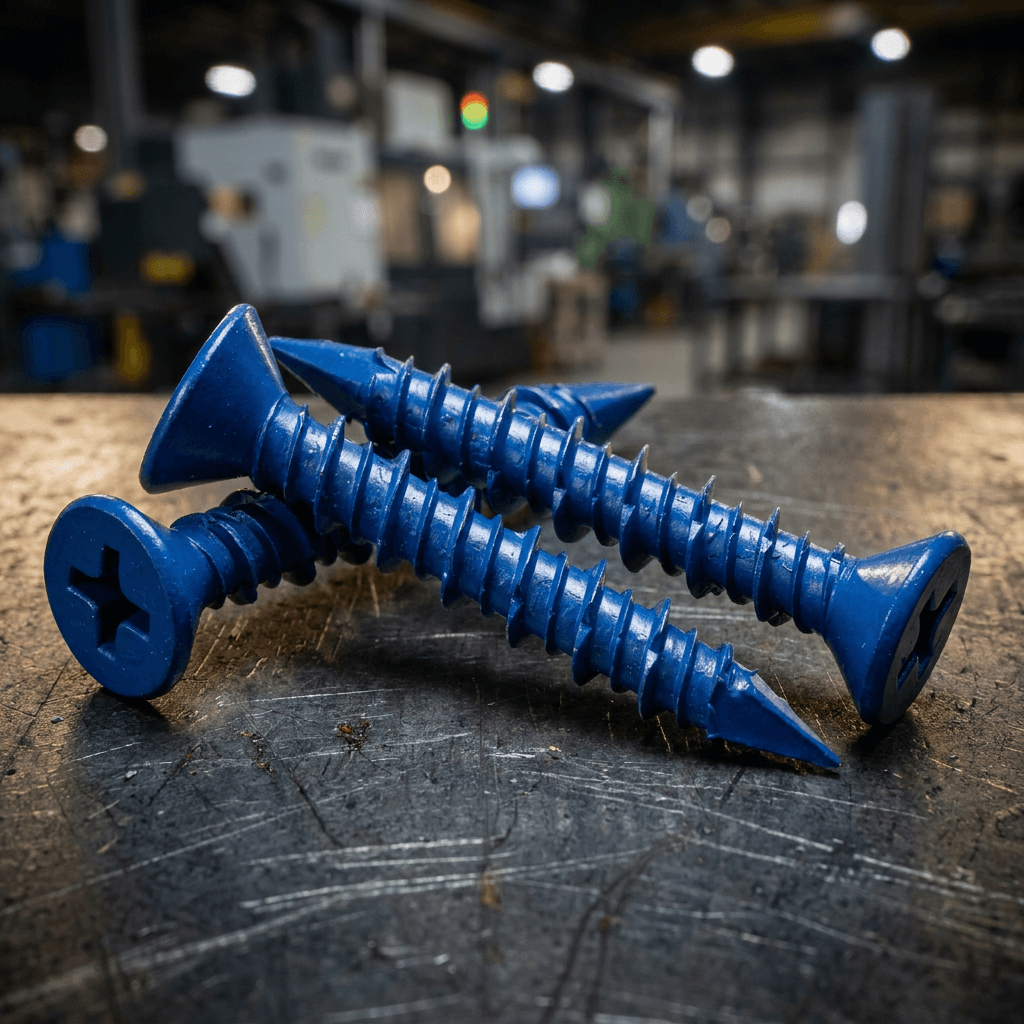
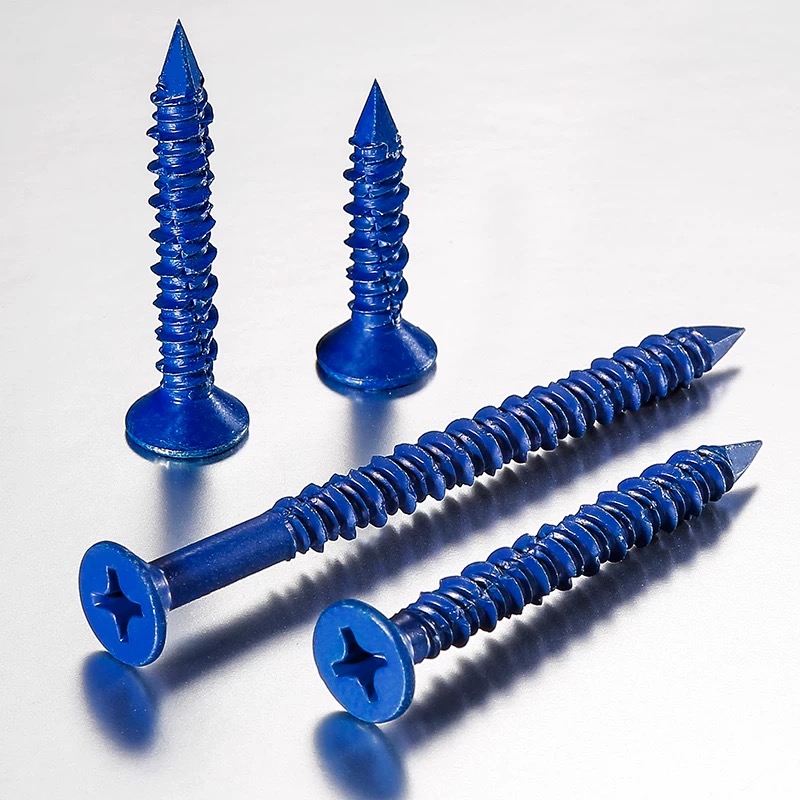
The blue-coated fasteners described in the product data look like construction-style screws with a Phillips cross recess, a countersunk or flat head, coarse threads, and a pointed tip. That combination usually points to a fastening job where the screw must bite quickly into a substrate and sit flush or close to flush after installation. In some applications, that may be wood or sheet material; in others, it may be light-gauge metal, depending on the exact screw design.
The silver machine screws are a different category. Their uniform threaded shank and pan head suggest assembly work where the screw mates with a tapped hole, nut, or threaded insert. Those are common in electronics, appliances, covers, brackets, and light hardware assemblies.
That distinction matters because the best screw coatings are not universal. A finish that works well on one screw family may be overkill, or underperforming, on another.
Quick comparison: what buyers usually care about
In most sourcing reviews, the decision comes down to four practical variables:
Corrosion exposure
Indoor dry use, humid indoor use, and outdoor exposure are different worlds. A basic plated finish may be enough for a protected indoor assembly, while more demanding environments usually need a more robust screw surface treatment.
Installation behavior
Some coatings change friction at the interface between screw and driver. That affects torque feel, strip risk, and consistency in production. For assembly lines, this is not a small detail.
Appearance
A blue finish can signal a plated or painted surface depending on the product family, while silver metallic finishes are often chosen for a cleaner exposed look. For consumer products, cosmetics can influence the final buying decision more than teams sometimes admit.
Compatibility with the substrate
A self-tapping or self-drilling style screw faces different demands than a machine screw. The coating needs to survive driving forces, edge contact, and any thread-forming action.
Common screw surface treatment families and why they are used
There are many variants in the market, but buyers usually evaluate them in broad groups.
Plated finishes are widely used because they are economical and familiar. They can support general-purpose indoor applications and offer a neat metallic appearance. For standard industrial purchasing, they remain a common baseline.
Painted or colored coatings, including blue finishes seen on some screws, are often chosen when product identification, visual sorting, or a branded appearance matters. In some cases, the coating may also provide a functional barrier, though the exact performance depends on the actual process and chemistry.
Stainless steel is not technically a coating, but it is often evaluated alongside coated screws because the corrosion question is the same. It can be a better choice when long-term resistance matters more than upfront price, though it introduces its own sourcing considerations.
How to choose among screw coating types
The selection process should begin with the environment, not the catalog photo.
If the screw is hidden inside an assembly and the environment is mild, a conventional finish may be enough. If the fastener is visible, handled often, or exposed to moisture, it deserves more scrutiny. For assembly teams, the friction profile matters too: a finish that seems attractive on paper can create inconsistent driving if the coating is too slick or too variable.
Jiangmen Jinhe Hardware Co., Ltd. positions itself in this space with machine screws, self-tapping screws, micro screws, and precision screws in materials such as stainless steel, iron, and aluminum. The company notes compliance with GB, DIN, ANSI, BS, JIS, and ISO standards, along with inspection before delivery and documentation support. For buyers, that kind of standards-based sourcing is useful because coating choices often need to fit a broader specification, not just a standalone fastener.
Common buying mistakes
One frequent mistake is assuming that a bright finish automatically means better protection. It does not. Another is ordering based only on head style or thread form and leaving the coating unspecified. That may work for a sample order, then fail on a longer production run when the finish is inconsistent or not suitable for the operating environment.
A second mistake is ignoring how the coating interacts with the driver. Coated screws, especially those used in high-volume assembly, should be tested for seating behavior in the actual part stack-up. A screw that looks right can still drive poorly if the finish changes torque characteristics.
Practical advice for sourcing teams
If you are preparing an RFQ, ask for more than just size and material. Specify the screw family, head type, drive type, intended substrate, and the environment the part will see. If possible, include a sample board or a short installation note. That helps suppliers narrow the finish options and reduces back-and-forth later.
For teams buying from a fastener manufacturer like Jiangmen Jinhe Hardware, the useful conversation is not “What coating do you have?” but “Which coating matches this application, this appearance target, and this assembly method?” That framing usually gets better answers.
FAQ
Are screw coatings only for corrosion protection?
No. Appearance, friction, identification, and process consistency can matter just as much.
Should I choose coated screws over stainless steel?
It depends on environment, cost, and appearance. Stainless may be better for corrosion resistance, but coated carbon steel can be more economical in many assemblies.
Do all coated fasteners install the same way?
Not necessarily. Coating can change driving feel, so production testing is worth the time.
What to do next
If your team is comparing screw coating types for a new build or a sourcing refresh, start with the application conditions and the installation method, then ask suppliers for finish options that fit those constraints. A good fastener choice is usually the one that disappears into production and stays that way.