


How to Audit a Screw Manufacturer in China Before You Order
If you are comparing a screw manufacturer in China, do not begin with the unit price. Begin with the part, the application, and the evidence needed to approve the order. A useful audit should confirm five things: the supplier understands the drawing; the proposed manufacturing route matches the screw; inspection criteria are agreed before production; packaging protects identification and count; and the company handling the quotation and export is clearly identified.
This guide is for importers, hardware distributors, furniture manufacturers, private-label brands, and OEM purchasing teams. It can be used for a remote supplier review, a factory visit, or a quotation comparison. It does not assume that one factory is right for every screw. The goal is to identify the supplier that fits your application and can explain how it will control the risks that matter to you.
Quick answer: what should buyers audit first?
Ask the supplier to review one representative drawing or sample before discussing a full product list. Confirm the head, drive, thread, point, dimensions, material, finish, mating material, critical characteristics, quantity, packaging, and destination market. Then ask how those requirements will move from quotation to sample approval, production, inspection, packing, and shipment.
A factory presentation is useful, but it is not a substitute for a part-specific plan. Machinery, certificates, and workshop photographs show that a facility exists. They do not prove that your recess depth, thread fit, coating, counting method, or carton label will be correct. Approval should be based on documented requirements and agreed checks.
| Audit area | What to request | Decision question |
|---|---|---|
| Part definition | Drawing, sample notes, applicable standard, revision | Are both sides quoting the same part? |
| Manufacturing route | Proposed forming, threading, secondary work, finish, packing flow | Does the route suit the geometry and order? |
| Quality plan | Critical characteristics, gauges, sample plan, records | Will inspection find the defects that affect assembly? |
| Sample approval | Sample scope, approval criteria, change control | What exactly authorizes mass production? |
| Packaging | Pack quantity, label, bag or box format, carton requirement | Can receiving and assembly identify the product correctly? |
| Commercial handoff | Quotation entity, manufacturing entity, Incoterm, destination | Who makes, sells, documents, and exports the order? |
Why the cheapest quotation is often the least informative
Two quotations can show the same description and still cover different products. “M5 screw, zinc plated” does not tell you the head dimensions, drive geometry, thread tolerance, material grade, hardness requirement, coating system, coating thickness, passivation, lubrication, inspection scope, packaging quantity, or label format. If one supplier silently assumes a standard catalog item and another prices a made-to-drawing part, the totals cannot be compared fairly.
A low price may be valid. It may reflect an efficient process, suitable tooling, a standard material, or an order quantity that fits the production route. It may also exclude work you expected, such as sample development, sorting, an agreed inspection report, individual packing, barcode labels, or special export cartons. The audit should reveal what is included before the purchase order is issued.
For this reason, ask each candidate to return a marked requirement sheet. The supplier should identify confirmed items, open items, proposed alternatives, and assumptions. A blank field is not an agreement. If the finish or tolerance is unknown, write “to be confirmed after technical review” rather than filling the gap with a convenient guess.
Define the job before you evaluate the factory
The right screw manufacturer China candidate depends on what you are buying. A supplier that is well suited to standard self-tapping screws may not be the best match for a special shoulder screw, a decorative furniture connector, or a retail assortment with multiple components. Before you audit, place the project in one of the following groups.
- Standard or standards-based supply: the part follows a named dimensional or performance standard, with limited changes to material, finish, or packaging.
- Modified standard screw: the basic form is familiar, but one or more dimensions, drives, points, colors, coatings, markings, or packing requirements differ.
- Made-to-drawing custom screw: the drawing controls the geometry, tolerances, material, finish, inspection, and revision.
- Assembly kit: the screw must be matched with nuts, cam locks, brackets, plugs, washers, or other components and packed as one set.
- Private-label retail pack: product, count, presentation, barcode, label, and pack durability are all part of the approved item.
This classification changes the audit. A standard bulk screw program may focus on lot identity, conformity, and repeat supply. A made-to-drawing part needs deeper revision control, tooling review, first-sample approval, and critical-dimension inspection. A hardware kit adds component matching and count control. A retail pack adds artwork control and packaging appearance.
Verify the company identity and supply structure
Ask for the legal name and address of the manufacturing company. Then identify the company that will issue the quotation, contract, invoice, and export documents. They may be the same company, or the manufacturer may work with an authorized export partner. Either structure can work when responsibilities are explicit.
JHFIX publicly describes Jiangmen Jinhe Hardware Products Co., Ltd. as the manufacturing company and Jiangmen Shenxin Trading Co., Ltd. as its authorized export and trading partner. Its Global Sales & Export page explains the division between manufacturing, quality control, international communication, quotations, contracts, invoices, and export coordination. A buyer should still ensure that the names on the quotation, purchase order, payment instructions, and shipping documents match the agreed arrangement.
During any supplier audit, record the following:
- legal manufacturing entity and factory address;
- quotation and invoice entity;
- export contact and communication channel;
- bank beneficiary shown on the commercial documents;
- production location for the quoted part;
- processes performed in-house and processes handled by approved external sources;
- who approves drawings, samples, deviations, packaging artwork, and shipment release.
This is basic purchasing control. It also prevents confusion when a technical discussion uses one company name while commercial paperwork uses another.
Audit the drawing review, not only the drawing
A drawing is useful only when both parties interpret it in the same way. Ask the manufacturer to identify the characteristics that drive tooling, process choice, assembly, and inspection. For a screw, these often include the head diameter and height, drive type and depth, bearing surface, under-head geometry, shank diameter, thread form, pitch, length reference, thread length, point style, material, finish, and any specified mechanical property.
For a standards-based part, state the exact standard and edition if your company requires one. ASME lists B18.6.3 as the standard for inch-series machine screws, tapping screws, and metallic drive screws. ISO/TC 2 covers fastener dimensions, tolerances, mechanical and functional properties, coatings, test methods, and acceptance procedures. A standard reference narrows ambiguity, but it does not replace application-specific requirements such as finish color, packaging, or inspection documentation.
Ask these drawing-review questions:
- Which dimensions are critical to fit or function?
- Which dimensions can be controlled by tooling and which need secondary work?
- Is the thread fully defined by a standard, a mating part, or a custom profile?
- Does the finish change the fit, driving behavior, appearance, or corrosion requirement?
- Are there sharp-edge, burr, surface, cleanliness, or appearance criteria?
- How will the supplier identify the drawing revision on samples and production records?
- What must be confirmed by the buyer before tooling or mass production?
If you have a physical sample but no drawing, treat reverse engineering as a controlled step. One sample may contain wear, deformation, coating buildup, or manufacturing variation. Ask the supplier to create or confirm a specification sheet, then approve that definition. “Same as sample” is too vague when the sample has no agreed measurement method.
Match the proposed manufacturing route to the part
A factory audit should explain how the screw will be made, not merely show a row of machines. The route varies by geometry, material, volume, tooling, and secondary operations. It may include wire preparation, cold heading or another forming method, thread rolling or thread forming, machining, heat treatment when required, surface treatment, sorting, inspection, cleaning, and packing.
JHFIX publicly presents cold heading, tapping, stamping, injection molding, assembly, packaging, and quality inspection as part of its manufacturing system. Those capabilities are relevant for screws and mixed furniture-hardware programs. They do not mean that every process or range applies to every product. The correct audit question is: “Which of these processes will be used for this drawing, and which requirements need outside processing or additional review?”
Look for a route that is specific enough to evaluate. If the supplier proposes cold heading, ask whether the geometry is suitable for forming and whether new tooling is required. If secondary machining is proposed, ask which feature needs it and how that feature will be inspected. If a coating is outsourced, ask how the batch remains identified and how incoming coated parts are checked. If automatic sorting is offered, define which characteristics the equipment will inspect and what it cannot detect.
Do not reward a long equipment list by itself. Reward a clear link between the equipment, your part, and the control plan.
Build the inspection plan around assembly risk
Inspection should begin with the failure modes your application cannot tolerate. A screw can meet several dimensions and still fail in use if the drive does not engage the tool, the point does not start in the target material, the thread does not mate, the finish changes friction, or the head interferes with the assembly. Your engineering and purchasing teams should identify the characteristics that affect fit, function, safety, appearance, and receiving.
ISO 3269:2019 describes a purchaser-side acceptance inspection procedure for fastener lots when no prior agreement exists and provides a reference procedure for disputes. The standard also notes limits to its scope, including special-purpose applications that require more advanced control or traceability. The practical lesson is simple: agree on an inspection plan before the order. Do not rely on a generic final-inspection phrase after a problem appears.
| Risk | Possible check | Requirement source |
|---|---|---|
| Screw does not fit the mating thread | Thread gauge or mating-part verification | Drawing, thread standard, approved mating part |
| Tool slips or will not seat | Drive dimensions and functional driver check | Drawing or applicable product standard |
| Head sits proud or pulls through | Head dimensions, countersink fit, application test | Drawing and assembly requirement |
| Finish affects appearance or assembly | Visual master, color reference, thickness or functional check as specified | Approved finish specification |
| Mixed parts reach the line | Lot identity, segregation, label and packing verification | Purchase and packaging specification |
| Kit is incomplete | Count method, weight or vision check, pack audit | Approved bill of materials and pack instruction |
Ask who owns the gauges, how measurement equipment is controlled, how nonconforming parts are segregated, what records accompany the shipment, and how a deviation is approved. If you need a specific report, state the report format and characteristics in the RFQ. “Inspection report required” is not enough when one party expects a dimensional layout and the other expects a pass/fail note.
Use samples to confirm the process, not to decorate the quotation
A sample is a decision tool. Define what the sample must prove. For a catalog item, it may confirm appearance, dimensions, driver fit, or packaging. For a custom screw, it may confirm tooling, geometry, mating, assembly, and finish before mass production. For a kit, it must also confirm component matching and pack content.
Record the sample identification, drawing revision, material and finish, sample quantity, inspection results, and approval decision. If the production process will differ from the sample process, document the difference. A machined prototype may prove geometry but not the same forming behavior or surface condition as a production screw. That does not make the prototype useless; it means the approval scope must be clear.
When you approve a sample, state whether approval covers appearance, dimensions, function, packaging, or all of them. Preserve an approved reference when appearance or color matters. Require written review for later changes to tooling, material source, finish source, dimensions, artwork, or pack count when those changes affect your requirements.
Audit packaging as part of the product
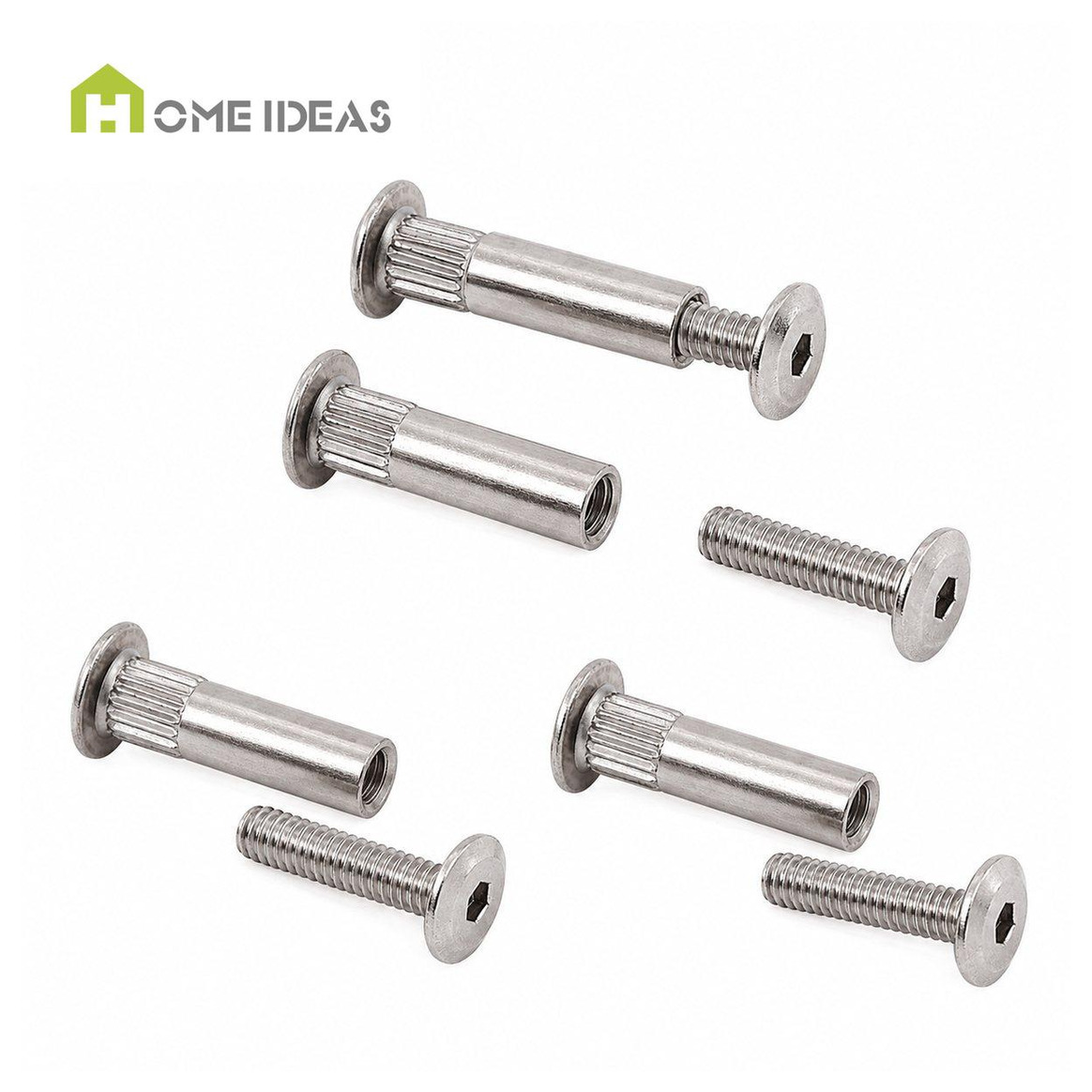
Packaging is not an afterthought for distributors, furniture factories, retailers, or assembly plants. The correct screw in the wrong bag can still stop production. Ask the supplier to show how it prevents mixed parts, controls quantity, prints labels, protects finished surfaces, and keeps inner packs matched with outer cartons.
At minimum, define:
- bulk, bag, blister, box, bucket, or kit format;
- quantity per inner pack and inner packs per carton;
- part number, description, revision, lot, quantity, and barcode fields;
- label language and placement;
- moisture, abrasion, and surface-protection needs;
- carton size or weight limits, if your warehouse has them;
- pallet, shipping-mark, and destination requirements;
- private-label artwork approval and change control.
JHFIX lists bag, blister, box, plastic-bucket, hardware-kit, and private-label packaging among its public supply options. Confirm availability and commercial terms for your exact screw, order quantity, artwork, and destination. Packaging equipment and materials should be reviewed against the finished pack you intend to receive.
Evaluate communication with a controlled test
Fast replies are pleasant, but accurate replies are more valuable. Use the RFQ as a controlled communication test. Send the same requirement pack to shortlisted suppliers. Then compare how each one handles missing information, conflicts, alternatives, and open decisions.
A capable response should separate confirmed facts from proposals. It should ask about the application when the substrate or mating part affects screw selection. It should not promise a coating, tolerance, test, or schedule before reviewing feasibility. It should identify commercial assumptions and explain what must happen before a firm quotation or production release.
Score the response on these behaviors:
- Does the supplier reference your drawing number and revision?
- Are open questions grouped and easy to answer?
- Are technical and commercial issues separated?
- Does the quotation state unit, quantity break, packaging basis, tooling, and Incoterm?
- Does the supplier identify which requirements need a sample or test?
- Can the export contact explain who manufactures and who invoices the order?
- Are changes recorded in writing?
This test costs little and often reveals more than a polished presentation.
Compare quotations on a common basis
Convert every quotation into a comparison sheet. Do not compare only the price-per-thousand. Record material, finish, dimensional basis, inspection scope, sample or tooling charges, packaging, quantity, currency, Incoterm, destination, payment terms, quotation validity, and exclusions. If freight or duty is outside the quotation, keep it outside every supplier’s part-price comparison and calculate landed cost separately.
Also compare the cost of uncertainty. A quotation with unresolved material, finish, packaging, or inspection fields is not cheaper yet; it is incomplete. Ask for clarification before ranking it. When a supplier proposes an alternative, show it on a separate line so engineering can decide whether the alternative is acceptable.
A purchasing decision may include factors that are not expressed in the unit price: tooling ownership, sample approval, component consolidation, pack labor, label control, inspection documentation, communication, and re-order consistency. Weight these factors according to your operation. A furniture-kit buyer may value component coordination more heavily than a buyer of one bulk standard screw.
Remote audit questions for a screw manufacturer China shortlist
If a factory visit is not practical, request a live or recorded walk-through focused on the quoted product family. Ask to see material identification, forming or threading equipment relevant to the part, in-process checks, finished-goods segregation, inspection tools, sample retention, packing, and warehouse labeling. Do not ask the supplier to expose another customer’s confidential drawings or branded products.
Use these questions during the call:
- Which process step creates each critical feature on our drawing?
- Where can variation enter the process?
- Which characteristic is checked first during setup?
- How is a machine adjustment recorded?
- How are mixed parts prevented after surface treatment or sorting?
- How is the approved finish or appearance reference controlled?
- How is pack quantity verified?
- How are rejected parts identified and contained?
- What changes require buyer approval?
- Which part of our requirement still needs technical confirmation?
Ask for evidence that belongs to your project stage. Before quotation, a clear process proposal and question list may be enough. Before production, you may need an approved drawing, sample record, packaging instruction, and inspection plan. Before shipment, you may need the agreed inspection and packing records. Avoid collecting documents that no one on your team will review.
Red flags that deserve a pause
No single issue proves that a supplier is unsuitable, but several patterns should delay approval until they are resolved.
- The quotation does not reference a drawing, sample, standard, or detailed specification.
- The supplier confirms every tolerance, material, finish, test, and schedule without technical questions.
- Company names or bank details change without a documented explanation.
- Factory images, addresses, and legal entities do not match.
- A certificate is offered as proof for a product requirement it does not cover.
- The sample cannot be traced to a revision or process.
- Inspection is described only as “100% quality” with no defined characteristic or method.
- Packaging count, labels, and carton requirements are absent from the quotation.
- The supplier will not separate a confirmed fact from a proposed substitute.
- Pressure to pay arrives before the part and commercial terms are agreed.
A good response to a red flag is clarification and evidence. It is not a longer marketing claim.
When JHFIX may be a relevant fit
Based on its current public pages, JHFIX is relevant to buyers sourcing screws together with furniture hardware, nuts, stamped hardware, packaging, or complete hardware kits. Its published product categories include self-tapping screws, self-drilling screws, machine and socket screws, wood and deck screws, furniture and Chicago screws, specialty and custom screws, and drywall and chipboard screws. It also presents bag, blister, box, and bucket packaging.
JHFIX may be worth evaluating when your project needs drawing- or sample-based discussion, multiple matched hardware components, private-label packaging, or export coordination connected to a manufacturing team. Suitability still depends on the actual drawing, standard, material, finish, quantity, inspection, packaging, and destination. A public capability page is the start of the review, not the final approval.
If your requirement is outside the shown product families, requires a specialized process, or has an unconfirmed performance or compliance requirement, send the details for technical review before assuming feasibility.
Prepare an audit-ready RFQ package
The fastest way to receive a useful answer from a screw manufacturer China candidate is to send a complete, organized requirement pack. Include what you know and mark what remains open.
| RFQ field | What to provide |
|---|---|
| Product and application | Where the screw is used, substrate or mating parts, assembly method |
| Definition | 2D/3D drawing, standard, physical sample, photos, revision |
| Geometry | Diameter, length, thread, head, drive, point, critical tolerances |
| Material and finish | Required grade or specification; coating, color, appearance, or open questions |
| Validation | Sample need, mating test, dimensional report, specified performance checks |
| Quantity | Prototype or sample quantity, order quantity, annual estimate if useful |
| Packaging | Bulk or retail format, count, label, barcode, kit bill of materials |
| Commercial | Destination, requested Incoterm, currency, required documentation |
Do not delay the inquiry because every field is not final. Label unresolved items as “open for manufacturer recommendation” or “to be confirmed after sample review.” That wording invites a technical discussion without pretending that the requirement is settled.
Frequently asked questions
How do I verify that a screw supplier in China is a manufacturer?
Check the legal manufacturing entity, production address, relevant process equipment, product records, and the connection between the factory and the company issuing commercial documents. Use a live part-specific review when possible. A website label by itself is not proof.
Should I require ISO 9001 from every screw manufacturer?
Use the quality-system and certification requirements that your company, customer, market, or application actually needs. Verify scope and validity. A management-system certificate does not replace the product drawing, process review, inspection plan, or shipment evidence.
What standard should I put on a screw drawing?
Use the standard that defines the product you need and that your engineering team accepts. Standards may cover dimensions, threads, mechanical properties, coatings, or inspection. Do not list several standards unless their roles and compatibility are clear. For a custom part, the drawing should state which requirements are controlled by the drawing and which come from a named standard.
How many samples should I request?
There is no universal number. Choose enough samples to evaluate the defined dimensions, mating, assembly, finish, and packaging without implying statistical proof that the sample cannot provide. Agree on the sample quantity and approval criteria with the supplier.
Can I audit a China screw factory remotely?
Yes, a remote review can confirm company identity, process flow, equipment relevance, inspection methods, packaging, and open technical questions. It may not replace an on-site audit when your organization or application requires one. State the purpose and evidence needed before the call.
What is the most important question to ask about quality inspection?
Ask which product characteristics affect your assembly and how each will be checked. This connects inspection to risk. “Do you inspect quality?” usually produces a generic answer.
Can one supplier provide screws and complete furniture hardware kits?
Some suppliers can coordinate screws, connectors, nuts, brackets, plugs, washers, and packing. Confirm the exact components, manufacturing sources, compatibility checks, count method, and packaging instruction. JHFIX publicly lists screw, furniture-hardware, nut, stamping, kitting, and packaging categories for buyer review.
What should I send to JHFIX for an initial review?
Send the product application, drawing or sample, dimensions and thread, material and finish requirements, mating components, estimated quantity, packaging, inspection needs, and destination. If a field is unknown, say so. The manufacturing and export teams can then review the requirement before a quotation is finalized.
Make the audit produce a decision
A supplier audit is useful only when it ends with clear actions. Record what is accepted, what remains open, who owns each answer, and what evidence is required before sample approval, production, and shipment. Rank suppliers against the same requirement pack. Keep technical suitability separate from commercial preference until both are clear.
When you evaluate a screw manufacturer China option this way, the conversation changes. The factory is no longer competing on a vague promise of “high quality.” It is explaining how your part will be defined, made, checked, packed, and documented.
Ready for a part-specific review? Send JHFIX your drawing or sample, application, critical dimensions, material and finish, estimated quantity, packaging requirement, inspection need, and destination. Use the Global Sales & Export page to contact the team, or start with the screw product range if you are still defining the category.