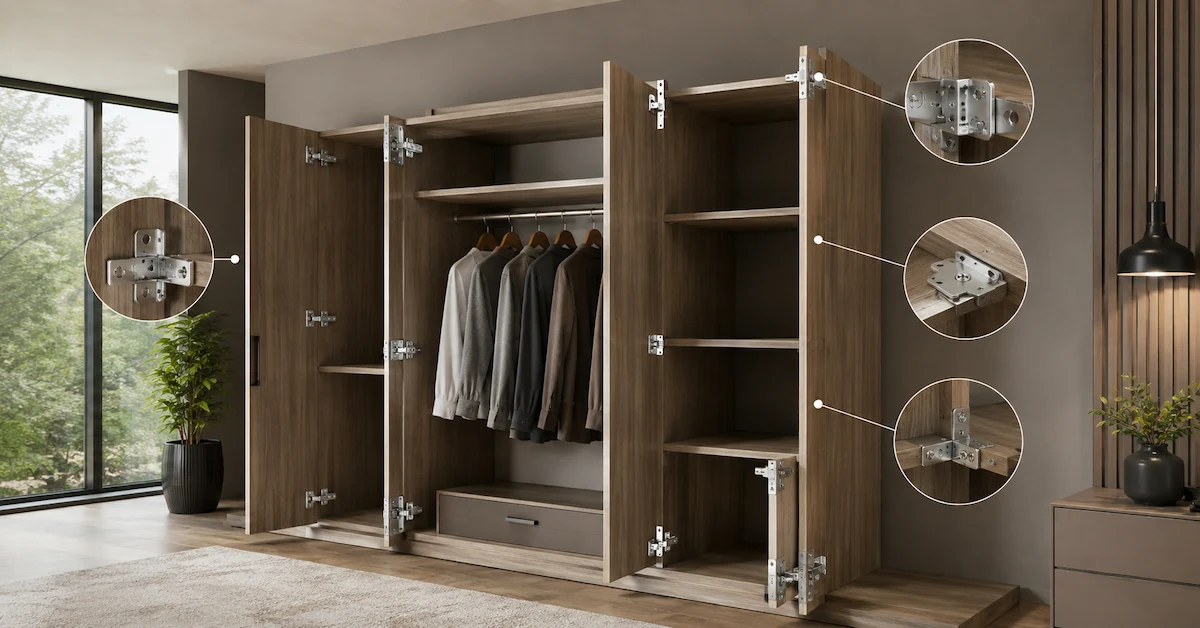

Stamped hardware for furniture is widely used in cabinets, wardrobes, office furniture, kitchen furniture, flat-pack furniture, and custom installation kits. For furniture brands, hardware distributors, and OEM buyers, the quality of stamped parts directly affects assembly strength, product stability, packaging accuracy, and long-term customer satisfaction.
Unlike standard screws or nuts, stamped furniture hardware often needs to match a specific structure, hole position, thickness, surface finish, and installation requirement. That is why buyers should not only compare unit prices. They should also evaluate tooling capability, stamping accuracy, material selection, quality inspection, packaging options, and OEM communication.
JHFIX is a professional fastener and hardware manufacturing factory offering screws, nuts, furniture hardware, stamping hardware, and customized packaging solutions. Buyers can explore more product categories through the JHFIX product page: https://www.jhfix.com/products
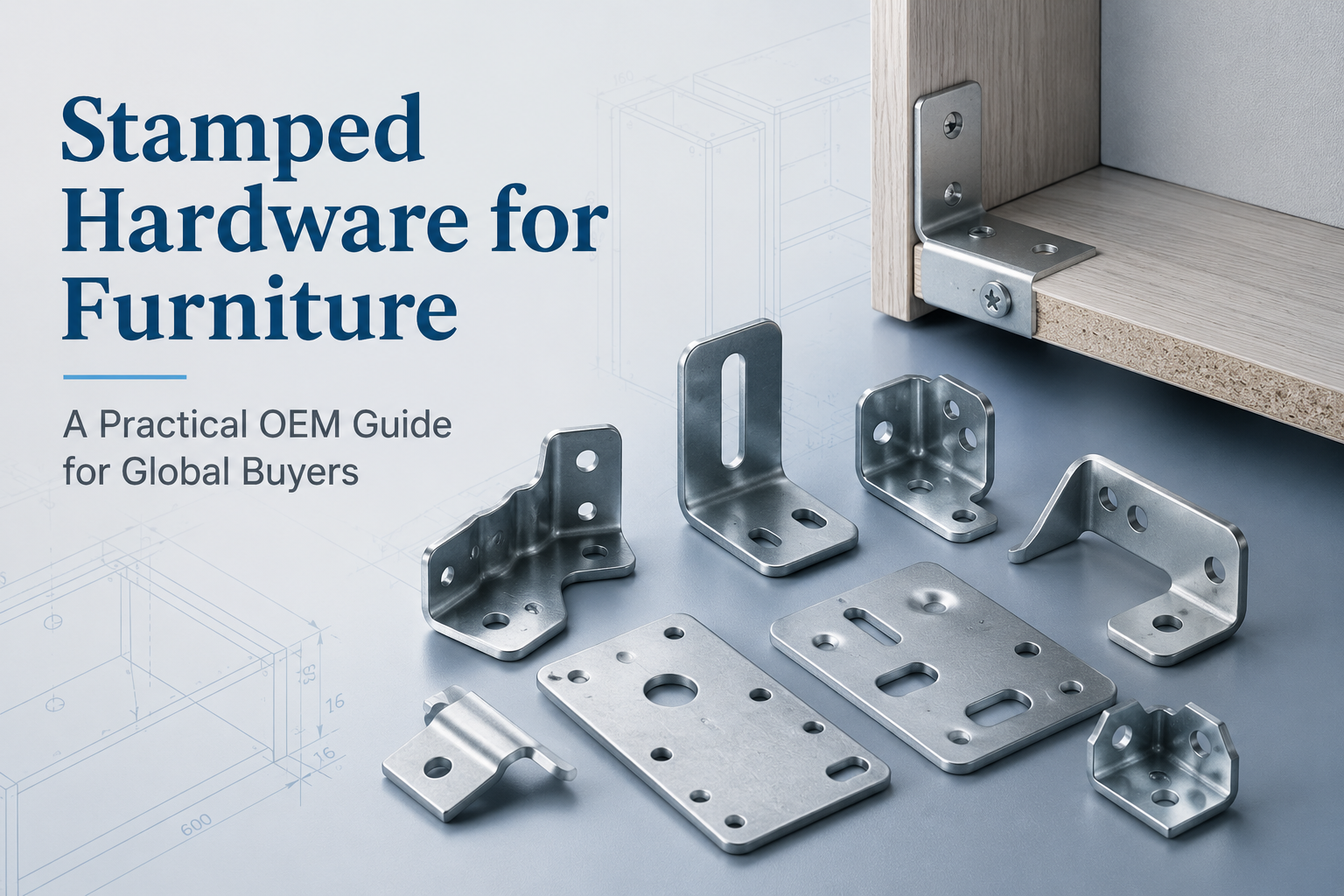
Quick Answer: What Is Stamped Hardware for Furniture?
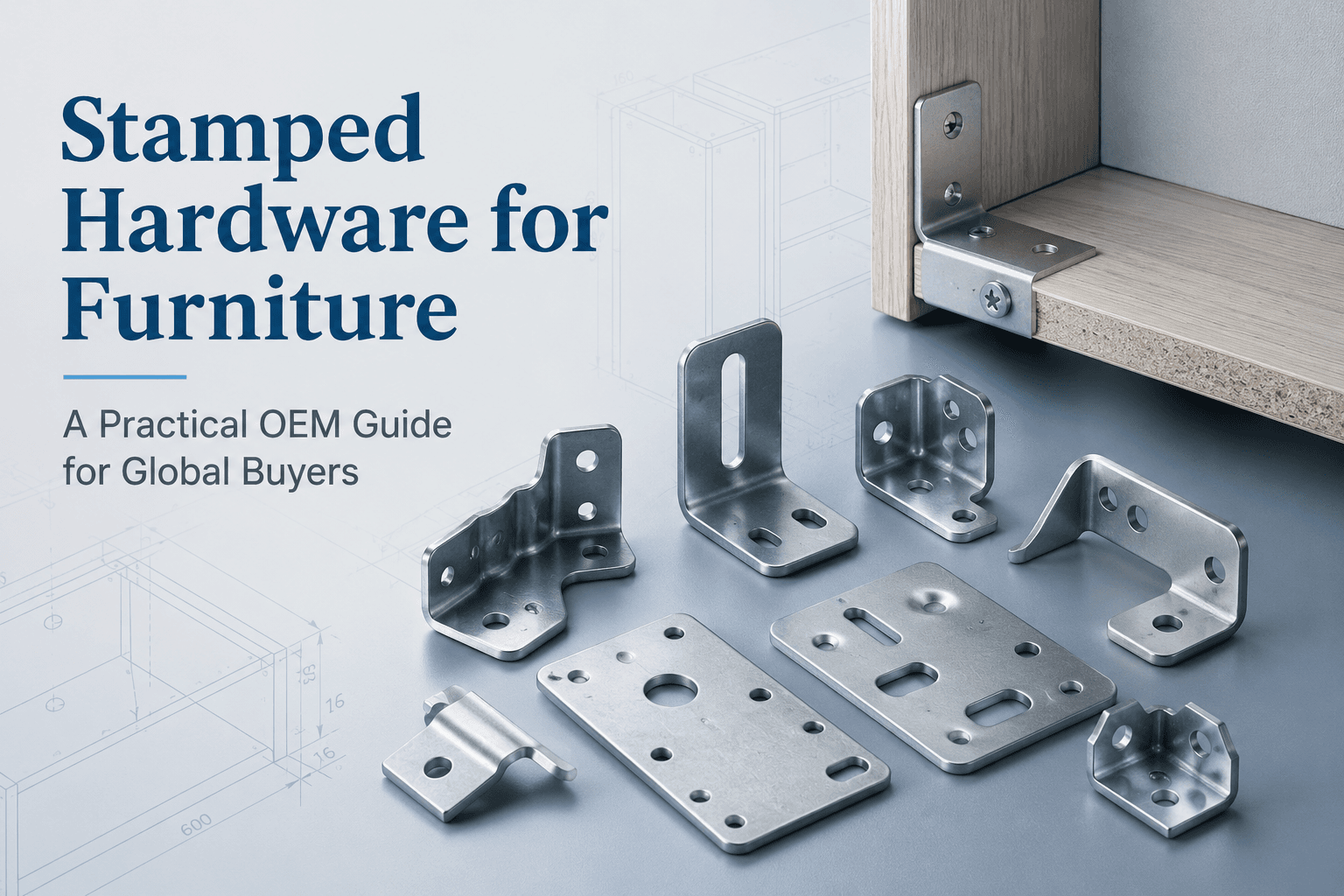
Stamped hardware for furniture refers to metal furniture components produced by stamping, punching, bending, forming, or shaping sheet metal through dies and presses. These parts are commonly used as brackets, plates, connectors, supports, fixing parts, reinforcement pieces, and customized assembly components.
For B2B buyers, stamped furniture hardware is mainly used when a furniture structure requires repeatable dimensions, stable strength, low unit cost in mass production, and customized shapes that cannot be easily replaced by standard fasteners.
Why Furniture Manufacturers Use Stamped Hardware
Furniture production is becoming more modular, standardized, and packaging-driven. Many products need to be shipped flat, assembled quickly, and installed with consistent hardware kits. Stamped hardware helps manufacturers meet these requirements because it can be produced in repeatable shapes and customized dimensions.
Common benefits include:
- Stable dimensions for mass furniture assembly
- Lower cost for high-volume production after tooling
- Flexible shapes for cabinets, panels, frames, and supports
- Custom holes, slots, bends, and mounting structures
- Compatibility with screws, nuts, cam locks, and furniture connectors
- Surface finishes suitable for indoor furniture, kitchen furniture, and retail hardware kits
For furniture brands and distributors, stamped hardware is not only a small accessory. It is part of the final product experience.
Common Applications of Stamped Hardware for Furniture
Stamped hardware for furniture can be used in many different furniture systems. The most common applications include:
| Application | Common Stamped Parts | Buyer Concern |
|---|---|---|
| Cabinet assembly | Mounting plates, joining plates, fixing brackets | Hole accuracy and surface finish |
| Wardrobe systems | Support plates, connectors, reinforcement parts | Load stability and corrosion resistance |
| Kitchen furniture | Metal brackets, cabinet connectors, support clips | Moisture resistance and durability |
| Office furniture | Desk frame plates, panel connectors, fixing hardware | Structural strength and batch consistency |
| Flat-pack furniture | Pre-packed stamped components | Packaging accuracy and easy assembly |
| DIY furniture kits | Small stamped accessories in bags or boxes | Clear matching with screws and instructions |
If the stamped part is packed together with screws, nuts, or furniture connectors, packaging accuracy becomes just as important as part accuracy.
Materials Used for Furniture Stamping Hardware
The material should be selected based on strength, surface finish, corrosion resistance, and cost level.
| Material | Features | Best For |
| Carbon steel | Strong, cost-effective, easy to stamp | General furniture brackets and plates |
| Stainless steel | Good corrosion resistance and clean appearance | Kitchen furniture, humid environments |
| Galvanized steel | Better anti-rust performance than untreated steel | Indoor furniture and hardware kits |
| Aluminum | Lightweight and corrosion-resistant | Lightweight furniture or decorative parts |
| Spring steel | Better elasticity and resilience | Clips, locking parts, flexible components |
For most furniture applications, carbon steel with zinc plating is a practical choice. For humid or premium furniture environments, stainless steel or higher-grade surface treatment may be required.
Surface Finishes and Coating Options
Surface treatment affects appearance, corrosion resistance, and customer perception. OEM buyers should confirm finish requirements before production.
Common options include:
- Zinc plating
- Nickel plating
- Black oxide
- Powder coating
- Electrophoresis coating
- Polishing
- Custom color coating
For visible furniture hardware, appearance matters more. For hidden connectors or internal reinforcement plates, corrosion resistance and dimensional stability may be more important than decorative finish.
Key Specifications Buyers Should Confirm
Before placing an OEM order for stamped hardware for furniture, buyers should prepare clear specifications. A complete RFQ should include:
| Item | What to Confirm |
| Material | Carbon steel, stainless steel, aluminum, galvanized steel |
| Thickness | Sheet thickness based on load and structure |
| Dimensions | Length, width, hole distance, bend height |
| Hole type | Round hole, slotted hole, countersunk hole, threaded hole |
| Tolerance | Critical dimensions and acceptable deviation |
| Finish | Zinc plated, black, nickel, powder coated, custom finish |
| Function | Support, connection, reinforcement, mounting |
| Drawing/sample | 2D drawing, 3D file, or physical sample |
| Packaging | Bulk, bag packaging, blister packaging, box packaging |
| Testing | Dimensional inspection, surface check, load test if needed |
The clearer the specification, the lower the risk of wrong tooling, unstable production, or poor assembly performance.
Stamping Hardware vs. Machined Hardware vs. Cast Hardware
Furniture buyers often compare stamped parts with machined or cast parts. Each option has its own use case.
| Type | Advantages | Limitations | Best For |
| Stamped hardware | Fast production, low unit cost, good repeatability | Tooling needed for custom shapes | High-volume furniture parts |
| Machined hardware | High precision, flexible for small batches | Higher unit cost | Special precision parts |
| Cast hardware | Good for thick or complex 3D shapes | Mold cost and surface finishing needs | Decorative or heavy-duty parts |
| Standard fasteners | Easy to source, low development cost | Limited shape and function | Screws, nuts, bolts, washers |
For furniture manufacturers with stable demand, stamped hardware is usually a cost-effective solution because the tooling cost can be spread across mass production.
How to Choose a Stamped Hardware Supplier
Choosing the right supplier is not only about the lowest quote. A reliable stamped hardware supplier should understand furniture assembly, production tolerances, packaging requirements, and export quality expectations.
1. Check In-House Manufacturing Capability
A supplier with in-house stamping, tooling support, assembly, and packaging can control quality more effectively. JHFIX provides integrated fastener and hardware manufacturing support, including stamping hardware and related furniture hardware products. You can review the stamping category here: https://www.jhfix.com/products/stamping-hardware
2. Confirm Engineering Communication
For custom stamped parts, engineering communication is critical. The supplier should review drawings, confirm dimensions, check hole locations, evaluate bend radius, and suggest manufacturable improvements.
3. Review Quality Control Process
A good supplier should inspect raw materials, monitor production, measure key dimensions, check surface finish, and perform final inspection before shipment. This is especially important for furniture kits where missing or incorrect parts can cause customer complaints.
4. Ask About Packaging Options
Many furniture buyers need hardware kits, not just loose metal parts. JHFIX also supports bag packaging, plastic blister packaging, box packaging, and plastic bucket packaging, which is useful for furniture brands, retail hardware kits, and e-commerce sellers.
5. Evaluate Export Experience
Global buyers need stable communication, clear order documents, export packaging, and reliable lead time. JHFIX has over 20 years of fastener and hardware manufacturing experience and supplies products to customers in multiple international markets. More company information is available here: https://www.jhfix.com/about-us
OEM/ODM Process for Custom Stamped Furniture Hardware
A practical OEM process usually includes these steps:
- Buyer sends drawings, samples, or functional requirements
- Engineering team reviews material, structure, dimensions, and tolerance
- Supplier provides quotation, tooling cost, and lead time
- Sample or pre-production part is made for approval
- Buyer confirms fit, finish, packaging, and function
- Mass production begins after approval
- Final inspection and packaging are completed before shipment
This process helps reduce design mistakes before bulk production.
Cost Factors of Stamped Hardware for Furniture
The final cost depends on more than material weight. Buyers should consider:
- Material type and thickness
- Tooling complexity
- Number of holes, bends, or forming steps
- Surface treatment
- Order quantity
- Tolerance requirements
- Packaging method
- Inspection and sorting needs
- Export carton and labeling requirements
For example, a simple flat mounting plate may be low-cost, while a multi-bend support bracket with custom coating and retail packaging will cost more. The best approach is to send drawings and expected annual quantity so the supplier can quote based on tooling and production efficiency.
Quality Control Checklist for Buyers
Before confirming mass production, buyers can use this checklist:
- Are all drawings and samples confirmed?
- Is the material grade clearly listed?
- Are critical dimensions marked?
- Is the surface finish approved by sample?
- Are holes, slots, and bends measured?
- Is there a pre-production sample?
- Is packaging artwork or label confirmed?
- Are screws, nuts, or other matching parts included?
- Is there a final inspection before shipment?
- Are cartons suitable for export handling?
This checklist is especially useful for buyers sourcing furniture hardware kits or private-label hardware packages.
Why Work with JHFIX for Furniture Stamping Hardware?
JHFIX supports global buyers with one-stop hardware manufacturing and packaging services. Instead of sourcing stamped parts, screws, nuts, connectors, and packaging from separate suppliers, buyers can manage more components through one factory.
JHFIX can support:
- Stamped furniture hardware
- Furniture connectors and cam lock systems
- Screws and nuts for assembly kits
- Custom hardware parts based on drawings or samples
- Bag, blister, box, and bucket packaging
- OEM/ODM production support
- Quality inspection before shipment
For buyers who need both hardware products and organized packaging, this reduces communication cost and improves order consistency.
You can also check common order questions on the JHFIX FAQ page: https://www.jhfix.com/faq
FAQ
1. What is stamped hardware for furniture?
Stamped hardware for furniture refers to metal parts made by stamping, punching, bending, or forming sheet metal into furniture components such as brackets, plates, connectors, supports, and reinforcement parts.
2. What materials are commonly used for stamped furniture hardware?
Common materials include carbon steel, stainless steel, galvanized steel, aluminum, and spring steel. The right material depends on strength, appearance, corrosion resistance, and cost requirements.
3. Can stamped furniture hardware be customized?
Yes. Custom stamped hardware can be made according to drawings, samples, size requirements, hole positions, thickness, surface treatment, and packaging needs.
4. Is stamping suitable for small orders?
Stamping is more cost-effective for medium and large production runs because tooling is usually required. For very small orders, buyers should confirm tooling cost and MOQ with the supplier.
5. What surface finish is suitable for furniture hardware?
Zinc plating, nickel plating, black coating, powder coating, and custom color finishes are common. Hidden hardware usually focuses on corrosion resistance, while visible hardware also needs better appearance.
6. What should I provide when requesting a quote?
You should provide drawings, samples, material requirements, thickness, dimensions, surface finish, quantity, packaging method, and any testing requirements.
7. Can stamped hardware be packed with screws and nuts?
Yes. Stamped parts can be packed together with screws, nuts, washers, connectors, or installation accessories in bag packaging, blister packaging, box packaging, or customized hardware kits.
8. How can I reduce quality risks in OEM stamped hardware orders?
Confirm drawings, approve samples, define critical dimensions, check surface treatment, request final inspection, and make sure packaging details are confirmed before mass production.
Conclusion
Stamped hardware for furniture is a practical solution for furniture manufacturers, hardware distributors, DIY kit brands, and OEM buyers who need stable quality, repeatable dimensions, and customized metal components. The right supplier should offer more than stamping production. It should also provide engineering review, material selection, surface treatment, quality inspection, and packaging support.
If you are sourcing stamped hardware for furniture, JHFIX can help review your drawings, develop samples, arrange production, and provide suitable packaging for your market. Visit JHFIX to explore fastener, furniture hardware, stamping hardware, and packaging solutions: https://www.jhfix.com/