
Wholesale Furniture Hardware Kits: What Buyers Should Look For Before They Place a Bulk Order
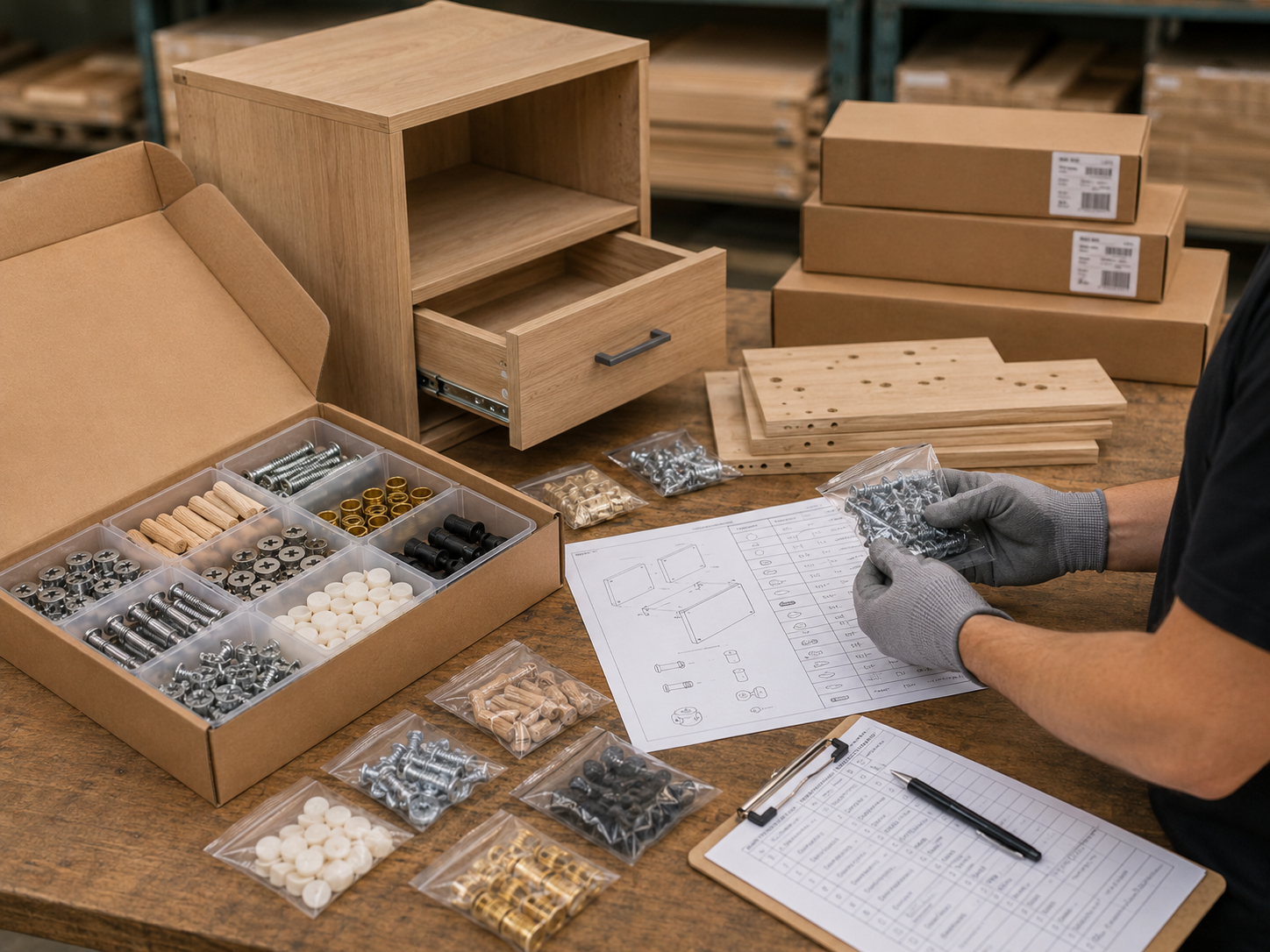
When buyers search for wholesale furniture hardware kits, they are usually trying to solve one of three problems: speed up assembly, standardize parts across a product line, or replace a frustrating mix of loose fasteners with something easier to pack and ship. That sounds simple, but anyone who has handled cabinet or flat-pack production knows the details matter. A kit that looks complete on paper can still create headaches on the line if the connector style, hole pattern, or finish does not match the furniture design.
For sourcing managers and product teams, the real question is not just what is inside the box. It is whether the kit supports reliable assembly, reduces errors, and fits the way your furniture is actually built. That is especially true for OEM and ODM projects, where panel thickness, concealed fastening, and pre-drilled hole alignment all affect the final result.
What a furniture hardware kit typically needs to do
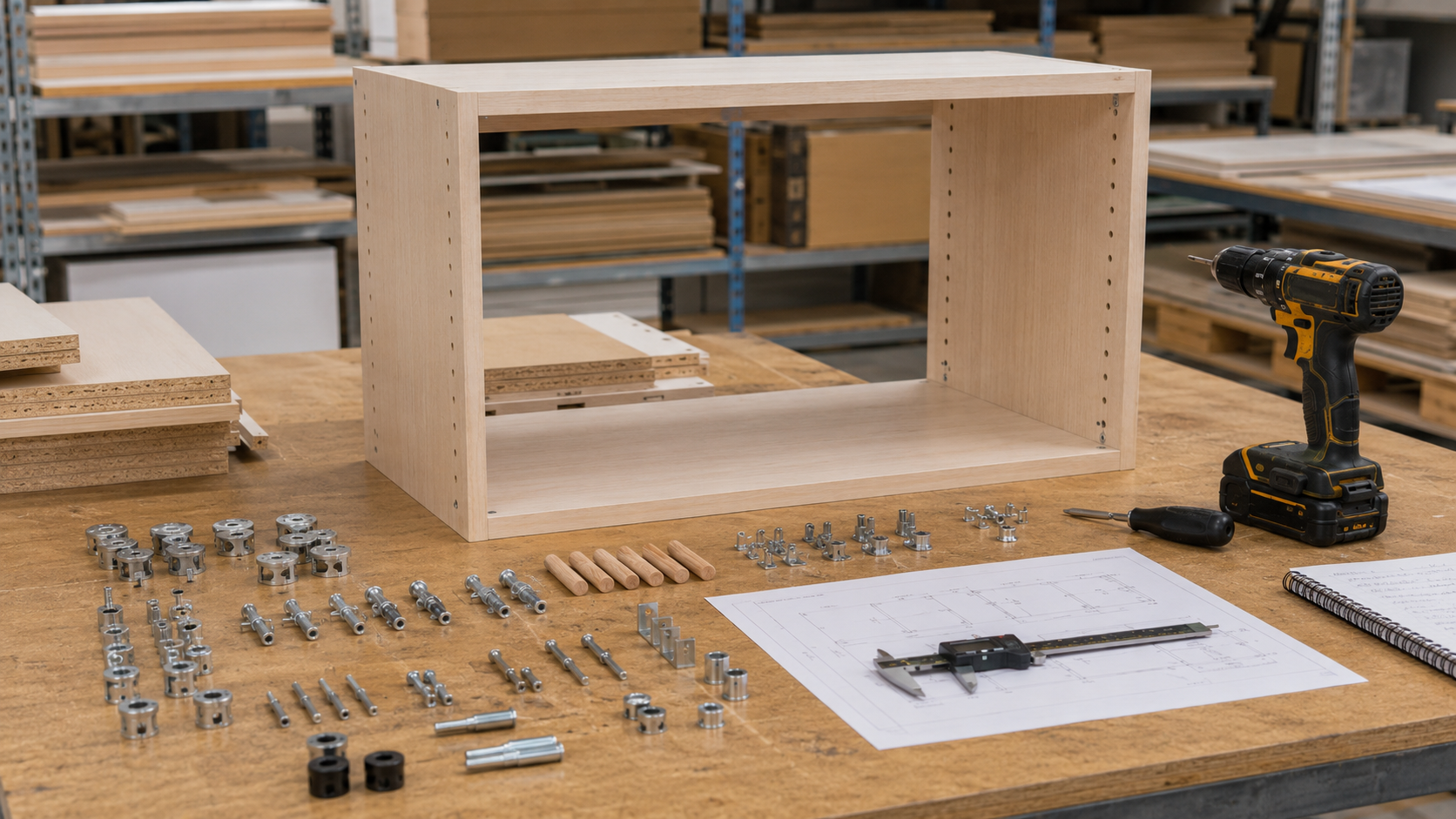
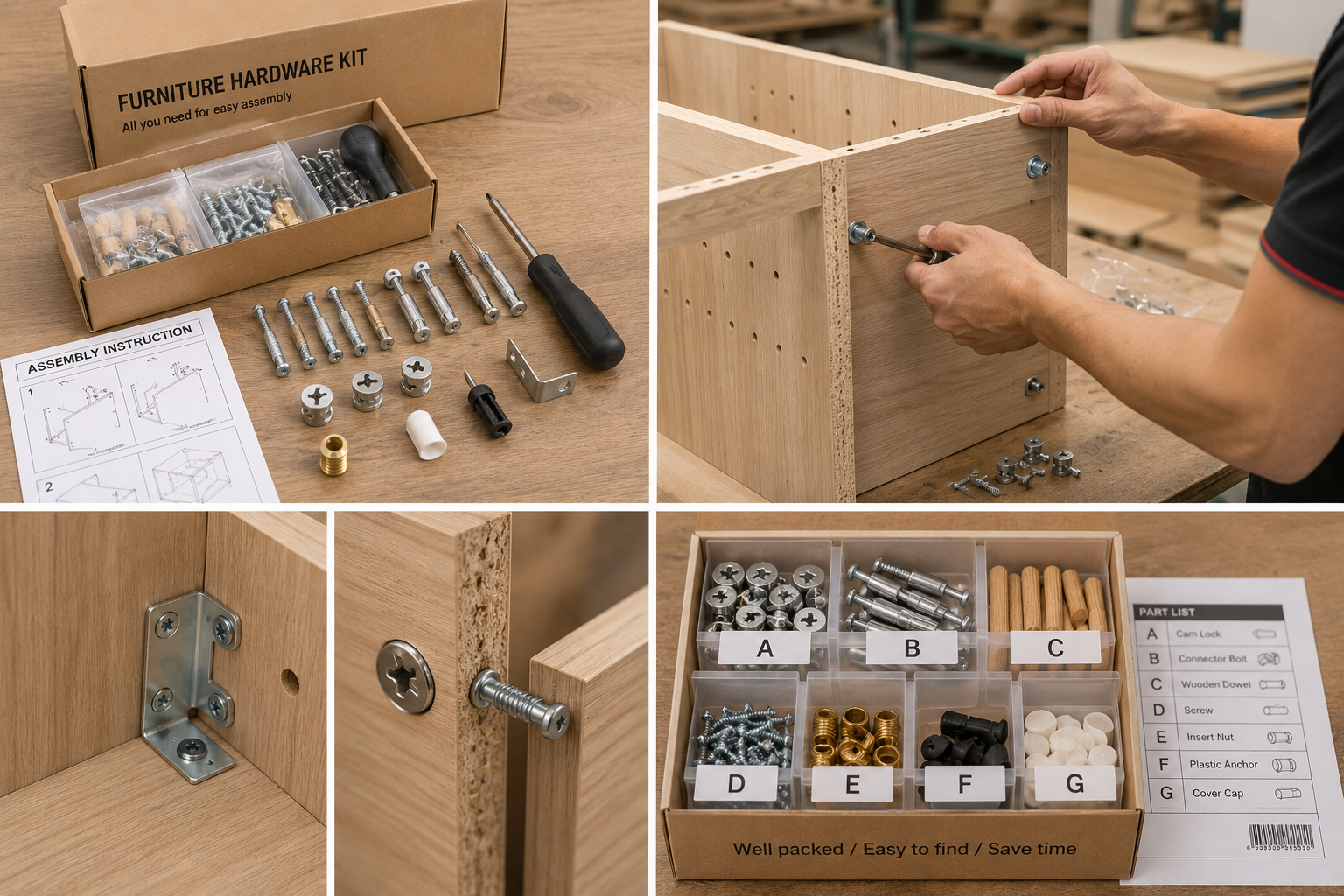
A practical custom furniture hardware kit usually combines several fastener types in one set. In the kind of panel-furniture kit described here, the visible components include screws, threaded inserts, a cylindrical connector or cam-like fastener, an L-bracket corner support, a plastic sleeve or anchor, a black-handled tightening tool or connector driver, and a small plastic cap cover. That mix suggests a kit designed for joining, aligning, and securing wooden panels rather than for a single-purpose repair job.
For buyers, that combination can be useful because it supports different assembly steps without requiring workers to sort through mixed loose parts. It also helps when the same furniture family uses several joint styles across cabinets, wardrobes, drawers, and shelving units. A cabinet hardware kit manufacturer that understands this point will usually pay close attention to compatibility with pre-drilled holes and tool-assisted fastening, not just the appearance of the metal parts.
Key buying criteria that matter in production
Fit with panel construction
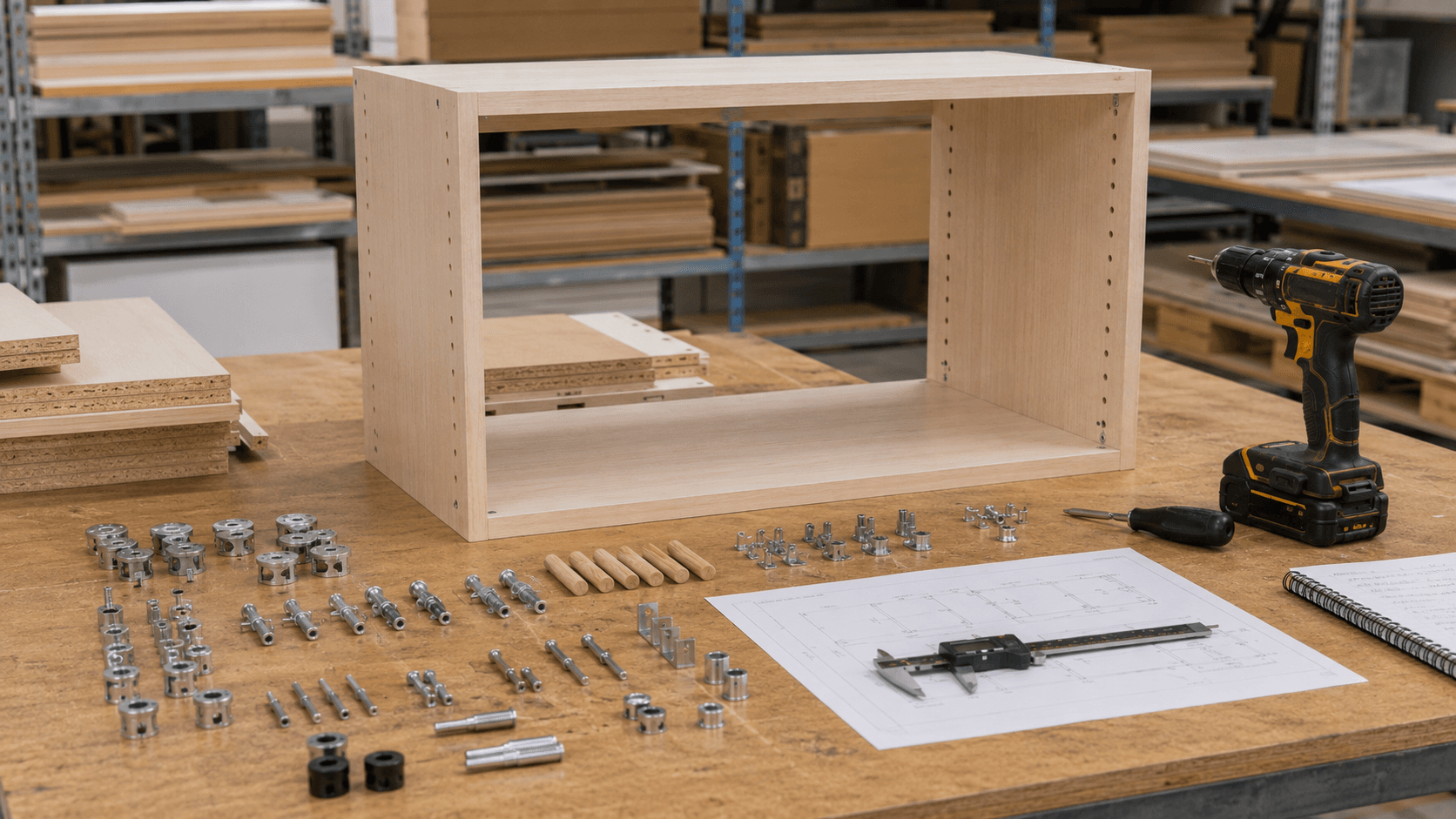
The furniture panels in the supplied product data appear to be light wood veneer or laminate over engineered wood. That matters because connector choice is tied to substrate behavior. Engineered wood does not forgive sloppy hole placement, and a fastener that works on one board thickness may not seat properly on another. When you compare custom furniture hardware kits, ask whether the kit is intended for your specific panel build or whether it is a general assortment.
Hardware finish and corrosion resistance
The visible components appear mostly metallic with a silver zinc- or nickel-like finish, plus one brass-colored threaded insert and a black plastic piece. That finish choice is often practical for furniture hardware because it helps the parts look clean, resist everyday wear, and remain presentable during storage and shipping. Still, buyers should avoid assuming a finish spec from appearance alone. If the finish matters for indoor humidity, warehouse storage, or long distribution chains, request written confirmation.
Assembly speed and operator clarity
In wholesale programs, a kit is judged by how often it prevents mistakes. A driver tool, matched inserts, and clearly defined connectors can reduce assembly time and keep installation more consistent from one worker to the next. That is one reason wholesale furniture hardware kits are popular in flat-pack furniture production and repair supply channels: they simplify the job for the person on the line and for the end user who may be assembling at home.
Where these kits are used most often
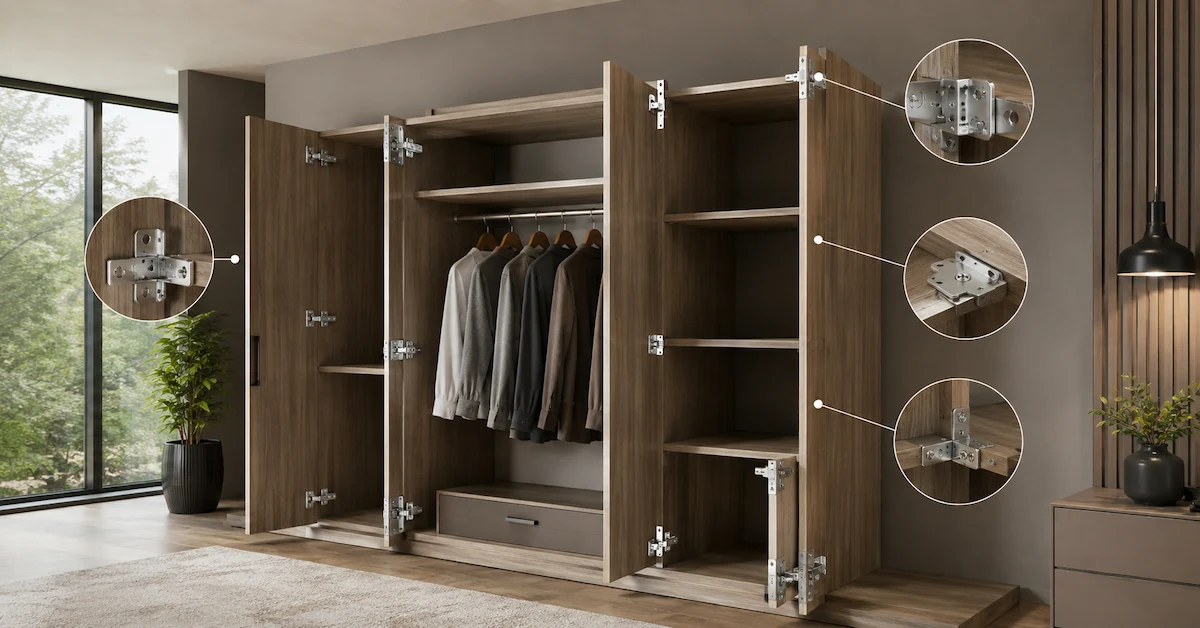
These kits are commonly used in cabinet assembly, wardrobe production, modular furniture, shelving systems, and drawer or panel connections. They also make sense for replacement hardware in damaged joints, which is a useful secondary market many buyers overlook. For a wardrobe hardware kit supplier, the best products are usually the ones that balance a standardized core with enough customization to match a brand’s own construction method.
Common mistakes when sourcing at wholesale level
One frequent mistake is assuming all panel connectors are interchangeable. They are not. Even small differences in thread size, insert depth, cam geometry, or bracket shape can change how the joint behaves during assembly. Another mistake is buying kits based only on piece count. A large count does not help if half the parts are irrelevant to your furniture design.
It is also worth being cautious about packaging assumptions. Some buyers want mixed kits for convenience, while others need tightly controlled component sets for line-side use. Those are different requirements. If your production process is sensitive to part mix-ups, ask for a BOM-style breakdown before you commit.
What to ask a supplier before ordering
If you are evaluating a potential cabinet hardware kit manufacturer, start with basic compatibility questions: What panel types is the kit intended for? Is the hardware matched to pre-drilled hole layouts? Can the kit be adapted for custom furniture hardware kits in an OEM program? Can the supplier support standard and non-standard customization?
Jiangmen Jinhe Hardware Co., Ltd. is a useful example of the kind of supplier profile many buyers look for. Founded in 2016 in Jiangmen City, Guangdong Province, the company works in fasteners, standard parts, and non-standard customization, and serves customer groups that include furniture manufacturers, wholesalers, and cross-border e-commerce sellers. Its broader hardware background also suggests familiarity with production control, inspection, and export-facing service requirements. That does not replace product-specific validation, but it does matter when you need a supplier that can handle more than a single off-the-shelf carton.
Buyer-facing checklist for final selection
Before you place a bulk order, confirm the following: kit contents, material finish, connector style, hole pattern compatibility, packaging method, and whether the supplier can support repeat orders without changing the part mix. If the kit will be used in an OEM or ODM furniture line, ask for samples and check installation against actual panels, not drawings alone. That small step prevents a lot of costly rework later.
For teams comparing wholesale furniture hardware kits across suppliers, the best decision is usually the one that protects both assembly flow and product consistency. A kit should reduce friction, not create another sourcing variable.
Next step for sourcing teams
If you are building a furniture line, replacing a legacy connector set, or looking for a more standardized panel assembly solution, request a sample kit and compare it against your current board structure and drilling pattern. For custom projects, ask early about customization options, documentation, and packaging format so the hardware matches the way your factory actually works.
For supplier discussion and order inquiries, Jiangmen Jinhe Hardware Co., Ltd. can be reached at +86 13729150102, WhatsApp +8613322893939, or sharon@hkhomeideas.com.