
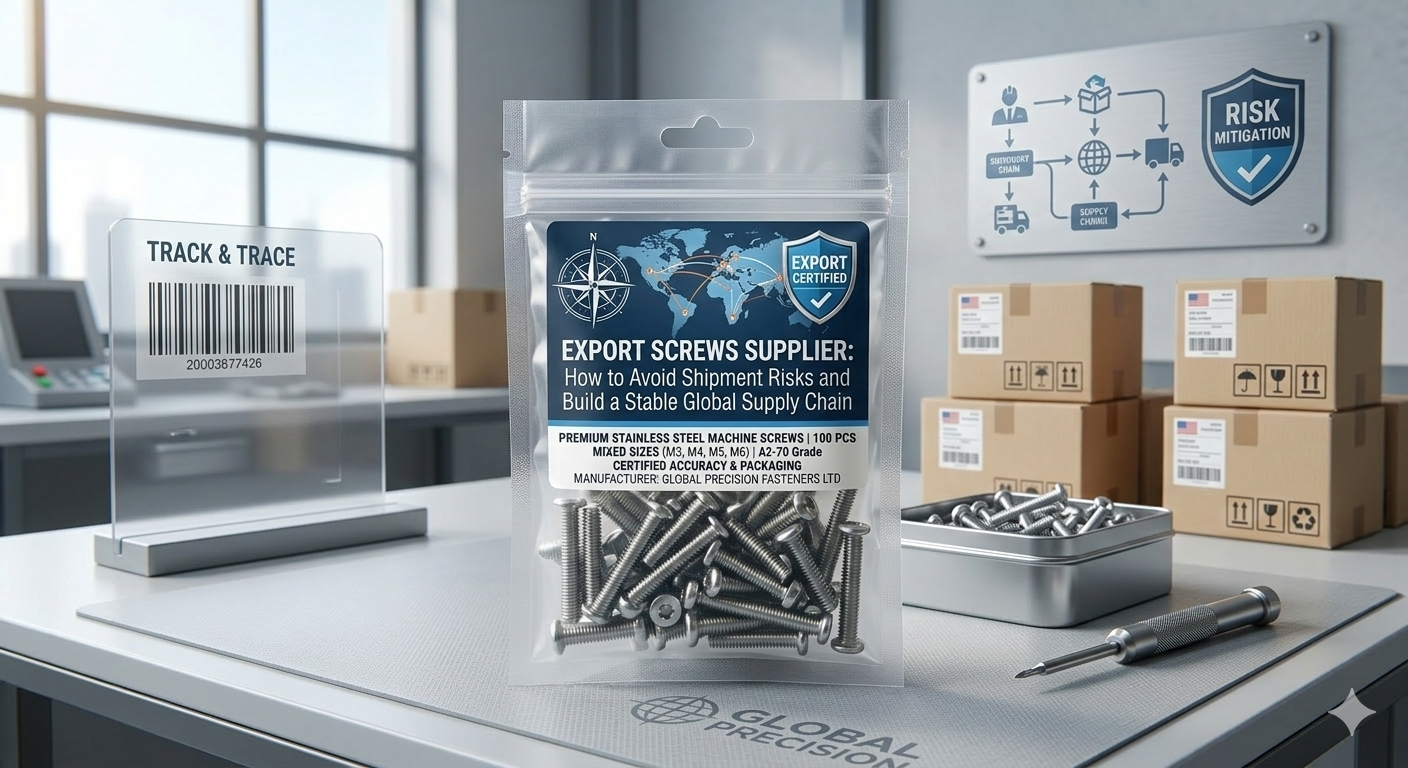

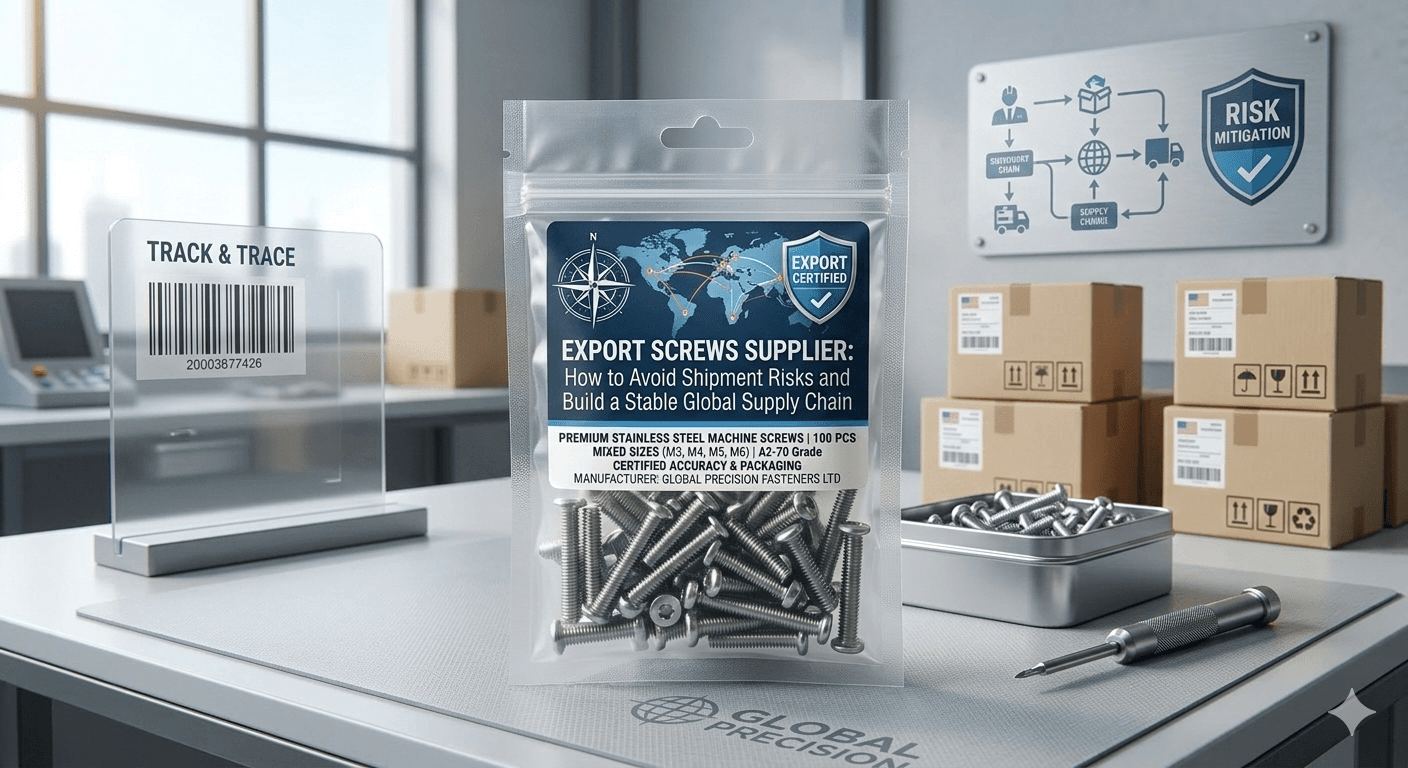
When Export Screws supplier Shipments Go Wrong
Anyone who has handled international fastener sourcing has seen it before. A container arrives. Something feels off. The cartons are slightly deformed. Labels don’t match the packing list. The screws look fine—but during installation, torque feels inconsistent.
At first, it seems like a logistics issue. Then a packaging issue. Then maybe a manufacturing problem. In reality, it is usually all of them—quietly connected.
This is exactly where many buyers struggle. They assume exporting screws is just an extension of domestic supply. It isn’t. It’s a system problem.
At JHFIX, we approach export screw supply differently. Instead of treating manufacturing, packaging, and shipping as separate steps, we align them into one controlled workflow. The goal is simple: what leaves the factory should arrive ready for assembly—without surprises, without adjustments.
What the Screws Are Made Of—and Why It Still Matters in export screws supplier
Before discussing packaging or logistics, it’s worth stepping back. What exactly are you exporting?
Material choice plays a deeper role in export supply than most expect. Not just for performance—but for compliance, durability during transport, and long-term storage.
Carbon steel screws are widely used due to cost efficiency. Stainless steel adds corrosion resistance, especially for humid or coastal markets. Alloy steel increases strength for industrial applications.
But the real difference lies in treatment and consistency.
| Material Type | Typical Strength | Export Consideration |
|---|---|---|
| Carbon Steel | 400–700 MPa | Requires anti-rust protection |
| Stainless Steel (304/316) | 500–700 MPa | Ideal for humid climates |
| Alloy Steel | 800–1200 MPa | Used in heavy-duty applications |
According to standards from organizations like ISO (https://www.iso.org) and ASTM (https://www.astm.org), even slight inconsistencies in material composition or heat treatment can affect mechanical behavior.
Now imagine that inconsistency multiplied across 50,000 screws in a shipment. That’s when export issues start to show up—not immediately, but at the customer’s assembly line.
Why Buyers Stay with Us: Experience That Shows Up in the Details
It’s easy to claim experience. It’s harder to show it where it matters.
Over the years, we’ve seen patterns repeat across export projects—miscounts, weak cartons, mismatched documentation, unstable screw performance. None of these are dramatic on their own. Together, they create friction.
What we focus on instead is control:
-
Controlled material sourcing with batch traceability
-
Thread rolling calibrated for consistent torque behavior
-
Packaging systems designed for long-distance transport
-
Documentation aligned with customs and client requirements
This approach doesn’t just reduce risk. It makes supply predictable. And for OEM buyers, predictability is often more valuable than price.
The Quiet Cost of Poor Export Packaging
Let’s talk about something most suppliers underestimate—packaging.
Bulk screws packed loosely in cartons may survive short domestic transport. Export is different. Containers are stacked, shifted, exposed to humidity, and handled multiple times.
What happens then?
Cartons compress. Inner bags tear. Screws mix. Labels fade.
The result isn’t just cosmetic damage. It’s operational disruption.
| Packaging Type | Counting Accuracy | Damage Risk | Real Impact |
|---|---|---|---|
| Loose bulk cartons | ~90% | High | Recounting, delays |
| Standard packaging | ~97–98% | Moderate | Occasional adjustments |
| Export-grade packaging | 99%+ | Low | Stable operations |
Export-grade packaging isn’t about making things look better. It’s about ensuring that what arrives can be used immediately—no sorting, no guessing.
Compliance Is Not Paperwork—It’s Timing
A missing document doesn’t always stop a shipment. But it often slows it down.
In export screw supply, compliance includes:
-
Material declarations (RoHS, REACH)
-
Mechanical property standards (ISO, ASTM)
-
Accurate labeling and HS codes
-
Country-of-origin documentation
Organizations such as IRENA (https://www.irena.org) and WTO (https://www.wto.org) emphasize how regulatory alignment affects global trade efficiency.
What buyers often experience is simpler: paperwork delays mean containers sit. And when containers sit, costs increase.
A reliable export screws supplier integrates compliance into production—not after it.
A Real Case: When Packaging Changed the Entire Delivery Outcome
A European furniture distributor approached us after repeated issues with previous suppliers. The problem wasn’t the screws themselves—it was everything around them.
Cartons arrived damaged. Mixed screws required manual sorting. Assembly teams reported delays due to missing quantities.
We didn’t change the screw specification immediately. Instead, we adjusted:
-
Reinforced carton structure for stacking pressure
-
Inner compartment packaging to separate screw types
-
Moisture-resistant liners for sea transport
-
Pre-counted packaging aligned with SKU requirements
The result?
-
Counting accuracy improved from ~92% to over 99%
-
Assembly preparation time reduced by approximately 20%
-
Customer complaints dropped significantly within two shipments
Nothing dramatic. Just controlled improvements. But those changes reshaped the client’s entire supply experience.
Where Export Screw Supply Really Gets Tested
Some projects expose supplier weaknesses faster than others.
You’ll see it in:
-
Flat-pack furniture shipped across continents
-
Industrial equipment requiring consistent fasteners in multiple markets
-
Hardware distributors managing regional inventory
-
Long-term OEM programs with repeat shipments
In these environments, consistency matters more than anything else. Not once—but every time.
Frequently Asked Questions
Q1: What is the most common failure in export screw supply?
Not the screw itself—but packaging and documentation inconsistencies that disrupt downstream operations.
Q2: How can buyers reduce export-related risks?
By working with suppliers who integrate manufacturing, packaging, and compliance into one controlled system.
Q3: Does better packaging really reduce costs?
Yes. It reduces material loss, eliminates recounting, and prevents delays—often saving more than the packaging cost itself.
A More Predictable Way to Handle Export Screw Supply
Export supply should feel stable. Not perfect—but predictable. That’s the difference.
At JHFIX, we focus on making that stability visible—through controlled manufacturing, export-ready packaging, and aligned documentation. If you want to understand how these elements come together, you can explore more details on our homepage:
https://www.jhfix.com/
If you are currently dealing with shipment inconsistencies, packaging failures, or export delays, it’s worth taking a closer look at the root cause. Often, the solution is not changing the product—but changing how it is supplied. You can reach out to our team here to discuss your project and explore a more reliable approach:
https://www.jhfix.com/contact-us