
What buyers really need from a fasteners supplier
When engineers start comparing sources for small metal parts, the shortlist usually looks simple on paper. In practice, choosing a Fasteners Supplier is less about finding the lowest unit price and more about finding a shop that can keep dimensions steady, handle mixed materials, and support the realities of assembly. That matters whether you are building electrical enclosures, appliance subassemblies, medical equipment, or general industrial hardware.
Fasteners are easy to overlook because they are small, but they can quietly drive assembly cost, scrap rates, rework, and field failures. A screw that strips too early, a shoulder that sits a fraction high, or a finish that does not match the rest of the build can slow an entire production line. For sourcing teams, the decision is not just “who can ship parts,” but “who can supply parts that fit the job every time.”
Why precision matters more than quantity
Jiangmen Jinhe Hardware Co., Ltd. focuses on machine screws, self-tapping screws, micro screws, and precision screws, with materials including stainless steel, iron, and aluminum. The company also supports non-standard customization, which is often where the real value sits for OEMs. Standard parts cover a lot of ground, but many assemblies still need a custom head style, a special thread detail, or a turned feature that reduces the number of separate components in the stack-up.
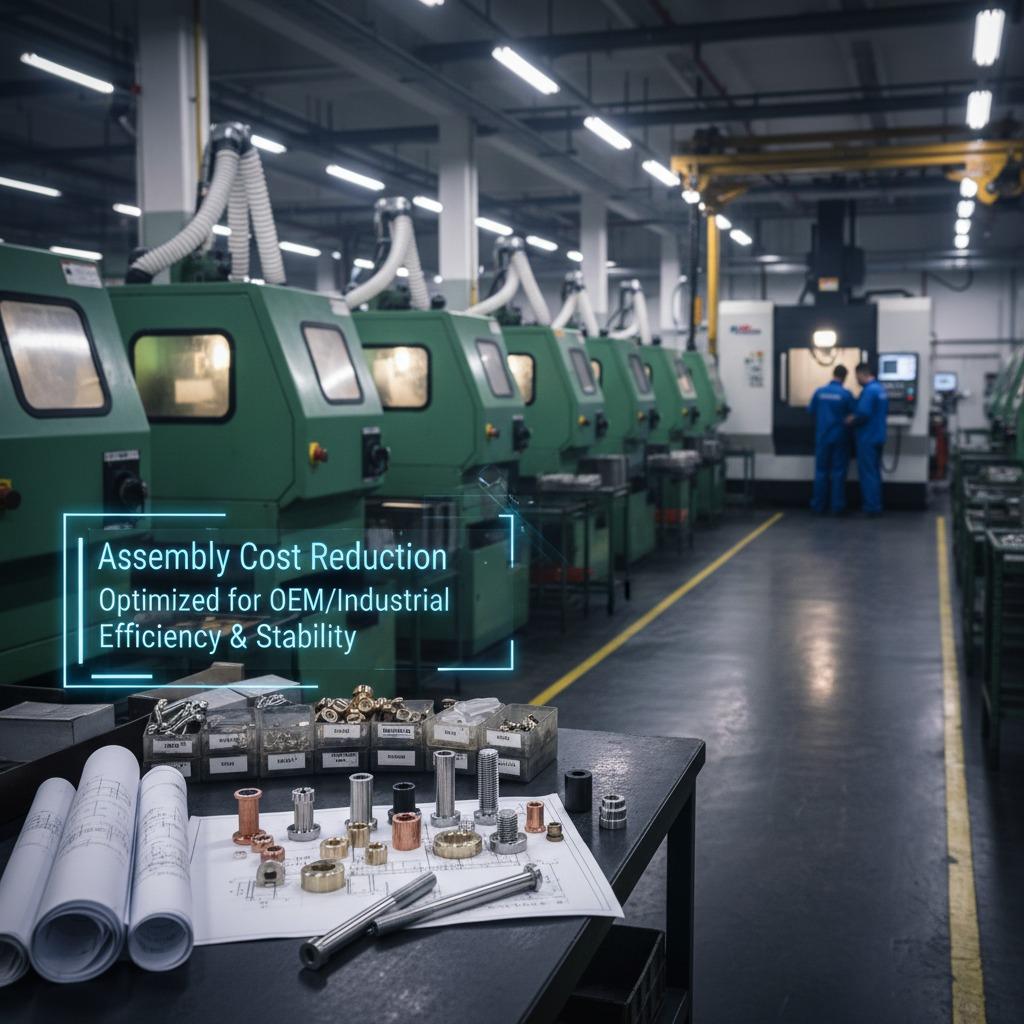
The product visuals point to precision metal fasteners and turned screw-machined components: threaded studs, shoulder-style parts, hex-drive features, spacers, inserts, and other small parts with mixed finishes. That mix is important. One assembly may need a bright stainless-like finish for appearance and corrosion resistance, while another needs a black-coated part or a brass-tone component for differentiation or contact behavior. Buyers often underestimate how much finish consistency affects final assembly, especially when parts are visible to end users.
Standard parts, custom parts, and when each makes sense
A good metal fasteners manufacturer usually serves both lanes. Standard parts are efficient when the design is stable and the application is common. Custom parts make sense when the assembly has one of those annoying problems that keeps returning: too many pieces, too much manual alignment, or a need to combine fastening and locating in a single component.
For OEM and industrial buyers, custom turned fasteners can reduce assembly cost by collapsing steps. That does not always mean the part is cheaper on paper. It means the line runs faster, the operator handles fewer loose pieces, and the finished product becomes more repeatable. That is often where the real savings live.
What to look for in a manufacturing partner
1. Material range
A supplier that can work across stainless steel, iron, and aluminum gives product teams more flexibility. Material choice affects weight, corrosion behavior, machinability, and appearance. It also changes how comfortably a part can be turned or threaded without burr issues.
2. Process capability
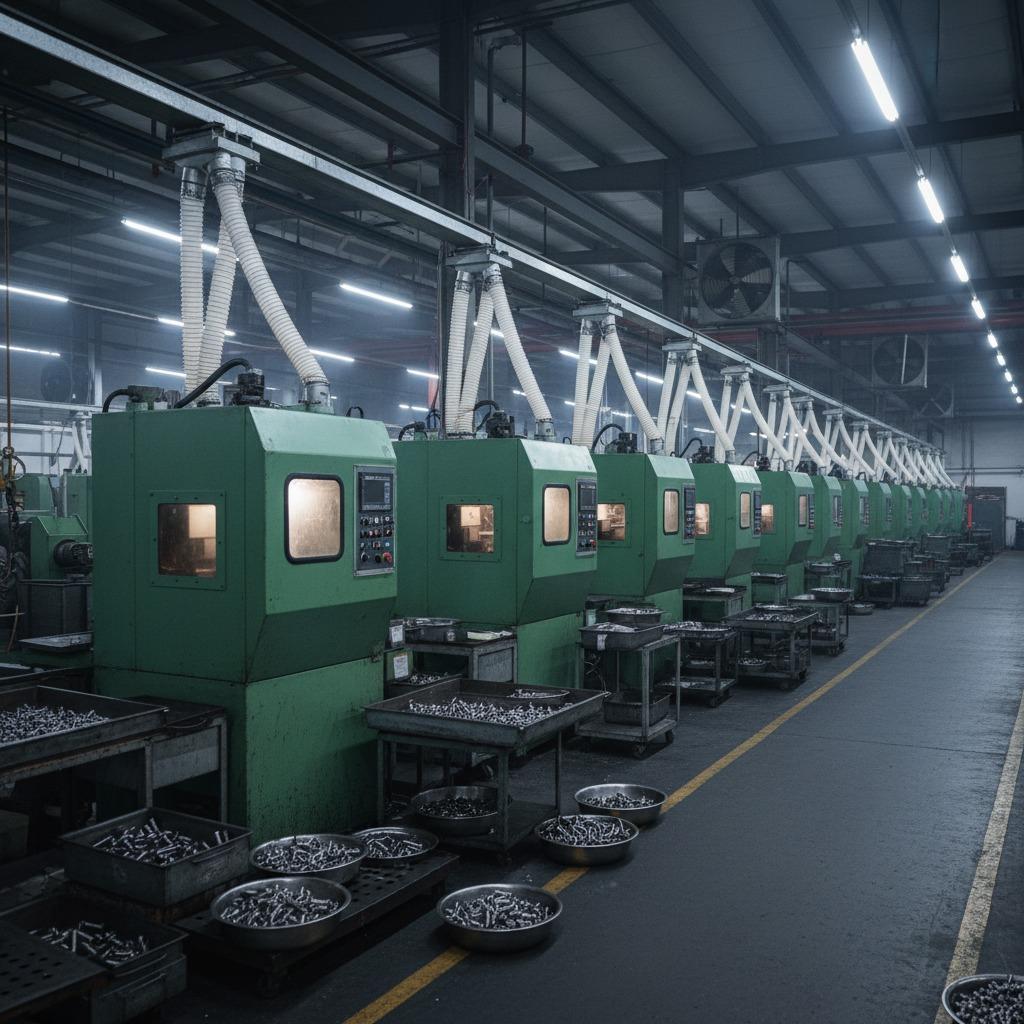
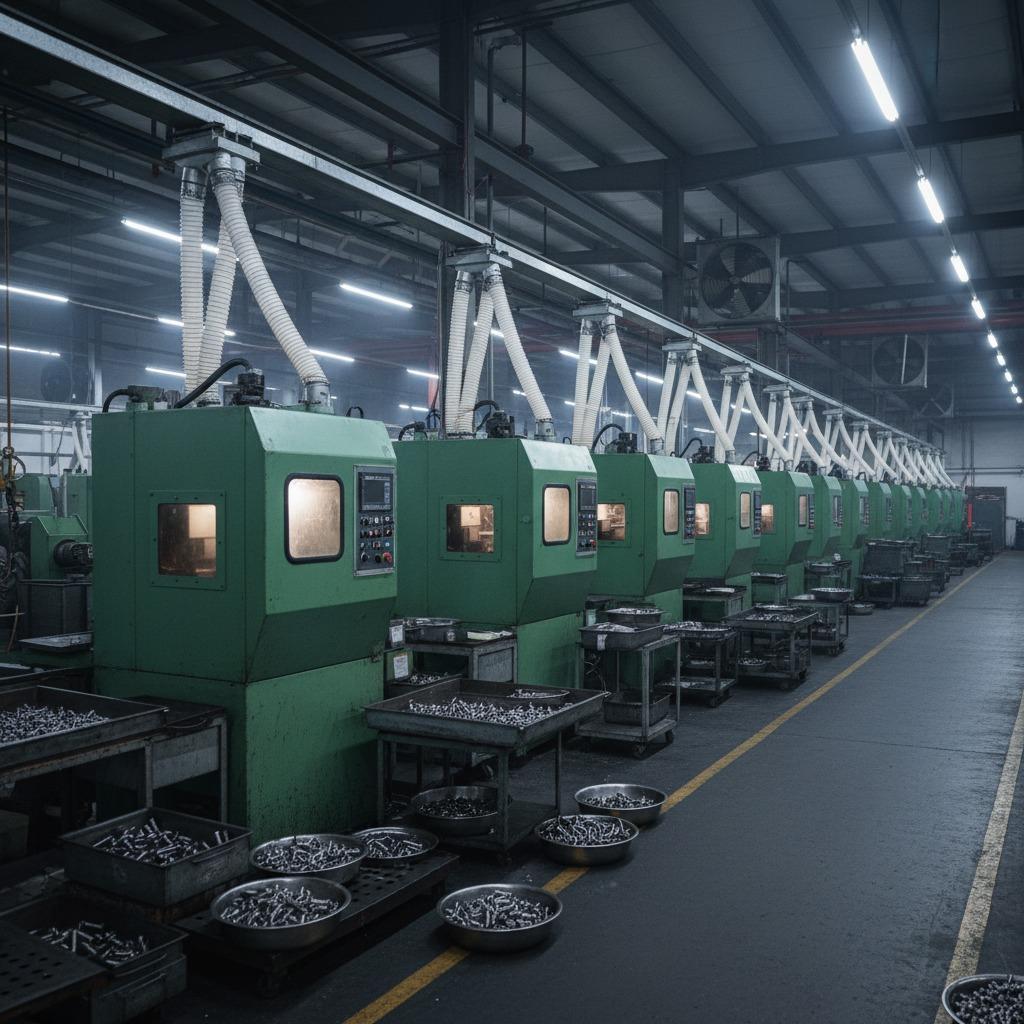
The industrial finishing line shown in the preparation data suggests batch processing of small metal parts in enclosed stations with ducted extraction. Even if the exact process is not identified, the setup signals something important: the supplier understands that small parts need controlled handling, dust management, and repeatable post-machining treatment. For buyers, that usually translates into better consistency and a cleaner factory environment.
3. Inspection discipline
Jiangmen Jinhe states that products undergo strict inspection before delivery and are accompanied by necessary documentation. That is the kind of phrase buyers should test during qualification. Ask what gets inspected, how often, and where the records sit. A supplier does not need to overwhelm you with paperwork, but it should be able to show that quality control is part of the process rather than an afterthought.
Common mistakes buyers make
The most common mistake is treating all fasteners as interchangeable. They are not. A micro screw for electronics is a different sourcing problem from a general-purpose machine screw. Another frequent error is specifying only the basic shape while leaving thread details, finish, or mating condition vague. That invites back-and-forth later, and sometimes the wrong part makes it into trial assembly.
There is also a tendency to ignore logistics until the end. Jinhe notes international freight forwarding, domestic logistics, warehousing, and supply chain support. For export buyers or wholesalers, that matters almost as much as the part itself. A reliable part that arrives late can still disrupt production.
Practical buyer advice before you RFQ
Before sending drawings, define the application clearly. Is the part fastening, locating, spacing, clamping, or connecting? Those functions can call for different geometries even when the part looks similar. If appearance matters, say so early. If the assembly will see vibration, heat, or repeated service, say that too. You do not need to over-specify every detail, but the supplier should understand the operating environment.
For teams buying from a fasteners supplier in China, Jiangmen Jinhe’s customer base is a useful indicator: home appliance, electronics, furniture, building materials, medical device, and cross-border e-commerce channels. That breadth suggests familiarity with both high-volume programs and more specialized non-standard orders. Still, every project needs its own validation. A supplier’s background helps, but your print controls the outcome.
FAQ: quick sourcing questions
Can one supplier handle both standard and custom fasteners?
Yes, and in many programs that is preferable. It simplifies communication and can improve part-family consistency.
Are all precision screws the same?
No. Head style, drive type, thread form, material, and finish can all change performance and assembly behavior.
What is the safest next step?
Request samples or drawings review, confirm material and finish needs, and ask how the supplier handles inspection and documentation.
Where Jiangmen Jinhe fits in the sourcing process
Jiangmen Jinhe Hardware Co., Ltd. was founded in 2016 in Jiangmen City, Guangdong Province, and operates from a 4,000-square-meter site. For buyers evaluating a Metal Fasteners Manufacturer, that combination of standard fastener production, non-standard customization, and export support is a sensible starting point. It will not remove the need for technical review, but it can shorten the path from inquiry to workable sample.
If your next project needs precision screws, turned metal fasteners, or a custom small-part solution that helps reduce assembly cost, the practical move is straightforward: send the drawing, state the function, and ask for a manufacturing review before you commit to volume.