
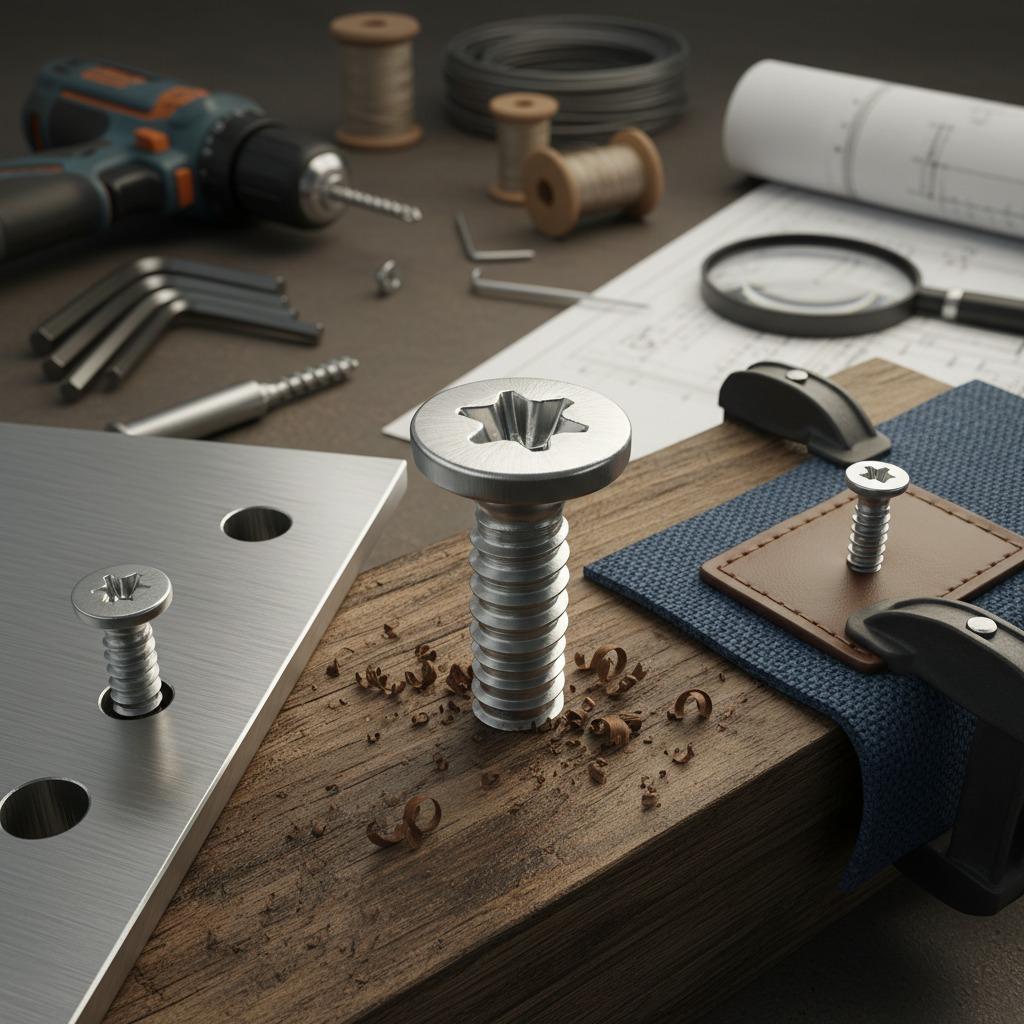
In industrial manufacturing, screws are often treated as low-value components. Yet in reality, they are high-frequency variables. A single production line may use thousands of screws per shift, and even minor inconsistencies can ripple across assembly speed, quality control, and final product reliability.
This is where the role of an industrial screws supplier becomes critical. Not because of the screws themselves, but because of how consistently they perform across batches, how accurately they are packaged, and how seamlessly they integrate into real assembly workflows. Buyers who focus only on unit price often discover hidden costs later—delays, rework, and inefficiencies that are far more expensive than the screws themselves.
What Industrial Buyers Actually Expect from a Screws Supplier
From a specification standpoint, most industrial screws appear standardized. However, in actual use, expectations extend far beyond dimensions and material grades.
Industrial buyers typically require:
-
Consistent driving performance across large production runs
-
Stable torque behavior for automated or semi-automated assembly
-
Clear and reliable packaging that supports fast line-side replenishment
-
Accurate quantities that match planning systems and reduce manual checks
In high-volume environments, predictability matters more than flexibility. A reliable industrial screws supplier delivers not only products but also process stability.
Hidden Problems in Industrial Screw Procurement
Many procurement issues do not appear immediately. They accumulate over time and are often misattributed to other parts of the process.
Common challenges include:
-
Batch inconsistency causing variation in installation torque
-
Mixed screw types within bulk packaging
-
Counting deviations leading to unexpected shortages
-
Packaging collapse during internal handling or export transport
-
Inefficient labeling that slows warehouse operations
According to industrial assembly benchmarks, these combined issues can reduce effective production efficiency by 10–18%. In some cases, material loss and rework push the total impact beyond 20%, especially in export-driven manufacturing environments.
These are operational costs that are rarely visible in purchase orders but are very real in execution.
The Role of Packaging in Industrial Screw Supply
Packaging is often underestimated in screw procurement. However, it directly affects handling efficiency, counting accuracy, and loss control.
Different supply models produce significantly different outcomes:
| Supply Model | Loose Bulk Supply | Standard Pre-Pack | Custom Industrial Packaging |
|---|---|---|---|
| Counting accuracy | ~90% | ~97–98% | 99%+ |
| Material loss rate | 5–7% | 2–3% | <1% |
| Assembly efficiency | Baseline | +10–15% | +20–30% |
| Handling efficiency | Standard | Improved | Highly optimized |
Loose supply may appear cost-effective, but it introduces variability. Pre-packed solutions improve control, while custom packaging—aligned with actual assembly processes—delivers the highest level of efficiency and accuracy.
In practice, the difference between 90% and 99% counting accuracy determines whether production continues smoothly or stops for recounting and adjustments.
Why Integrated Industrial Screws Manufacturing Matters
An industrial screws supplier that integrates manufacturing, counting, and packaging creates a more controlled system. This reduces dependency on external handling processes and minimizes error points.
Instead of receiving generic bulk screws, buyers receive fasteners prepared for real use conditions—whether that means reinforced packaging for export, bucket packaging for repeated handling, or project-based kits for assembly lines.
This integration does not increase complexity. It reduces it by aligning supply with actual production requirements.
Application Scenarios Where Supplier Capability Becomes Critical
The impact of supplier quality becomes more visible in specific environments:
-
Industrial equipment assembly lines with repetitive fastening operations
-
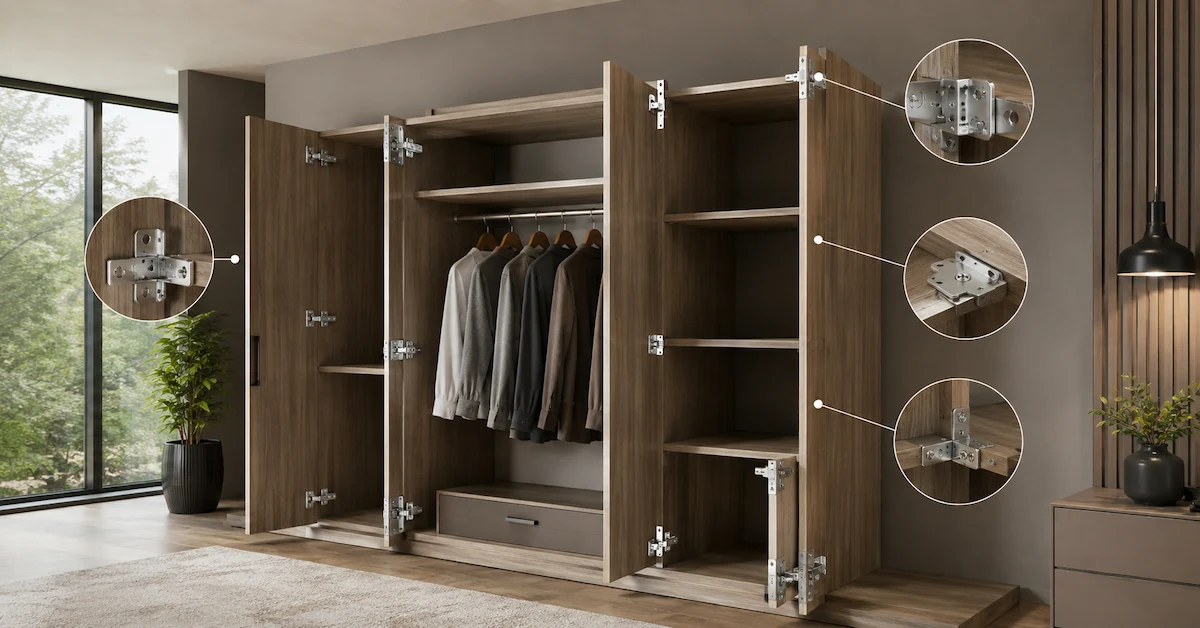
Furniture manufacturing requiring multiple screw types per product
-
Export-oriented production with strict packaging and labeling standards
-
OEM projects with long production cycles and consistent specifications
In these scenarios, a weak supplier introduces variability. A strong supplier removes it.
Frequently Asked Questions
Q1: How do I evaluate an industrial screws supplier beyond price?
Focus on batch consistency, packaging accuracy, and the supplier’s ability to support your actual assembly process rather than just providing standard products.
Q2: Is custom packaging necessary for industrial screws?
Not always, but for high-volume or complex assemblies, it significantly reduces errors, improves efficiency, and lowers total operational cost.
Q3: What risks should be checked before placing bulk orders?
Confirm specification consistency, packaging durability, counting accuracy, and labeling clarity, especially for export shipments.
Moving Toward a More Reliable Industrial Screw Supply System
Choosing the right industrial screws supplier is less about comparing catalogs and more about understanding how supply integrates into your production system. Stable batches, accurate packaging, and predictable delivery help reduce friction across procurement, warehousing, and assembly.
To better understand how industrial screw manufacturing, bulk supply, and packaging solutions can be aligned with real production environments, you can explore our full capabilities on the JHFIX homepage. This provides a structured view of how screws and hardware are produced, packaged, and supplied for industrial and OEM applications.
If you are currently facing issues such as inconsistent batches, packaging inefficiencies, or supply instability, a direct discussion can help identify practical improvements. Our team works with industrial buyers to optimize specifications, packaging formats, and delivery processes. You are welcome to reach out through our Contact Us page to discuss your project and explore a more reliable supply approach.