

Why screw coating types matter before you buy
When buyers compare screw coating types, they are usually trying to solve more than one problem at once: corrosion resistance, appearance, drive performance, and total assembly cost. A screw that looks right in the bin may still be the wrong choice once it meets humidity, salt spray, painted panels, or a tight torque requirement. That is why the coating, not just the base metal, deserves attention early in sourcing.
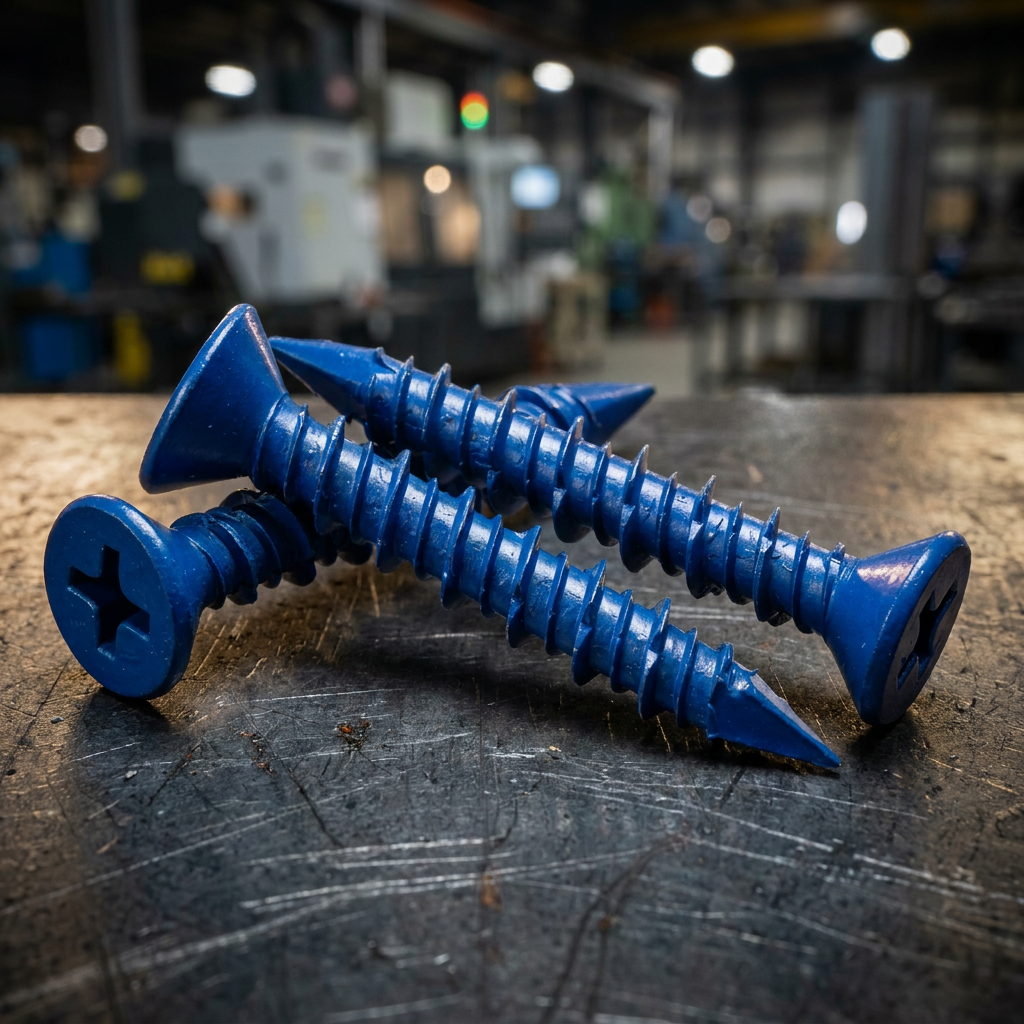
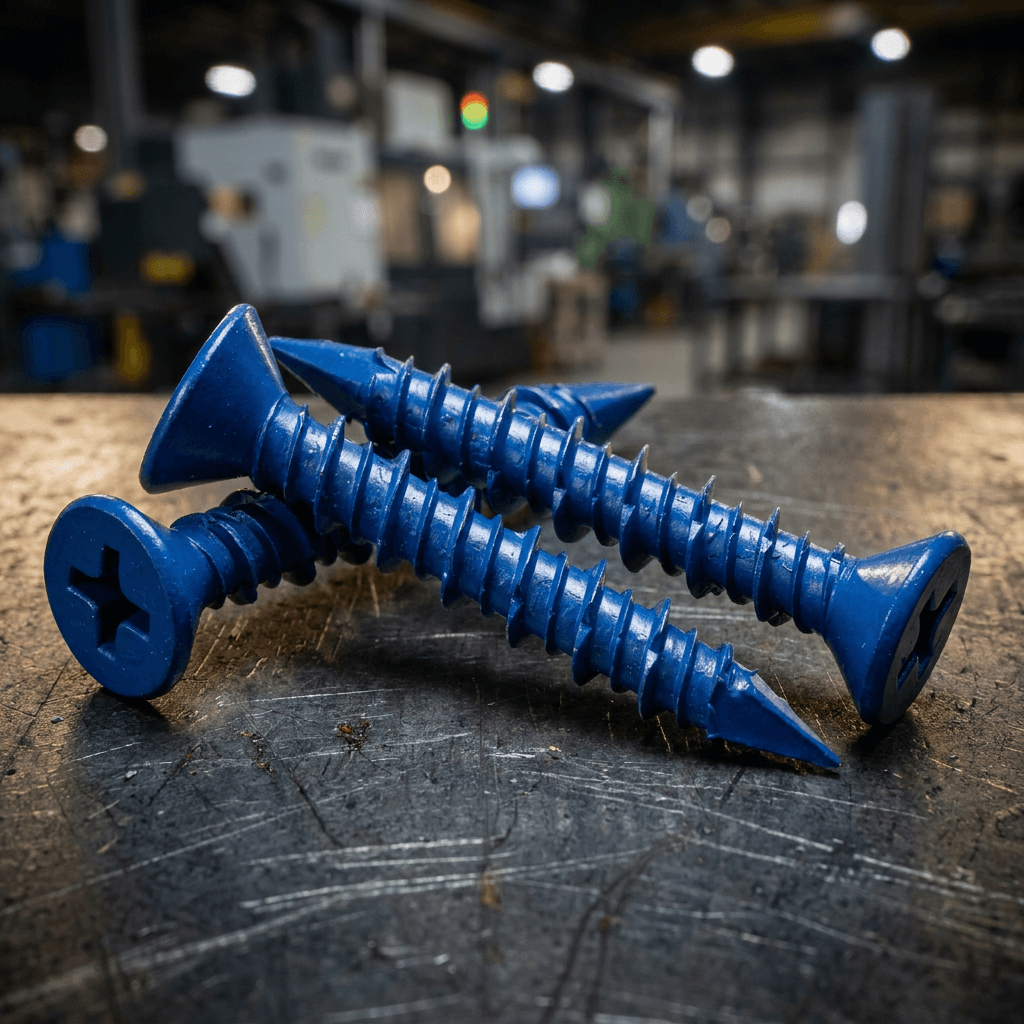
In practice, the finish on a fastener can affect how it installs, how long it lasts, and whether it blends into the finished product. A blue-coated screw, for example, may be selected for visual identification, light protection, or a process-related reason; but the exact coating chemistry cannot be assumed just from color. The same caution applies to coated screws in general: a shiny surface is not automatically a durable one, and a colored surface is not automatically decorative.
What the visible screw details tell you
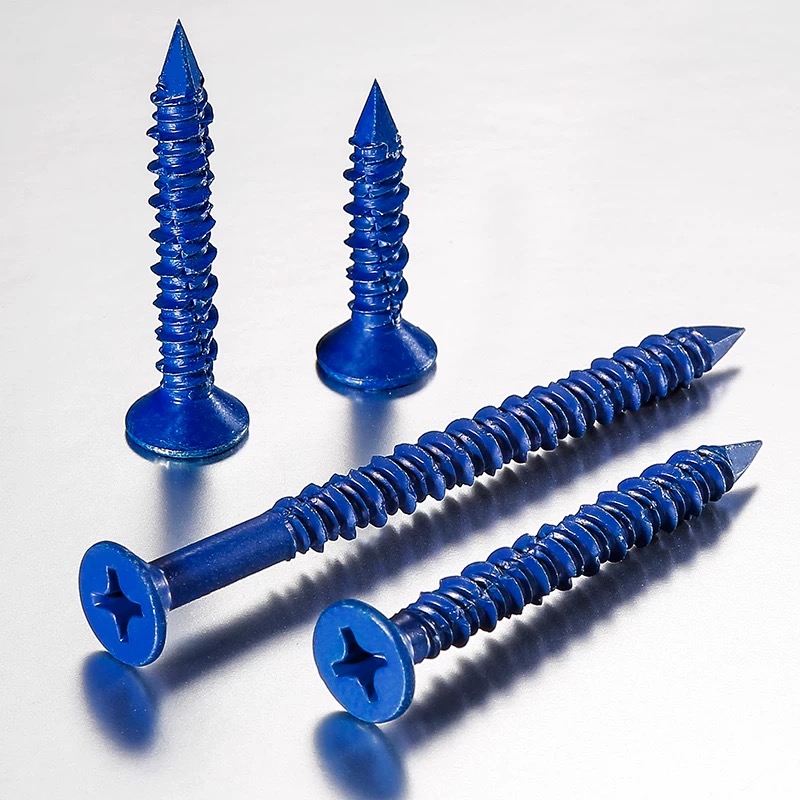
From the product information provided, the screws shown appear to be metal fasteners with a blue coated or painted finish, a countersunk flat head, a cross recess drive, coarse threads, and a sharp point. That combination usually points toward general fastening in wood, sheet material, light construction, or assembly work where the screw needs to bite quickly and sit flush with the surface.
There is also a second fastener profile described in the source data: machine screws with a low-profile head and a washer-like flange. That style is more common in machinery, electronics, enclosures, appliance parts, and light structural assemblies where load spread at the head matters. The two examples are not identical, but they sit in the same sourcing conversation because both depend on the right screw surface treatment to perform reliably.
Quick comparison of common screw surface treatment options
Plain steel or untreated finish
Cheapest on paper, but often the least forgiving in real use. If the assembly will face moisture or handling wear, plain steel can become a false economy.
Zinc-plated finishes
Often chosen for general-purpose industrial hardware. Zinc coatings are widely used because they offer a practical balance of corrosion resistance, appearance, and cost. In many buyer conversations, this is one of the best screw coatings to start with when the environment is not extreme.
Painted or colored coatings
Useful for identification, branding, or a specific product system. Blue is a common industrial color, but the meaning depends on the manufacturer. One plant’s code may not match another’s, so buyers should avoid assuming performance from color alone.
Stainless steel appearance
Stainless can reduce the need for coating in some applications, though grade selection still matters. The base material and the environment must match; otherwise the buyer simply pays more for a finish that does not solve the real issue.
How to choose between best screw coatings for your application
The right answer depends on three questions: where the fastener will live, what material it will join, and how visible the finished part will be. If the screw is hidden inside a panel, corrosion performance may dominate the decision. If it is part of a consumer-facing assembly, color consistency and head appearance may matter just as much. If the installation is into wood or soft substrate, thread geometry and point design become critical alongside the coating.
For sourcing teams, it helps to treat finish as part of the total fastening system rather than an isolated line item. A screw surface treatment that improves assembly speed but scratches too easily can create rework later. A coating that looks attractive but interferes with drive engagement can slow the line down. The trade-off is real, and it is usually cheaper to resolve in sampling than after production starts.
Common mistakes buyers make
The most common mistake is specifying only the color. Blue coated screws may be visually distinctive, but without a coating specification, the buyer has not actually defined corrosion behavior, adhesion, or wear resistance. Another frequent error is assuming that all cross recess screws behave the same. Drive geometry, head shape, and thread form can all change installation torque and strip risk.
Buyers also sometimes overbuy on finish. Not every indoor application needs an aggressive corrosion system, and not every decorative assembly needs a premium coating. The cost of over-specification can be hidden until the purchase volume grows.
Practical buyer checklist
When evaluating coated screws, ask for the base material, coating type, head style, drive style, and intended substrate. If the supplier cannot confirm those items clearly, the sample is not ready for final approval. For industrial programs, request inspection documentation and consistent lot control; Jiangmen Jinhe Hardware Co., Ltd. notes that it serves machine screws, self-tapping screws, micro screws, and precision screws, with production across stainless steel, iron, and aluminum, and follows common GB, DIN, ANSI, BS, JIS, and ISO standards. That breadth matters because the coating choice should fit the production route and the end use, not just the catalog photo.
It also helps to ask how the finish behaves under handling. Some coatings look solid until they see repeated contact in packing, sorting, or installation. That is a small detail on paper and a real defect on the line.
FAQ: what sourcing teams usually ask
Are blue-coated screws always corrosion resistant?
No. Blue may indicate a coating, paint, or a production code. Performance depends on the actual coating system, not the color itself.
Do countersunk screws and flange-head screws need the same finish?
Not necessarily. The head geometry changes contact area, installation behavior, and appearance requirements, so the ideal finish can differ.
Can one finish work for electronics, furniture, and building materials?
Sometimes, but not often without compromise. Those markets have different expectations for appearance, corrosion resistance, and mechanical behavior.
What to do next
If you are comparing screw coating types for a new build or a supplier change, start with the real environment and the actual substrate, then work backward to finish selection. Ask for samples, verify the head and drive geometry, and make sure the coating description is written clearly on the spec sheet. Jiangmen Jinhe Hardware Co., Ltd. positions itself as a fastener manufacturer with customization support and export-oriented service, which is useful if your project needs a standard part tuned into a non-standard one. For buyers, that is often where the practical value lies: not in the color of the screw, but in whether the finish, form, and supply chain all line up before the first batch ships.