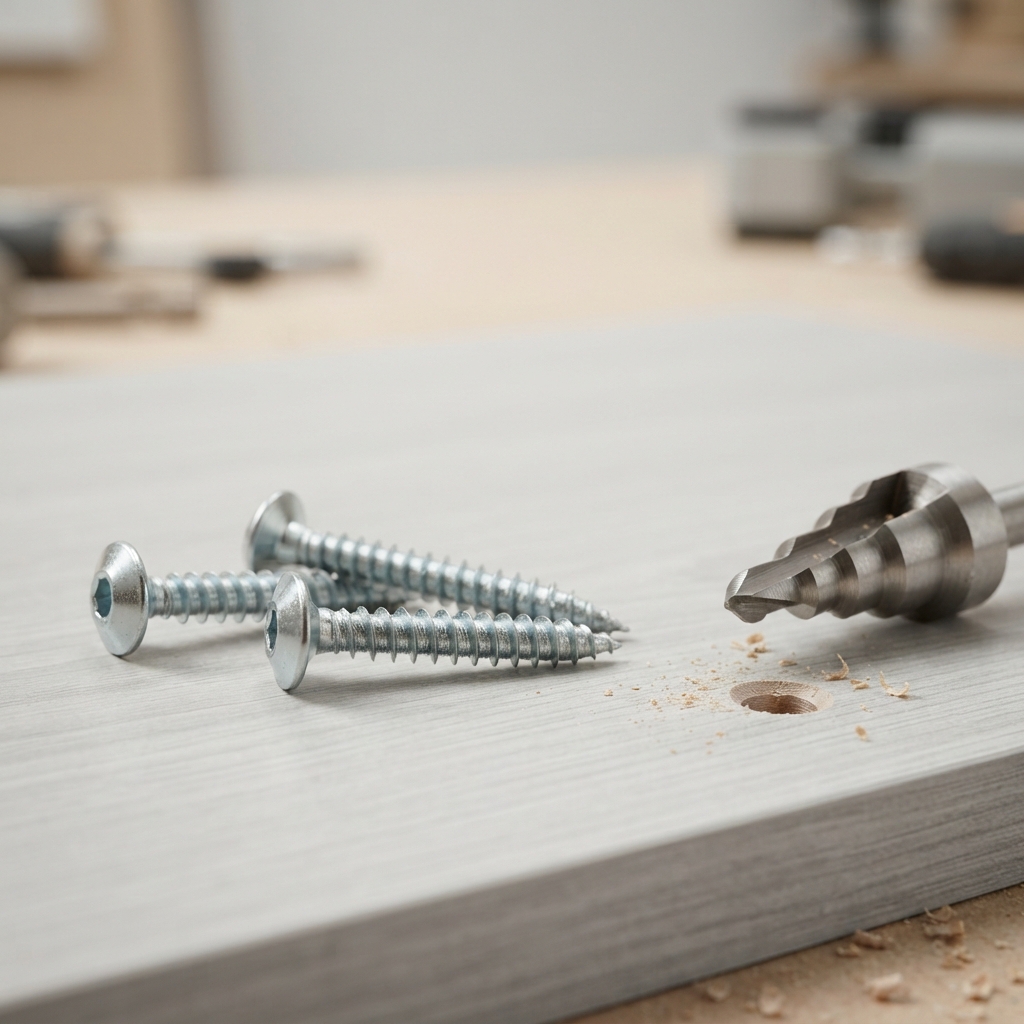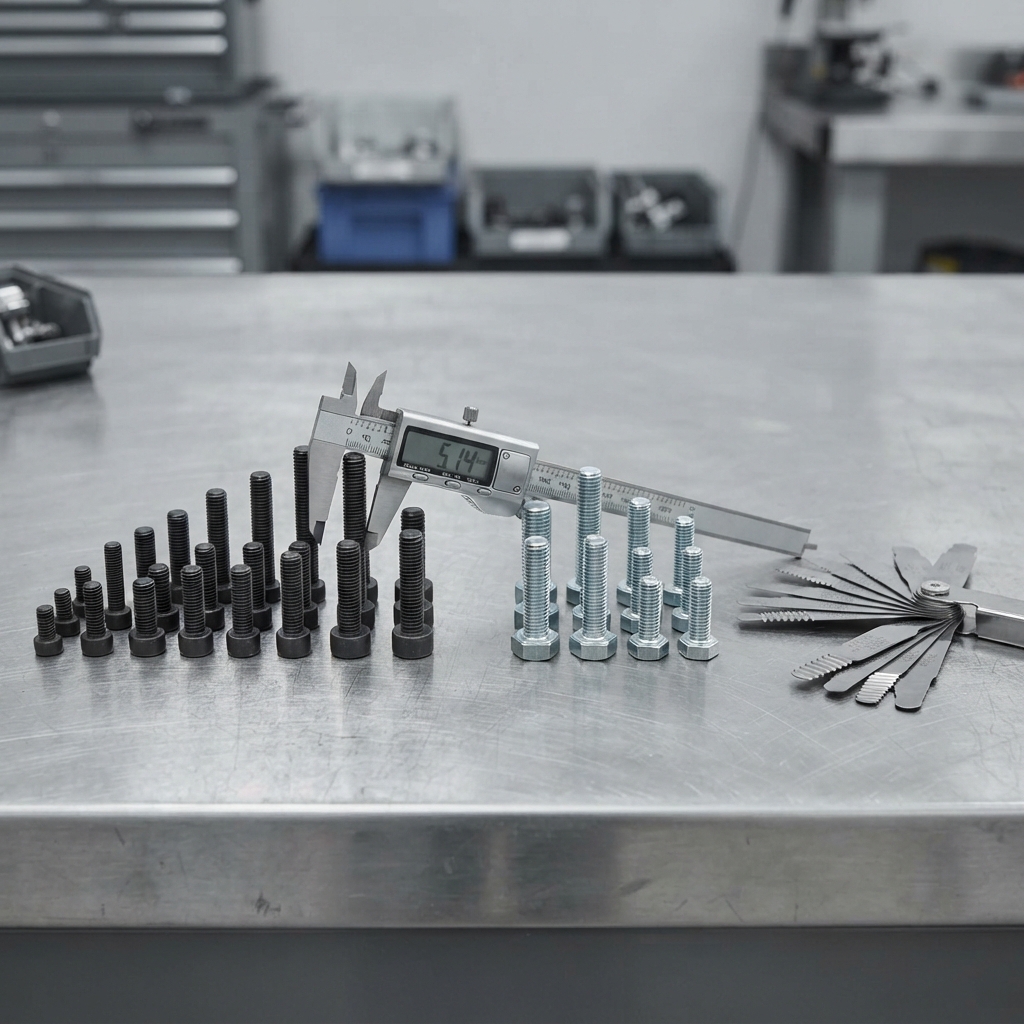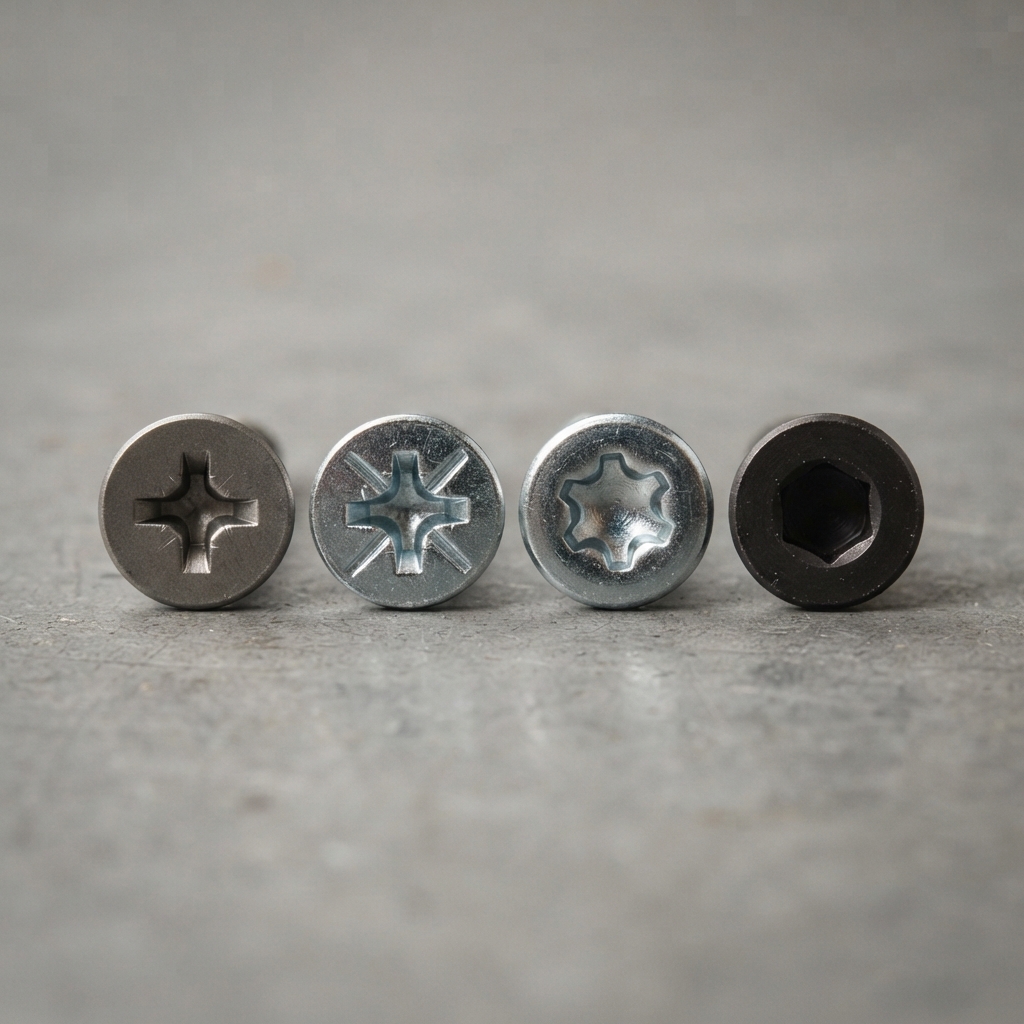

Screw drive types decide whether an assembly line runs or stalls: the recess, not the thread, usually determines cam-out, stripped screw heads and rework. Most buyers should specify a hexalobular (Torx) or internal hex socket drive for high-torque, high-volume work, and keep Phillips or Pozidriv only where torque is low or the market expects them.
This guide compares the screw drive types you will actually be quoted on, explains what each one does to torque transfer, bit life and scrap rate, and gives you the fields to write into a drawing, RFQ and incoming inspection plan so that two suppliers cannot interpret "cross recess" two different ways. It also covers the screw head types and the bits your customers can actually turn.
Quick answer: which screw drive should you specify?
Choose the drive from the joint and the driving method, then confirm it with a bit-fit trial on the real assembly. The table below is the short version; the rest of this article explains the reasoning and the evidence you should ask a supplier for.
| Buying situation | Drive to specify first | Why it usually wins |
|---|---|---|
| Automated or high-torque driving, painted or plated heads, high volume | Hexalobular / Torx (ISO 10664) | Near-vertical recess walls transfer torque with little downward force, so the bit is less likely to climb out |
| Machine joints into a nut, insert or tapped hole; repeated service | Internal hex socket (hex key) | Deep, positive engagement and a familiar service tool; needs good key access and a non-worn key |
| Flat-pack furniture, hand assembly, cost-sensitive kits | Phillips or Pozidriv, chosen per market | Cheap tooling and universal bits, but only at controlled torque with the correct bit pattern |
| Decking, timber and US retail packs | Combination drive (cross plus square) | Works with two common bit types, which suits installers who arrive with mixed tools |
| Replacement or legacy service parts | Match the installed part exactly | A "better" drive that the customer's tool kit cannot turn is a defect, not an upgrade |
Two rules sit above that table. First, the drive is a specification, not a preference: write the recess standard, size and bit type, not just "Phillips". Second, if the drive changes, the torque, the bit and the pilot hole all change with it, so re-approve the assembly rather than only the screw.
What are the main screw drive types?
The types of screw drives that matter commercially fall into four families: cross recesses (Phillips and Pozidriv), hexalobular (Torx), polygon sockets (internal and external hex), and square or slotted legacy drives. Each behaves differently under torque, and each carries a different tool and inspection cost.
Cross recess: Phillips (type H) and Pozidriv (type Z)
Both are defined as cross recesses in ISO 4757, which sets the recess types and their gauging dimensions. Phillips (type H) has tapered, angled recess walls and a pointed bit. That geometry is deliberate: the bit climbs out at a designed torque, which protects the joint from over-tightening on a clutch-less driver — and is exactly why a stripped screw head is so common once bits wear or the driver is held at an angle.
Pozidriv (type Z) looks similar from arm's length but is a different recess: the walls are closer to parallel, the recess is blunter and four extra ribs sit between the main arms. A correct Pozidriv bit engages those ribs; a Phillips bit sits higher in the recess and concentrates load on a smaller area. In a Pozidriv vs Phillips comparison, the conclusion for a buyer is that the two are not interchangeable on a controlled line, even though both are "cross-head".
Hexalobular: Torx and Torx Plus
The hexalobular drive is standardised in ISO 10664, which specifies the shape, basic dimensions and gauging method of the internal driving feature. Six lobes with near-vertical walls give a large contact area, so the driver can transmit high torque with modest axial force and very little radial slip. That is why a Torx screw appears where the head is small relative to the torque — pan and flat heads in furniture hardware, appliance and automotive assemblies, and thin or coated heads where a chewed recess is immediately visible to the end customer.
Torx is not automatically the right answer. It requires the correct bit size (a T20 bit in a T25 recess will strip it faster than a Phillips would), bits wear and must be replaced on a schedule, and in markets where end users own only cross-head screwdrivers, a Torx screw becomes a complaint about "no tool in the box".
Polygon sockets: internal hex and external hex
An internal hex socket screw (hex key or Allen drive) is a straightforward polygon recess: high torque capacity, a deep engagement, and a tool every maintenance technician owns. Its weak points are access and wear — a ball-end key used at an angle, or a rounded key, will round the socket corners, and a shallow socket in a low head leaves little material to resist that. External hex heads use a wrench or socket instead of a bit and are common on bolts rather than small screws.
Square, slotted and combination drives
Square (Robertson) drive uses a slightly tapered square recess that holds the screw on the bit, which helps one-handed driving in timber and in overhead work. Slotted drive is the oldest form and the weakest under power tools: the blade cannot centre itself, so it slips sideways and damages both the slot and the surrounding surface. Combination drive pairs a cross recess with a square recess so that either bit type can turn the screw; it is widespread in decking and retail timber packs, but the two bit types do not deliver identical torque behaviour, so the approved bit must be named.
Screw drive types compared
| Drive | Reference | Torque transfer | Cam-out risk | Tool access | Typical buying use |
|---|---|---|---|---|---|
| Phillips (cross, type H) | ISO 4757 type H | Moderate | High by design; rises sharply with bit wear | Universal | Low-torque assembly, retail kits, markets expecting cross-head tools |
| Pozidriv (cross, type Z) | ISO 4757 type Z | Moderate to high | Lower than Phillips with the correct PZ bit | Good, but PZ bits are less universal | Furniture and joinery where cross-head is expected but torque is higher |
| Hexalobular (Torx) | ISO 10664 | High | Low when the bit size and condition are controlled | Requires the exact bit size | High-volume, high-torque, visible or coated heads |
| Internal hex socket | Socket head cap screws are standardised separately (ISO 4762) | High | Low if the key is unworn and square to the axis | Hex keys are common; deep recess limits debris escape | Machine joints, brackets, serviceable equipment |
| Square (Robertson) | Regional practice; no ISO cross-recess equivalent | Moderate to high | Low | Regional bit availability | Timber, decking, one-handed installation |
| Slotted | Legacy form | Low | Very high with power tools | Universal but unstable | Restoration and legacy service parts only |
| Combination (cross + square) | Vendor-defined pairing | Moderate | Depends which bit is used | Two bit options | Decking and retail timber packs |
Phillips vs Pozidriv: why the bit matters more than the head
The visible difference between the two most common screw drive types in furniture assembly is small; the functional difference is in the recess walls and the bit tip. Phillips walls are angled so the bit is forced outward as torque rises. Pozidriv walls are closer to parallel, with the four ribs adding contact area, so more torque goes into the screw instead of into lifting the driver.
| Feature | Phillips (type H) | Pozidriv (type Z) |
|---|---|---|
| Recess wall | Tapered, designed to cam out | Closer to parallel, less cam-out |
| Extra ribs | None | Four ribs between the cross arms |
| Bit tip | Pointed | Blunter, with matching ribs |
| Cross-compatibility | A PZ bit in a Phillips recess sits poorly | A Phillips bit in a PZ recess sits high and can chew the ribs |
| Buyer risk | Stripped heads when bits wear | Stripped recess when the line uses Phillips bits "because they fit" |
If your assembly station uses one bit for both patterns, you have an uncontrolled process, not a cost saving. Either standardise the recess across the kit or issue both bit types and label them at the station.
Torx vs hex socket: which handles torque better?
Phillips vs Torx is the comparison most buyers start with, but the more useful question for machine assembly is Torx vs hex socket. Both transmit high torque; they differ in where the load sits and what the operator can do wrong. A Torx recess spreads load across six large lobes and a broad floor, so the bit resists climbing out even when the driver is slightly off-axis. An internal hex socket concentrates load on six flat walls and depends on a deep, clean recess and an unworn key: once the corners round, the socket loses engagement quickly and the head is effectively scrap.
Choose Torx when the head is small, the torque is high, the head is painted or plated and appearance matters. Choose a hex socket when the joint is a machine assembly that a technician will service with a hex key, and when the recess can be deep enough to survive repeated use. In both cases the inspection question is the same: does the bit or key engage the full recess depth, and is the tool within its wear limit?
Why cam-out costs more than the fastener
Cam-out is the moment the driver rides up the recess wall instead of turning the screw. It is not a cosmetic defect: the head is damaged, the bit is damaged, the clamp load is short of target, and the operator either re-drives a new screw or leaves a joint that will fail later. The cost lands in four places — rework labour, scrapped screws and bits, line stoppage, and field complaints.
Model it rather than argue about it. Take an illustrative order of 1,000,000 screws with a 2% stripped-head rate at an assumed $0.35 of rework cost each: that is $7,000 of avoidable cost before any line-stop time is counted. Change the rate to 0.5% with a better-matched drive and the same arithmetic gives $1,750. The numbers are illustrative, not a quotation; the point is that a fraction of a percent of scrap rate is worth more than the unit-price difference between two drive options.
Three process factors move that rate more than the screw price does: bit condition, driver alignment and clutch setting. A worn bit in a Phillips recess is the single most common cause of stripped heads in furniture assembly, and no screw specification can compensate for it. It is also why some screw drive types are engineered to cam out: Phillips protects a joint from over-torque by sacrificing the head.
Which screw drive types fit which application?
| Application | Recommended drive | What to control |
|---|---|---|
| Flat-pack and RTA furniture kits | Pozidriv or Phillips for panel screws; hex socket or Torx for connectors | Bit type in the kit, torque setting, and a recess deep enough for the supplied tool |
| Decking and outdoor timber | Combination drive or Torx | Which bit is approved for final torque, plus coating coverage inside the recess |
| Metal brackets and machine joints | Internal hex socket | Key access, recess depth, thread engagement and bottoming clearance |
| High-volume automated driving | Torx | Bit size, bit replacement interval, feed orientation and drive-bit concentricity |
| Electrical and appliance assemblies | Torx or Pozidriv | Tamper resistance where required, and recess integrity after plating |
| Legacy service parts | Copy the installed drive | No substitution: match recess, head and bit availability supplied to the end user |
What must the drawing and purchase order state?
A drive callout that says only "cross recess" leaves the supplier free to choose recess type, depth and size. Those choices change bit fit, cam-out and the appearance of every head in the lot. State the following fields, and treat a quotation that ignores them as incomplete.
| Field | What to write |
|---|---|
| Recess family and standard | For example "cross recess ISO 4757 type Z" or "hexalobular internal drive ISO 10664" — name the standard the recess must meet |
| Recess size | Bit or key size (for example PZ2, T25, 4 mm hex), not only the screw diameter |
| Recess depth and gauging | Depth or gauge requirement, and the gauging method the supplier will use to prove it |
| Head geometry | Head diameter, height and bearing face, since the recess competes with the head for material |
| Bit-fit acceptance | A statement that the approved bit must seat fully, without rocking, at the specified torque |
| Torque window | Driving torque and, where relevant, a torque-to-cam-out acceptance value |
| Finish and recess coverage | Coating system plus a rule that plating or paint must not fill or bridge the recess |
| Bit supply in the kit | If the product is a consumer kit, the bit type and quantity packed with it |
| Marking | Head marking or drive identification where the end user must match a tool |
| Sampling and records | Sample size, acceptance criteria and the report the supplier must send with each lot |
When a kit contains several screw drive types — a common case in flat-pack furniture — write the drive per BOM line rather than once for the kit, so the packing list, the instruction sheet and the screws cannot drift apart.
How to inspect drive recesses at goods-in
You do not need a laboratory to catch drive problems; you need a controlled bit, a torque driver and a written acceptance rule. Run this sequence on the first lot and then on every lot at the sampling level you have agreed.
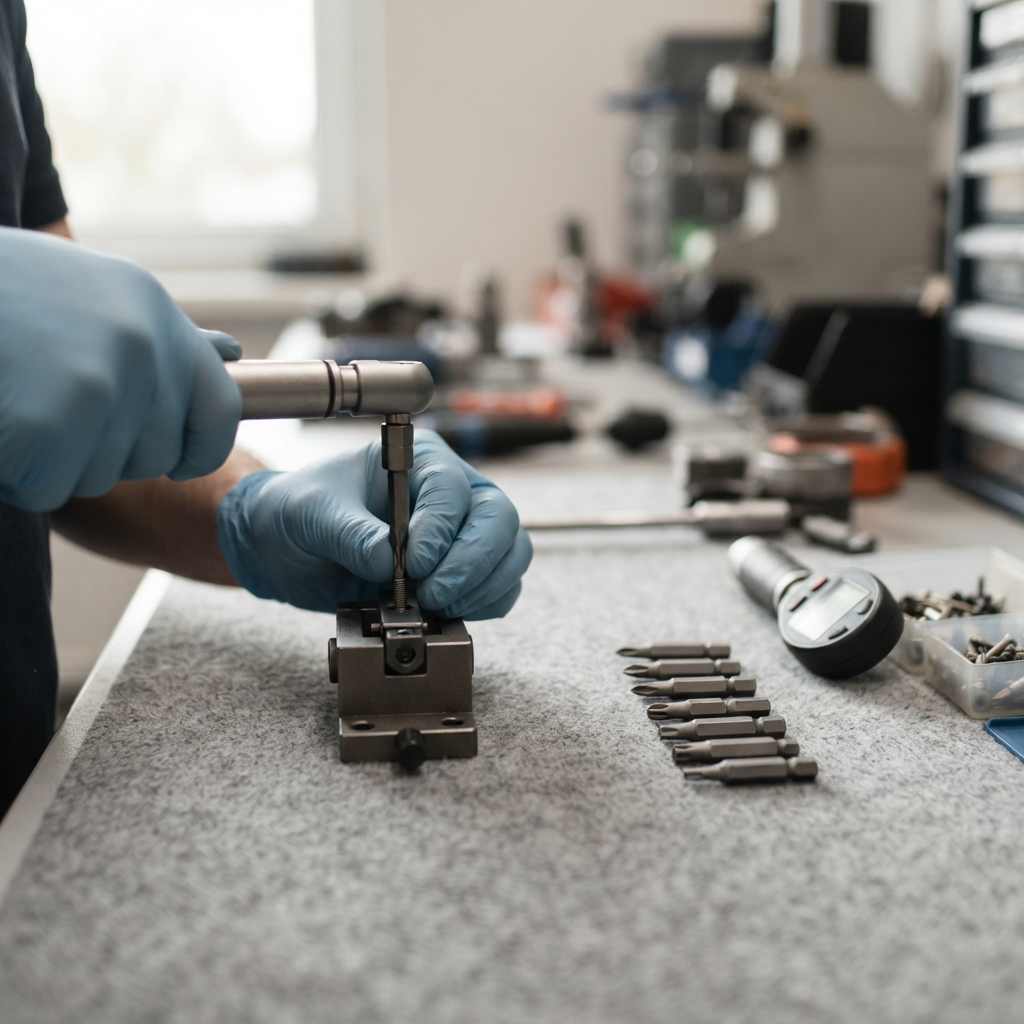
- Check the callout against the part. Confirm the recess family, size and standard on the drawing match what arrived. A T25 recess delivered against a T20 callout is a nonconformance even if it fits the driver.
- Gauge the recess. Use the supplier's gauge or a recess depth gauge on a sample from each cavity or machine, and record the readings rather than a pass/fail tick.
- Run a bit-fit trial. Seat the approved bit by hand: it should enter to full depth without rocking or binding. Repeat with a bit at its wear limit to see how much margin the recess has.
- Drive to torque, then measure. Drive a sample into the production joint at the specified torque, then check for head damage, recess deformation and short clamp. Record the torque at which cam-out starts if you have a torque driver with a peak hold.
- Inspect after finishing. Plating and paint build up in recesses. Check that the recess is clear and that the bit still seats fully after coating, not only before.
- Check lot consistency, not just the average. Compare recess condition across the lot; mixed tooling or mixed bit wear shows up as variation within one delivery.
Set the sample size and accept/reject numbers before production rather than arguing about them after a rejection. The logic for choosing inspection levels and defect classes is the same as for any other fastener characteristic and is set out in our guide to AQL sampling for fasteners.
Common screw drive specification mistakes
- Writing "cross recess" without type or size. The supplier may deliver type H or type Z, in a size that suits their tooling rather than your driver.
- Assuming Phillips and Pozidriv are interchangeable. They are different recess standards, and the wrong bit damages the ribs that make Pozidriv work.
- Choosing Torx without checking the customer's tool kit. A better drive the assembler cannot turn becomes a return.
- Ignoring coating build-up. A recess that gauges correctly before plating can be tight after it; specify recess coverage and verify after finishing.
- Specifying a drive without a torque value. Cam-out and stripped heads are torque events; without a torque window the drive cannot be accepted or rejected objectively.
- Buying the cheapest bit. Bit wear, not screw quality, drives most stripped-head complaints in high-volume furniture assembly.
- Changing the drive mid-program without re-approval. A new recess changes the bit, the torque and sometimes the head geometry; treat it as a drawing revision with a sample approval.
- Not packing the bit with a consumer kit. If the kit needs a PZ2 or T25 driver, the packing list must say so and, for retail kits, include it.
How to evaluate a supplier's drive control
Ask for evidence, not assurances. A supplier who controls the drive recess can answer these questions with documents and a sample, and the answers will match across the quotation, the drawing and the inspection report.
- Which recess standard and size will you produce against, and where does it appear on your process drawing?
- How do you gauge recess depth and size, and how often during a run?
- What is your bit-fit acceptance rule, and which bit do you use as the reference?
- How do you protect the recess through plating, painting or coating, and how do you verify it afterwards?
- What torque do you drive at during your own assembly trial, and how do you record cam-out or head damage?
- What evidence comes with each lot — gauge readings, bit-fit record, torque trial, photos?
- If a recess problem appears in the field, what is your containment and root-cause process?
Two of those answers are the tell. A supplier who cannot name the recess standard is not controlling the feature; a supplier who cannot show a post-coating bit-fit check is likely to ship tight recesses after a plating change. Both issues are visible in the first article inspection, which is why the drive belongs in the first article inspection report and not only on the purchase order.
Screw drive options we manufacture
We produce cross-recess, hex-socket, hexalobular and combination-drive screws and hardware for furniture, construction and equipment assembly, made to drawing or to sample. The three products below show the range; each page lists the configuration we photograph, and the final drive, thread, finish and packaging are confirmed against your approved drawing or sample.
- Black hex-socket low-profile wide-head machine screw — fully threaded machine screw with an internal hex socket and a blunt end for a nut, threaded insert or tapped hole. Machine-thread configurations from M1 to M12 and lengths from 3 mm to 200 mm can be reviewed; MOQ is 10,000 pcs per confirmed specification. Finish options include zinc plating, Ruspert coating, spray painting, electrophoretic coating, blackening and gold, silver or copper plating.
- Yellow-toned combination-drive deck screw assortment — flat seating head with a combination-style drive, coarse thread and sharp point, supplied as separated size groups in plastic pails or private-label packs. The photographed sizes are #8, #9 and #10 in lengths from 0.75 in to 4 in; confirm the size schedule and counts before ordering.
- Blue-coated concrete screw assortment kit — countersunk concrete screw forms with cross-drive and hex tool interfaces, packed in a divided organizer case with installation accessories. Every BOM line, compartment count and label needs approval before production.
For assemblies where the drive and the mating part must be released together, it helps to treat the screw, the insert and the kit as one specification rather than three purchases. Our guide to furniture fasteners for flat-pack cabinets shows how that works joint by joint, and our notes on star drive deck screws cover the star-drive side of outdoor work.
Frequently asked questions
What are the most common screw drive types?
The most common are Phillips and Pozidriv cross recesses, hexalobular (Torx) drive, internal hex socket, square drive and slotted drive. Combination drives that pair a cross recess with a square recess are also common in decking and retail timber packs.
Is Torx better than Phillips?
Torx transfers more torque with less cam-out and is the better choice for high-torque, high-volume or coated heads. Phillips remains cheaper and more universally tooled, so it still suits low-torque hand assembly and markets where end users own only cross-head screwdrivers.
What is the difference between Phillips and Pozidriv?
Phillips has tapered recess walls and a pointed bit, and is designed to cam out at a set torque. Pozidriv has closer-to-parallel walls, a blunter tip and four extra ribs, which gives more torque before cam-out — but only when a Pozidriv bit is used.
Can I use a Phillips bit in a Pozidriv screw?
It will often turn the screw, but it sits high in the recess and loads the ribs unevenly, which damages the recess and reduces the torque the joint can take. Use the matching bit type for any controlled assembly.
Why do screw heads strip or cam out?
Cam-out happens when the driver rides up the recess wall instead of turning the screw. The usual causes are a worn or wrong-size bit, an off-angle driver, too much torque for the recess, a shallow or coating-filled recess, and a recess designed to cam out — as Phillips is.
What is a combination drive screw?
A combination drive has both a cross recess and a square recess in the same head, so either bit type can drive it. The two bits do not behave identically, so the drawing or kit should name which bit is approved for final torque.
Which drive is best for automated assembly?
Hexalobular drive is usually the best fit for automated driving because it needs little axial force, resists cam-out and tolerates slight misalignment. It depends on the exact bit size, a bit replacement schedule and a screw that feeds reliably in the driving equipment.
How should the drive be written on a drawing?
Name the recess standard and size (for example cross recess ISO 4757 type Z, PZ2, or hexalobular ISO 10664, T25), add the recess depth or gauge requirement, the head geometry, the torque window and the bit-fit acceptance rule, then require the gauging record with each lot.
Does plating affect how the bit fits?
Yes. Zinc plating, paint and dip coatings build up inside the recess, so a head that gauged correctly before finishing can bind a bit afterwards. Specify that the recess must remain clear and verify bit fit after coating as well as before.
Can we change the drive on an existing part?
You can, but it is a drawing change rather than a like-for-like substitution: the bit, the torque, the head geometry and sometimes the tooling all change. Re-approve the assembly with a sample and update the kit contents and instructions before the change reaches production.
Conclusion
Screw drive types are a specification decision with a measurable cost. Pick the recess from the joint and the driving method — hexalobular or hex socket where torque and volume are high, cross recess only where the market or the torque allows it — then write the standard, size, depth, torque and bit-fit rule into the drawing, and verify them at first article and at goods-in. That is what separates a drive that survives the line from one that quietly adds rework to every order.
If you are choosing a drive for a new assembly or correcting stripped heads on an existing one, send us the drawing, the mating part and the driver you use. Our team in Jiangmen can review the recess, head and torque requirements against your assembly and quote the screw with the matching kit and packaging — contact us to start the review.