
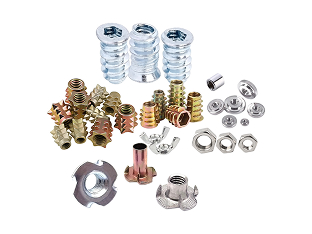

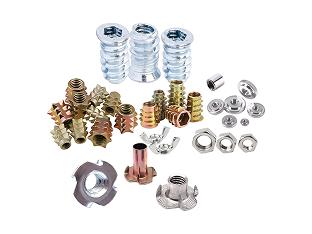
Why Bulk Nut Supply Often Breaks Down in Quality and Cooperation
In bulk fastener sourcing, the real challenge rarely comes from price—it comes from consistency and coordination.
Buyers often encounter situations where nuts meet specifications on paper but behave differently across batches. Thread fit varies slightly, installation torque becomes unstable, and assembly teams begin to compensate without realizing the root cause. At the same time, communication gaps with suppliers—unclear packaging standards, inconsistent delivery schedules, or lack of traceability—add another layer of uncertainty.
These issues don’t usually appear all at once. They build up gradually, shipment after shipment, until efficiency starts to slip and trust begins to weaken.
At JHFIX, we address these challenges by combining controlled manufacturing processes with structured supply management. From thread precision and material consistency to packaging accuracy and delivery coordination, every step is designed to reduce variability—not just in the product, but in the entire cooperation process.
Materials and Mechanical Stability: Why Consistency Matters More Than Strength
Before discussing packaging or logistics, it’s worth asking a simple question: are all nuts in the batch behaving the same way?
In bulk supply, this becomes critical.
Carbon steel, stainless steel, and alloy steel are the most common materials. Each has its place. But material selection alone doesn’t guarantee stability—process control does.
| Material Type | Strength Range | Typical Application | Bulk Stability Factor |
|---|---|---|---|
| Carbon Steel | Medium | General assembly | Moderate |
| Stainless Steel A2 | Medium | Corrosion-prone areas | High |
| Alloy Steel | High | Heavy-load systems | Very High |
Standards defined by International Organization for Standardization provide baseline requirements. However, what matters in bulk supply is not just compliance—but repeatability across thousands of pieces.
A reliable bulk nuts supplier ensures that every unit behaves consistently, not just meets specification on paper.
Why Buyers Eventually Prioritize Stability Over Price
Most procurement decisions begin with cost comparison. That’s expected.
But after a few shipments, priorities shift.
Buyers start noticing patterns:
- Minor thread variations affecting installation
- Small quantity discrepancies creating inventory issues
- Packaging inconsistencies causing delays
At that point, the focus changes. Not dramatically—but decisively.
Instead of asking “Who is cheaper?” buyers begin asking “Who delivers the same result every time?”
This is where an experienced bulk nuts supplier differentiates itself—through controlled processes, not just competitive pricing.
At JHFIX, that control includes:
- Stable thread production with tight tolerance management
- Batch-level inspection for consistency
- Packaging systems designed for accuracy and durability
- Supply planning aligned with production schedules
Because consistency, once lost, is difficult to recover downstream.
Thread Consistency: The Subtle Factor That Changes Everything
Thread variation rarely shows up during visual inspection. It reveals itself during use.
A nut that feels slightly tighter. Another that engages too loosely. A torque reading that fluctuates just enough to require adjustment.
Individually, these differences are manageable. Collectively, they slow everything down.
Organizations like ASTM International emphasize that thread fit directly influences load distribution and mechanical stability.
In bulk supply, even minimal deviation becomes repetitive.
A qualified bulk nuts supplier ensures thread geometry remains consistent across batches—so installation feels the same, every time.
Packaging Accuracy: The Quiet Driver of Operational Efficiency
Packaging is often overlooked—until it becomes a problem.
Loose bulk packaging introduces several risks:
- Counting inaccuracies
- Mixed specifications
- Material loss during handling
- Increased preparation time
Here’s how different packaging approaches perform:
| Packaging Type | Counting Accuracy | Operational Impact |
|---|---|---|
| Loose bulk | ~90% | Frequent interruptions |
| Standard packaging | ~97–98% | Occasional adjustments |
| Controlled packaging | 99%+ | Smooth workflow |
In high-volume operations, even a small shortage can disrupt production.
A dependable bulk nuts supplier treats packaging as part of the product—not just a shipping requirement.
A Real Case: When Supply Stability Replaced Daily Adjustments
A regional distributor managing multiple SKUs faced a recurring issue. Not product defects—but inconsistencies in quantity and packaging.
Warehouse teams spent hours recounting shipments. Assembly clients reported occasional shortages.
We didn’t change the nut specification. Instead, we optimized:
- Packaging segmentation to prevent mixing
- Weight-based verification for counting accuracy
- Reinforced cartons for transport stability
The outcome was immediate:
- Counting accuracy improved to over 99%
- Warehouse processing time reduced significantly
- Inventory discrepancies nearly eliminated
The product stayed the same. The system improved.
Where Bulk Nut Supply Gets Stress-Tested
Bulk supply challenges become most visible in:
- High-volume manufacturing lines
- Distribution systems handling multiple product types
- Export shipments with extended transit times
- OEM production requiring consistent repeat orders
In these environments, small inefficiencies don’t stay small.
They scale.
That’s why choosing the right bulk nuts supplier is less about capability—and more about consistency under pressure.
Frequently Asked Questions
Q1: What is the most common issue in bulk nut supply?
Quantity discrepancies and thread inconsistency, both of which affect assembly efficiency and inventory accuracy.
Q2: How can buyers evaluate a bulk nuts supplier effectively?
By reviewing packaging systems, batch consistency, and real-world performance—not just product specifications.
Q3: Does improved packaging significantly increase cost?
Only slightly. In most cases, the reduction in labor and delays offsets the additional expense.
Making Bulk Supply Work the Way It Should
Bulk supply should reduce complexity—not introduce it.
When material consistency, thread precision, and packaging accuracy align, operations become predictable. And predictability is what keeps production efficient.
At JHFIX, we focus on delivering bulk fastener solutions that perform consistently in real-world conditions. From controlled manufacturing to accurate packaging, every step is designed to reduce variability.
To explore how we support OEM and industrial bulk supply projects, you can visit our homepage:
https://www.jhfix.com/
If you’re currently dealing with recurring supply inconsistencies or operational inefficiencies, it may be time to reassess your sourcing strategy. You can contact our team here to discuss your requirements and explore a more reliable solution:
https://www.jhfix.com/contact-us