
How to Choose a Flat Pack Furniture Hardware Kit Supplier for Stronger Assembly
When buyers source from a flat pack furniture hardware kit supplier, they are not only buying screws, brackets, and connectors.
They are buying the part of the furniture that decides whether the product can be assembled smoothly, whether the structure stays square, and whether the customer finishes the installation without frustration.
Panels define the look of flat-pack furniture. Hardware defines the build.
If the screws strip easily, the brackets do not sit square, the dowels are the wrong length, or the kit arrives with missing parts, the whole product suffers. For furniture manufacturers, cabinet makers, wholesalers, and cross-border sellers, small hardware problems can quickly become production delays, return claims, or poor customer reviews.
That is why a flat-pack hardware kit should be treated as a core sourcing decision, not a final packaging detail.
What a good flat pack hardware kit needs to do
A practical flat pack furniture hardware kit has three main jobs:
It must hold the furniture together.
It must make assembly easier.
It must stay consistent across repeat orders.
That sounds simple. In real furniture production, it is not.
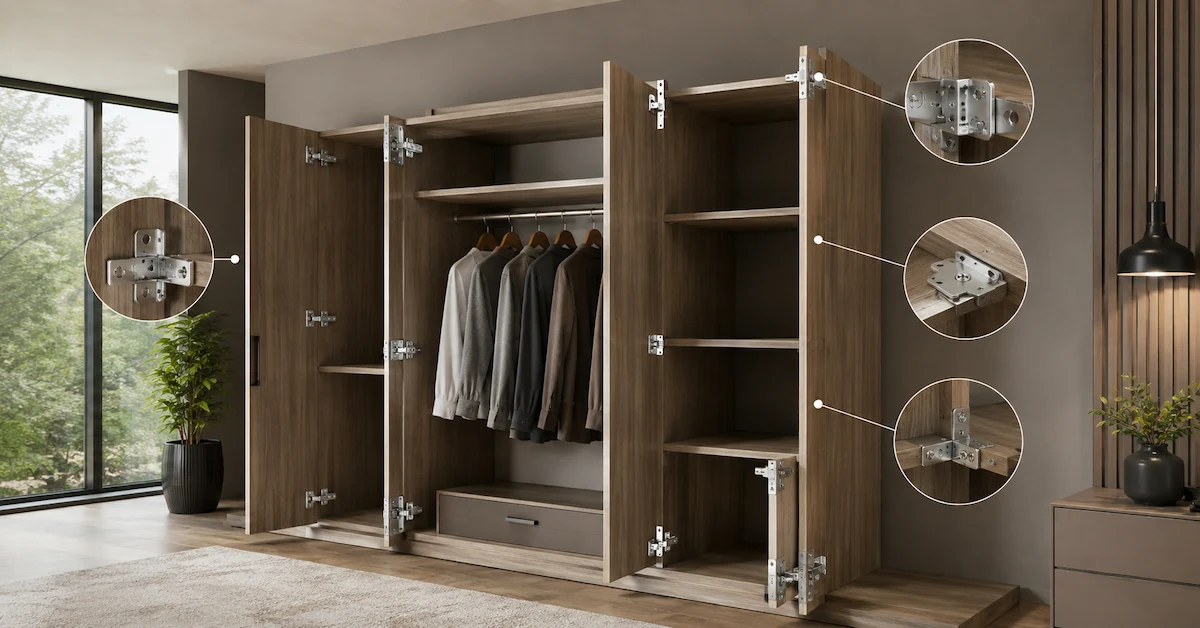
Different furniture designs require different hardware strategies. A small storage box may need visible corner brackets and screws. A cabinet carcass may need dowels, cam locks, and connector fittings. A wardrobe or shelving unit may require stronger joints, more careful part labeling, and better packaging control.
A typical kit may include:
| Hardware Type | Main Function |
|---|---|
| Machine screws | Used with threaded parts or metal fittings |
| Self-tapping screws | Used for wood-based panels or compatible substrates |
| Precision screws | Used where fit and alignment are more sensitive |
| Corner brackets | Help reinforce square frames and corners |
| Dowels | Support panel alignment during assembly |
| Cam-lock connectors | Create hidden knock-down furniture joints |
| Plastic spacers or caps | Improve spacing, protection, or appearance |
| Standard parts | Washers, nuts, inserts, sleeves, or other small fittings |
The point is not whether every component is complex. The point is whether every component has a clear role in the assembly.
A good flat pack hardware kit manufacturer helps buyers build that logic into the kit.
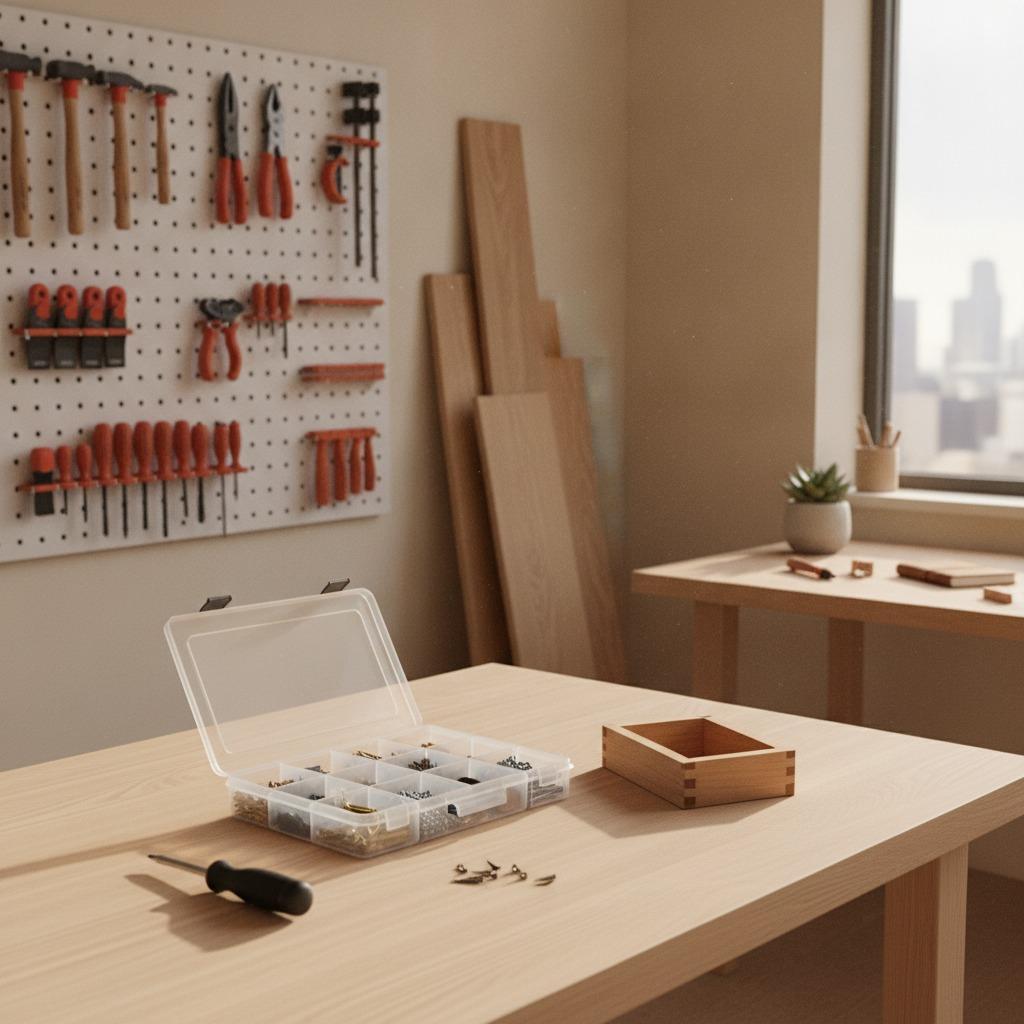
Why the hardware can matter more than the panel
A panel can look excellent and still fail as a product if the hardware does not work properly.
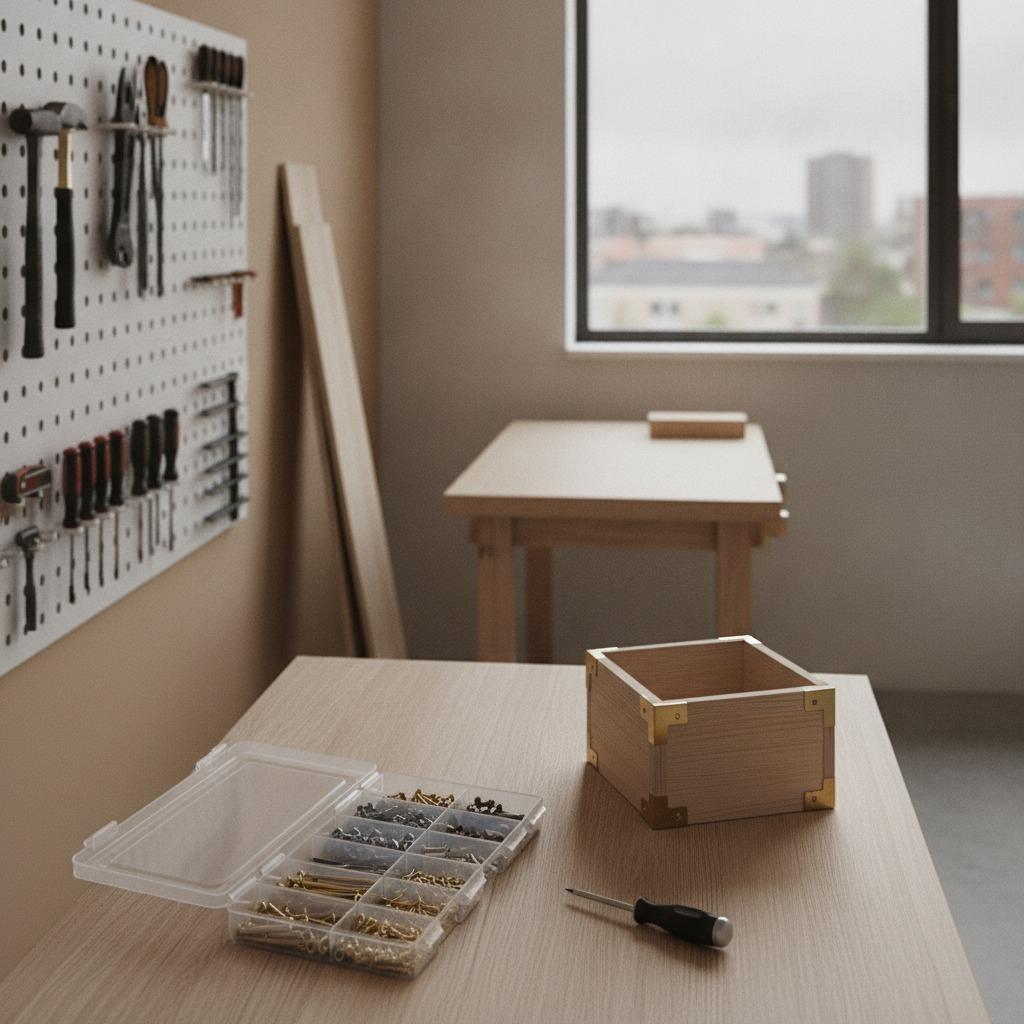
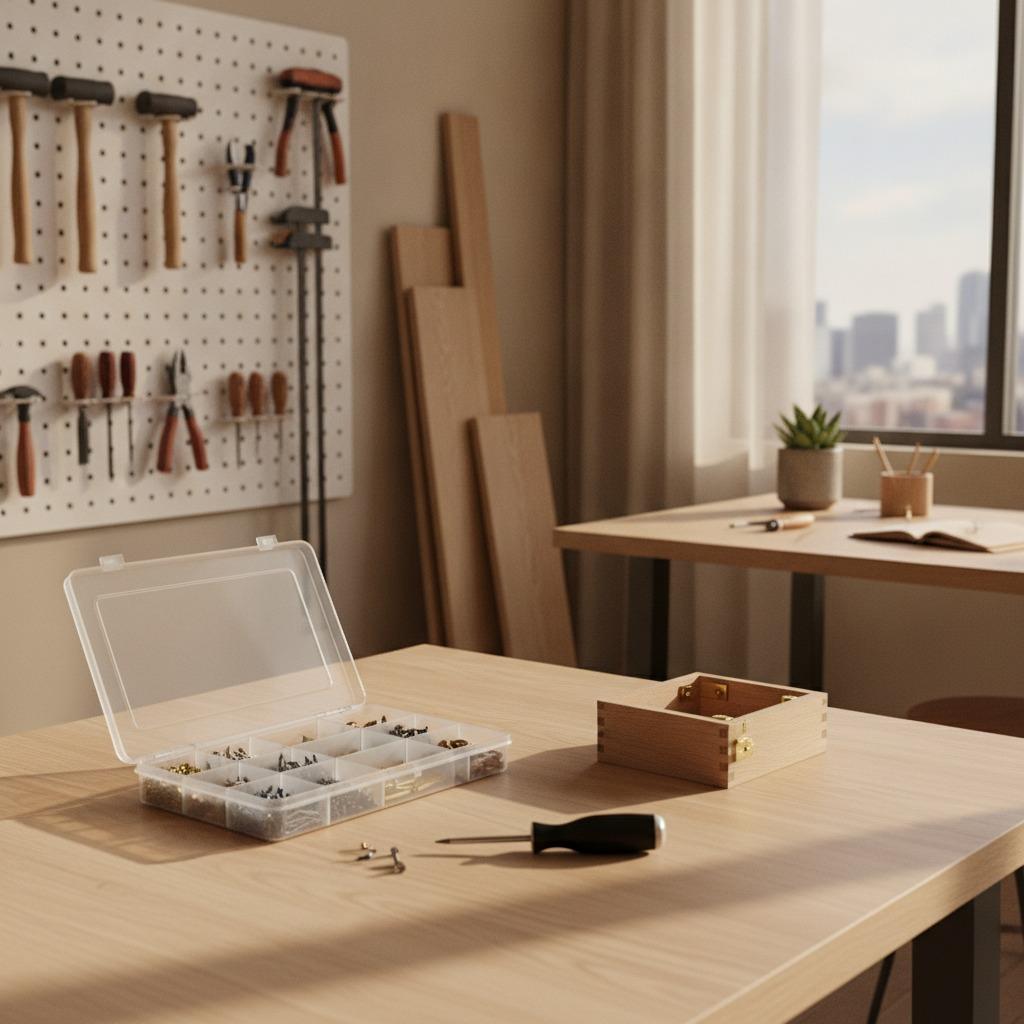
For example, a small rectangular wooden box or storage container may look simple. But the assembly still depends on the corners sitting square, screws biting cleanly, and brackets holding the panels without forcing misalignment.
In simple furniture, hardware problems are often more visible because there is nowhere to hide them. A crooked bracket, poor screw fit, or mismatched finish can make the product look lower quality than the panel material suggests.
For larger flat-pack products, the same problem becomes more expensive. A wrong connector or missing screw can affect thousands of units if the kit is already packed and shipped.
This is why buyers should not treat hardware as a commodity. It is part of the product structure.
What buyers should ask when comparing suppliers
Many sourcing teams start with price. That is understandable, but price alone is a weak filter.
A cheaper kit can become more expensive after assembly delays, rework, replacement shipments, or customer complaints.
More useful questions include:
Can the supplier work with standard specifications such as GB, DIN, ANSI, BS, JIS, or ISO where relevant?
Can they provide both standard parts and non-standard customization?
Can they support machine screws, self-tapping screws, micro screws, precision screws, brackets, and assembly accessories?
Can they provide inspection and documentation before delivery?
Can they package the hardware in a way that matches assembly or retail use?
Can they repeat the same kit configuration across future orders?
Jiangmen Jinhe Hardware Co., Ltd., founded in 2016 in Jiangmen City, Guangdong Province, focuses on machine screws, self-tapping screws, micro screws, precision screws, standard parts, and non-standard customization. Its business scope covers R&D, production, and sales for domestic and international markets, with logistics and warehousing support as part of the service package.
For furniture manufacturers and cross-border sellers, this type of supplier capability can be more practical than working with a one-size-fits-all trading source.
Material and finish choices buyers should confirm
Flat-pack furniture hardware is not only about shape.
Material and finish also affect performance, appearance, and cost.
Jiangmen Jinhe Hardware works with stainless steel, iron, and aluminum. Each material has different advantages.
Stainless steel may be selected when corrosion resistance or a cleaner appearance is required. Iron parts may be suitable for cost-sensitive programs where the environment is controlled. Aluminum may be useful where lower weight or specific design needs matter.
Finish is also important.
A hidden bracket may only need functional protection. A visible connector on a wooden box or open-frame product may need a cleaner surface. A screw head that looks slightly different from the bracket can stand out more than expected.
Buyers should confirm:
-
base material
-
surface finish
-
corrosion expectation
-
visible appearance
-
matching requirement with wood or panel color
-
whether the part is hidden or exposed after assembly
A photo or sample tray is not enough for final approval. The specification should be written clearly.
Packaging is part of the hardware solution
A flat-pack furniture hardware kit must be easy to use.
If the user has to guess which screw belongs where, the kit has failed part of its job.
For factories, packaging affects line speed. For e-commerce sellers, it affects customer satisfaction. For distributors, it affects inventory control. For after-sales teams, it affects replacement efficiency.
Good packaging may include:
-
labeled bags
-
compartment boxes
-
model-specific kits
-
assembly-step packaging
-
branded OEM labels
-
carton labels
-
barcode labels
-
separated small parts to prevent mixing
The packaging format should match the buyer’s business model.
A factory line may need fast access.
A retail product may need clear customer-friendly packaging.
A repair kit may need reusable storage.
A distributor may need clean SKU separation.
A strong flat pack furniture fittings supplier should understand these differences.
Common mistakes in flat pack hardware sourcing
One common mistake is assuming all fasteners are interchangeable.
They are not.
A screw that works in one board thickness may split another. A bracket that looks sturdy may create alignment problems if panel geometry is tight. A dowel that is slightly too short or too long can affect how the product seats during assembly.
Another mistake is approving a kit without testing it on real panels. A part that looks fine alone may feel loose, too tight, or awkward when installed in MDF, particleboard, plywood, or solid wood.
A third mistake is ignoring inspection. The supplier may have machining or packing capability, but if outgoing checks are weak, the buyer still inherits the defect.
A fourth mistake is treating packaging as decoration. A technically correct kit can still fail if it arrives mixed, damaged, incomplete, or poorly labeled.
Practical buying advice for furniture brands
If you are shortlisting a flat pack furniture hardware supplier, look for three things first:
manufacturing consistency, customization ability, and delivery support.
Consistency protects your production line. Customization helps when your design does not fit a standard catalog part. Delivery support matters because furniture supply chains often move across regions, and a kit is only useful if it arrives complete and on time.
Ask for clear technical documentation. A good supplier should make it easy to verify what is being shipped, whether the order includes standard parts or custom components, and how quality is checked before dispatch.
For cross-border e-commerce sellers and furniture wholesalers, packaging can be just as important as the hardware itself. Parts need to be counted, labeled, and shipped in a way that reduces missing-item claims.
A flat pack hardware kit is part product, part logistics system.
When a flat-pack kit is the right answer
Flat-pack hardware kits are useful when buyers need shipping efficiency, simpler warehousing, and easier customer assembly.
They are especially suitable for:
-
cabinets
-
wardrobes
-
shelves
-
small wooden boxes
-
storage organizers
-
open-frame furniture
-
drawer bases
-
DIY furniture
-
repair and replacement kits
-
RTA furniture products
However, if the furniture requires heavy structural loading, frequent disassembly, or a premium design with concealed fixings, the hardware plan needs more careful engineering.
This is where supplier input becomes useful. A good supplier should help buyers choose the right fastening method instead of only quoting a parts list.
FAQ: High-Conversion Questions for Furniture Hardware Buyers
1. Can you customize a flat pack furniture hardware kit according to my drawing?
Yes. For OEM furniture projects, the kit can usually be customized according to drawings, samples, panel thickness, drilling position, and assembly sequence.
Customization may include screw sizes, bracket dimensions, connector types, dowel quantity, finish, packaging, labels, and carton requirements.
2. What information should I provide for an accurate quotation?
Buyers should provide the furniture drawing, hardware list, panel thickness, material, target application, required quantity, finish requirement, packaging method, and delivery destination.
If the design is still in development, sending an existing sample or prototype photo can help the supplier understand the assembly requirement faster.
3. Can I get samples before placing a bulk order?
Yes. Sample testing is strongly recommended.
Buyers should assemble the sample kit with real panels and check screw fit, bracket position, dowel alignment, connector performance, packaging convenience, and component quantity before confirming mass production.
4. What is the MOQ for customized flat pack furniture hardware kits?
MOQ depends on the hardware type, customization level, finish, packaging method, and production process.
Standard parts usually support more flexible quantities. Customized screws, special brackets, unique connectors, OEM labels, or project-specific kits may require a higher MOQ.
5. Can you provide OEM packaging or branded labels?
Yes, OEM packaging can usually be discussed for furniture brands, distributors, and e-commerce sellers.
Options may include labeled bags, compartment boxes, branded stickers, carton labels, barcode labels, private-label packaging, or assembly-step packaging.
Packaging should be confirmed early because it affects cost, production time, and shipment planning.
6. How do you control missing parts in each hardware kit?
A reliable supplier should use counting, sorting, inspection, and packaging control before shipment.
Buyers can ask whether the supplier provides packing photos, inspection records, sample approval, or part-list confirmation for each kit when required.
7. How long does production usually take?
Lead time depends on whether the hardware is standard or customized, as well as the order quantity, surface finish, packaging requirement, and production schedule.
Standard parts are usually faster. Custom parts, special finishes, or branded packaging may need additional sample approval time.
8. Can one supplier provide screws, brackets, connectors, and packaging together?
Yes, if the supplier has both fastener supply and kitting capability.
Working with one supplier can reduce communication costs, improve consistency, and make repeat orders easier than sourcing screws, brackets, connectors, and packaging from different vendors.
9. Can the kit be used for repair or replacement parts?
Yes. Flat-pack hardware kits can be used for new furniture production, replacement packs, after-sales repair kits, distributor assortments, and e-commerce spare-part sales.
For replacement use, clear labeling and part identification are especially important.
Next step
If you are evaluating a flat pack furniture hardware kit supplier, start with the drawings, fastening requirements, and assembly sequence.
Then compare suppliers on more than price:
-
material options
-
inspection practice
-
documentation
-
customization ability
-
packaging design
-
logistics support
-
repeat-order consistency
Companies like Jiangmen Jinhe Hardware Co., Ltd. show why a hardware partner should be judged on both production capability and service response.
In flat-pack furniture, that combination is often what keeps a product line moving and keeps customers away from the return label.