
Why a complete screw size chart matters in furniture and hardware sourcing
If you work with cabinets, flat-pack furniture, or fixture assembly, a complete screw size chart is less of a reference sheet and more of a guardrail. One wrong screw can split a panel, strip a threaded insert, or leave a connector proud where it should sit flush. In cabinet work especially, the difference between a wood screw, a machine screw, and a self-tapping screw is not academic. It changes how the joint behaves under load, how fast assembly goes, and whether a customer gets a clean finish or a rattling callback.
This matters for engineers, sourcing managers, and product teams because furniture hardware is usually a system, not a single part. A cabinet carcass with predrilled side holes for shelf pins, for example, needs the right hole pattern, the right connector family, and the right screw lengths to match panel thickness and assembly method. The same is true for the assorted furniture fixing hardware used in knock-down cabinets and repair kits: brackets, plates, threaded inserts, sleeves, and screws all have to play nicely together.
Quick reference: what the chart should help you decide
A screw size chart guide should answer a few practical questions quickly: which diameter fits the material, which length is safe for the panel, which head style matches the hardware, and which thread type suits wood or metal inserts. That sounds basic, but in production it prevents a surprising amount of waste.
For cabinet and furniture assembly, the decision usually falls into one of four buckets:
- Wood screws for direct fastening into solid wood or engineered panels where the thread needs bite.
- Machine screws for use with threaded inserts, sleeves, or metal connectors.
- Self-tapping screws for faster assembly in compatible materials and certain hardware brackets.
- Specialty connector pieces for knock-down furniture, hidden joinery, or repeated assembly cycles.
Reading screw size without guessing
Most buyers use the term screw size chart to mean diameter, length, thread type, and head style in one view. That is the right instinct. A chart should not just say “small” or “large.” It should help you match the fastener to the panel and the hardware interface.
Diameter
Diameter affects holding power and hole fit. Too small, and the joint can loosen. Too large, and the material may crack or the screw may not seat properly in a bracket hole. For furniture panels with predrilled hardware patterns, the hole size in the connector often matters as much as the screw itself.
Length
Length is where buyers often get into trouble. In cabinet carcass work, the screw needs enough engagement for grip without blowing through the face of the panel. That caution sounds obvious, but it is still one of the most common assembly mistakes in mass production and DIY kits alike.
Head style and drive
Flat head, pan head, and other common forms each behave differently at the surface. If the hardware calls for a flush fit, the wrong head style creates fit-up problems. Drive type matters too; a poor match can slow line assembly or damage the screw head before the joint is fully seated.
What the hardware in furniture kits is really doing
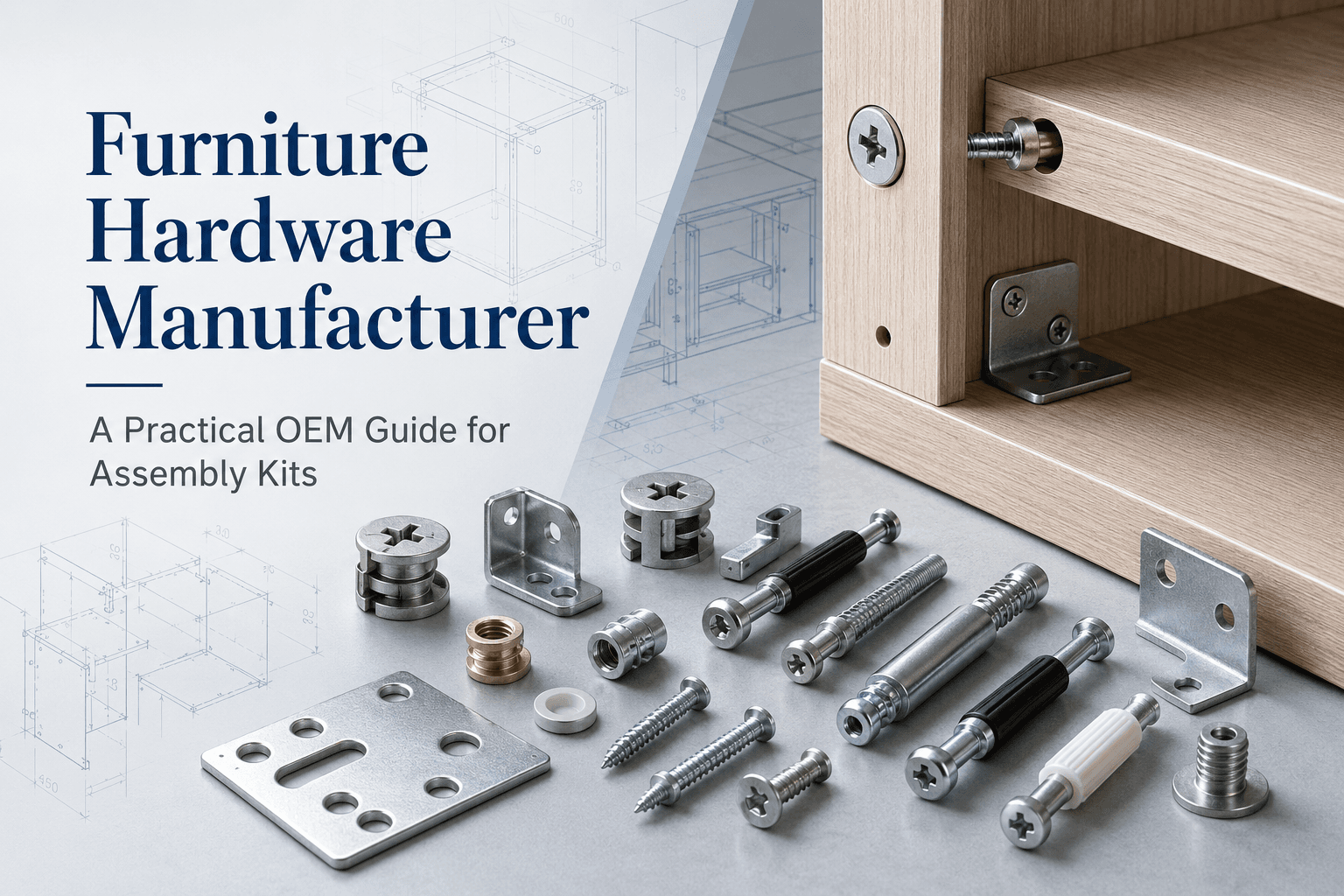
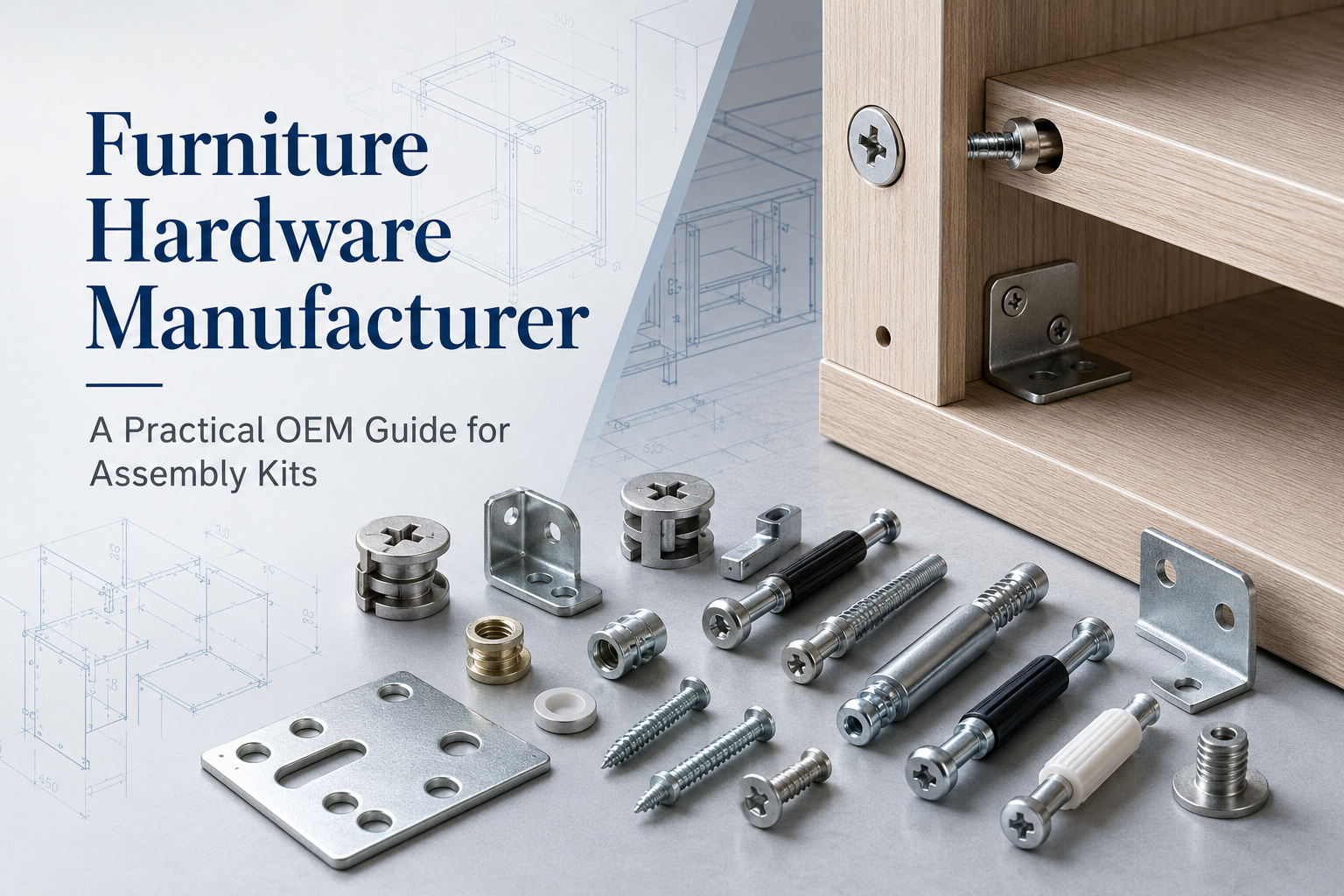
The mixed hardware shown in cabinet and furniture assembly kits is designed for repeatable joins across wood panels, brackets, and connectors. The visible L-shaped brackets, flat plates with multiple holes, threaded inserts, and small plastic sleeves or caps suggest a modular approach. That is useful in OEM and ODM programs because it gives the factory flexibility: the same box structure can be adapted for different cabinet families, shelving units, or storage modules with only small changes to the fastener set.
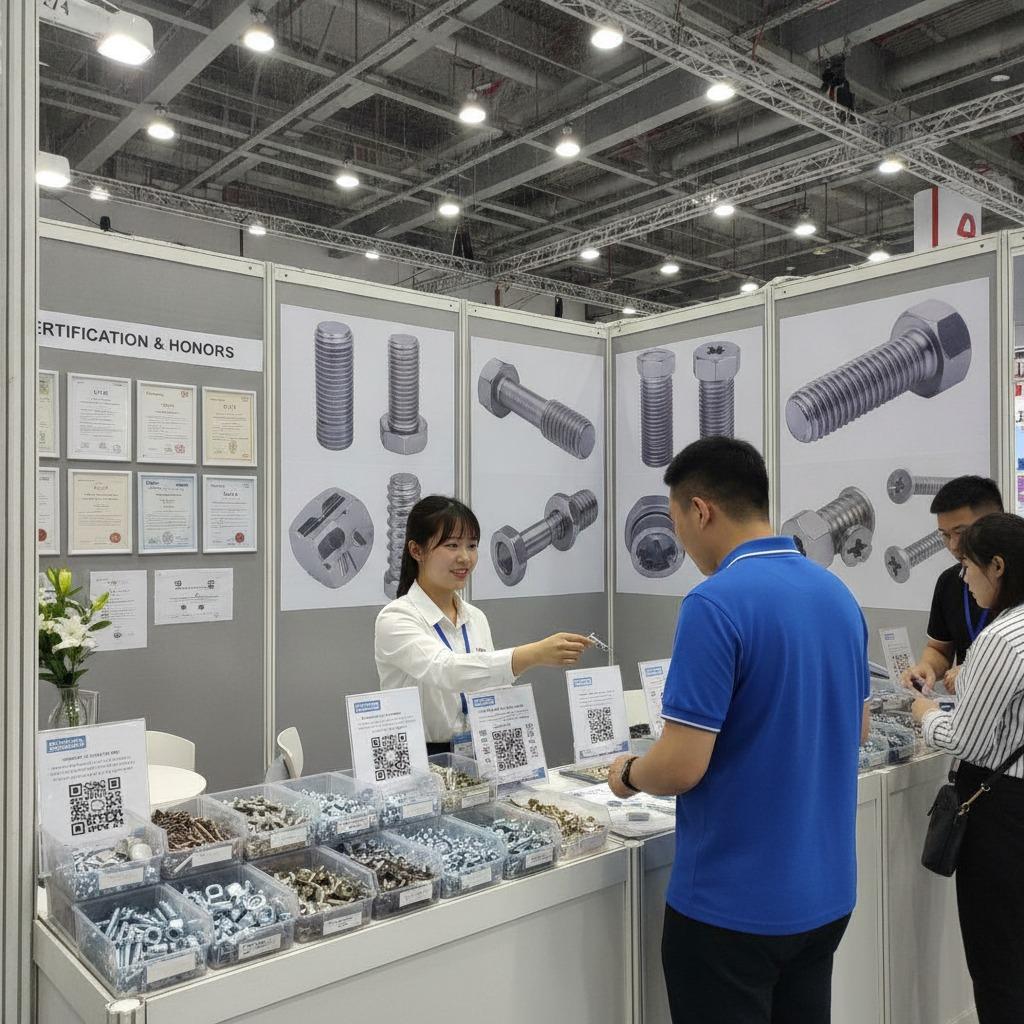
Jiangmen Jinhe Hardware Co., Ltd. focuses on machine screws, self-tapping screws, micro screws, and precision screws in materials such as stainless steel, iron, and aluminum. The company also notes work to GB, DIN, ANSI, BS, JIS, and ISO standards, plus non-standard customization. For buyers sourcing cabinet hardware or related fasteners, that combination is relevant because furniture programs often need both standard screws and a few custom dimensions that match a specific panel stack or connector geometry.
Selection criteria that save time later
When you compare fasteners for furniture assembly, do not stop at size alone. A clean-looking cabinet can still fail in use if the hardware mix is wrong.
- Match the screw to the substrate: solid wood, plywood, MDF, or a metal insert do not behave the same.
- Check whether the joint is meant to be permanent or removable.
- Confirm plating or material choice for the working environment.
- Ask whether the bracket or connector needs a specific head profile or thread engagement.
- Review packaging and kit completeness if the fasteners are part of a flat-pack system.
Common mistakes buyers still make
One mistake is assuming that visually similar screws are interchangeable. They are not. Another is buying by length only and ignoring diameter or thread pattern. Buyers also sometimes overlook the hardware interface itself: a perfectly good screw will still fail if it does not match a threaded sleeve or connector body.
There is also a sourcing trap around “universal” furniture kits. Universal sounds efficient, but furniture assembly often punishes vague specifications. If a supplier claims OEM & ODM customization, multiple packaging options, or precision manufacturing, that may be useful, but the buyer still needs drawings, interface details, and a clear bill of materials before signing off.
Practical advice for sourcing teams
If you are building a screw size chart for procurement or engineering use, keep it tied to the actual product family. A cabinet carcass with adjustable shelf-pin holes needs a different reference set than a bed frame or an appliance bracket. Start with the panel thickness, the connector type, and the assembly sequence. Then map each joint to a fastener size that gives reliable bite without overdriving the material.
For suppliers like Jiangmen Jinhe Hardware Co., Ltd., it is worth requesting samples, material documentation, and inspection records before committing to volume. Their business profile points to strict inspection before delivery and support for furniture, electronics, and other industrial sectors, which is useful, but buyers should still verify the fit in their own build. That is the step that matters on the line, not the brochure language.
FAQ
Can one screw size chart cover all furniture?
Not well. A chart can be a starting point, but cabinet hardware, repair fittings, and knock-down furniture each create different demands.
Should I standardize on one screw family?
Only if the design allows it. Standardization helps procurement, but it should not override fit, load path, or serviceability.
What should I ask a fastener supplier first?
Ask for the exact size range, thread type, head style, material, finish, and whether the part is intended for wood, metal, or a connector system.
Next step
If you are revising a cabinet bill of materials, setting up a hardware kit, or comparing suppliers for furniture assembly fasteners, start with a size chart built around your real joints, not a generic one. Then ask for samples and verify the fit on the actual panel stack. That small step often saves the most expensive mistake in the project.