
Why buying from a supplier export to Europe is different from buying locally
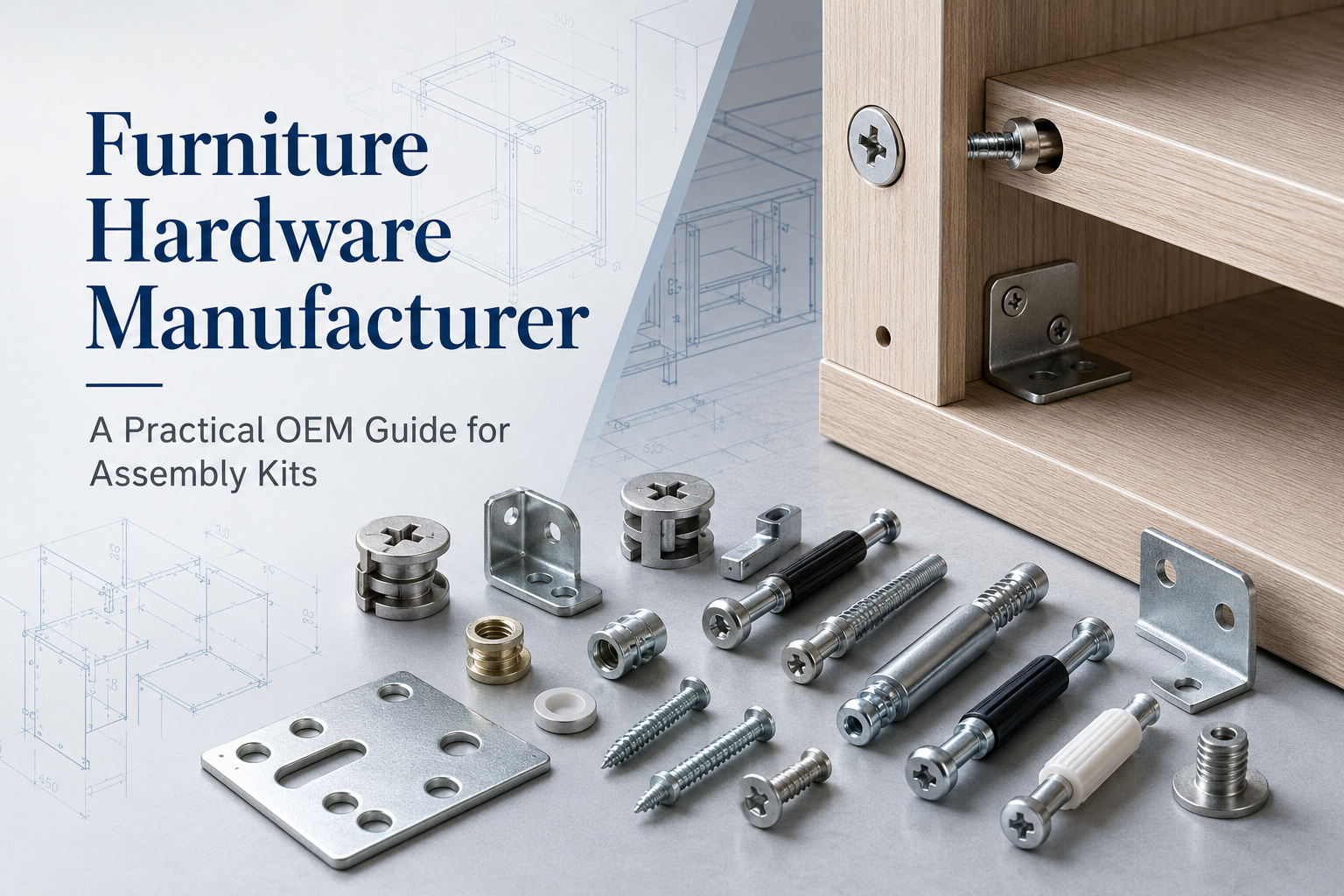
For sourcing teams, a supplier export to Europe is not just a vendor that can box product and book a ship. It is a supplier that has to understand the paperwork, the packaging discipline, and the consistency that European buyers expect when fasteners move from a factory floor to a distributor shelf or an OEM line. That matters especially in screws and other small fastening hardware, where one mixed tray can create a warehouse headache, and one unclear label can slow an entire receiving process.
Jiangmen Jinhe Hardware Co., Ltd. is built around that kind of business. Founded in 2016 in Jiangmen City, Guangdong Province, the company focuses on machine screws, self-tapping screws, micro screws, precision screws, and related fastener products. It also describes itself as offering foreign trade services, import and export qualifications, and supply chain support such as logistics, warehousing, and freight forwarding. For European buyers, that combination is often more useful than a glossy catalog. You need a partner who can keep product moving and documentation intact.
What European buyers usually need from a fastener exporter
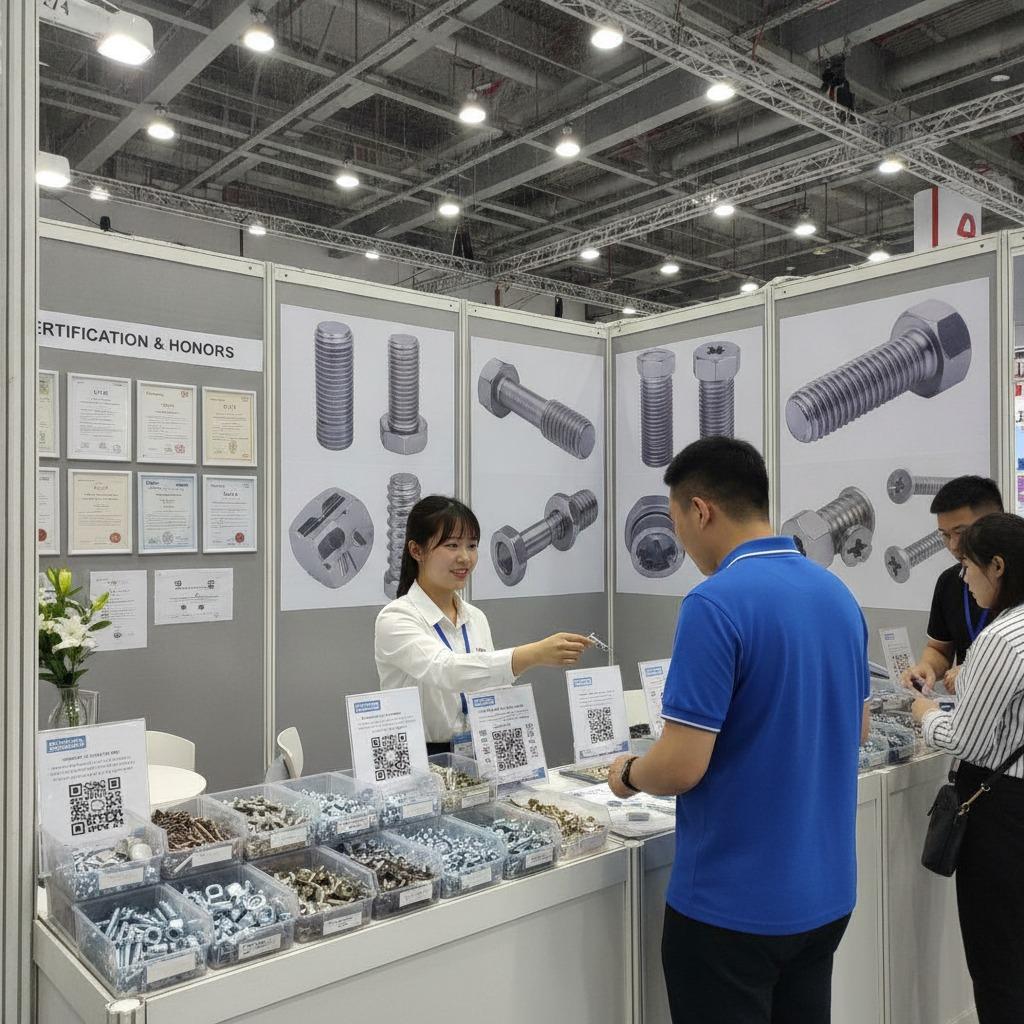
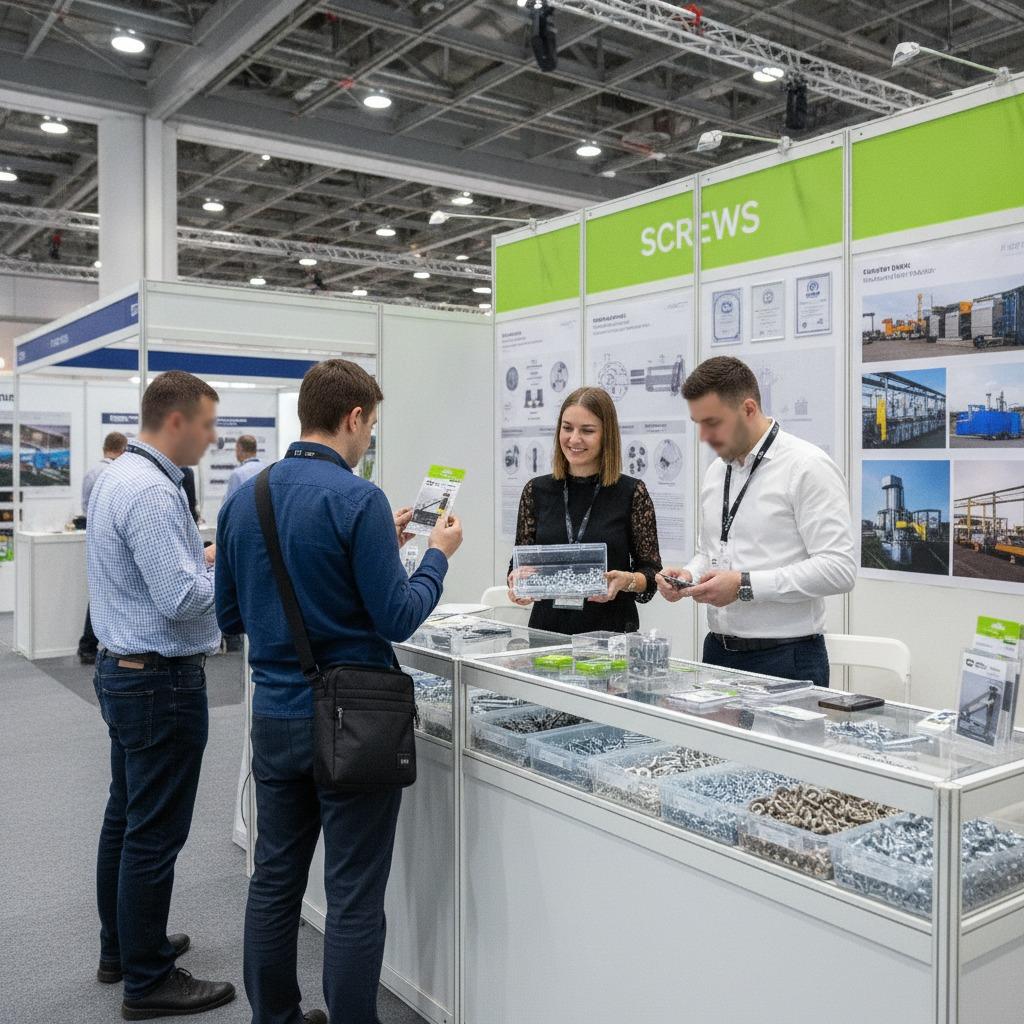
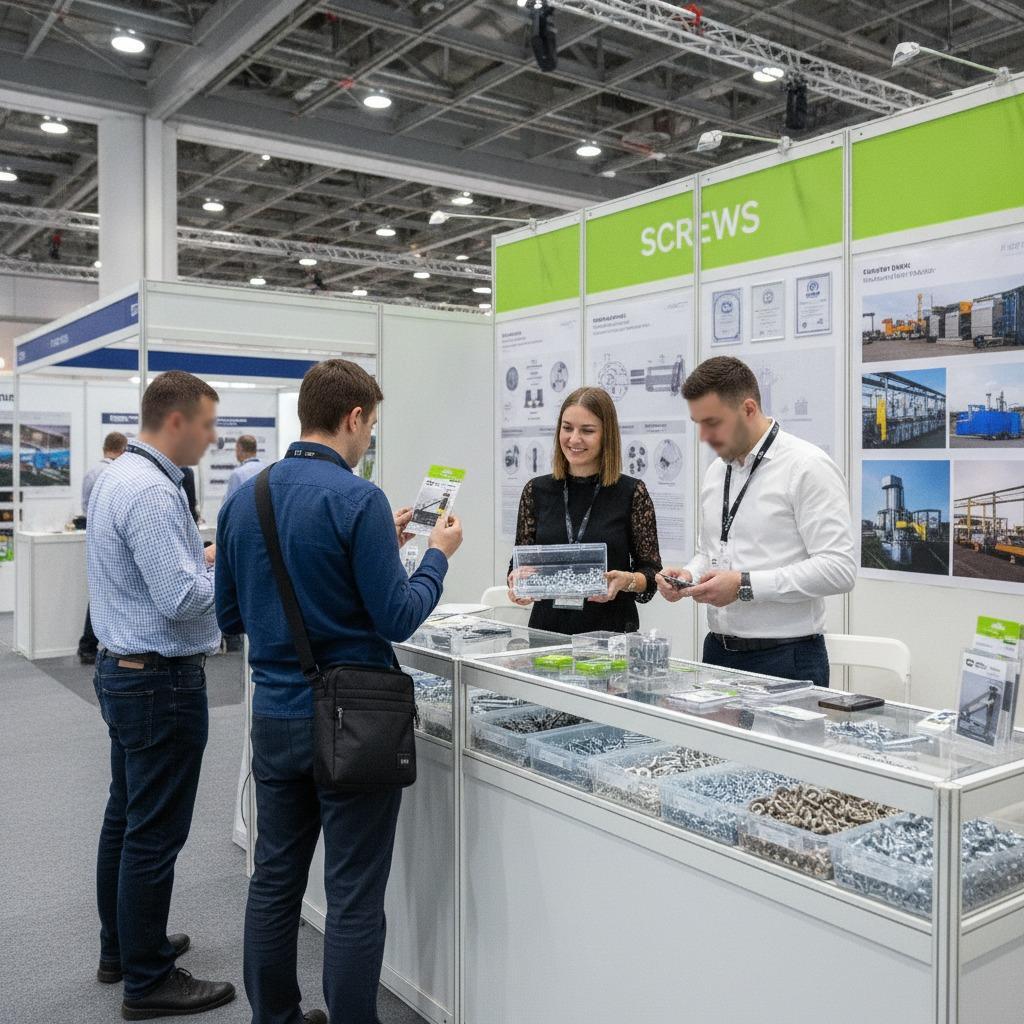
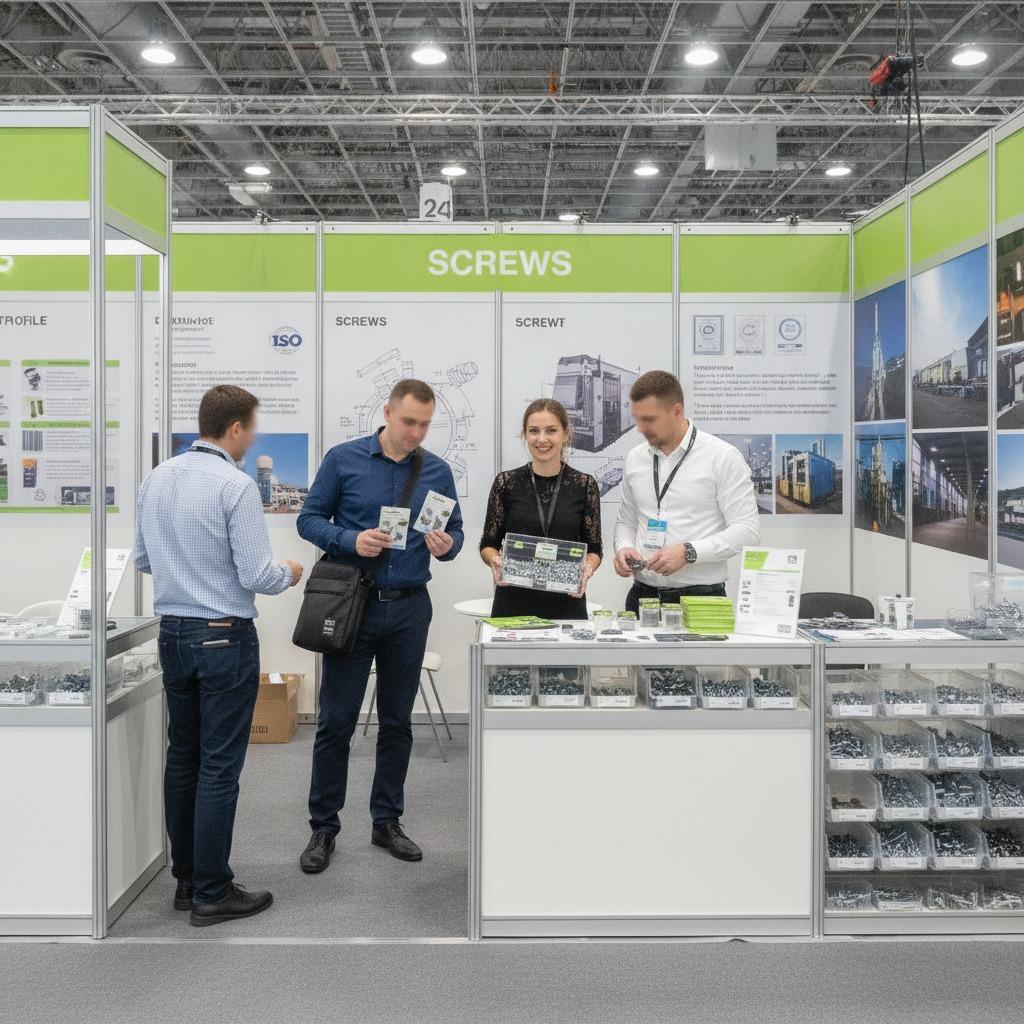
European sourcing is rarely about buying “screws” in the abstract. It is about matching a fastener family to a specific application: furniture assembly, electrical enclosures, appliance production, building materials, or maintenance kits. The visible trade-show display from the company shows assorted screw varieties, organized trays, QR-coded product cards, and sample packs. That kind of presentation suggests a broad SKU mix and a sales process designed for comparison, which is helpful when buyers are selecting across head styles, finishes, and packaging formats.
For importers and distributors, the practical questions are usually straightforward:
Can the supplier keep the assortment stable? Can they identify products clearly? Can they support standard and non-standard orders? Can they prepare export documents without turning every shipment into a back-and-forth of corrections? Those are the issues that decide whether a supplier becomes a long-term source or just another quote in the inbox.
Jiangmen Jinhe Hardware: a quick profile for sourcing teams
The company information supplied for Jiangmen Jinhe Hardware points to a broad fastener capability rather than a single niche line. Its stated materials include stainless steel, iron, and aluminum, and its product range covers GB, DIN, ANSI, BS, JIS, and ISO standards. It also serves electronics, medical devices, automation, home appliances, furniture, and building-material customers.
That breadth is useful, but buyers should still stay precise. “Broad range” does not automatically mean every item is available in every coating, drive style, or size. The image shows mixed metal finishes and multiple screw forms, but the exact grades, coatings, and dimensions are not readable. A practical buyer would ask for datasheets, sample confirmation, and pack-level labeling before making assumptions.
How to evaluate a Europe shipping supplier before placing an order
1. Start with the product identity
For fasteners, a small naming mistake can become an expensive logistics issue. Confirm the thread type, head style, material, finish, and packaging unit. Do not rely on a tray photo alone, even if the booth display looks organized.
2. Check the documentation flow
An international supplier Europe buyers can work with should be able to provide consistent commercial documents, packing lists, and product identification. If the supplier also handles freight forwarding and warehousing, as Jiangmen Jinhe says it does, that can simplify the handoff between production and shipment. Still, the buyer should verify who is responsible for what at each step.
3. Ask about inspection and response time
According to the company information, products undergo strict inspection before delivery and customer issues receive a response within 30–60 minutes, with solutions within 2 hours. Those are strong service claims, but in procurement, the real test is whether the supplier can keep that discipline when volumes rise or a shipment needs correction. It is worth asking for the standard inspection process and what happens if a batch is rejected.
Common mistakes when choosing a European export supplier
The first mistake is overvaluing a trade-show display. A neatly arranged booth with multiple compartments and QR-coded cards is a positive sign, but it is still only a sign. It does not prove dimensional control, traceability, or packaging stability.
The second mistake is under-specifying the order. Fasteners are a classic category for silent substitution. A part that looks close enough on a screen may differ in coating, drive, or material. That is tolerable for some distributor programs and unacceptable for others.
The third mistake is ignoring downstream use. Furniture and cabinet buyers, for example, often care about appearance, drive consistency, and pack labeling as much as mechanical performance. Industrial buyers care more about repeatability and document control. A good export supplier should be able to speak to both, but the order should still be written for the actual application.
Why the company background matters
Jiangmen Jinhe states that it works with customers in home appliance, electronics, furniture, building materials, and medical device manufacturing, and that it partners with brands such as Liansu and Futian Electric, with additional references to Midea, Hisense, and Sleemon. Those references suggest experience with demanding industrial buyers, though any procurement team should still do its own qualification.
One detail worth noting is the company’s emphasis on both standard parts and non-standard customization. That can be valuable for European buyers who need a mix of catalog screws and special variants for assemblies, repair kits, or private-label packaging. A supplier that can shift between those two modes often saves time when product programs change.
What to ask before you move from inquiry to sample order
Ask for product drawings or confirmed specifications. Ask how the supplier labels packs and whether QR-coded identification is available on the buyer’s preferred unit. Ask which standards are actually being quoted, not just listed in a general capability statement. And ask who manages logistics once the goods leave the plant.
If the supplier export to Europe is serious about service, it should be able to answer those questions without drama. The best fastener suppliers usually are not the loudest ones at the booth. They are the ones that can keep a screw assortment straight, a shipment documented, and a buyer’s receiving team out of trouble.
Next step for sourcing teams
If you are evaluating Jiangmen Jinhe Hardware or another European export supplier, start with a small, clearly defined sample request. Match one application, one fastener family, and one packaging requirement. That is often the fastest way to see whether the supplier is a real fit for your market, or just a good-looking display with a broad claim set.