
Why a Custom Wholesale Screws Supplier Matters in Bulk Fastener Sourcing
When a production line, repair program, or new product launch depends on the right fastener, a custom wholesale screws supplier is no longer just a place to buy screws.
The requirement may look simple at first.
Get the right screw.
Use the right material.
Choose the right finish.
Pack the right quantity.
Deliver it on time.
In real procurement work, however, that small part affects much more than the purchase order. It can influence assembly speed, field reliability, warehouse handling, packaging efficiency, and how often engineers must deal with last-minute substitutions.
That is why screw sourcing becomes serious once the order moves from samples to volume.
A screw that is “almost right” may still create problems. The head may not sit cleanly. The drive recess may wear too quickly. The thread may not suit the substrate. The coating may look wrong beside nearby hardware. Or the screws may arrive in a format that forces the buyer to spend extra time sorting, counting, and repacking.
For bulk buyers, these details are not small. They are the difference between a smooth supply program and a repeated production headache.
What a wholesale screw supply program usually includes
A screw supply program can cover much more than one standard part.
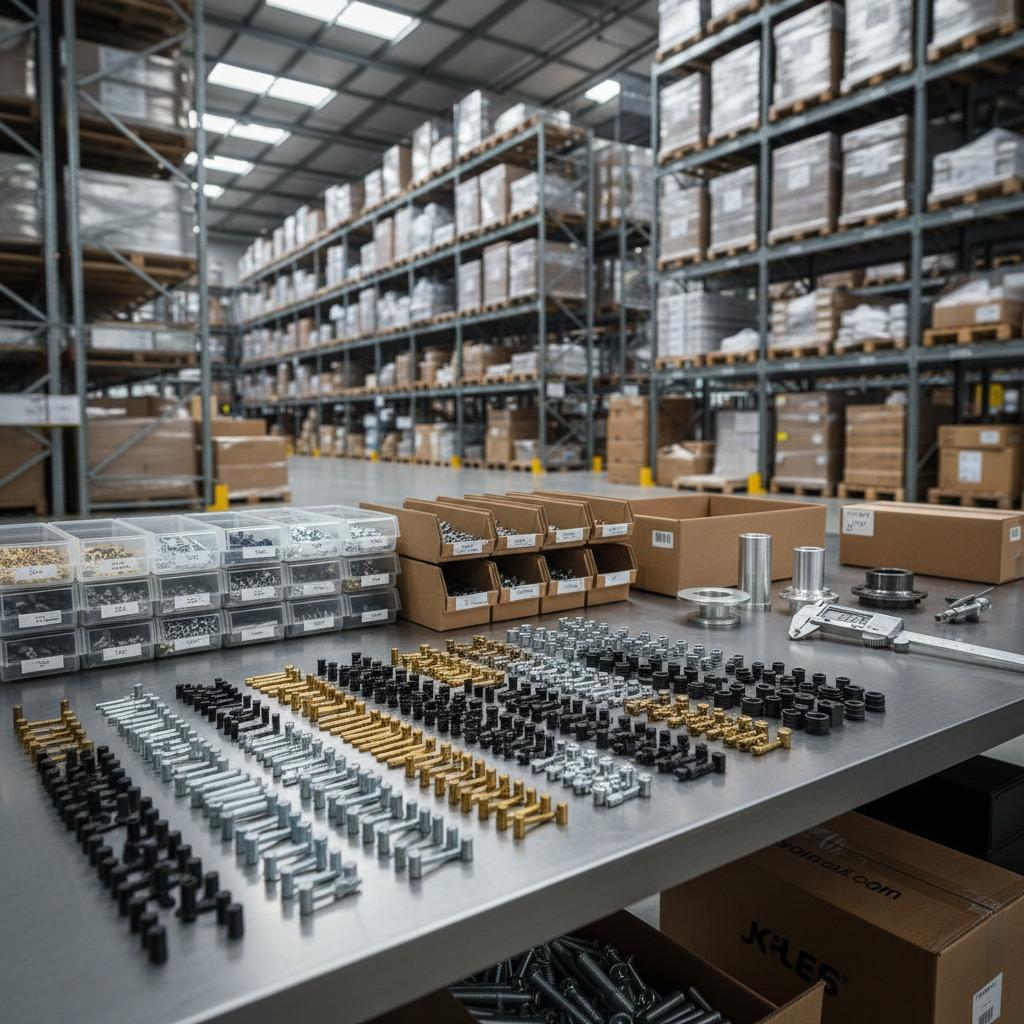
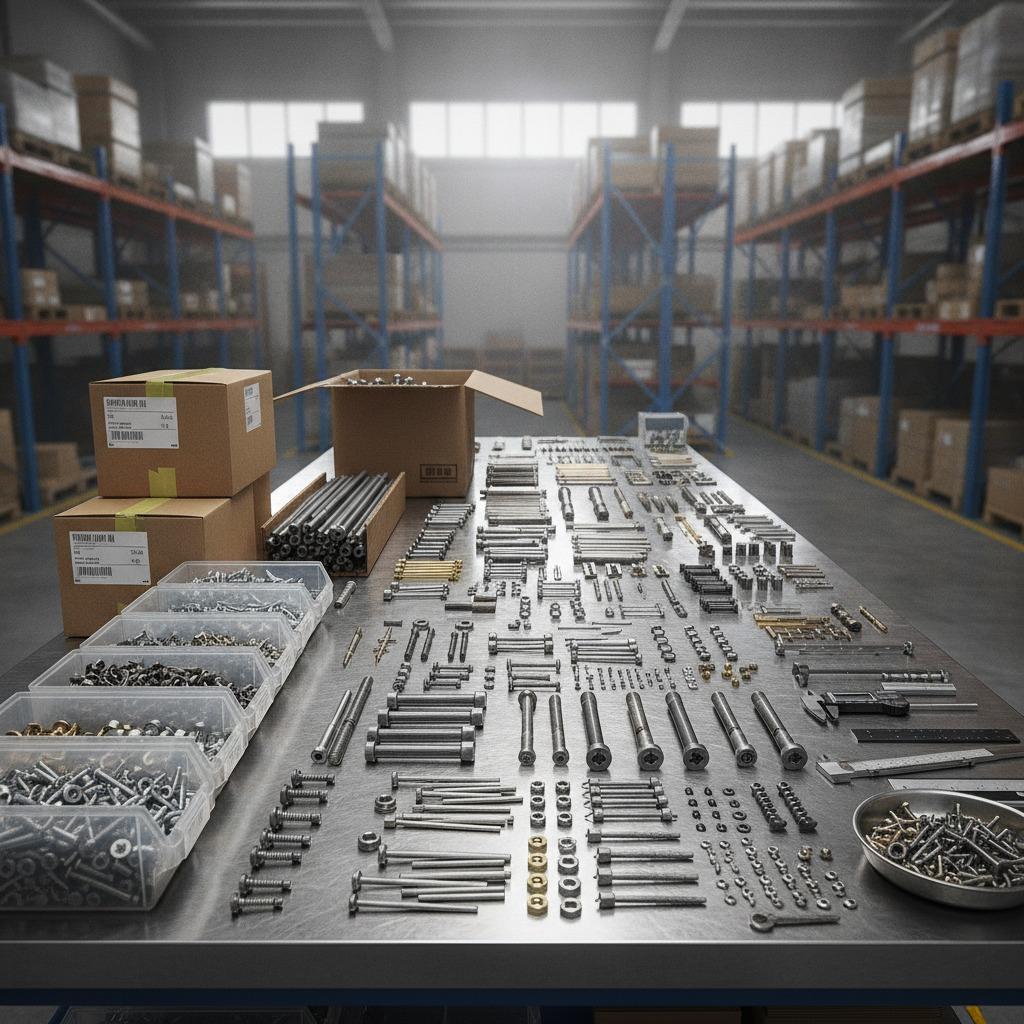
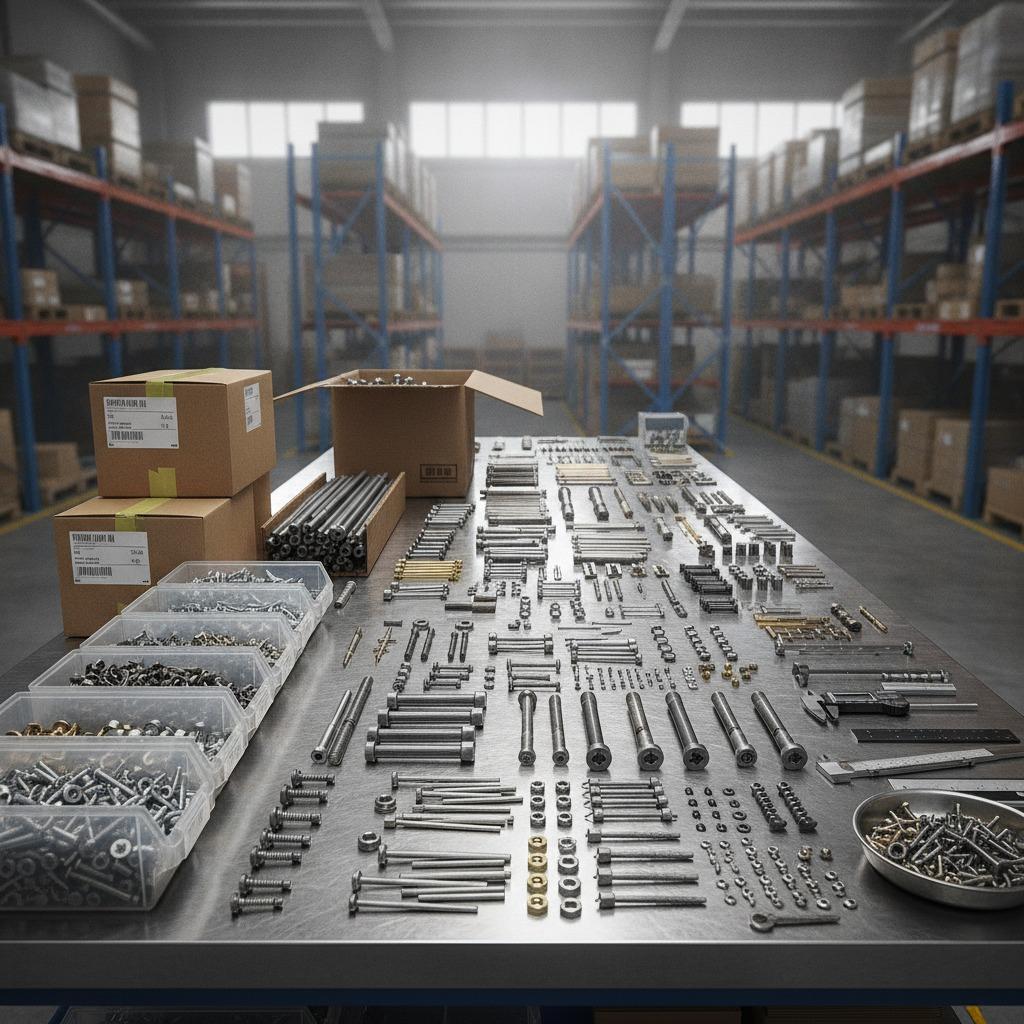
In many sourcing projects, buyers may need machine screws, self-tapping screws, micro screws, precision screws, bolts, nuts, spacers, standoffs, washers, and small accessories. Some orders are simple bulk shipments. Others require pre-sorted kits, labeled bags, compartment boxes, or mixed fastener assortments for maintenance teams, furniture assembly, resale, or e-commerce fulfillment.
Jiangmen Jinhe Hardware Co., Ltd., founded in 2016 in Jiangmen City, Guangdong Province, works across fasteners, standard parts, and non-standard customization. The company states that it produces screws in stainless steel, iron, and aluminum, with applications in electronics, medical devices, automation, home appliances, furniture, and related industries.
For buyers, that background matters because a real fastener program is rarely just “one screw in one carton.” A purchasing team may need standard stock for one product, non-standard customization for another, and packaging support for a third. A supplier that can discuss several screw families and custom requirements under one workflow can reduce sourcing complexity.
Stock supply, custom supply, and kitted supply
Not every buyer needs a custom screw. But many buyers need to know when standard supply is no longer enough.
| Supply Type | Best Use | Main Risk |
|---|---|---|
| Stock screws | Standard repairs, workshop replenishment, general hardware distribution | Limited flexibility in size, head style, finish, and packing |
| Custom screws | OEM assembly, special dimensions, non-standard head or drive requirements | Requires clear drawings, samples, and approval steps |
| Bulk self-tapping screws | Furniture, sheet metal, panels, general fastening programs | Thread form must match the substrate |
| Precision screws | Electronics, compact assemblies, appliances, medical-related products | Dimensional control and cleanliness matter more |
| Mixed or kitted supply | Maintenance kits, e-commerce packs, hardware wholesale assortments | Packaging and count control become critical |
Stock screws are useful when the design is already settled and the available part works without compromise. They are fast to source and practical for maintenance inventory.
Custom screws make more sense when the assembly has specific head geometry, length, drive type, coating, material, or packaging needs. In this case, an OEM screw supplier is brought in because the product design has requirements that a general catalog part cannot fully meet.
Mixed or kitted supply is another level. If the buyer needs fasteners sorted by project, machine model, product SKU, or service kit, packaging discipline becomes as important as the screw itself. Clear boxes, labeled bags, bulk cartons, and organized pick-and-pack systems are not decoration. They reduce handling errors.
Details buyers should not ignore
Thread type, head style, finish, and material are the obvious checks. But in actual sourcing, the less visible details often create the most trouble.
A black finish may suit one product line but look wrong in another. A bright zinc-like finish may be acceptable for general hardware, but not for a demanding corrosion environment. A self-tapping screw may work well in one substrate and fail in another.
Buyers should also confirm the drive type carefully. Phillips, hex socket, Torx-style, countersunk, pan head, and socket-style screws all support different assembly habits. A mixed sample tray may show broad capability, but it does not prove that every head style is available in every size, material, and finish.
Before placing a repeat order, confirm:
- screw size
- thread type
- head style
- drive recess
- material
- finish
- metric or imperial requirement
- strength or grade requirement
- packaging format
- inspection method
- label and carton details
- reorder control
These points may feel basic, but they are where many bulk fastener projects go wrong.
What matters in real procurement
For sourcing managers, the right custom fastener manufacturer usually needs to do three things well.
First, the supplier must hold the specification. The approved screw should not slowly change from batch to batch.
Second, the supplier must communicate clearly. When a size, finish, packaging method, or delivery schedule is unclear, the buyer needs answers quickly.
Third, the supplier must pack cleanly. Even a technically correct screw can become inefficient if it arrives in a format that slows receiving or line-side use.
Jiangmen Jinhe says it supports strict inspection before delivery and provides necessary documentation. The company also states that customer support responds within 30 to 60 minutes and offers solutions within 2 hours. These are service claims, not a replacement for buyer-side verification, but they show the type of operating details procurement teams should ask about.
A buyer should still confirm the actual inspection items, documentation package, and packaging process during quotation.
Common mistakes when buying custom screws in bulk
One common mistake is ordering from a sample that looks right but is not tied to a controlled drawing or part number.
A second mistake is accepting a “similar” screw for an OEM build without testing it in the real assembly. Similar is not the same as approved.
A third mistake is treating packaging as a late detail. For bulk production, repair kits, e-commerce screw sets, and hardware wholesale assortments, packaging affects labor, counting accuracy, and customer experience.
Another mistake is not confirming whether the supplier is running true custom production or simply combining stock parts into a kit. Both approaches can be useful, but they are not the same. The pricing logic, quality control, lead time, and repeat-order risk may be different.
For custom screw sourcing, buyers should know which lane they are in before approving the order.
Practical questions to ask before placing an order
Before choosing a custom wholesale screws supplier, buyers should ask direct questions:
Which standards can the parts follow?
Can the supplier support non-standard dimensions?
Is the part based on a drawing, sample, or stock item?
What materials are available?
How is the finish controlled?
Can inspection records or supporting documents be provided?
Can the packaging be customized?
How are reorders matched to the approved sample?
Can the supplier support export documents, warehousing, or logistics?
Jiangmen Jinhe’s broader business scope includes domestic and international logistics, warehousing, and supply chain services. That can be useful for cross-border e-commerce sellers, hardware wholesalers, and buyers managing multi-site replenishment.
Still, the technical side should come first. Logistics support is helpful only when the screw specification is already correct.
What this kind of supplier is best suited for
A custom wholesale screws supplier is most useful for buyers who need both manufacturing discipline and fulfillment discipline.
That may include:
- OEM assembly programs
- ODM product development
- furniture hardware supply
- electronics and appliance fastening
- maintenance inventory
- hardware resale
- mixed fastener kits
- e-commerce screw assortments
- non-standard screw customization
- recurring bulk orders
If a buyer only needs one common screw in one box, many catalog sellers can help.
But if the buyer needs the right screw, sorted correctly, documented properly, packed for use, and replenished without surprises, the supplier field becomes much narrower.
FAQ
Is a custom wholesale screws supplier only for large factories?
No. Hardware wholesalers, furniture manufacturers, e-commerce sellers, repair kit suppliers, maintenance teams, and OEM brands can all benefit when they need stable specifications, custom packaging, or repeat bulk supply.
When should buyers choose custom screws instead of stock screws?
Choose stock screws when the application is simple and proven. Choose custom screws when size, head style, thread form, material, finish, packaging, or documentation affects performance or workflow.
Why does packaging matter in screw sourcing?
Packaging affects receiving, counting, storage, assembly, resale, and user experience. Poor packaging can create extra work even when the screws themselves are correct.
What should be confirmed before bulk production?
Buyers should confirm drawings, samples, material, finish, head type, drive type, thread type, standards, inspection method, packaging, labels, carton packing, and reorder rules.
What makes an OEM screw supplier useful?
An OEM screw supplier can produce or customize fasteners according to the buyer’s application, drawing, sample, or packaging requirement. The main value is repeatability.
Next step
If your team is comparing suppliers for custom screw sourcing, mixed fastener kits, or OEM bulk supply, start with a specification review.
Prepare the drawing, sample, target volume, application details, packaging requirement, and inspection expectations. Then ask for a sample set that reflects the real production plan, not a generic substitute.
That short technical exchange can save a surprising amount of trouble later.
A dependable custom wholesale screws supplier should help buyers control the full path from specification to production, inspection, packaging, delivery, and repeat supply.