
What Buyers Really Expect from a Custom Wholesale Screws Supplier
When engineers, sourcing teams, or hardware distributors search for a custom wholesale screws supplier, they are usually not looking for a simple box of general-purpose screws.
They are trying to solve a more practical problem.
They need the right screw.
In the right finish.
With the right packaging.
Delivered in the right quantity.
And, most importantly, repeated without unexpected changes.
That sounds straightforward until a production line, OEM assembly, repair program, or maintenance supply chain starts depending on it. Once fasteners move from sample testing to bulk orders, small details become serious. A slightly wrong head height can affect assembly. A weak drive recess can slow workers down. A coating mismatch can affect product appearance. Poor packaging can turn receiving into a sorting job.
For buyers, the decision is not only about price. It is about consistency, dimensional control, supplier communication, packaging discipline, and whether the supplier can support repeat orders without creating confusion.
That is where a custom fastener manufacturer becomes more than a parts vendor. It becomes part of the production plan.
Why custom screws become a procurement issue
Standard screws work well when the product design is simple and forgiving.
Many real products are not like that.
Electronics housings, furniture modules, machine covers, home appliance parts, medical device components, and equipment panels often need fasteners that fit a specific structure. The screw may need to match a limited clearance area, a torque requirement, a surface finish, or a fixed assembly process.
In those cases, a catalog screw may almost work, but “almost” is not enough.
A custom screw manufacturer for bulk orders helps buyers align the screw with the application. That may involve adjusting the size, head type, drive recess, thread form, material, finish, or packaging method.
This is especially important when the order is recurring. A one-time sample can be adjusted manually. A bulk production order cannot depend on luck. The part must be controlled, inspected, packed, and replenished in a stable way.
What a capable supplier should handle
A serious OEM screw supplier should be comfortable with more than one screw family.
Jiangmen Jinhe Hardware Co., Ltd. states that it produces machine screws, self-tapping screws, micro screws, and precision screws, using materials such as stainless steel, iron, and aluminum. The company also says its products can follow standards including GB, DIN, ANSI, BS, JIS, and ISO.
For B2B buyers, that range is useful because many purchasing programs involve mixed fastener needs. A furniture factory may need self-tapping screws and connector screws. An electronics assembler may need small precision screws. A hardware wholesaler may need several finishes and sizes. An e-commerce seller may need organized kits rather than loose bulk cartons.
A supplier with wider fastener coverage can reduce the need to source from several channels for one project.
Still, buyers should not assume that every size, grade, coating, or standard is available automatically. Each order should be confirmed through drawing review, sample approval, and written specification.
Why materials and finishes are not only cosmetic
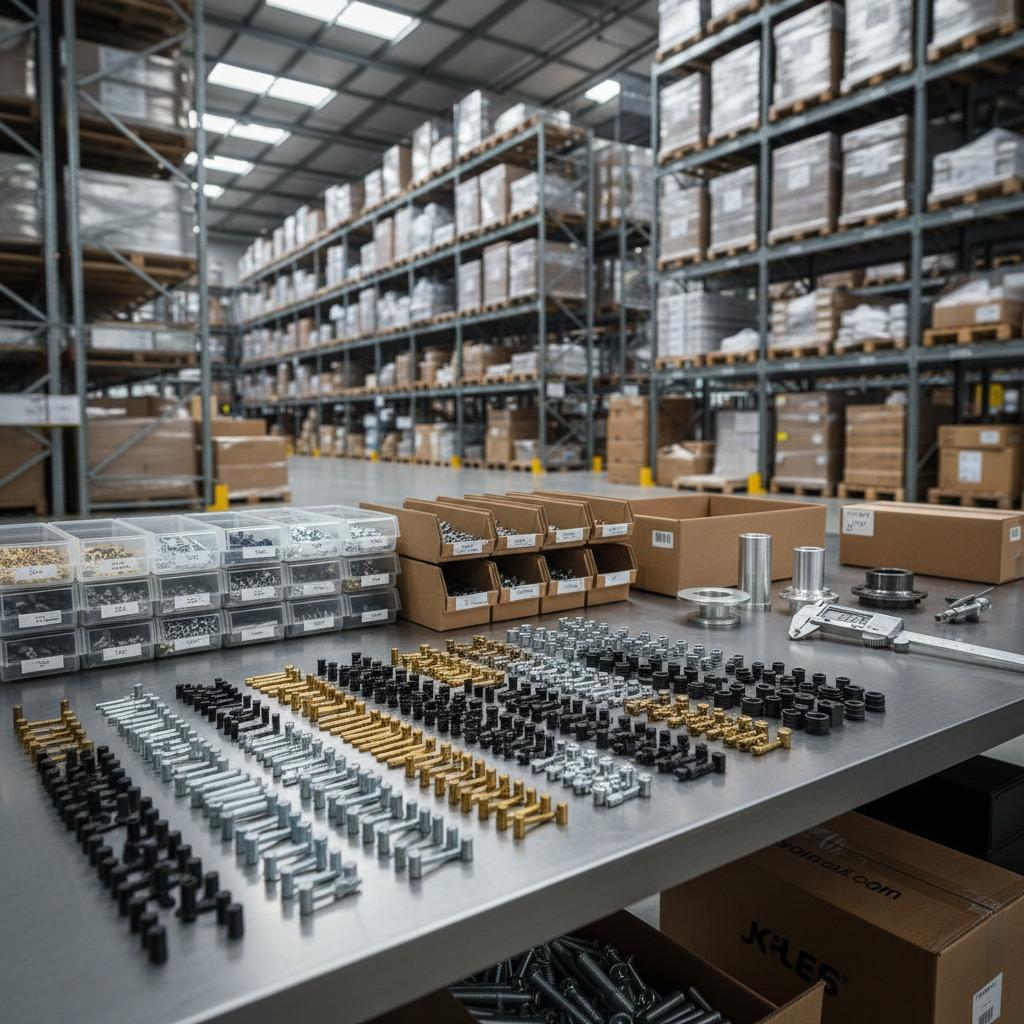
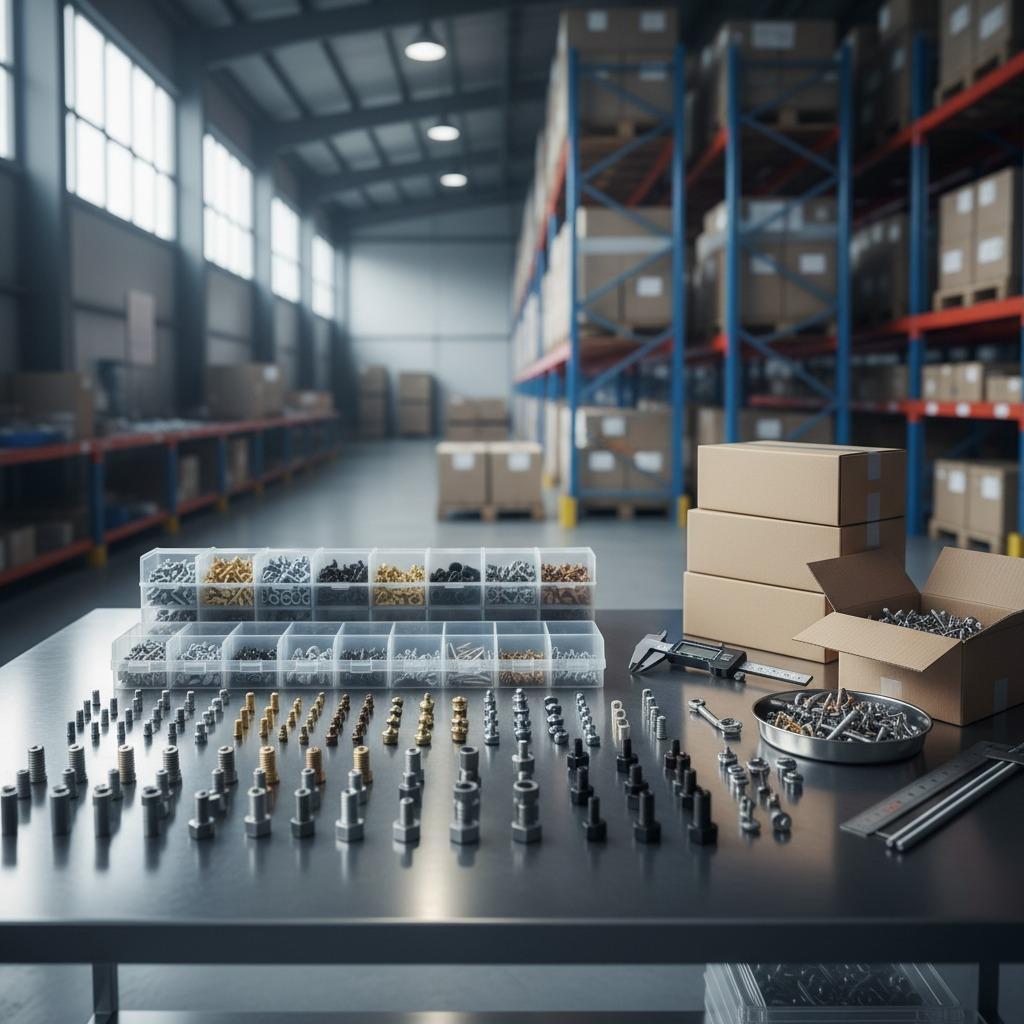
The product image shows mixed screw appearances, including silver or zinc-like finishes, black-coated parts, and yellow or gold-toned surfaces. That kind of finish variety is common in fastener sourcing, but buyers should treat it carefully.
Finish is not just about appearance.
It can affect corrosion resistance, assembly feel, storage behavior, and compatibility with surrounding materials. A black-coated screw may suit a dark enclosure. A bright zinc-like finish may work for general indoor use. A yellow-toned coating may match a certain hardware style or customer preference.
But the exact base material and coating specification cannot be confirmed from a photo alone.
A buyer should always ask for:
- material confirmation
- finish description
- plating or coating requirement
- corrosion expectation, if relevant
- inspection method
- sample approval
- packaging condition
According to Jinhe’s company information, the company performs strict inspection before delivery and provides necessary documentation. For procurement teams, that type of support is important, but it should still be verified through project-specific requirements.
Stock buying versus custom wholesale supply
Not every project needs a custom screw. Sometimes a stock screw is enough.
But buyers should know the difference.
| Supply Route | When It Works Best | Main Risk |
|---|---|---|
| Standard stock screws | Simple repair, workshop use, general distribution | Limited control over size, finish, and packaging |
| Custom screws | OEM assembly, special design needs, non-standard dimensions | Requires drawing, sample, and approval process |
| Bulk self-tapping screws | Furniture, panels, sheet metal, appliances | Thread must match the real substrate |
| Precision screws | Electronics, compact products, small mechanisms | Dimensional control matters more |
| Mixed fastener kits | Maintenance, resale, e-commerce, assembly kits | Sorting and labeling must be controlled |
A distributor may be enough when the buyer needs common stock quickly.
A custom supplier becomes more useful when the screw must match a product, a process, or a customer-facing kit.
Packaging is part of the supply decision
Many buyers focus on the screw first and leave packaging until the end.
That often creates problems.
For bulk fastener orders, packaging affects receiving, counting, storage, line-side use, resale, and customer experience. Loose bulk fasteners may work for one factory, but they may slow down another. Some buyers need compartment boxes. Others need labeled bags, custom cartons, retail packaging, or SKU-based kitting.
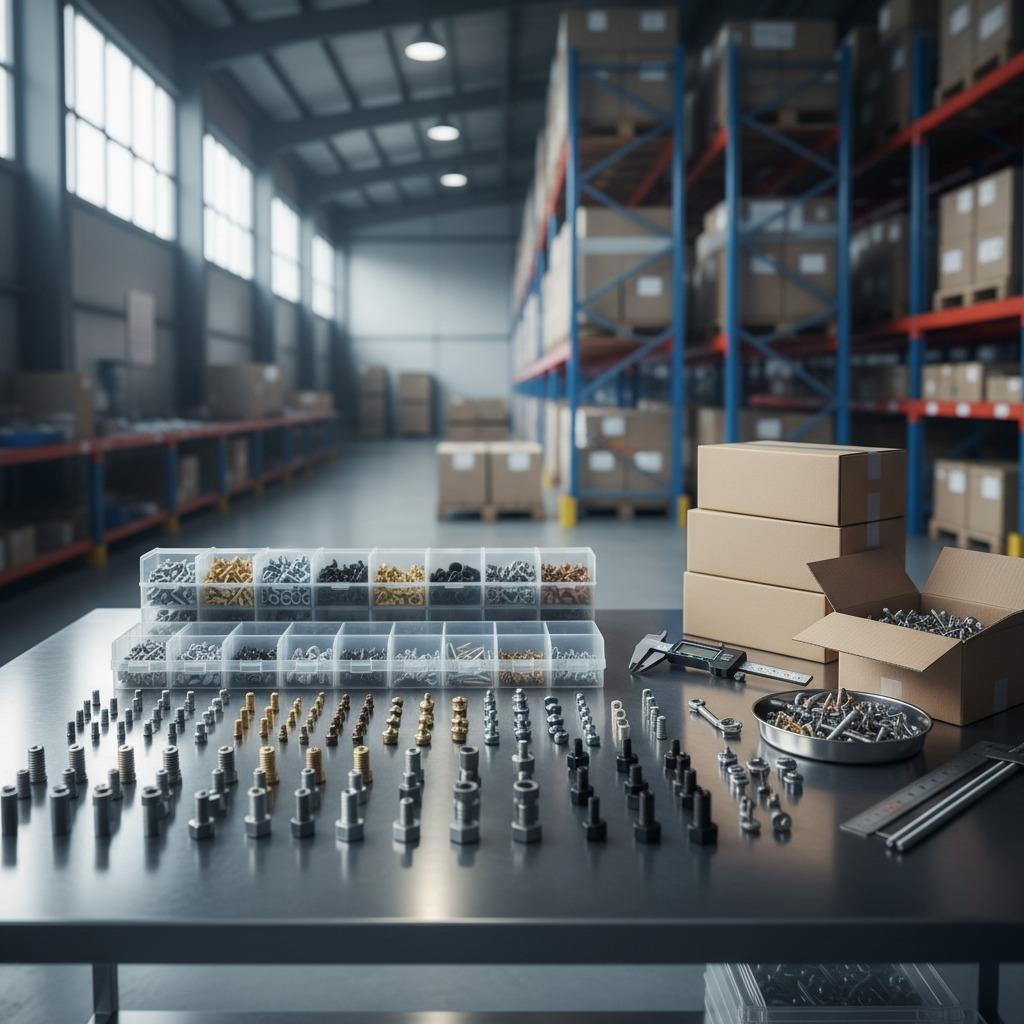
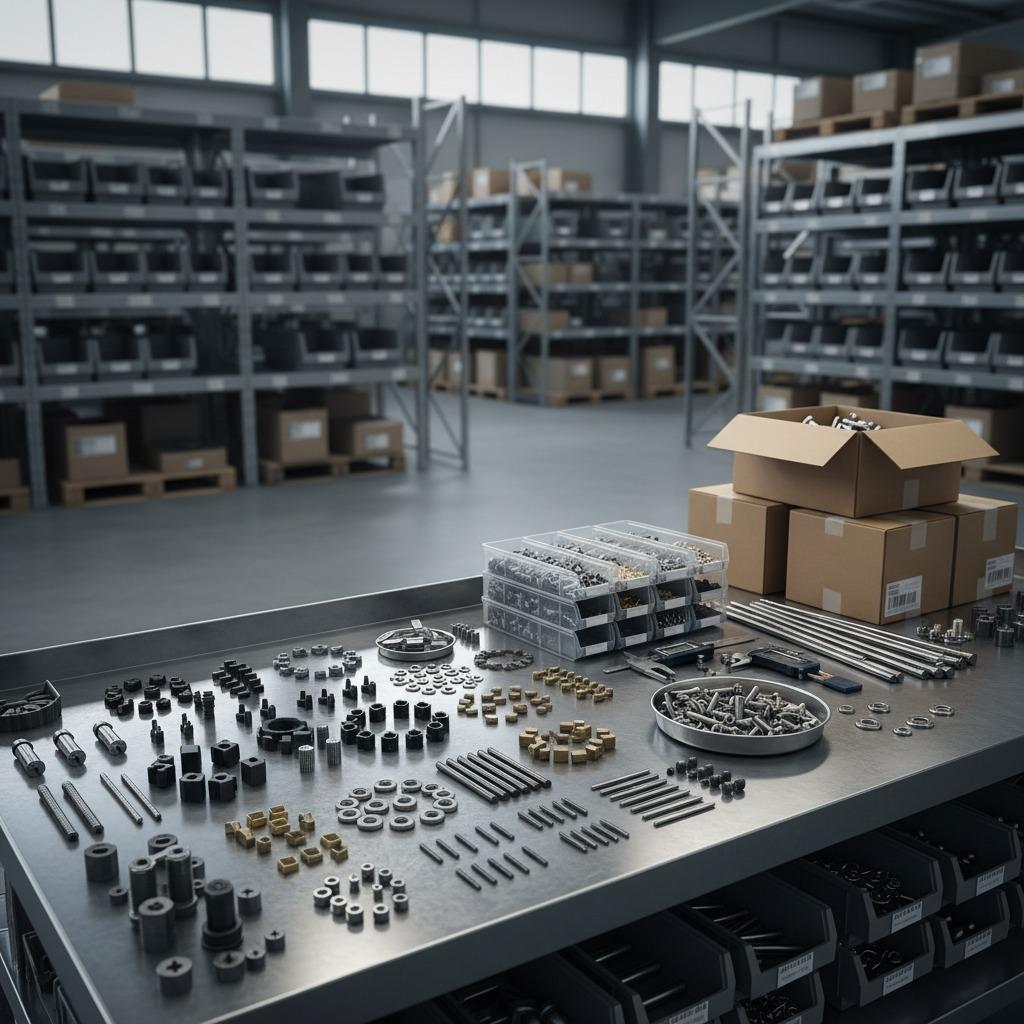
The image reference shows sorted fasteners, compartment boxes, and measuring tools. That is a useful reminder: fastener sourcing often includes organization and checking, not just manufacturing.
For mixed hardware orders, buyers should ask how the supplier sorts, labels, packs, and protects different parts before shipment.
A technically correct screw can still create extra work if the packaging is wrong.
How to compare suppliers without getting lost in the catalog
Most sourcing teams start with the catalog.
That is understandable, but it is not enough.
A better supplier comparison should focus on practical questions:
Can the supplier produce to the required standard?
Can they support non-standard customization?
Can they match drawings or samples?
Can they control finish and material requirements?
Can they sort and pack mixed fasteners properly?
Can they provide inspection documents if needed?
Can they support repeat orders without changing the approved part?
Can they handle logistics for wholesale or export orders?
Jiangmen Jinhe Hardware says it offers warehousing, domestic logistics, international freight forwarding, and supply chain services. For cross-border e-commerce sellers, hardware wholesalers, and manufacturers, that broader support can reduce sourcing friction.
But the technical side should always come first. Logistics support is useful only when the fastener specification is correct.
Common mistakes buyers make
One common mistake is approving a screw based on appearance alone.
A photo can show head style and finish color, but it cannot confirm thread pitch, coating thickness, strength, tolerance, or material grade.
Another mistake is assuming all “custom” work is the same. A custom metric screws manufacturer may modify an existing screw family, or it may produce a fully non-standard part. These two routes may have different costs, tooling needs, lead times, and quality controls.
A third mistake is ignoring the mating part. A screw should be confirmed together with the material it will enter, the hole condition, the tool, and the torque requirement.
Buyers also sometimes forget packaging. If the final product needs a kitted set, sorted tray, or labeled compartment box, packaging must be discussed before production, not after.
When the supplier becomes a manufacturing partner
If the screws are used in electronics, furniture, building materials, appliances, automation, or medical device-related products, the supplier relationship should go beyond simple purchasing.
The buyer should ask whether the supplier can help reduce variation.
That means controlling the part, the finish, the inspection process, the packaging, and the reorder path.
Jinhe’s company information states that it serves sectors including home appliance, electronics, furniture, building materials, and medical device manufacturing. It also mentions cooperation with brands such as Liansu, Futian Electric, Midea, Hisense, and Sleemon. Buyers should still carry out their own qualification process, but these details suggest the company is positioned for repeat industrial fastener supply.
For engineers and procurement teams, that is the real question: can the supplier help make small fastener orders less risky?
What to ask before placing a bulk order
Before placing an order, prepare a clear technical brief.
Include:
- drawing or sample
- screw type
- size and length
- head style
- drive type
- thread type
- material
- finish
- application
- standard requirement
- packaging format
- inspection requirement
- order quantity
- delivery destination
If the project involves self-tapping screws, explain the substrate. If it involves mixed hardware kits, explain the sorting and labeling needs. If it involves OEM production, request documentation early.
A vague RFQ usually creates a vague quotation. A clear brief helps the supplier quote more accurately and helps the buyer compare offers more fairly.
FAQ
What does a custom wholesale screws supplier do?
A custom wholesale screws supplier provides screws in bulk and supports customization, packaging, inspection, documentation, and repeat supply based on buyer requirements.
When should buyers choose custom screws?
Buyers should choose custom screws when size, head type, drive style, thread form, finish, material, or packaging affects product performance, assembly speed, or user experience.
Why is packaging important in fastener sourcing?
Packaging affects receiving, storage, counting, sorting, assembly, resale, and customer satisfaction. Poor packaging can create extra labor even when the screws are technically correct.
What should buyers confirm before mass production?
Buyers should confirm drawing, material, finish, thread type, head style, drive type, standard, inspection method, packaging format, label content, and repeat-order rules.
Is a custom supplier only needed for large factories?
No. Hardware wholesalers, e-commerce sellers, furniture brands, maintenance suppliers, repair kit brands, and OEM manufacturers can all benefit from custom wholesale screw supply.
A practical next step for buyers
If you need a custom screw manufacturer for bulk orders, start with a short technical brief instead of a vague RFQ.
List the application, drawing, material, finish, standard, packaging format, inspection requirement, logistics needs, and expected order quantity.
That gives the supplier enough information to respond usefully and helps you compare offers on more than unit price alone.
For buyers looking for an OEM screw supplier with production, inspection, packaging, and export support, Jiangmen Jinhe Hardware Co., Ltd. can be contacted at:
Tel / WeChat: +86 13729150102
WhatsApp: +86 13322893939
Email: sharon@hkhomeideas.com
The right supplier conversation usually starts with one drawing and ends with fewer surprises when the goods reach the dock.