
Why Buyers Look for a Custom Wholesale Screws Supplier Before Bulk Orders Go Wrong
When a production line, furniture factory, maintenance team, or hardware distributor starts looking for a custom wholesale screws supplier, the real problem is usually bigger than price.
The buyer may already have screws.
The issue is that they are not quite right.
Maybe the screw head sits too high on the product surface. Maybe the drive recess strips too easily during assembly. Maybe the finish does not match the surrounding hardware. Maybe the screw length is close, but still causes problems in real use. Or maybe the parts arrive in bulk cartons and create extra sorting work before they can be used.
In small quantities, these problems may feel manageable. In bulk orders, they become expensive.
For engineers, sourcing managers, furniture brands, hardware wholesalers, and OEM product teams, screw sourcing is not simply about buying metal parts. It is about choosing the right screw type, material, head style, finish, packaging method, and supplier process before the order enters mass production.
That is where a custom fastener manufacturer becomes more than a vendor. A good supplier helps turn a drawing, sample, or application requirement into a stable supply arrangement.
Why custom screw supply matters in real production
A screw looks simple until it enters an assembly line.
Once production begins, every small detail matters. The head must match the tool. The thread must suit the material. The finish must meet the product requirement. The packaging must support receiving, storage, and assembly. The supplier must be able to repeat the same part after the first batch.
That is why buyers often move from standard screws to custom wholesale supply.
A standard screw is useful when the application is basic and proven. But when the screw affects product fit, appearance, installation speed, or after-sales performance, buyers need more control.
A custom screw manufacturer for bulk orders can help adjust:
| Requirement | Why Buyers Care |
|---|---|
| Screw length | Prevents poor fit, weak fastening, or interference |
| Head style | Supports appearance, clearance, and assembly design |
| Drive type | Reduces stripping and improves tool compatibility |
| Thread form | Helps match the screw to wood, metal, plastic, or other materials |
| Finish | Affects appearance, corrosion resistance, and handling |
| Material | Supports strength, weight, cost, and application needs |
| Packaging | Reduces sorting, mixing, and receiving work |
| Inspection | Helps keep bulk orders consistent |
The lowest price is not always the lowest cost. If the screws cause rework, sorting, line delays, or customer complaints, the saving disappears quickly.
What buyers should expect from a serious supplier
Jiangmen Jinhe Hardware Co., Ltd. describes itself as a fastener manufacturer founded in 2016 in Jiangmen City, Guangdong Province, with a 4,000-square-meter facility. The company’s product scope includes machine screws, self-tapping screws, micro screws, and precision screws, with materials such as stainless steel, iron, and aluminum.
For buyers, this matters because bulk screw programs often involve more than one product type. A furniture manufacturer may need self-tapping screws and connector screws. An electronics assembler may need smaller precision screws. A hardware wholesaler may need mixed fastener assortments. An e-commerce seller may need screws packed in retail-friendly kits.
Jinhe also references GB, DIN, ANSI, BS, JIS, and ISO standards. For B2B sourcing, standard references are useful because they give both buyer and supplier a clearer language for discussing drawings, sizes, tolerances, materials, and quality expectations.
A serious OEM screw supplier should not only ask for quantity. It should ask about the application, drawing, material, finish, head type, drive style, packing format, and repeat-order requirements.
Stock screws versus custom bulk screw supply
Stock screws are useful when the buyer needs a common part quickly. They are often easier to source and may have shorter lead times. For simple maintenance, general repair, or low-risk assembly, stock screws may be enough.
But stock screws also require compromise.
The length may not be ideal.
The head may not match the final appearance.
The finish may not suit the product.
The packaging may not match the buyer’s workflow.
Custom bulk screw supply is different. It is better suited for buyers who need screws made or adjusted around a real product requirement.
| Sourcing Option | Best For | Main Limitation |
| Stock screws | Standard use, fast replacement, simple repair | Limited size, finish, and packaging flexibility |
| Custom screws | OEM products, non-standard assembly, special finish needs | Requires clearer specifications and sample approval |
| Bulk self-tapping screws | Furniture, panels, sheet metal, general assembly | Must match substrate and thread requirement |
| Precision screws | Electronics, appliances, compact assemblies | Requires tighter dimensional control |
| Custom packaged screws | Retail, e-commerce, furniture kits, wholesaler assortments | Packaging layout must be confirmed early |
A buyer should not only ask, “Can you supply this screw?”
The better question is, “Can you supply it in the way our production or sales channel actually needs it?”
Where custom screw supply matters most
Different industries care about different screw details.
Electronics buyers often focus on compact geometry, stable dimensions, and clean assembly.
Furniture buyers care about holding power, appearance, installation speed, and packaging.
Home appliance manufacturers may care about finish consistency, corrosion resistance, and repeat supply.
Medical device and precision product buyers may need tighter control, documentation, and cleaner packaging.
Hardware wholesalers often need a broad product range and reliable replenishment.
Cross-border e-commerce sellers may care about custom packaging, small kits, and product presentation.
This is why a custom wholesale screws supplier needs flexibility. The supplier should be able to support different screw families without treating every request as a one-time exception.
Jinhe’s stated product range—machine screws, self-tapping screws, micro screws, and precision screws—fits this kind of mixed demand. For buyers managing several product lines, having one supplier that can discuss multiple screw types may reduce communication and purchasing complexity.
Why finish and packaging deserve more attention
Buyers often look closely at screw size but less carefully at finish and packaging. That can create problems later.
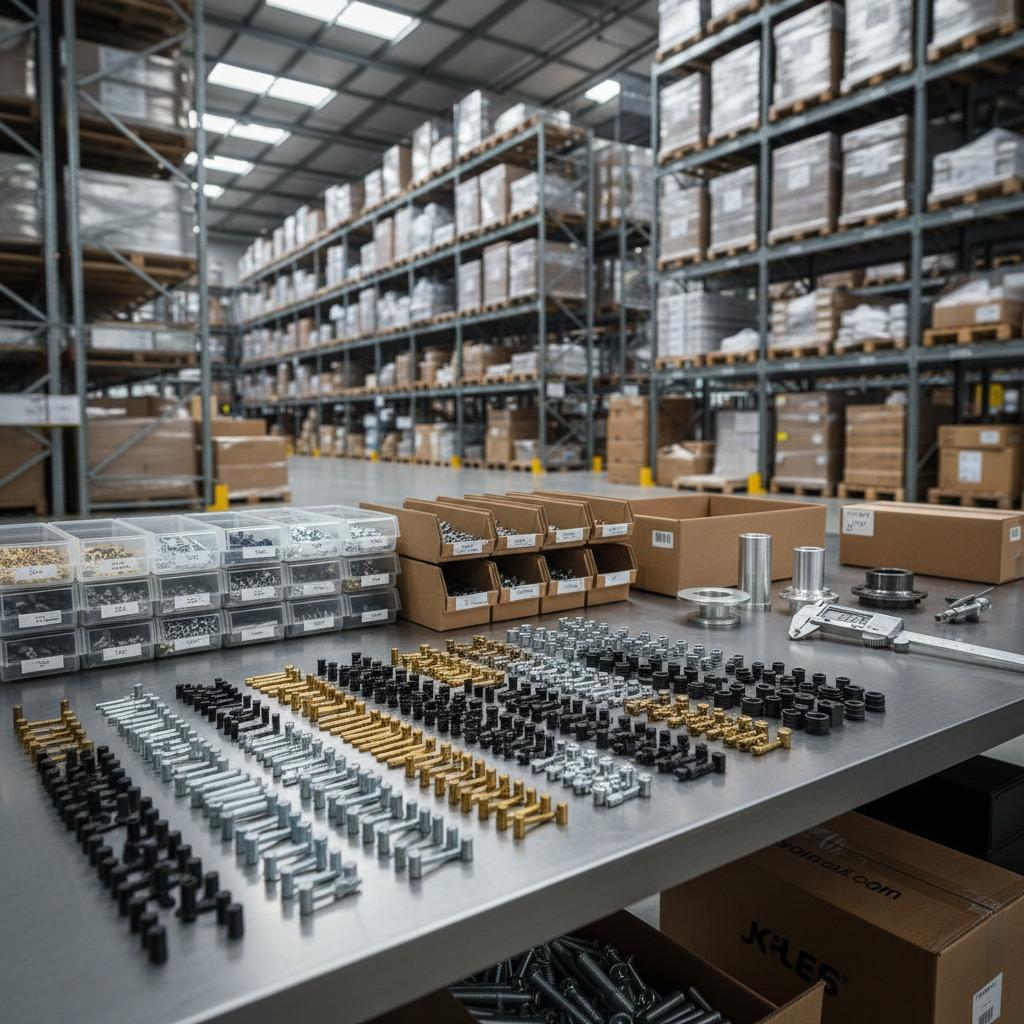
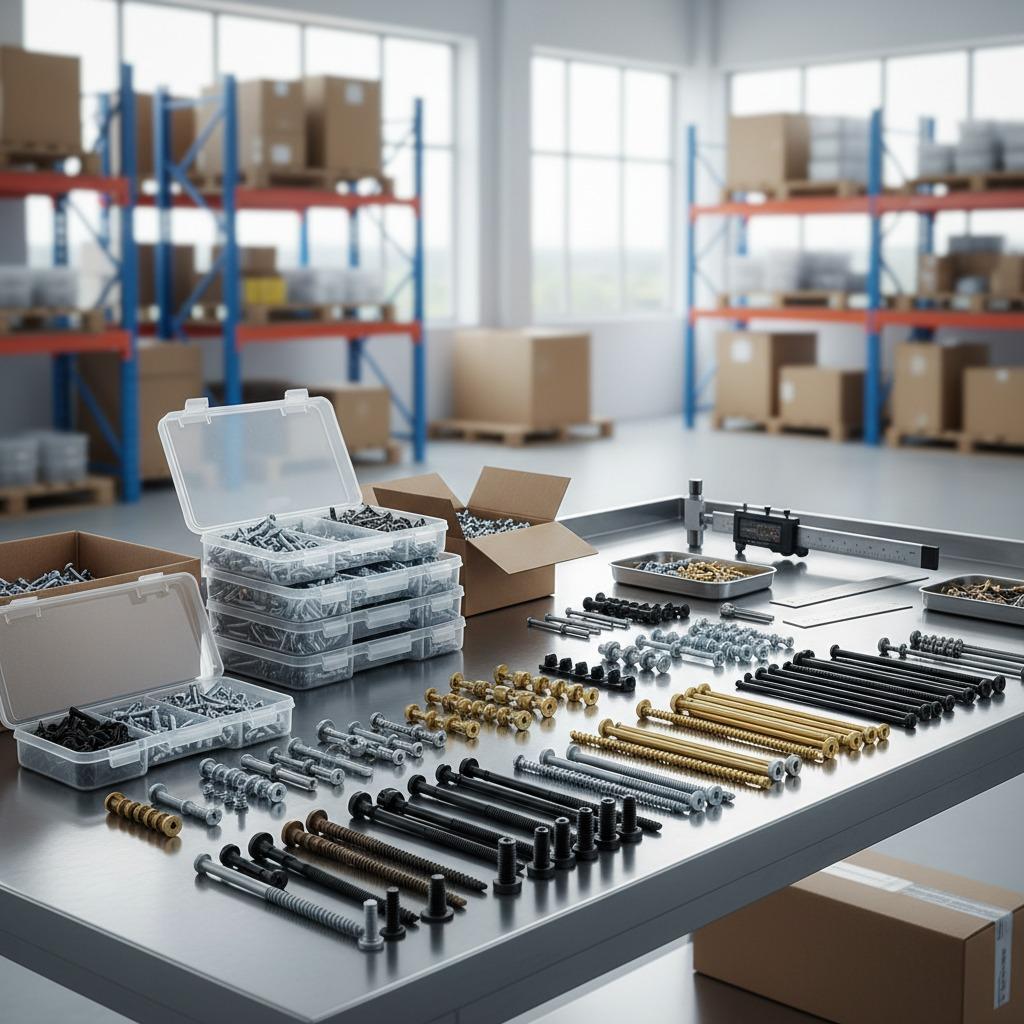
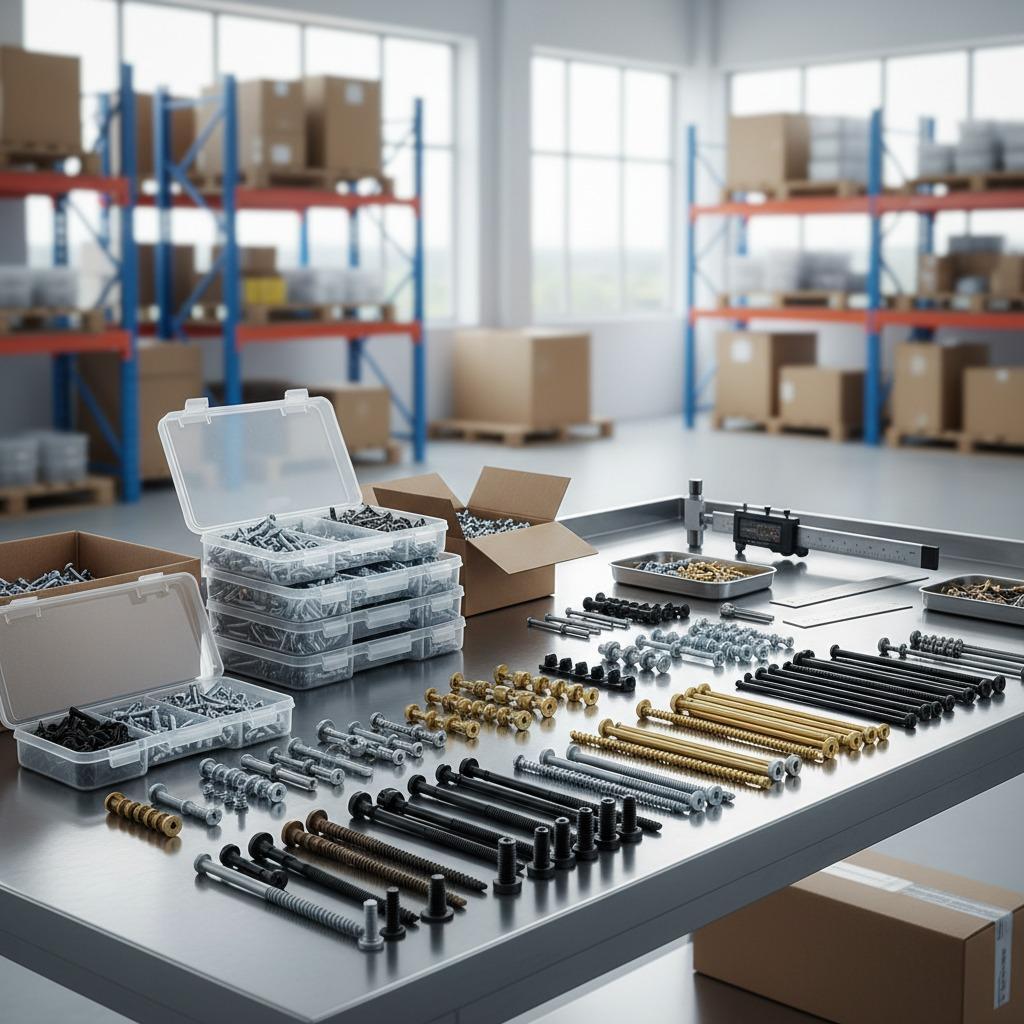
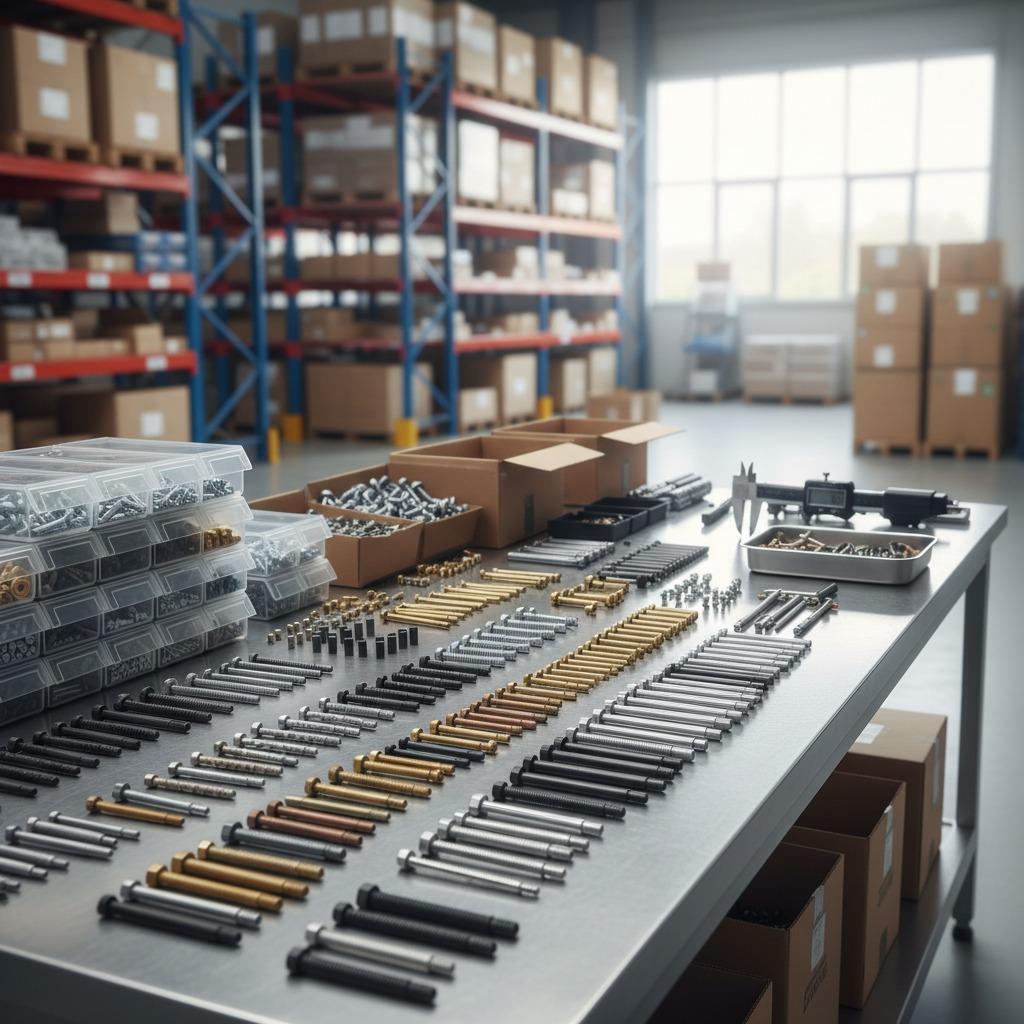
Finish is not only cosmetic. It may affect appearance, storage, corrosion resistance, and how the screw behaves during assembly. A black-coated screw may be preferred for dark housings. A bright metal finish may be better for visible hardware. A yellow or gold-toned finish may be chosen for certain product or retail requirements.
The exact material and coating should always be confirmed in writing. A photo can show appearance, but it cannot confirm coating chemistry, base material, strength class, or corrosion performance.
Packaging also matters.
Loose mixed screws may work in a workshop, but they may be a poor choice for an assembly line or e-commerce product. Some buyers need bulk cartons. Others need labeled bags, compartment boxes, plastic kits, or customized packaging by SKU.
If the buyer must re-count, re-sort, or re-pack every shipment, the low screw price may no longer be attractive.
What buyers should confirm before bulk orders
Before placing a bulk order, buyers should prepare a clear specification package.
That package should include:
- screw drawing or sample
- size and length
- head style
- drive type
- thread type
- material family
- finish requirement
- quantity
- packaging method
- inspection requirement
- standard reference
- label or part number requirement
- delivery and logistics needs
If the screw is custom or semi-custom, buyers should also ask whether the supplier is adapting an existing screw family or producing a fully non-standard part. These two paths may have different tooling costs, lead times, and MOQ requirements.
A good supplier should make unclear details visible before production starts.
That is much better than discovering the problem after the goods arrive.
Common mistakes in screw sourcing
One common mistake is treating “screws” as one simple category.
A machine screw, self-tapping screw, micro screw, and precision screw are not the same sourcing problem. They may require different production control, inspection points, packaging, and application testing.
Another mistake is approving an order from a product photo alone. A photo can show head shape and finish color, but it cannot confirm thread pitch, tolerance, strength, plating thickness, or material grade.
A third mistake is treating packaging as a final detail. For furniture kits, e-commerce screw packs, repair boxes, and distributor assortments, packaging should be discussed early.
A fourth mistake is choosing the lowest quote without checking what is included. Samples, inspection, documentation, packaging, export support, and repeat-order control all affect the real cost.
The final mistake is not confirming reorder consistency. A first order may pass, but the real test is whether the supplier can deliver the same specification again.
What Jinhe appears positioned to support
Based on the supplied company information, Jiangmen Jinhe Hardware Co., Ltd. is positioned as a fastener manufacturer supporting standard parts and non-standard customization. Its stated services include inspection before delivery, supporting documentation, foreign trade support, warehousing, logistics, and supply chain services.
For overseas buyers, wholesalers, furniture brands, electronics assemblers, and OEM product teams, that combination can be useful. It suggests the supplier can discuss not only screw production, but also packaging and delivery workflow.
Still, buyers should confirm all technical and commercial details during quotation. The final screw specification, finish, packaging, inspection method, and delivery terms should be written clearly before mass production.
FAQ
Is a custom wholesale screws supplier only for large factories?
No. Furniture manufacturers, hardware wholesalers, e-commerce sellers, repair kit brands, appliance factories, electronics assemblers, and maintenance supply companies can all benefit from custom screw supply if they need stable specifications or organized packaging.
When should I choose custom screws instead of stock screws?
Choose stock screws when the application is simple and the fit is already proven. Choose custom screws when size, head style, thread form, finish, material, or packaging affects product performance or workflow.
What makes an OEM screw supplier useful?
An OEM screw supplier can produce or customize screws according to the buyer’s drawing, sample, application, packaging requirement, or standard. The key value is repeatability, not just one-time supply.
Why should packaging be discussed early?
Packaging affects counting, storage, protection, assembly, and customer experience. For bulk orders, poor packaging can create extra labor even when the screws themselves are correct.
What should buyers ask before placing an order?
Buyers should ask about drawings, material, finish, head type, thread type, inspection, documentation, packaging, sample approval, lead time, logistics, and repeat-order control.
Next step
If you are comparing suppliers, do not start with price alone.
Start with the screw application, drawing, material, finish, packaging format, and order quantity. Then ask how the supplier will control inspection, documentation, and repeat supply.
That process usually shows the difference between a convenient seller and a dependable custom wholesale screws supplier.
For buyers who need machine screws, self-tapping screws, micro screws, precision screws, custom metric screws, bulk self-tapping screws, OEM screw supply, or non-standard fastener customization, Jiangmen Jinhe Hardware Co., Ltd. can be considered for further discussion.
The right screw supplier does more than ship fasteners. It helps keep small parts from creating large production problems.