
Why a fastener set matters in cabinet and furniture assembly
When a cabinet lands on the bench as a clean, unfinished box with pre-drilled rows and a spread of loose hardware nearby, the real question is not whether it can be assembled. It is whether the fastener set on hand matches the job well enough to hold the piece together without slowing the line, stripping the panel, or creating a warranty headache later.
That is especially true in flat-pack furniture, workshop storage, and custom cabinetry, where the wood panel, the hardware, and the assembly sequence all need to work together. A mismatch between screw type, thread style, and panel material can turn a simple build into rework. For sourcing teams, the decision is not just “which screw is cheapest?” It is “which fastening package supports clean assembly, repeatable quality, and fewer field failures?”
What buyers are really looking at
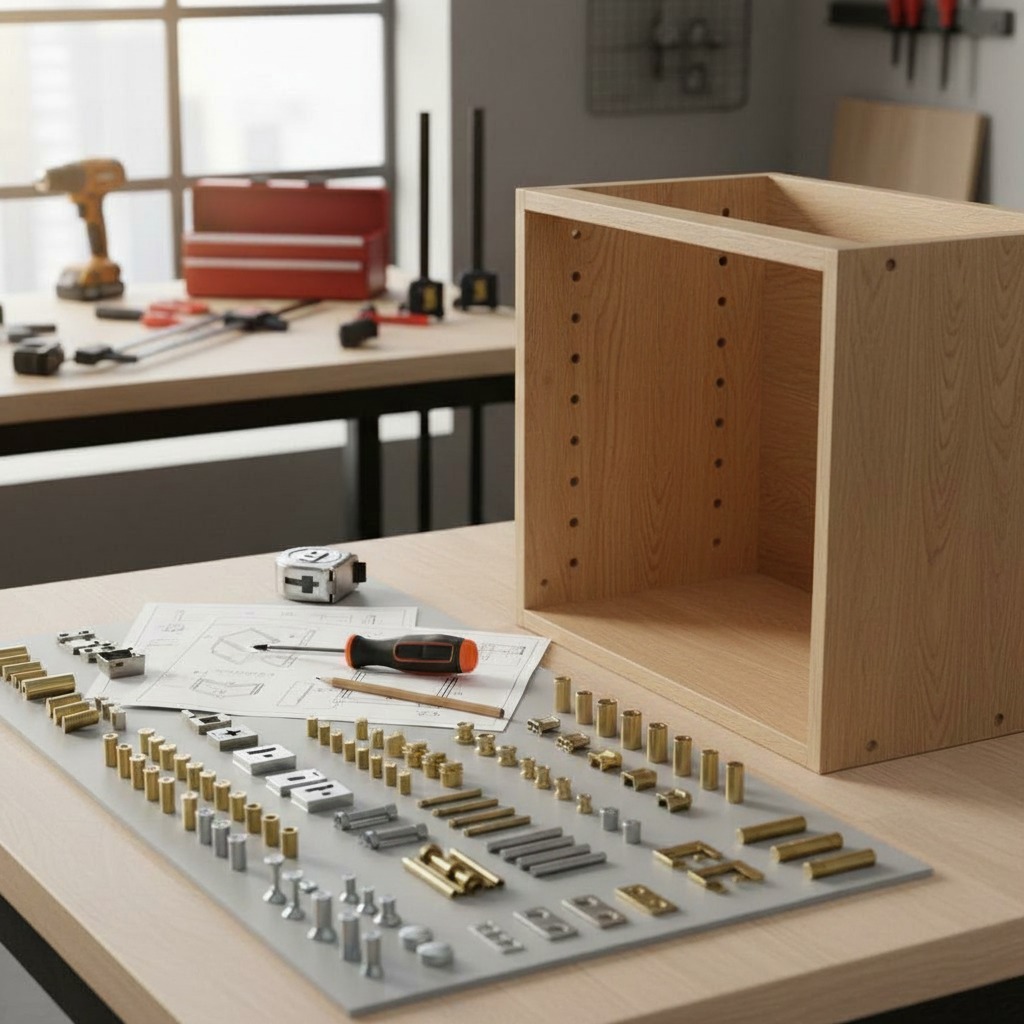
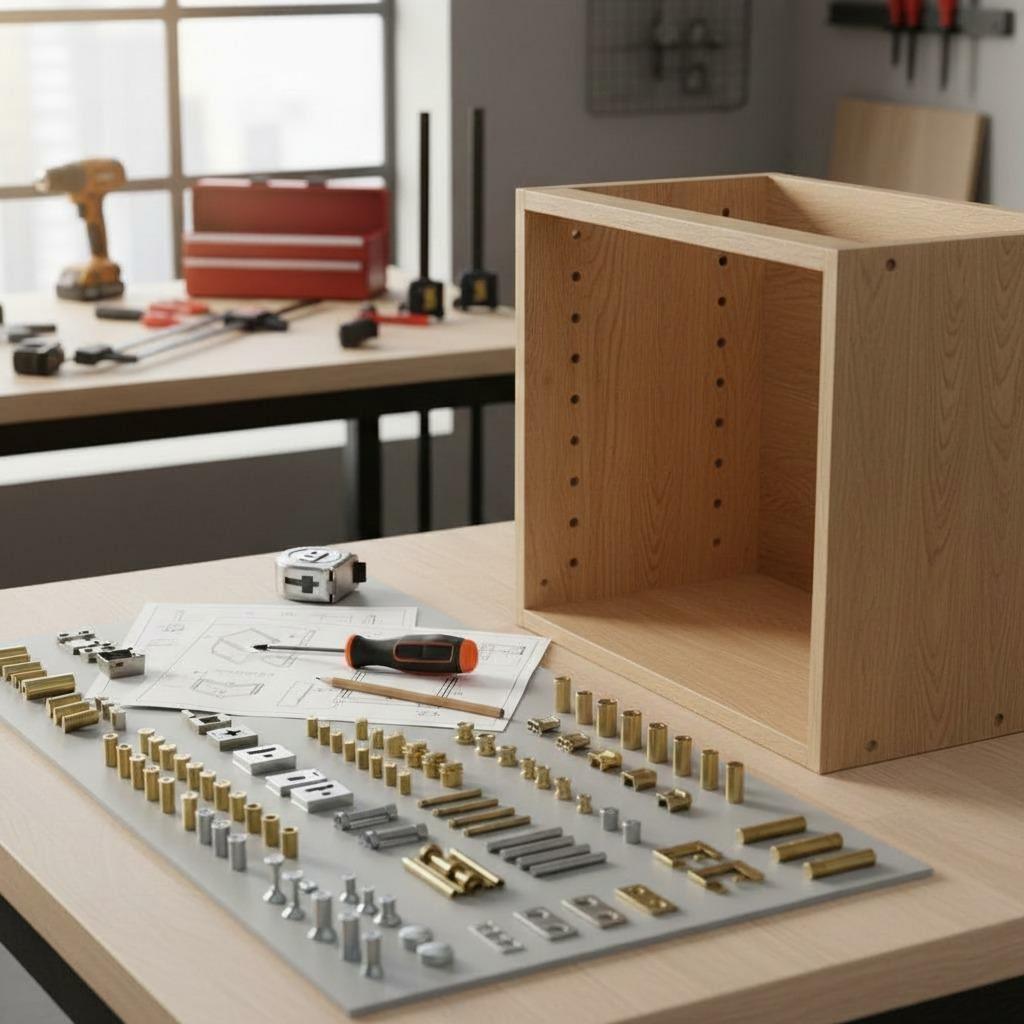
In the cabinet image described here, the product is an open-front box with square panel geometry, smooth exterior faces, and rows of evenly spaced drilled holes on the inside side panels. That points to a furniture or cabinetry application where hardware placement matters as much as the board itself. The foreground hardware assortment, along with a tape measure, screwdriver, and pencil, suggests planning before installation rather than random parts selection.
For a buyer, this is the point where a screw assortment becomes more than a bag of mixed metal parts. It should support the specific material stack: plywood, MDF, veneer-faced board, or solid wood components. The wrong fastener can split an edge, wander in soft board, or sit proud and interfere with hinges, slides, or fittings. A good DIY fastener kit is less about quantity and more about fit, consistency, and ease of identification during assembly.
Common fastener choices for furniture and cabinet work
Machine screws
Machine screws are often used with inserts, brackets, or metal-to-metal assemblies. In furniture production, they matter when parts need disassembly or when a component is attached to a metal fitting rather than driven directly into wood.
Self-tapping screws
Self-tapping screws are common in mixed-material assemblies and certain hardware attachment points. They can reduce setup time, though they still require the right pilot hole and panel thickness. Too much force, and you lose the clean edge that furniture buyers notice immediately.
Micro screws and precision screws
For compact hardware, internal fittings, or smaller assemblies, micro screws and precision screws provide finer control. Jiangmen Jinhe Hardware Co., Ltd. notes that it produces machine screws, self-tapping screws, micro screws, and precision screws in materials such as stainless steel, iron, and aluminum. That range is useful for buyers who need a metal fastener assortment tailored to different subassemblies rather than a one-size-fits-all box.
Selection criteria that actually affect assembly
Specification sheets matter, but the practical questions come first. Is the panel soft enough to need a gentler thread? Does the assembly need repeated knock-down capability? Will the screw head sit visible on a finished face, or hidden inside the carcass?
In cabinet and furniture work, finish quality is often tied to fastening choice. A screw that bites cleanly and seats consistently saves time on the line and avoids the small defects that become obvious after the product is installed in a kitchen, closet, or office.
Jiangmen Jinhe Hardware Co., Ltd. says its products are made to technical requirements and inspected before delivery, with compliance to standards such as GB, DIN, ANSI, BS, JIS, and ISO. For sourcing managers, that kind of standard alignment can simplify vendor approval, although every project still needs its own drawing check and incoming inspection. No catalog should be trusted blindly, especially on custom builds.
Where buyers go wrong
The most common mistake is buying a screw assortment by count alone. A box with many pieces is not necessarily useful if half the contents do not match the panel system. Another mistake is ignoring assembly sequence. If the cabinet design expects pre-drilled alignment points, the hardware should support that process instead of fighting it.
There is also the temptation to over-specify. Some teams select heavier hardware than the application really needs, which can add cost and complicate installation without improving performance in any meaningful way. In furniture, “stronger” is not always “better.” Better fit is better.
Practical advice for sourcing and production teams
Ask suppliers how they separate product families, how parts are packed, and whether the kit labeling is clear enough for the shop floor. If the same plant handles home appliance, electronics, furniture, and custom work, packaging discipline becomes part of the value, not an afterthought.
Jiangmen Jinhe Hardware Co., Ltd. also states that it serves furniture manufacturers, wholesalers, and cross-border e-commerce sellers, with support for non-standard customization and foreign trade services. That is relevant for buyers who need a supplier that can handle both standard fasteners and project-specific variants.
One useful test before scale-up: build one cabinet, then build ten. The first build reveals fit; the tenth reveals whether the fastening system is truly production-friendly.
FAQ
Is a screw assortment enough for cabinet assembly?
Sometimes, but only if the assortment matches the panel material, hardware, and assembly method. Mixed hardware without clear sorting can slow work more than it helps.
Should furniture buyers always choose stainless steel?
Not always. Stainless steel is useful in many environments, but material choice should follow function, appearance, and budget. Iron or aluminum may be suitable in some applications if the design allows it.
What should be checked before placing an order?
Confirm head style, thread type, material, packing method, and whether the supplier can support documentation and inspection. For production use, that is usually more important than a glossy catalog photo.
Next step
If your project involves cabinets, storage units, or flat-pack furniture, start by mapping the fastening points before you buy the hardware. Then build the order around the board material, assembly sequence, and the level of repeatability you need. For standard or customized fastener sets, a supplier like Jiangmen Jinhe Hardware Co., Ltd. can be a practical starting point when you need both product range and export-ready support.