
Plastic Blister Packaging Supplier: Why Hardware Packaging Still Matters in Retail and Distribution
 Hardware packaging is easy to ignore when the parts are still in bulk cartons.
A screw is a screw. A hinge is a hinge. A bracket, latch, washer, bolt, or small fastener looks simple enough when it is sitting in a bin. But once those parts need to be sold as a retail SKU, shipped across markets, picked in a warehouse, or packed into a repair kit, the packaging starts carrying more responsibility.
That is where a plastic blister packaging supplier becomes more than a packaging vendor.
A good blister pack keeps small parts visible. It stops mixed hardware from moving around too much. It gives the product a shape that can be counted, scanned, hung, stacked, and shipped. For hardware suppliers, wholesalers, tool brands, and e-commerce sellers, that is not decoration. It is part of the supply chain.
The buyer may be looking at the metal parts first.
The customer often judges the pack before touching the parts.
Hardware blister packaging solves a very ordinary problem
Small hardware has a habit of creating disorder.
Screws fall into corners. Washers stick together. Hinges scratch against other metal parts. A black-coated component may be mixed with zinc-plated screws. A bracket kit may look complete until one small fastener is missing.
In bulk handling, this creates warehouse problems. In retail, it creates customer hesitation. In e-commerce, it can create returns or complaints because the pack arrives looking messy, damaged, or incomplete.
Hardware blister packaging helps because it gives the parts a fixed place.
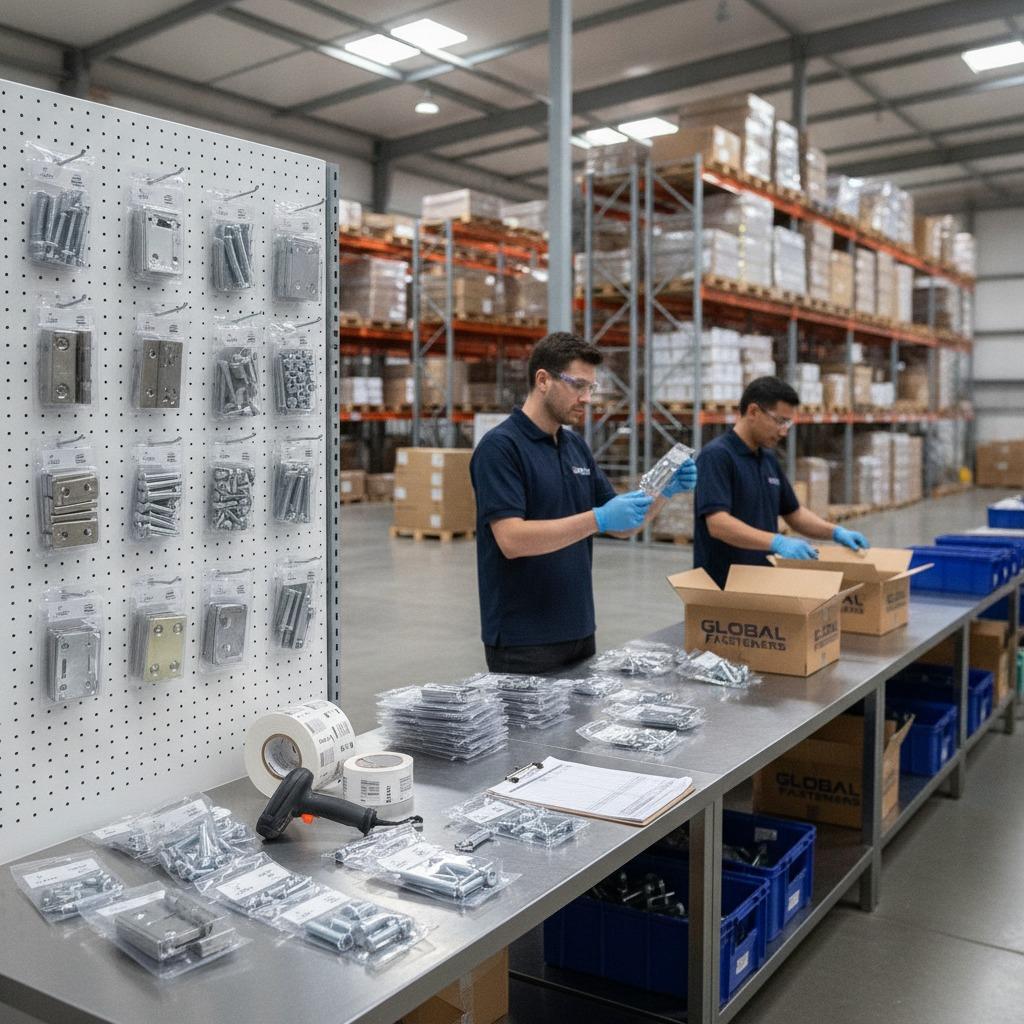
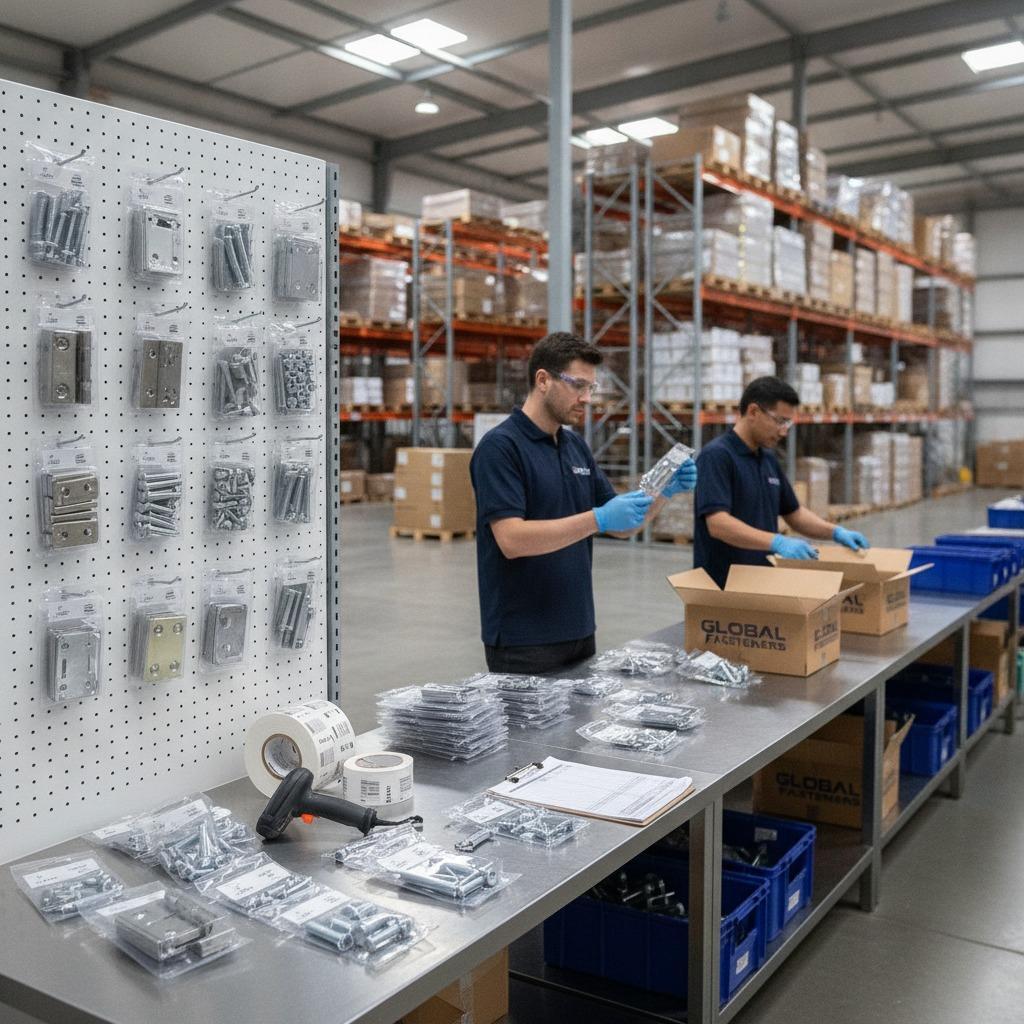
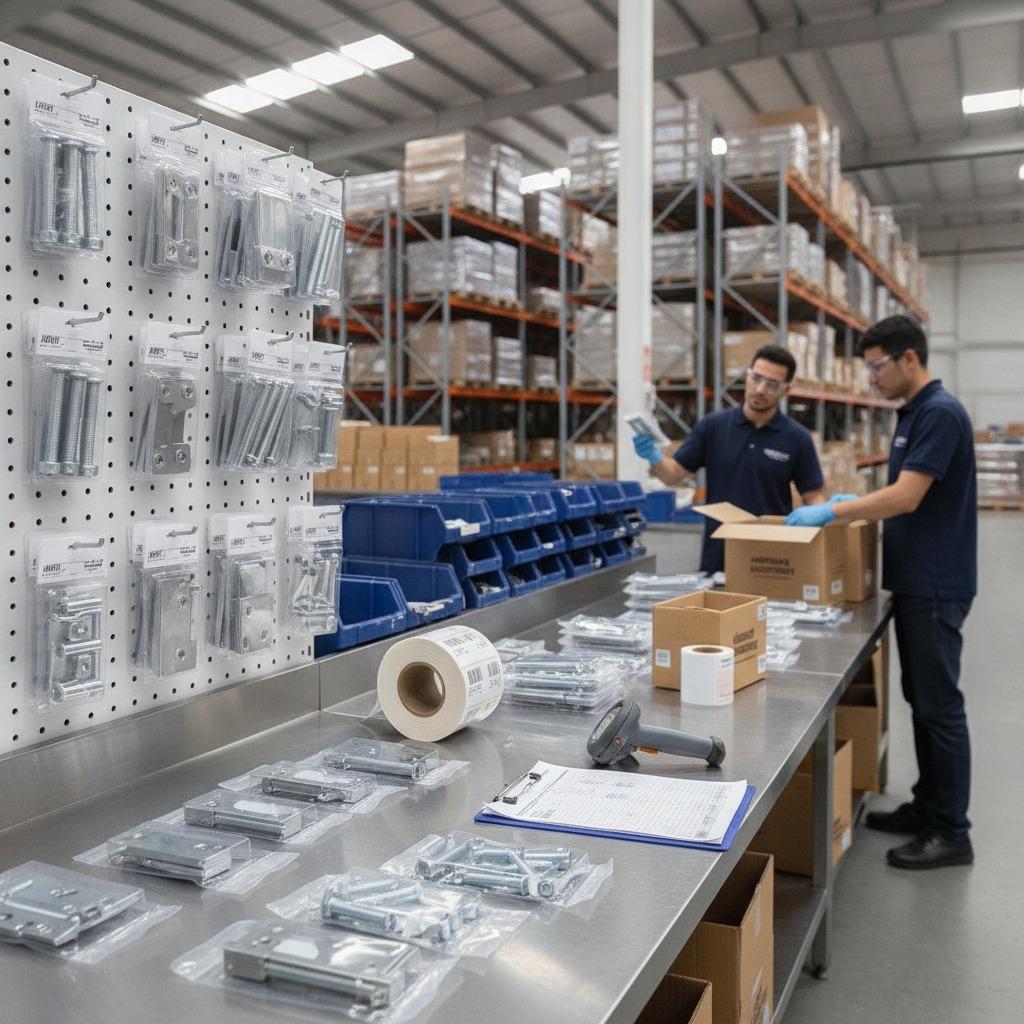
A clear molded shell lets people see what is inside. Formed cavities hold the components more securely than a loose bag. A backing card gives space for a barcode, SKU, product name, quantity, and simple usage information. A hang tab or header slot makes the pack ready for pegboard display.
That is why blister packs are still common for screws, hinges, brackets, latches, fastener assortments, repair kits, and small machined parts.
The format is simple because the problem is simple: buyers need small parts to stay organized.
Retail display is not only about looking good
A retail hardware pack has to answer questions quickly.
What is inside?
How many pieces are included?
Is this the right size?
Are the screws included?
Does this kit match the job?
Clear blister packaging helps because the customer does not need to open the pack to inspect the contents. A hinge set can show the hinge and matching screws. A screw assortment can show different sizes. A bracket pack can show both the bracket and mounting fasteners.
For hardware stores and DIY channels, that visibility matters.
A plain bag may be cheaper, but it does not always help the customer make a decision. If two products look similar, the cleaner and clearer pack often feels more trustworthy.
That does not mean the pack needs to be fancy.
In fact, hardware packaging usually works better when it is straightforward. The plastic should show the product. The card should provide useful information. The barcode should be easy to scan. The hang hole should fit the display system.
Good packaging should not hide the hardware behind too much design.
A blister pack should fit the part, not just the shelf
One mistake buyers make is choosing a standard pack size too quickly.
A standard blister may work well for a small screw set, but not for a hinge kit. A deep cavity may protect a bulky bracket, but waste space for flat washers. A long hinge may need a different card shape or stronger cavity support. A sharp metal part may need more clearance so it does not press against the plastic during transit.
This is why buyers should review the actual hardware before approving the blister format.
The supplier should know:
- Part size
- Part weight
- Sharp edges
- Finish sensitivity
- Number of components
- Whether parts need separate cavities
- Whether the pack will hang, stack, or ship in cartons
- Whether the product is retail, e-commerce, or industrial supply
A blister pack that looks fine in a drawing may not behave well in a carton.
The real test is the packed sample.
Mixed finishes need careful separation
Many hardware kits include several finishes in one pack.
A single blister may hold zinc-plated screws, brass-colored fittings, black-coated brackets, stainless washers, or plastic pieces. This is common in door hardware, window hardware, cabinet accessories, furniture kits, and repair packs.
That mix can be useful, but it also creates risk.
Polished parts can scratch. Black-coated components can mark lighter parts. Brass-toned pieces may show abrasion if they rub against harder metal. Small washers can shift under larger parts if the cavity is too open.
A good tool blister packaging manufacturer should think about how the parts move inside the pack.
Sometimes the answer is separate cavities. Sometimes it is a tighter formed shape. Sometimes one small inner bag inside the blister is enough. The right choice depends on the hardware.
The goal is not just to make the pack look organized at the factory.
It should still look organized when it reaches the shelf.
Retail, warehouse, and e-commerce packs do different jobs
A retail pack needs shelf appeal and quick product recognition.
A warehouse pack needs clear labels, stackable shape, and easy SKU identification.
An e-commerce pack needs stronger protection because it may travel through parcel networks with other goods.
An industrial service pack may need part traceability, model numbers, or stronger separation instead of a glossy display card.
These uses overlap, but they are not identical.
That is why buyers should not ask only, “Can you make blister packaging?”
A better question is, “Can this packaging work in our channel?”
A pack that hangs beautifully on a pegboard may crack if the outer carton is weak. A rigid clamshell may protect the product well but take too much space in storage. A compact pack may be efficient for shipping but too small for clear retail information.
The best hardware packaging solutions are designed around the route the product will take.
Material and sealing details should be confirmed early
Clear plastic shells can look similar across suppliers.
Performance may be very different.
Before approving a blister packaging project, buyers should confirm the plastic material, thickness, forming method, sealing method, backing card structure, hang-tab strength, and carton packing plan.
This matters especially for hardware.
Metal parts are heavier and sharper than many consumer goods. Screws, hinges, brackets, bolts, and latches can press into plastic, scratch surfaces, or shift during shipping. If the plastic is too thin or the seal is weak, the pack may fail before it reaches the customer.
Buyers should also ask how the pack is closed.
Is it heat sealed?
Is it a clamshell?
Is it card-backed?
Can it be opened and reclosed?
Does the channel require tamper resistance?
These details affect both product protection and user experience.
A clear shell is useful. A clear shell that fails in transit is not.
Packaging should help inspection, not hide problems
One advantage of blister packaging is that it supports visual checking.
The warehouse can see the contents. The retailer can check the product before stocking. The buyer can inspect samples without opening every pack. The customer can confirm the general assortment before purchase.
But this only works if the layout is readable.
If parts are crowded, overlapping, or hidden behind graphics, the visibility advantage disappears. If the label does not match the contents, the clear shell cannot solve the problem. If similar fasteners sit too close together, workers may still need to open the pack to verify the count.
A good layout should make inspection easier.
For mixed hardware kits, buyers should review the part position, count visibility, and label location before production. These small details can prevent many receiving and customer-service issues later.
Where Jiangmen Jinhe Hardware fits into the sourcing picture
Jiangmen Jinhe Hardware Co., Ltd. is primarily a fastener and precision hardware manufacturer. The company was founded in 2016 in Jiangmen City, Guangdong Province, and works with machine screws, self-tapping screws, micro screws, precision screws, standard parts, and non-standard customization.
Its materials include stainless steel, iron, and aluminum, with production aligned to standards such as GB, DIN, ANSI, BS, JIS, and ISO.
For buyers sourcing hardware blister packaging, this background is relevant because packaging is often tied to the hardware itself. A blister pack for screws, hinges, brackets, or small fittings needs accurate parts, stable finishes, correct counts, and practical layout. Packaging and fastener supply should not be treated as completely separate decisions.
Jiangmen Jinhe also notes support for inspection before delivery, documentation, logistics, warehousing, foreign trade, and supply chain services. For hardware wholesalers, retail pack buyers, and cross-border sellers, those services may help reduce handoffs between production, packing, and shipping.
Still, each packaging project should be confirmed clearly.
The part list, blister design, cavity layout, label, material, sealing method, carton plan, and inspection process should be approved before volume orders begin.
Common mistakes buyers should avoid
One common mistake is choosing blister packaging by appearance alone.
A pack may look clean in a photo but still be weak in handling, slow to load, or awkward to stack in cartons.
Another mistake is forcing different hardware into one generic pack. A screw set, hinge set, bracket kit, and latch pack do not need the same cavity structure.
A third mistake is forgetting the outer carton. The blister may be strong enough by itself, but if the carton allows the packs to shift or crush, the final delivery may still look poor.
Buyers also sometimes underestimate mixed hardware. Once several part types or finishes are included, cavity design and separation become more important.
The final mistake is approving loose hardware samples instead of packed samples.
Loose parts show the fastener. They do not show whether the packaging works.
Practical questions to ask before placing an order
Before choosing a plastic blister packaging supplier, buyers should ask:
What parts will go into the pack?
Are the parts sharp, heavy, polished, or mixed?
What plastic material and thickness are recommended?
How will each part sit in the cavity?
Will the pack hang on a pegboard?
Can the backing card include SKU, barcode, and instructions?
How is the blister sealed or closed?
Can mixed finishes be separated?
How will the packs be cartonized?
Can real packed samples be tested before approval?
Can the supplier support kitting, inspection, and logistics?
These questions are practical. They help buyers avoid packaging that only looks acceptable but fails during real use.
Frequently Asked Questions
What is hardware blister packaging?
Hardware blister packaging is clear formed plastic packaging used for screws, hinges, brackets, latches, bolts, fasteners, small machined parts, and mixed hardware kits.
Why do hardware suppliers use blister packaging?
Blister packaging makes small parts visible, helps keep components separated, supports retail display, improves SKU identification, and can reduce handling mistakes.
Is blister packaging only for retail?
No. It can also be used for e-commerce, warehouse organization, spare-part kits, contract packaging, and industrial hardware programs.
What should buyers check before approving blister packaging?
Buyers should check cavity design, plastic thickness, sealing method, backing card, hang-tab strength, part retention, label clarity, and carton protection.
Can blister packaging hold mixed hardware?
Yes, but mixed hardware needs careful layout so parts do not scratch, shift, hide each other, or confuse the user.
Can fasteners and packaging be coordinated with one supplier?
In some cases, yes. A supplier with fastener knowledge, kitting experience, inspection, packaging coordination, and logistics support can make the project easier to manage.
Good packaging makes hardware easier to trust
Blister packaging still matters because hardware needs more than protection.
It needs visibility. It needs order. It needs a format that helps people count, scan, store, sell, ship, and use the product without unnecessary handling.
That is what buyers should expect from a capable plastic blister packaging supplier.
For hardware blister packaging, retail hardware packs, tool blister packaging, clamshell packaging for industrial parts, fastener kits, and small hardware packaging projects, Jiangmen Jinhe Hardware Co., Ltd. can discuss fastener selection, kit structure, packaging requirements, inspection, logistics, warehousing, and repeat supply needs.
For direct inquiries:
Tel/WeChat: +86 13729150102
WhatsApp: +86 13322893939
Email: sharon@hkhomeideas.com
Start with the hardware list, part size, display channel, packaging format, label needs, shipping route, and expected order quantity.
Once the product route is clear, the right blister packaging becomes much easier to design and approve.