
Why a fastener set matters when you’re building or assembling cabinet hardware
A cabinet carcass can look simple from the outside, but anyone who has spent time in furniture production knows the real work happens in the small parts. A fastener set is what turns a flat-pack box, a workshop prototype, or an unfinished cabinet case into something that can actually be assembled, adjusted, and held together through repeated use. In cabinetry, the wrong screw or missing connector is not a small inconvenience; it can throw off alignment, weaken joints, or waste a full production run.
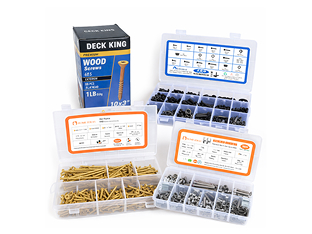
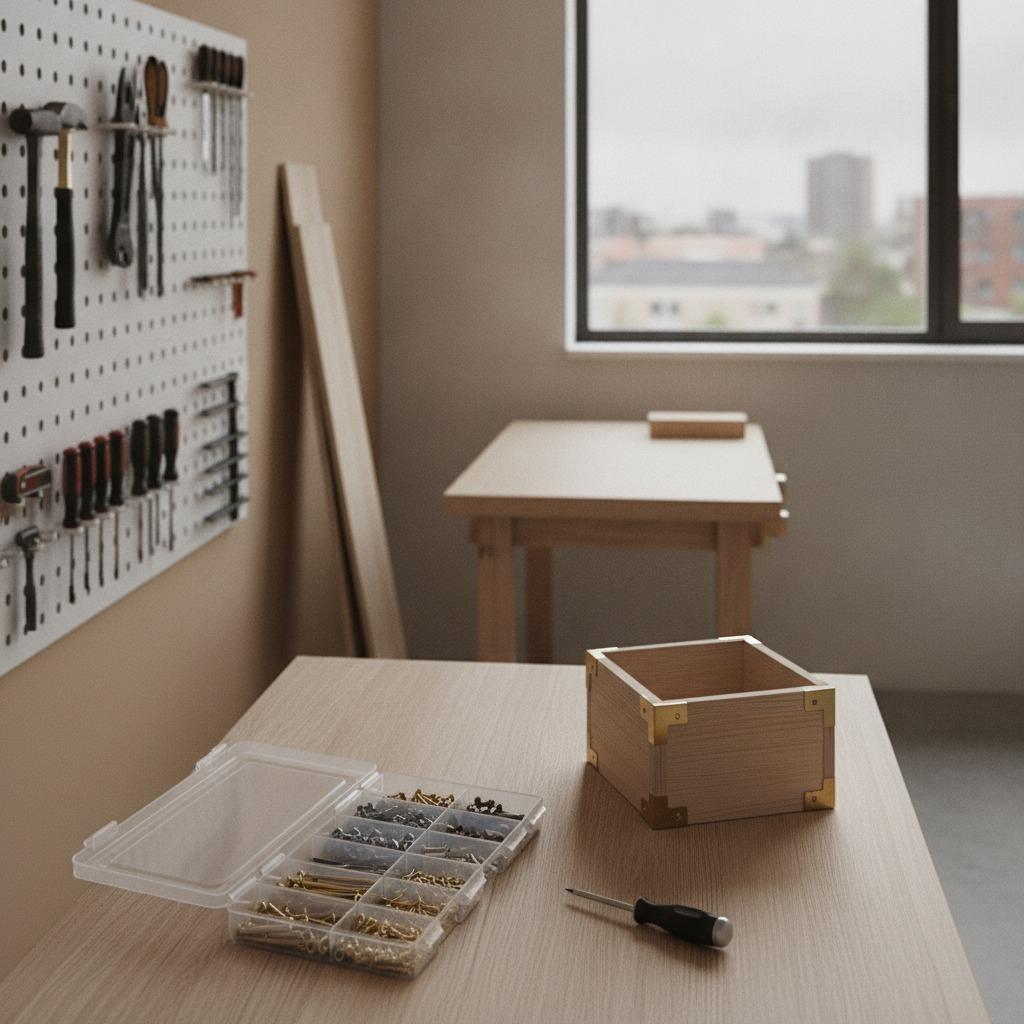
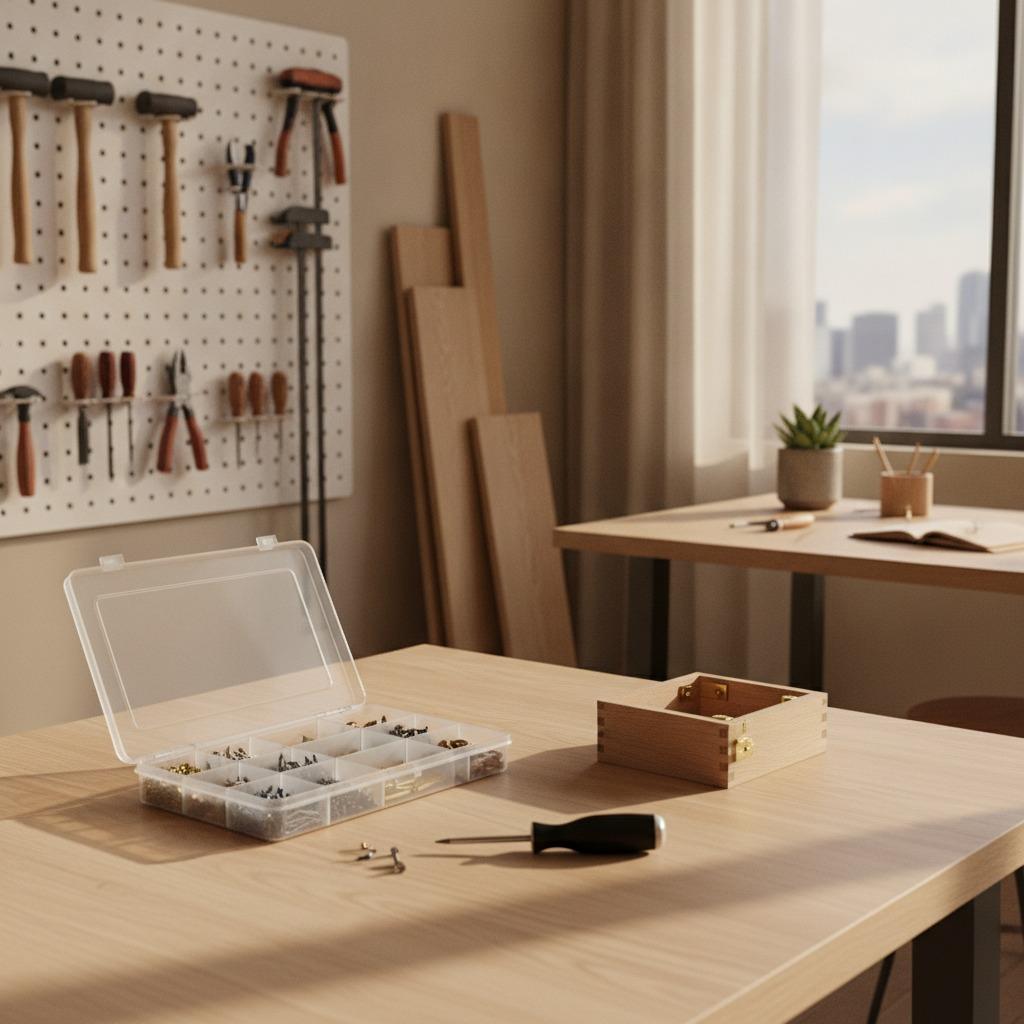
That is why buyers in furniture manufacturing, millwork, and workshop assembly usually think in terms of a complete screw assortment or metal fastener assortment rather than a single piece of hardware. The goal is not just to “have screws on hand.” It is to match the fastening method to the panel material, the hole pattern, and the assembly sequence.
What the cabinet image is really telling you
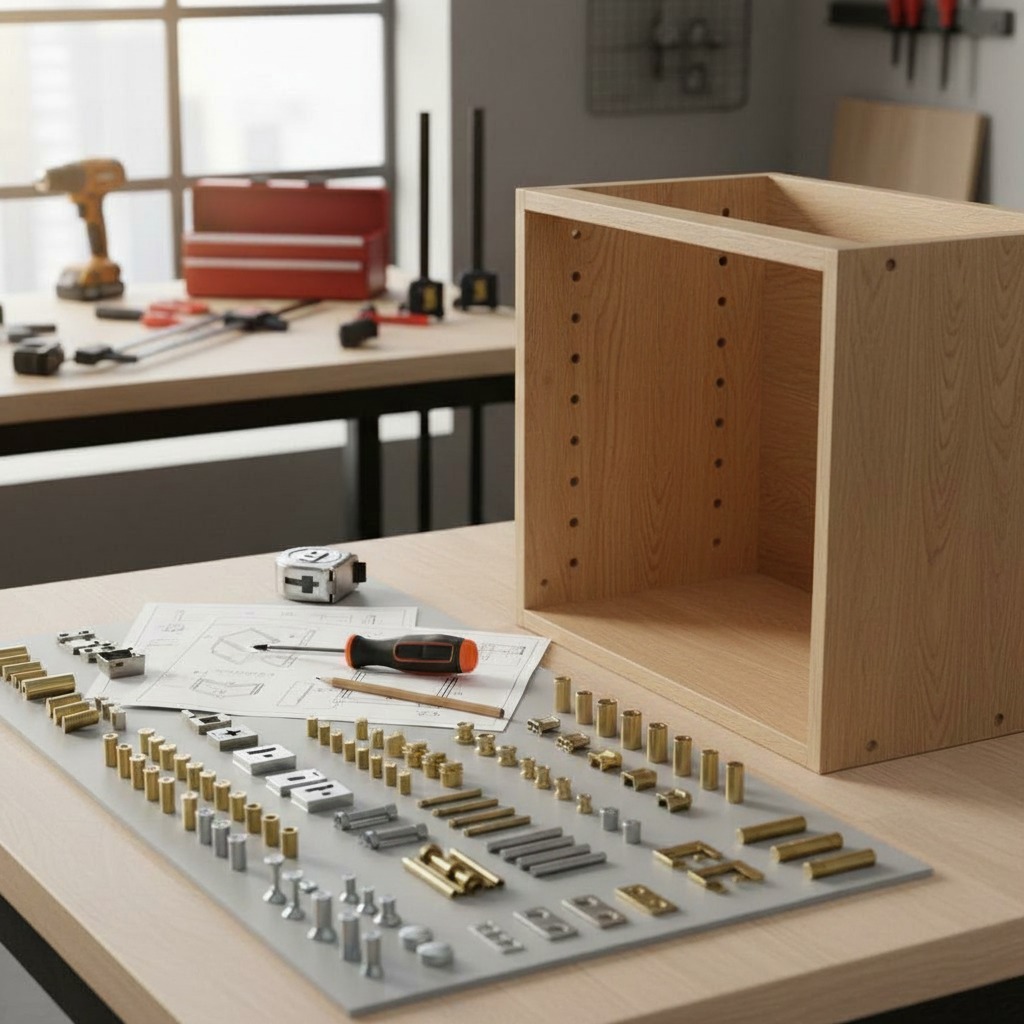
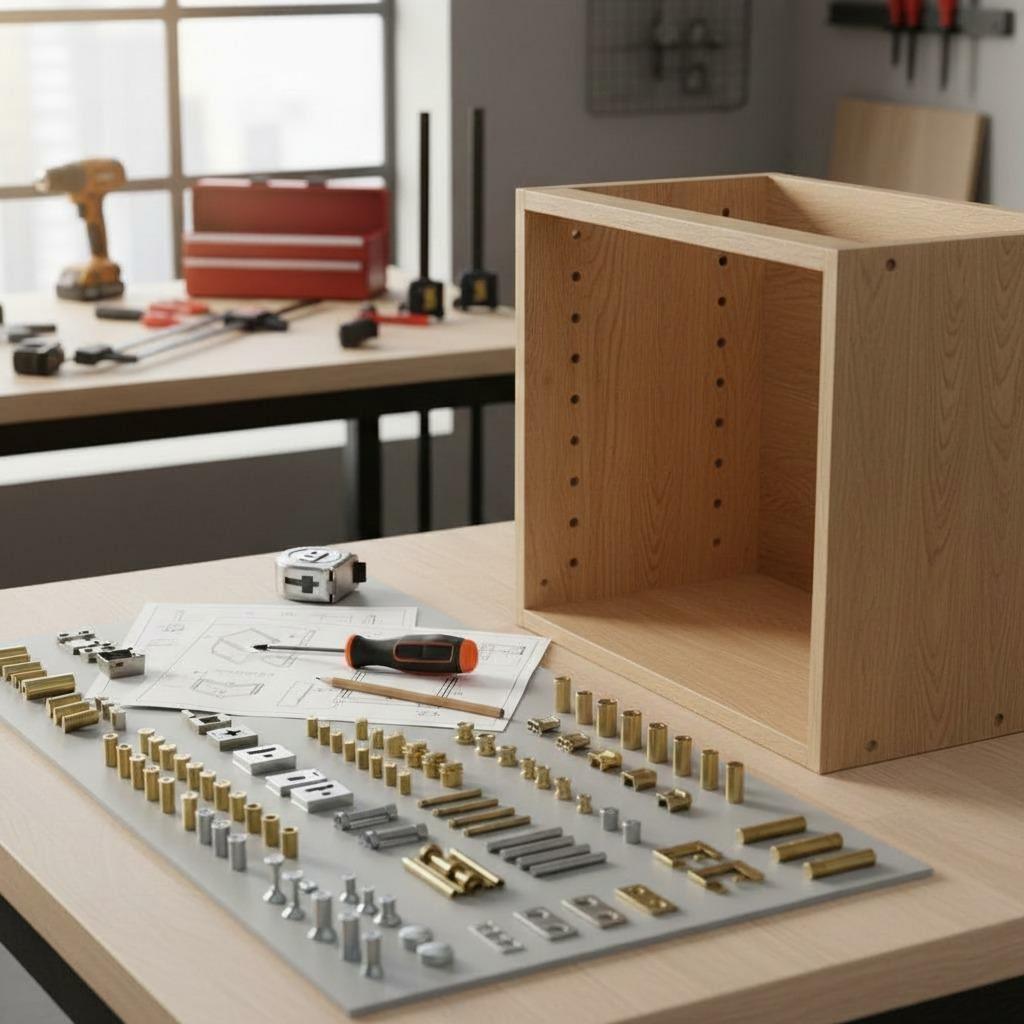
The cabinet carcass shown is an open-front box with a clean, machined look, and the inside side panels have regular rows of drilled holes. That pattern usually points to adjustable shelf pin locations or modular hardware mounting points. In practical terms, it suggests a case that may be built for flexibility: shelves, fittings, or internal components can be positioned after assembly.
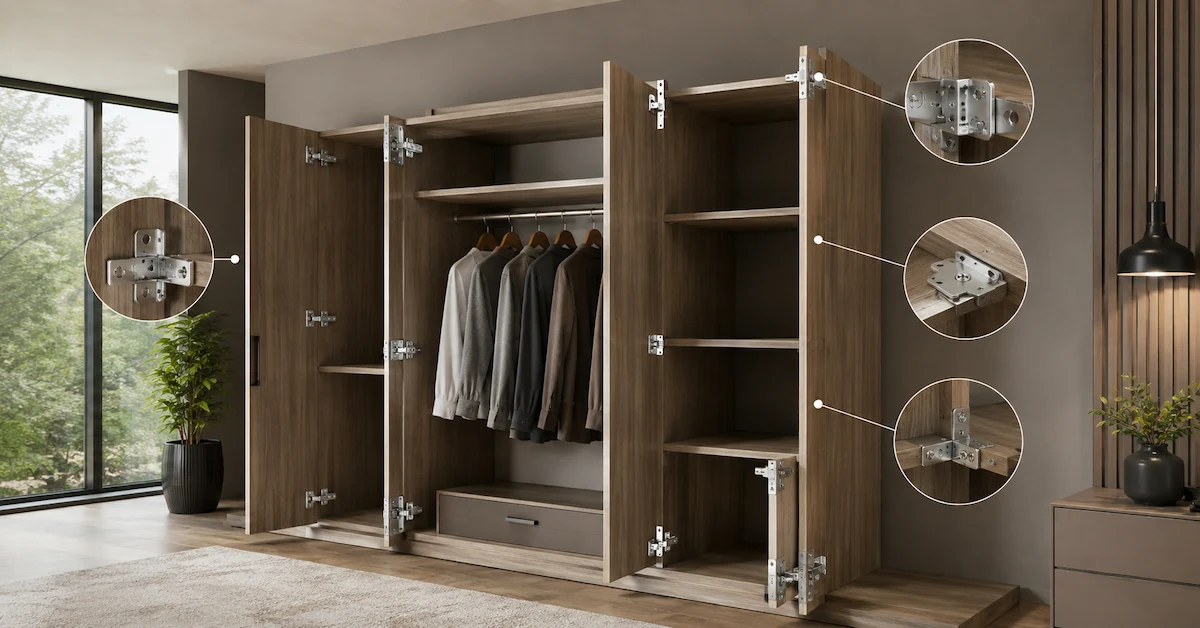
The hardware laid out in front of the cabinet also says something important. Screws, pins, connectors, brackets, dowels, and hinges do not belong in the same conversation by accident. They belong there because cabinet assembly often depends on a mix of fastening styles. Some parts locate and align. Others clamp. A few are there simply to keep the structure square while the glue or mechanical joint does its job.
Choosing the right fastener set for cabinet assembly
Not every project needs the same kit. A DIY fastener kit can be helpful for small shop work, but a production environment usually needs tighter control over part consistency and specification. The best choice depends on how the cabinet is made and how it will be used.
For flat-pack or panel furniture
Confirm that the fasteners suit the panel thickness and hole pattern. Confirming compatibility sounds basic, but it is where many assembly problems begin. If the connector geometry does not match the drilled layout, operators start forcing parts together, which is a bad habit in any shop.
For custom millwork and prototyping
A mixed screw assortment is often useful because prototypes change quickly. One build may need machine screws and inserts; the next may need self-tapping screws or small brackets. Flexibility matters more than overbuying one exact style.
For furniture manufacturing
Repeatability matters most. The fastener should be consistent in thread form, head style, and drive type so assembly teams do not waste time sorting parts or correcting fit issues.
What to look for beyond the part number
The fastening method is only part of the decision. Buyers should also consider how the hardware behaves during assembly.
A few practical points are worth keeping in mind:
The drive style should be easy to use on the line, especially if access is limited inside a cabinet box.
The finish or material should suit the environment, whether the application is general indoor furniture, storage units, or higher-use assemblies.
The hardware should arrive well sorted and documented, because mixed bins save money only when the receiving team can actually identify them quickly.
Jiangmen Jinhe Hardware Co., Ltd. manufactures machine screws, self-tapping screws, micro screws, and precision screws in stainless steel, iron, and aluminum, with production aligned to GB, DIN, ANSI, BS, JIS, and ISO standards. That breadth matters for buyers who need more than generic hardware. Furniture and cabinet projects often rely on a combination of standard parts and non-standard customization, especially when the design is being adjusted for a specific board type or assembly workflow.
Common mistakes buyers make
One mistake is treating all cabinet fasteners as interchangeable. They are not. A screw that works well for one panel or bracket may be poor for another.
Another common issue is buying a large DIY fastener kit without checking the actual assembly requirement. The kit may look complete, but if the right connector or pin type is missing, it does not solve the job.
A third problem is ignoring inspection and documentation. In production work, a hardware issue discovered after assembly costs more than the screw itself. It costs labor, rework, and schedule time.
Buyer takeaway
If you are sourcing hardware for cabinet assembly, treat the fastener set as part of the structure, not as an accessory. Match the kit to the panel system, the hole layout, and the assembly process. Keep an eye on packaging, consistency, and material compatibility. That is usually where the difference shows up between a smooth build and an irritating one.
Need a supplier for screws and custom fasteners?
For manufacturers, wholesalers, and sourcing teams looking for standard parts or custom fastener support, Jiangmen Jinhe Hardware Co., Ltd. supplies screws and related fastening products for multiple industries, including furniture applications. If your project needs a screw assortment or a tailored metal fastener assortment, it is worth starting with a supplier that already works across standard and custom requirements.