
Fastener tooling cost is the one-time charge for the dies, punches, cams, molds and fixtures needed to make a specific screw or fastener, and it sits outside the piece price. Buyers who treat it as a single number usually pay twice: once in the quotation, and again at exit when the tool cannot be moved. The workable approach is to separate three questions that a fastener tooling cost quotation often blends together — what the tooling actually is, how its cost is recovered, and who owns it.
What does fastener tooling cost actually cover?
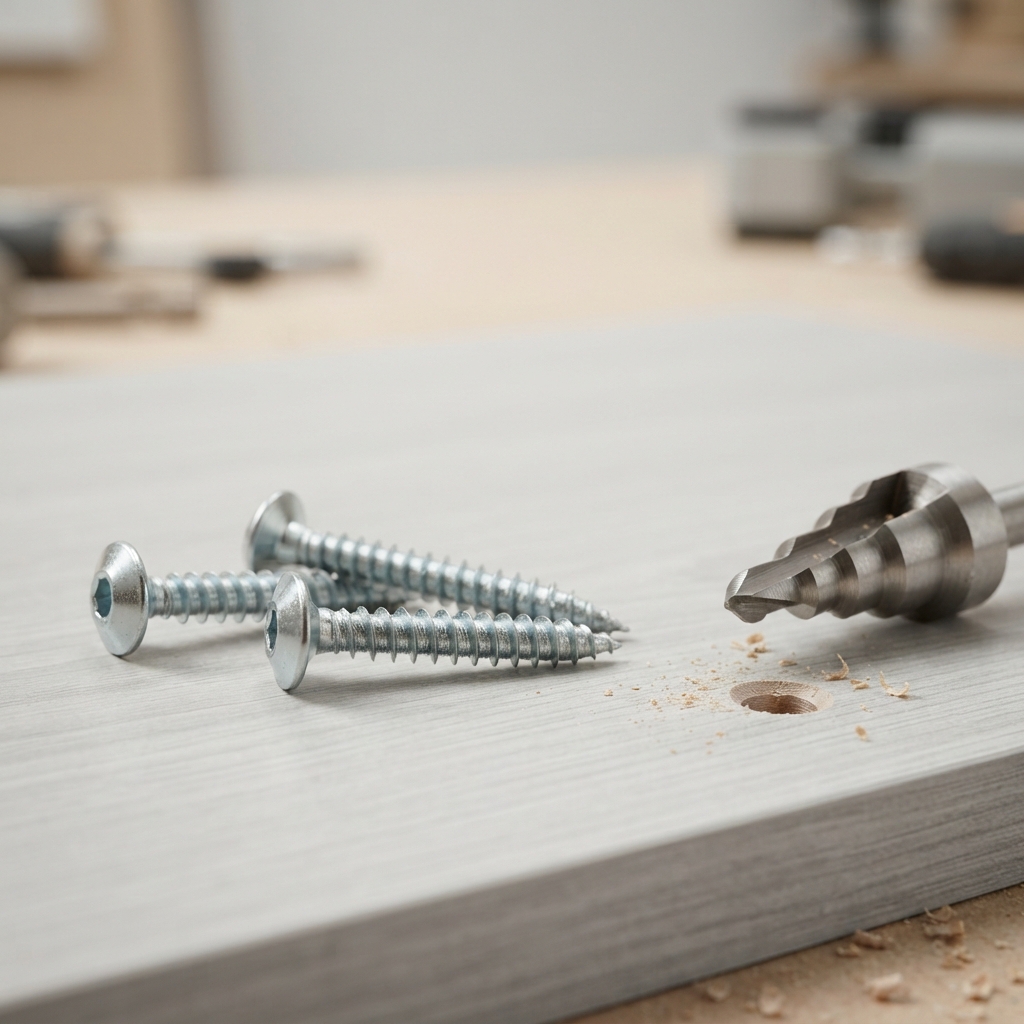
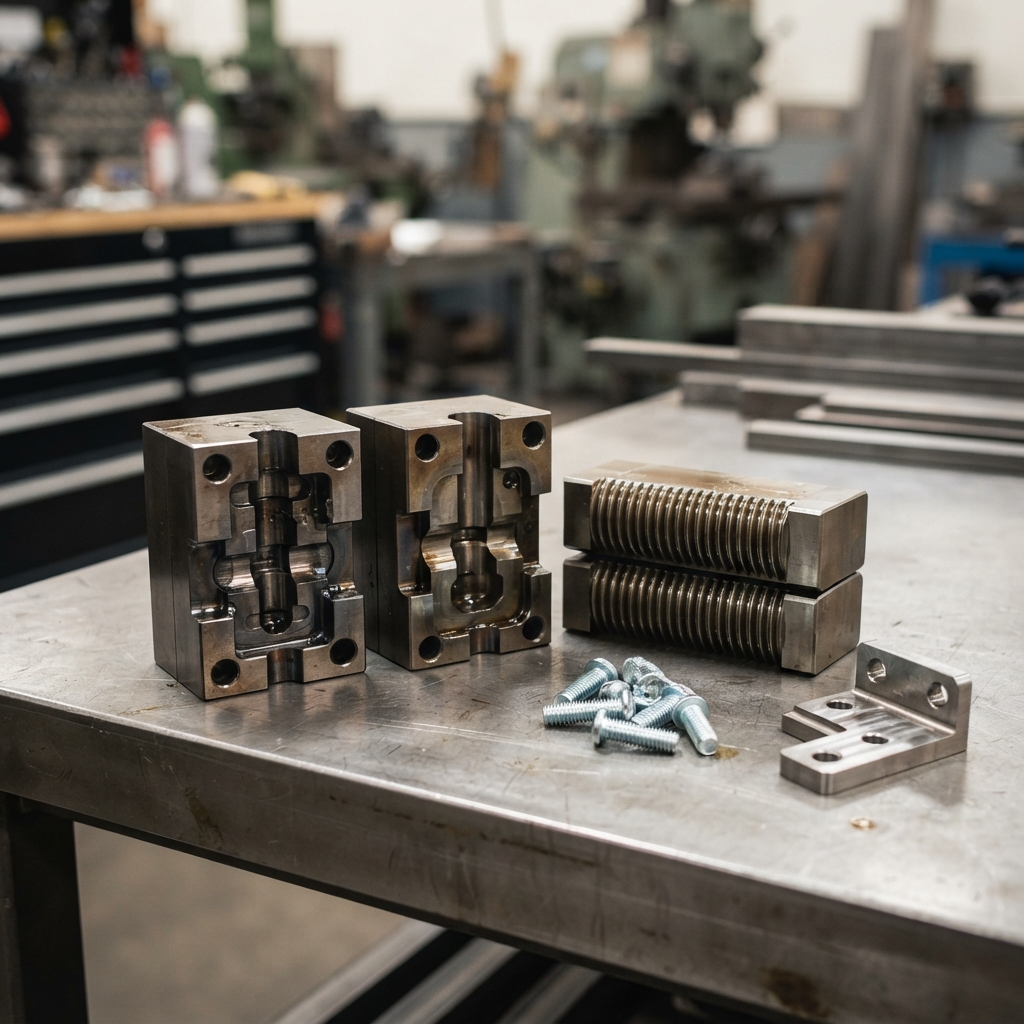
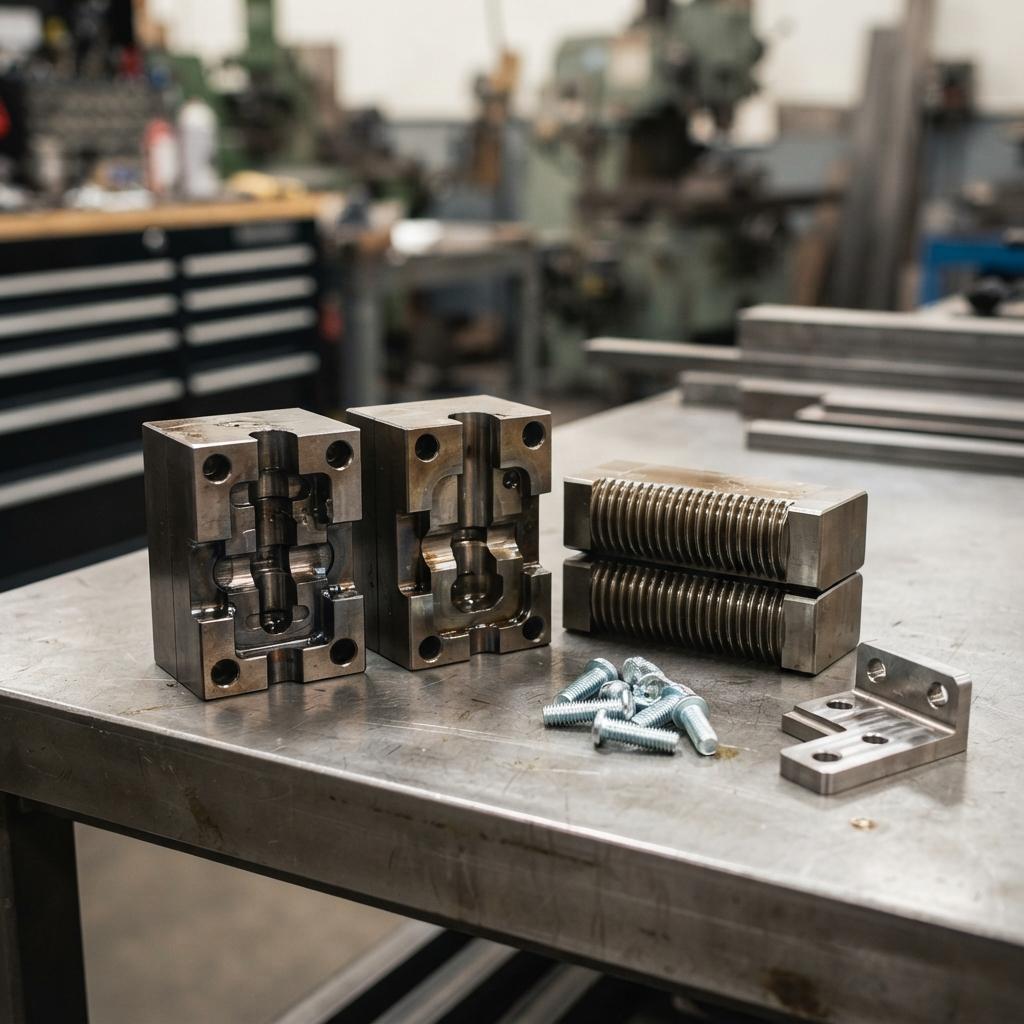
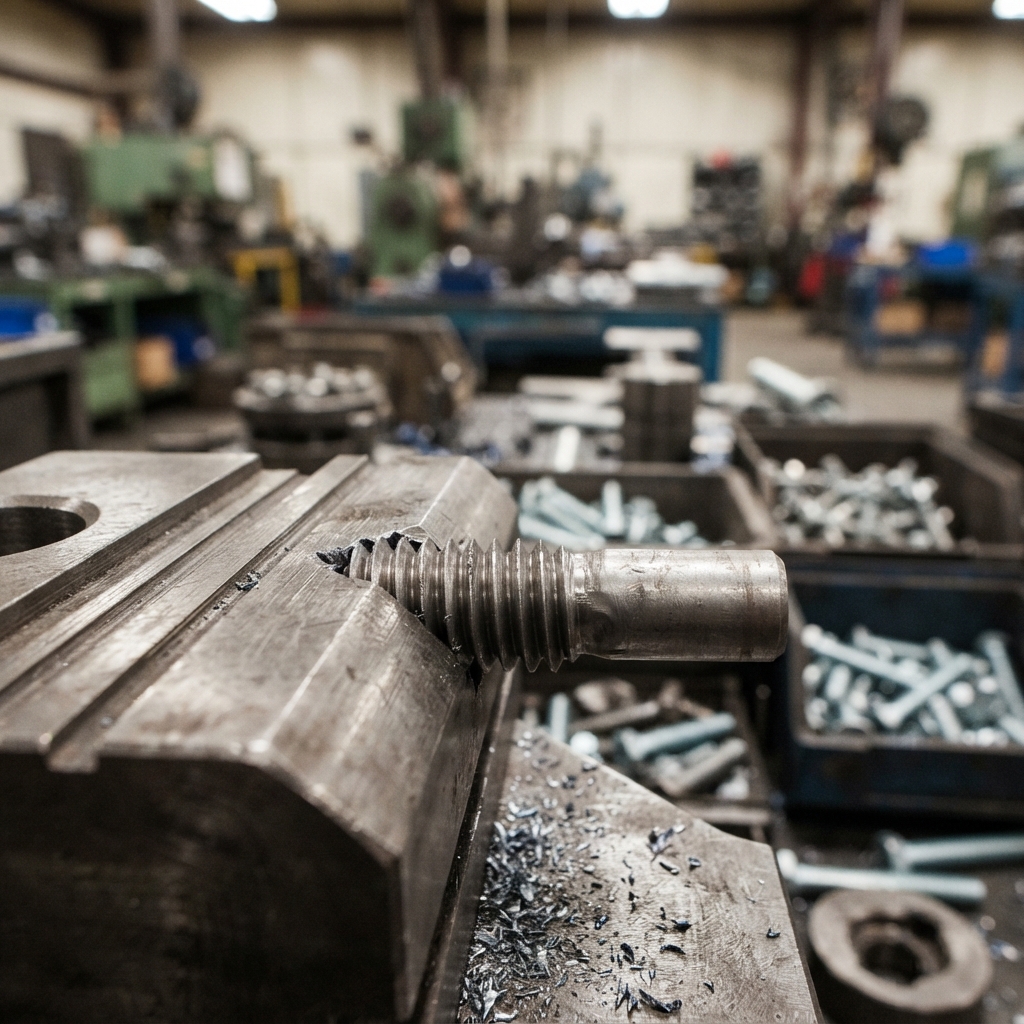
Tooling is the capital equipment that turns a drawing into a repeatable part. For a cold-headed screw it is usually a heading die set and a pair of thread rolling dies. For a stamped bracket it is a punch and trim tool. For a plastic cam, sleeve or wall plug it is an injection mold. For a hardware kit it can include assembly fixtures and go/no-go gauges that hold the kit's components in the right relationship to each other.
In custom fastener manufacturing the tooling scope follows the process route, not the part name. That is why a fastener tooling cost line cannot be benchmarked across part families: a two-die thread rolling setup, a multi-station heading tool and a hardened stamping progression tool do not share a cost structure, and neither do they wear out at the same rate.
| Tooling item | What it does | Main cost drivers | Wear and replacement point |
|---|---|---|---|
| Cold heading die set | Upsets wire into head and shank geometry | Number of forming stations, head complexity, carbide versus tool steel, heat treatment | Dimensional drift on head height and shank diameter; replace or rework when the head form no longer gauges |
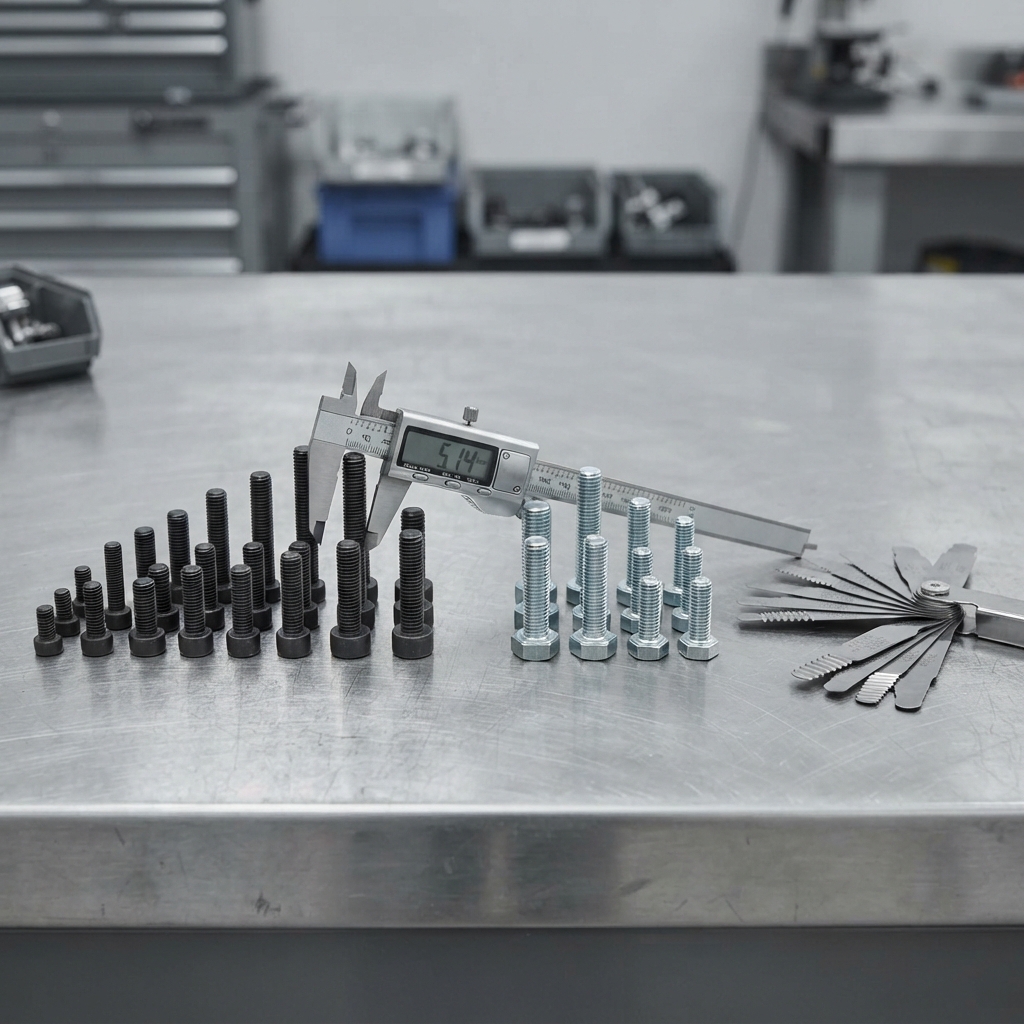
| Thread rolling dies | Forms the thread by displacement rather than cutting | Thread length, pitch, diameter, die material, required thread class | Thread profile wear; shows up as gauge failure or torque scatter before visible damage |
| Punch and trim tooling | Blanks, forms and trims stamped hardware | Part size, number of operations, blank layout, expected stroke count | Edge wear and burr growth; sharpening intervals shorten as the tool ages |
| Injection mold | Forms polymer cams, sleeves, anchors and grommets | Cavitation, steel grade, slider count, surface finish, cooling layout | Flash, sink and gate marks; cavitation determines output per cycle |
| Assembly fixture and gauge | Sets kit sequence and checks fit | Number of components, tolerance stack, inspection frequency | Fixture wear causes false rejects; gauges need periodic calibration |
| Coating rack or fixture | Holds parts during plating or coating | Part geometry, contact points, rack density | Contact marks and coating thickness variation at contact points |
A quotation that lists "tooling: USD X" without naming which of these items it buys gives the buyer nothing to verify. Ask for the tooling schedule by item, the process each item belongs to, and the expected production life in strokes or shots.
Why do two suppliers quote the same drawing differently?
Because they are not quoting the same production route. A cold-headed part and a machined-from-bar part can both meet the drawing while carrying completely different tooling economics: the headed route needs dies and usually wins on unit cost at volume, while the machined route may need little dedicated tooling and wins on low volume or tight geometric tolerances. Price comparisons that ignore the route are not comparisons.
The same logic separates tool families. An injection mold cost for a polymer cam and a heading die set for a screw are not substitutes, so a like-for-like comparison has to begin with the process that will run the part.
The second source of difference is where the tooling cost sits. Three common structures look identical on a purchase order and behave very differently in practice:
| Quote structure | What the buyer sees | Cash flow | Main risk |
|---|---|---|---|
| Tooling billed separately, buyer-owned | Tooling line plus piece price that excludes tooling | Upfront payment before first production | Tool sits at a supplier with no written access or transfer right |
| Tooling amortized into piece price | Lower or zero tooling line, higher unit price | Spread across shipments | Volume shortfall leaves unrecovered cost, which resurfaces as a price increase or a claim |
| Tooling absorbed by supplier | No tooling line at all | None | Supplier owns the tool; buyer has no leverage and no transfer option |
None of these is automatically wrong. The problem starts when the structure is not stated. A buyer comparing a zero-tooling quote against a separately billed quote is comparing a fully loaded price against a partly loaded one.
Who owns the tooling? Four models and what they mean
Tooling ownership is a contractual determination, not a consequence of who paid the invoice. Umbrex, in its explainer on supplier tooling amortization, makes the same distinction: commercial amortization describes how the investment is recovered through unit price, while ownership and control are separate questions that the contract has to answer.
| Model | Who owns the tool | Best suited to | What to secure in writing |
|---|---|---|---|
| Buyer-paid, buyer-owned | Buyer, from payment | Custom geometry, single-source risk, regulated components | Tool identification, location, access and inspection rights, transfer procedure, insurance, lien waiver |
| Supplier-owned, amortized | Supplier | Standard or near-standard parts, long programs, low capital appetite | Amortization volume, true-up mechanism, price after recovery, no re-charge on repeat orders |
| Shared or capped | Buyer after a volume threshold | New programs with uncertain demand | The exact threshold, the transfer trigger and the documentation that proves it |
| Customer-supplied tooling | Buyer, shipped to supplier | Second sourcing, supplier transfer | Condition report on receipt, maintenance responsibility, damage liability, return freight |
The model matters most at the exit. If the relationship ends, ownership decides whether the tooling transfer is a scheduled handover or a restart from a new tool. That is the real cost of getting it wrong, and it is usually larger than the fastener tooling cost on the invoice.
What should a tooling clause contain? A ten-point checklist
- Tool identification. A unique tool number, the part number it produces, the process route and the date of first approval.
- Ownership statement. Who owns the tool, from which payment or which production volume, and whether ownership survives a change of supplier.
- Physical location. Which factory and which workshop holds the tool, including any subcontracted coating or heat treatment steps.
- Access and inspection. The buyer's right to inspect the tool, with notice, and to receive a condition report.
- Maintenance and wear. Who pays for routine maintenance, sharpening and refurbishment, and at what interval.
- Expected life. A stated life in strokes or shots, and what happens if the tool fails early.
- Replacement and modification. Whether a design change is a modification or a new tool, and who pays for each.
- Amortization terms. If tooling is recovered in the piece price, the assumed volume, the recovery period and the true-up if volume falls short.
- Transfer rights. The procedure, the notice period, the cost of packing and shipping, and confirmation that the supplier will not retain the tool for unpaid unrelated invoices.
- End of life. Disposition, storage period and scrap authorization when the program ends.
A tooling clause that covers ownership but not access is a clause that cannot be enforced in a factory the buyer never visits. Access, location and transfer belong in the same paragraph as ownership.
How do you calculate tooling cost per part?
The arithmetic is simple; the assumption behind it is what needs scrutiny.
Tooling cost per part = total tooling investment ÷ units expected to be produced with that tool. Add financing, maintenance and replacement provisions if the buyer carries them.
As an illustration only: a tool quoted at USD 4,000 spread over 50,000 units adds USD 0.08 per part. If the program only reaches 20,000 units, the same tool adds USD 0.20 per part. The tool did not become more expensive; the volume assumption changed. This is why a supplier amortizing tooling into the unit price needs a stated volume, and why a buyer should model the low-volume case before signing.
Two further adjustments are usually missed. First, the cost of quality: a worn tool produces drift before it produces rejects, so gauge checks and first-article inspection during the tool's life are part of the tooling economics, not a separate quality overhead. Second, the cost of the second tool: if the part is single-sourced on one die set, a breakdown stops the line, and a duplicate tool is an insurance premium that should be priced at the start rather than negotiated during a stoppage.
What are the red flags in a fastener tooling quote?
- A single lump-sum tooling figure with no itemization. The buyer cannot tell whether it covers heading, thread rolling, coating fixtures or gauges.
- "Free tooling" with no ownership statement. Free tooling is normally amortized tooling, and the supplier keeps the asset.
- No stated tool life. Without a stroke or shot life, "wear" becomes a matter of opinion at the first quality dispute.
- Tooling charged again on a repeat order. This usually means the first charge was treated as a setup fee, not a tool.
- Vague change control. "Minor modifications included" is not a scope; it is an opening for a later invoice.
- No transfer clause. Ownership without removal rights is a certificate, not control.
- Tooling paid to a trading company, tool held by an unnamed factory. The contractual owner and the physical holder must be identified before payment.
- No trial or first-article report before mass production. Tooling is proven by parts and data, not by a completion photo.
Fastener sourcing teams should read these signals together rather than one at a time. A supplier that cannot itemize the tool, cannot name its life and cannot describe the transfer procedure is unlikely to produce a stable part, because the same lack of process control shows up in both places.
Documentation expectations around fasteners are well established in the industry; All-Pro Fasteners, for example, frames its procurement guide to fastener quality and documentation around certifications and traceable records rather than assurances. Tooling paperwork belongs in the same file as the material and inspection records.
Trial order, tooling and the first production run
Tooling and trial volume are linked, and buyers often negotiate them in the wrong order. The sequence that holds up is: approve the drawing and the process route, agree the tooling scope and ownership, run the tool, approve first-article samples against the drawing, then release production volume. Approving samples before the tooling terms are settled leaves the buyer with an approved part and no asset.
Two related guides cover the adjacent decisions: how a custom screw MOQ shapes a trial order, and the checks worth running before approving custom screw samples. Both assume the tooling question has already been answered.
How JHFIX approaches tooling in a custom fastener program
Jiangmen Jinhe Hardware Products Co., Ltd. has manufactured fasteners since 2004 in Jiangmen, Guangdong, and exports through its authorized export partner, Jiangmen Shenxin Trading Co., Ltd., to more than 40 countries. The workshops cover cold heading, tapping, punching, injection molding, assembly and packing, with a dedicated inspection room — which means the tooling in a quotation can be tied to the process route that will actually run the part, rather than to a generic allowance.
For buyers, that has a practical consequence: heading dies, thread rolling dies, punch tooling and injection molds are different assets with different wear points, and they should appear as separate lines in the quotation. A buyer can then ask which line belongs to which process, what the expected life is, and who holds the tool. Products such as the cross-drive countersunk self-tapping screw and the metric socket screw, nut and washer kit show the two ends of that range: a single cold-headed screw and a multi-component kit that also needs assembly and inspection fixtures.
We do not quote a tooling number without the drawing review behind it, because the tooling scope follows the geometry, the material and the finishing route. Buyers who want the fastener tooling cost line explained item by item can raise it through the contact page with the drawing and the expected annual volume.
Frequently asked questions
Is fastener tooling always charged separately?
No. It is either billed as a separate line, amortized into the piece price, or absorbed by the supplier. Only the first two make the cost visible, and only the first normally gives the buyer ownership. Ask which structure applies before comparing prices.
Who owns the tooling if I pay for it?
Ownership follows the contract, not the invoice. A payment alone does not automatically transfer title. The purchase order or tooling agreement should state that the buyer owns the tool from payment, name the tool, and give access and transfer rights.
Can I move tooling to another supplier?
Only if the agreement provides for it. Tooling transfer rights should cover notice, packing, shipping cost, condition reporting and the supplier's obligation to release the tool even where other commercial disputes exist. Without those terms, a tool can remain physically stranded.
How long does fastener tooling last?
It depends on the tool type, the material formed and the coating or finishing steps. Thread rolling dies, heading dies, stamping tools and injection molds have different wear mechanisms, so life should be stated per tool in strokes or shots rather than as a single program-level number.
Should I pay tooling upfront or amortize it?
Pay upfront and own it when the geometry is custom, the program is long, or single-source risk is unacceptable. Amortize when volume is predictable and capital is better kept in inventory. In both cases, write down the volume assumption and what happens if it is missed.
Why is tooling charged again for a small design change?
Because a change to head geometry, thread, material or cavity layout can require re-cutting or replacing part of the tool. The quotation should distinguish a modification from a new tool and state the cost of each, so a later change is not treated as an open-ended extra.
Does a "free tooling" quote really cost more?
It can. If the tooling is recovered in the unit price, the buyer pays for it across the volume and does not own the asset. The total is not necessarily higher, but the exit cost and the negotiating position are worse.
Conclusion
Fastener tooling cost is manageable when it is treated as three separate decisions: the tooling scope by process, the recovery method and volume assumption, and the ownership and transfer terms. Buyers who settle those three points before the first part is produced avoid the two most expensive outcomes — paying for a tool they cannot move, and discovering the real fastener tooling cost only when volume falls short.
A practical action list before the next tooling quotation:
- Send the drawing with material, finish, thread class and annual volume, and ask for the process route in the reply.
- Require the tooling to be itemized by tool type, with expected life in strokes or shots.
- State the ownership model and the transfer procedure in the purchase order, not in a later email.
- Model the tooling cost per part at your low-volume case, not only at forecast.
- Ask for the first-article report and gauge results before releasing mass production.
- Price a duplicate tool for any single-sourced custom part.
If you are comparing quotations and the tooling lines are not structured the same way, send both to our team through the contact page with the drawing and volume; we will walk through which costs belong to the tool, which belong to the piece price and which belong to the exit.