
Flat Pack Cabinet Hardware: Why Small Fittings Decide the Whole Assembly
A flat-pack cabinet rarely fails in a dramatic way.
More often, the problem is quieter.
The side panel does not pull in tightly. A corner has a little movement. A screw strips before it seats. The door gap looks uneven after installation. Or the customer opens the hardware bag and spends ten minutes trying to work out which small part belongs to which step.
The panels may be correct. The drawing may be correct. The carton may even look well packed.
Still, the finished cabinet feels wrong.
That is why flat pack cabinet hardware should never be treated as “the small stuff.” In knock-down cabinets, shelving units, wardrobe systems, and modular storage products, the hardware is the part that turns cut panels into a stable piece of furniture.
It decides how quickly the cabinet goes together, how square the box feels, and whether the customer trusts the product after tightening the last fitting.
The hardware carries more responsibility than it shows
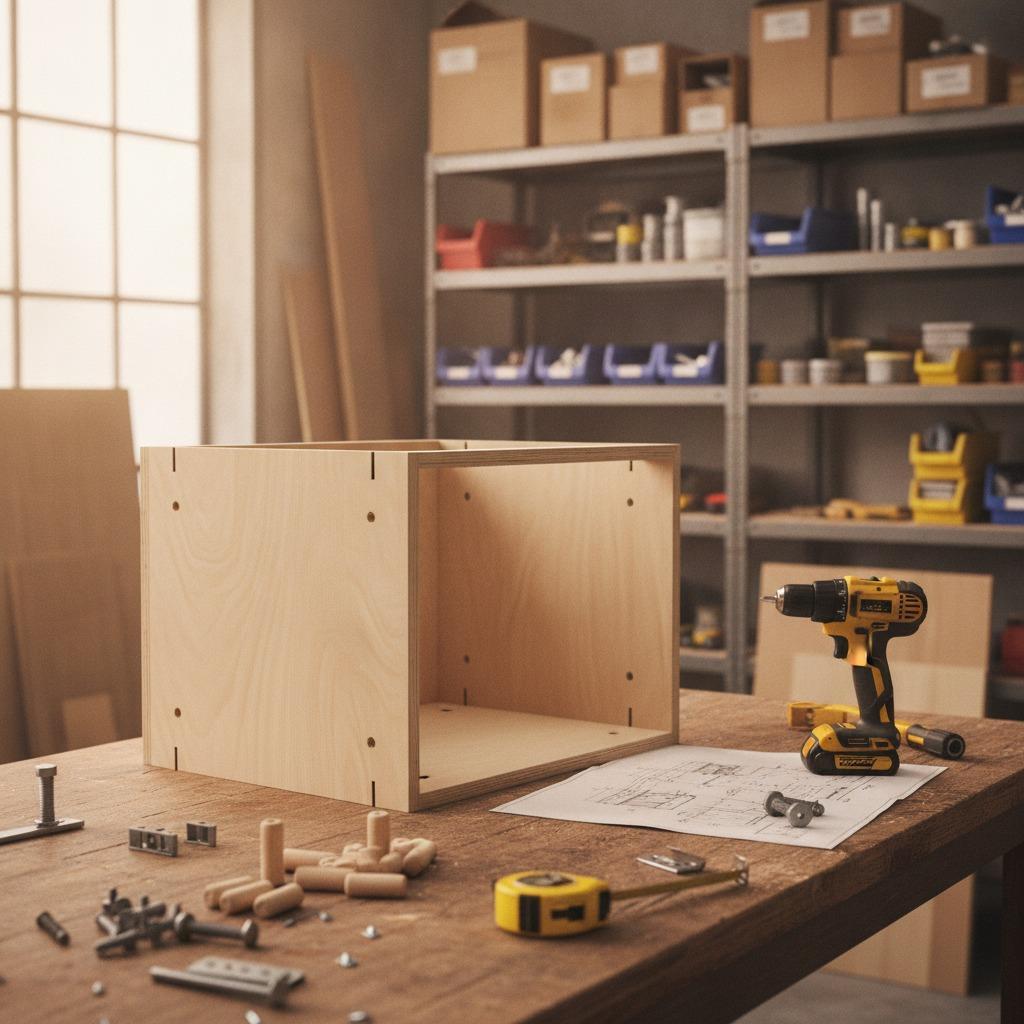
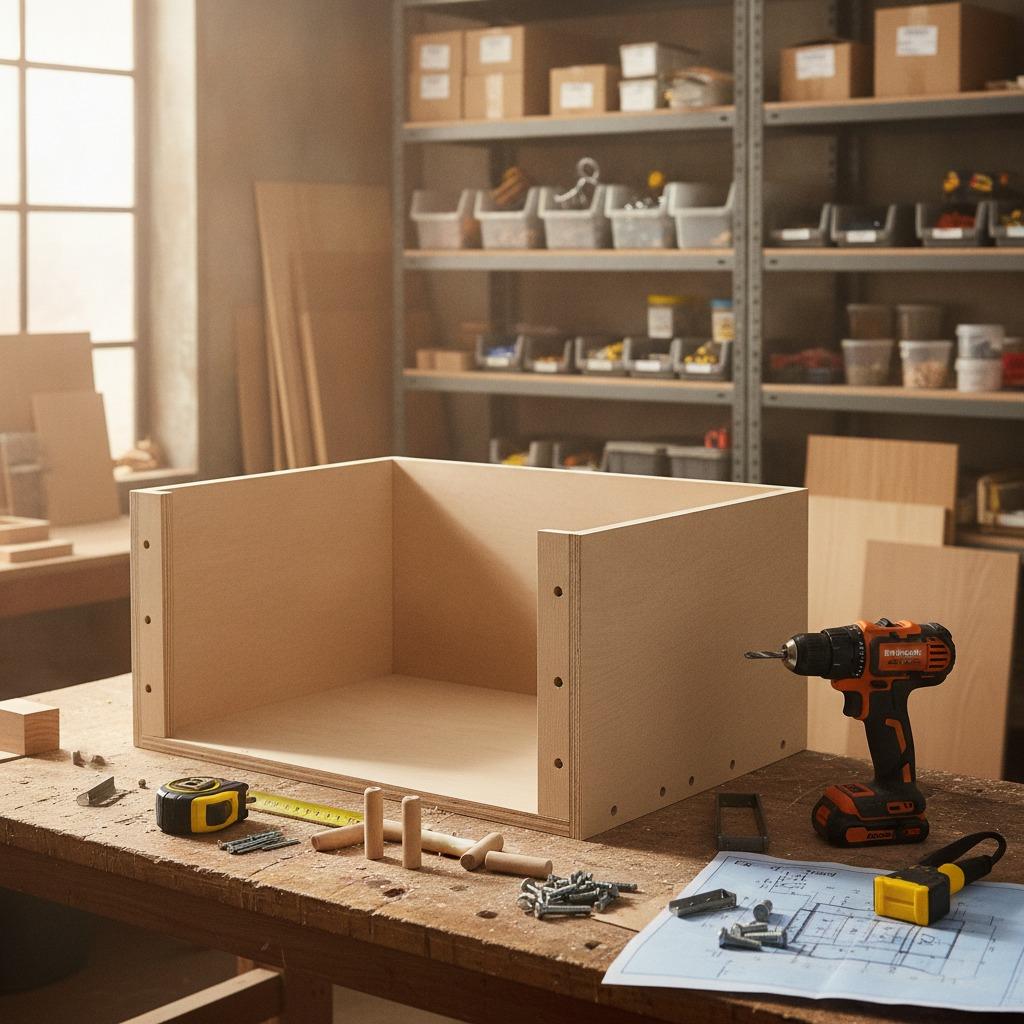
Look at a simple cabinet carcass before it is assembled.
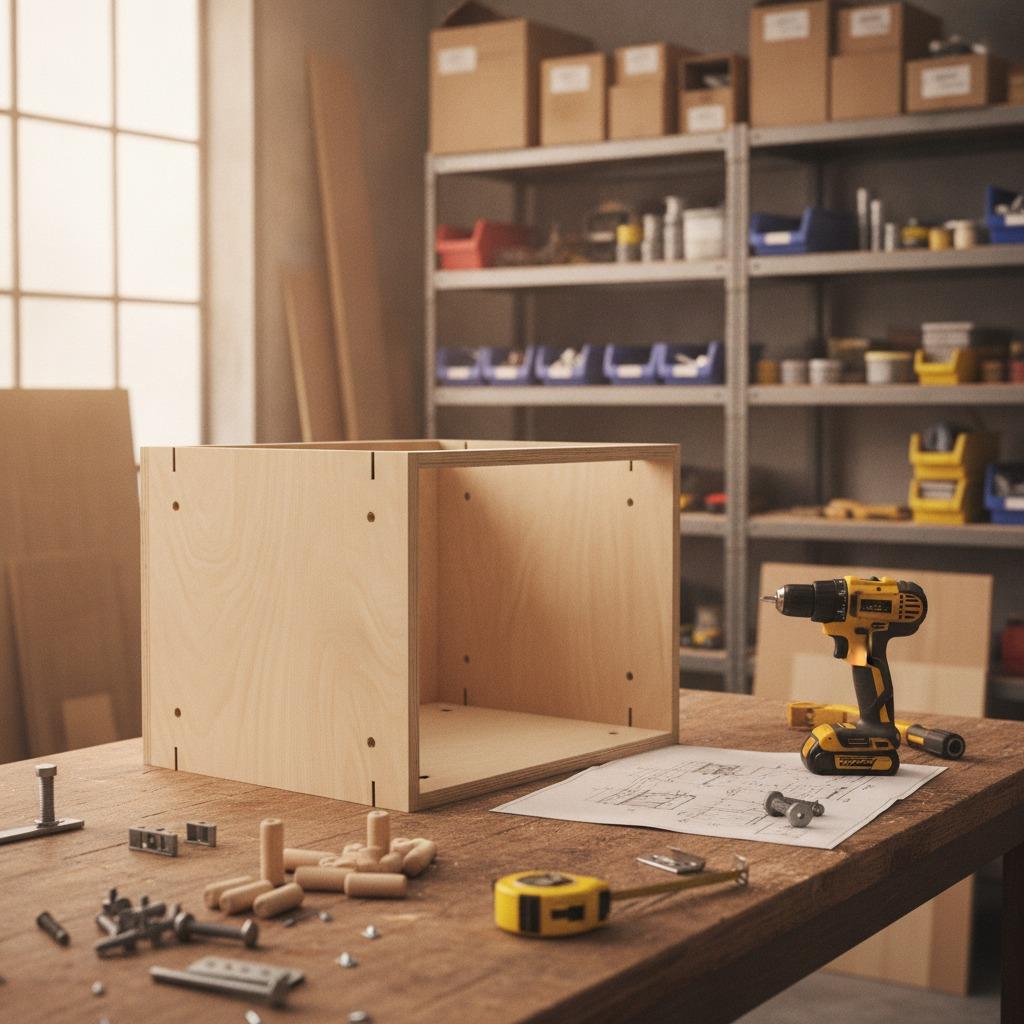
There are panels, pre-drilled holes, maybe some slot cuts, a few edge-finished boards, and a small pile of screws, dowels, brackets, cam fittings, or connector bolts nearby. Nothing looks especially complicated.
But the hardware is doing several jobs at once.
It locates the panels.
It pulls the structure tight.
It supports shelves or rails.
It keeps corners from moving.
It helps the cabinet survive shipping, handling, installation, and sometimes reassembly.
That is a lot to ask from parts that may cost very little individually.
A screw that is too aggressive can damage the board. A dowel that is too loose can make the first alignment step feel sloppy. A cam fitting that does not match the drilled hole will not pull the joint together properly. A bracket with the wrong hole position can throw off the rest of the cabinet.
This is why good flat pack assembly hardware is not just about strength. It is about fit, repeatability, and how the parts behave in the actual cabinet.
Panel material should lead the hardware decision
A common sourcing mistake is choosing hardware before fully understanding the panel.
Plywood, MDF, particleboard, laminated board, veneered panels, and other sheet materials do not hold fasteners in the same way. One board may give the screw a firm bite. Another may need a more careful pilot hole. A lower-density panel may feel fine during the first build, then loosen after moving or repeated tightening.
That matters in flat-pack cabinets because the customer or installer usually cannot correct the material mismatch on site.
Before approving a hardware kit, buyers should check the board thickness, hole diameter, hole depth, edge distance, thread type, connector size, and expected load. They should also consider whether the cabinet will be assembled only once or taken apart and rebuilt later.
A flat pack furniture hardware supplier that understands panel furniture will ask about these details early.
A supplier that only asks for quantity and target price may be leaving too much to chance.
Pre-drilled holes make the hardware less forgiving
Pre-drilled holes are useful because they make assembly faster and more repeatable.
They also expose mistakes quickly.
Once the holes are drilled, the connector must match the prepared geometry. If the cam hole is too shallow, the fitting may sit proud. If the bolt length is wrong, the panels may not tighten. If the screw pilot hole is too loose, the screw may spin. If the hole is too close to the panel edge, the board may split under pressure.
A flat-pack cabinet gives very little room for improvisation.
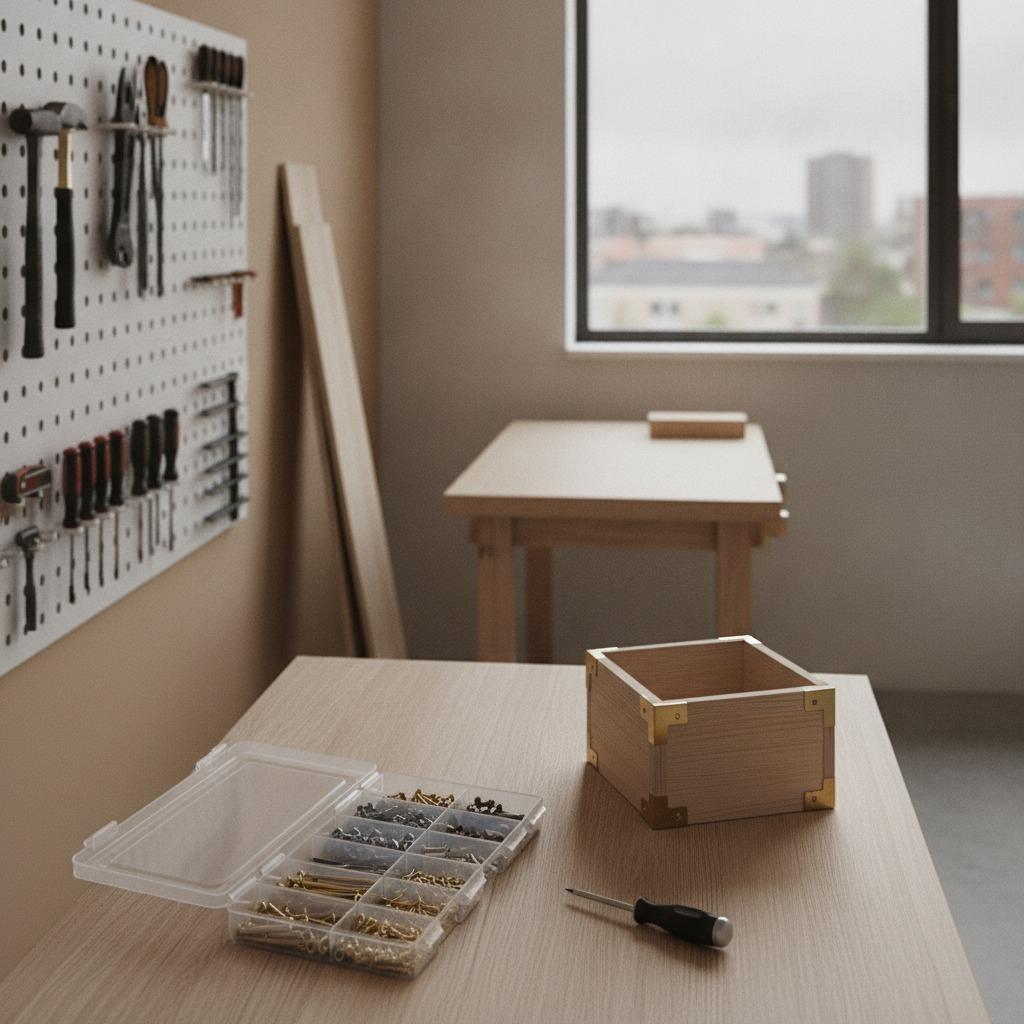
That is why the real test should happen at the bench, not only in the purchasing file. Use the actual board material. Use the actual hole pattern. Use the same tool the worker or customer will use. Assemble the cabinet in the real sequence.
Then look for the practical signs: clean seating, firm tightening, square corners, no surface damage, no obvious wobble, no confusion between similar parts.
That test usually reveals more than a product photo.
Cam fittings, screws, and dowels each solve a different problem
There is no single universal fitting for every cabinet.
Cam-and-dowel systems are common in flat-pack furniture because they help panels come together quickly and keep the outside surface cleaner. They are useful for retail furniture, home assembly, and modular products where compact shipping matters.
Screw-based fastening can be more direct. It often makes sense for workshop storage, utility cabinets, prototypes, and some semi-industrial furniture where visible fasteners are acceptable and servicing matters.
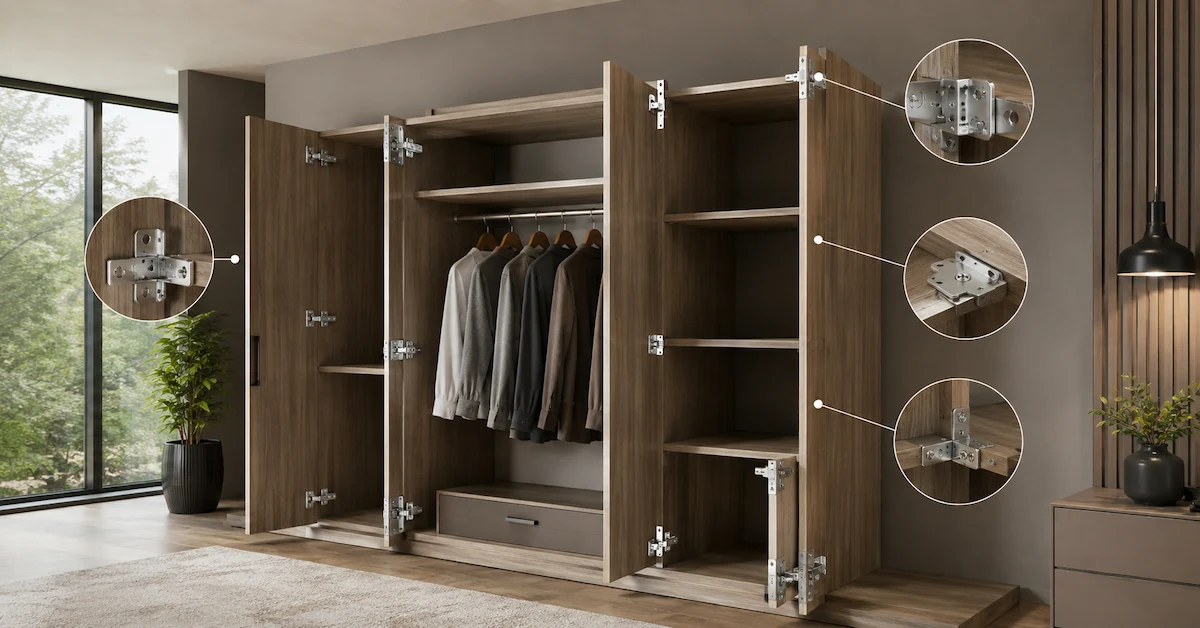
Dowels help with alignment. Brackets reinforce corners or internal fittings. Shelf pins, caps, washers, connector bolts, and small plastic pieces all have their own role in the kit.
Many real cabinet programs use a mixed system.
That is not a weakness. In fact, it is often the practical answer. Dowels locate the panel, cam fittings pull it tight, screws secure brackets, and small caps or plugs finish the appearance.
The key is making sure the mix is intentional.
A hardware kit should not feel like leftover parts collected into a bag. It should follow the cabinet structure.
The assembly sequence matters more than buyers expect
A kit can contain the right parts and still be hard to use.
If two screw lengths look similar and sit in the same bag, someone will eventually use the wrong one. If dowels, cams, bolts, and caps are not separated clearly, the customer may stop halfway through the build. If the instruction sheet says “Part C” but the hardware pack is not labeled that way, the user has to guess.
That is where many flat-pack complaints begin.
Not because the hardware is impossible to use, but because the kit makes the user work too hard.
For factory assembly, this slows the line. For home assembly, it becomes frustration. For installers, it becomes lost time on site. For e-commerce sellers, it can turn into a support message or a return request.
Good flat pack cabinet hardware should be packed around the assembly sequence. The right part should appear at the right time, or at least be easy to identify.
Packaging does not need to be fancy.
It needs to be clear.
Hardware cannot fix poor panel preparation
It is tempting to blame the connector when a joint feels loose.
Sometimes the connector is the problem. Sometimes it is not.
A well-made cam fitting will still perform poorly if the hole position is wrong. A good screw will still strip if the pilot hole is badly matched. A strong bracket may still sit crooked if the panel drilling is off.
This is why hardware and panel processing should be reviewed together.
Flat-pack furniture depends on tolerance stacking. A small error in board cutting, hole depth, edge banding, and fastener size can add up. By the time the customer tightens the last corner, the issue may look like a hardware failure even if the original problem began earlier.
For buyers, the practical lesson is simple: test the full assembly chain.
Panel. Hole. Connector. Screw. Dowel. Tool. Packaging. Instruction step.
All of it matters.
Where supplier capability starts to matter
A good supplier is not just someone who can sell a screw or connector.
For cabinet hardware programs, the supplier should understand standard parts, custom requirements, inspection, packaging, and repeat supply. The same cabinet line may need different screw lengths, cam fittings, dowels, brackets, shelf supports, caps, and replacement packs.
If the supplier can only provide loose parts, the buyer may need to manage the integration alone.
That can work for small runs. It becomes risky when the product moves into repeated orders or multiple SKUs.
Jiangmen Jinhe Hardware Co., Ltd. works with machine screws, self-tapping screws, micro screws, precision screws, standard parts, and non-standard customization. Its materials include stainless steel, iron, and aluminum, with work aligned to standards such as GB, DIN, ANSI, BS, JIS, and ISO.
For buyers sourcing cabinet connector hardware or custom furniture fasteners, this type of fastener background can be useful. A flat-pack cabinet kit often depends on more than one part family, and those parts need to stay consistent from sample to production.
Do not over-spec the wrong part
Not every cabinet needs the most expensive connector.
This is worth saying because sourcing teams sometimes move too far in the other direction. After one assembly issue, they may choose heavier hardware, more complex fittings, or a custom connector that adds cost without solving the real cause.
Better hardware does not always mean stronger hardware.
Better usually means better matched.
A utility cabinet may need a simple, reliable screw system. A consumer flat-pack cabinet may need hidden cam fittings and clear step-by-step hardware packaging. A modular storage unit that will be moved often may need connectors that tolerate repeated assembly. A display cabinet may need more attention to visible finish.
The hardware should fit the use case, not the most impressive specification.
Packaging is part of the hardware decision
Flat-pack cabinet hardware is small, and small parts are easy to lose.
A kit may include every correct component at the supplier’s table, then become confusing after shipping because parts have shifted, mixed, or hidden under one another. A missing screw may be real. It may also be a washer stuck in a corner of the bag. Either way, the customer experiences the same problem: the assembly stops.
Good packaging reduces this risk.
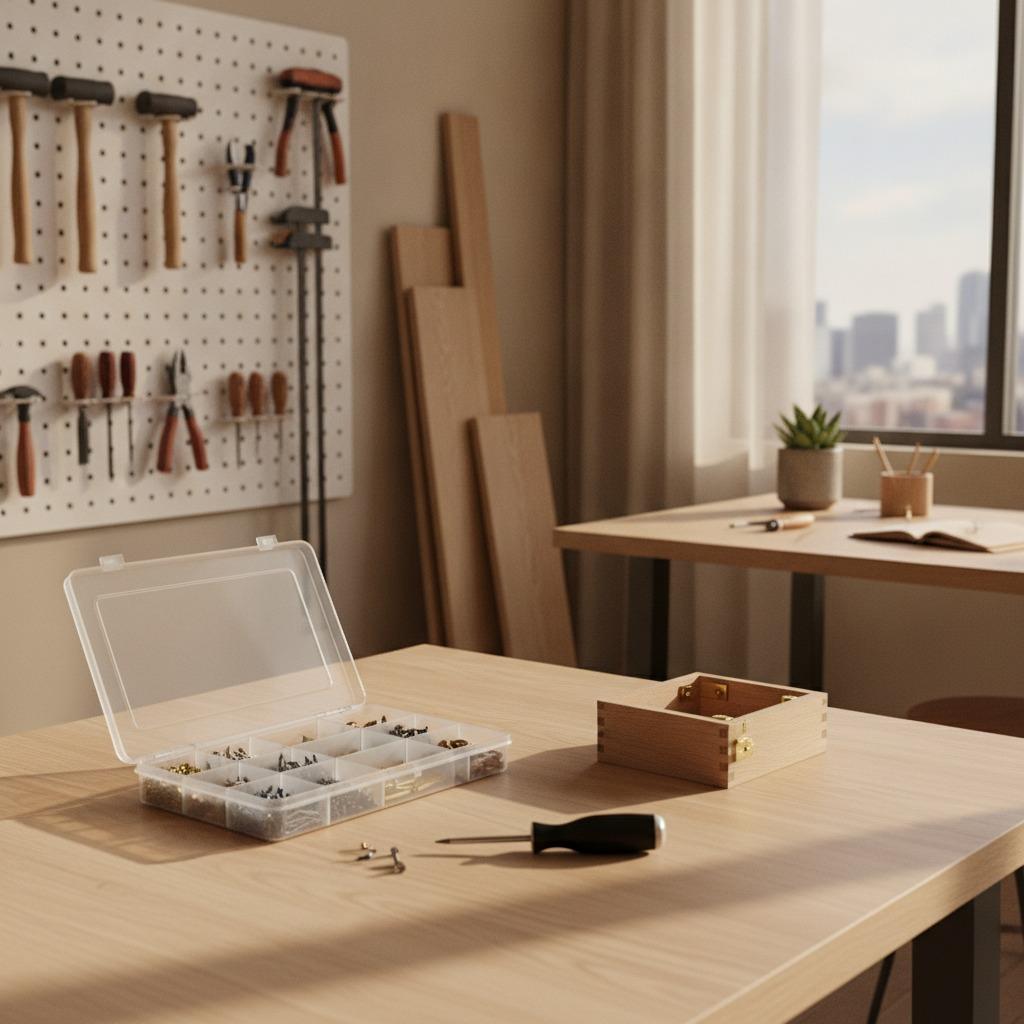
For cabinet programs, buyers may need separated bags, compartment trays, labels by step, model numbers, barcodes, spare packs, or retail-ready hardware kits. For export orders, carton strength and inner protection also matter.
A hardware set that is packed badly can create complaints even when the parts are acceptable.
That is why kitting should be discussed before the first volume order, not after the first complaint.
Documentation helps when problems appear
Documentation may not feel exciting, but it matters when something goes wrong.
If a cabinet comes back with a loose joint, the buyer needs to know whether the issue came from the hardware, the panel, the drilling process, the packing count, or the assembly method. Without part records, inspection notes, or a stable specification, that investigation becomes guesswork.
Jiangmen Jinhe notes inspection before delivery and documentation support. For buyers, those details can help when flat-pack cabinet hardware moves from prototype to repeated shipments.
Good paperwork is not bureaucracy for its own sake.
It is how sourcing teams keep small hardware problems from becoming vague, expensive arguments later.
Common mistakes buyers still make
One common mistake is treating all flat pack furniture hardware as interchangeable.
It is not.
Cam fittings, dowels, screws, brackets, inserts, shelf pins, caps, and washers each solve different problems. A part that works in one cabinet line may be unsuitable for another.
Another mistake is choosing hardware before the panel design is stable. If board thickness, hole pattern, or assembly order changes, the hardware may need to change too.
A third mistake is testing loose parts but not the packed kit. The supplier may provide good hardware, while the customer receives a confusing or incomplete hardware bag.
Buyers also sometimes forget replacement parts. Customers lose fittings. Installers misplace screws. Cabinets are moved and rebuilt. A small spare kit can reduce after-sales work.
The final mistake is looking only at unit price. A cheaper kit is not cheap if it creates slower assembly, damaged panels, customer complaints, or replacement shipments.
Questions buyers should ask before ordering
Before sourcing flat pack cabinet hardware, buyers should ask:
What panel material is being used?
What board thickness and hole pattern are required?
Are the holes pre-drilled?
Which parts are included in the complete kit?
What screw lengths and connector sizes are needed?
Will the cabinet be assembled once or repeatedly?
Can the hardware be tested with the actual panel?
How are similar parts separated in packaging?
Can labels match the assembly instructions?
How is kit completeness checked before shipment?
Can replacement packs be supplied later?
Can non-standard fasteners be customized?
What inspection documents are available?
Can logistics or export support be included?
A supplier that understands the cabinet system should be able to answer these questions in practical terms.
Frequently Asked Questions
What is flat pack cabinet hardware?
Flat pack cabinet hardware includes screws, cam locks, connector bolts, dowels, brackets, shelf pins, plugs, caps, washers, and other fittings used to assemble ready-to-assemble cabinets and panel furniture.
Why does board material matter?
Different boards hold fasteners differently. MDF, plywood, particleboard, laminated board, and veneered panels may need different screws, connector styles, pilot holes, or tightening methods.
Are cam fittings always the best choice?
No. Cam fittings are useful for many flat-pack products, but screw systems, dowels, brackets, or mixed hardware systems may be better depending on the cabinet design and user needs.
Should buyers test the full assembly before bulk orders?
Yes. The hardware should be tested with the actual panel material, hole pattern, tools, packaging format, and assembly sequence.
Why is packaging important?
Packaging helps prevent missing parts, mixed fasteners, unclear assembly steps, and customer complaints. In flat-pack cabinets, the hardware kit is part of the user experience.
Can flat pack cabinet hardware be customized?
Yes. Screw length, connector type, finish, kit quantity, labels, packaging, and non-standard fasteners can be customized when the project requires it.
The right hardware keeps the cabinet calm
Good flat pack cabinet hardware does not need to look special.
It needs to make the cabinet build properly.
The panels align. The screws hold. The cam fittings tighten. The dowels guide the structure. The kit is complete. The instructions make sense. The next shipment matches the approved sample.
That is what buyers should expect from a reliable flat pack furniture hardware supplier.
For flat pack cabinet hardware, flat pack assembly hardware, cabinet connector hardware, modular cabinet hardware, custom furniture fasteners, and organized furniture hardware kits, Jiangmen Jinhe Hardware Co., Ltd. can discuss material options, standard parts, non-standard customization, inspection, packaging, warehousing, logistics, and repeat supply requirements.
For direct inquiries:
Tel/WeChat: +86 13729150102
WhatsApp: +86 13322893939
Email: sharon@hkhomeideas.com
Start with the panel material, board thickness, hole pattern, hardware list, assembly sequence, packaging method, and expected order quantity.
Once those details are clear, the right flat pack cabinet hardware becomes much easier to source and repeat.