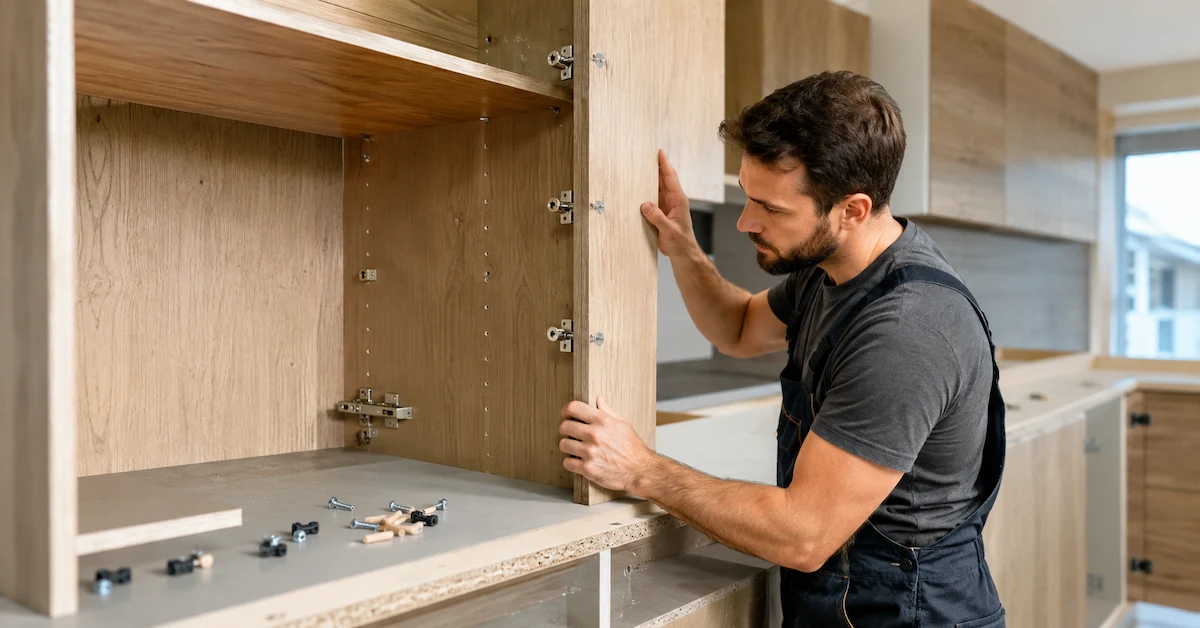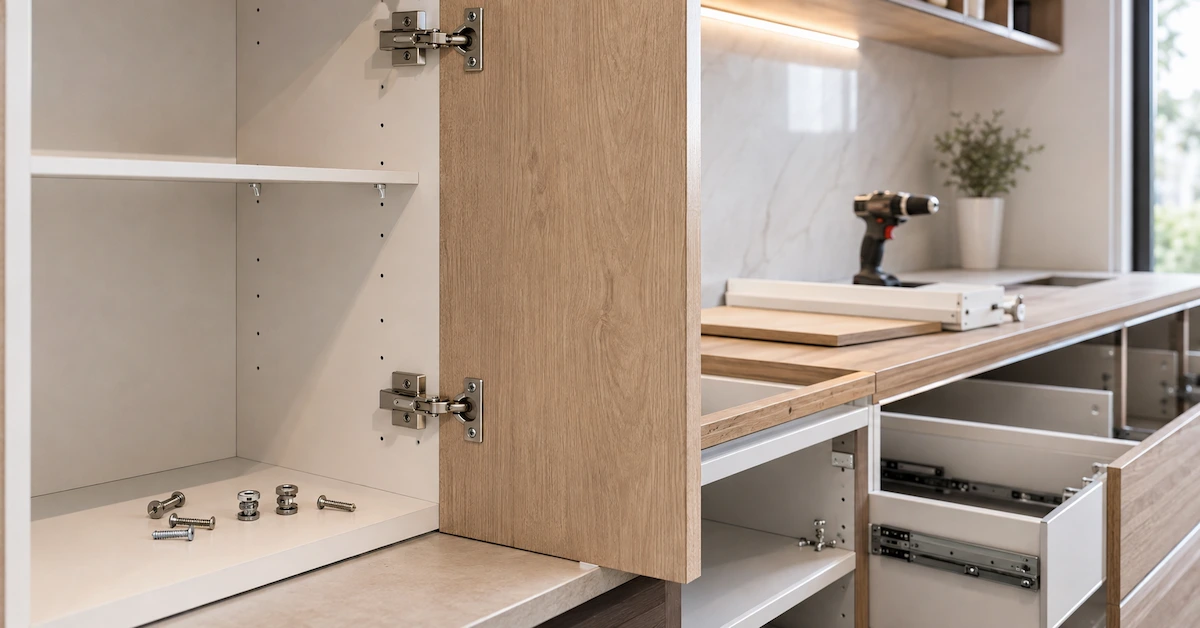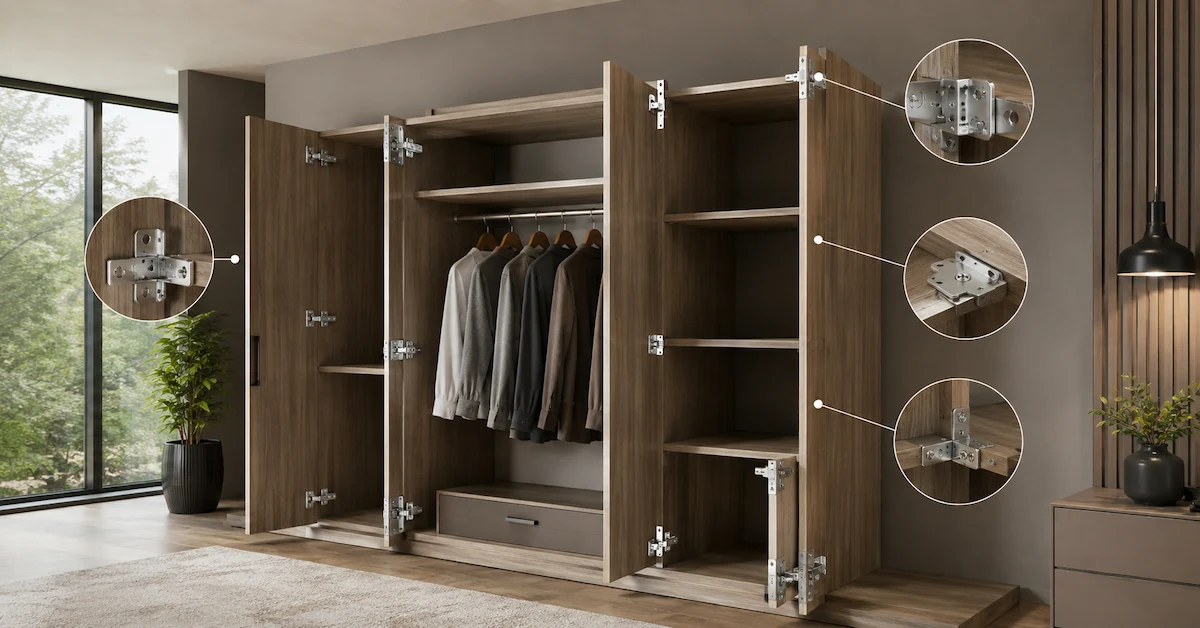

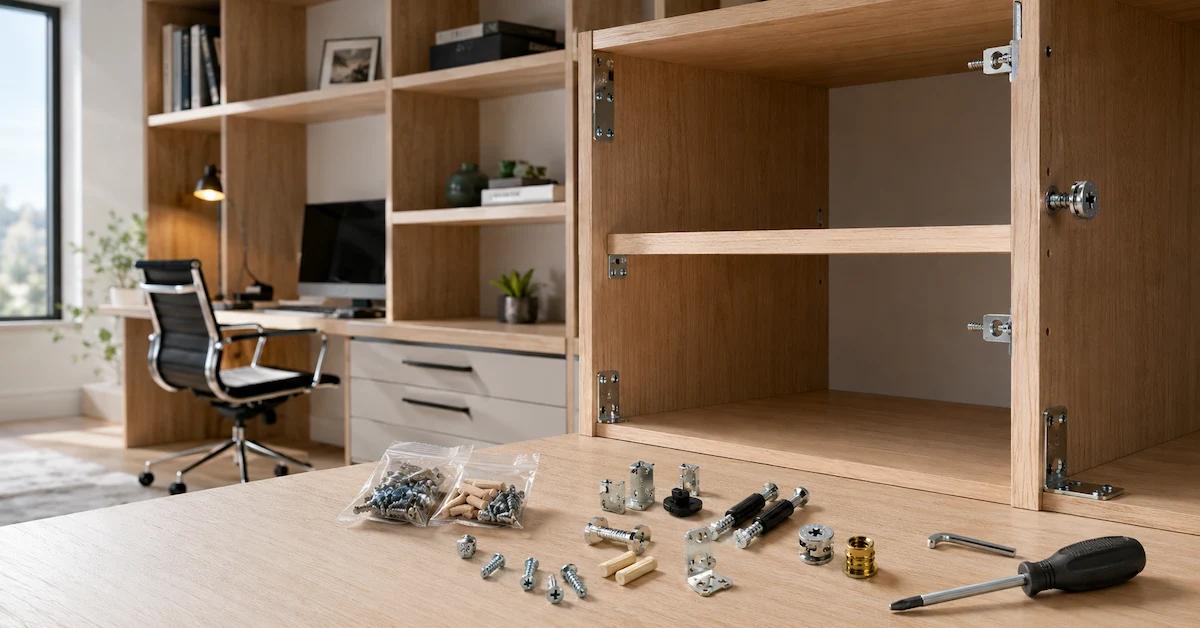
Furniture connectors and fasteners are the foundation of modern furniture assembly. For cabinet manufacturers, wardrobe brands, flat-pack furniture companies, hardware distributors, and OEM buyers, these small components determine whether furniture can be assembled efficiently, remain stable during use, and provide a reliable customer experience.
Although connectors and fasteners are usually hidden inside furniture, they directly influence structural strength, installation speed, product quality, and after-sales performance.
A wrong connector size may cause loose panels. An incorrect screw length may damage boards. Poor-quality fasteners may reduce furniture lifespan. Missing hardware inside a package may prevent customers from completing installation.
That is why global buyers should source furniture connectors and fasteners from suppliers who understand furniture structures, component matching, OEM customization, packaging control, and quality inspection.
JHFIX supplies screws, nuts, furniture hardware, stamping hardware, and packaging solutions for global buyers. Explore the JHFIX product range for complete furniture hardware solutions.
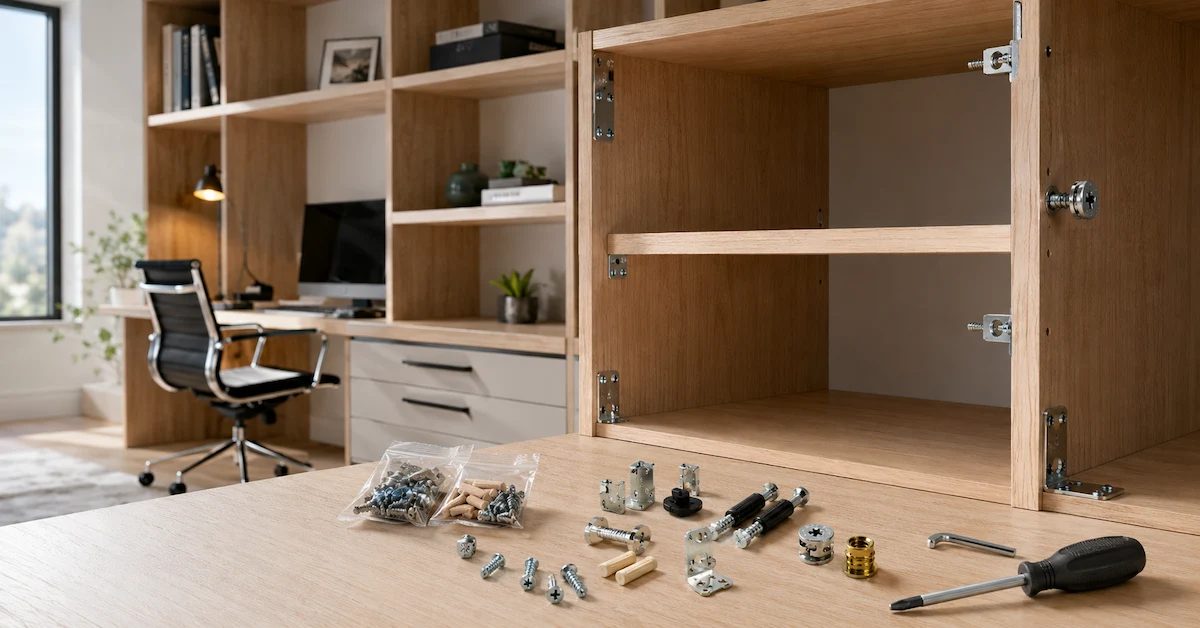
Quick Answer: What Are Furniture Connectors and Fasteners?
Furniture connectors and fasteners are hardware components used to join, fix, reinforce, and assemble furniture parts.
Common furniture connectors include:
- Cam locks
- Cam bolts
- Cabinet connectors
- Joint connectors
- Dowel connectors
- Corner connectors
Common furniture fasteners include:
- Wood screws
- Self-tapping screws
- Machine screws
- Insert nuts
- Bolts
- Washers
- Brackets
- Fixing plates
For OEM furniture projects, these components are often combined into complete hardware kits based on furniture design, board thickness, assembly method, and packaging requirements.
Why Furniture Connectors and Fasteners Matter
Furniture assembly has become more standardized, especially with the growth of flat-pack furniture, modular furniture, and export furniture products.
Reliable connectors and fasteners help buyers:
- Improve furniture stability
- Reduce assembly difficulty
- Support mass production
- Lower installation errors
- Reduce customer complaints
- Improve repeat orders
- Simplify packaging management
- Support global furniture distribution
For furniture manufacturers, hardware is not simply an accessory. It is part of the product performance.
Common Types of Furniture Connectors
Furniture connectors are designed to join different furniture components while maintaining strength and assembly convenience.
| Connector Type | Common Application | Main Advantage |
|---|---|---|
| Cam locks | Flat-pack cabinets and wardrobes | Easy assembly and disassembly |
| Cam bolts | Matching cam lock systems | Stable panel connection |
| Cabinet connectors | Kitchen cabinets and storage furniture | Strong hidden connection |
| Joint connectors | Modular furniture structures | Improved assembly efficiency |
| Dowel connectors | Panel alignment | Accurate positioning |
| Corner connectors | Furniture reinforcement | Increased stability |
Cam lock systems are especially popular in flat-pack furniture because they allow efficient assembly while keeping hardware hidden from the final appearance.
Common Furniture Fasteners
Fasteners provide the actual fixing force between furniture components.
| Fastener Type | Application | Key Consideration |
| Wood screws | Wooden panels and furniture boards | Thread design and length |
| Self-tapping screws | Metal or plastic fixing | Material compatibility |
| Machine screws | Threaded connections | Size accuracy |
| Insert nuts | Repeated assembly furniture | Thread strength |
| Bolts | Heavy-duty connection | Load requirements |
| Washers | Load distribution | Diameter and thickness |
| Brackets | Structural reinforcement | Material thickness |
The correct combination of connectors and fasteners creates a stable furniture assembly system.
Main Applications of Furniture Connectors and Fasteners
Kitchen Cabinets
Kitchen cabinets require reliable hidden connectors, screws, bolts, brackets, and support hardware. The hardware must match board thickness and installation structure.
Common requirements:
- Cam locks
- Cabinet bolts
- Wood screws
- Shelf supports
- Fixing brackets
Wardrobes and Storage Furniture
Wardrobes require stronger connection systems because of larger panels and higher loads.
Common products include:
- Insert nuts
- Connector bolts
- Reinforcement brackets
- Fixing plates
Flat-Pack Furniture
Flat-pack furniture depends heavily on accurate connectors and fasteners.
The hardware kit must provide:
- Correct parts
- Correct quantity
- Clear identification
- Easy installation
Office Furniture
Office desks and storage systems require durable hardware because they are frequently assembled and used.
DIY Furniture Products
DIY brands need easy-to-understand hardware kits with organized packaging and clear labels.
How to Choose Furniture Connectors and Fasteners
1. Match Hardware with Furniture Structure
The supplier should understand:
- Panel thickness
- Material type
- Load requirements
- Assembly method
- Installation environment
Different furniture structures require different connector and fastener combinations.
2. Choose the Right Material
Common materials include:
| Material | Feature |
| Carbon steel | Strong and cost-effective |
| Stainless steel | Corrosion resistance |
| Zinc alloy | Suitable for connector systems |
| Aluminum | Lightweight option |
| Plastic | Used for accessories and positioning parts |
Material selection depends on furniture application, environment, and cost target.
3. Confirm Surface Treatment
Surface finish affects appearance and durability.
Common options:
- Zinc plating
- Nickel plating
- Black coating
- Stainless finish
- Custom coating
4. Test Complete Assembly
Buyers should test connectors and fasteners together instead of testing individual parts only.
A complete test should confirm:
- Fit
- Strength
- Installation process
- Stability
- User experience
OEM Furniture Connectors and Fasteners Solutions
Many furniture brands require customized hardware solutions rather than standard products.
OEM options include:
- Custom connector dimensions
- Special screw sizes
- Matching cam lock systems
- Custom brackets
- Stamped fixing plates
- Insert nut solutions
- Hardware kit combinations
- Private-label packaging
- Barcode labels
A professional OEM supplier should support drawings, samples, BOM files, and production testing.
Furniture Hardware Kit Solutions
Many buyers do not purchase connectors and fasteners separately. They need complete kits.
A typical furniture hardware kit may include:
| Component | Example |
| Connectors | Cam locks, cabinet connectors |
| Fasteners | Screws, bolts, nuts |
| Support parts | Brackets, plates |
| Accessories | Caps, anchors, washers |
| Packaging | Bag, blister, box, bucket |
Complete kits help furniture brands reduce assembly problems and improve customer satisfaction.
Packaging Options for Connectors and Fasteners
Packaging is important for both furniture factories and retail brands.
| Packaging Type | Suitable For |
| Bag packaging | Furniture assembly kits |
| Blister packaging | Retail hardware products |
| Box packaging | Hardware assortments |
| Plastic bucket packaging | Bulk screws and fasteners |
A supplier with packaging capability can help buyers manage products from manufacturing to final sales.
Quality Control Checklist
Before ordering furniture connectors and fasteners, buyers should check:
- Material quality
- Connector dimensions
- Screw length
- Thread accuracy
- Surface finish
- Corrosion resistance
- Assembly compatibility
- Quantity per kit
- Packaging accuracy
- Sample approval
For OEM projects, quality control should cover both individual parts and complete hardware sets.
Furniture Connectors and Fasteners Supplier Selection Checklist
| Evaluation Point | What to Check |
| Product range | Connectors, screws, nuts, brackets |
| OEM ability | Drawings, samples, customization |
| Manufacturing | Production capability and inspection |
| Packaging | Bag, blister, box, bucket |
| Quality | Dimension, finish, assembly testing |
| Experience | Furniture industry knowledge |
| Supply stability | Repeat order consistency |
Choosing the right supplier helps reduce sourcing risks and improve product reliability.
RFQ Information Buyers Should Prepare
| Information | Details |
| Furniture type | Cabinet, wardrobe, shelf, desk |
| Connector type | Cam lock, cabinet connector, bracket |
| Fastener type | Screw, bolt, nut, washer |
| Material | Steel, stainless steel, zinc alloy |
| Size | Diameter, length, thickness |
| Quantity | Trial or bulk order |
| Packaging | Bag, blister, box, bucket |
| Drawing/sample | Required for customization |
| Market | Retail, wholesale, OEM |
Clear information helps suppliers provide accurate solutions.
Why Choose JHFIX for Furniture Connectors and Fasteners?
JHFIX provides complete furniture hardware solutions including:
- Furniture connectors
- Screws
- Nuts
- Insert nuts
- Brackets
- Stamping hardware
- Hardware kits
- Customized packaging solutions
With integrated manufacturing and packaging capability, JHFIX helps global buyers reduce supplier coordination and improve hardware consistency.
Learn more through the About Us page, check common questions through the FAQ page, or contact JHFIX for OEM furniture hardware projects.
FAQ
1. What are furniture connectors and fasteners?
Furniture connectors and fasteners are hardware components used to join, fix, and reinforce furniture structures, including cam locks, screws, bolts, nuts, brackets, and fixing plates.
2. What connectors are commonly used in furniture?
Common furniture connectors include cam locks, cam bolts, cabinet connectors, dowels, joint connectors, and corner connectors.
3. Can furniture connectors and fasteners be customized?
Yes. OEM customization can include size, material, finish, design, packaging, and complete hardware kit combinations.
4. What furniture uses connectors and fasteners?
They are widely used in cabinets, wardrobes, shelves, office furniture, flat-pack furniture, and DIY furniture.
5. What information is needed for a quotation?
Buyers should provide product type, size, material, quantity, application, packaging requirements, and drawings or samples.
6. Why are complete hardware kits better than loose parts?
Complete kits reduce sorting work, missing-part risks, packaging errors, and assembly problems.
7. What packaging options are available?
Common options include bags, blister packs, boxes, plastic buckets, and customized retail packaging.
8. How can buyers reduce furniture assembly problems?
Use matched connectors and fasteners, approve samples, confirm BOM details, and conduct final inspection before shipment.
Conclusion
Furniture connectors and fasteners are critical components for reliable furniture assembly. For global buyers, choosing the right supplier means more than purchasing screws or connectors. It requires a partner who understands furniture structures, OEM customization, packaging solutions, and quality control.
JHFIX helps furniture manufacturers, distributors, and brands develop stable furniture hardware solutions with connectors, fasteners, kits, and customized packaging.
Browse the JHFIX product range, learn more about our manufacturing capabilities, check the FAQ section, or contact us for customized furniture hardware solutions.