
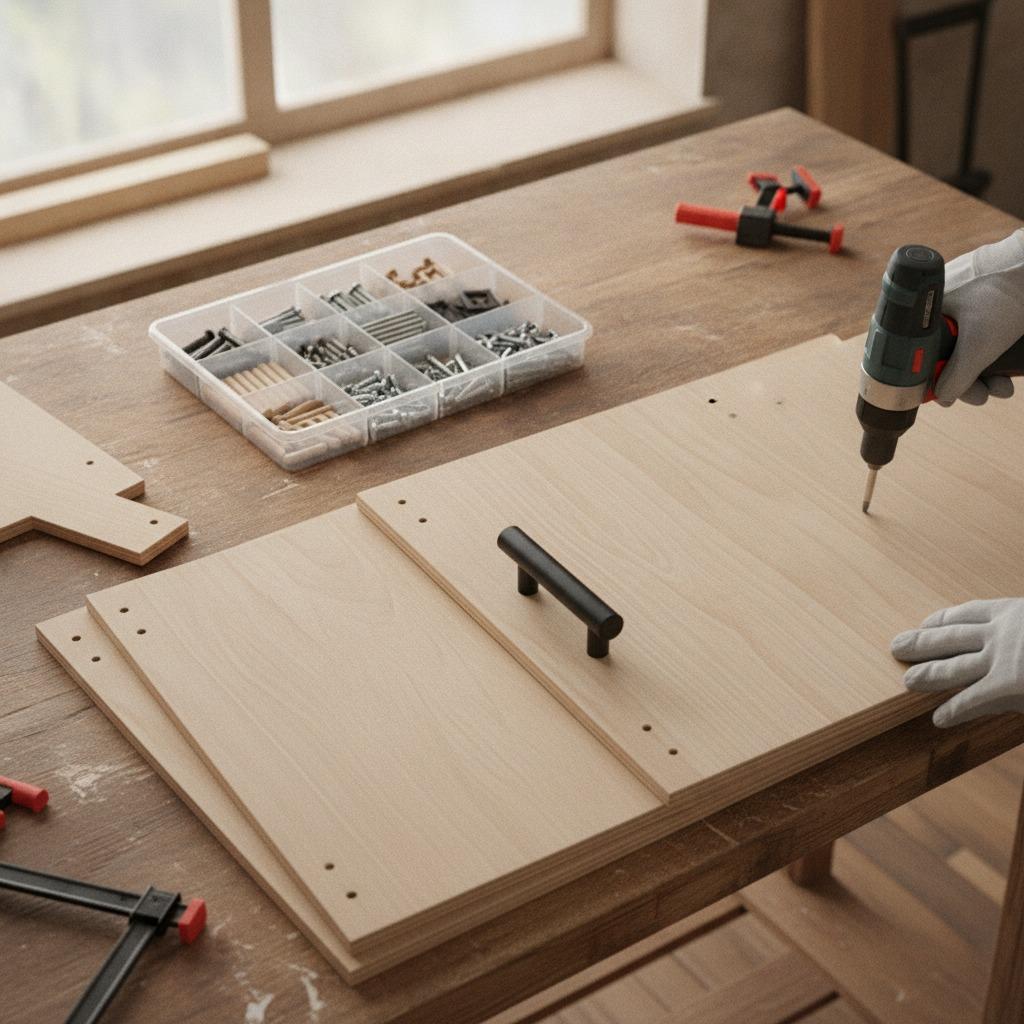
Furniture Hardware Kit Manufacturer: Why the Right Partner Matters Before Production Starts

A flat-pack cabinet can look simple when it is standing in a showroom.
Clean panels. Straight lines. A practical storage shape. Maybe a door, a shelf, a drawer, or a small handle. From the outside, there is not much drama.
Production tells a different story.
Before the first panel is cut, someone has to decide the drilling pattern. Someone has to choose the connector system. Someone has to confirm screw length, cam fit, dowel position, packaging method, and how the end user will understand the assembly sequence.
That is where a furniture hardware kit manufacturer becomes more than a parts supplier.
For engineers, sourcing managers, furniture brands, and OEM product teams, the real question is not only, “Can this supplier ship hardware?”
The better question is: can this supplier help keep the assembly process repeatable?
Because in flat-pack furniture, the small hardware kit often decides whether the product feels engineered or improvised.
A furniture hardware kit is part of the product structure
A cabinet kit is not just wood panels and a box of screws.
The hardware controls how the panels meet, how the corners stay square, how much force is needed during assembly, and whether the finished unit feels stable after the last fastener is tightened.
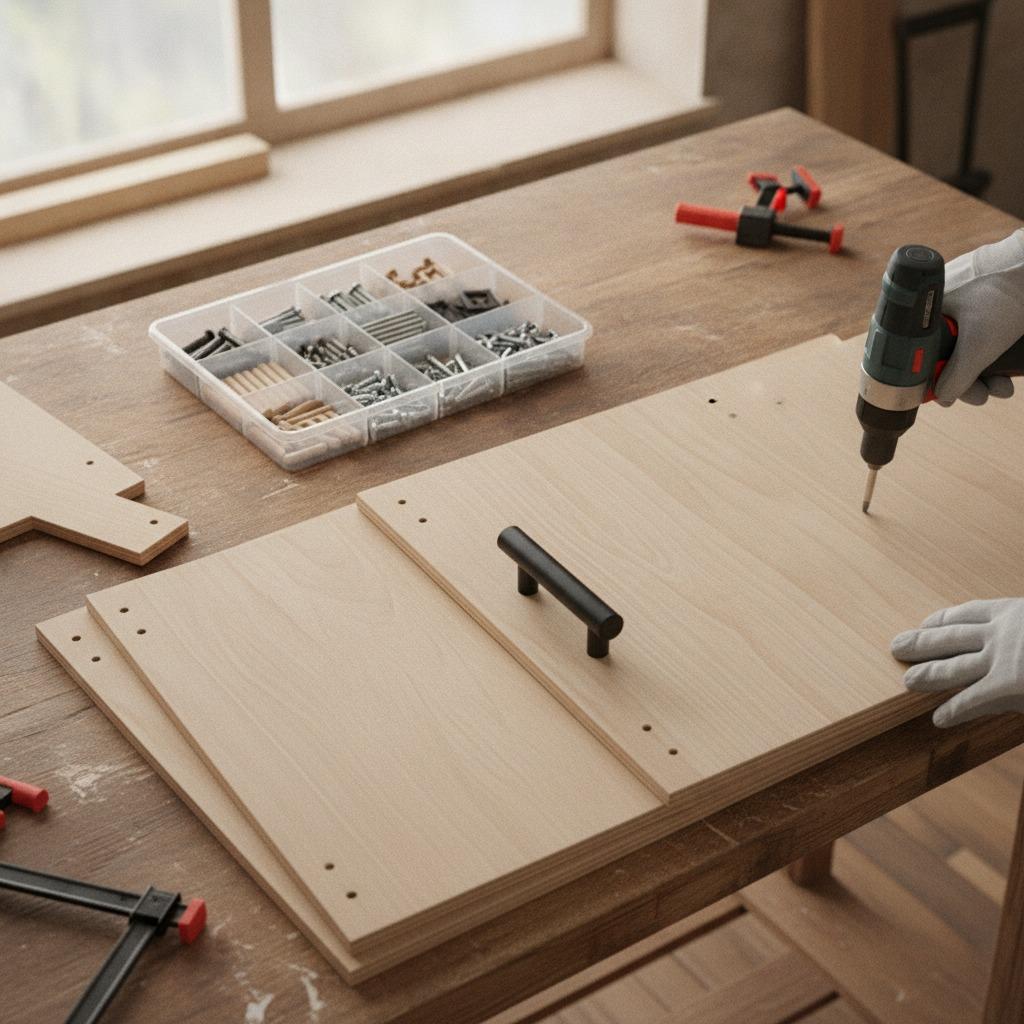
A typical flat-pack furniture kit may include:
- cam locks
- connecting bolts
- screws
- dowels
- washers
- hinge screws
- concealed connectors
- brackets
- caps
- sleeves
- labels
- replacement parts
Each part has its own job.
One part pulls the boards together. Another helps align the panels before tightening. Another supports the corner. Another hides the connection. Another makes the kit easier to identify during assembly.
If one component is wrong, the whole furniture unit can feel wrong.
That is why buyers should not treat hardware as an accessory added after the cabinet design is finished. The hardware should be considered before the drilling map, panel thickness, and packaging plan are finalized.
Product example: Jinhe JH-05 3 in 1 hidden furniture connector
One useful example is Jinhe’s JH-05 furniture connecting bolt, listed on JHFix as a China OEM Stainless Steel Zinc Plated 3-in-1 Hidden Invisible Furniture Connector Hardware for Dining, Kitchen, Bedroom, and Hotel Use. According to the product page, the product name is Furniture Connecting Bolt, the model number is JH-05, and the system is described as Bolt + Cam + Nut, 3 in One.
| Item | Product Information |
|---|---|
| Brand Name | Jinhe |
| Model Number | JH-05 |
| Product Name | Furniture Connecting Bolt |
| Material | Stainless Steel |
| Thread Size | M6.2 |
| Length Options | 32mm / 35mm / 40mm / 42mm |
| Product Structure | Bolt + Cam + Nut, 3 in One |
| Cam Size | Suitable for all conventional cam |
| Finish | Zinc Plated / Nickel, customizable |
| Head Type | Pan head / Cross head |
| Usage | Cabinet Connector / Furniture Connector |
| Listed Features | Easy assemble / Durable / Soft closing / Waterproof |
For buyers, these details are useful because a 3 in 1 hidden connector is not chosen only for appearance. It must match the furniture’s board thickness, hole pattern, connector depth, cam engagement, and assembly method.
The product may look like a small fitting.
In a cabinet or storage unit, it becomes part of the structure.
Why 3 in 1 furniture connectors are common in flat-pack products
A 3 in 1 furniture connector is popular because it solves several practical problems at once.
It helps panels join without large visible brackets.
It supports knock-down assembly.
It keeps the exterior cleaner.
It can work well in cabinets, wardrobes, shelves, kitchen furniture, bedroom furniture, and hotel furniture when the drilling pattern is controlled.
This is why these connectors are often used in flat-pack furniture.
Still, a 3 in 1 connector is not magic.
The bolt must match the cam. The cam must fit the hole. The nut or matching part must engage correctly. The board must hold the connection. The user must understand the assembly step.
If those conditions are not met, the connector may not pull tight. The panels may shift. The corner may feel loose. The customer may blame the whole cabinet, even if the real problem is one small part.
Board design should come before hardware approval
Many sourcing mistakes begin when the hardware is selected too late.
A buyer may finish the cabinet design first, then ask suppliers for a matching hardware kit. That can work if the design uses a common connector pattern. But if the board thickness, drilling distance, hole depth, or assembly sequence is unusual, the supplier may need to adjust the fastener set.
For a stainless steel furniture connecting bolt such as the Jinhe JH-05, buyers should check practical details before bulk ordering:
- board material
- board thickness
- hole diameter
- hole depth
- cam hole position
- bolt length
- head type
- matching cam and nut
- assembly direction
- expected load
- whether the furniture may be disassembled later
Particleboard, MDF, plywood, laminated panels, and veneered boards do not behave the same way under tightening force. A connector that works smoothly in one board may not perform the same way in another.
A sample part on a desk is not enough.
The connector should be tested in the actual panel.
Stainless steel and plated finish should be specified clearly
The JH-05 product page lists stainless steel as the material and zinc plated / nickel as customizable finish options. It also lists pan head / cross head as head type options.
Those details matter because furniture hardware is often judged not only by strength, but also by installation feel and appearance.
A cross head may be easier for common assembly tools. A pan head may suit a specific furniture fitting or visible/semi-visible area. Zinc plating and nickel finish may support different appearance or corrosion expectations, depending on the final use environment.
Buyers should not assume that one finish fits all projects.
A dry bedroom cabinet, a hotel room cabinet, a kitchen storage unit, and a product stored in humid warehouse conditions may need different finish discussions.
Before production, confirm:
- base material
- surface treatment
- finish color
- corrosion expectation
- head type
- thread size
- length option
- whether substitutions are allowed
Small changes in these details can affect both assembly and repeat supply.
Packaging can make or break the assembly experience
A furniture hardware kit may contain all the right parts and still create problems if the packaging is unclear.
This happens often.
Two connector bolts look similar. A cam is mixed with another small part. Screws are placed in one loose bag without separation. The instruction sheet calls for a certain part, but the hardware pack does not label it clearly.
For factory assembly, this slows the line.
For installers, it creates extra checking.
For end users, it becomes frustration.
Good packaging should follow the assembly sequence.
If the customer needs the 3 in 1 connector first, the cam and matching bolt should be easy to identify. If different bolt lengths are used in one kit, they should be separated. If the product is shipped for hotel, kitchen, or bedroom furniture programs, replacement parts should also be easy to track.
A reliable cabinet hardware kit manufacturer should discuss packaging before mass production, not after complaints appear.
Cabinet kits and drawer kits need different thinking
Furniture hardware kits are not all the same.
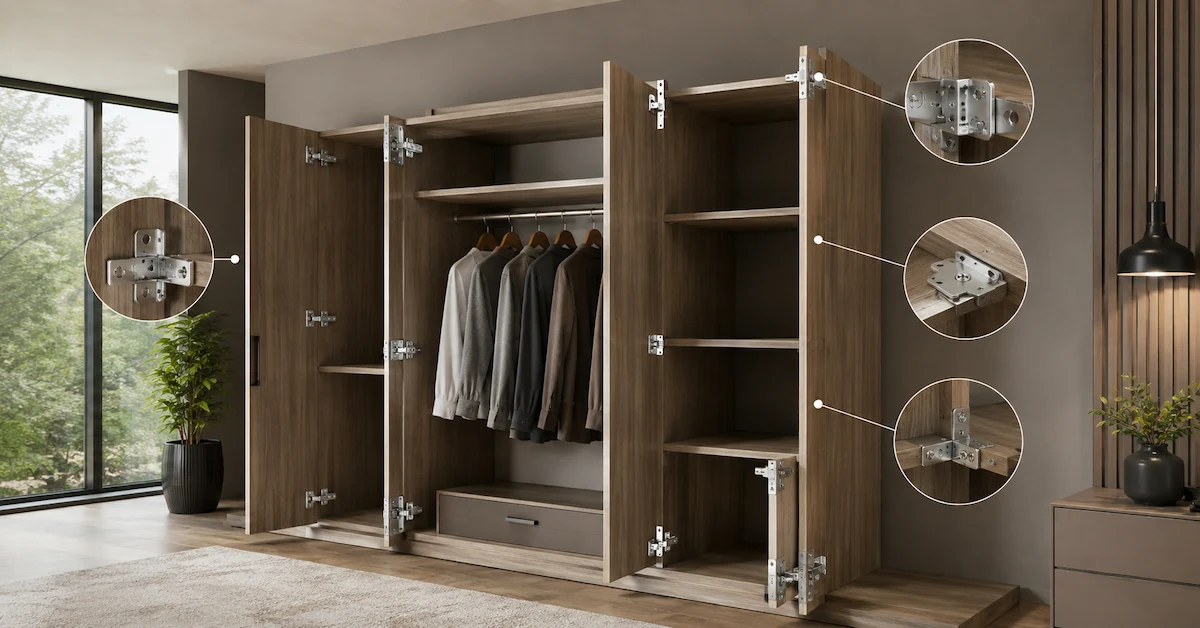
A cabinet hardware kit usually focuses on panel joining, structural fastening, shelf support, hinge points, and overall stability. The hardware has to help the box stay square.
A drawer hardware kit has a different job. It may include runners, fixing screws, stops, guides, and alignment parts. The main issue is movement. A drawer must open and close smoothly, hold its position, and avoid rubbing or jamming.
The two kit types may share screws, but they are not interchangeable.
This is why buyers should describe the product clearly when speaking with a hardware supplier. A kitchen cabinet, hotel wardrobe, drawer unit, small office shelf, and modular storage box may all need different hardware logic.
The right supplier should ask questions before recommending the kit.
What Jiangmen Jinhe Hardware brings to the discussion
Jiangmen Jinhe Hardware Co., Ltd. works with machine screws, self-tapping screws, micro screws, precision screws, furniture connectors, standard parts, and non-standard customization. Its product range covers different materials, including stainless steel, iron, aluminum, carbon steel, and other hardware materials depending on the application.
For furniture buyers, this background is relevant because a complete kit rarely depends on one component alone. A cabinet or storage project may need 3 in 1 hidden furniture connectors, cam locks, connector bolts, screws, dowels, hinge screws, washers, caps, labels, and organized packaging.
The JH-05 furniture connecting bolt is one example of a part that can sit inside a wider hardware kit. It is listed for cabinet and furniture connector use, with multiple length options and customizable finish choices.
That kind of product information helps buyers begin the review.
The final approval should still come from sample testing.
A good supplier should support repeat orders, not only samples
Many suppliers can prepare one good sample.
The real test is whether they can repeat it.
For furniture hardware kits, repeatability includes:
- same connector dimensions
- same thread size
- same finish
- same head type
- same kit count
- same packaging method
- same label format
- same replacement support
If the sample uses one version of a connecting bolt and the bulk order uses another without approval, assembly may change. If a finish shifts between batches, visible or semi-visible hardware may look inconsistent. If packaging changes, the customer may no longer understand the instruction sheet.
This is why buyers should define the approved specification clearly before placing a large order.
Common mistakes buyers should avoid
One common mistake is treating all furniture fasteners as interchangeable.
They are not.
A 3 in 1 connector, cam lock, dowel, hinge screw, washer, bracket, and standard wood screw all solve different problems. Replacing one with another can damage the board or weaken the joint.
Another mistake is choosing hardware by catalog appearance. A connector can look neat and still be wrong for the board or drilling pattern.
A third mistake is ignoring packaging. Loose hardware may reduce short-term packing cost, but it can create missing-part claims and assembly mistakes later.
Buyers also sometimes overcomplicate the kit. Extra parts can look useful in a BOM review, but they may slow assembly or increase packing errors if the design does not need them.
The final mistake is approving a part without checking the actual user assembly process. The engineering team may understand the connector. The customer may not.
Practical questions before placing an order
Before choosing a furniture hardware kit manufacturer, buyers should ask:
What parts are included in the full kit?
Which parts are standard, and which are customized?
Is the connector suitable for the board material?
What thread size and length options are available?
Does the 3 in 1 connector match the cam and nut system?
What head type is required: pan head or cross head?
What finish is needed: zinc plated, nickel, or customized?
Can the kit be tested with actual production panels?
How are similar parts separated in packaging?
How is kit completeness checked before shipment?
What inspection documents are available?
Can replacement packs be supplied later?
Can the same specification be repeated in future orders?
Can logistics, warehousing, or export support be included?
These questions move the discussion from “Can you quote this part?” to “Can this kit support our production?”
Frequently Asked Questions
What does a furniture hardware kit manufacturer provide?
A furniture hardware kit manufacturer may provide cam locks, connecting bolts, screws, dowels, washers, hinge screws, brackets, caps, sleeves, labels, and customized packaging for furniture assembly.
What is a 3 in 1 hidden furniture connector used for?
A 3 in 1 hidden furniture connector is used to connect furniture panels while reducing visible hardware on the outside surface. It is commonly used in cabinets, wardrobes, shelving, kitchen furniture, bedroom furniture, and hotel furniture.
What is the Jinhe JH-05 furniture connecting bolt made from?
According to the product page, the Jinhe JH-05 furniture connecting bolt is made from stainless steel.
What lengths are available for the JH-05 connector?
The product page lists 32mm, 35mm, 40mm, and 42mm length options.
Why does packaging matter for furniture hardware kits?
Packaging helps prevent missing parts, mixed fasteners, unclear assembly steps, and customer complaints. For flat-pack furniture, the hardware kit is part of the user experience.
Should buyers test hardware before bulk orders?
Yes. Buyers should test the kit with actual panels, drilled holes, assembly tools, packaging format, and the complete assembly sequence before mass production.
The right partner keeps assembly predictable
A good furniture hardware kit does not need to look complicated.
It needs to work without causing noise.
The connector fits. The bolt engages. The cam tightens. The dowel aligns. The screw holds. The kit is complete. The packaging is clear. The next order matches the approved sample.
That is what buyers should expect from a reliable furniture hardware kit manufacturer.
For furniture hardware kits, 3 in 1 hidden furniture connectors, stainless steel connecting bolts, cabinet connector hardware, flat-pack furniture hardware, kitchen furniture hardware, hotel furniture hardware, OEM furniture hardware kits, and custom furniture fasteners, Jiangmen Jinhe Hardware Co., Ltd. can discuss standard parts, non-standard customization, material options, zinc plated or nickel finish, inspection, packaging, warehousing, logistics, and repeat supply requirements.
For direct inquiries:
Tel/WeChat: +86 13729150102
WhatsApp: +86 13322893939
Email: sharon@hkhomeideas.com
Start with the panel material, board thickness, hole pattern, connector type, hardware list, packaging method, finish requirement, and expected order quantity.
Once those details are clear, the right furniture hardware kit becomes much easier to source, assemble, and repeat.